
Home Blog Page 53

The Sky Isn’t the Limit Anymore: Flying Taxis Are Coming to India!🚁

0

🚀 A New Era of Commuting Has Arrived

Why ride when you can fly?

At The Startup Mahakumbh in Delhi, innovation reached new heights — quite literally. Among the sea of startups and visionaries stood a jaw-dropping showcase: India’s first flying taxi prototype. Designed to make short-distance travel faster, cleaner, and cheaper, these air taxis are all set to redefine how India moves in the next decade.

Forget the endless hours stuck in traffic jams or waiting for a cab to show up. This futuristic vehicle promises to airlift you from point A to point B in just a fraction of the time — with up to 90% time saved compared to traditional road transport.

✈️ Meet India’s First Flying Taxi

The Design. The Dream. The Disruption.

The flying taxi on display was a Vertical Take-Off and Landing (VTOL) vehicle — a compact, drone-like aircraft powered by clean electric energy. With a range of 200+ km and speeds up to 200 km/h, this skycab is tailored for city-to-city hops and intra-city traffic escape.

🛩️ Silent Propulsion System for noise-free operation

⚡ Battery-powered, making it eco-friendly and carbon-neutral

👨‍✈️ Autonomous & AI-driven with real-time navigation systems

🧳 Room for 2-4 passengers with lightweight luggage

Whether you’re heading to the airport, office, or across town, this innovation could soon make your morning commute feel like a sci-fi movie — minus the fiction.

💸 Will It Burn a Hole in Your Pocket? Think Again.

From the Skies, at the Price of an Auto.

Straight from the founder’s mouth — the vision is “mobility for all.” Early estimates suggest the cost per ride will be comparable to a regular auto rickshaw fare.

How’s that possible?

🌐 Shared economy model similar to Uber/Airbnb

🔋 Electric infrastructure reduces operational costs

🔧 Minimal moving parts lowers maintenance

🎯 Mass production goals to scale down manufacturing cost

The team is working closely with aviation authorities and urban transport regulators to bring this to Indian skies by late 2025 or early 2026. Trials are already underway in select locations.

🌟 Startup Mahakumbh: Breeding Ground for Giants

The Platform That Propelled the Skycab.

Organized in Delhi, Startup Mahakumbh 2025 wasn’t just another tech fest. It was a launchpad of ideas — and the flying taxi stole the show. From high-tech booths to pitch arenas packed with investors and government delegates, this was the ideal space for such revolutionary ideas to take flight.

🚀 Empowered by Make in India and Startup India

🧠 Backed by top aerospace engineers and IIT alumni

💰 In talks with major venture capital firms and government funding arms

🔚 Final Descent

The skies are no longer a dream — they’re a destination. As India stands on the brink of an urban air mobility revolution, flying taxis are more than just innovation; they’re a promise of what’s next. With platforms like Startup Mahakumbh igniting possibilities, the future is no longer down the road — it’s above us.

So next time you’re stuck in traffic, just look up — your ride might be flying overhead.

7 Ancient Indian Inventions That the World Now Claims as Their Own

0

🧮 1. Zero – India’s Silent Superpower

🗓️ Origin: 5th century CE (Brahmagupta)

🌍 Miscredited To: Islamic mathematicians

Zero isn’t “nothing.” It’s everything. Without zero, there’s no calculus, coding, or quantum computing. India didn’t just invent it — it redefined mathematics with it.

While Arab scholars transmitted it westward, the seed was Vedic.

The modern digital world rests on an ancient Indian circle

⚗️ 2. Zinc Smelting – The First Industrial Chemistry

🗓️ Origin: 9th century CE, Zawar (Rajasthan)

🌍 Miscredited To: Chinese or European alchemists

India was the first to master the difficult process of zinc extraction — a metal that vaporizes before it melts. Zawar’s ancient furnaces had condensation chambers, showing early chemical engineering genius.

Europe struggled till the 18th century. India did it 800 years earlier.

🛕 3. Civil Engineering – Indus Valley Urban Planning

🗓️ Origin: 2600–1900 BCE (Harappa, Mohenjo-daro)

🌍 Miscredited To: Romans and Greeks

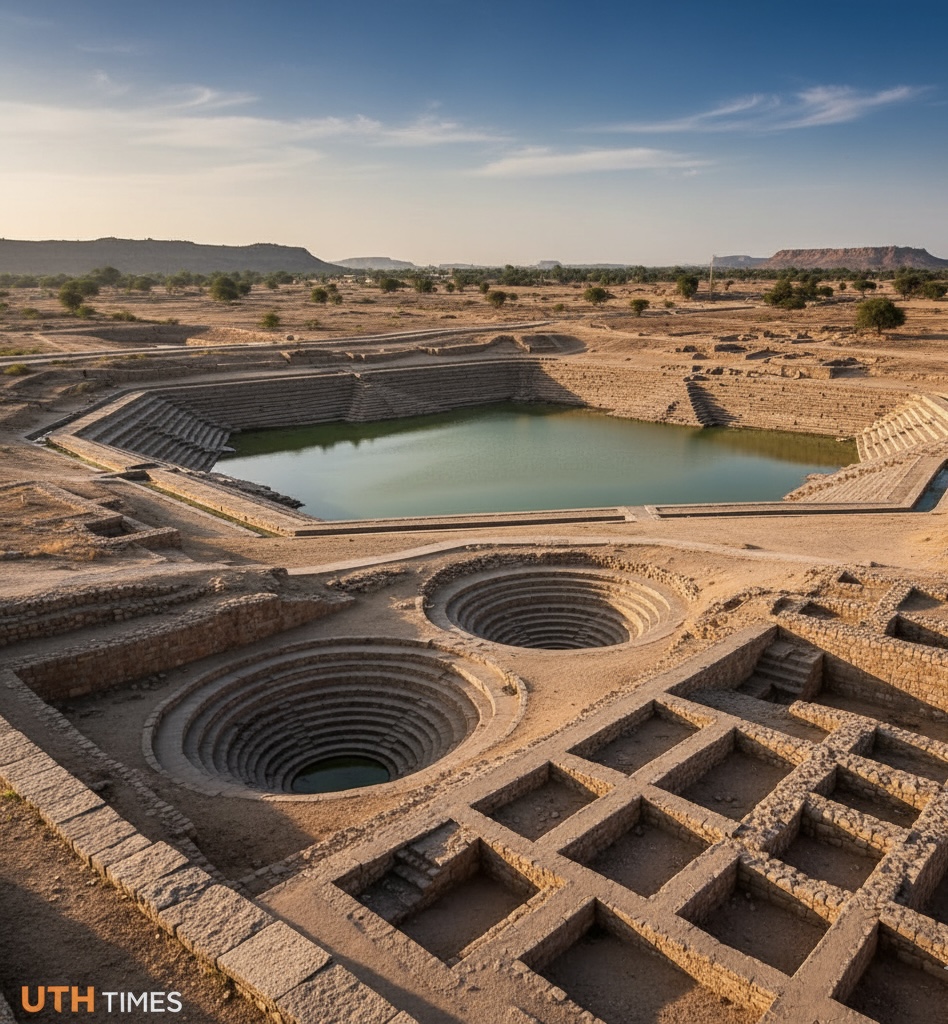
Ancient Indian cities had straight roads, underground drainage, public baths, and flood control — long before Rome laid its aqueducts.

And unlike Roman sewage, Indus sanitation didn’t flow into streets.

They didn’t just build homes. They built sustainable civilizations.

🩺 4. Surgical Techniques – From Cataracts to C-sections

🗓️ Origin: c. 600 BCE (Sushruta Samhita)

🌍 Miscredited To: Medieval European medicine

Sushruta described over 300 surgeries including plastic surgery, cesarean births, kidney stone removal, and even detailed anatomical dissections.

He used over 100 surgical instruments — many similar to today’s scalpels and forceps.

When Europe thought surgery was heresy, India had surgical classrooms.

🏺5. Clay Pot Refrigeration: India’s Eco-Friendly Cooling Tech Before Fridges

Long before modern refrigeration, India had already mastered natural cooling with porous clay pots—called matkas, surahis, and gharas.

🧊 How it worked: The porous walls of these earthen pots allowed slow evaporation of water, which cooled the contents inside—an early, sustainable form of refrigeration.

🌍 Global Influence: Today, eco-conscious designers and engineers are reviving this concept in the West under terms like “zero-electricity fridge” and “evaporative coolers”. Innovations like the Zeer Pot Fridge and Mitticool owe their roots to this ancient Indian principle.

It wasn’t just clever—it was green, centuries before sustainability became a global buzzword.

📜6. Ancient India’s Knowledge Copy Machine (Before the Printing Press)

Long before Gutenberg, India had its own way of mass-copying texts.

🖋️ At places like Nalanda, scribes etched scriptures, science, and philosophy onto palm leaves with metal styluses — replicating knowledge by hand, with stunning precision.

📚 It wasn’t a printing press, but it worked like one — spreading wisdom across centuries.

🌾 7. Agricultural Science – Ancient Manuals of Soil & Seasons

🗓️ Origin: Krishi-Parashara (~100 BCE) & Vedic texts

🌍 Miscredited To: Chinese and Roman sources

India had ancient manuals on crop rotation, soil types, monsoon prediction, seed preservation, and irrigation. The Krishi-Parashara outlined scientific farming tailored to climate zones.

Our ancestors didn’t just farm — they understood Earth’s biology.

🧠 A Legacy Buried, Not Broken

Ancient India didn’t just dream — it designed, discovered, and delivered. From metallurgy to medicine, the roots of modern civilization were sown in Indian soil.

It’s time the world stopped calling our genius a coincidence… and started calling it history.

9 Scientific Theories That Sound Like Sci-Fi (But Aren’t)

In the age of Marvel multiverses and Interstellar plot twists, some of the wildest ideas you’ve seen on screen aren’t fiction — they’re serious scientific theories. These concepts come straight from the minds of physicists, cosmologists, and mathematicians — and they might just redefine reality as we know it.

Here are 9 theories that sound like they belong in a Christopher Nolan movie — but they’re grounded in science.

🌌 1. The Multiverse Theory

Sci-Fi Vibe: Doctor Strange meets Rick & Morty

According to quantum physics and string theory, our universe might be just one of countless others — each with its own laws, histories, and versions of you.

Some suggest that every decision you make splits reality into parallel timelines.

There could be a universe where dinosaurs still rule… or one where you never read this sentence.

⏳ 2. Time Dilation (Einstein’s Relativity)

Sci-Fi Vibe: Interstellar

Einstein’s theory of relativity tells us that time slows down as you move faster or approach gravity wells (like black holes).

This isn’t theory anymore — it’s been tested using atomic clocks on satellites and jets.

Astronauts age slightly slower than people on Earth. Space isn’t just far — it’s a time machine.

🕳️ 3. Black Holes Evaporate (Hawking Radiation)

Sci-Fi Vibe:

Stephen Hawking proposed that black holes aren’t forever. They slowly lose mass by emitting radiation, and over trillions of years, they may completely vanish.

Even the deadliest cosmic monsters have an expiration date.

🌠 4. Simulation Hypothesis

Sci-Fi Vibe: The Matrix, literally

Are we living in a computer simulation? Philosophers and scientists like Nick Bostrom say it’s possible — even probable — that an advanced civilization could run hyper-realistic simulations of their ancestors.

If so, we might be in one right now.

Glitches in the matrix? Coincidences? Déjà vu? Just bug reports.

🪐 5. Cosmic Inflation

Sci-Fi Vibe: Universe expanding faster than the speed of light?

Just after the Big Bang, the universe didn’t expand slowly — it exploded outward faster than light itself, stretching space in less than a trillionth of a second.

This inflation explains the uniformity of the cosmos today.

The universe began not with a whisper, but with hyperspeed chaos.

🧊 6. Boltzmann Brains

Sci-Fi Vibe: Disembodied space minds floating in infinity

The theory? It’s more statistically likely that a fully formed consciousness (a “Boltzmann Brain”) randomly pops out of quantum chaos than the entire structured universe forming as we know it.

You might be a lone brain, hallucinating everything — including this article.

🔀 7. Quantum Entanglement

Sci-Fi Vibe: Spooky action at a distance

Two particles can be linked across galaxies, so that changing one instantly affects the other — even if they’re light-years apart.

Einstein hated this idea and called it “spooky”, but it’s been experimentally confirmed.

It’s like having a twin who sneezes when you blink — across the universe.

🌀 8. Closed Time-like Curves (CTCs)

Sci-Fi Vibe: Time travel loops

General relativity allows for hypothetical “loops in time,” where particles (or people?) could loop back and interact with their own past.

Some solutions suggest wormholes could make this possible.

Want to meet your past self? The math allows it. Reality? TBD.

🌊 9. Quantum Superposition

Sci-Fi Vibe: Being in two places at once

A particle can exist in multiple states or locations simultaneously — until it’s observed. That’s why Schrödinger’s cat is both dead and alive… until you check.

Reality might not be real until you look at it.

🧠 Conclusion: Welcome to the Real Sci-Fi

These aren’t movie scripts — they’re the bleeding edge of science.

As technology advances and experiments become sharper, some of these wild ideas may one day move from theory to observable truth.

In the future, today’s science fiction may just become… tomorrow’s science textbook. 📘✨

The 101-Year-Old Sprinter Who Conquered the World: Sardarni Maan Kaur’s Golden Legacy

When most people slow down, she decided to start running. Literally. Sardarni Maan Kaur wasn’t just defying age—she was redefining it. Honoured with the Nari Shakti Puraskar by President Ram Nath Kovind, Maan Kaur is not merely an athlete; she’s an international icon of resilience, health, and feminine strength.

👟 From Kitchen to Track: The Astonishing Start at 93

In 2009, at the age of 93, when most are confined to a quiet life, Maan Kaur laced up her shoes for the first time—and sprinted into history. Inspired by her son, Gurdev Singh, a veteran athlete himself, she began her training at the Punjabi University grounds in Patiala. Her commitment? Daily workouts, milk, almonds, and zero junk food.

She wasn’t just showing up—she was winning. Her very first race was the 100-meter sprint at a local veterans’ meet—and she never looked back.

🥇 Global Domination: Over 20 Medals & Unstoppable Records

🌍 International Fame:

  • At age 101, she won the gold in the World Masters Games in Auckland, New Zealand (2017), clocking 74 seconds in the 100m dash.
  • She bagged medals across Canada, Malaysia, Singapore, and New Zealand, beating age barriers and competitors alike.

🏅 Medal Count:

  • Over 20 international medals, many in track-and-field events like javelin, shot put, and sprinting.
  • Broke records in the W100+ age category, where few even participate.

🧬 What Kept Her Going?

  • A strict vegetarian diet, discipline, and a mission: to inspire Indian women to stay fit and active—at any age.

💪 Voice of the Fit India Movement: Age is Just a Number

When the Fit India Movement was launched by PM Narendra Modi in 2019, Maan Kaur became its face of ageless fitness. Her life echoed the movement’s mantra—fitness is not seasonal, it’s lifelong.

She conducted awareness events, attended marathons, and encouraged senior citizens to reclaim their health. She proved that exercise isn’t just for the young—it’s fuel for life, regardless of age.

🎖️ Crowning Glory: Nari Shakti Puraskar

In 2020, President Ram Nath Kovind conferred the Nari Shakti Puraskar—India’s highest civilian honour for women—upon her at Rashtrapati Bhavan.

👑 The citation read: “For her exceptional courage, perseverance, and groundbreaking achievements in athletics.”

Her hands may have held medals, but her legacy holds millions of hearts.

🕊️ Conclusion: The Sprint That Changed Lives

Sardarni Maan Kaur didn’t just run races—she ran into history. Her story isn’t about late success. It’s about timeless courage. She proved that life doesn’t slow down with age—it only gains momentum, if you have the will.

And as the tracks of life stretch ahead, her footprints remain behind—etched in gold.

From Survivor to Rajya Sabha MP: The Untold Story of Kerala’s Sadanandan Master

🔷 A Quiet Nomination That Roared Through History

On July 12, 2024, when President Droupadi Murmu nominated four members to the Rajya Sabha, one name struck with quiet power: C. Sadanandan Master. Unknown to many outside Kerala—and even to many in its younger generation—his story is one of survival, grit, and the long arc of justice.

But who is this man whose name carries the weight of pain, resistance, and resurrection?

🔥 Born in Red Soil, Raised by Conviction

🧬 Roots in Kannur:

Sadanandan was born in the politically charged soil of Kannur, the fortress of Marxist politics in Kerala. His family was deeply embedded in leftist ideology—his father a sympathizer, his brother a CPI(M) worker. As a young man, Sadanandan, too, gravitated toward the communist cause.

📖 The Turning Point:

The shift came not through political confrontation but through literature. Reading Bharata Darsanangal by Mahakavi Akkitham sparked in him a new awakening—a vision of India grounded in cultural nationalism. He soon aligned with the RSS, embracing a nationalist philosophy rooted in tradition and service.

🧲 The Charismatic Teacher:

A trained teacher with a B.Ed., he quickly became a magnet for youth in Kannur who were looking for purpose beyond ideology. His rising influence was seen as a direct threat by CPI(M) leadership in the region.

🩸 January 25, 1994: The Night of Knives

🌑 A Ruthless Ambush:

On that dark January evening, while returning from a family visit before his sister’s wedding, Sadanandan was ambushed. A group of Marxist extremists emerged from the shadows and chopped off both his legs with deadly precision.

💔 Not Just an Attack — A Message:

This was no mere assault. It was retribution for daring to walk away from Marxist ranks and for inspiring others to do the same. The attack was intended to destroy his spirit, not just his body.

🚀 From Hospital Bed to Parliament Bench

🛏️ Months of Agony, Years of Resolve:

Most would have withered under such trauma. But not Sadanandan. He spent months in hospitals, underwent grueling surgeries, and slowly began his life again—with artificial limbs and an iron will.

🪖 Back on the Ground:

He didn’t retreat into silence. He returned to teaching, mentoring, and grassroots service. He became a symbol of resistance against political violence and a beacon of peaceful transformation in Kannur.

🏛️ A National Voice:

In 2024, three decades after that brutal attack, the nomination to Rajya Sabha was more than a political decision—it was a recognition of resilience, a salute to a man who refused to be broken.

🕊️ The Legacy of a Survivor

Sadanandan Master’s life is not just a political biography—it’s an epic of endurance. He didn’t fight with weapons. He fought with education, service, and belief. He stood firm in the face of cruelty, and in return, earned not just sympathy—but respect across the spectrum.

✍️ Final Word

Some stories are written with ink. Others, like Sadanandan Master’s, are etched in blood, healed with courage, and crowned with service.

Assam’s Crude Oil Revolution Begins: India’s First Profiting State in Oil Production 💰

0

🚀 A Historic Turn: Assam Redefines India’s Energy Landscape

Assam, the heart of India’s oil heritage, has now achieved a landmark milestone — it has become the first Indian state to both produce and earn profit directly from crude oil.

With the Modi government officially approving the Petroleum Mining Lease (PML) for the Khagorijan oil block to Oil India Limited (OIL), Assam steps into a new era of energy self-reliance and financial empowerment.

🛢️ What is the Khagorijan Block & Why It Matters

🔍 Location & Significance:

The Khagorijan oilfield, situated in Dibrugarh district, has long held oil reserves managed by OIL. But until now, profits from exploration were centralised, with states earning only royalties.

🔥 Game-Changing Lease Approval:

Under the new Petroleum Mining Lease approved by the central government, Assam now holds the right to directly earn a share in profit petroleum. This is the first time any Indian state has been allowed to do so, marking a fundamental policy shift.

💸 Economic Impact: Turning Oil into State Revenue

📈 State as a Stakeholder:

With this lease, Assam is not just a location for extraction—it’s now a profit partner. This opens new avenues for direct earnings beyond traditional royalties, which were often marginal compared to central revenues.

🏗️ Boost to Local Infrastructure:

The anticipated revenue is expected to flow into building roads, schools, energy systems, and social welfare—a direct return from the land’s natural wealth to its people.

🌍 Model for Other States:

Assam sets a precedent. Other resource-rich states like Gujarat, Rajasthan, and Andhra Pradesh could soon push for similar profit-sharing models, decentralising India’s natural resource economy.

🧭 Energy Independence with a Local Touch

⚡ Reducing Import Dependence:

India is one of the world’s largest oil importers. With state-level involvement in production, Assam’s model could help localise energy systems, increase domestic output, and cut long-term import bills.

🌱 Sustainable Development Focus:

The move also pushes for more responsible, locally-managed extraction, ensuring that ecological and community concerns are better addressed than in distant, centralised models.

🏁 Conclusion: Assam Leads, India Follows

This isn’t just an oil story—it’s a revolution in resource democracy. Assam has broken ground, not just beneath the soil, but in policy and vision. With this bold stride, India’s energy map has a new capital—Assam.

Dark Stars: How John Michell Imagined Black Holes Centuries Before Einstein

0

Before spacetime bent.

Before Einstein dreamed of relativity.

There was John Michell — a clergyman with the mind of a cosmic revolutionary.

In 1783, he quietly published an idea that would one day shake the pillars of astrophysics: the concept of a star so dense that even light itself couldn’t escape its grip. Today we call it a black hole. But Michell called it something poetic, haunting, and ahead of its time—a “dark star.”

🔭 The Visionary in the Shadows

In an age when telescopes barely grazed the heavens and science still walked hand-in-hand with theology, John Michell stood at the crossroads of genius and obscurity.

🧠 Who was he?

  • A Cambridge-educated polymath
  • A geologist, astronomer, philosopher, and priest
  • The man who invented the idea of measuring the mass of Earth using gravity
  • And above all, the first human to mathematically predict a black hole

Using Newton’s laws and the corpuscular theory of light (where light was thought to be made of particles), Michell crafted a radical hypothesis:

If a star were both extremely massive and incredibly compact, its escape velocity would exceed the speed of light — and light could never leave.

A cosmic prison. A star turned shadow.

🌠 The Physics That Pierced the Veil

At the heart of Michell’s reasoning was a simple yet powerful formula:

And just like that, the idea of a “dark star” was born — a celestial body whose pull is so intense that light, the fastest traveler in the universe, is forever trapped.

Even more astonishing? Michell predicted that:

  • 🌌 These invisible giants might populate the universe
  • 🌟 They could be detected indirectly—through their gravitational pull on nearby stars

A method still used today to find black holes!

🕯️ Why the World Forgot

So why didn’t Michell become the father of modern astrophysics?

Because the world wasn’t ready.

⚫ The wave theory of light soon replaced the particle model, discrediting his logic.

⚫ His paper was buried in journals few read.

⚫ And telescopes of the time couldn’t see far enough to find such “dark stars.”

It would take over 130 years, Einstein’s theory of general relativity, and finally modern astronomy to bring Michell’s ghost back into the conversation.

🔮 Legacy of the Invisible

Today, we call them black holes—raging monsters at the centers of galaxies, devouring stars, warping time.

But their spiritual father was a quiet genius in 18th-century Yorkshire.

He imagined the invisible before the telescope could see.

He whispered the truth of black holes before science had a name for them.

John Michell didn’t just predict black holes —

He dared to see darkness as a presence, not an absence.

And in doing so, he reached out across centuries…

…to tell us that sometimes, the most powerful forces in the universe are the ones we can’t see at all.

How the Indus-Sarasvati Sparked the Rise of Pharaonic Egypt

0

🔮A Forgotten River’s Ripple Effect

In the silent sands of ancient Egypt lies a forgotten whisper from the East. Could the mighty Indus-Sarasvati civilization have silently ignited the birth of Pharaohs through the economic corridors it created? Dive into this layered tale of trade, tombs, and truth—lost to time and politics.

🌊 Maritime Highways: The Indus-Sarasvati’s Economic Web

The Indus-Sarasvati civilization was not just an isolated marvel; it was the engine room of ancient global trade. With its ports like Lothal and Dholavira, it connected the Indian subcontinent to Sumer, Elam, and perhaps, unwittingly, to Egypt.

  • 🌐 Exports: Rich in timber, spices, lapis lazuli, pearls, cotton, and grains.
  • ⚓ Demand in Sumer: These products were vital to the Mesopotamian economy.
  • 🛳️ Trade Imbalance: Sumer had few high-value items to reciprocate—making Egypt’s gold a lucrative solution.

🏛️ Uruk’s Ambition: The Dynastic Race Theory

Sir Flinders Petrie’s 1890s excavations at Naqada changed everything. He discovered Sumerian-style mud-brick tombs, Afghan lapis, and cylinder seals eerily similar to those in Mesopotamia.

  • 🗿 Architecture: Recessed brickwork found in Uruk mirrored in Abydos and Naqada.
  • ⚔️ Weapons: Pear-shaped maces and flint knives with Mesopotamian designs.
  • 📜 Theory: Petrie proposed the Dynastic Race Theory—that Uruk invaders founded the first Egyptian dynasty.

🐫 Petroglyphs, Boats & Burial Clues

1930s discoveries of desert petroglyphs showed invaders on Sumerian-style reed boats, holding maces and wearing foreign headdresses.

  • 🚢 Abydos Boat Graves (1990s): Royal boats pre-dating dynastic Egypt.
  • ⛏️ Khufu’s Boat (1954): Gigantic ship buried near the Great Pyramid, indicating advanced maritime culture.
  • 🔍 These clues were buried beneath a political tide post-WWII.

🧠 Politics vs. Archaeology: The Post-War Suppression

After the Holocaust and in an era of decolonization, narratives shifted:

  • 🧨 Race-based theories were seen as politically dangerous.
  • 🇪🇬 Egyptology pivoted toward indigenous development, minimizing foreign influence.
  • 🧾 Trade was offered as a safer, sanitized explanation for cultural similarities.

📚 The Return of Doubt: Scholars Speak Again

Despite academic silence, scholars like Peter James and Jared Diamond questioned the abrupt emergence of hieroglyphs, state power, and religion in Egypt.

  • 🌌 Creation myths: The Seven Sages, Nun/Nunki echo Mesopotamian roots.
  • 🏛️ Architecture & Pottery: Shared styles across Indus, Sumer, and early Egypt hint at transplants, not just trade.

🪙 The Real Prize: Gold and Power

Uruk’s economic motives were likely not conquest, but access to Egyptian gold, a material treasured across India. The Indus-Sarasvati economy may have silently orchestrated the geopolitical chessboard, urging Uruk’s expansion to Egypt.

🔚 OUTRO: What We Forgot in the Sands

When history becomes politically inconvenient, facts are often buried. But boats, bricks, and blades still whisper across time. Perhaps it’s time we rediscover the Indusfluence behind one of history’s most iconic civilizations—Pharaonic Egypt.

How Feynman Mastered Calculus at 15: The Self-Taught Genius Method🤯

0

🚀 The Teenage Mind That Defied Convention

Before he was a Nobel laureate, before he rewired quantum physics, Richard Feynman was just a 15-year-old boy—alone in his room with a battered book and a burning question: How does the universe work?

He didn’t wait for school to tell him.

He found the answer himself.

📘 Calculus for the Practical Man : The Unlikely Gateway

🔹 Feynman discovered a self-teaching book meant for working engineers—Calculus for the Practical Man. It wasn’t glamorous. It wasn’t prestigious. But it was clear, intense, and alive.

🔹 He devoured every page. He redrew the diagrams by hand. Wrote notes as if he were the author. Built a personal index. Not for school. Not for anyone. Just because he had to know.

🔹 “It was the first time I understood something my father didn’t,” he once said. That moment hit deep. It wasn’t just math. It was power.

✍️ Math as a Language of Play

🔹 Long before entering MIT, Feynman was already creating his own math symbols, tweaking formulas, and inventing methods to solve problems that didn’t exist in the book.

🔹 One of his obsessions? The half-derivative—a bizarre, barely explored concept. But Feynman didn’t just ask what it was. He asked, what if it worked?

🔹 He didn’t learn math. He reimagined it. He approached each problem like a puzzle to break, not a rule to follow. This mindset would later redefine particle physics.

🧠 The Blueprint of a Self-Taught Genius

🔹 Feynman’s notebooks from that era are chaotic, brilliant, obsessive. Not clean lectures. Not perfect notes. But real thinking.

🔹 He used brute force curiosity to break into a world that usually demands professors and degrees.

His weapon? Relentless independence.

🔹 No school could’ve taught him this. Because he invented the method as he went.

🏁 A Lesson Etched in Infinity

He didn’t ask permission to learn.

He didn’t seek validation.

He just did the work—and let the universe unfold.

“The joy of finding things out,” he’d later say, “is what drives me.”

And it started with a boy. A book. And an unstoppable question.

Why Meritocracy and a Robust Culture Are Essential for Any Nation’s Economic Boom

0

In the quest for sustainable economic growth, nations often focus on policies, resources, and infrastructure. However, two intangible yet powerful forces—meritocracy and a strong cultural foundation—serve as the true bedrock of prosperity.

Meritocracy, a system where advancement is based on talent, effort, and achievement rather than nepotism or privilege, ensures efficient allocation of human capital.

A strong culture, encompassing shared values like diligence, innovation, and social trust, reinforces behaviors that drive productivity and resilience.

Together, they create an ecosystem where individuals and societies thrive economically.Meritocracy fuels economic development by rewarding competence and fostering innovation. When positions in government, business, and education are allocated based on merit, it leads to higher productivity and better resource utilization.

Research shows that meritocratic systems promote prosperity by dismantling barriers to talent, resulting in faster growth rates.

For instance, countries with higher meritocracy degrees exhibit increased social capital, which sustains long-term economic expansion.

This is evident in Singapore, where a rigorous merit-based civil service has propelled it from a developing nation to a global economic hub. By contrast, nepotistic systems breed inefficiency, stifling innovation and slowing growth.

Meritocracy also reduces income inequality in balanced forms, as it enhances social mobility and encourages investment in education and Economists argue that labor markets in high-income countries are more meritocratic, correlating with superior development outcomes.

Equally vital is a strong culture that aligns societal norms with economic goals. Culture influences how people allocate scarce resources, shaping attitudes toward work, risk-taking, and cooperation.

Values such as long-term orientation, as seen in East Asian Confucian societies, promote savings, education, and entrepreneurship, leading to rapid industrialization in nations like South Korea and Japan.

Cultural beliefs in hard work and trust enhance economic exchanges by reducing transaction costs and fostering networks.

Studies confirm that cultures emphasizing autonomy, life satisfaction, and collective well-being positively impact growth metrics like GDP per capita.

Conversely, cultures plagued by corruption or short-termism hinder development, as they erode institutional trust and deter investment.

The synergy between meritocracy and strong culture amplifies their effects. A meritocratic system thrives in a culture that values fairness and achievement, while a robust culture is sustained by merit-based rewards that reinforce positive behaviors. In Scandinavian countries, for example, a culture of egalitarianism combined with meritocratic policies has yielded high innovation and welfare standards.

Without these foundations, even abundant resources can lead to stagnation, as seen in some resource-rich but culturally fragmented nations.In conclusion, meritocracy and strong culture are indispensable for economic development, providing the human and social infrastructure for growth.

Nations aspiring to prosperity must cultivate these elements through education reforms, transparent institutions, and cultural promotion. By doing so, they not only boost GDP but also build inclusive, resilient economies that benefit all citizens.