
In the age of Marvel multiverses and Interstellar plot twists, some of the wildest ideas you’ve seen on screen aren’t fiction — they’re serious scientific theories. These concepts come straight from the minds of physicists, cosmologists, and mathematicians — and they might just redefine reality as we know it.
Here are 9 theories that sound like they belong in a Christopher Nolan movie — but they’re grounded in science.
🌌 1. The Multiverse Theory
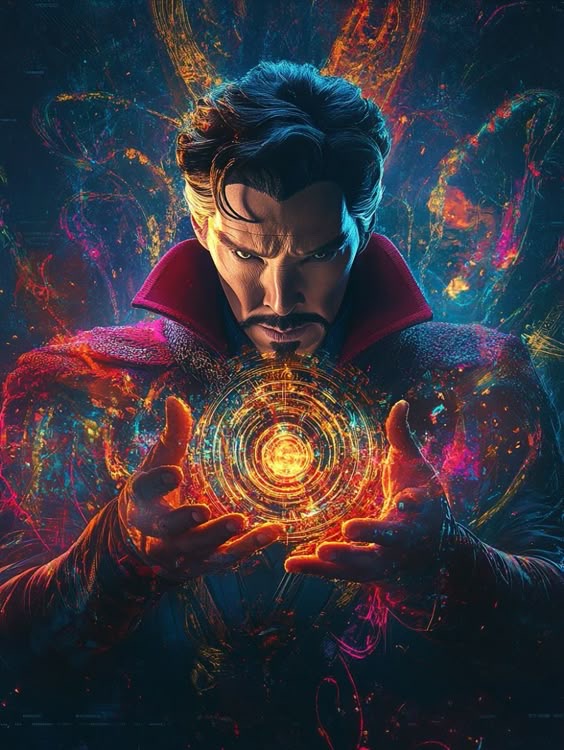
Sci-Fi Vibe: Doctor Strange meets Rick & Morty
According to quantum physics and string theory, our universe might be just one of countless others — each with its own laws, histories, and versions of you.
Some suggest that every decision you make splits reality into parallel timelines.
There could be a universe where dinosaurs still rule… or one where you never read this sentence.
⏳ 2. Time Dilation (Einstein’s Relativity)
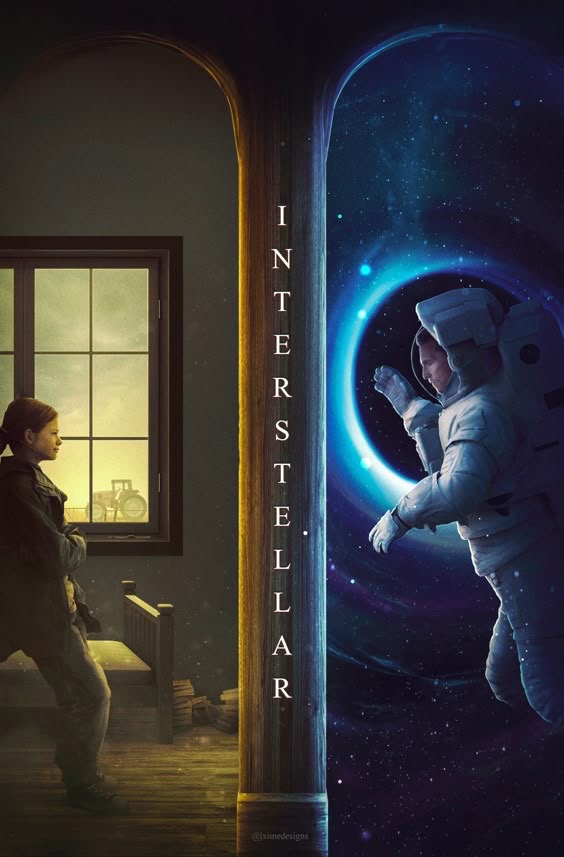
Sci-Fi Vibe: Interstellar
Einstein’s theory of relativity tells us that time slows down as you move faster or approach gravity wells (like black holes).
This isn’t theory anymore — it’s been tested using atomic clocks on satellites and jets.
Astronauts age slightly slower than people on Earth. Space isn’t just far — it’s a time machine.
🕳️ 3. Black Holes Evaporate (Hawking Radiation)
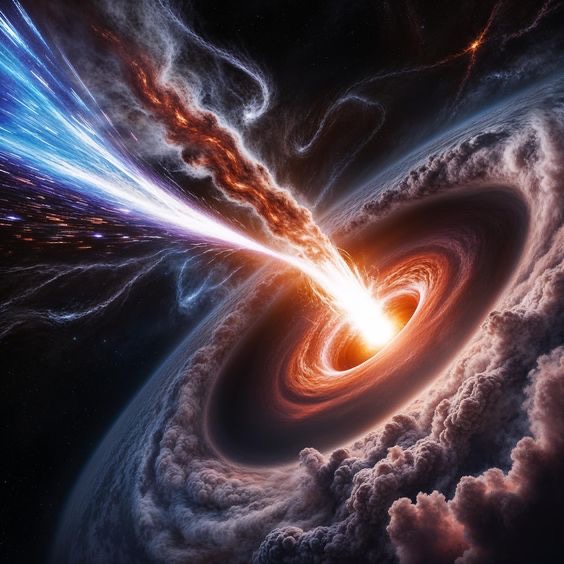
Sci-Fi Vibe:
Stephen Hawking proposed that black holes aren’t forever. They slowly lose mass by emitting radiation, and over trillions of years, they may completely vanish.
Even the deadliest cosmic monsters have an expiration date.
🌠 4. Simulation Hypothesis
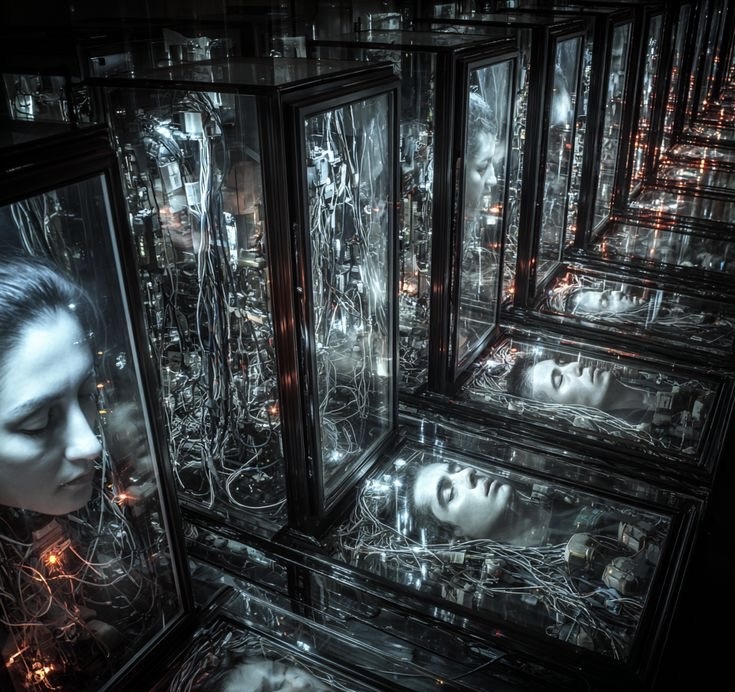
Sci-Fi Vibe: The Matrix, literally
Are we living in a computer simulation? Philosophers and scientists like Nick Bostrom say it’s possible — even probable — that an advanced civilization could run hyper-realistic simulations of their ancestors.
If so, we might be in one right now.
Glitches in the matrix? Coincidences? Déjà vu? Just bug reports.
🪐 5. Cosmic Inflation
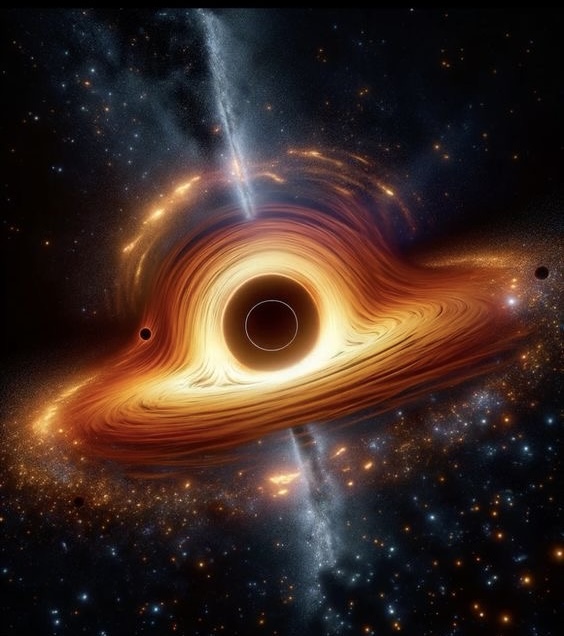
Sci-Fi Vibe: Universe expanding faster than the speed of light?
Just after the Big Bang, the universe didn’t expand slowly — it exploded outward faster than light itself, stretching space in less than a trillionth of a second.
This inflation explains the uniformity of the cosmos today.
The universe began not with a whisper, but with hyperspeed chaos.
🧊 6. Boltzmann Brains
Sci-Fi Vibe: Disembodied space minds floating in infinity
The theory? It’s more statistically likely that a fully formed consciousness (a “Boltzmann Brain”) randomly pops out of quantum chaos than the entire structured universe forming as we know it.
You might be a lone brain, hallucinating everything — including this article.
🔀 7. Quantum Entanglement
Sci-Fi Vibe: Spooky action at a distance
Two particles can be linked across galaxies, so that changing one instantly affects the other — even if they’re light-years apart.
Einstein hated this idea and called it “spooky”, but it’s been experimentally confirmed.
It’s like having a twin who sneezes when you blink — across the universe.
🌀 8. Closed Time-like Curves (CTCs)
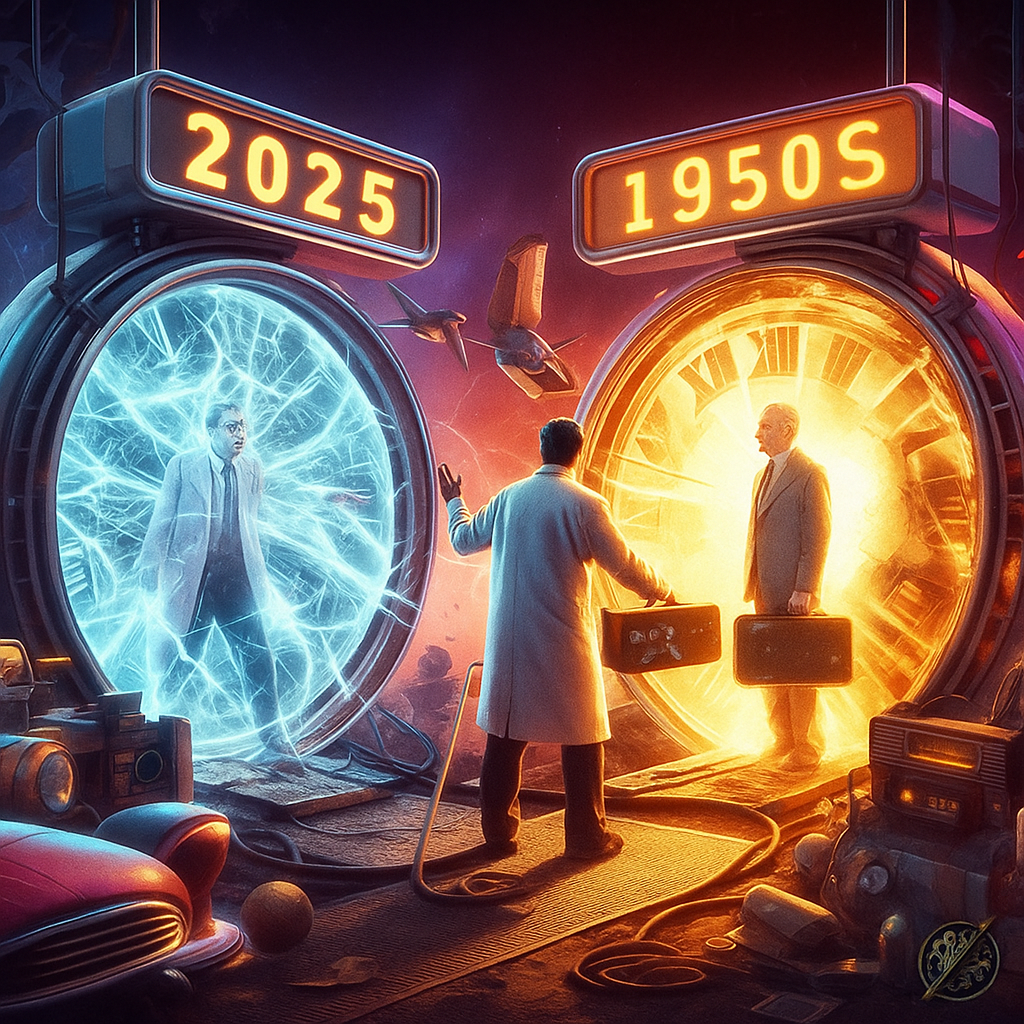
Sci-Fi Vibe: Time travel loops
General relativity allows for hypothetical “loops in time,” where particles (or people?) could loop back and interact with their own past.
Some solutions suggest wormholes could make this possible.
Want to meet your past self? The math allows it. Reality? TBD.
🌊 9. Quantum Superposition
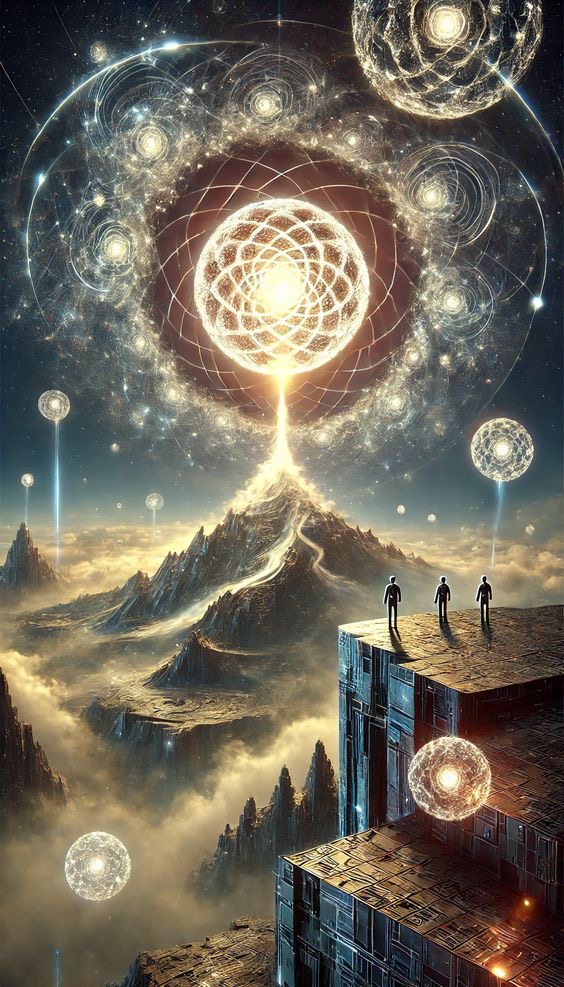
Sci-Fi Vibe: Being in two places at once
A particle can exist in multiple states or locations simultaneously — until it’s observed. That’s why Schrödinger’s cat is both dead and alive… until you check.
Reality might not be real until you look at it.
🧠 Conclusion: Welcome to the Real Sci-Fi
These aren’t movie scripts — they’re the bleeding edge of science.
As technology advances and experiments become sharper, some of these wild ideas may one day move from theory to observable truth.
In the future, today’s science fiction may just become… tomorrow’s science textbook. 📘✨

