Home Blog Page 52

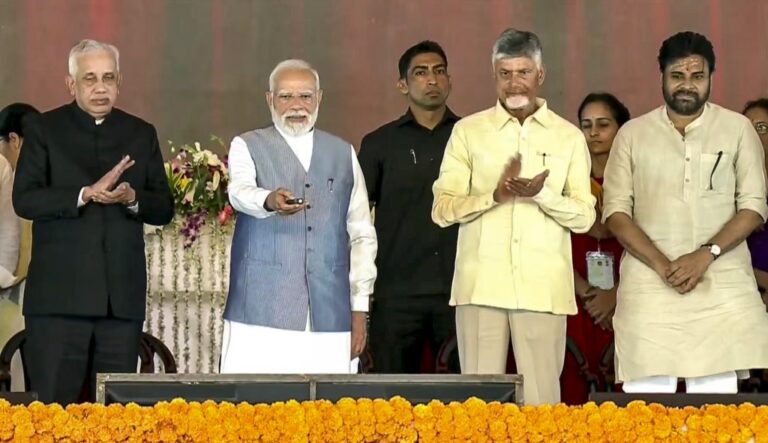
From Mughal Garden to Amrit Udhyan: India’s Living Memorial Reopens August 16🪷

0

🌸 A Garden That Speaks

On August 16, a soulful chapter in India’s evolving legacy will bloom again — Amrit Udhyan, not just a garden, but a living memorial to the sacrifices and dreams of countless Indians who shaped our freedom. Located near Kartavya Path, this sacred space connects the past to the present, inviting every citizen to walk with pride, reflection, and gratitude.

🪷 What Is Amrit Udhyan?

Amrit Udhyan, previously known as Mughal Gardens, has been reimagined as part of the Azadi Ka Amrit Mahotsav celebrations. Unlike any typical park, this space is now designed to honour the spirit of sacrifice, renunciation, and national duty — making it a memorial of collective consciousness.

  • 🌿 A serene sanctuary of remembrance
  • 🪷 Represents India’s journey from colonialism to Kartavya (duty)
  • 📍 Nestled behind Rashtrapati Bhavan, now open in phases
  • 🌸 A spiritual transformation, not just a physical renovation

🇮🇳 Why Was It Established?

The transformation of this space was not just about renaming a garden. It was a symbolic step by the Government of India to:

  • 🌟 Break from colonial imprints
  • 🙏 Honour unsung heroes of India’s independence
  • 🔥 Create a space for spiritual awakening and national pride
  • 📜 Celebrate the ideals of truth, penance, and renunciation

📖 The History Behind the Garden

Originally part of Lutyens’ Delhi in the early 20th century, this space evolved through multiple identities. But in 2022, as India celebrated 75 years of independence, the decision was taken to transform it into a space that reflects India’s own stories, not colonial designs.

  • 🏛️ Designed during British rule, now reimagined for Bharat
  • 🕊️ Shift from ornamental beauty to soulful storytelling
  • 📅 Transformation part of the Central Vista redevelopment project

🦸‍♂️ Main Protagonists Behind the Vision

The conceptualisation and execution of Amrit Udhyan involved visionaries and planners:

  • 👤 Prime Minister Narendra Modi – spearheaded the decolonisation of national symbols
  • 🧠 Urban planners behind Central Vista
  • 🎨 Cultural historians and architects who ensured every inch echoed India’s sacrifice stories

🗓️ When Was It Decided?

The plan to revamp the Mughal Gardens into Amrit Udhyan took form in 2022, during the landmark Azadi Ka Amrit Mahotsav. As the government aimed to recast national spaces, this garden became a canvas to retell India’s story in Indian terms.

  • 📌 Officially renamed in January 2023
  • 🌼 Reopening for public visits from August 16, 2025

🧭 What’s New from August 16?

This reopening is not just a stroll — it’s a soul walk.

  • 🎧 Audio-guided heritage walks
  • 📽️ Installations on freedom fighters
  • 🕯️ “Smriti Sthal” – quiet space to pay homage
  • 🌺 Themed sections named after freedom ideals: Balidan Vatika, Tyag Vihar, and more

🌅 Conclusion: Come, Walk with the Nation’s Soul

Amrit Udhyan is more than a destination. It is a declaration — that India remembers. That freedom was not gifted, it was earned. And now, in this garden of memory, you too can walk where history breathes.

📍 Open from August 16 — Step in, reflect, and rise.

Let the fragrance of freedom guide your path.

When Akhand Bharat Was Cast in Metal: The Forgotten WW2 Medal That Held a United India

0

Not all stories are told in textbooks.

Some are hidden in medals.

Some are buried in metal.

One such forgotten artifact—the India Service Medal from World War II—carries more than honor.

It carries a map.

Not just any map—the map of Akhand Bharat—a vision of undivided civilizational unity, long before borders carved us apart.

🥇 The Medal Born from War, Not Battle

During the chaos of World War II (1939–1945), the British Empire mobilized Indian soldiers across continents.

But not every warrior went to the frontlines. Some stayed back—working behind the scenes to keep the massive war machinery running.

To honor them, the British instituted the India Service Medal, awarded to:

  • 🎖️ Indian military personnel
  • ⏳ With 3+ years of non-operational service within India
  • 🕰️ Between 3 September 1939 and 2 September 1945

It was meant to reward duty.

But unknowingly, it preserved something far greater: a snapshot of an undivided India.

🗺️ Etched in Metal: A Map of Akhand Bharat

On the reverse of this silver medal lies a map.

Look closer.

It’s not the modern Republic of India.

It’s Akhand Bharat — the subcontinent as it stood before 1947, united under one geopolitical and civilizational frame.

The medal shows:

  • 🇮🇳 Present-day India
  • 🇵🇰 Pakistan
  • 🇧🇩 Bangladesh
  • 🏞️ Parts of Afghanistan, Nepal & Burma (Myanmar)
    All under one landmass, without borders, cuts, or divisions.

Above the map is boldly inscribed: “INDIA”.

No prefixes. No suffixes. Just one, whole name—for one, whole civilization.

🕉️ More Than Geography: A Civilizational Unity

This wasn’t just a colonial administrative zone.

It was a living, breathing cultural ecosystem bound together by:

  • 🕊️ Shared philosophies and dharmic roots
  • 📖 Common scriptures, from the Vedas to Sufi texts
  • 🏔️ Sacred geography—the Himalayas, Sindhu, Ganga, Bodh Gaya
  • 🎨 Syncretic traditions, from Bengal to Balochistan

This was civilizational India—Akhand Bharat as envisioned by sages, rulers, and revolutionaries—from Chanakya to Ashoka, from Guru Nanak to Swami Vivekananda.

The medal, though issued by colonial hands, unknowingly captured the essence of a land united in soul, even if ruled in parts.

🩸 From Metal to Memory: The Fall of Unity

Within just a few years of its issuance, Partition struck.

Borders were drawn. Lines were etched in blood.

And the map on that medal turned from present reality to a painful memory.

Thousands who wore that medal with pride…

…never imagined the land they served would be carved up into three nations.

That unified India, once inscribed in silver, now existed only in memory—and in metal.

📿 Not Just a Medal—A Mandala of Oneness

For modern generations, the India Service Medal is more than a relic.

It is a mandala—a symbol of sacred wholeness.

It tells us:

  • Akhand Bharat was not a myth.

  • It was not propaganda.

  • It was once visible, mappable, lived, and even medaled.

This medal proves that the dream of unity predates Partition, politics, and polemics.

It echoes the truth that India was once Akhand—not just by land, but by life.

🔚 Closing: A Metal That Still Speaks

History often fades with time.

But metal remembers.

The India Service Medal—stamped with Akhand Bharat—is a silent sentinel from the past, reminding us that before the bloodshed, there was oneness.

Not just in empire, but in essence.

And maybe—just maybe—that unity can still be remembered, honored, and one day, reimagined.

Why 108 Is Not Just a Number in Sanatan Dharma

Some numbers are counted. Others are lived.

In Sanatan Dharma, 108 is not a statistic — it’s a cosmic password, a spiritual algorithm, a sacred heartbeat vibrating through mantras, temples, and even galaxies. It’s whispered in yogic breaths, embedded in ancient texts, and reflected in the very geometry of existence.

This is not just the story of a number.

It’s the story of the soul’s journey — from self to source.

🔮 The Inner Equation of 108: The Soul’s Map

Let’s decode 108 digit by digit — because this isn’t numerology. It’s spiritual physics.

🔹 1 – The Self (Aham)

You begin as one — the jiva, the embodied soul, wrapped in karma and illusion. You are the spark that seeks light, the seeker beginning the journey.

🔹 0 –The Void (Shunyata)

Here begins ego death. The zero stands for surrender, silence, the pause between inhale and exhale. It’s where all identities dissolve, and oneness whispers.

🔹 8 – Infinity (Ananta)

Turn the 8 sideways, and it becomes the symbol of eternity. It represents cosmic law — karma, rebirth, moksha — the final destination where the self merges with the infinite.

✨ 108 = The Journey

From individual → to ego death → to universal union.

📿 Where 108 Echoes in Sanatan Dharma

This isn’t mythology. This is sacred design.

Everywhere 108 shows up, it encodes a spiritual pattern.

📿 108 Beads in a Japa Mala

Not random. Each bead = a breath, a beat, a barrier falling.

108 mantras = one complete circle of purification.

📜 108 Upanishads

The crown jewels of Vedic wisdom. 108 portals to Atma Gyaan (self-knowledge). Each one a thread in the spiritual fabric of Bharat.

🛕 108 Steps in Temples

Each step upward = a layer of maya shed.

You ascend physically to descend spiritually — into your true self.

There is an object heading towards Earth in Late Oct! Harvard Scientist is sure it is an Alien Craft.🛸👽

0

When astronomers detected 3I/ATLAS—an object hurtling through our solar system—they expected a comet. Instead, Harvard astrophysicist Avi Loeb proposes a provocative hypothesis: could it be alien-made, even hostile? While Loeb’s theory grabs headlines, the scientific community largely favors the simpler, natural explanation.

🔬 The Discovery and Controversy

🛰️ Detected on July 1, 2025 by the ATLAS survey telescope in Chile, 3I/ATLAS entered our solar system at extraordinary speed and with an unusual trajectory  .

Loeb and co-authors suggest its motion near Venus, Mars, and Jupiter, combined with its timing and size, make it unlikely to be purely random—pointing to a potential alien “probe” under a Dark Forest scenario  

🧠 Loeb’s Hypothesis: What Makes 3I/ATLAS Suspicious?

  • Trajectory Alignment: The object’s orbit lies within 5° of the solar system’s plane—an alignment with only ~0.2% chance if random  .
  • Planetary Flybys: It passes near Venus, Mars, and Jupiter—calculated to be a mere ~0.005% likelihood by chance  .
  • Hidden Approach at Perihelion: It will reach its closest point to the Sun on October 29, 2025, while Earth is on the opposite side—Loeb suggests this could conceal it during critical observation windows  .
  • Lack of Gas Signature: No typical cometary spectral lines have yet been observed, which Loeb claims is suspicious—though critics argue they may be too faint at this distance  .

Loeb insists his speculation is a thought experiment meant to provoke rigorous investigation—not a confirmed claim  

🔭 Scientific Consensus: Natural Comet

Most astronomers, including Darryl Seligman and Samantha Lawler, firmly state that all current observations match cometary behavior consistent with previous interstellar visitors like Oumuamua and Borisov  .

Evidence includes:

  • Visible cometary coma showing gas and dust,
  • Activity detected as far out as 6 AU pre-discovery,
  • Ongoing infrared and ultraviolet observations from Hubble and JWST will soon reveal volatile composition  .

Seligman and others highlight that extraordinary claims need extraordinary evidence—which 3I/ATLAS currently lacks


🌏 Why This Matters

Understanding 3I/ATLAS impacts both planetary defense and the search for extraterrestrial intelligence:

  • If artificial, it could represent the first technosignature study opportunity.
  • If natural, it helps refine models of interstellar cometary behavior and age (~7–14 billion years old)  .

Upcoming observations from JWST, Hubble, and the Vera Rubin Observatory are expected to settle whether 3I/ATLAS is an artifact of nature—or potentially, something more deliberate.

🧭 The Bigger Picture: Why It Matters So Much

🧩 A Clue to the Unified Theory?

If Object 3 is confirmed as something truly new, it could lead us to a long-sought goal: the Theory of Everything — a framework unifying quantum mechanics with general relativity.

🌐 Einstein dreamed of it. Hawking searched for it. Could ATLAS have just stumbled onto its first trace?

🔋 Technological Fallout

Like all discoveries in fundamental physics, the ripples could spread far beyond theory:

  • 🛸 Quantum computing
  • 🧬 Medical imaging
  • 🛰️ Particle-based propulsion
  • 🔒 Unbreakable encryption

Physics isn’t just about understanding the universe. It’s about rebuilding it with better tools.

🔮 What Object 3 Could Actually Be 💫 Leading Theories in the Race

🧿 Dark Photon

A hypothetical force carrier for dark matter interactions. If Object 3 is a dark photon, we may finally be able to detect and interact with dark matter.

🧿 Graviton Imposter

Some propose Object 3 mimics properties expected from the elusive graviton, the never-detected particle that would explain gravity’s quantum nature.

🧿 String Resonance

String theorists are giddy — some properties of Object 3 could match vibrational modes predicted in string theory, giving experimental hints to the deepest layer of reality.

⚔️ The Challenge: Proof, Politics, and Patience

🧪 Scientific Rigor

CERN isn’t jumping the gun. Confirmation needs 5-sigma certainty — meaning a 1 in 3.5 million chance of being a fluke. Researchers are now conducting focused high-luminosity runs to collect deeper data.

💼 Scientific Rivalry

Other colliders (like CMS at CERN, or future successors in Japan and China) are racing to confirm or refute the signal. This is a global showdown in precision physics.

⌛ Time Pressure

The LHC’s current operational cycle ends soon. If Object 3 isn’t confirmed in time, it may go down as the greatest ghost particle — never truly caught, never truly explained.

🌌 CONCLUSION: The Universe Just Got Weirder

Object 3 is not just a signal. It’s a cosmic breadcrumb, possibly leading to new laws of nature, new forces, even new dimensions.

In a world obsessed with certainty, Object 3 is a reminder that mystery is the mother of discovery. Whether it fades into error or explodes into the greatest scientific breakthrough in a century — we are witnessing history being written in particles.

The question is not just “What is Object 3?”

The real question is — Are we ready to understand it? 🔓

First Railway Station Recognised as a UNESCO World Heritage

0

🚉 A Living Monument of Movement

The Chhatrapati Shivaji Maharaj Terminus (CSMT) isn’t just a railway station — it’s a palace where steel rails kiss stone heritage. Once known as Victoria Terminus, this Mumbai marvel became the first standalone railway station in the world to be recognized as a UNESCO World Heritage Site in 2004 — not part of a group, but celebrated in singular glory.

A fusion of functionality and fine art, CSMT embodies the rhythm of a city and the soul of a nation.

🏛️ Born from the British Raj, Inspired by India

Designed by the brilliant British architect Frederick William Stevens, the station was constructed over 10 years (1878–1888) at a then-staggering cost of ₹16.14 lakh.

🎨 Architectural Brilliance

  • 🏰 Victorian Gothic Revival: Soaring pointed arches, turrets, ribbed vaults, and flying buttresses — echoing European cathedrals
  • 🕌 Traditional Indian Craftsmanship: Carved stone screens (jaalis), peacocks, elephants, and intricate woodwork — all deeply Indian
  • 🧱 Locally sourced sandstone and limestone created a proud Indian foundation for a colonial dream

CSMT became the architectural icon of British colonial railways, combining Western aesthetics with Indian storytelling.

🛤️ More Than Just A Terminal — A Timeline in Itself

While the terminus bustles with over 3 million daily commuters, it also guards the memory of the first passenger train in India — which ran from Bori Bunder (old name of CSMT) to Thane on 16 April 1853.

🕰️ A Station Frozen in Motion

  • 📚 A 19th-century Italian marble lion flanks the entrance — symbolising power and vigilance
  • 🕊️ A grand central dome (inspired by St. Pancras in London) stands over the main concourse — as if time itself watches over
  • 🔔 The old mechanical railway clock still ticks — unbothered by tech, beating with legacy

🏆 A UNESCO Recognition Like No Other

Unlike other stations in a group listing, CSMT was recognized as a standalone heritage site — a rare honour. It was praised not just for architecture, but for its dual mastery of art and engineering. It wasn’t just beautiful; it worked — and still does.

UNESCO called it a “perfect blend of cultures”, where Gothic meets Mumbai, and tradition meets transport.

🔚 A Platform to the Past, Present & Future

From steam to speed trains, CSMT has seen India change. And yet, it stands proud — not just as a place where journeys start and end, but as a journey in itself. A place where bricks breathe history, and platforms pulse with life.

Next time you pass through it, don’t just catch a train. Catch the story.

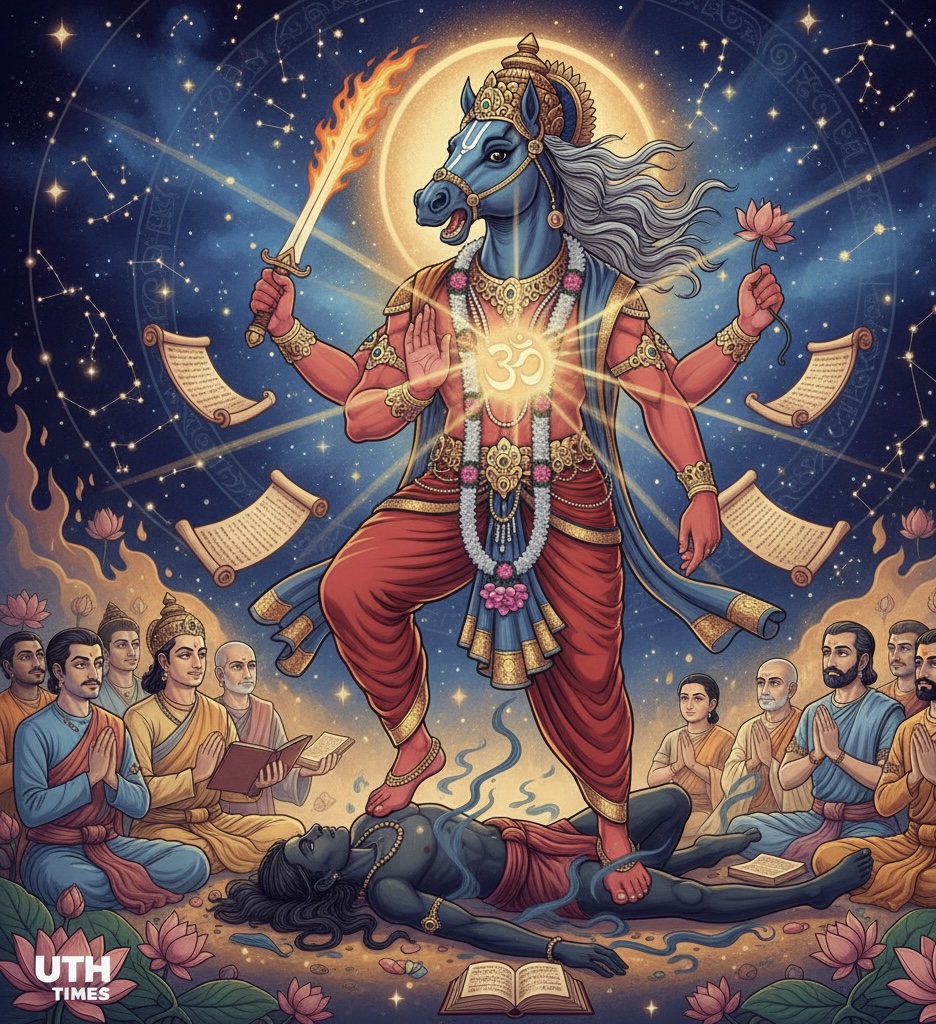
Vajra: The Indestructible Weapon of Gods and Inner Power

0

⚡️ Vajra : The Thunderbolt That Shook Heaven and Earth

A flash in the sky. A weapon of gods.

The Vajra, once hurled by Indra, king of Devas, isn’t just a mythical weapon — it’s a symbol of unbreakable will, spiritual awakening, and cosmic truth.

Crafted from sacrifice, powered by dharma, and echoed in yogic energy systems — this divine thunderbolt has crossed myth into the realm of personal transformation.

💎 Why is Vajra ‘Indestructible’?

The word Vajra comes from Sanskrit: “Vajra” means both diamond and thunderbolt.

Diamonds are the hardest substance in nature; thunderbolts are raw untamed power. Together, Vajra becomes a metaphor for:

  • 💠 Unbreakable Will: The strength to endure, evolve, and conquer inner demons.
  • ⚔️ Divine Power: Not just physical might — but the force that upholds truth and balance.
  • 🔥 Destruction of Ego: It doesn’t just shatter enemies — it breaks the illusions that bind us.

🦴 Forged from Sacrifice: The Story of Dadhichi

When the demon Vritra blocked the heavens, no weapon could defeat him.

The gods turned to Rishi Dadhichi, who willingly gave up his life so his bones could be forged into a Vajra.

This wasn’t just war — it was tapasyā made into a weapon.

The message?

🕉️ True power is born from sacrifice, not selfishness.

🐉 Vritra: The Demon of Drought

Vritra wasn’t just a demon — he was a blocker of flow, hoarding the waters of life.

Indra’s Vajra didn’t just slay a monster.

It released rivers, rain, and the rhythm of existence.

🌀 Symbolism:

  • ❌ Blockages = Ego, ignorance, fear
  • 🌧️ Waters = Wisdom, life, clarity
  • ⚡ Vajra = Liberation

⚙️ Scientific Echoes: Thunderbolt as Energy

Modern science knows lightning as billions of volts—pure energy.

Vedic seers understood this centuries ago. They didn’t just fear lightning — they meditated on it.

Vajra wasn’t a fantasy.

⚡ It was their way of capturing raw cosmic energy, giving it spiritual form, and showing that divine energy could be awakened within.

🏯 Where Is Vajra Today?

Even now, the Vajra is found across the Himalayas:

  • 🏔️ In Bhutan, a massive Vajra towers above the hills.
  • 🧘 In Tibetan monasteries, it’s used during rituals.
  • 🛕 In Buddhism, it represents enlightenment – merging power with wisdom.

🌓 Dual Nature of Vajra

Vajra carries two cosmic polarities:

  • ⚡ Destructive like thunder — shattering ignorance
  • 💎 Clarity-giving like a diamond — cutting through illusion

It’s not just a weapon — it’s a reminder:

🌪️ Truth must sometimes strike like lightning.

🧘‍♀️ Vajra in Yoga, Tantra & Energy Channels

In yogic and tantric practice:

  • 🧬 Vajra Nadi = energy channel carrying Shakti
  • 🧎‍♂️ Vajrasana = meditation pose for stability
  • 🔮 Vajra Visualisation = used to awaken inner divine force

The Vajra becomes a spiritual tool — transforming the body into a temple of clarity.

⚖️ Dharma’s Fierce Guardian

Vajra is more than a weapon — it’s a cosmic reminder:

  • 🕊️ Peace is sacred. But truth must be protected.
  • 🔥 Force is justified — when born of purity, not ego.
  • 🦸‍♂️ Like Dadhichi, real heroes die for others, not dominate them.

🌩️ Conclusion: Wield Your Inner Vajra

The Vajra was never meant to stay in heaven.

It lives in your mind, your soul, your actions.

Use it to:

  • ✨ Break fear
  • ✨ Destroy ignorance
  • ✨ Illuminate truth

Because you, too, are a warrior of light.

Be unshakable. Be radiant. Wield your Vajra. 🔱

Stars Before Time: Universe’s Weird Twist 🪐

What if the universe isn’t what we thought it was?

James Webb Space Telescope didn’t just look deeper into space — it looked deeper into reality itself, and what it saw doesn’t fit the story we’ve believed for decades.

🚨 The Cosmic Shock: Galaxies Too Grown, Too Soon

James Webb’s infrared vision has uncovered galaxies that existed just 300–500 million years after the Big Bang — and yet, they look fully formed. Instead of chaotic baby galaxies, JWST sees massive, bright, spiral-like structures that resemble mature systems.

🧩 These galaxies are:

  • 🧠 Too big: Some have masses rivaling the Milky Way
  • 💡 Too bright: Their luminosity doesn’t match expected star formation rates
  • 🕰️ Too evolved: Structures appear settled, organized — not turbulent or primitive

This breaks the standard Lambda-CDM model — the framework that describes how dark energy, dark matter, and normal matter shaped the universe across time. If this model can’t explain JWST’s data, it may not just be wrong — it may be irrelevant.

🌀 Dark Matter, Broken Mirror? Theories in Trouble

To “fix” this, some physicists suggest patching the model:

  • 🧪 Rewriting dark matter behavior
  • ⚡ Rethinking dark energy’s role in acceleration
  • 📉 Speeding up early star formation unnaturally

But each patch leads to more questions than answers.

Is it possible the entire framework — from gravity to time — needs to be rewritten?

🧠 Beyond the Big Bang: A New Language of the Universe?

What if our current theories are linguistic fossils — brilliant guesses rooted in limited observation?

🌀 Some physicists now propose:

  • 🧬 Modified gravity — gravity behaves differently across time and space
  • 🪞 Temporal asymmetry — time may not be one-directional
  • 🧠 Recursive cosmic evolution — the universe may “think” in patterns, not lines

Just like quantum mechanics exposed how observers change the observed, JWST may be showing us that the cosmic observer (us) is still too young to understand what it’s seeing.

The galaxies aren’t necessarily too old. Our ideas may just be too premature.

🧭 Conclusion: Time to Think Bigger

This isn’t just a crack in the model — it’s a philosophical rupture. JWST didn’t just see galaxies — it exposed the blind spot in human understanding.

Maybe the universe isn’t older than we thought.

Maybe our thought isn’t old enough.

This Neuroscientist just revealed that DMT lets you Communicate with Aliens 👽🤔😮

0

Unlocking the DMT Realm: Aliens, Machine Elves, and Humanity’s Hidden FrontierI

Imagine inhaling a substance that catapults you into a vibrant, otherworldly dimension teeming with intelligent beings—aliens who aren’t from distant stars but from the fabric of reality itself.

This isn’t science fiction; it’s the bold claim of neuroscientist Andrew Gallimore, as unpacked in a riveting X thread by Holden Culotta. Gallimore, a decades-long DMT researcher, posits that dimethyltryptamine (DMT), a potent psychedelic found in plants and even our own brains, serves as a portal to communicate with non-physical entities that have “transcended biology.”Culotta’s thread dives deep into the eerie parallels between DMT trips and alien abductions.

Users often report encounters with “machine elves”—jovial, multidimensional sprites that bounce with energy, showcasing bizarre objects—or insectoid beings that perform psychic surgeries, rewiring brains to cure ailments like depression or chronic pain. These visions echo ancient Amazonian shamans’ descriptions of Hekura spirits and fearsome Warusinari insects, suggesting humanity has been tapping into this realm for millennia.Gallimore dismisses the idea of mere hallucinations, arguing DMT grants these discarnate intelligences access to our neural machinery, building a “directed world” in our minds.

He draws connections to UFO lore: abductees describe similar hierarchies of worker grays overseen by towering Nordics or mantids, mirroring DMT entities. But not all trips are benevolent; one harrowing account details a soul-torturing “alien scientist” revealing dystopian visions of humanity trapped in a matrix.

Looking ahead, Gallimore envisions a post-biological future where advanced civilizations ditch physical forms, manipulating reality’s core—echoing physicist John Barrow’s “anti-Kardashev” scale of inward exploration.

With emerging tech like extended DMT infusions (DMTx), we could stabilize these journeys, turning fleeting glimpses into sustained dialogues. The nostalgia many feel—”welcome home”—hints this realm might be our true origin.Culotta’s thread, blending clips from Gallimore’s interview with Jesse Michels, challenges anthropocentric arrogance: DMT humbles us, revealing intelligences far beyond our grasp.

As we edge toward transcending biology, could these beings be our guides—or warnings? The implications? Mind-bending, paradigm-shattering, and utterly transformative.

Cosmic Web Captured: Scientists Reveal the Universe’s Hidden Skeleton😱

0

In a historic leap for astronomy, scientists have unveiled the first-ever direct image of the “cosmic web” — the massive hydrogen network that secretly binds galaxies across space. The long-theorized structure, once only a concept in simulations, is now an awe-inspiring reality.

🔭 The Discovery: A Thread Through Time and Space

Astronomers, peering 12 billion years into the past, used the MUSE instrument on the European Southern Observatory’s Very Large Telescope (VLT) to detect a glowing 3-million-light-year-long filament. This slender, ghostly structure stretched between two ancient quasars, dating back to when the universe was just 2 billion years old.

🌀 What they saw:

  • ✨ A glowing ribbon of hydrogen gas
  • 🌠 Spanning across intergalactic space
  • 💫 Linking galaxies like a gravitational lifeline

This filament marks a direct observation of the vast cosmic scaffold, a structure previously known only from theoretical models.

🧬 The Cosmic Web: The Universe’s Hidden Architecture

The cosmic web is an intricate network of filaments composed of gas and dark matter, connecting galaxies like beads on a string. It’s the invisible backbone of the universe, directing how galaxies move, form, and evolve.

🧩 Key Facts:

  • 🧪 Composed mainly of cold hydrogen gas
  • 🌌 Structured by the influence of dark matter
  • 🧭 Guides galactic growth and star formation

This discovery affirms the long-standing hypothesis that galaxies feed off this web, drawing gas through filaments to birth new stars and continue expanding.

💻 From Simulation to Reality: A Perfect Match

What truly astonished scientists was the accuracy of computer models. When the observed filament was compared with supercomputer simulations, the alignment was near-perfect. This offered strong support for the Cold Dark Matter (CDM) model — the leading theory for cosmic evolution.

📊 Simulation insights:

  • 🔍 Predicts filament locations with precision
  • ⚛️ Confirms dark matter’s role in shaping the universe
  • 🔄 Validates decades of astrophysical modeling

This rare glimpse acts as a cosmic litmus test, proving the real universe follows the invisible patterns scientists have long believed existed.

🌠 A New Era of Discovery Begins

This first direct view opens a new frontier in cosmology. With more powerful telescopes and deeper surveys, astronomers are now racing to map the entire cosmic web — filament by filament.

🌐 What’s Next:

  • 🚀 Searching for more filaments
  • 🛰️ Studying how galaxies feed from them
  • 🌌 Unlocking secrets of early universe formation

This is just the beginning of seeing the universe as it truly is — not just a scatter of galaxies, but a living, breathing network of connected cosmic threads.

🌟 CONCLUSION

For centuries, the cosmic web was a silent skeleton in the universe’s closet. Today, it has emerged from the shadows, revealing the true structure of everything we see in the sky. And with it, humanity inches closer to understanding the grand design of existence.

Taj Mahal or Tejo Mahalaya 🕌? The Forgotten Temple Behind the Marble Veil

0

The Taj Mahal is revered globally as a symbol of love, yet some voices suggest it might hold secrets far older than Shah Jahan’s time. Could this marble wonder once have echoed with chants to Lord Shiva, under the name Tejo Mahalaya? Let’s explore a tale where beauty meets mystery.

🕉️ Tejo Mahalaya: A Temple Beneath the Tomb?

📜 Where It Began:

Historian P.N. Oak first proposed that the Taj Mahal was originally a grand temple-palace dedicated to Mahadev—Tejo Mahalaya. He cited Sanskrit texts, old records, and architectural clues to support his theory.

🔠 A Name Reinterpreted:

While “Taj Mahal” is commonly believed to honor Mumtaz Mahal, some researchers argue it’s a variation of “Tejo Mahalaya”—where “Tejo” refers to Shiva and “Mahalaya” means abode or palace.

🧭 Eyewitnesses from the Past

🧳 Before Mumtaz’s Death:

Travelers like Peter Mundy and Jean-Baptiste Tavernier, who visited Agra in the early 1600s, wrote about a majestic structure already standing at the Taj’s location—before Mumtaz passed away. These travelogues add a fascinating layer to the mystery.

🔧 Minor Modifications?:

According to some researchers, Shah Jahan may have renovated rather than built the Taj from scratch. They believe changes like the addition of Quranic calligraphy and a cenotaph were made to repurpose an older structure.

🛕 Architectural Echoes of a Temple

📐 Vedic Geometry:

The Taj’s layout—a central dome with four corner towers, octagonal symmetry, and a chhatri-laden roofline—bears uncanny resemblance to classical Hindu temple architecture rooted in Vedic math.

🪷 Sacred Symbols:

Inside and out, the monument features lotus motifs, trishul-like designs, and intricate carvings not typically found in Islamic tombs. These elements have led some to believe the structure was once a spiritual center of worship.

🚪 The Mystery of the Sealed Rooms:

The 22 locked basement rooms have been a topic of speculation for decades. Petitioners have argued that these chambers may hold statues, ancient carvings, or inscriptions connected to a pre-Mughal past.

🧾 History or Hypothesis? The Ongoing Curiosity

⚖️ Court Cases and Requests :

Several legal pleas have asked for the opening of the sealed rooms and a thorough archaeological study. While none have succeeded so far, public interest in the monument’s true history continues to grow.

📚 Official Silence, Public Interest:

Mainstream historians still support the tomb theory, citing Mughal records. However, the alternate view has carved out a curious space in public consciousness—raising questions, not conclusions.

🪔 Conclusion

Whether it’s a timeless love story or a monument with a layered past, the Taj Mahal remains India’s most enigmatic jewel. Its pristine white marble may hold more than beauty—perhaps echoes of a forgotten era still waiting to be heard.

Sometimes, the truth lies not in rewriting history—but in daring to ask: what if?