
Home Blog Page 44

Ayurveda on Brain Fog: The Ancient Science That Explained It First

0

🌿 Ayurveda on Brain Fog: The Ancient Science That Explained It First

Brain fog may sound like a modern problem, but Ayurveda mapped its root causes millennia ago. Where neuroscience sees neurotransmitter imbalance, Ayurveda sees blocked mind-channels, disturbed Prana, and weakened Agni. And astonishingly—both align.

🔥 The Ayurvedic Blueprint Behind Brain Fog

Ayurveda doesn’t treat brain fog as a random phase. It identifies it as a systemic imbalance, originating in digestion, energy flow, and mental pathways known as manovaha srotas.

🔱 Weak Agni: The First Spark That Fades

When digestive fire—Agni—weakens:

  • 🔸 Food doesn’t digest fully
  • 🔸 Toxic residue called ama forms
  • 🔸 Ama enters subtle channels and clogs mental pathways

This is why Ayurveda says:

“A dull stomach creates a dull mind.”

Modern science echoes the same: gut inflammation → neurotransmitter disruption → cognitive fog.

🌬️ Vata Disturbance: The Scatter Effect

Vata governs movement—of thoughts, impulses, breath.

When it becomes aggravated through:

  • 🔸 Excess screen exposure
  • 🔸 Irregular sleep
  • 🔸 Skipping meals
  • 🔸 Overstimulation

…it results in:

  • ⚡ Racing thoughts
  • ⚡ Difficulty focusing
  • ⚡ Restlessness
  • ⚡ Short-lived attention

This is the “mind running ahead of itself”—a classic Vata imbalance.

🌧️ Kapha Overload: The Mental Slump

Kapha brings stability, but when excessive, it becomes heaviness.

Triggered by:

  • 🔸 Cold foods
  • 🔸 Excess dairy
  • 🔸 Overeating
  • 🔸 Sugar and fried foods

It produces:

  • 💧 Mental sluggishness
  • 💧 Slow thinking
  • 💧 “Mud-like” heaviness in the mind

This is why fog often hits right after junk food—Ayurveda blames rising ama, while modern science blames inflammation.

🧘 Quick Ayurvedic Fixes for Instant Clarity

  • 🌿 Warm, light meals to ignite Agni
  • 🌿 Ginger + black pepper to melt ama
  • 🌿 Deep nasal breathing to regulate Prana
  • 🌿 Brahmi, Shankhpushpi, Tulsi tea to nourish the mind
  • 🌿 Oil massage (Abhyanga) to ground Vata

🌞 Daily Habits That Prevent Brain Fog

  • ☀️ Morning sunlight to align circadian rhythm
  • 🕉️ 10 mins pranayama to stabilize mind-channels
  • 🕯️ Early bedtime to repair cognitive pathways
  • 🍲 Regular mealtimes to balance Agni
  • 🍃 Light dinner to avoid overnight ama formation

These habits keep Prana steady, Agni strong, and manovaha srotas clear.

Ayurveda didn’t just notice brain fog—it decoded its architecture long before modern science. Today, neuroscience validates what ancient seers knew: clarity is a system, not a symptom.


The Day Humanity Uploads Its Mind: Elon Musk’s Vision of Human Minds Living Inside Robots

0

🌌 When Sci-Fi Starts to Look Real

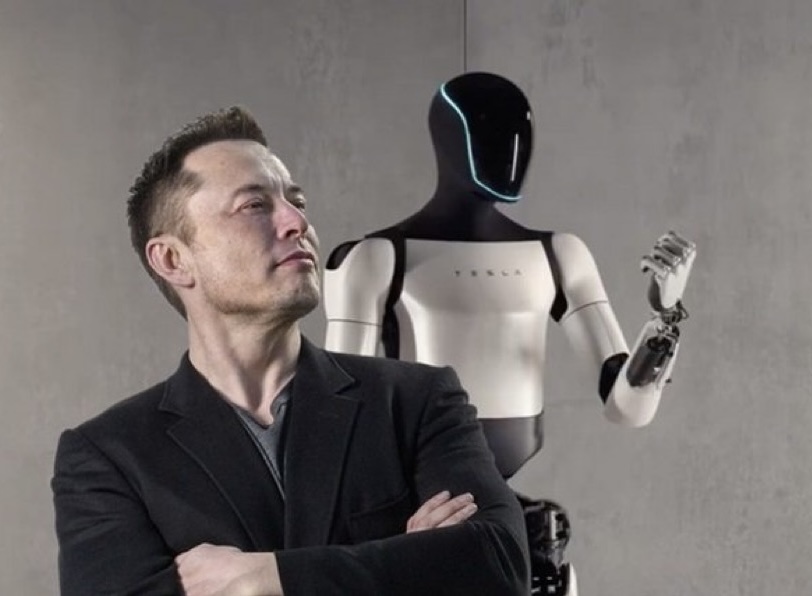
For centuries, humanity feared death. Today, it is not just being challenged—it is being technologically redesigned. Elon Musk believes the human mind could soon be uploaded into robotic bodies. Not in a century—but possibly within 20 years, or even 10.

🧠 THE VISION — A DIGITAL VERSION OF YOU

Elon Musk’s futuristic prediction is simple yet shocking:

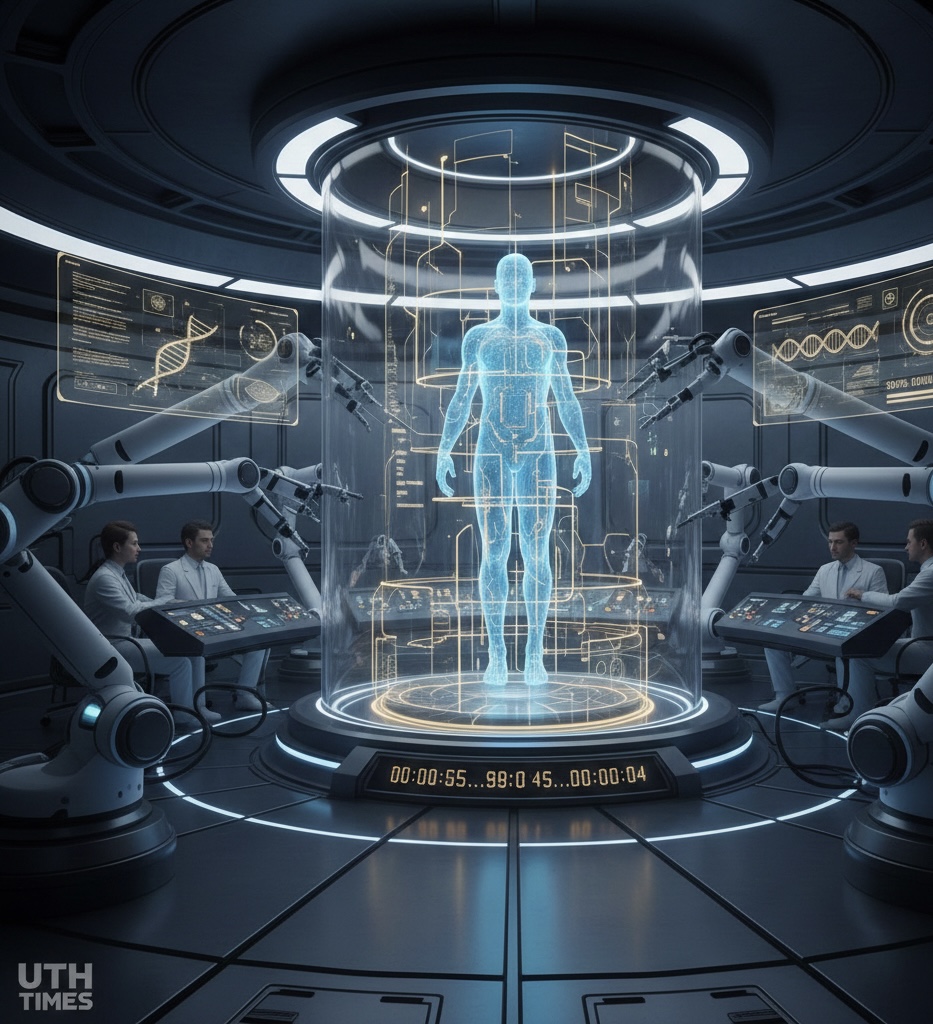
  • 🧬 Your memories and personality are just data.
  • 🤖 That data can be transferred.
  • 👤 A robotic version of you could walk, talk, and think even after your biological body ceases to function.

This means digital immortality. A second life. Not heaven, not reincarnation — but an upgrade.

⚡ NEURALINK — THE REAL-LIFE BRIDGE TO THE BRAIN

Neuralink, Musk’s brain-chip startup, may be the critical step toward mind uploading. Today, it helps paralyzed patients control devices with thought. Tomorrow, it could do more. Much more.

What it aims to achieve:

  • 🧠 Real-time brain signal recording
  • 🔌 High-bandwidth brain–machine communication
  • 💾 Storing memories outside the brain
  • 🔄 Transferring consciousness into a synthetic mind

If these goals succeed, your mind becomes software — transferable, saveable, maybe even upgradable.

🤖 THE HUMANOID BODY — A NEW FORM OF HUMAN LIFE

Imagine choosing your body like choosing a smartphone model.

Musk envisions humanoid robots with:

  • 🦾 Artificial muscles stronger than humans
  • 👁️ High-resolution digital vision
  • 🧠 AI-enhanced thinking speed
  • 🔃 Body replacements when damaged

This could birth a new species:

Homo Technologicus — humans living through machines.

🌀 THE BIG QUESTIONS — DO WE STILL REMAIN HUMAN?

If your mind is transferred into a robot, are you still you?

Or is it just a perfect digital clone?

What about emotions? Morality? Soul?

The world may face philosophical battles bigger than any scientific breakthrough.

🚀 A Short Ending — The Countdown Has Already Begun

The idea once belonged to science fiction. Now, it lives inside laboratories. Whether this future excites or terrifies us—one thing is clear: Humanity is preparing for its most radical evolution. Not the end of humans…

but perhaps the beginning of Version 2.0.

Prufrock-5’s Rain-Soaked Breakout: Bastrop’s Next-Gen Tunnel Machine Begins Its Sprint

0

⚡ A Stormy Launch in Bastrop

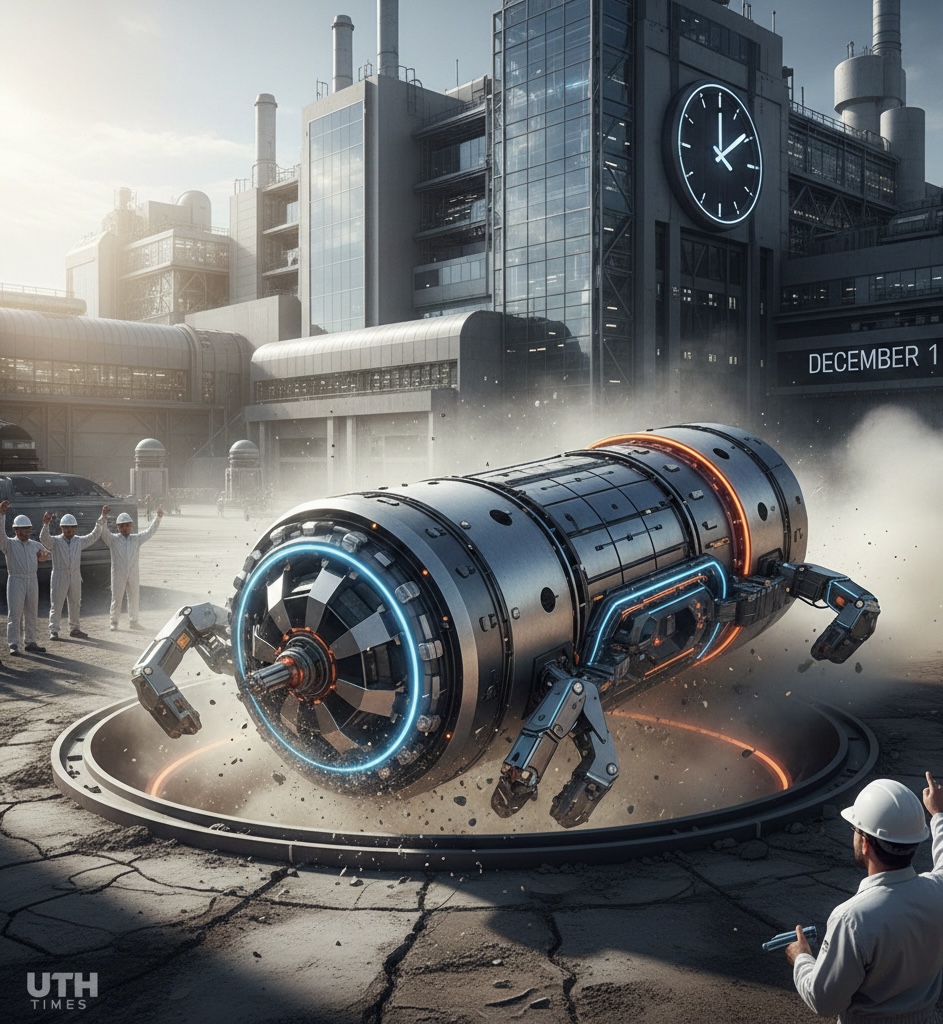
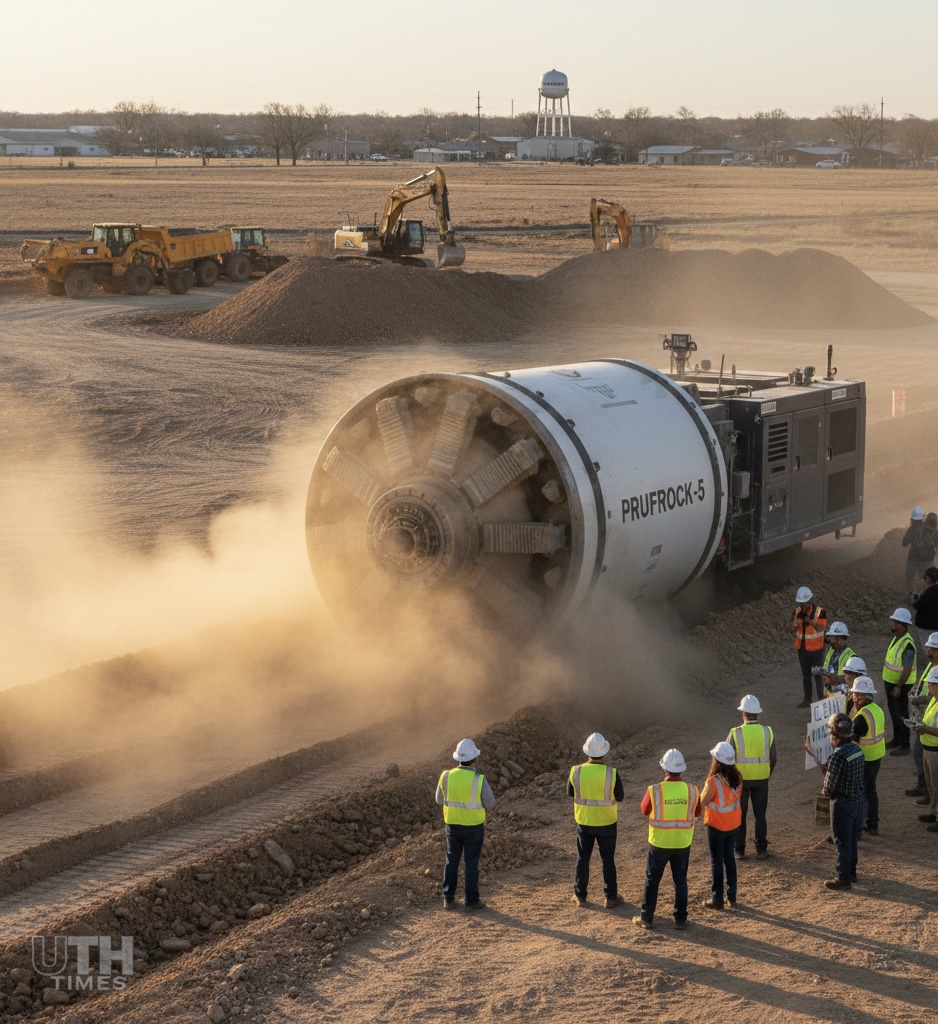
In the thick of a soggy Bastrop morning, The Boring Company’s highly anticipated Prufrock-5 quietly exited its factory. The rain beat against the facility, drumming a gritty soundtrack as the next-generation tunnel-boring machine made its debut — not with fanfare, but with raw, relentless ambition. This isn’t just another TBM; Prufrock-5 is expected to push performance into uncharted terrain.

🔧 The Engineering Breakthrough

  • Prufrock-5 builds on the advanced “porpoising” architecture that lets it launch from the surface and dive underground swiftly, avoiding the need for deep launch shafts.  
  • With a departure from the factory confirmed, engineers are preparing for a full-scale tunneling phase beginning December 1 — a critical date marking the machine’s transition from factory floor to subterranean powerhouse.
  • The company’s internal goals suggest a step-function increase in speed: Prufrock-5 is expected to outperform its predecessors by a large margin, potentially accelerating tunnel progress to previously unimagined rates.

🌍 Strategic Importance: Why Bastrop Matters

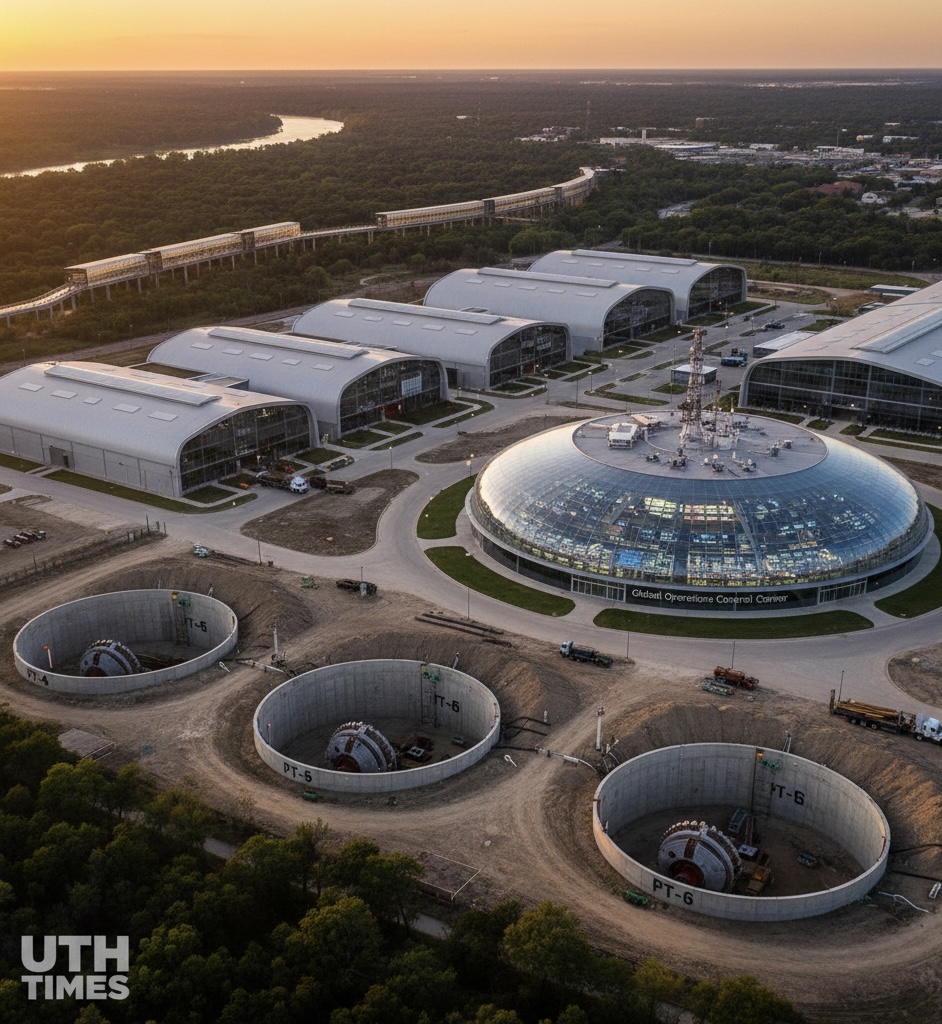
  • Bastrop, Texas, is more than just a manufacturing hub — it’s ground zero for The Boring Company’s R&D operations.  
  • The site has hosted several porpoise-test tunnels (PT), including PT-4, PT-5, and PT-6.  
  • A new centralized Global Operations Control Center, based in Bastrop, allows remote real-time monitoring of TBMs — enhancing control, reducing downtime, and dramatically scaling operations.  
  • Bastrop is also linked to broader infrastructure ambitions: local authorities have floated pedestrian tunnels under trails, connecting parts of the city using The Boring Company’s tech.  

⚠️ Risks, Pressure, and Public Eyes

  • While Prufrock-5’s march forward is bold, it’s not without controversy: The Boring Company has previously faced environmental scrutiny in Bastrop regarding stormwater management.  
  • Local stakeholders will be watching closely. Success could redefine urban tunneling; missteps could reignite opposition.
  • But the narrative is shifting: this isn’t a test anymore. With Prufrock-5, The Boring Company is signaling that Bastrop isn’t just a playground — it’s a proving ground.

🚀 What’s Next?

As the calendar edges toward December, all eyes will be on Bastrop. Will Prufrock-5 deliver the quantum leap in tunneling velocity that engineers promise? If it does, it could reset expectations for infrastructure projects around the globe — and cement Bastrop’s place at the cutting edge of underground innovation.

India’s Mega 19 km Brahmaputra Bridge: A Game-Changer for Northeast Connectivity

0

India is constructing one of its most ambitious infrastructure projects yet: a 19.28 km four-lane extradosed bridge across the mighty Brahmaputra River, linking Dhubri in Assam with Phulbari in Meghalaya. This is not just a bridge — it’s a strategic masterpiece that promises to redefine connectivity in the Northeast. 

🌉 Engineering Marvel & Strategic

  • The main navigation span of the bridge stretches for 12.625 km, while long approach viaducts of 3.5 km on the Dhubri side and 2.2 km on the Phulbari side tie the structure to road networks.  
  • The project is being built by Larsen & Toubro (L&T) under the supervision of NHIDCL, with JICA (Japan International Cooperation Agency) providing loan assistance.  
  • Costing roughly ₹4,997 crore, this bridge is not only a feat of civil engineering but also a significant financial investment in the region.  

📉 A Shortcut That Changes Everything

  • Today, traveling by road between Dhubri and Phulbari involves a gigantic 200 km detour, taking several hours.  
  • With this bridge, that distance is cut down to just 19 km, and the travel time drops to 20–35 minutes, replacing slow and risky ferry services.  
  • The bridge also fills a missing link on National Highway 127B, unlocking road access between key towns in Meghalaya like Tura, Nongstoin, and helping foster economic integration.  

🌍 Regional & Strategic Ripple Effects

  • By bridging Assam and Meghalaya, the structure enhances trade and mobility in the Northeast — not only internally but also internationally.  
  • It strengthens India’s connectivity to Bangladesh and Bhutan, via adjoining border towns like Dalu (Meghalaya) and Hatisar (Assam).  
  • The bridge also has socio-economic significance: it will improve access for around 2 million commuters, reduce dependence on ferries, and potentially boost tourism and local business.  

🏗 Current Progress & Timeline

  • As of early 2025, more than 55% of the construction has been completed, according to NHIDCL reports.  
  • The targeted completion date is September 2028, with work being closely monitored at the highest levels — including by the Prime Minister’s Office (PMO).  
  • Once operational, this bridge will become India’s longest river bridge over water, a next-level infrastructure landmark.  

🔗 Why This Bridge Matters

  • It’s a symbol of vision: bridging not just land, but divides — economic, geographic, and strategic.
  • It’s a catalyst for development in remote and under-connected areas of Meghalaya and Assam.

  • It’s a geopolitical asset, improving access and resilience in a sensitive border region.

In short, the Dhubri-Phulbari Brahmaputra Bridge isn’t just steel and concrete — it’s a bold statement of ambition, integration, and transformation. With its completion, the fabric of India’s Northeast will be rewoven, ushering in a new era of connectivity and opportunity.

The Jupiter Gambit: When 1973 Scientists Targeted the Unknown

0

In 1973, a daring idea was whispered inside a small control room:

“What if we gave him coordinates… in space?”

It wasn’t science fiction. It was a challenge—and NASA accepted it.

🌌 The Era of ‘Unknown Jupiter’

Before 1973, Jupiter was more mystery than knowledge. Scientists saw it as:

  • 🌀 A swirling giant of storms
  • 🧪 A chemical puzzle
  • 🛰️ A potential testing ground for deep space navigation

NASA’s Pioneer 10 had just completed its historic flyby, but it raised more questions than answers. Instead of ending the mission, scientists pushed the limits further.

🧠 The Bold Proposal — Giving Space a Target

When researcher Ingo agreed to a radical new idea, the mission changed forever:

  • 🌍 No longer just observational data from Earth
  • 🧭 They would send exact spatial coordinates… to a probe millions of kilometers away
  • 📡 It would be a true space navigation experiment

This was not normal. Until then, spacecraft were guided with broad trajectory plans — not pinpoint coordinates inside 3D space.

It was like trying to throw a dart into a hurricane… blindfolded.

🛰️ Pioneer 10 – A New Kind of Navigator

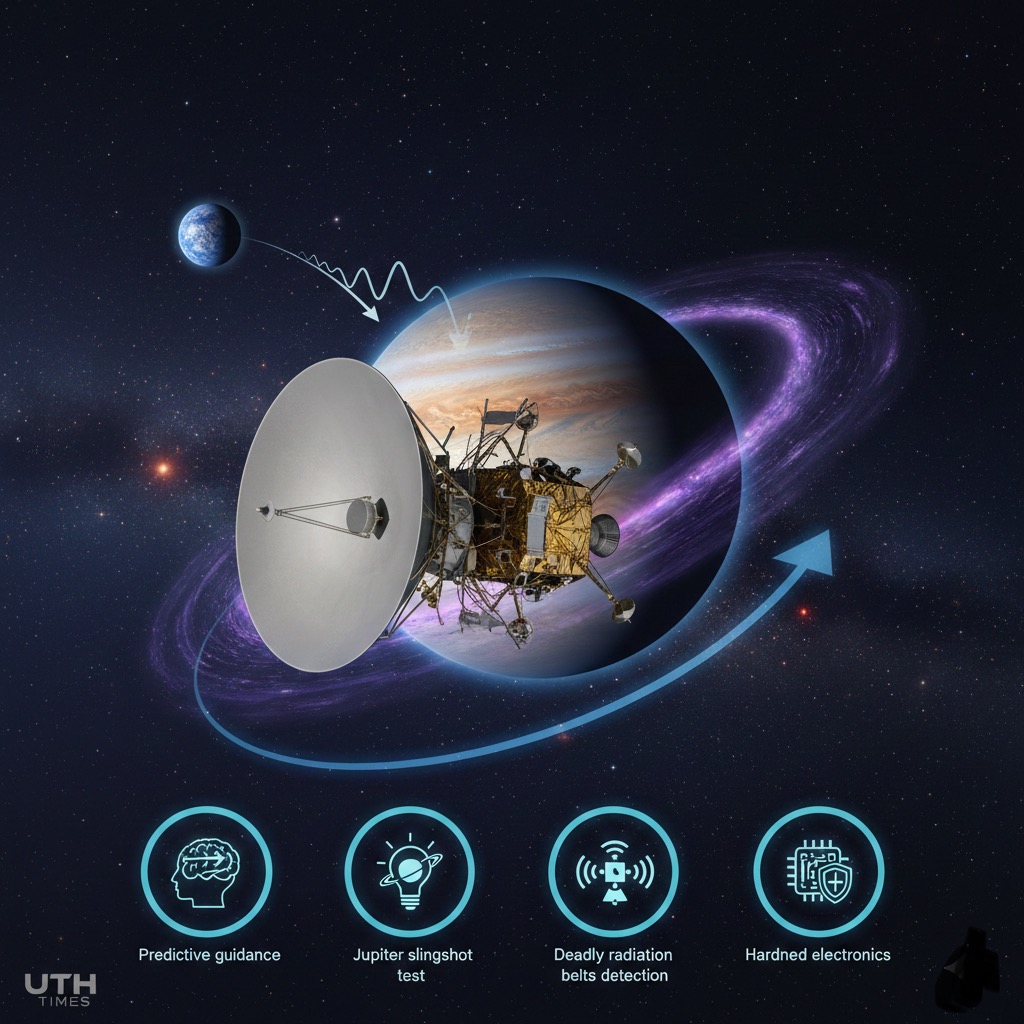
Pioneer 10 became the first machine to be guided using true deep-space coordinates.

Each transmission from Earth took over 40 minutes to reach it — and yet NASA managed to adjust its path in real time.

Key Breakthroughs:

  • 🧠 Introduced “predictive guidance” — anticipating motion before commanding it
  • 💡 Used Jupiter’s gravity as a slingshot test
  • 🛰️ First spacecraft to detect Jupiter’s deadly radiation belts
  • 🔋 Designed with hardened electronics — technology now essential in every deep-space mission

⚙️ Space as a Coordinate System

To give coordinates in space, engineers had to redefine navigation itself:

  • 🧭 They built a solar-system-wide coordinate grid
  • 📡 They engineered a new tracking system using Doppler shift
  • 📐 They treated space not as emptiness—but as a measurable landscape

This approach became the foundation for modern interplanetary travel. Voyager, Cassini, New Horizons—all followed this path.

🌠 Legacy – The Moment Space Became “Reachable”

This bold idea turned Jupiter from a distant mystery…

into a reachable destination.

Not just for data—but for exploration.

Their question still echoes today:

“What if we push the limits… again?”

When Light Becomes a Weapon: DRDO’s Photonic RF Memory

0

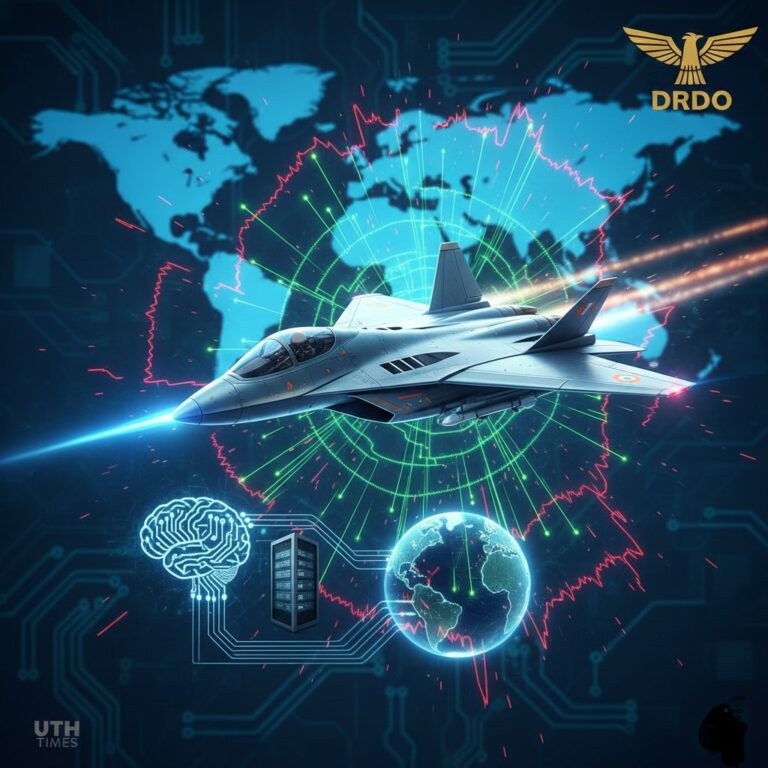
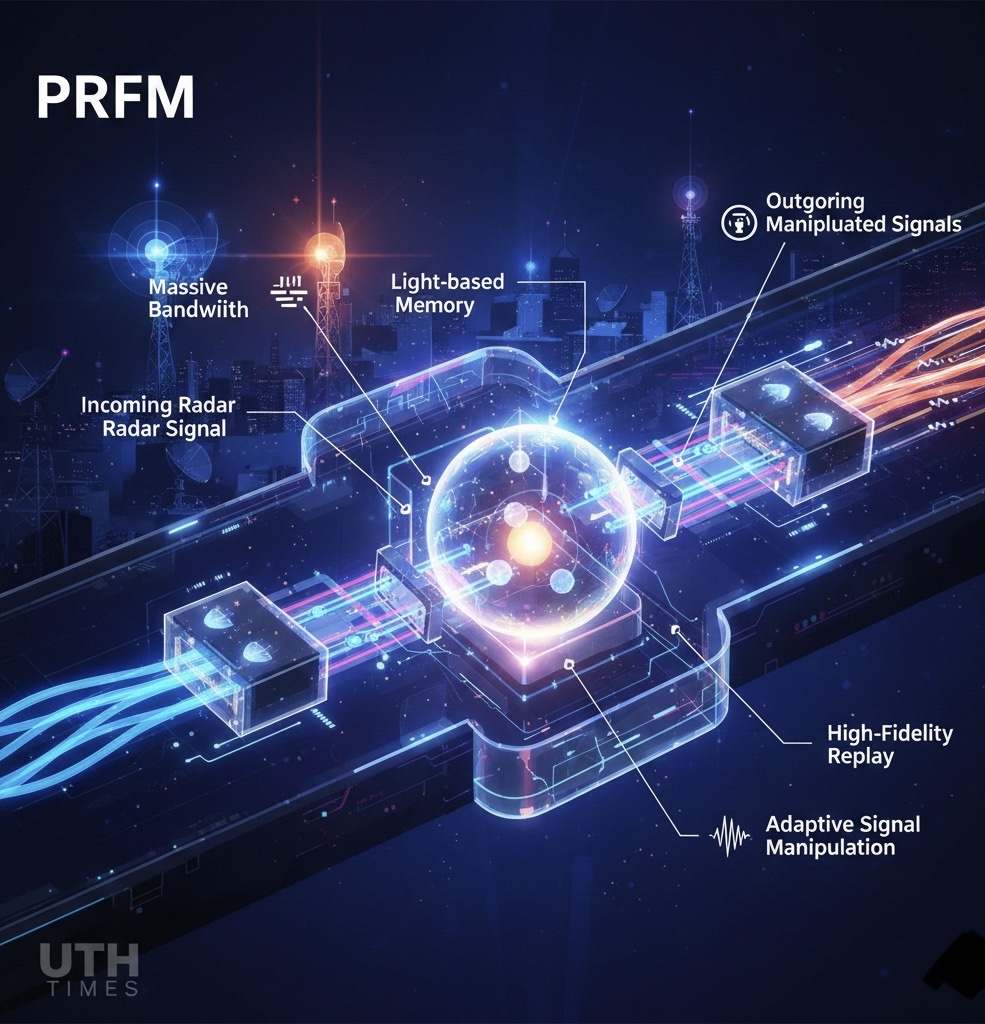
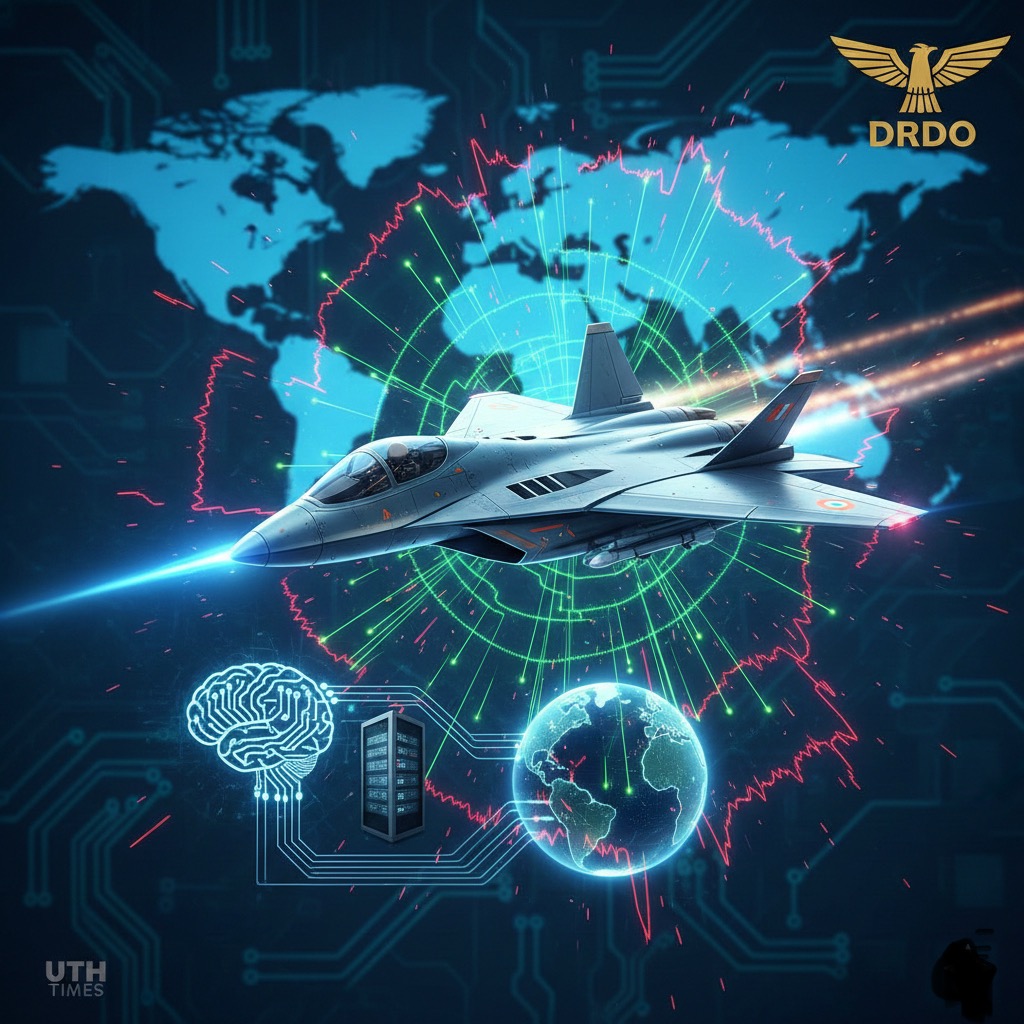
DRDO is reportedly pushing the boundaries of electronic warfare by exploring Photonics-based RF Memory (PRFM) — a radical evolution of classical Digital RF Memory (DRFM). Instead of using purely electronic circuits, PRFM uses light — photons — to capture, store, and replay radar signals. This could transform how jammers deceive modern radars.

📡 What Is PRFM — And Why It Matters

  • ✨ Massive Bandwidth: Using photonic circuits means PRFM can operate over enormously wide frequency ranges, far beyond the constraints of conventional electronics.
  • ⚡ Ultra-Low Latency: Light-based memory lets incoming radar signals be stored and retransmitted with minimal delay — critical for real-time deception.
  • 🎯 High-Fidelity Replay: Since the system works coherently with the incoming signal, PRFM can offer extremely accurate copies, preserving phase, amplitude, and timing — enabling precise spoofing or mirroring of an enemy’s radar waveform.
  • 🔄 Adaptive Signal Manipulation: The memory can tweak stored waveforms — altering range, Doppler, angle, or signature — to create believable false targets or confuse the adversary’s radar tracker.

🛡️ Military Impact: Smarter, Sharper Jamming

  • 💣 Sharper Deception: PRFM enables creation of very realistic echoes. Enemy radars could be tricked into seeing phantom aircraft or decoys, undermining range and velocity tracking.
  • 🧠 Smarter Countermeasures: With such high fidelity and bandwidth, jammers become more than noise makers — they act like intelligent adversaries, mimicking genuine emissions.
  • 🛡️ Stronger Protection: Against AESA (Active Electronically Scanned Array) and LPI (Low Probability of Intercept) radars, which use agile, complex waveforms, photonic memory’s speed and fidelity offer robust defense.
  • 🌐 Networked EW: PRFM-equipped jammers could feed back into real-time EW networks, sharing stored signatures and threat libraries across platforms.

⚙️ Why Photonics — And Why Now

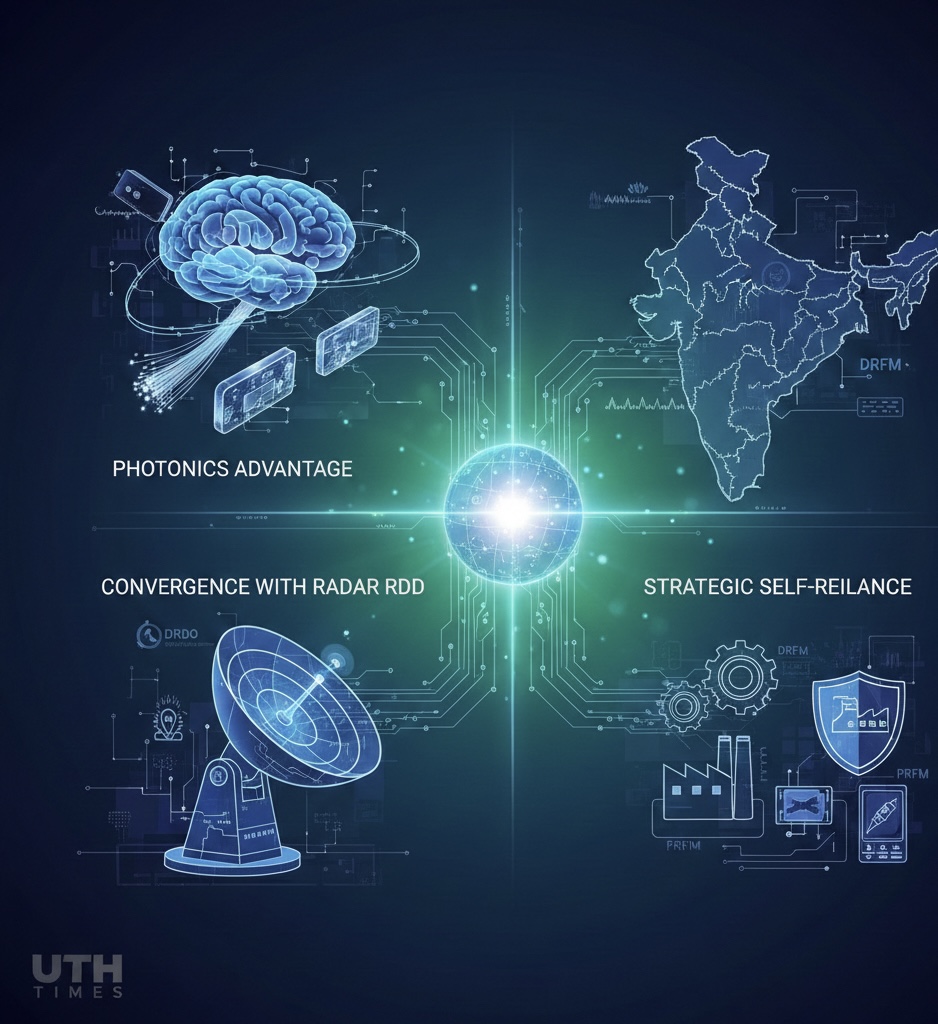
  • 🚀 Photonics Advantage: Optical components, like modulators and fiber optics, handle GHz-to-tens-of-GHz signals with lower noise and broader linearity than purely electronic circuits.
  • 🧪 Convergence with Radar R&D: DRDO’s own work on photonic radar (as covered by defense analysts) shows it already has experience with photonic integrated circuits and light-generation for radar systems.  
  • 🏭 Strategic Self-Reliance: Developing PRFM indigenously would align with DRDO’s push for advanced electronic warfare capabilities, complementing its Digital Radio Frequency Memory (DRFM) systems.  

⚠️ Challenges on the Horizon

  • 🔧 Complex Engineering: Building a stable, high-speed photonic memory system that reliably captures and replays RF waveforms is nontrivial — optics + electronics integration is hard.
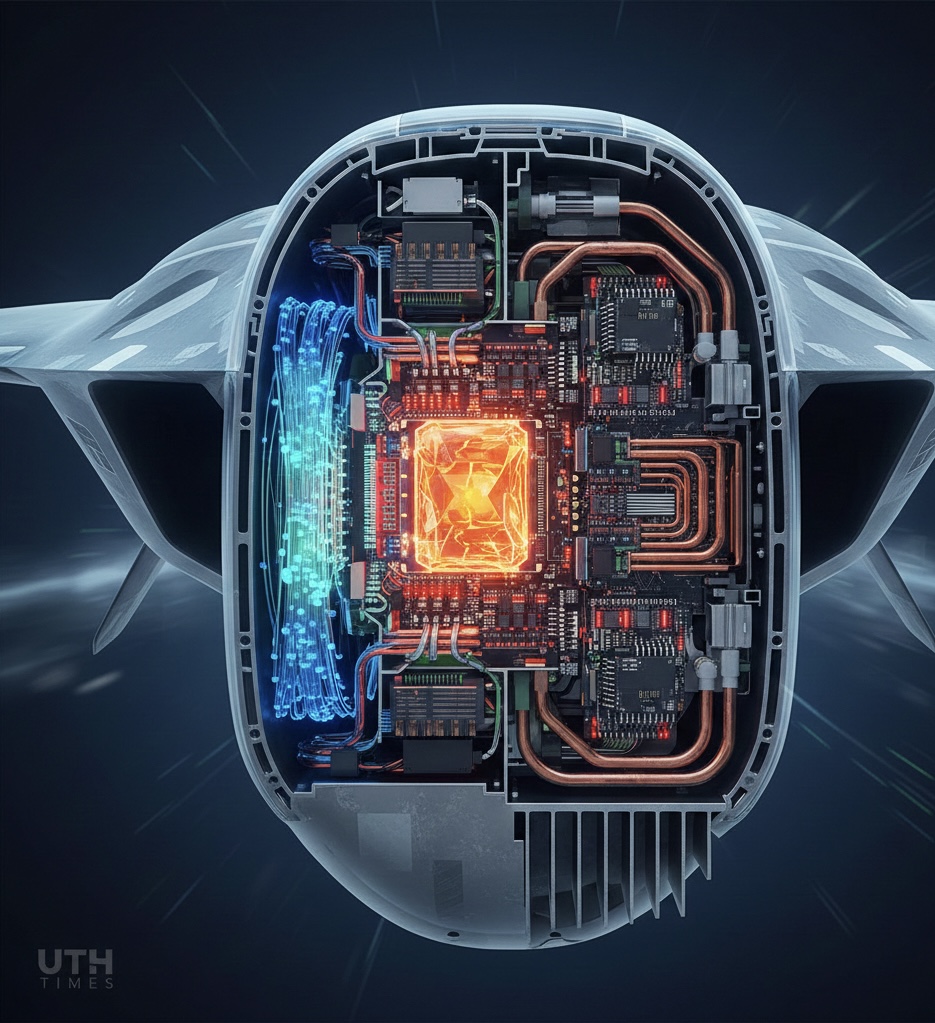
  • 🔋 Size, Weight, Power (SWaP): Photonic systems may involve lasers, modulators, and fiber — managing them in airborne jammers or compact pods will be a design challenge.
  • 🧊 Thermal Management: High-speed photonic circuits generate heat — cooling will be vital for real-world deployment.
  • 🧭 Security & Robustness: Optical systems must be made rugged enough for battlefield conditions (vibration, shock, temperature).

🧭 Strategic Implications for India

If DRDO succeeds, PRFM could position India among a very select few nations possessing light-based deception jammers. It could dramatically elevate the sophistication of Indian EW — protecting aircraft, disrupting advanced radars, and reshaping deterrence. Beyond defense, it could also spin off into high-speed photonic memory research with dual-use potential.

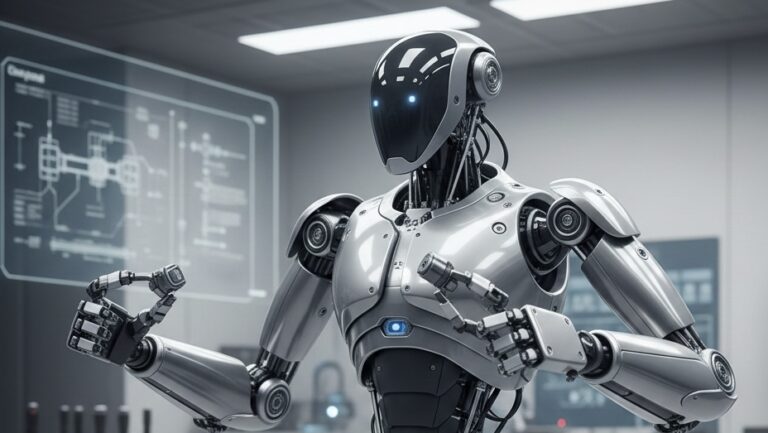
Svaya’s Desktop Dual-Arm Humanoid: India’s Bimanual Revolution on the Factory Floor

0

Swirling in the world of flexible automation, Svaya Robotics — a Hyderabad-based deep-tech firm — is making waves with its desktop, dual-arm humanoid robot. Far from being just another cobot, this is a true bimanual worker, engineered to collaborate seamlessly with other robots on a production line.

What Makes This Humanoid Special

🤖 High-Performance Actuator & Control

Svaya has leveraged its in-house expertise to build compact, high-power actuators coupled with precise motion control. The result: each of its two arms moves with fluid human-like dexterity, capable of delicate manipulation and repeatable precision. 

🔄 360° Body Rotation & Reach

This isn’t a simple arm-on-a-base setup — the robot’s full-body rotation allows it to pivot seamlessly, reaching in any direction (sideways, backward, downward) without compromising stability.  Its 19 actuators give it a remarkable workspace flexibility. 

🧠 Human-Like Dexterity + Sub-Millimeter Precision

With 7 degrees of freedom per arm, the humanoid mimics natural, human motions — navigating constrained spaces, climbing around obstacles, and manipulating tools.  The modular wrist can host different end-effectors (like grippers, screwdrivers, inspection tools), enabling rapid reconfiguration across tasks. 

👁️ Vision & Intelligence

Svaya’s humanoid integrates stereo vision in its head, along with coordinated pan-tilt motion, giving it real-time 3D insight into its environment.  With vision + force sensing + AI, it’s not just a mechanical worker — it’s context-aware, learning and adapting. 

Multi-Robot Collaboration: The Game Changer

  • Svaya’s design philosophy emphasizes scalable collaboration — this humanoid isn’t isolated; it’s built to work alongside other robots and humans seamlessly.
  • On the assembly line, it can partner with other cobots: one robot can handle heavy lifting while the humanoid performs the fine, precise manipulation.
  • Its modular end-effectors allow quick switching — for example, from pick-and-place to inspection — making it highly flexible.
  • Thanks to software-defined control and in-house AI stack, it adapts in real-time, enabling responsive workflows and minimizing downtime.  

Why This Is a Foundation, Not Just a Toy

This desktop humanoid is effectively a miniaturized testbed, built on Svaya’s core technologies: its actuators, AI, vision, and motion planning all scale. As per Svaya, this platform is the stepping stone to a full-size, general-purpose humanoid.  Its modular architecture means the same skills can be ported to bigger robots.

Industrial Impact: Transforming Production Lines

Svaya’s vision is audacious: instead of rigid automation, factories get deployable productivity — robots that can shuffle between tasks, re-learn new operations, and dynamically adjust as demand changes.  This humanoid could become a linchpin in high-mix, low-volume manufacturing, especially where manual dexterity was once exclusively human.

🔚 Conclusion

In a world where automation often means loss of flexibility, Svaya Robotics is offering something transformative: a desktop dual-arm humanoid that’s not just smart, but collaborative, adaptive, and scalable. It’s not a futuristic research bot — it’s real, practical, and poised to usher in a new era of multi-robot synergy on the factory floor.

The Unfinished Obelisk: Egypt’s Frozen Engineering Marvel

0

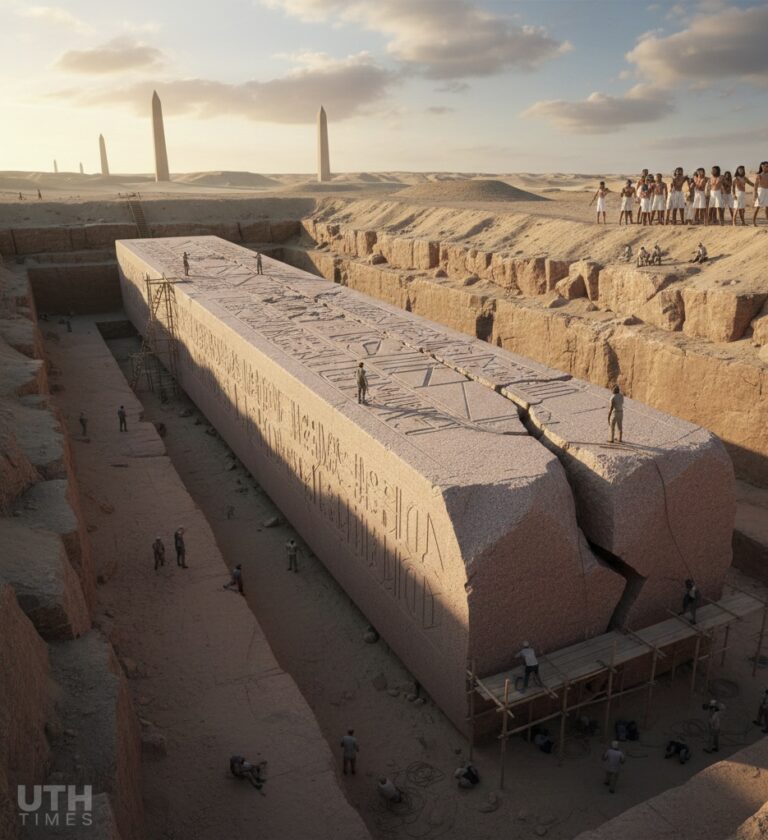
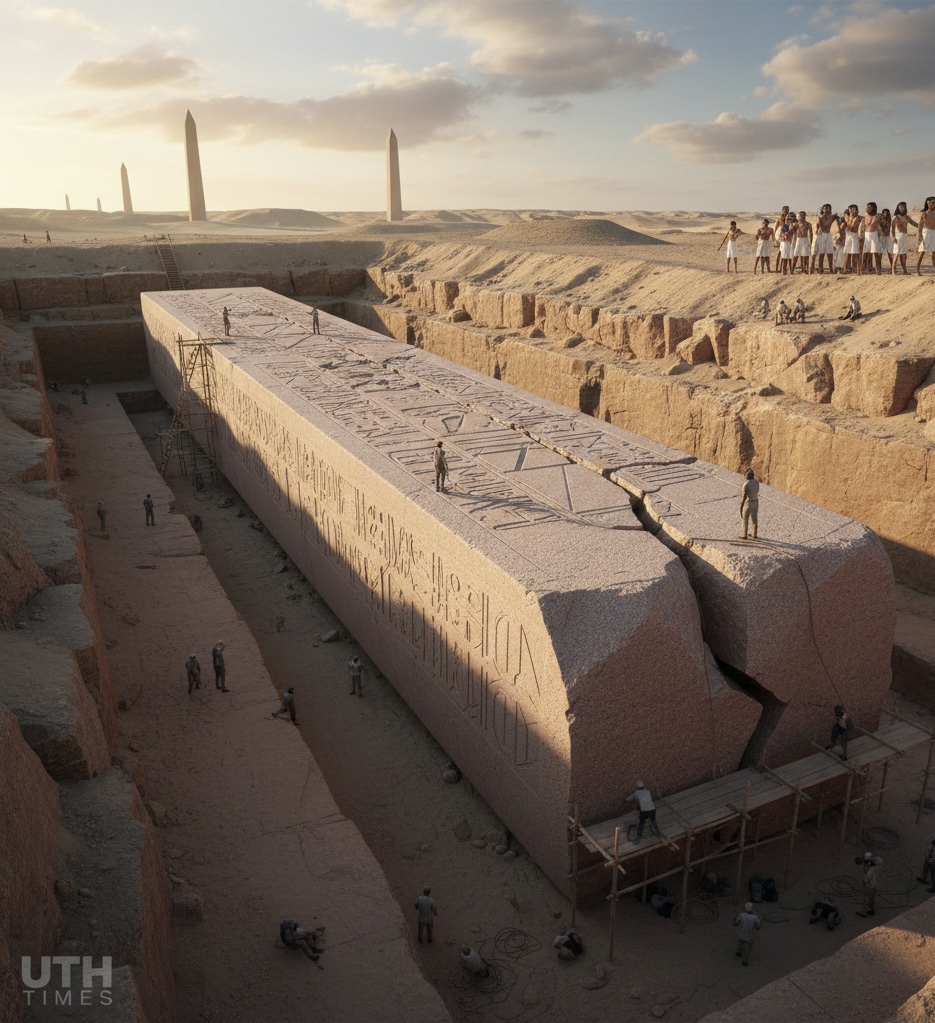
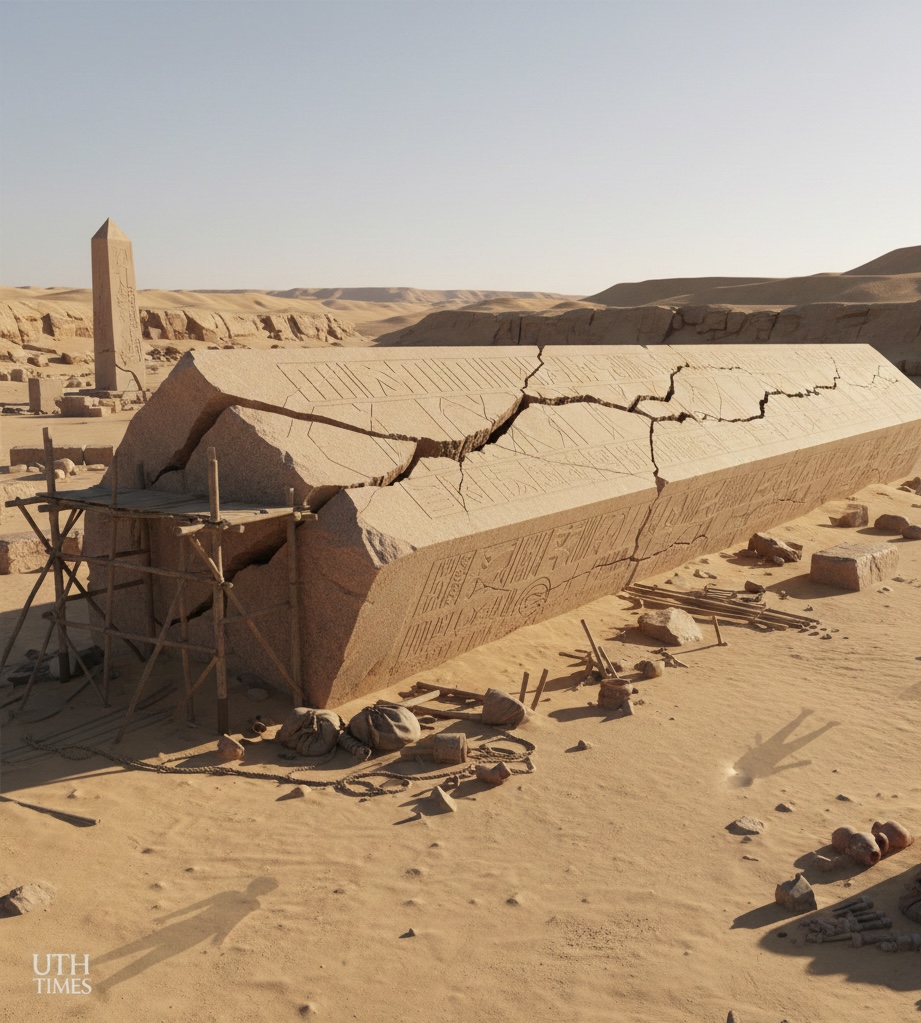
In the scorching granite quarries of Aswan lies one of ancient Egypt’s most intriguing mysteries—the Unfinished Obelisk. A colossal monument that never rose, yet reveals more about Egyptian engineering than many completed wonders.

🏛️ The Giant That Never Stood: A Monument of Impossible Scale

🔹 A 1,100-Ton Vision of the New Kingdom

Had the Unfinished Obelisk been completed, it would have dwarfed every standing obelisk in Egypt and beyond.

  • 🔸 Length: Almost 42 meters
  • 🔸 Weight: An estimated 1,100 tons—the heaviest obelisk ever attempted
  • 🔸 Era: Likely commissioned by Queen Hatshepsut, a ruler famed for ambitious architectural projects

This sheer scale reflects a civilization that did not merely build for beauty—but for eternity.

⛏️ A Rare Window Into Ancient Engineering

🔹 Carved Straight From the Bedrock

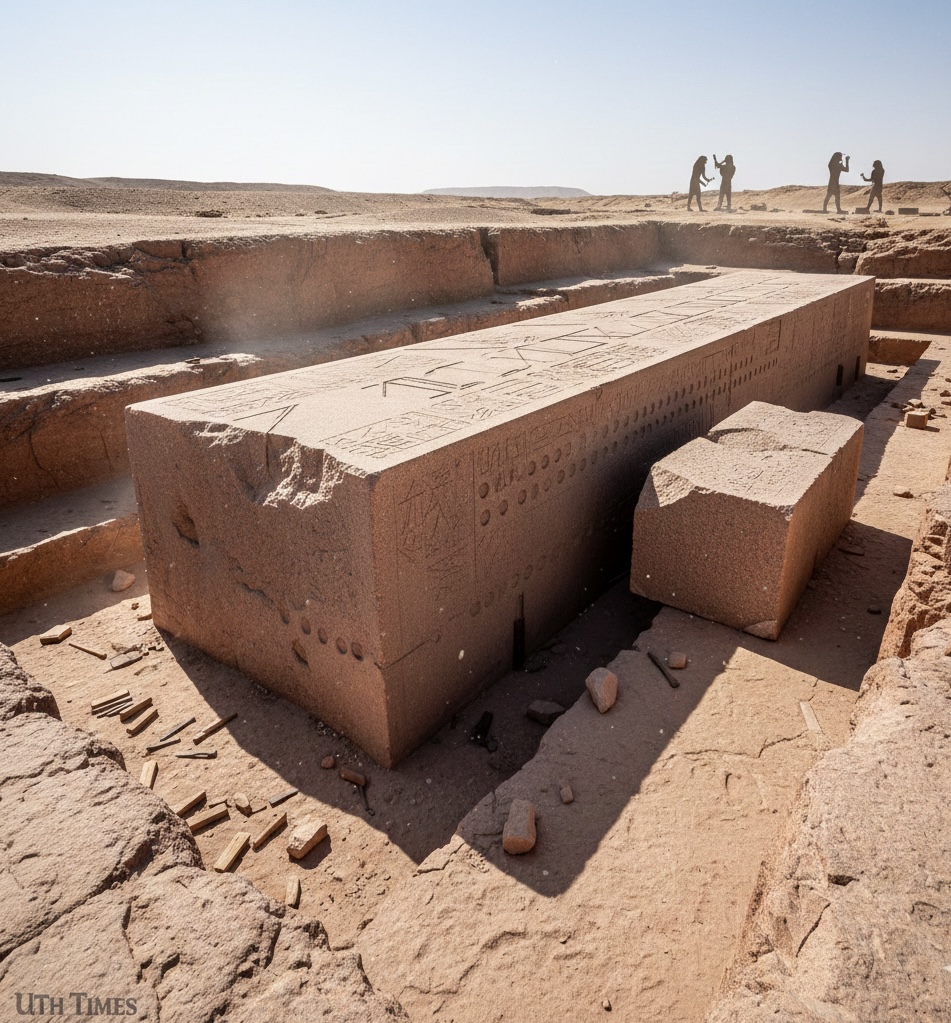
Unlike many structures, the obelisk was carved directly out of the granite bedrock. This gives modern archaeologists a priceless, real-time snapshot of the obelisk-making process.

  • 🔸 Channels, trenches, and narrow gaps surround the monument
  • 🔸 Pounding marks appear exactly where workers struck the rock
  • 🔸 The process itself is preserved in stone—mid-action, mid-thought, mid-dream

Walking through the quarry is like walking into the workshop of ancient stonemasons who left only moments ago.

⚒️ Tools of Titans: Dolerite Balls and Raw Strength

🔹 Hard Stone vs. Harder Stone

Granite is one of the toughest rocks on Earth. To shape it, Egyptians used dolerite balls—round, extremely hard stones used as pounding tools.

  • 🔸 Thousands of blows were needed to chip away mere centimeters
  • 🔸 Workers spent years carving a single obelisk
  • 🔸 Dolerite fragments and broken tools still lie scattered across the site

This was a feat of endurance as much as ingenuity.

🪨 The Cracks That Ended a Dream

Just as the final stages neared, disaster struck.

Deep cracks formed in the stone—fatal flaws for a monument that needed perfect structural integrity.

Instead of repairing it, workers abandoned the obelisk entirely, leaving it precisely where it lies today.

This moment—frozen for 3,500 years—makes the site one of the most honest, raw, and human archaeological locations in Egypt.

The Unfinished Obelisk stands not as a failure, but as a rare gift. It reveals the sweat, skill, and staggering ambition of a civilization that shaped stone as though shaping destiny itself.

 India’s Historic Descent into the Deep: The Arrival of Matsya 6000

0

India is preparing to plunge into the unexplored darkness of the deep ocean—territory where pressure crushes steel and sunlight never reaches. With the unveiling of Matsya 6000, the nation enters the elite club of deep-sea powers, ready to explore one of Earth’s final frontiers.

🇮🇳 India’s Ocean Leap: Matsya 6000 Unveiled

India has officially introduced Matsya 6000, its first-ever manned submersible vehicle designed under the ambitious Deep Ocean Mission. This is not just a machine—it’s a symbol of India’s scientific rise and its determination to explore realms that remain untouched by humanity.

🚀 Key Features of Matsya 6000

  • 🔹 Depth Capability: 6000 meters — equivalent to 6 km under crushing ocean pressure
  • 🔹 Crew Capacity: 3 scientists — enabling direct human observation
  • 🔹 Titanium Alloy Hull — engineered to withstand 600 times atmospheric pressure
  • 🔹 Advanced Life Support — ensures survival for 12–16 hours in extreme environments
  • 🔹 Ultra-HD Visual & Sensor Suite — maps, samples, and studies the deep ocean floor

Crafted by National Institute of Ocean Technology (NIOT), Matsya 6000 stands as one of the most technologically sophisticated vehicles India has ever built.

🌊 Inside the Deep Ocean Mission

The ₹4,000-crore Deep Ocean Mission aims to transform India into a global ocean-science powerhouse. Matsya 6000 is the heart of this mission, enabling:

  • ✳️ Exploration of polymetallic nodules (nickel, cobalt, manganese)
  • ✳️ Study of extreme deep-sea ecosystems
  • ✳️ Advancement in underwater robotics & sensors
  • ✳️ Resource mapping for future energy & mineral needs

This mission positions India alongside USA, Russia, France, Japan, and China—the only nations capable of sending humans to such depths.

🛠 The First Test Dive: Early 2026

The maiden uncrewed and subsequent crewed test dives will be conducted off the coast of Chennai in early 2026. Engineers will test:

  • 🔹 pressure endurance
  • 🔹 manoeuvrability
  • 🔹 life-support reliability
  • 🔹 deep-sea communication systems

A successful test will mark India’s first human descent into the hadal zone.

🌐 Why This Matters for India and the World

Matsya 6000 isn’t just a submersible—it’s a gateway to the future of marine sciences, climate research, and strategic deep-sea capability.

It enhances India’s global scientific standing and strengthens national resource security for decades to come.

With Matsya 6000, India is no longer just exploring the oceans—it’s diving headfirst into the unknown, ready to write history beneath 6000 meters of water.

India is not touching the horizon.

India is descending beyond it.

The Mathura Revelation: Vikramaditya’s Earliest Royal Footprint

0

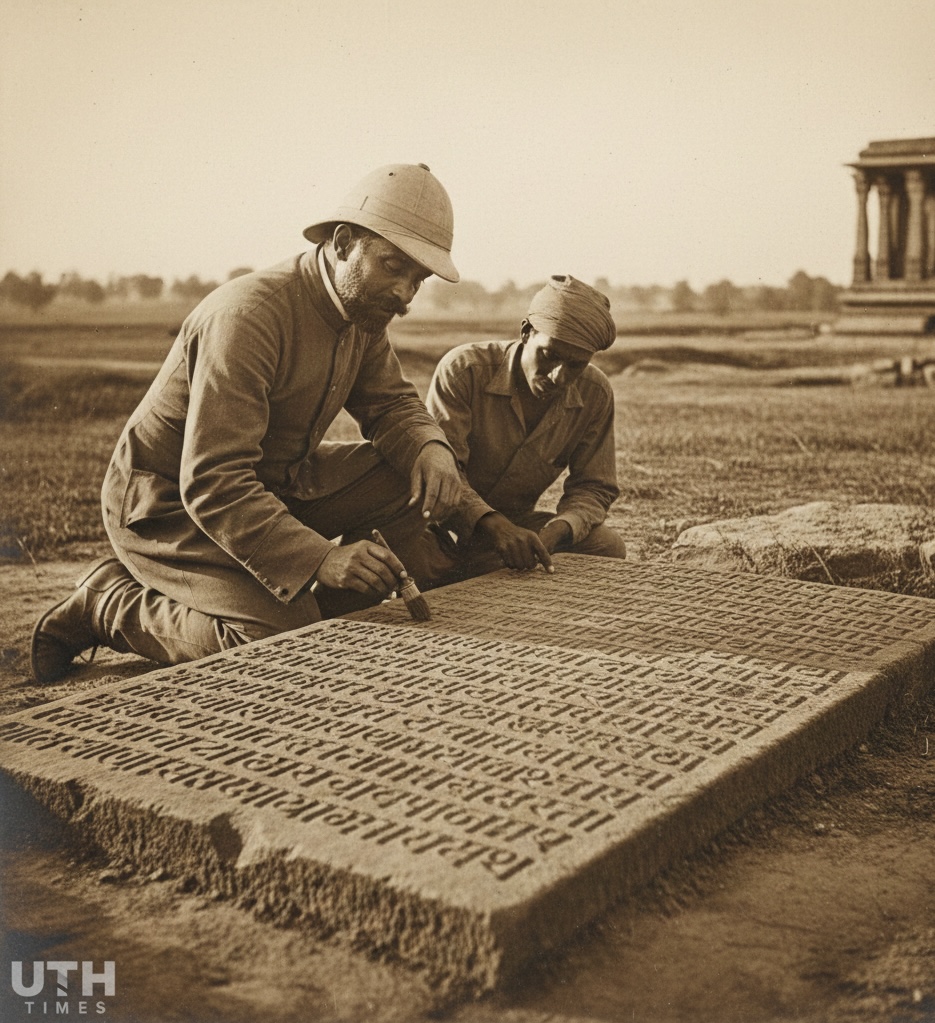
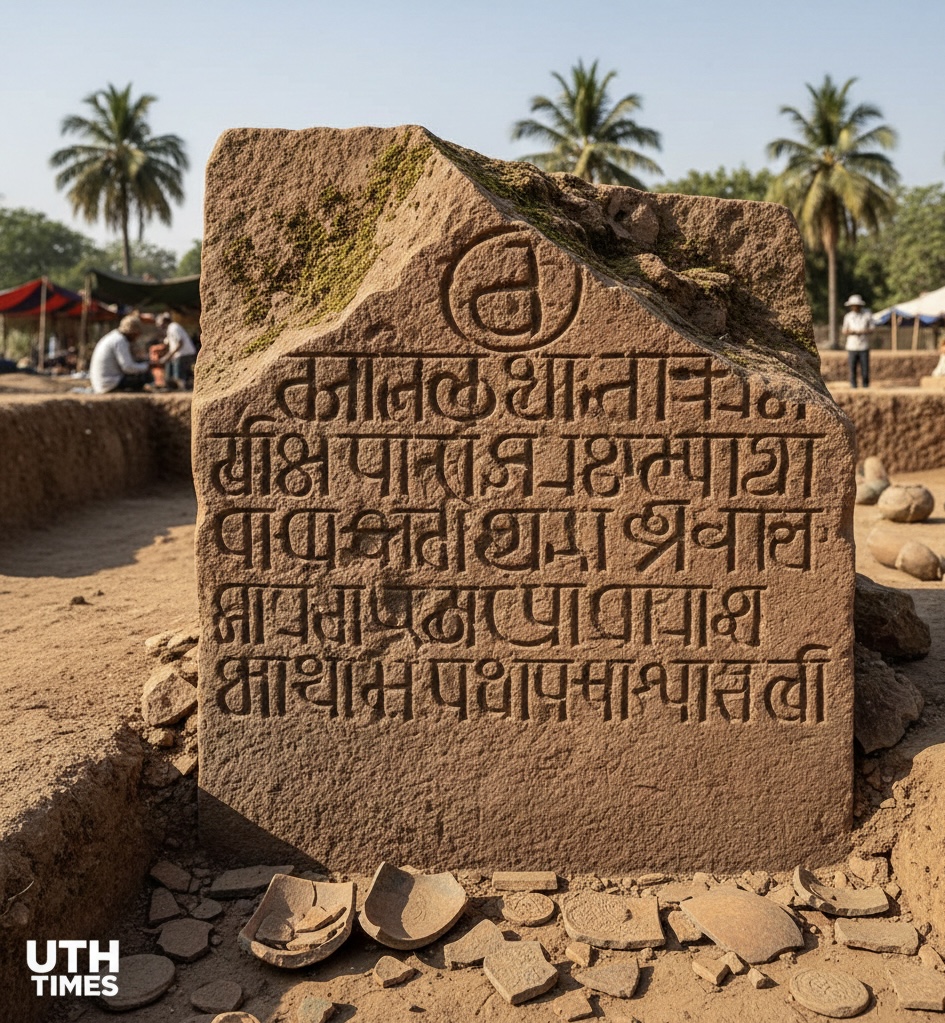
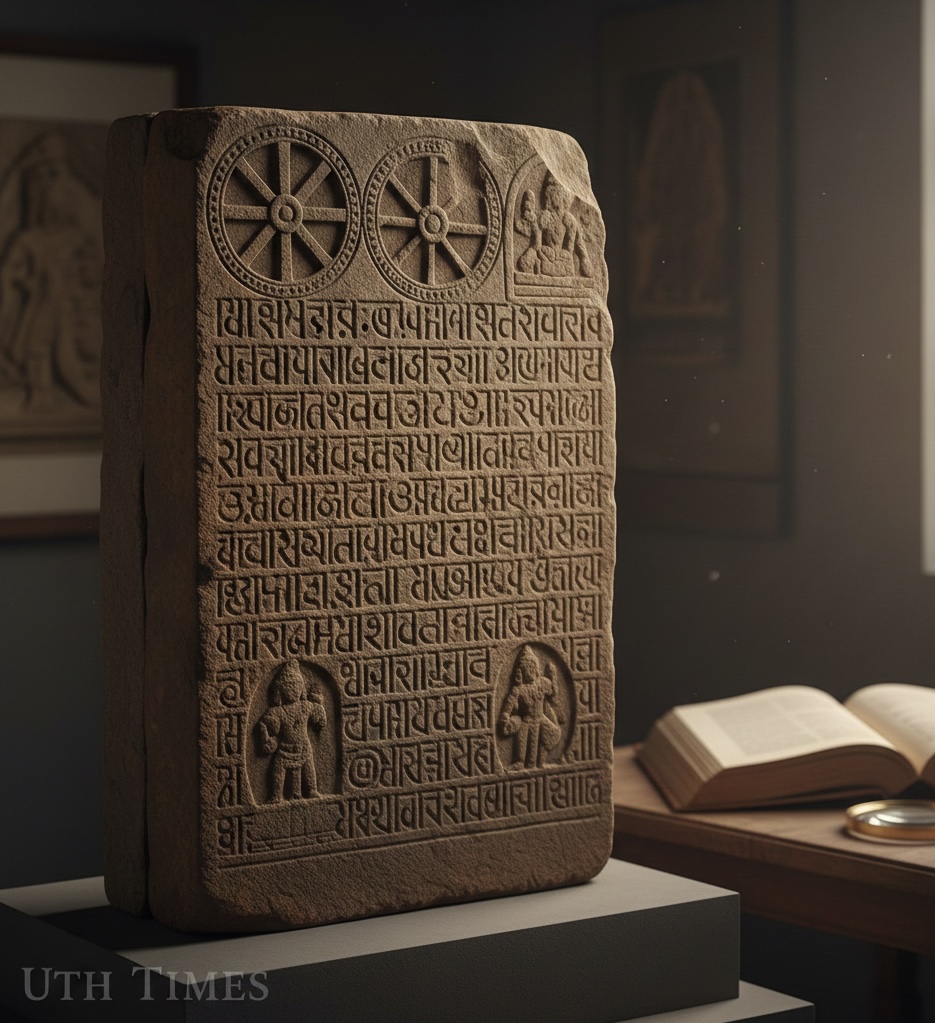
The Mathura Stone Inscription of Chandragupta II is not just a carved slab of stone—it’s a time capsule that captures the birth of one of India’s greatest emperors. Discovered in 1853, this inscription rewrites our understanding of Gupta politics, culture, and royal succession.

🟦 The Discovery That Changed Gupta History

In 1853, the legendary archaeologist Alexander Cunningham unearthed a stone inscription at Mathura, written in elegant Gupta Brahmi script and classical Sanskrit. Housed today in the Mathura Museum, this artifact stands as one of the earliest and most authentic proofs of the rise of Chandragupta II Vikramaditya.

What makes it extraordinary?

  • 🔹 It directly names Samudragupta as the father
  • 🔹 It names Mahādevī Dattādevī as the mother
  • 🔹 It records Samudragupta personally choosing Chandragupta as his rightful successor

Such explicit dynastic confirmation is extremely rare in Gupta epigraphy and makes this inscription a cornerstone document for early Gupta chronology.

🟨 A Window Into Dynastic Legitimacy

The inscription settles a long-standing debate: Chandragupta II’s accession was not accidental—it was sanctioned by Samudragupta himself.

It uses the phrase that Samudragupta “accepted” Chandra­gupta as heir, affirming a smooth royal transition. This carries massive historical weight, especially considering conjectures about rival claimants and palace politics.

Even more intriguing is how Samudragupta is described:

  • 🔸 “Sarvarājyo­chettā” — The Exterminator of Kings
    A title we also see on his gold coins, showing consistency between inscriptions and coinage.
  • 🔸 A donor of “many crores of gold and cows, lawfully acquired,”
    reflecting the immense wealth and authority of the Gupta Empire at its zenith.

🟩 Vaishnava Identity of the Guptas Strengthened

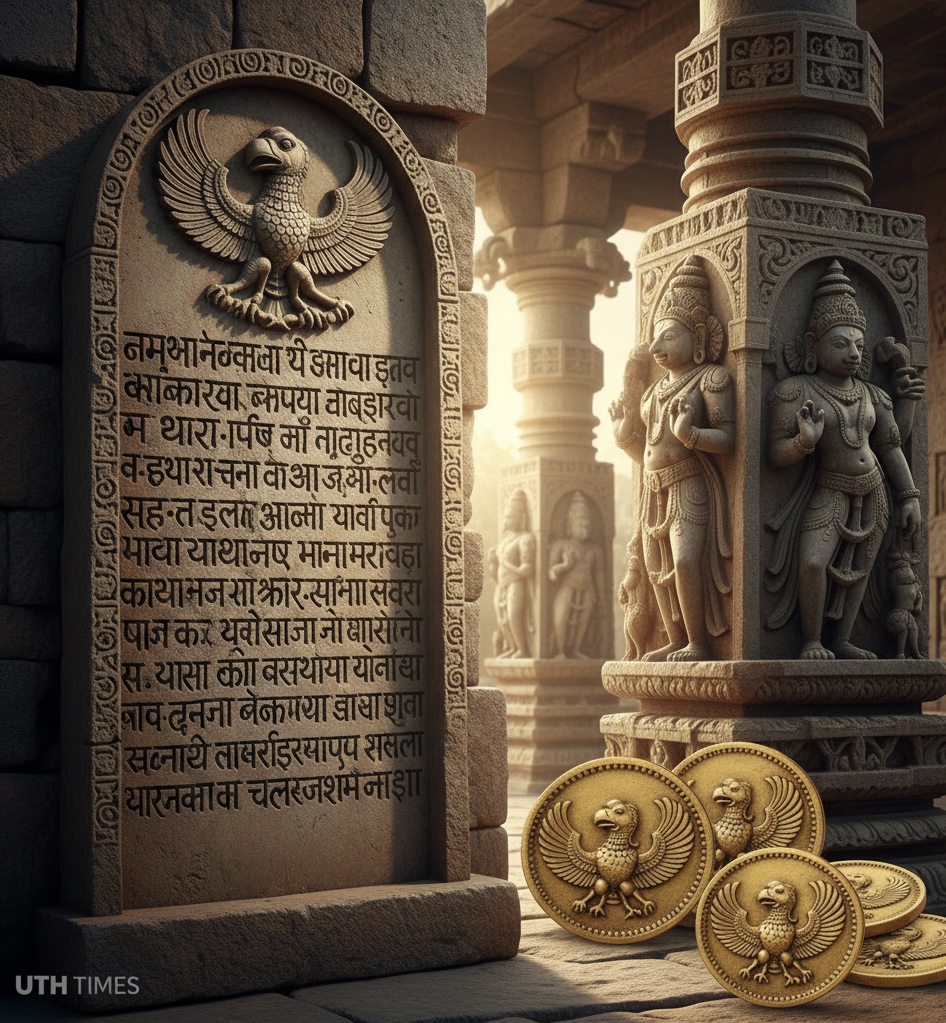
The inscription reveres Chandragupta II as a great devotee of Viṣṇu, fitting seamlessly with other Gupta-era Vaishnava imagery—such as the Garuda symbol on their coins.

This further reinforces the idea that Vaishnavism wasn’t just a religious preference, but a state-backed cultural identity of the Gupta imperial house.

🟥 Dating the Inscription: Why It Belongs to His Early Reign

Scholars place this inscription between c. 380–405 CE, with strong internal evidence supporting an early Chandragupta II timeframe:

  • 🟣 Samudragupta is dead
  • 🟣 No mention of Chandragupta’s Western Kṣatrapa victories
  • 🟣 No reference to his later northern conquests

This silence speaks loudly: the empire under Chandragupta II had not yet entered its expansionist phase.

The script style—early Gupta Brahmi—also aligns with the transitional period of the late 4th to early 5th century CE.

This makes the Mathura inscription one of the earliest datable records of his reign.

A Crisp Ending

The Mathura Stone Inscription isn’t merely an archaeological artifact—it is the first heartbeat of the Vikramaditya era. With dynastic clarity, Vaishnava identity, and Gupta imperial culture carved into stone, it remains one of the most illuminating documents of ancient Indian history.

More details await in the upcoming book Parikshit to Present—where India’s past rises again, inscription by inscription.