
The Mathura Stone Inscription of Chandragupta II is not just a carved slab of stone—it’s a time capsule that captures the birth of one of India’s greatest emperors. Discovered in 1853, this inscription rewrites our understanding of Gupta politics, culture, and royal succession.
🟦 The Discovery That Changed Gupta History
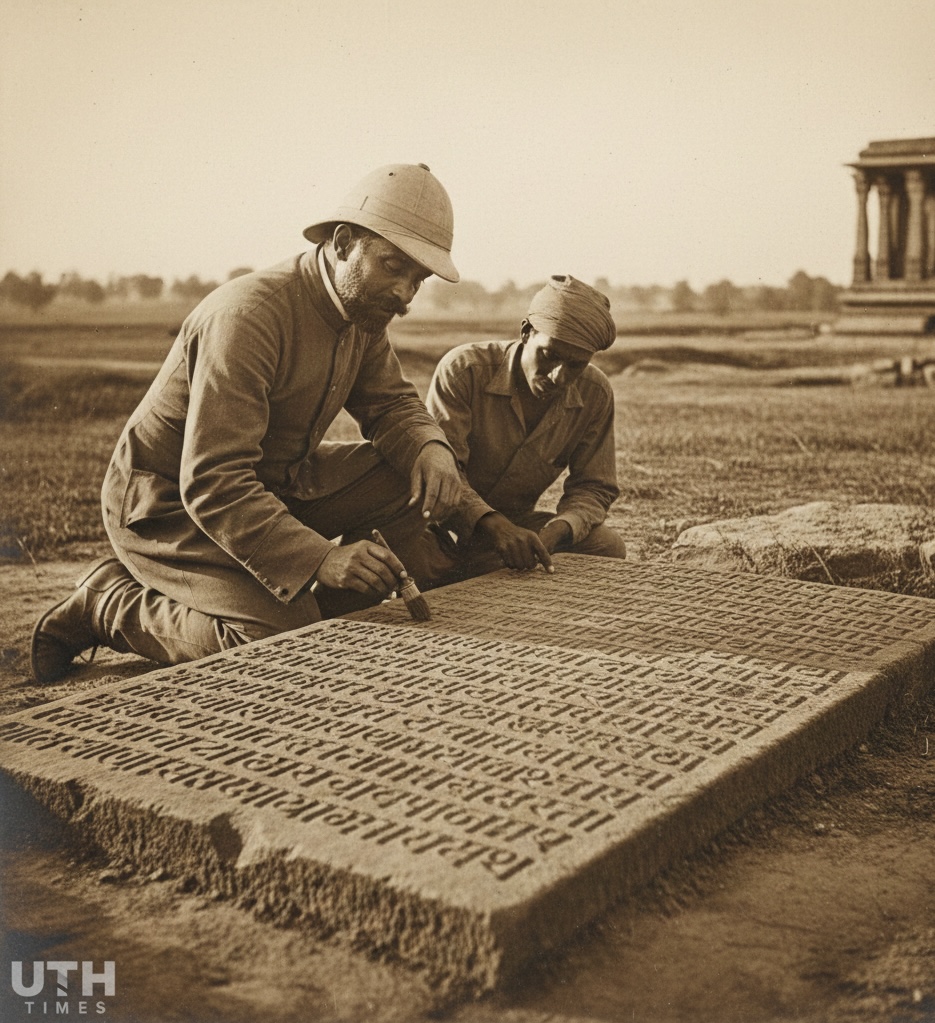
In 1853, the legendary archaeologist Alexander Cunningham unearthed a stone inscription at Mathura, written in elegant Gupta Brahmi script and classical Sanskrit. Housed today in the Mathura Museum, this artifact stands as one of the earliest and most authentic proofs of the rise of Chandragupta II Vikramaditya.
What makes it extraordinary?
- 🔹 It directly names Samudragupta as the father
- 🔹 It names Mahādevī Dattādevī as the mother
- 🔹 It records Samudragupta personally choosing Chandragupta as his rightful successor
Such explicit dynastic confirmation is extremely rare in Gupta epigraphy and makes this inscription a cornerstone document for early Gupta chronology.
🟨 A Window Into Dynastic Legitimacy
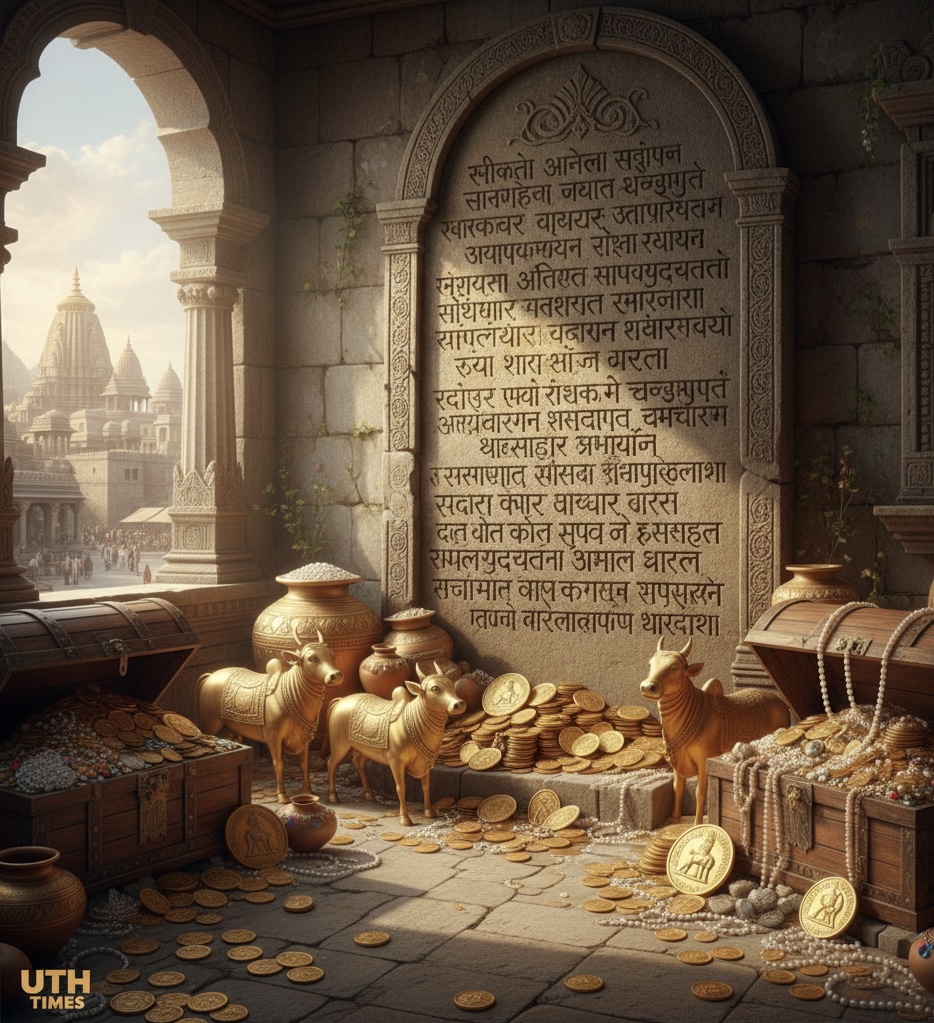
The inscription settles a long-standing debate: Chandragupta II’s accession was not accidental—it was sanctioned by Samudragupta himself.
It uses the phrase that Samudragupta “accepted” Chandragupta as heir, affirming a smooth royal transition. This carries massive historical weight, especially considering conjectures about rival claimants and palace politics.
Even more intriguing is how Samudragupta is described:
- 🔸 “Sarvarājyochettā” — The Exterminator of Kings
A title we also see on his gold coins, showing consistency between inscriptions and coinage. - 🔸 A donor of “many crores of gold and cows, lawfully acquired,”
reflecting the immense wealth and authority of the Gupta Empire at its zenith.
🟩 Vaishnava Identity of the Guptas Strengthened
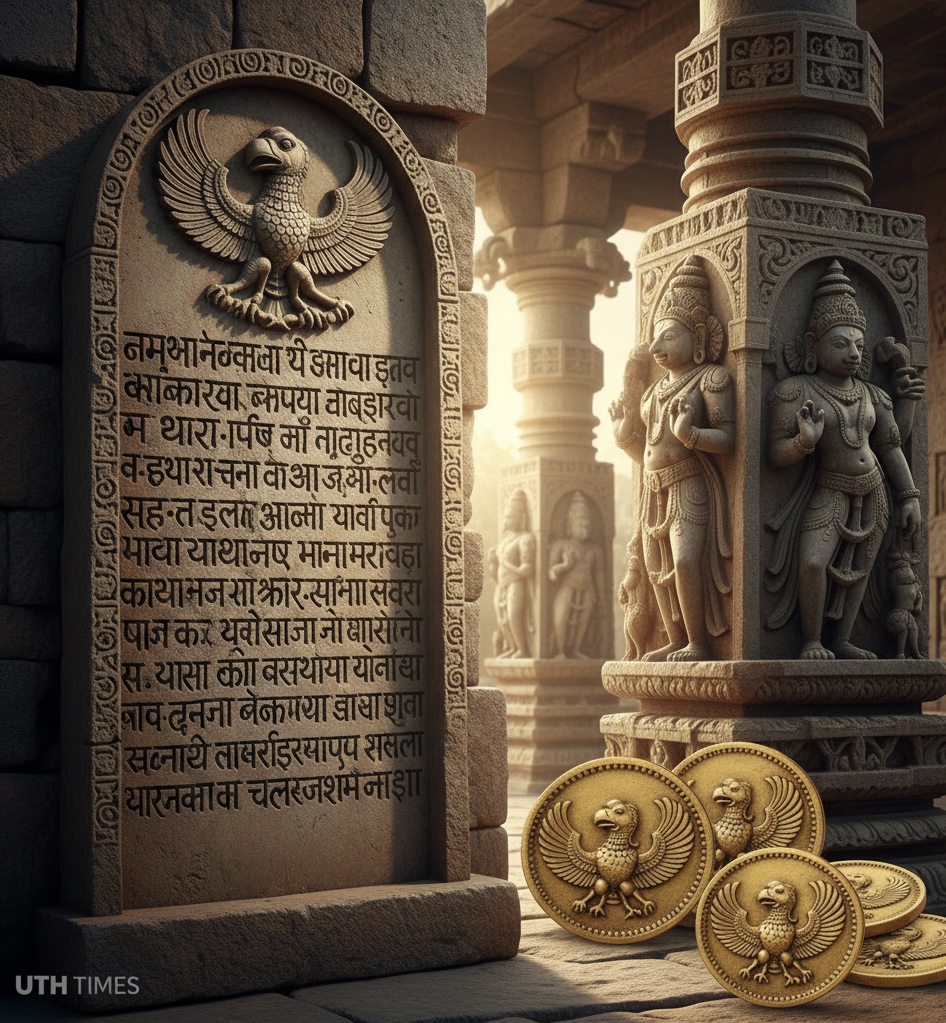
The inscription reveres Chandragupta II as a great devotee of Viṣṇu, fitting seamlessly with other Gupta-era Vaishnava imagery—such as the Garuda symbol on their coins.
This further reinforces the idea that Vaishnavism wasn’t just a religious preference, but a state-backed cultural identity of the Gupta imperial house.
🟥 Dating the Inscription: Why It Belongs to His Early Reign
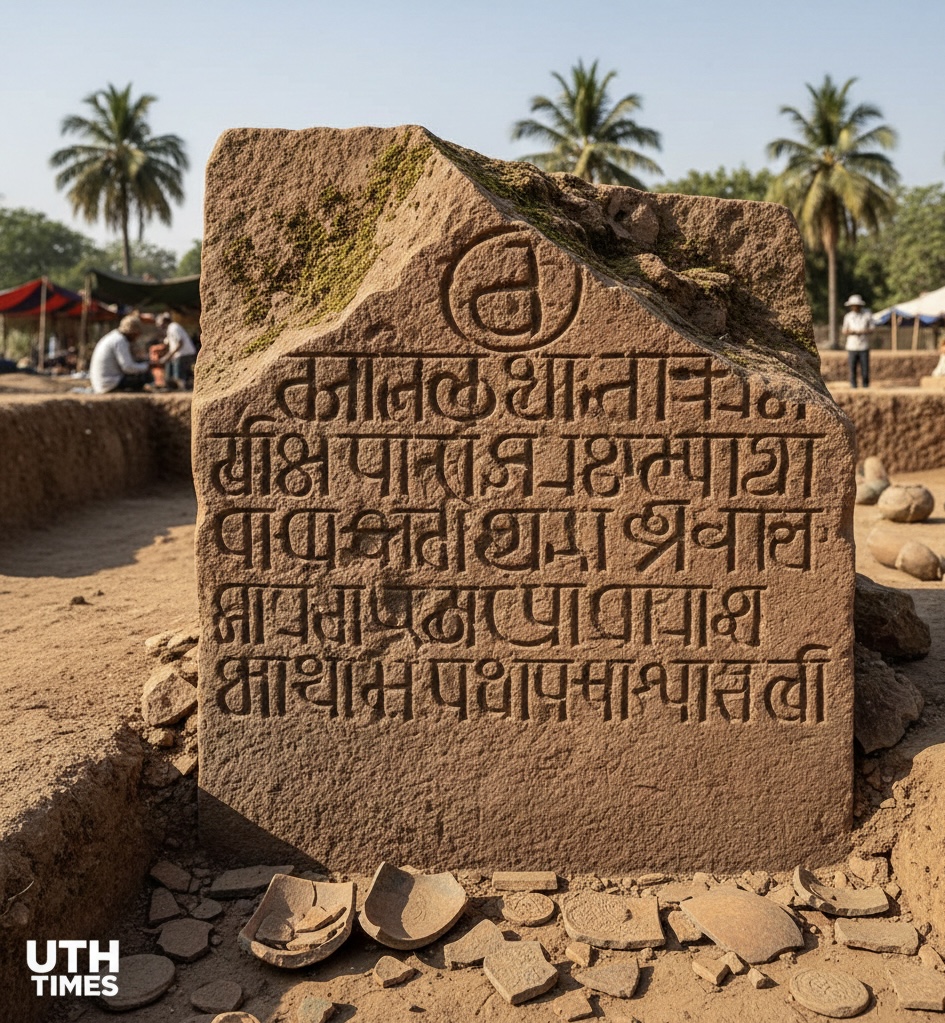
Scholars place this inscription between c. 380–405 CE, with strong internal evidence supporting an early Chandragupta II timeframe:
- 🟣 Samudragupta is dead
- 🟣 No mention of Chandragupta’s Western Kṣatrapa victories
- 🟣 No reference to his later northern conquests
This silence speaks loudly: the empire under Chandragupta II had not yet entered its expansionist phase.
The script style—early Gupta Brahmi—also aligns with the transitional period of the late 4th to early 5th century CE.
This makes the Mathura inscription one of the earliest datable records of his reign.
A Crisp Ending
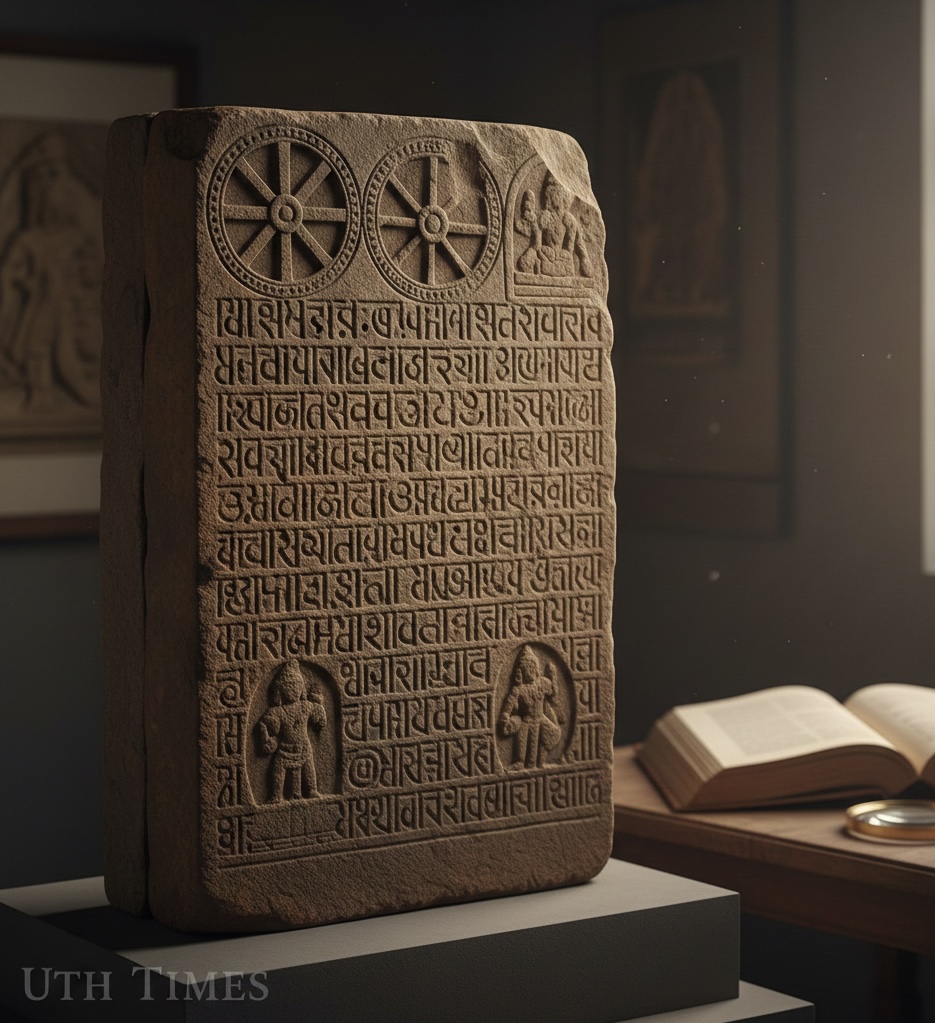
The Mathura Stone Inscription isn’t merely an archaeological artifact—it is the first heartbeat of the Vikramaditya era. With dynastic clarity, Vaishnava identity, and Gupta imperial culture carved into stone, it remains one of the most illuminating documents of ancient Indian history.
More details await in the upcoming book Parikshit to Present—where India’s past rises again, inscription by inscription.

