
India is preparing to plunge into the unexplored darkness of the deep ocean—territory where pressure crushes steel and sunlight never reaches. With the unveiling of Matsya 6000, the nation enters the elite club of deep-sea powers, ready to explore one of Earth’s final frontiers.
🇮🇳 India’s Ocean Leap: Matsya 6000 Unveiled
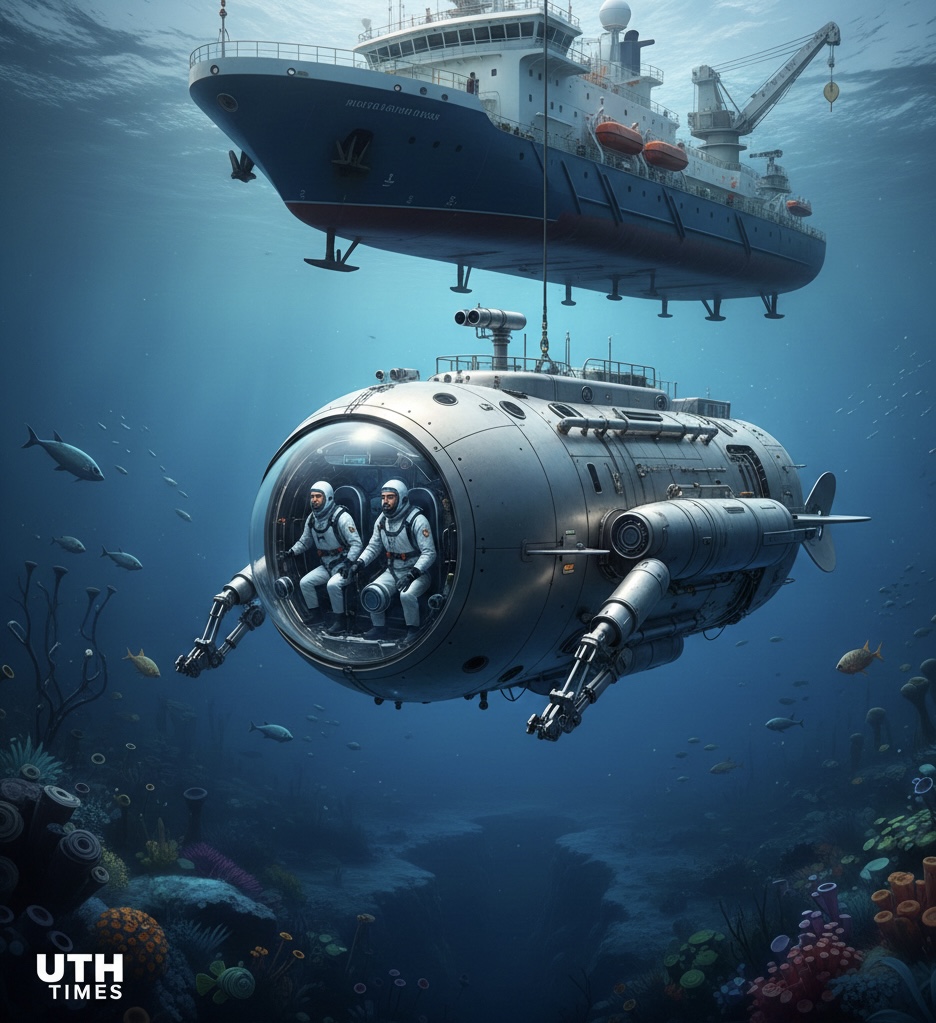
India has officially introduced Matsya 6000, its first-ever manned submersible vehicle designed under the ambitious Deep Ocean Mission. This is not just a machine—it’s a symbol of India’s scientific rise and its determination to explore realms that remain untouched by humanity.
🚀 Key Features of Matsya 6000
- 🔹 Depth Capability: 6000 meters — equivalent to 6 km under crushing ocean pressure
- 🔹 Crew Capacity: 3 scientists — enabling direct human observation
- 🔹 Titanium Alloy Hull — engineered to withstand 600 times atmospheric pressure
- 🔹 Advanced Life Support — ensures survival for 12–16 hours in extreme environments
- 🔹 Ultra-HD Visual & Sensor Suite — maps, samples, and studies the deep ocean floor
Crafted by National Institute of Ocean Technology (NIOT), Matsya 6000 stands as one of the most technologically sophisticated vehicles India has ever built.
🌊 Inside the Deep Ocean Mission
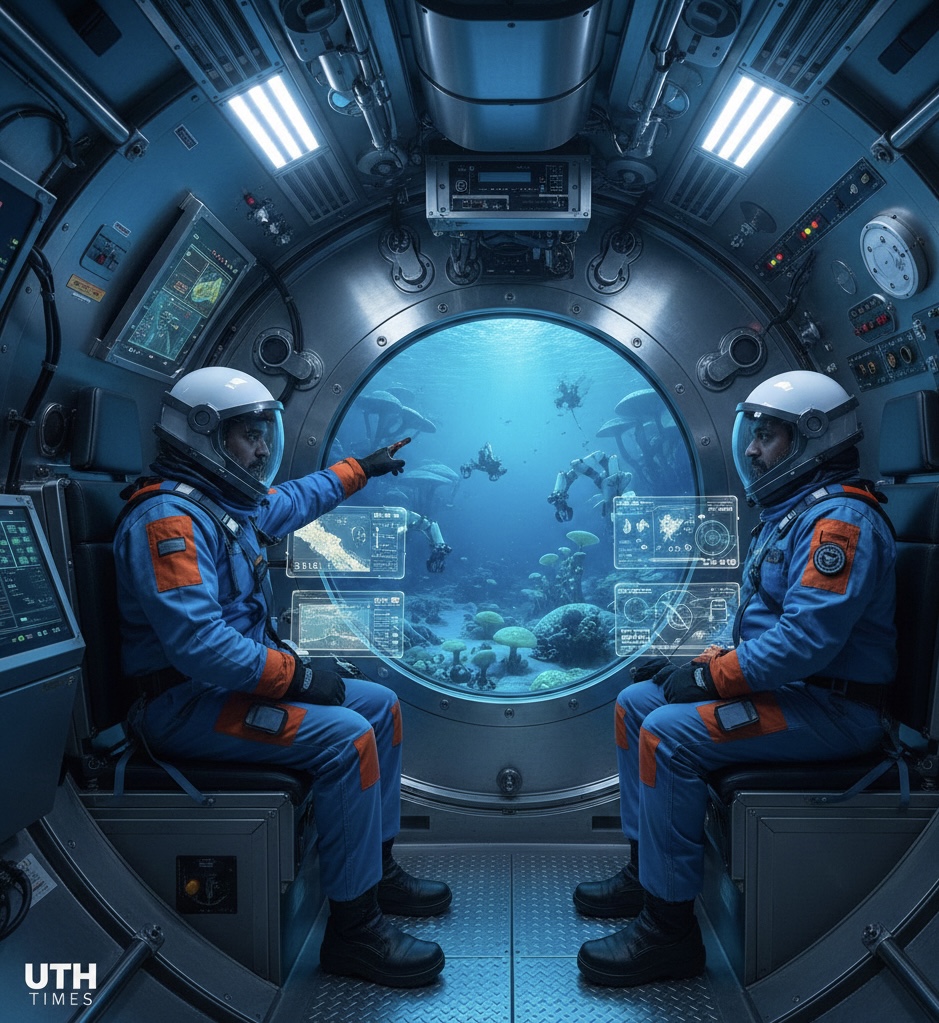
The ₹4,000-crore Deep Ocean Mission aims to transform India into a global ocean-science powerhouse. Matsya 6000 is the heart of this mission, enabling:
- ✳️ Exploration of polymetallic nodules (nickel, cobalt, manganese)
- ✳️ Study of extreme deep-sea ecosystems
- ✳️ Advancement in underwater robotics & sensors
- ✳️ Resource mapping for future energy & mineral needs
This mission positions India alongside USA, Russia, France, Japan, and China—the only nations capable of sending humans to such depths.
🛠 The First Test Dive: Early 2026
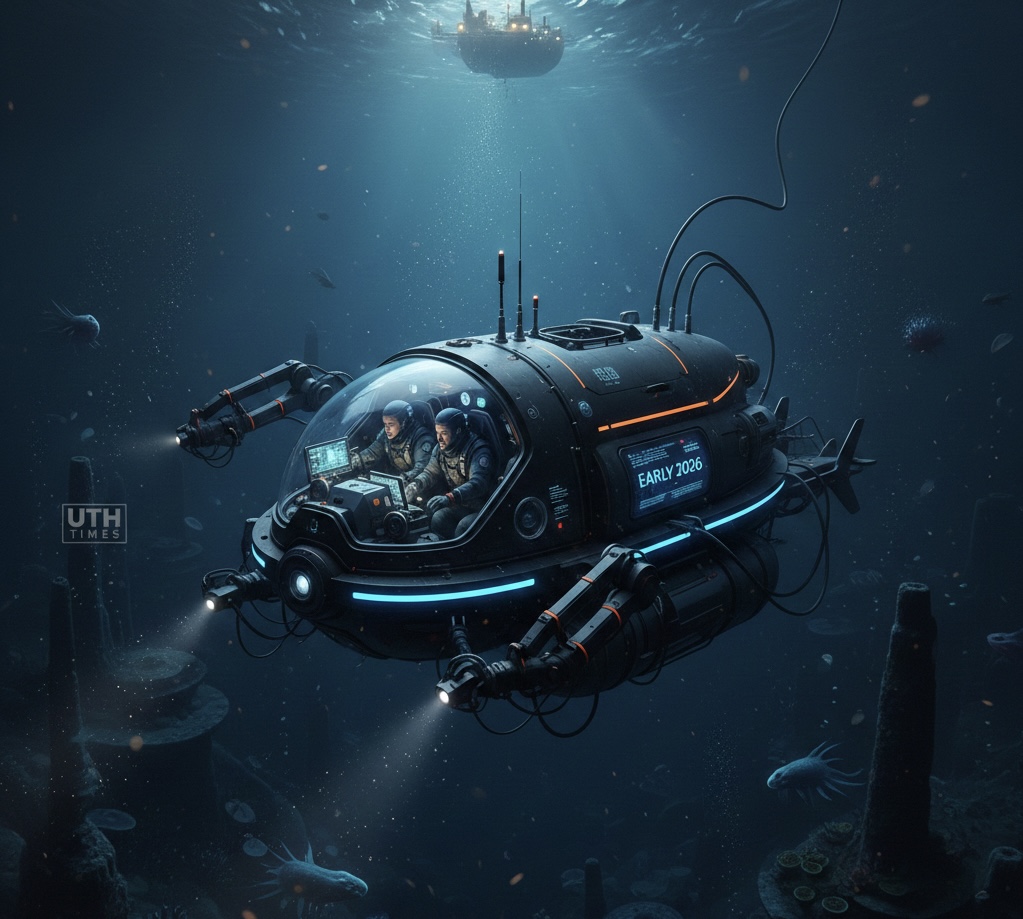
The maiden uncrewed and subsequent crewed test dives will be conducted off the coast of Chennai in early 2026. Engineers will test:
- 🔹 pressure endurance
- 🔹 manoeuvrability
- 🔹 life-support reliability
- 🔹 deep-sea communication systems
A successful test will mark India’s first human descent into the hadal zone.
🌐 Why This Matters for India and the World

Matsya 6000 isn’t just a submersible—it’s a gateway to the future of marine sciences, climate research, and strategic deep-sea capability.
It enhances India’s global scientific standing and strengthens national resource security for decades to come.
With Matsya 6000, India is no longer just exploring the oceans—it’s diving headfirst into the unknown, ready to write history beneath 6000 meters of water.
India is not touching the horizon.
India is descending beyond it.

