
In the scorching granite quarries of Aswan lies one of ancient Egypt’s most intriguing mysteries—the Unfinished Obelisk. A colossal monument that never rose, yet reveals more about Egyptian engineering than many completed wonders.
🏛️ The Giant That Never Stood: A Monument of Impossible Scale
🔹 A 1,100-Ton Vision of the New Kingdom
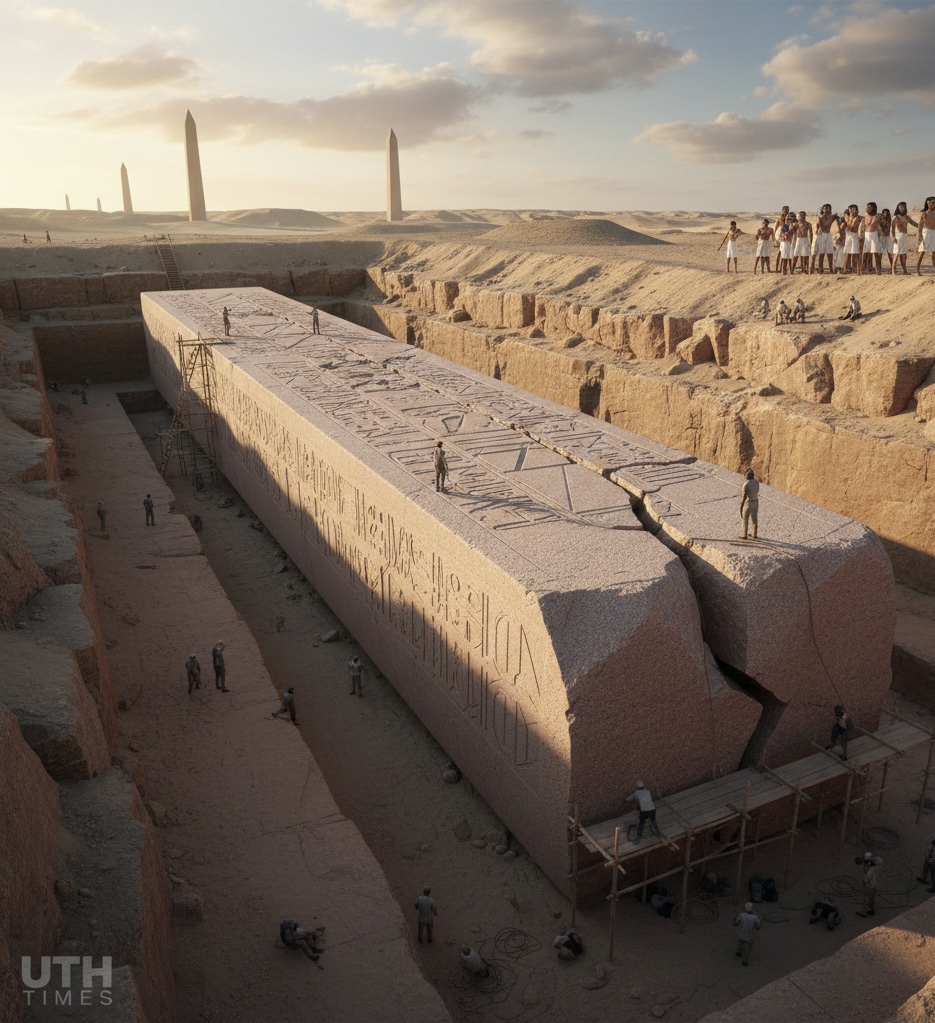
Had the Unfinished Obelisk been completed, it would have dwarfed every standing obelisk in Egypt and beyond.
- 🔸 Length: Almost 42 meters
- 🔸 Weight: An estimated 1,100 tons—the heaviest obelisk ever attempted
- 🔸 Era: Likely commissioned by Queen Hatshepsut, a ruler famed for ambitious architectural projects
This sheer scale reflects a civilization that did not merely build for beauty—but for eternity.
⛏️ A Rare Window Into Ancient Engineering
🔹 Carved Straight From the Bedrock
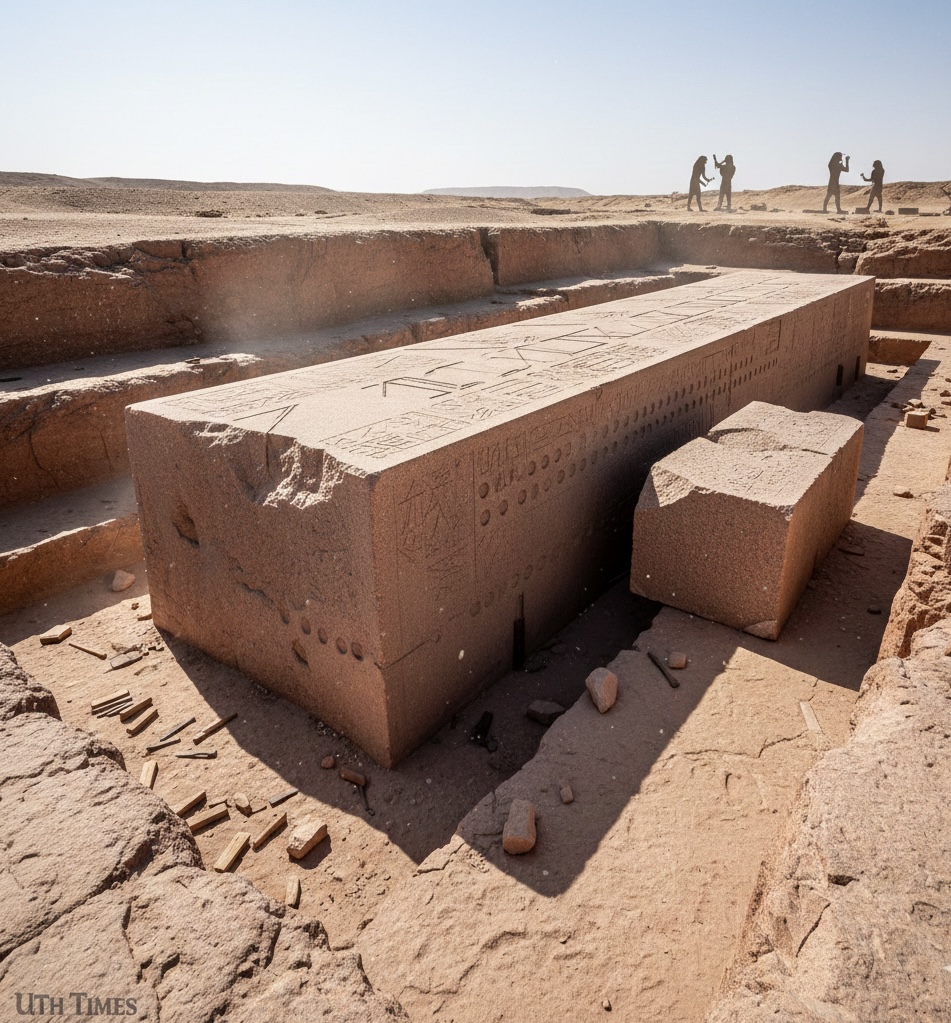
Unlike many structures, the obelisk was carved directly out of the granite bedrock. This gives modern archaeologists a priceless, real-time snapshot of the obelisk-making process.
- 🔸 Channels, trenches, and narrow gaps surround the monument
- 🔸 Pounding marks appear exactly where workers struck the rock
- 🔸 The process itself is preserved in stone—mid-action, mid-thought, mid-dream
Walking through the quarry is like walking into the workshop of ancient stonemasons who left only moments ago.
⚒️ Tools of Titans: Dolerite Balls and Raw Strength
🔹 Hard Stone vs. Harder Stone
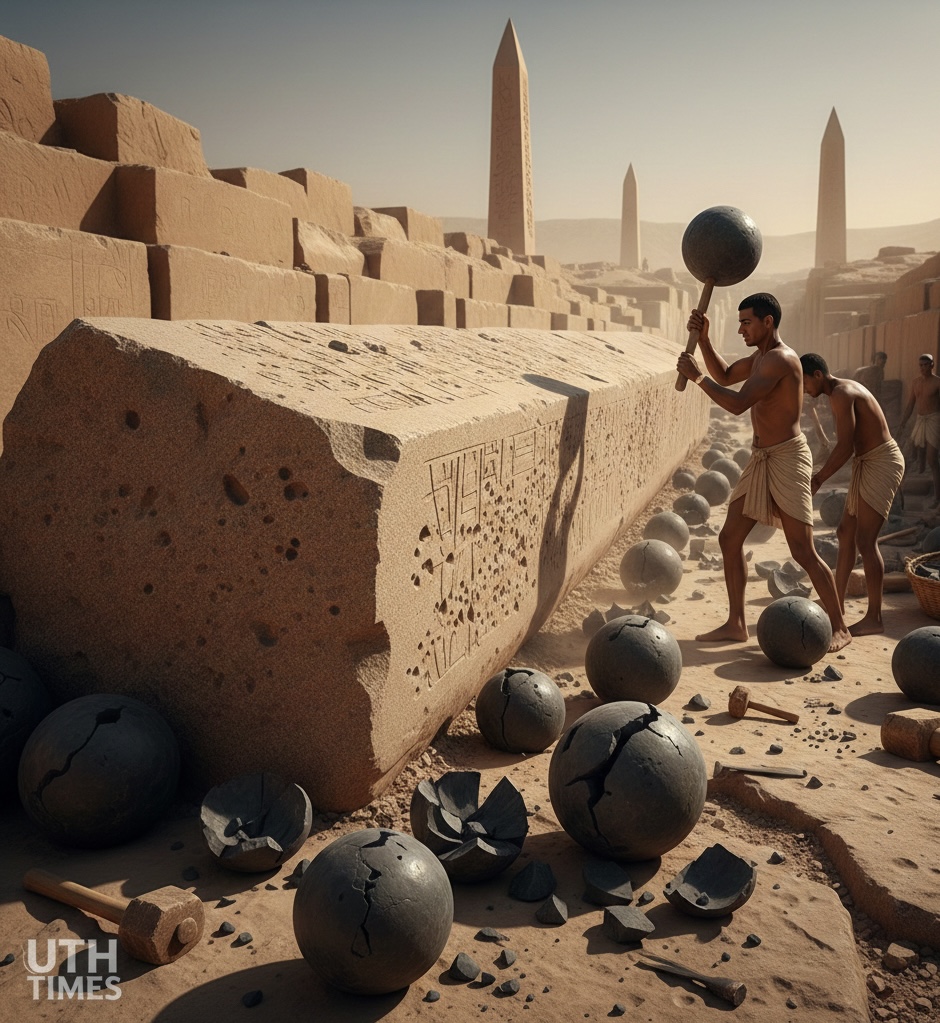
Granite is one of the toughest rocks on Earth. To shape it, Egyptians used dolerite balls—round, extremely hard stones used as pounding tools.
- 🔸 Thousands of blows were needed to chip away mere centimeters
- 🔸 Workers spent years carving a single obelisk
- 🔸 Dolerite fragments and broken tools still lie scattered across the site
This was a feat of endurance as much as ingenuity.
🪨 The Cracks That Ended a Dream
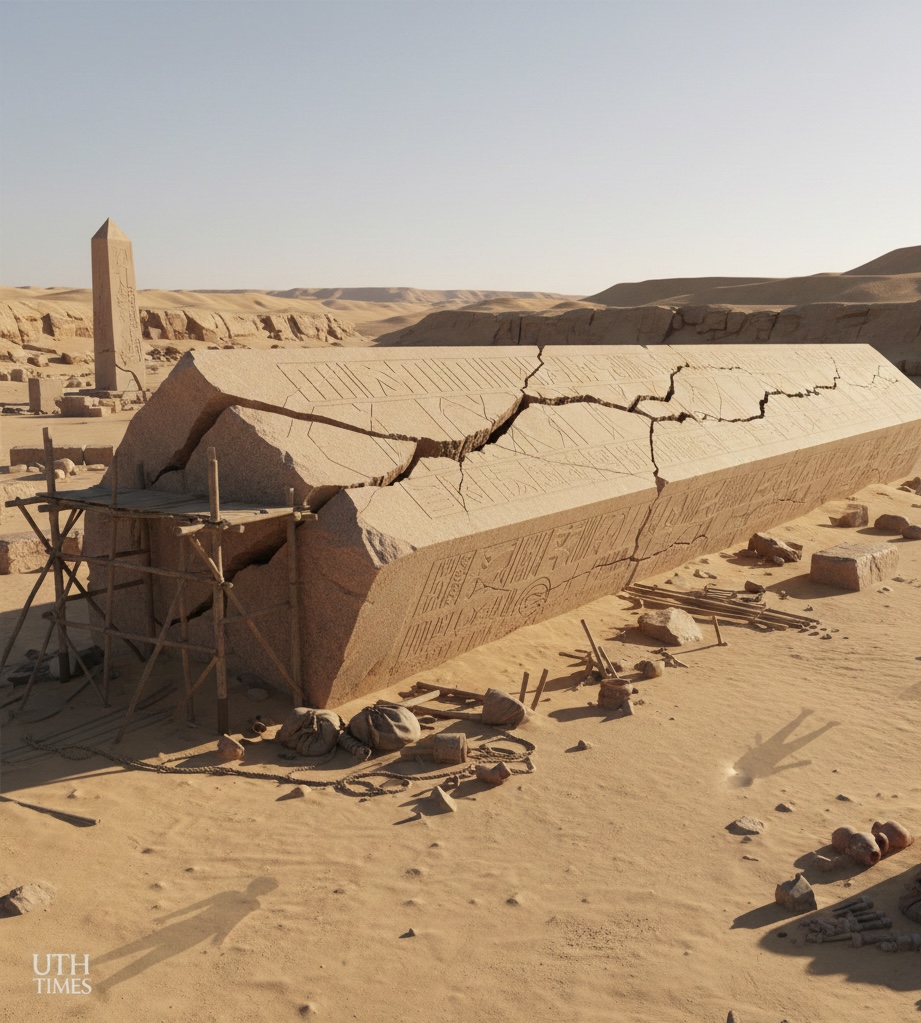
Just as the final stages neared, disaster struck.
Deep cracks formed in the stone—fatal flaws for a monument that needed perfect structural integrity.
Instead of repairing it, workers abandoned the obelisk entirely, leaving it precisely where it lies today.
This moment—frozen for 3,500 years—makes the site one of the most honest, raw, and human archaeological locations in Egypt.
The Unfinished Obelisk stands not as a failure, but as a rare gift. It reveals the sweat, skill, and staggering ambition of a civilization that shaped stone as though shaping destiny itself.

