
Home Blog Page 30

Svaya’s Desktop Dual-Arm Humanoid: India’s Bimanual Revolution on the Factory Floor

0

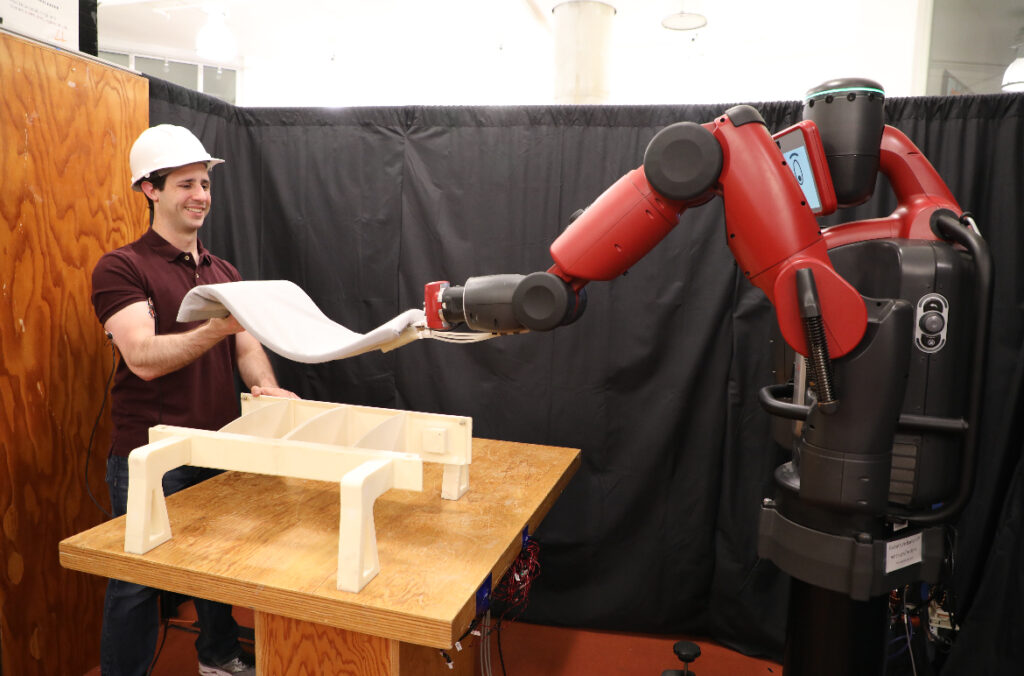
Swirling in the world of flexible automation, Svaya Robotics — a Hyderabad-based deep-tech firm — is making waves with its desktop, dual-arm humanoid robot. Far from being just another cobot, this is a true bimanual worker, engineered to collaborate seamlessly with other robots on a production line.

What Makes This Humanoid Special

🤖 High-Performance Actuator & Control

Svaya has leveraged its in-house expertise to build compact, high-power actuators coupled with precise motion control. The result: each of its two arms moves with fluid human-like dexterity, capable of delicate manipulation and repeatable precision. 

🔄 360° Body Rotation & Reach

This isn’t a simple arm-on-a-base setup — the robot’s full-body rotation allows it to pivot seamlessly, reaching in any direction (sideways, backward, downward) without compromising stability.  Its 19 actuators give it a remarkable workspace flexibility. 

🧠 Human-Like Dexterity + Sub-Millimeter Precision

With 7 degrees of freedom per arm, the humanoid mimics natural, human motions — navigating constrained spaces, climbing around obstacles, and manipulating tools.  The modular wrist can host different end-effectors (like grippers, screwdrivers, inspection tools), enabling rapid reconfiguration across tasks. 

👁️ Vision & Intelligence

Svaya’s humanoid integrates stereo vision in its head, along with coordinated pan-tilt motion, giving it real-time 3D insight into its environment.  With vision + force sensing + AI, it’s not just a mechanical worker — it’s context-aware, learning and adapting. 

Multi-Robot Collaboration: The Game Changer

  • Svaya’s design philosophy emphasizes scalable collaboration — this humanoid isn’t isolated; it’s built to work alongside other robots and humans seamlessly.
  • On the assembly line, it can partner with other cobots: one robot can handle heavy lifting while the humanoid performs the fine, precise manipulation.
  • Its modular end-effectors allow quick switching — for example, from pick-and-place to inspection — making it highly flexible.
  • Thanks to software-defined control and in-house AI stack, it adapts in real-time, enabling responsive workflows and minimizing downtime.  

Why This Is a Foundation, Not Just a Toy

This desktop humanoid is effectively a miniaturized testbed, built on Svaya’s core technologies: its actuators, AI, vision, and motion planning all scale. As per Svaya, this platform is the stepping stone to a full-size, general-purpose humanoid.  Its modular architecture means the same skills can be ported to bigger robots.

Industrial Impact: Transforming Production Lines

Svaya’s vision is audacious: instead of rigid automation, factories get deployable productivity — robots that can shuffle between tasks, re-learn new operations, and dynamically adjust as demand changes.  This humanoid could become a linchpin in high-mix, low-volume manufacturing, especially where manual dexterity was once exclusively human.

🔚 Conclusion

In a world where automation often means loss of flexibility, Svaya Robotics is offering something transformative: a desktop dual-arm humanoid that’s not just smart, but collaborative, adaptive, and scalable. It’s not a futuristic research bot — it’s real, practical, and poised to usher in a new era of multi-robot synergy on the factory floor.

The Unfinished Obelisk: Egypt’s Frozen Engineering Marvel

0

In the scorching granite quarries of Aswan lies one of ancient Egypt’s most intriguing mysteries—the Unfinished Obelisk. A colossal monument that never rose, yet reveals more about Egyptian engineering than many completed wonders.

🏛️ The Giant That Never Stood: A Monument of Impossible Scale

🔹 A 1,100-Ton Vision of the New Kingdom

Had the Unfinished Obelisk been completed, it would have dwarfed every standing obelisk in Egypt and beyond.

  • 🔸 Length: Almost 42 meters
  • 🔸 Weight: An estimated 1,100 tons—the heaviest obelisk ever attempted
  • 🔸 Era: Likely commissioned by Queen Hatshepsut, a ruler famed for ambitious architectural projects

This sheer scale reflects a civilization that did not merely build for beauty—but for eternity.

⛏️ A Rare Window Into Ancient Engineering

🔹 Carved Straight From the Bedrock

Unlike many structures, the obelisk was carved directly out of the granite bedrock. This gives modern archaeologists a priceless, real-time snapshot of the obelisk-making process.

  • 🔸 Channels, trenches, and narrow gaps surround the monument
  • 🔸 Pounding marks appear exactly where workers struck the rock
  • 🔸 The process itself is preserved in stone—mid-action, mid-thought, mid-dream

Walking through the quarry is like walking into the workshop of ancient stonemasons who left only moments ago.

⚒️ Tools of Titans: Dolerite Balls and Raw Strength

🔹 Hard Stone vs. Harder Stone

Granite is one of the toughest rocks on Earth. To shape it, Egyptians used dolerite balls—round, extremely hard stones used as pounding tools.

  • 🔸 Thousands of blows were needed to chip away mere centimeters
  • 🔸 Workers spent years carving a single obelisk
  • 🔸 Dolerite fragments and broken tools still lie scattered across the site

This was a feat of endurance as much as ingenuity.

🪨 The Cracks That Ended a Dream

Just as the final stages neared, disaster struck.

Deep cracks formed in the stone—fatal flaws for a monument that needed perfect structural integrity.

Instead of repairing it, workers abandoned the obelisk entirely, leaving it precisely where it lies today.

This moment—frozen for 3,500 years—makes the site one of the most honest, raw, and human archaeological locations in Egypt.

The Unfinished Obelisk stands not as a failure, but as a rare gift. It reveals the sweat, skill, and staggering ambition of a civilization that shaped stone as though shaping destiny itself.

 India’s Historic Descent into the Deep: The Arrival of Matsya 6000

0

India is preparing to plunge into the unexplored darkness of the deep ocean—territory where pressure crushes steel and sunlight never reaches. With the unveiling of Matsya 6000, the nation enters the elite club of deep-sea powers, ready to explore one of Earth’s final frontiers.

🇮🇳 India’s Ocean Leap: Matsya 6000 Unveiled

India has officially introduced Matsya 6000, its first-ever manned submersible vehicle designed under the ambitious Deep Ocean Mission. This is not just a machine—it’s a symbol of India’s scientific rise and its determination to explore realms that remain untouched by humanity.

🚀 Key Features of Matsya 6000

  • 🔹 Depth Capability: 6000 meters — equivalent to 6 km under crushing ocean pressure
  • 🔹 Crew Capacity: 3 scientists — enabling direct human observation
  • 🔹 Titanium Alloy Hull — engineered to withstand 600 times atmospheric pressure
  • 🔹 Advanced Life Support — ensures survival for 12–16 hours in extreme environments
  • 🔹 Ultra-HD Visual & Sensor Suite — maps, samples, and studies the deep ocean floor

Crafted by National Institute of Ocean Technology (NIOT), Matsya 6000 stands as one of the most technologically sophisticated vehicles India has ever built.

🌊 Inside the Deep Ocean Mission

The ₹4,000-crore Deep Ocean Mission aims to transform India into a global ocean-science powerhouse. Matsya 6000 is the heart of this mission, enabling:

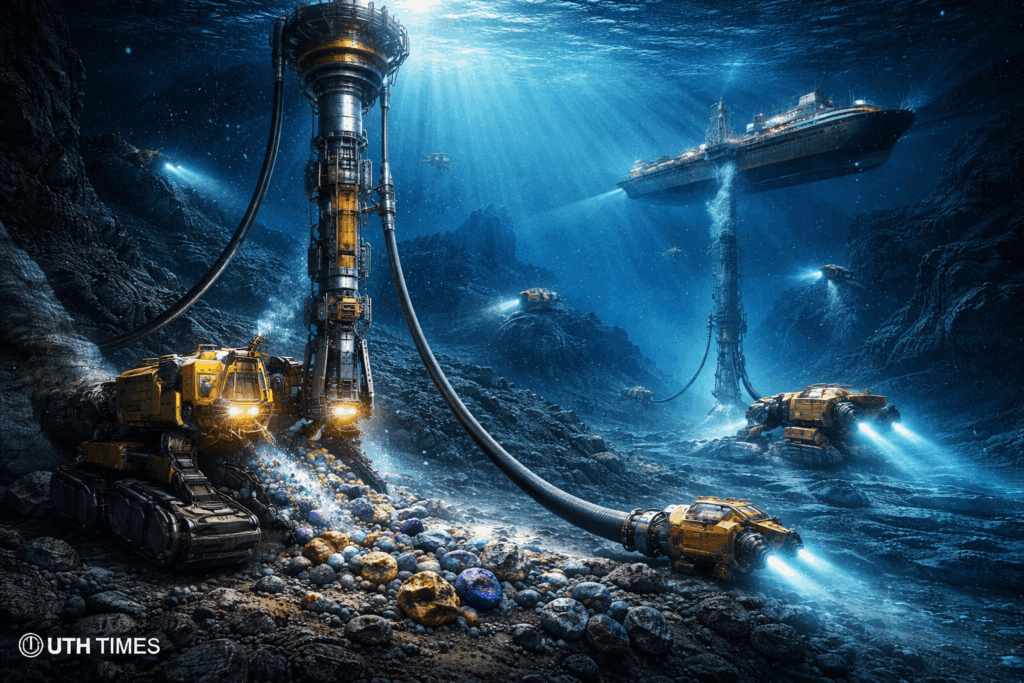
  • ✳️ Exploration of polymetallic nodules (nickel, cobalt, manganese)
  • ✳️ Study of extreme deep-sea ecosystems
  • ✳️ Advancement in underwater robotics & sensors
  • ✳️ Resource mapping for future energy & mineral needs

This mission positions India alongside USA, Russia, France, Japan, and China—the only nations capable of sending humans to such depths.

🛠 The First Test Dive: Early 2026

The maiden uncrewed and subsequent crewed test dives will be conducted off the coast of Chennai in early 2026. Engineers will test:

  • 🔹 pressure endurance
  • 🔹 manoeuvrability
  • 🔹 life-support reliability
  • 🔹 deep-sea communication systems

A successful test will mark India’s first human descent into the hadal zone.

🌐 Why This Matters for India and the World

Matsya 6000 isn’t just a submersible—it’s a gateway to the future of marine sciences, climate research, and strategic deep-sea capability.

It enhances India’s global scientific standing and strengthens national resource security for decades to come.

With Matsya 6000, India is no longer just exploring the oceans—it’s diving headfirst into the unknown, ready to write history beneath 6000 meters of water.

India is not touching the horizon.

India is descending beyond it.

The Mathura Revelation: Vikramaditya’s Earliest Royal Footprint

0

The Mathura Stone Inscription of Chandragupta II is not just a carved slab of stone—it’s a time capsule that captures the birth of one of India’s greatest emperors. Discovered in 1853, this inscription rewrites our understanding of Gupta politics, culture, and royal succession.

🟦 The Discovery That Changed Gupta History

In 1853, the legendary archaeologist Alexander Cunningham unearthed a stone inscription at Mathura, written in elegant Gupta Brahmi script and classical Sanskrit. Housed today in the Mathura Museum, this artifact stands as one of the earliest and most authentic proofs of the rise of Chandragupta II Vikramaditya.

What makes it extraordinary?

  • 🔹 It directly names Samudragupta as the father
  • 🔹 It names Mahādevī Dattādevī as the mother
  • 🔹 It records Samudragupta personally choosing Chandragupta as his rightful successor

Such explicit dynastic confirmation is extremely rare in Gupta epigraphy and makes this inscription a cornerstone document for early Gupta chronology.

🟨 A Window Into Dynastic Legitimacy

The inscription settles a long-standing debate: Chandragupta II’s accession was not accidental—it was sanctioned by Samudragupta himself.

It uses the phrase that Samudragupta “accepted” Chandra­gupta as heir, affirming a smooth royal transition. This carries massive historical weight, especially considering conjectures about rival claimants and palace politics.

Even more intriguing is how Samudragupta is described:

  • 🔸 “Sarvarājyo­chettā” — The Exterminator of Kings
    A title we also see on his gold coins, showing consistency between inscriptions and coinage.
  • 🔸 A donor of “many crores of gold and cows, lawfully acquired,”
    reflecting the immense wealth and authority of the Gupta Empire at its zenith.

🟩 Vaishnava Identity of the Guptas Strengthened

The inscription reveres Chandragupta II as a great devotee of Viṣṇu, fitting seamlessly with other Gupta-era Vaishnava imagery—such as the Garuda symbol on their coins.

This further reinforces the idea that Vaishnavism wasn’t just a religious preference, but a state-backed cultural identity of the Gupta imperial house.

🟥 Dating the Inscription: Why It Belongs to His Early Reign

Scholars place this inscription between c. 380–405 CE, with strong internal evidence supporting an early Chandragupta II timeframe:

  • 🟣 Samudragupta is dead
  • 🟣 No mention of Chandragupta’s Western Kṣatrapa victories
  • 🟣 No reference to his later northern conquests

This silence speaks loudly: the empire under Chandragupta II had not yet entered its expansionist phase.

The script style—early Gupta Brahmi—also aligns with the transitional period of the late 4th to early 5th century CE.

This makes the Mathura inscription one of the earliest datable records of his reign.

A Crisp Ending

The Mathura Stone Inscription isn’t merely an archaeological artifact—it is the first heartbeat of the Vikramaditya era. With dynastic clarity, Vaishnava identity, and Gupta imperial culture carved into stone, it remains one of the most illuminating documents of ancient Indian history.

More details await in the upcoming book Parikshit to Present—where India’s past rises again, inscription by inscription.

 India’s Human Spaceflight Leaps Forward with Human-Rated Vikas Engine

0

⭐ A New Dawn for India’s Space Ambition

India has taken a historic leap toward its first-ever human spaceflight in 2027, as Godrej Aerospace delivers the first human-rated L110 Vikas engine to ISRO. This moment is not just a technological feat—it is the ignition spark for India’s dream of sending its own astronauts, the Vyomnauts, into space aboard the Gaganyaan mission.

🚀 The Heart of Gaganyaan: What Makes the L110 Vikas Engine Special?

India’s L110 Vikas engine is no ordinary rocket engine. This is the first time the engine has been “human-rated”—meaning it meets the highest global standards of reliability, safety, and performance for carrying human life.

🔍 Key Highlights of the Engine:

  • ⭐ Developed by Godrej Aerospace, India’s long-time propulsion partner for ISRO
  • ⭐ Installed on the L110 stage of the GSLV Mk-III / LVM3, India’s most powerful launch vehicle
  • ⭐ Human-rating ensures:
    • 🟣 Redundancy to prevent failure
    • 🟣 Enhanced testing cycles
    • 🟣 Improved materials and safety margins
    • 🟣 Consistent thrust performance

This engine will power the core stage that lifts India’s astronauts off the ground—making it the very heartbeat of the mission.

🛠️ Godrej Aerospace’s Role: Crafting India’s Space Backbone

Godrej Aerospace has been a cornerstone of India’s rocket manufacturing since the 1980s, but this delivery marks a new peak of excellence.

✨ Their contributions include:

  • 🔵 Manufacturing more than 175 Vikas engines
  • 🔵 Building engines for PSLV, GSLV, and LVM3 missions
  • 🔵 Supplying critical components for Chandrayaan & Mangalyaan
  • 🔵 Now delivering India’s first human-grade propulsion system

This achievement puts Indian private industry on par with global aerospace giants.

👨‍🚀 The 2027 Gaganyaan Mission: What Comes Next?

India’s first human spaceflight will carry 3 Indian astronauts to 400 km above Earth for a 3-day mission, before returning safely to the Indian Ocean.

🚀 Upcoming Milestones:

  • 🟠 Completion of crew module and escape system tests
  • 🟠 Integration of human-rated LVM3 stages
  • 🟠 Final unmanned mission validation
  • 🟠 Full astronaut training completion

With the Vikas engine now delivered, India has crossed one of the most critical gateways toward human spaceflight.

🌟 Conclusion: A Milestone That Propels a Nation Forward

The human-rated Vikas engine is more than a machine—it is a symbol of India’s engineering maturity, confidence, and cosmic ambition. With this, the path toward Gaganyaan 2027 is clearer, brighter, and fully powered.

India is no longer just reaching for the stars—it is preparing to travel among them. 🇮🇳✨

Shabda Brahman: The Vedic Science of Sound-Creation

The universe, according to both cutting-edge physics and ancient Vedic wisdom, began not with matter—but with vibration. Long before science spoke of frequencies, waves, and the cosmic hum, the Vedas declared: “Creation arises from Shabda—primordial sound.” This is the story of that cosmic vibration.

🔥 The Cosmic Sound Principle — Shabda Brahman

🔹 Sound as the First Principle of Reality

  • 🌐 The Vedas describe Shabda Brahman as the vibrational essence from which existence emerges.
  • 🌟 The Rig Veda calls this cosmic current Vāc, the vibratory field from which “all beings arise and into which all dissolve.”
  • 🌀 According to the Upanishads, the sequence of creation is:
    • Sound → Energy → Matter
    • Vibration slows down until it crystallizes as physical reality.
  • 🌌 This places sound, not substance, at the foundation of the universe—an idea now echoed by quantum field theory and modern sound-based physics.

🔱 OM — The Blueprint Frequency of Existence

🔹 Not a word, but a cosmic vibration

  • 🔊 OM (AUM) is described as the sound-form of Brahman, the original frequency through which consciousness announces itself.
  • 💠 It carries the “code” of the universe—similar to how a seed contains the entire tree.
  • 🪐 Many cosmologists now study the universe’s low-frequency hum, astonishingly similar to the concept of Nada—the eternal sonic field of creation.

🕉️ The Four Layers of Sound in Tantra

🔹 How vibration becomes reality

Tantra decodes creation through four descending layers of sound:

  • 🔸 Para — Silent, formless vibration; pure potential
  • 🔸 Pashyanti — The first spark of thought-sound
  • 🔸 Madhyama — Mental speech, internal resonance
  • 🔸 Vaikhari — Physical spoken sound and audible expression

Creation itself follows this descent: from silence → vibration → energy → physical form.

🎶 Why Mantras Work: The Science of Resonance

🔹 Sound as alignment, not prayer

  • ✨ Mantras act as vibrational “keys,” syncing the mind with the universe’s original frequencies.
  • 🌈 Specific sounds resonate with particular chakras and nadis, creating emotional balance, clarity, and energetic alignment.
  • 🧬 The human body is architected for vibration: the nervous system, breath, and subtle energy pathways all respond to sound patterns.

🔹 Modern physics catching up

  • Wave mechanics, cymatics, quantum vibration theories, and frequency-based matter formation all point to a vibrational universe—exactly what Vedic sages taught millennia ago.

🌟 Conclusion

Shabda Brahman teaches that consciousness becomes vibration, and vibration becomes creation. The universe is not silent—it is a mantra in motion. When we tune into that primal sound, we don’t just chant; we resonate with the architecture of reality itself.

 Surang Tila: The 1400-Year-Old Stone Marvel of Sirpur

0

Surang Tila in Sirpur isn’t just another ancient ruin—it’s a 1400-year-old architectural puzzle crafted under the Sarbhapuriyas. Rising in gleaming white stone, tilted pillars, and hidden chambers, this temple complex remains one of India’s most mysterious heritage sites.

⛰️ SURANG TILA: THE SHINING HILL TEMPLE OF SIRPUR

🔱 A Temple Dedicated to Brahma, Vishnu & Shiva

Surang Tila is unique because few ancient Indian temples house shrines of all three major deities—Brahma, Vishnu, and Shiva.

Here, the temple complex features:

  • 🌟 Multiple sanctums arranged around a raised platform
  • 🌟 Shiva lingas with distinct architectural flavours
  • 🌟 A rare four-faced Brahma idol base
  • 🌟 A Vishnu temple featuring classical Sirpur stonework

This multi-deity layout reflects Sirpur’s identity as a thriving spiritual capital in the 6th–8th centuries CE.

🏛️ The 30-Step Ascent: A Symbol of Power

One of Surang Tila’s most iconic visual signatures is its massive 30-step staircase, made from shining white sandstone.

Highlights include:

  • 🏹 Grand elevated platform, giving the temple a fortress-like dominance
  • 🏹 Precision-cut stones, locked without mortar
  • 🏹 Geometric symmetry, unmatched in temples of this era

Climbing these steps feels like walking into a forgotten kingdom of stone engineers.

🌪️ Earthquake-Tilted Pillars: A Geological Mystery

Perhaps the most talked-about feature is the tilted pillar hall.

  • ⚡ The tilt was caused by a major earthquake around the 12th century
  • ⚡ Instead of collapsing, the pillars bent as the foundation shifted
  • ⚡ Today, they stand as natural seismographs of ancient India

This phenomenon makes Surang Tila an international curiosity for archaeologists and geologists.

🌌 Surang Tila’s Name & Hidden Chambers

“Surang Tila” translates to ‘Tunnelled Mound’, referencing the underground chambers that once existed beneath its platform.

  • 🌑 These chambers may have stored sacred items
  • 🌑 Some theories link them to tantric rituals
  • 🌑 Others believe they were engineered escape spaces

Even today, these sealed passages add a layer of mystical charm.

🛕 Sirpur: The Forgotten Capital of Stone

Surang Tila is part of a larger archaeological landscape that includes:

  • 🪔 Buddhist monasteries
  • 🪔 Jain shrines
  • 🪔 Lakshmana Temple
  • 🪔 Market complexes and ancient habitations

Sirpur was once so significant that even Chinese traveller Xuanzang wrote about its glorious temples and monasteries.

🌅 CONCLUSION

Surang Tila is not merely a ruin—it is a stone manuscript of India’s ancient engineering brilliance, spiritual diversity, and resilience. It stands tilted, timeless, and triumphant.

If you want, I can also prepare an SEO-optimised webpage version, a social-media micro-article, or a 10-slide carousel for Instagram.

Atrahasis: The First Great Flood Survivor

0

🌊 A Short Beginning: A Whisper From the Ancient Clay

The Epic of Atrahasis, carved onto 4,000-year-old Mesopotamian tablets, is more than a myth—it’s humanity’s earliest blueprint of survival. This is where the flood narrative truly began, long before Noah or Manu, in a world ruled by capricious gods and saved by one wise human.

⭐ THE EPIC OF ATRAHASIS: WHEN GODS SHAPED, SHATTERED & SPARED HUMANITY

🧱 1. Creation of Humans: Born to Serve the Gods

The story begins with the younger gods, the Igigi, rebelling against the senior deities. Exhausted from digging canals and maintaining the cosmos, they demand relief.

To solve the divine labor crisis, the high god Enki proposes a radical plan:

  • 🌟 Mix divine blood with clay to create a new species.
  • 🌟 Humans are born—not as equals, but as workers meant to shoulder the burdens of the gods.
  • 🌟 Life flourishes, cities rise, and mankind multiplies.

But with growth comes trouble: humans become too noisy, disturbing the gods’ peace.

🌩️ 2. The Gods’ Fury: Plagues, Famines & Cosmic Retaliation

Annoyed by the clamor of humanity, the chief god Enlil decides it’s time to silence them. His attacks unfold in escalating waves:

  • ⚡ Deadly plagues ravage populations.
  • ⚡ A great drought chokes the land.
  • ⚡ Famine spreads, grinding civilizations to dust.

Yet each time, Enki—humanity’s secret ally—teaches Atrahasis how to counter these divine punishments. Through rituals and offerings, mankind survives.

Enlil grows furious. Subtle punishments aren’t enough.

🌪️ 3. The Great Flood: A Divine Reset of the World

Finally, Enlil unleashes the ultimate weapon:

  • 🌊 A catastrophic, world-drowning flood designed to erase humanity forever.
    Bound by an oath of secrecy, Enki finds a loophole: he whispers the warning not to Atrahasis directly, but to the walls of his reed hut so the hero can “overhear” it.
    Enki instructs him to:
  • 🚢 Build an enormous ark sealed with pitch
  • 🚢 Gather his family, animals, and essentials
  • 🚢 Prepare for a storm that will swallow the earth

As the flood rages, the gods themselves panic at its scale. For seven days and nights, the world disappears under roaring water.

🌈 4. After the Waters: A New Order for Humanity

When the flood ends, Atrahasis emerges into a transformed world.

The gods regret their impulse. To prevent future overpopulation, they impose new rules:

  • 🌱 Shortened human lifespans
  • 🌱 Mortality firmly fixed
  • 🌱 Natural limitations on birth

Humanity is spared—but forever changed.

🏛️ A Short Ending: The Echo of Survival

The Epic of Atrahasis is not just an ancient story; it’s the original tale of resilience, rebellion, and the fragile balance between divine power and human endurance. Even after four millennia, Atrahasis stands as the first great survivor—proof that wisdom can outlast even the fury of the gods.

Vikram-I: India’s Private Leap Into the Next Space Age

0

A Bold Beginning 🚀

Hyderabad-based Skyroot Aerospace is preparing to rewrite India’s private spaceflight history. With its first orbital rocket, Vikram-I, scheduled for a February 2026 debut, the company is stepping into a league previously dominated by national space agencies. This isn’t just another launch—this is India’s entry into a new commercial space era.

🌌 Vikram-I: The Rocket Designed for a New Space Economy

Vikram-I is Skyroot’s flagship small-lift launch vehicle engineered for agility, efficiency, and affordability. Unlike bulkier rockets, this one is designed for the rapidly accelerating small-satellite market.

Key Technological Highlights

  • ⭐ Solid-Fuel Powered Stages:
    Vikram-I uses three solid propulsion stages, giving it a strong thrust-to-weight ratio and dependable, low-maintenance operation.
  • ⭐ Liquid-Fueled Upper Stage:
    The final stage uses a cutting-edge liquid engine for fine orbital precision—crucial for modern nano and microsatellites.
  • ⭐ Carbon Composite Body:
    Lightweight yet ultra-strong, ensuring maximum payload efficiency.
  • ⭐ Mission Flexibility:
    Tailor-made for LEO missions, earth observation satellites, communication nanosats, and constellation deployments.

🌍 Why Skyroot’s Mission Matters Globally

Skyroot’s February 2026 Vikram-I mission isn’t just a technical milestone—it’s a market-shifting event.

Global Impact Highlights

  • 🌟 India Joins the Private Orbital League:
    With this launch, India follows SpaceX, Rocket Lab, and other global players into private orbital capability.
  • 🌟 Commercial Satellites Get Cheaper & Faster:
    Vikram-I promises quick turnaround times, making satellite deployment less expensive for startups and global customers.
  • 🌟 Strengthening India’s Space Supply Chain:
    Over 200 Indian companies contribute to Skyroot’s ecosystem—fueling jobs, R&D, and a booming aerospace industry.

🛰 A Mission Backed by Vision, Grit & Innovation

Skyroot, founded by former ISRO scientists Pawan Kumar Chandana and Naga Bharath Daka, blends experience with startup agility. The company previously made global headlines in 2022 with Vikram-S, India’s first private rocket to reach space.

Now, Vikram-I aims to place satellites into orbit, marking a full progression from suborbital to orbital capability.

The Final Word 🌠

Skyroot’s Vikram-I launch in Feb 2026 is more than a mission—it’s a defining moment for India’s private aerospace future. With world-class tech, scalable vision, and global ambitions, Skyroot is positioning India as a competitive powerhouse in the new space race.

India’s Historic Jet Fuel Export to California: A First Across the Pacific

0

✈️ A New Chapter: India Ships Jet Fuel to California

In a landmark moment, India has dispatched its first-ever jet fuel cargo to the U.S. West Coast, responding to a severe supply bottleneck in California.  This isn’t just another fuel shipment — it’s a strategic strike, born of necessity, opportunity, and finely tuned market dynamics.

🚨 Why This Shipment Matters: The California Crunch

  • Refinery Fire Fallout: The trigger behind this historic deal was a fire in October at Chevron’s El Segundo refinery in southern California. The blaze hit the plant’s jet fuel production unit hard, forcing it offline.  
  • Tight Supplies: With that unit down, U.S. West Coast jet fuel inventories shrank. As of November 7, stocks were at a three-month low — just 11.12 million barrels.  
  • Repair Timeline: Chevron expects the El Segundo unit to be back by early 2026, meaning the region will likely rely on imports until then.  

📦 The Indian Solution: How It Played Out

  • Source & Scale: Around 60,000 metric tons (roughly 472,800 barrels) of jet fuel was loaded at Reliance Industries’ Jamnagar refinery on October 28–29.  
  • The Vessel: This cargo hitched a ride on the Panamax tanker Hafnia Kallang, chartered by Castleton Commodities.  
  • Destination: It’s expected to dock in Los Angeles in early December, bridging the shortfall for Chevron.  

💡 The Economics Behind the Move

  • Rare Arbitrage Moment: This route was unlocked by a sweet arbitrage window — jet fuel prices on the U.S. West Coast are trading about US$10 per barrel above Singapore free-on-board rates.  
  • But It’s Not Cheap to Ship: Freight from India to California is less common and costlier. By contrast, routes from Northeast Asia (like South Korea) remain much cheaper, with freight around US$40 per ton for refined fuels.  
  • One-Off or Trend?: Traders warn that regular exports from India are unlikely. The economics don’t favor it long-term — unless such arbitrage windows recur.  

🌐 Bigger Implications: India’s Energy Footprint Expands

This isn’t just a one-shot tanker trip — it’s a signal. India, traditionally a fuel importer, is now dispatching refined aviation jet fuel across oceans.  That hints at rising sophistication in its refining sector, especially in hubs like Jamnagar.

For the U.S., particularly California, this deal underscores vulnerability: when domestic refinery capacity falters, global supply chains swing into action. It’s a reminder that local disruptions can have worldwide ripples.

🔚 Final Word

This jet fuel export marks a milestone – not only in trade but in how India projects its energy strength globally. But more than that, it’s a tactical response to a crisis in California, showcasing how geopolitics, arbitrage, and refinery firestorms can reshape trade flows overnight.