
What if international payments stopped being slow, expensive, and politically filtered?
The Reserve Bank of India (RBI) has floated an idea that could quietly rewire how BRICS nations trade, travel, and transact—by linking their digital currencies. This isn’t hype. It’s architecture.
The Proposal Explained — One Network, Many Currencies
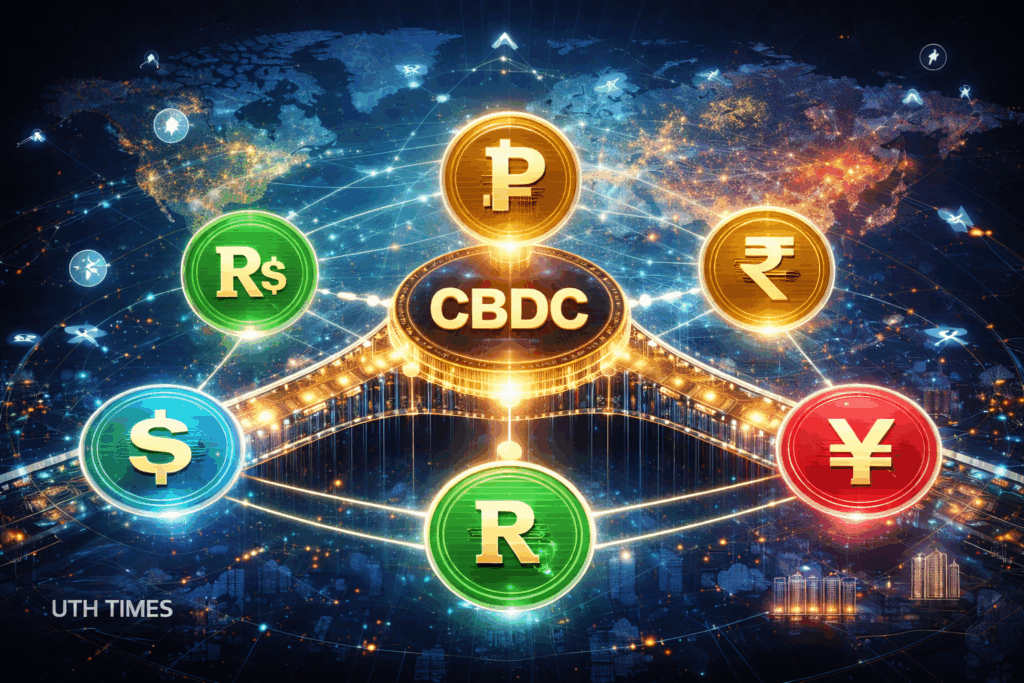
At the heart of the proposal lies a simple but radical shift: interoperability.
Instead of converting currencies through the US dollar, SWIFT, or multiple correspondent banks, BRICS nations could allow their Central Bank Digital Currencies (CBDCs) to talk to each other directly.
🌐 What this means:
- 💱 Instant currency conversion between BRICS CBDCs
- ⚡ Real-time settlement, not T+2 or T+3 delays
- 💸 Lower transaction costs for businesses and travelers
- 🔐 Central-bank–backed security, not private crypto volatility
This is not a single BRICS currency. It’s a digital bridge connecting sovereign currencies.
Why RBI Is Pushing This Now
India has already tested the waters with the Digital Rupee. The next step is scale—and BRICS offers exactly that.
🔥 Strategic drivers:
- 🛡️ Reduced dependency on the US dollar for trade settlement
- 🌍 Sanction-resilient payment routes
- 🏗️ Stronger South–South economic corridors
- 📈 Boost to exports, tourism, and MSMEs
For RBI, this isn’t ideological. It’s infrastructure logic.
Trade & Tourism: Where the Impact Will Be Felt First

Imagine this:
- An Indian exporter gets paid instantly by a Brazilian importer—no dollar conversion.
- A Chinese tourist in India pays via a CBDC wallet—no forex desk, no card fees.
- A Russian energy deal clears in minutes, not days.
🚀 Real-world effects:
- 🧳 Seamless cross-border tourism payments
- 🏭 Faster trade cycles = higher liquidity
- 🧾 Transparent, traceable transactions
- 📊 Reduced FX volatility exposure
This is friction removal at scale.
Geopolitical Undercurrents — Quiet, But Powerful
This move aligns with a broader BRICS ambition: financial multipolarity.
By creating a parallel, sovereign payment layer:
- 🌐 BRICS gains bargaining power
- ⚖️ Global payment dominance gets diluted
- 🧠 Monetary policy remains national—but connected
No slogans. No rebellion. Just design.
The Challenges Ahead

Let’s be clear—this isn’t plug-and-play.
⚠️ Hurdles include:
- 🔐 Cybersecurity coordination
- 📜 Regulatory harmonisation
- 🧩 Technical standard alignment
- 🤝 Political consensus across diverse economies
But none are deal-breakers. They’re engineering problems.
If implemented, this won’t make headlines like a new currency launch.
But years from now, it may be remembered as the moment global payments quietly changed direction.

