
Home Blog Page 29

Why Attacking boAt’s IPO Looks Like Part of a Much Bigger Conspiracy

0

The criticism surrounding boAt’s IPO isn’t happening in isolation — it fits into a larger, repeating pattern where every major Indian corporate success story gets attacked right before key economic milestones.

And when you look closely, the pattern tells you something uncomfortable:

There is a well-coordinated ideological ecosystem — often aligned with deep-left, radical, anti-growth narratives — that needs Indian IPOs to fail, because India’s economic rise dismantles their political agenda.

1️⃣ The Bigger Picture: “Attack India Inc, Attack India”

Every time a homegrown brand prepares to list, a section of the ecosystem starts pushing:

  • “It’s overvalued.”
  • “It’s a bubble.”
  • “It will fail.”
  • “Investors will be cheated.”

Never mind the facts.

Never mind the fundamentals.

Never mind global norms.

The objective is simple:

👉 Undermine trust in Indian startups → weaken Indian markets → weaken India’s growth story.

2️⃣ IPOs Are India’s Soft Power — That’s Why They Get Targeted

An IPO isn’t just a financial event.

It’s a signal:

✔ India is innovating

✔ India is building brands

✔ India is attracting capital

✔ India is becoming self-reliant

This directly threatens ideologies that survive on portraying India as:

  • “failing,”
  • “collapsing,”
  • “broken,”
  • “crony-driven,”
  • “anti-business,”
  • “anti-investor.”

A successful IPO kills their favourite narrative — so they attack it before success is even possible.

3️⃣ Why boAt Specifically? Because It Breaks Too Many Stories

boAt is everything the “anti-India economic ecosystem” hates:

  • A young Indian consumer brand beating foreign giants
  • Built by millennial entrepreneurs, not “old establishment”
  • Scaling without political patronage
  • A brand that dominates youth culture
  • A symbol of the New India economy

If boAt’s IPO succeeds, it shows the world that Indian lifestyle brands can achieve global-scale valuations.

This is exactly the kind of success the ideological left wants to prevent.

4️⃣ The Playbook Is Always the Same

You’ll notice the pattern:

  1. Leak fear-driven narratives
  2. Amplify selectively negative data
  3. Present opinions as financial analysis
  4. Seed doubt among retail investors
  5. Create a cloud of “controversy”

If retail investors lose trust → IPO demand drops → listing struggles.

Then the same ecosystem uses the dip to scream:

“See! India Inc is failing!”

➡️ It’s a self-fulfilling propaganda loop.

5️⃣ The Final Objective: Damage India’s Economic Mood

Make no mistake — it’s not just about boAt.

It’s about India’s economic confidence.

🔹 If India’s IPO market grows → India becomes the preferred hub for global capital.

🔹 If India’s startups succeed → India becomes the blueprint for emerging markets.

🔹 If India’s brands go global → the “old ideological ecosystem” becomes irrelevant.

So they attack precisely the things that represent India’s rise.

🧭 Conclusion: The boAt IPO Attacks Aren’t Random — They’re Strategic

This isn’t criticism.

This isn’t analysis.

This is narrative warfare.

And boAt is simply the latest battlefield.

The ecosystem that thrives on negativity, hopelessness, economic distrust, and ideological disruption doesn’t want India Inc to succeed — because a confident, growing India leaves no space for their politics.

That’s why boAt is being targeted.

That’s why Indian IPOs are constantly attacked.

And that’s why India must recognise this for what it is:

👉 A coordinated attempt to weaken the story of New India.

The Hidden Switch of the Mind: The Discovery That Changed 1963

0

1963 wasn’t just another year. It was the year a man claimed he had found the universe’s greatest secret—not in the stars, but inside the human mind. What he found was not magic… but mental mechanics.

🧠 THE SWITCH THAT CONTROLS REALITY

⚡ The Theory That Shocked Scientists

🔹 The claim: the human brain carries a psychological “switch”—a point of activation that transforms perception, attention, and even physical reactions.

🔹 When activated, it changes how reality is processed, making people:

  • Experience intense clarity
  • Feel stronger focus
  • Solve problems faster
  • Notice opportunities they previously ignored

🔹 It was not religious. Not mystical. It was neuropsychological. Researchers saw that when someone believes deeply in a thought, the subconscious rewires the brain’s Reticular Activating System (RAS)—a tiny structure that filters information and shapes what the mind sees as “reality.”

💡 In simple words: what you focus on becomes your reality.

🧬 THE 1963 DISCOVERY

🧪 The Man Who Found It

A behavioral researcher in 1963 noticed something unusual:

👉 When people were given a trigger phrase (“I decide what I see”), their brains shifted instantly. Heartbeat slowed. Eyes widened. Muscles relaxed.

👉 They behaved like they had overridden fear, and locked into problem-solving mode.

This was not hypnosis.

It was called Cognitive Switching—a rare mental state where the mind shifts from survival mode to creation mode.

🛠️ The Switch Happens When:

  • 🧠 Belief overrides doubt
  • 🎯 Focus overpowers fear
  • 🧩 Imagination replaces limitation
  • 💭 Vision becomes more real than memory

⚠️ THE WARNING

🚨 Activating the Switch Isn’t Always Safe

Researchers noticed a dangerous side:

👉 Some people used this mental switch for ego, control, or manipulation.

👉 Others became disconnected from reality, mistaking imagination for truth.

The real warning:

You can switch your mind into a higher gear…

but you must also stay grounded—otherwise the switch controls you.

🔍 HOW TO ACCESS IT (Scientifically Backed)

  • 🧘‍♂️ Slow breathing (activates vagus nerve)
  • 📜 Repeat a power statement: “I choose what my mind sees.”
  • 🎬 Visualize ONE goal as if it already exists
  • ✍️ Write it once daily — the act programs the RAS

This isn’t magic.

It’s Neural Intentional Programming.

The mind doesn’t obey logic.

It obeys repetition.

🪐 Ending

The greatest switch is real—and it’s inside you. But the question remains:

Are you using it? Or is it using you?

 India’s Export Shift: Breaking Free from US — Bold New Markets Fuel Growth

0

India’s export story in 2025 is evolving — fast. According to a fresh State Bank of India (SBI) report, the country’s merchandise exports during April–September 2025 climbed to USD 220 billion, up from USD 214 billion in the same period last year. 

What’s striking is not just this modest overall growth — but the clear shift away from over-reliance on the US.

📦 Exports Up, But US Share Slides

  • While total merchandise exports rose 2.9%, the share destined for the United States has been shrinking since July 2025, sliding to about 15% by September.  
  • In absolute terms, shipments to the US still grew: cumulative US exports in Apr–Sep rose ~13% (from USD 40 bn to ~USD 45 bn).  
  • But September saw a sharp drop: US-bound exports fell nearly 12% compared to a year ago, especially hitting sectors like marine products, precious/semi-precious stones, ready-made garments and cotton fabrics.  

This contrast — overall export growth despite a slump in US shipments — points to a deliberate diversification strategy.

🌍 A Global Spread: New Markets Taking Centre Stage

The SBI report notes that export destinations are diversifying fast. Besides the US, top growth is coming from United Arab Emirates (UAE), China, Vietnam, Japan, Hong Kong, Bangladesh, Sri Lanka, Nigeria and many more. 

  • In fact, exporters recorded positive growth across 24 countries, collectively accounting for about 59% of India’s exports in H1 FY26.  
  • This growth spans across a broad mix of sectors — not just traditional garments or jewels — signalling a structural shift rather than a short-term blip.  

This transformation reduces concentration risk: instead of depending on one big buyer (US), India now seems to be building a diversified network of buyers globally.

⚠️ What Prompted the Shift? Tariffs, Strategy & Survival

Why this pivot? A few big drivers:

  • The US imposed high tariffs on many Indian exports, especially labour-intensive items like garments, textiles, gems & jewellery, and marine products — squeezing margins dramatically.  
  • In response, exporters seemed to have recalibrated: instead of fighting tariff headwinds in one country, they broadened their reach — tapping new demand centers across Middle East, Asia, Africa and beyond.
  • Meanwhile, government support — including credit guarantees — also appears to have cushioned exporters and helped them adjust.  

🚀 What This Means for India’s Trade Future

  • The diversification trend builds resilience: global demand shocks, tariff wars, or geopolitical issues hit one country less hard if trade is more spread out.
  • For Indian exporters, this could mean more stability — less dependency on a single market, and more incentive to scale up production and diversify product lines.
  • On a macro level, India’s export architecture is evolving — from “US-heavy” to “global-spread,” which could reshape trade strategy, logistics, and even how trade agreements are approached.

🔚 Closing Thought

India’s trade story in 2025 isn’t about wild growth or record-breaking numbers. It’s smarter, craftier, and more resilient. By diversifying exports beyond the US — reaching across continents — India seems to be crafting a globally balanced export portfolio. The message is loud and clear: the world is now India’s customer base.

Sanatan Temples: The Most Advanced Mind Technology on Earth

What if temples were never religious spaces — but neuroscience hubs built to transform human consciousness? Sanatan Dharma didn’t just create places of prayer. It created technologies for the human mind — centuries before modern science even had names for them.

🧠 Temples as Human Energy Upgraders

Ancient rishis viewed humans as energy receivers. Temples were built where Earth’s geomagnetic field was strong — so simply standing there could recalibrate brainwaves, reduce stress, and induce clarity.

  • 🧲 Located on magnetic hotspots to balance body energy
  • 🧘 Brain shifts to Alpha waves — same as deep meditation
  • 💓 Heart rate slows down & cortisol (stress hormone) drops

You don’t go to a temple — the temple works on you.

🔊 Bell Physics: A Reset Button for the Brain

The bell in a temple is not symbolism. It is frequency engineering.

  • Produces 7 healing sound frequencies → activates all chakras
  • Creates a thoughtless gap for 6–7 seconds — proven by EEG scans
  • Synchronizes both sides of the brain — a rare neurological phenomenon

⚖️ Right brain (emotion)

⚙️ Left brain (logic)

➡️ After the bell rings — they operate in harmony.

🔆 Murti Is Not an Idol — It’s a Charged Energy System

Murtis were never God’s face. They were energy receivers:

  • 🪨 Made from black granite — a powerful conductor
  • 📐 Built with sacred yantra geometry — never random
  • ⚛️ Energized through Prana Pratishtha — transferring energy via sound & rituals

Think of it as charging a battery — the murti becomes a live transmitter of energy frequencies.

🔉 Mantra: Sound as a Science, Not Prayer

  • 🧬 Every mantra is a precise frequency algorithm
  • 🔄 Repetition structures water molecules in your body
  • 🎯 “Om” vibrates at 136.1 Hz — same frequency as Earth’s orbit around the Sun
  • 🧠 MRI scans: mantra chanting reduces anxiety & depression

🧠 Mantras are not spiritual requests — they are neurological tools.

🔥 Rituals = Psychological & Energetic Reprogramming

  • 🪔 Lighting a lamp releases negative ions → purifies air
  • 🌀 Parikrama balances both brain hemispheres through circular motion
  • 💧 Sprinkling water activates sensory reset in neural pathways
  • 👁️ Tilak stimulates the pineal gland — your “third eye”

➡️ Temples were not places of belief — they were clinics for the mind.

🛕 Temple Architecture = Sonic Geometry

Temples were designed using Vaastu & Sonic Resonance Architecture:

  • The Garbhagriha (sanctum) produces echo-free silence
  • Stone absorbs chant vibrations & releases them slowly
  • The temple floor naturally grounds electric charge from your body

➡️ Every step inside a temple changes your body without you realizing it.

🔷 END

Temples were never just places of worship.

They were human upgrade centers —

built not to control belief,

but to unlock consciousness.

Ayurveda on Brain Fog: The Ancient Science That Explained It First

0

🌿 Ayurveda on Brain Fog: The Ancient Science That Explained It First

Brain fog may sound like a modern problem, but Ayurveda mapped its root causes millennia ago. Where neuroscience sees neurotransmitter imbalance, Ayurveda sees blocked mind-channels, disturbed Prana, and weakened Agni. And astonishingly—both align.

🔥 The Ayurvedic Blueprint Behind Brain Fog

Ayurveda doesn’t treat brain fog as a random phase. It identifies it as a systemic imbalance, originating in digestion, energy flow, and mental pathways known as manovaha srotas.

🔱 Weak Agni: The First Spark That Fades

When digestive fire—Agni—weakens:

  • 🔸 Food doesn’t digest fully
  • 🔸 Toxic residue called ama forms
  • 🔸 Ama enters subtle channels and clogs mental pathways

This is why Ayurveda says:

“A dull stomach creates a dull mind.”

Modern science echoes the same: gut inflammation → neurotransmitter disruption → cognitive fog.

🌬️ Vata Disturbance: The Scatter Effect

Vata governs movement—of thoughts, impulses, breath.

When it becomes aggravated through:

  • 🔸 Excess screen exposure
  • 🔸 Irregular sleep
  • 🔸 Skipping meals
  • 🔸 Overstimulation

…it results in:

  • ⚡ Racing thoughts
  • ⚡ Difficulty focusing
  • ⚡ Restlessness
  • ⚡ Short-lived attention

This is the “mind running ahead of itself”—a classic Vata imbalance.

🌧️ Kapha Overload: The Mental Slump

Kapha brings stability, but when excessive, it becomes heaviness.

Triggered by:

  • 🔸 Cold foods
  • 🔸 Excess dairy
  • 🔸 Overeating
  • 🔸 Sugar and fried foods

It produces:

  • 💧 Mental sluggishness
  • 💧 Slow thinking
  • 💧 “Mud-like” heaviness in the mind

This is why fog often hits right after junk food—Ayurveda blames rising ama, while modern science blames inflammation.

🧘 Quick Ayurvedic Fixes for Instant Clarity

  • 🌿 Warm, light meals to ignite Agni
  • 🌿 Ginger + black pepper to melt ama
  • 🌿 Deep nasal breathing to regulate Prana
  • 🌿 Brahmi, Shankhpushpi, Tulsi tea to nourish the mind
  • 🌿 Oil massage (Abhyanga) to ground Vata

🌞 Daily Habits That Prevent Brain Fog

  • ☀️ Morning sunlight to align circadian rhythm
  • 🕉️ 10 mins pranayama to stabilize mind-channels
  • 🕯️ Early bedtime to repair cognitive pathways
  • 🍲 Regular mealtimes to balance Agni
  • 🍃 Light dinner to avoid overnight ama formation

These habits keep Prana steady, Agni strong, and manovaha srotas clear.

Ayurveda didn’t just notice brain fog—it decoded its architecture long before modern science. Today, neuroscience validates what ancient seers knew: clarity is a system, not a symptom.

The Day Humanity Uploads Its Mind: Elon Musk’s Vision of Human Minds Living Inside Robots

0

🌌 When Sci-Fi Starts to Look Real

For centuries, humanity feared death. Today, it is not just being challenged—it is being technologically redesigned. Elon Musk believes the human mind could soon be uploaded into robotic bodies. Not in a century—but possibly within 20 years, or even 10.

🧠 THE VISION — A DIGITAL VERSION OF YOU

Elon Musk’s futuristic prediction is simple yet shocking:

  • 🧬 Your memories and personality are just data.
  • 🤖 That data can be transferred.
  • 👤 A robotic version of you could walk, talk, and think even after your biological body ceases to function.

This means digital immortality. A second life. Not heaven, not reincarnation — but an upgrade.

⚡ NEURALINK — THE REAL-LIFE BRIDGE TO THE BRAIN

Neuralink, Musk’s brain-chip startup, may be the critical step toward mind uploading. Today, it helps paralyzed patients control devices with thought. Tomorrow, it could do more. Much more.

What it aims to achieve:

  • 🧠 Real-time brain signal recording
  • 🔌 High-bandwidth brain–machine communication
  • 💾 Storing memories outside the brain
  • 🔄 Transferring consciousness into a synthetic mind

If these goals succeed, your mind becomes software — transferable, saveable, maybe even upgradable.

🤖 THE HUMANOID BODY — A NEW FORM OF HUMAN LIFE

Imagine choosing your body like choosing a smartphone model.

Musk envisions humanoid robots with:

  • 🦾 Artificial muscles stronger than humans
  • 👁️ High-resolution digital vision
  • 🧠 AI-enhanced thinking speed
  • 🔃 Body replacements when damaged

This could birth a new species:

Homo Technologicus — humans living through machines.

🌀 THE BIG QUESTIONS — DO WE STILL REMAIN HUMAN?

If your mind is transferred into a robot, are you still you?

Or is it just a perfect digital clone?

What about emotions? Morality? Soul?

The world may face philosophical battles bigger than any scientific breakthrough.

🚀 A Short Ending — The Countdown Has Already Begun

The idea once belonged to science fiction. Now, it lives inside laboratories. Whether this future excites or terrifies us—one thing is clear: Humanity is preparing for its most radical evolution. Not the end of humans…


but perhaps the beginning of Version 2.0.

Prufrock-5’s Rain-Soaked Breakout: Bastrop’s Next-Gen Tunnel Machine Begins Its Sprint

0

⚡ A Stormy Launch in Bastrop

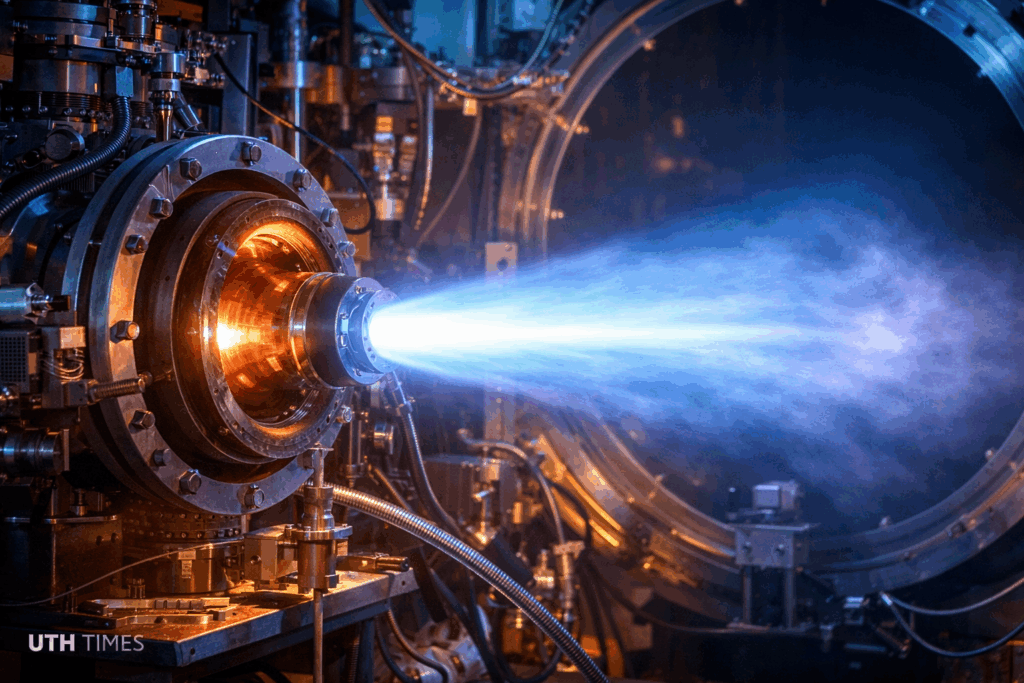
In the thick of a soggy Bastrop morning, The Boring Company’s highly anticipated Prufrock-5 quietly exited its factory. The rain beat against the facility, drumming a gritty soundtrack as the next-generation tunnel-boring machine made its debut — not with fanfare, but with raw, relentless ambition. This isn’t just another TBM; Prufrock-5 is expected to push performance into uncharted terrain.

🔧 The Engineering Breakthrough

  • Prufrock-5 builds on the advanced “porpoising” architecture that lets it launch from the surface and dive underground swiftly, avoiding the need for deep launch shafts.  
  • With a departure from the factory confirmed, engineers are preparing for a full-scale tunneling phase beginning December 1 — a critical date marking the machine’s transition from factory floor to subterranean powerhouse.
  • The company’s internal goals suggest a step-function increase in speed: Prufrock-5 is expected to outperform its predecessors by a large margin, potentially accelerating tunnel progress to previously unimagined rates.

🌍 Strategic Importance: Why Bastrop Matters

  • Bastrop, Texas, is more than just a manufacturing hub — it’s ground zero for The Boring Company’s R&D operations.  
  • The site has hosted several porpoise-test tunnels (PT), including PT-4, PT-5, and PT-6.  
  • A new centralized Global Operations Control Center, based in Bastrop, allows remote real-time monitoring of TBMs — enhancing control, reducing downtime, and dramatically scaling operations.  
  • Bastrop is also linked to broader infrastructure ambitions: local authorities have floated pedestrian tunnels under trails, connecting parts of the city using The Boring Company’s tech.  

⚠️ Risks, Pressure, and Public Eyes

  • While Prufrock-5’s march forward is bold, it’s not without controversy: The Boring Company has previously faced environmental scrutiny in Bastrop regarding stormwater management.  
  • Local stakeholders will be watching closely. Success could redefine urban tunneling; missteps could reignite opposition.
  • But the narrative is shifting: this isn’t a test anymore. With Prufrock-5, The Boring Company is signaling that Bastrop isn’t just a playground — it’s a proving ground.

🚀 What’s Next?

As the calendar edges toward December, all eyes will be on Bastrop. Will Prufrock-5 deliver the quantum leap in tunneling velocity that engineers promise? If it does, it could reset expectations for infrastructure projects around the globe — and cement Bastrop’s place at the cutting edge of underground innovation.

India’s Mega 19 km Brahmaputra Bridge: A Game-Changer for Northeast Connectivity

0

India is constructing one of its most ambitious infrastructure projects yet: a 19.28 km four-lane extradosed bridge across the mighty Brahmaputra River, linking Dhubri in Assam with Phulbari in Meghalaya. This is not just a bridge — it’s a strategic masterpiece that promises to redefine connectivity in the Northeast. 

🌉 Engineering Marvel & Strategic

  • The main navigation span of the bridge stretches for 12.625 km, while long approach viaducts of 3.5 km on the Dhubri side and 2.2 km on the Phulbari side tie the structure to road networks.  
  • The project is being built by Larsen & Toubro (L&T) under the supervision of NHIDCL, with JICA (Japan International Cooperation Agency) providing loan assistance.  
  • Costing roughly ₹4,997 crore, this bridge is not only a feat of civil engineering but also a significant financial investment in the region.  

📉 A Shortcut That Changes Everything

  • Today, traveling by road between Dhubri and Phulbari involves a gigantic 200 km detour, taking several hours.  
  • With this bridge, that distance is cut down to just 19 km, and the travel time drops to 20–35 minutes, replacing slow and risky ferry services.  
  • The bridge also fills a missing link on National Highway 127B, unlocking road access between key towns in Meghalaya like Tura, Nongstoin, and helping foster economic integration.  

🌍 Regional & Strategic Ripple Effects

  • By bridging Assam and Meghalaya, the structure enhances trade and mobility in the Northeast — not only internally but also internationally.  
  • It strengthens India’s connectivity to Bangladesh and Bhutan, via adjoining border towns like Dalu (Meghalaya) and Hatisar (Assam).  
  • The bridge also has socio-economic significance: it will improve access for around 2 million commuters, reduce dependence on ferries, and potentially boost tourism and local business.  

🏗 Current Progress & Timeline

  • As of early 2025, more than 55% of the construction has been completed, according to NHIDCL reports.  
  • The targeted completion date is September 2028, with work being closely monitored at the highest levels — including by the Prime Minister’s Office (PMO).  
  • Once operational, this bridge will become India’s longest river bridge over water, a next-level infrastructure landmark.  

🔗 Why This Bridge Matters

  • It’s a symbol of vision: bridging not just land, but divides — economic, geographic, and strategic.
  • It’s a catalyst for development in remote and under-connected areas of Meghalaya and Assam.
  • It’s a geopolitical asset, improving access and resilience in a sensitive border region.

In short, the Dhubri-Phulbari Brahmaputra Bridge isn’t just steel and concrete — it’s a bold statement of ambition, integration, and transformation. With its completion, the fabric of India’s Northeast will be rewoven, ushering in a new era of connectivity and opportunity.

The Jupiter Gambit: When 1973 Scientists Targeted the Unknown

0

In 1973, a daring idea was whispered inside a small control room:

“What if we gave him coordinates… in space?”

It wasn’t science fiction. It was a challenge—and NASA accepted it.

🌌 The Era of ‘Unknown Jupiter’

Before 1973, Jupiter was more mystery than knowledge. Scientists saw it as:

  • 🌀 A swirling giant of storms
  • 🧪 A chemical puzzle
  • 🛰️ A potential testing ground for deep space navigation

NASA’s Pioneer 10 had just completed its historic flyby, but it raised more questions than answers. Instead of ending the mission, scientists pushed the limits further.

🧠 The Bold Proposal — Giving Space a Target

When researcher Ingo agreed to a radical new idea, the mission changed forever:

  • 🌍 No longer just observational data from Earth
  • 🧭 They would send exact spatial coordinates… to a probe millions of kilometers away
  • 📡 It would be a true space navigation experiment

This was not normal. Until then, spacecraft were guided with broad trajectory plans — not pinpoint coordinates inside 3D space.

It was like trying to throw a dart into a hurricane… blindfolded.

🛰️ Pioneer 10 – A New Kind of Navigator

Pioneer 10 became the first machine to be guided using true deep-space coordinates.

Each transmission from Earth took over 40 minutes to reach it — and yet NASA managed to adjust its path in real time.

Key Breakthroughs:

  • 🧠 Introduced “predictive guidance” — anticipating motion before commanding it
  • 💡 Used Jupiter’s gravity as a slingshot test
  • 🛰️ First spacecraft to detect Jupiter’s deadly radiation belts
  • 🔋 Designed with hardened electronics — technology now essential in every deep-space mission

⚙️ Space as a Coordinate System

To give coordinates in space, engineers had to redefine navigation itself:

  • 🧭 They built a solar-system-wide coordinate grid
  • 📡 They engineered a new tracking system using Doppler shift
  • 📐 They treated space not as emptiness—but as a measurable landscape

This approach became the foundation for modern interplanetary travel. Voyager, Cassini, New Horizons—all followed this path.

🌠 Legacy – The Moment Space Became “Reachable”

This bold idea turned Jupiter from a distant mystery…

into a reachable destination.

Not just for data—but for exploration.

Their question still echoes today:

“What if we push the limits… again?”

When Light Becomes a Weapon: DRDO’s Photonic RF Memory

0

DRDO is reportedly pushing the boundaries of electronic warfare by exploring Photonics-based RF Memory (PRFM) — a radical evolution of classical Digital RF Memory (DRFM). Instead of using purely electronic circuits, PRFM uses light — photons — to capture, store, and replay radar signals. This could transform how jammers deceive modern radars.

📡 What Is PRFM — And Why It Matters

  • ✨ Massive Bandwidth: Using photonic circuits means PRFM can operate over enormously wide frequency ranges, far beyond the constraints of conventional electronics.
  • ⚡ Ultra-Low Latency: Light-based memory lets incoming radar signals be stored and retransmitted with minimal delay — critical for real-time deception.
  • 🎯 High-Fidelity Replay: Since the system works coherently with the incoming signal, PRFM can offer extremely accurate copies, preserving phase, amplitude, and timing — enabling precise spoofing or mirroring of an enemy’s radar waveform.
  • 🔄 Adaptive Signal Manipulation: The memory can tweak stored waveforms — altering range, Doppler, angle, or signature — to create believable false targets or confuse the adversary’s radar tracker.

🛡️ Military Impact: Smarter, Sharper Jamming

  • 💣 Sharper Deception: PRFM enables creation of very realistic echoes. Enemy radars could be tricked into seeing phantom aircraft or decoys, undermining range and velocity tracking.
  • 🧠 Smarter Countermeasures: With such high fidelity and bandwidth, jammers become more than noise makers — they act like intelligent adversaries, mimicking genuine emissions.
  • 🛡️ Stronger Protection: Against AESA (Active Electronically Scanned Array) and LPI (Low Probability of Intercept) radars, which use agile, complex waveforms, photonic memory’s speed and fidelity offer robust defense.
  • 🌐 Networked EW: PRFM-equipped jammers could feed back into real-time EW networks, sharing stored signatures and threat libraries across platforms.

⚙️ Why Photonics — And Why Now

  • 🚀 Photonics Advantage: Optical components, like modulators and fiber optics, handle GHz-to-tens-of-GHz signals with lower noise and broader linearity than purely electronic circuits.
  • 🧪 Convergence with Radar R&D: DRDO’s own work on photonic radar (as covered by defense analysts) shows it already has experience with photonic integrated circuits and light-generation for radar systems.  
  • 🏭 Strategic Self-Reliance: Developing PRFM indigenously would align with DRDO’s push for advanced electronic warfare capabilities, complementing its Digital Radio Frequency Memory (DRFM) systems.  

⚠️ Challenges on the Horizon

  • 🔧 Complex Engineering: Building a stable, high-speed photonic memory system that reliably captures and replays RF waveforms is nontrivial — optics + electronics integration is hard.
  • 🔋 Size, Weight, Power (SWaP): Photonic systems may involve lasers, modulators, and fiber — managing them in airborne jammers or compact pods will be a design challenge.
  • 🧊 Thermal Management: High-speed photonic circuits generate heat — cooling will be vital for real-world deployment.
  • 🧭 Security & Robustness: Optical systems must be made rugged enough for battlefield conditions (vibration, shock, temperature).

🧭 Strategic Implications for India

If DRDO succeeds, PRFM could position India among a very select few nations possessing light-based deception jammers. It could dramatically elevate the sophistication of Indian EW — protecting aircraft, disrupting advanced radars, and reshaping deterrence. Beyond defense, it could also spin off into high-speed photonic memory research with dual-use potential.