
What once belonged to science fiction is now stepping into the laboratory. Russian scientists have unveiled a prototype plasma engine that could slash the Earth–Mars journey from nearly nine months to just 30 days—a leap that could redefine the future of human spaceflight.
🚀 What Is This Plasma Engine?
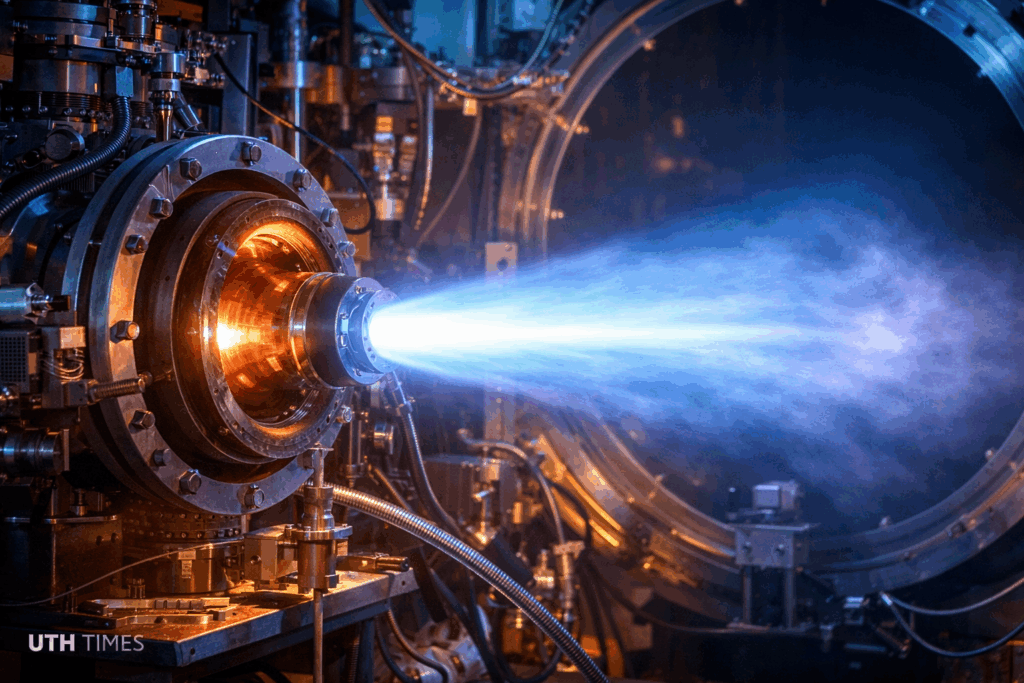
At the heart of this breakthrough is a plasma-based electric propulsion system, developed by scientists associated with Rosatom research units. Unlike chemical rockets that rely on explosive thrust, this engine uses superheated plasma accelerated by electromagnetic fields.
🔹 Plasma is heated to extreme temperatures (millions of degrees)
🔹 Charged particles are expelled at ultra-high velocities
🔹 Continuous thrust is maintained for weeks, not minutes
The result? Sustained acceleration in space, something chemical rockets simply cannot achieve.
🧠 Why This Changes Everything

Traditional Mars missions follow orbital mechanics—launch, coast, and wait. Plasma engines change the rules.
🔥 Key advantages:
- 🚀 Constant acceleration instead of short bursts
- ⏱️ Mars transit cut to ~30 days
- 🧑🚀 Reduced radiation exposure for astronauts
- 🛰️ Greater maneuverability in deep space
This means missions could be faster, safer, and more flexible, opening doors to regular interplanetary travel rather than rare, high-risk expeditions.
⚙️ How It’s Different From Ion Engines
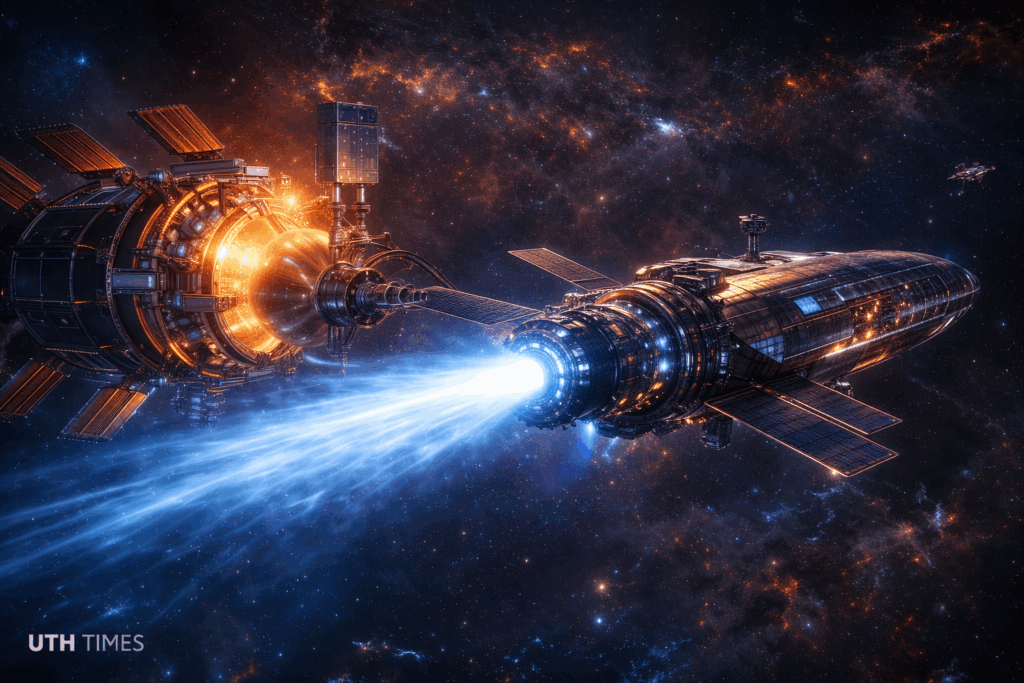
While ion engines already exist on satellites, this prototype operates at an entirely new scale.
🧲 What sets it apart:
- ⚡ Power output measured in megawatts, not kilowatts
- 🌌 Designed for crewed interplanetary spacecraft
- 🔬 Built for long-duration, high-energy missions
The engine would likely be paired with a nuclear or advanced space-based power source, enabling uninterrupted thrust deep into space.
🌍 Strategic & Global Impact
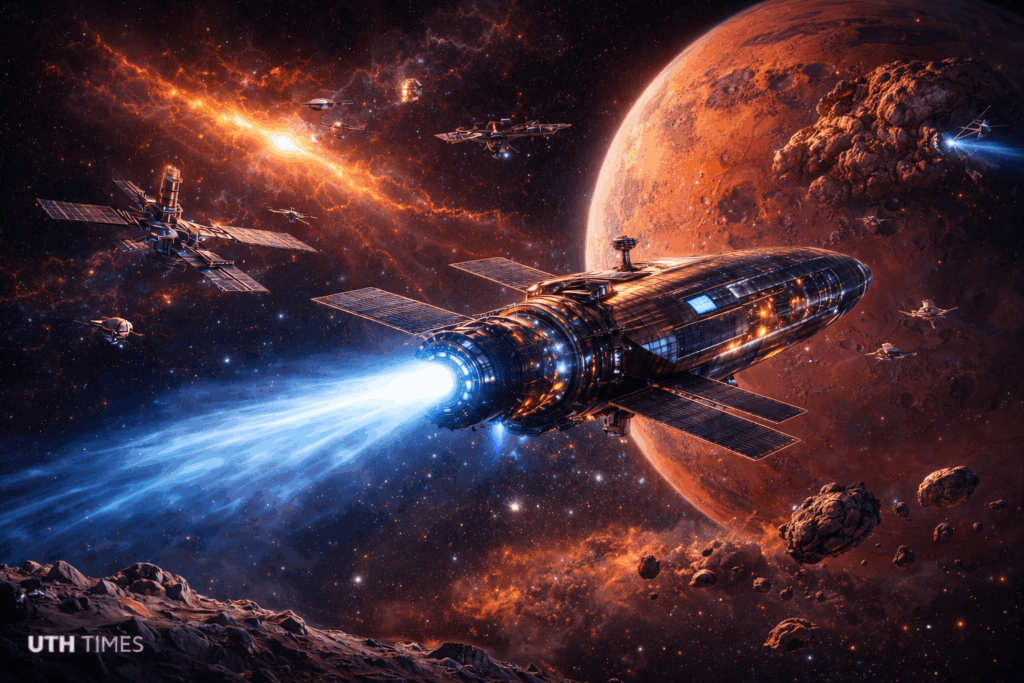
This isn’t just a scientific achievement—it’s a geopolitical signal.
🌐 Potential implications:
- 🚀 A new space race phase, focused on propulsion supremacy
- 🪐 Faster missions to Mars, asteroids, and deep-space stations
- 🔋 Spin-off technologies in energy, materials, and plasma physics
If scaled successfully, plasma propulsion could become the backbone of 21st-century space logistics.
🔮 What Comes Next

The prototype is currently ground-tested, but the roadmap includes:
- 🧪 Space-based testing
- 🛰️ Integration into experimental spacecraft
- 🧑🚀 Long-term vision: human missions to Mars and beyond
A 30-day journey to Mars is no longer a dream—it’s a technological trajectory. Plasma engines may soon turn the Red Planet from a distant frontier into a reachable destination.

