
Home Blog Page 24

India’s Agni-5 Bunker Buster: Power Beneath the Surface 🇮🇳🔥

0

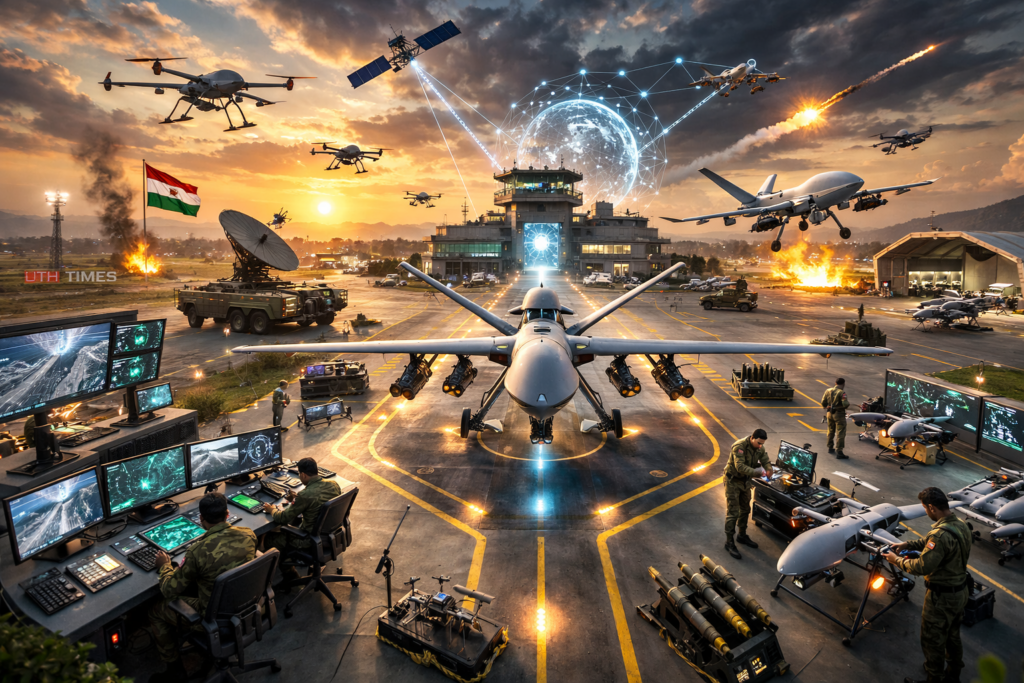
Without dramatic announcements or chest-thumping, India has quietly upgraded its most formidable long-range missile. The result is an Agni-5 variant capable of delivering the largest-ever conventional warhead, designed specifically to destroy deeply buried and hardened targets. This isn’t escalation — it’s precision deterrence, refined.

The Weapon Reimagined: From Deterrence to Precision Strike 🎯

The upgraded Agni-5 has evolved beyond its traditional nuclear deterrence role. This new configuration transforms it into a strategic bunker-buster, capable of neutralising underground command centres, missile silos, and fortified installations — without crossing the nuclear threshold.

🔹 What’s new

  • 💣 Massive high-density conventional warhead
  • 🧱 Designed for deep-earth penetration before detonation
  • 🎯 Extremely high accuracy with advanced guidance systems
  • 🚀 Retains intercontinental-class range capability

This makes Agni-5 a rare global asset — a non-nuclear strategic equaliser.

Why a Bunker Buster? The Strategic Logic 🧠

Modern warfare has moved underground. Adversaries increasingly rely on hardened facilities buried deep beneath mountains or reinforced concrete.

🧩 India’s answer:

  • 🕳️ Strike targets previously considered “untouchable”
  • 🛡️ Neutralise threats without nuclear escalation
  • ⚖️ Maintain strategic balance while remaining responsible

This capability sends a clear message: depth is no longer safety.

Engineering the Impact: What Makes It Deadly ⚙️

Unlike air-dropped bunker busters, Agni-5 delivers impact energy at hypersonic speeds.

⚡ Key technical strengths:

  • 🔥 Tremendous kinetic force from re-entry velocity
  • 🧲 Reinforced nose cone for penetration
  • 🧠 Smart fusing systems to detonate at optimal depth
  • 🛰️ Advanced navigation & mid-course correction

Developed under Defence Research and Development Organisation, the missile reflects India’s growing mastery over complex strike technologies.

Global Context: A Rare Capability 🌍

Very few nations possess long-range conventional bunker-buster missiles. India now joins an elite group — but with a distinct philosophy.

🌐 What sets India apart:

  • ❌ No first-use nuclear posture remains intact
  • ✅ Focus on precision, not mass destruction
  • 🕊️ Deterrence without destabilisation

It’s strength with restraint — a balance few achieve.

What This Means for India’s Defence Posture 🇮🇳

This upgrade reshapes India’s strategic playbook.

📌 Strategic outcomes:

  • 🔐 Enhanced credibility of conventional deterrence
  • 🧭 Reduced reliance on nuclear signalling
  • 🏗️ Ability to pre-empt hardened threats if required

India doesn’t need louder weapons — just smarter ones.

The Agni-5 bunker-buster isn’t about intimidation. It’s about certainty. In an era of buried threats and hidden arsenals, India has ensured that no target is too deep, and no deterrence too blunt.

Dolores Cannon: The Housewife Who Opened the Mind of Humanity

0

Dolores Cannon was not born into spirituality, philosophy, or occult study. She began as a Navy wife in Arkansas — a homemaker raising four children, grounded in routine, faith, and normalcy. No crystals. No prophecies. No spiritual quest.

Then, in 1968, a single hypnosis session ruptured reality as she knew it.

The Session That Shattered Psychology

Dolores was asked to hypnotize a woman suffering from anxiety — a routine therapeutic request. But instead of childhood memories, something unprecedented happened.

🧠 Under hypnosis, the woman began recalling:

  • 🌍 A life lived in 1923
  • 🕰️ Another in 1850
  • 🏺 And one in ancient Egypt

These weren’t vague visions. They were precise — names, locations, dialects, social customs. Dolores assumed fantasy… until she verified the historical accuracy. It matched.

That moment didn’t just change a session — it changed a lifetime.

The Discovery of the “Subconscious”

What Dolores uncovered wasn’t Freud’s subconscious. She described it as something far larger — a universal intelligence, a shared informational field connecting all souls.

🌐 She found patterns across thousands of sessions:

  • 👶 We choose our parents before birth
  • 🎓 Life is a structured learning system
  • 🧪 Earth functions like a simulation
  • ⚰️ Death is a transition, not an end

Different people. Different cultures. Same truths. Repeated endlessly.

The Voice That Wasn’t Human

One anomaly disturbed Dolores deeply. The voice speaking during sessions didn’t sound like the patient.

🗣️ It showed signs of:

  • 📚 Advanced vocabulary beyond education level
  • ⚛️ Quantum concepts unknown to the subject
  • 🧩 Metaphorical, non-emotional intelligence

When she asked who was speaking, the answer was consistent.

✨ “The Higher Self.”

The Volunteer Hypothesis

According to this Higher Self, humans are not accidents.

🚀 The revelation:

  • 🌟 Souls volunteered to incarnate on Earth
  • 🔄 Their mission: raise planetary consciousness
  • 🧠 Memory was erased at birth
  • 🌍 Earth is a dense, difficult classroom

Forget the Matrix — this was cosmic amnesia by design.

A Legacy That Refused to Be Ignored

Dolores Cannon didn’t ask to become controversial. But her work challenged science, religion, and reality itself. Whether viewed as revolutionary or unsettling, her findings remain eerily consistent — and impossible to dismiss.

She didn’t chase the truth.

The truth walked into her living room — and refused to leave.

India: The World’s Emerging Defence Factory 🇮🇳⚙️

0

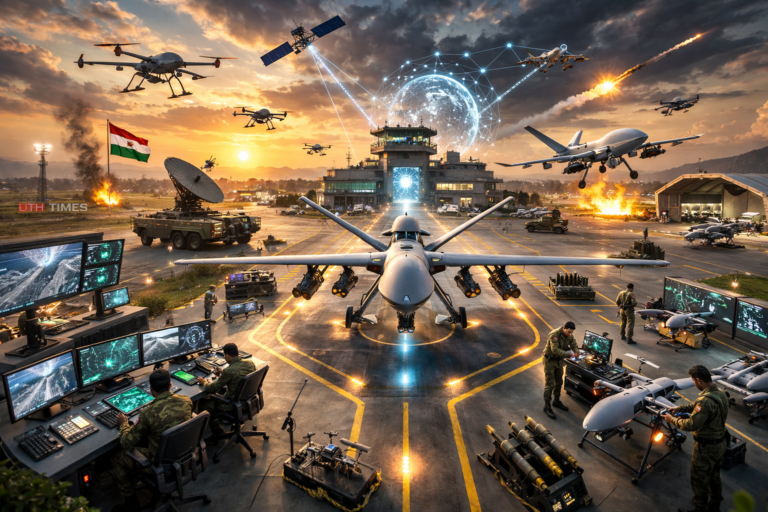
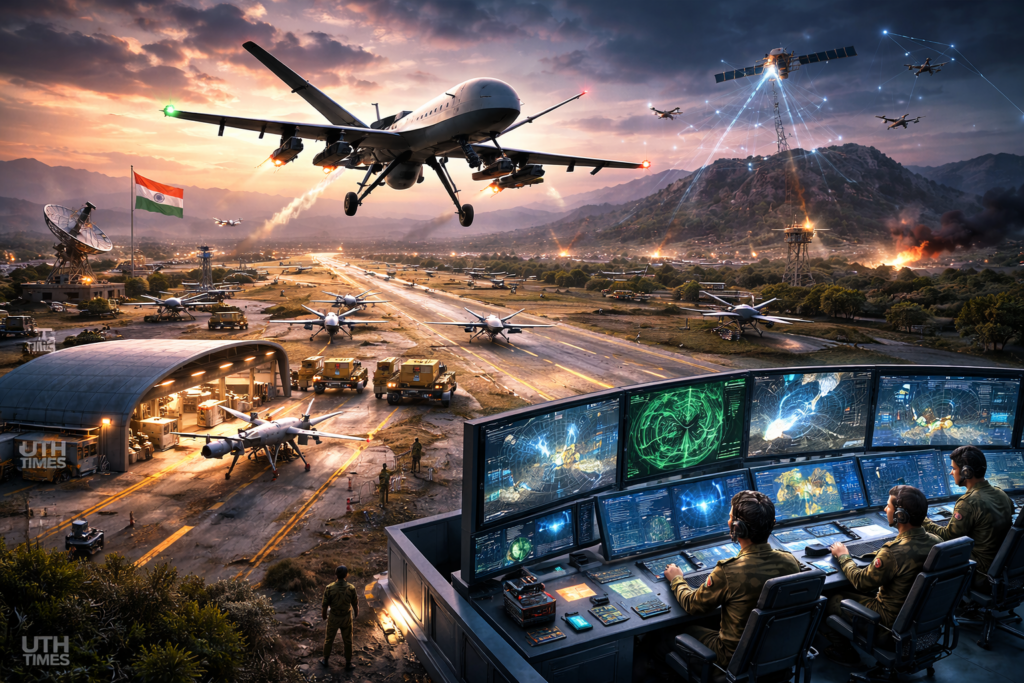
Without dramatic announcements or flashy declarations, India is engineering one of the most consequential shifts in global defence economics. As wars stretch supply chains and geopolitical fault lines deepen, India is steadily transforming into a reliable, scalable, and trusted defence manufacturing base for the world.

This is not ambition. It is alignment with global reality.

From Importer to Industrial Backbone

For decades, India was known primarily as a defence buyer. Today, it is evolving into a production backbone.

🧩 What makes India indispensable

  • 🏭 Massive industrial scale with rapid expansion capacity
  • 👨‍🔧 A skilled workforce familiar with Eastern and Western platforms
  • 🗳️ Democratic stability amid global uncertainty
  • 💰 Cost efficiency without compromising quality

Global defence firms now see India not as a sales destination—but as manufacturing insurance.

Israel: Redundancy in a Constant War

For Israel, uninterrupted defence production is existential.

🚀 Why India matters to Israel

  • 🛡️ Offshore production lines safe from direct conflict
  • 🛰️ Manufacturing of drones, sensors, loitering munitions & EW systems
  • 🤝 Transition from buyer-seller to co-development

India hosting the only Hermes-900 drone production line outside Israel signals deep strategic trust—not outsourcing, but integration.

Russia: Experience Meets Wartime Pressure

India is arguably Russia’s most experienced defence partner outside Russia itself.

⚙️ India’s role for Russia

  • 🧠 Decades-long operational and technical familiarity
  • 🏗️ Stable industrial capacity during wartime strain
  • 🔄 Support for export commitments while Russia prioritises domestic demand

In a sanctions-hit environment, India offers continuity without political volatility.

Europe: The Manufacturing Pivot

Even Europe is recalibrating.

✈️ Why Western OEMs are shifting production

  • 📦 Component and subsystem manufacturing at scale
  • 🧑‍🏭 Skilled manpower with global standards
  • 🌍 Lower geopolitical risk compared to conflict zones

India is no longer just buying European platforms—it is entering their production ecosystems.

The New Rules of Military Power

The next decade will not be dominated by who designs the most advanced weapon.

🔥 It will be decided by who can:

  • ⚡ Manufacture fast
  • 📈 Scale reliably
  • 🔒 Deliver uninterrupted, even during war

India is positioning itself exactly at that intersection.

India is not claiming to be the world’s defence factory.

Global conflict, broken supply chains, and strategic necessity are quietly making it one.

Hanuman — The Ninth Brahma of the Future

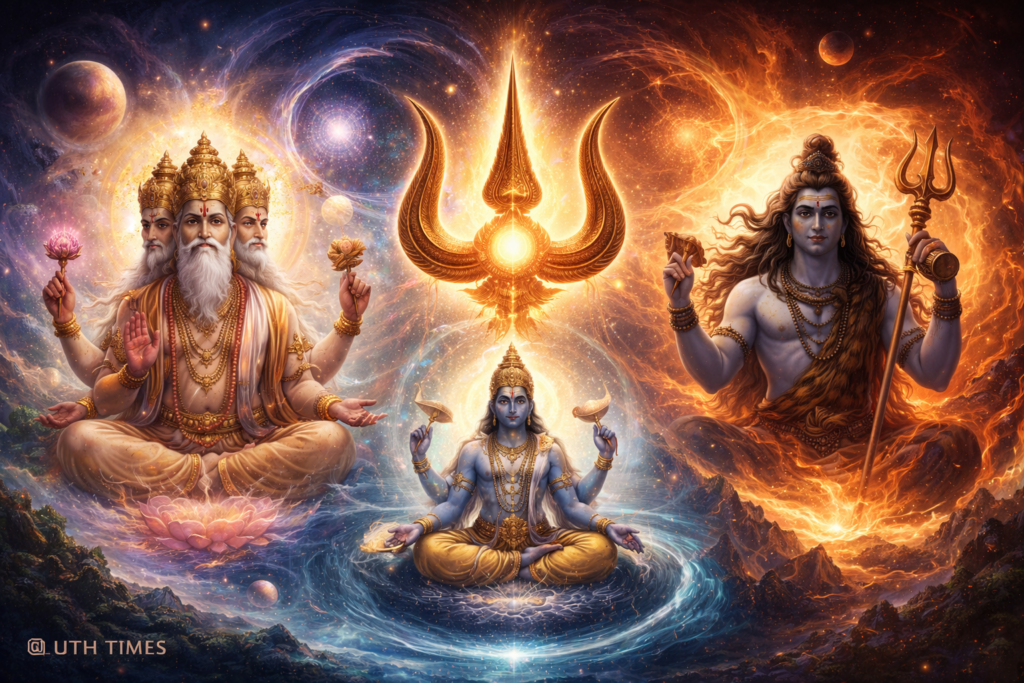
Hindu cosmology does not move in straight lines—it breathes in cycles of creation, preservation, and dissolution. Within this vast rhythm stands a profound belief: Hanuman, the eternal devotee, is destined to rise as the 9th Brahma of a future cosmic age.

The Cosmic Office of Brahma

Brahma is not a one-time creator but a cosmic post that changes hands across epochs.

✨ What Brahma Represents

  • 🌺 Architect of creation, not its source
  • 🌌 Maintainer of cosmic order at the dawn of every cycle
  • 📜 Executor of divine design, not ego-driven power

According to this belief system:

  • 🕉️ The 7th Brahma — Shatananda is currently active, already in the latter half of his tenure
  • 🕉️ The 8th Brahma — Chaturmukha will succeed him
  • 🕉️ Hanuman will ascend as the 9th Brahma, far in the cosmic future

Understanding the Time Scale — Beyond Human Imagination

This destiny unfolds across mind-bending measurements of time:

⏳ Cosmic Calculations

  • 🔹 1 Maha Yuga = 4 Yugas (Satya, Treta, Dvapara, Kali)
  • 🔹 71 Maha Yugas = 1 Manvantara (age of one Manu)
  • 🔹 28 Manvantaras = 1 Kalpa (half-day of Brahma)
  • 🔹 1 Full Day of Brahma = 2 Kalpas

📌 Hanuman’s Ascension

  • 🚀 Scheduled after 150 Kalpas
  • 🌠 Following the tenures of Shatananda and Chaturmukha
  • ⏰ A timeline so vast that it humbles even divine reckoning

Why Hanuman? The Paradox of Power and Devotion

Hanuman’s elevation is not based on conquest—but surrender.

🔥 His Unique Qualification

  • 💪 Infinite strength restrained by humility
  • 📿 Absolute devotion to Rama over personal glory
  • 🛡️ Eternal protector who chooses service over sovereignty

In Hindu philosophy, creation requires purity, not ambition. Hanuman embodies this balance perfectly—making him worthy of shaping worlds.

Until Then — Hanuman’s Present Mission

Though his cosmic coronation lies far ahead, Hanuman remains actively present.

🌍 His Role Today

  • 🕊️ Protector of devotees
  • 📿 Guardian of faith in Kali Yuga
  • 🔊 Inspirer of Rama’s name as the ultimate refuge

Hanuman’s future as the 9th Brahma reminds humanity of a timeless truth: the highest power is born from the deepest devotion. Until creation itself calls his name, he walks beside us—silent, vigilant, eternal.

Gaganyaan 2026: India Prepares for Its First Uncrewed Human Spaceflight

0

India is on the brink of a historic leap. In March 2026, Indian Space Research Organisation will launch the first uncrewed mission of Gaganyaan, marking the final and most decisive rehearsal before Indians travel to space aboard an indigenous spacecraft. This is not a test flight alone — it is India validating its place among elite human spaceflight nations.

What Is Gaganyaan — And Why This Mission Matters

Gaganyaan is India’s human spaceflight programme designed to send astronauts to Low Earth Orbit (LEO) and bring them back safely. The uncrewed March 2026 mission is mission-critical because it will test the entire human-rated ecosystem in real orbital conditions.

🚀 Mission objectives

  • 🧑‍🚀 Validate the Crew Module in space
  • 🔥 Test atmospheric re-entry and heat shield performance
  • 🌊 Demonstrate precise splashdown and recovery
  • 🧠 Verify autonomous mission systems and redundancies

This flight decides readiness. Nothing less.

The Rocket & Spacecraft: Built for Humans, Not Cargo

The mission will ride atop the LVM3 (Human-Rated) launch vehicle — India’s most powerful rocket, upgraded specifically for crew safety.

🛰️ Key technological upgrades

  • 🛡️ Redundant avionics & fault-tolerant systems
  • 🧯 Advanced crew escape system capable of milliseconds response
  • 🌡️ New-generation thermal protection tiles
  • 📡 Continuous tracking, telemetry, and abort monitoring

Every bolt, line of code, and structural element is designed with one goal: human survival in the harshest environment known.

Why an Uncrewed Mission Comes First

Human spaceflight allows no shortcuts. This mission replicates a real astronaut flight — minus the astronauts.

🧪 What will be tested

  • 🌀 Orbital insertion accuracy
  • 🕒 Life-cycle performance over multi-day orbit
  • 🔥 Hypersonic re-entry stresses
  • 🚁 Navy-led recovery operations in open sea

If this mission succeeds, India clears the last technical gate before placing humans in orbit.

Strategic Impact: More Than a Spaceflight

This mission reshapes India’s strategic posture.

🌍 National & global implications

  • 🛰️ Entry into the human spaceflight elite club
  • 🧠 Massive spin-offs in materials, AI, robotics, medicine
  • 🇮🇳 Symbol of technological sovereignty
  • 🚀 Foundation for future space stations & deep-space missions

Gaganyaan is not a destination — it’s a launchpad.

The Road Ahead

Following this uncrewed mission, one more validation flight may follow before India’s first astronauts lift off. When they do, it will be on a system proven in fire, vacuum, and velocity.

March 2026 will not just test a spacecraft — it will test India’s readiness to carry human life beyond Earth. And if all goes as planned, the countdown to India’s first astronauts truly begins.

Gomti Water Metro: Lucknow’s Next Leap in Urban Mobility

Lucknow may soon witness a quiet but historic transformation. The Uttar Pradesh government is planning to introduce a Water Metro system on the Gomti River, turning a cultural lifeline into a modern transport corridor. This initiative isn’t just about boats—it’s about redefining how cities move, breathe, and grow.

🌊 Why the Gomti Water Metro Matters

For decades, Lucknow’s mobility story has been road-heavy, congested, and pollution-prone. The Water Metro proposes a radical alternative—using the river as a transport artery, not just a scenic backdrop.

✨ Key objectives

  • 🚤 Reduce road congestion in core urban zones
  • 🌱 Promote low-emission, eco-friendly transport
  • 🕰️ Offer faster, predictable commute options
  • 🏙️ Reintegrate the river into everyday urban life

The Gomti isn’t being decorated—it’s being activated.

🚢 How the System Is Expected to Work

Inspired by successful water transport models, the Lucknow Water Metro is expected to operate electric or hybrid ferries along selected stretches of the Gomti.

🔹 Operational highlights

  • ⚡ Battery-powered boats with zero direct emissions
  • 🛑 Multiple jetties at key residential, commercial & tourism nodes
  • 🎟️ Integrated ticketing with city transport systems
  • 🧭 Fixed schedules ensuring reliability—not leisure-only rides

This is public transport on water, not a luxury cruise.

🏙️ Urban, Environmental & Economic Impact

The project carries significance far beyond mobility.

🌿 Environmental gains

  • 🌬️ Lower air pollution from reduced vehicular load
  • 💧 Incentive for river cleaning and monitoring
  • 🐟 Healthier river ecosystem through regulated use

💼 Economic & social boost

  • 🧳 New tourism circuits along the riverfront
  • 👷 Job creation in operations, maintenance & services
  • 🏘️ Value uplift for river-adjacent neighborhoods

The river becomes an asset—economically and ecologically.

🧠 Strategic Vision Behind the Project

For Lucknow, the Water Metro aligns with a larger vision: future-ready urban planning. By integrating the Gomti River into daily transport, the city moves toward multimodal, climate-conscious infrastructure—without expanding road footprints.

This is sustainable growth without spatial sprawl.

No transformation is without hurdles.

⚠️ Critical considerations

  • 🌊 Maintaining navigable water levels year-round
  • 🧹 Ensuring river cleanliness alongside operations
  • 🏗️ Sensitive infrastructure development without ecological damage

Execution will determine whether this becomes a model—or a missed opportunity.

✨ The Bigger Picture

The Gomti Water Metro is not just a transport project—it’s a mindset shift. If executed with precision and responsibility, Lucknow could set a national benchmark for river-based urban mobility, proving that smart cities don’t always need more roads—sometimes, they just need to look back at their rivers.

When Ravana Faced Shiva — The Fall of Ego and Rise of Devotion

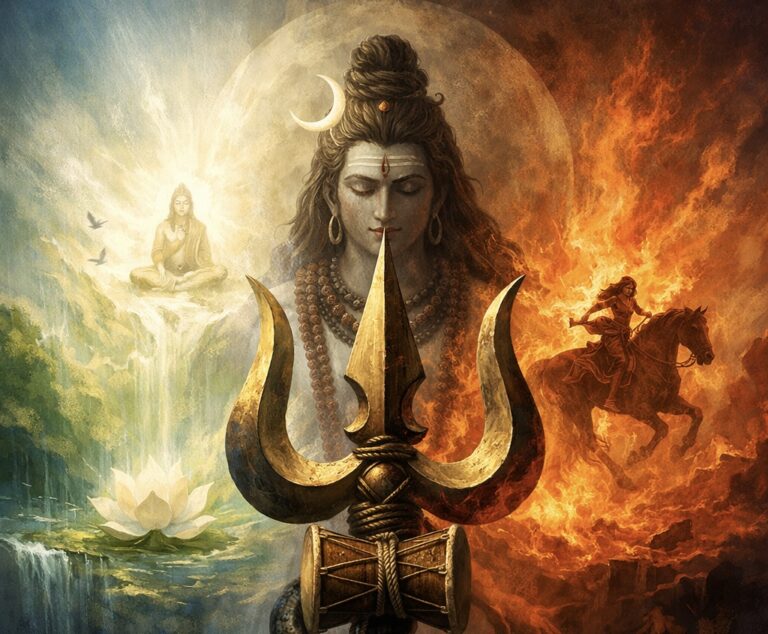
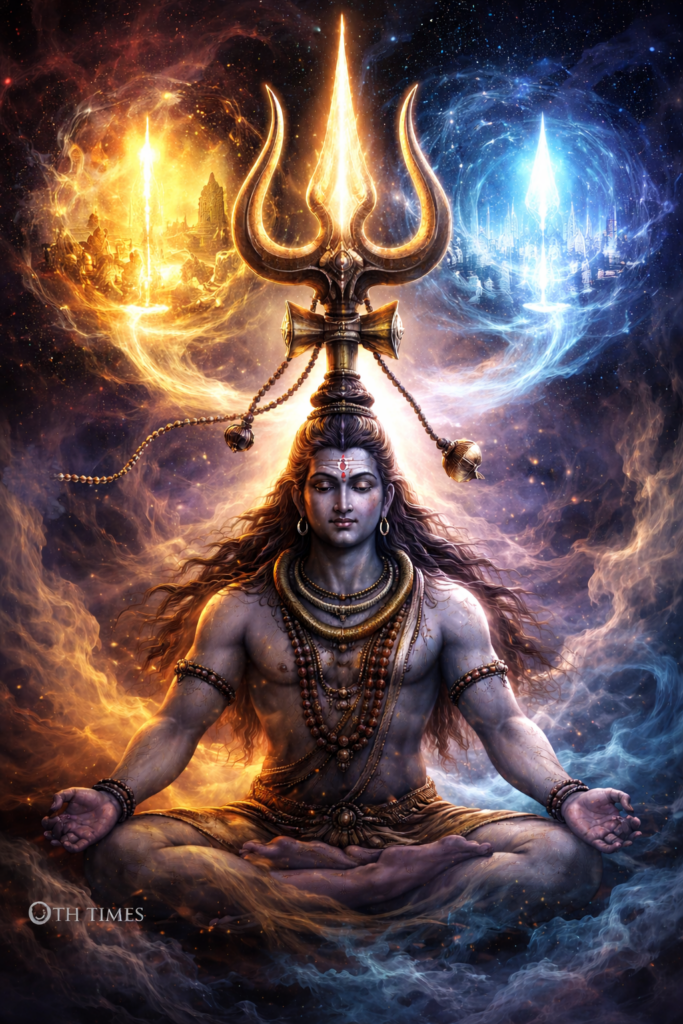
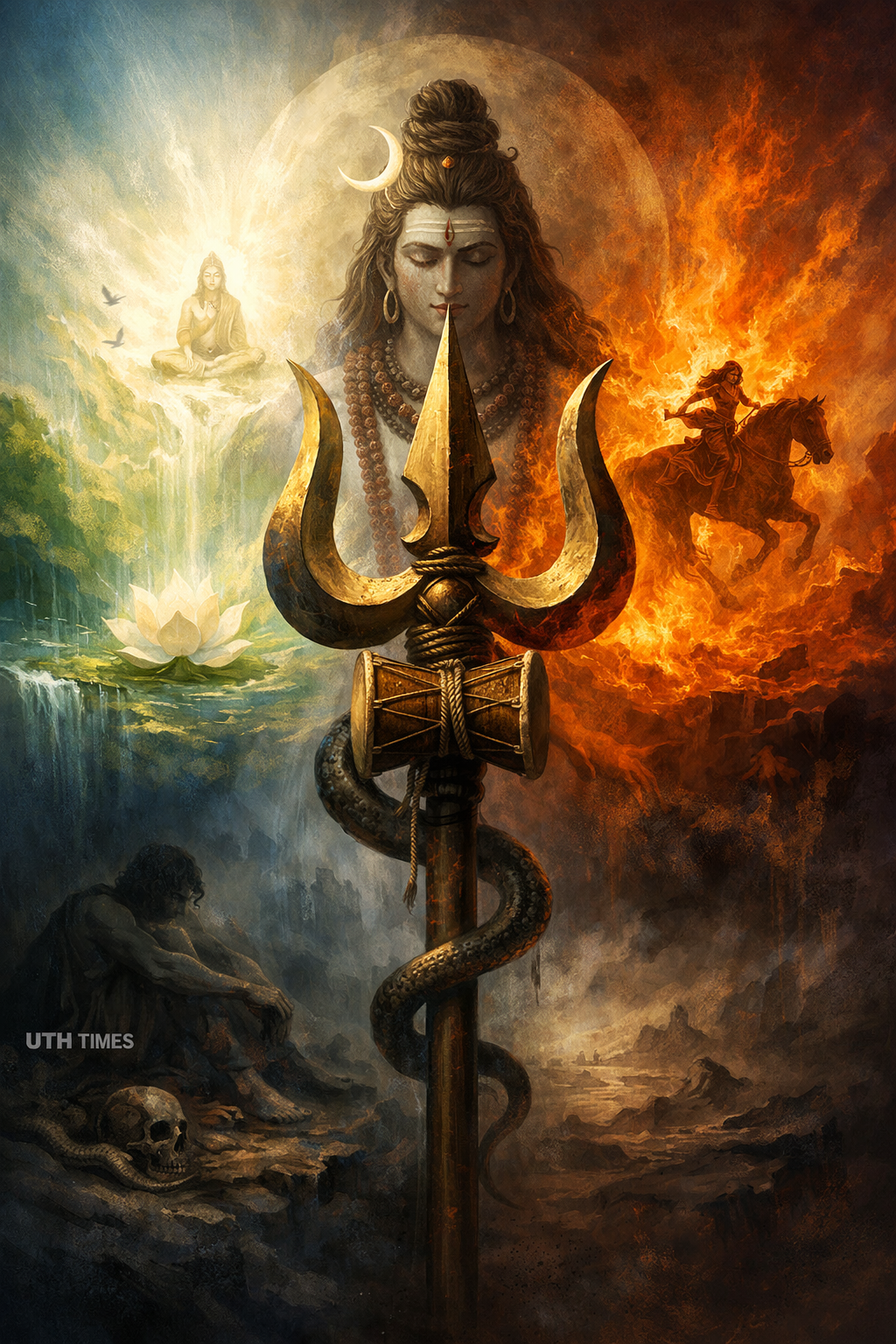
In the vast universe of Hindu Vedic itihaas , few episodes strike as deeply as the moment Ravana challenged Shiva at Mount Kailash.

This was not a battle of weapons — it was a confrontation between ego and cosmic order, where silence spoke louder than destruction.

Ravana: Strength Without Humility

Ravana was no ordinary villain.

🔥 His unmatched stature

  • 🧠 Supreme scholar of the Vedas and Shastras
  • 💪 Possessor of immeasurable physical strength
  • 👑 Emperor of Lanka, feared by gods and mortals alike

Yet Ravana’s brilliance carried a fatal flaw — ahamkar (ego). To demonstrate his superiority, he attempted to uproot Mount Kailash itself, disturbing the divine stillness of Shiva’s abode. This act was not rebellion, but arrogance seeking recognition.

Power without humility always seeks applause.

Shiva’s Response: The Authority of Stillness

Shiva did not rise in fury.

He did not unleash destruction.

👣 He simply pressed the mountain down with his toe.

⚡ What this moment reveals

  • 🕉️ True power does not need effort
  • 🕉️ Ego collapses before cosmic balance
  • 🕉️ Silence can overpower the loudest pride

Ravana was crushed beneath Kailash — not by Shiva’s strength, but by his own arrogance reflected back at him.

Suffering That Gave Birth to Devotion

Trapped beneath the mountain for years, Ravana faced unimaginable pain. Yet something remarkable happened in that darkness.

🎶 From agony emerged art

  • 🩸 Pain turned inward into reflection
  • 🎵 Rhythm replaced resistance
  • 📜 Devotion replaced defiance

In surrender, Ravana composed the Shiva Tandava Stotram, a hymn vibrating with intensity, devotion, and reverence. It was not a plea for escape — it was a confession of realization.

This was ego dissolving into worship.

Grace Beyond Judgment

Moved by the sincerity of Ravana’s devotion, Shiva released him.

🌸 Shiva’s response

  • ✨ Freedom without humiliation
  • ✨ Blessings without vengeance
  • ✨ A reminder that repentance redeems

Shiva did not destroy Ravana — he transformed him.

🪔 This episode teaches us

  • 🌑 Pride binds, surrender liberates
  • 🌑 Suffering can become a doorway to wisdom
  • 🌑 Even the fallen can rise through devotion

Ravana’s fall beneath Kailash remains eternal proof: when ego bows, grace descends.

The Titan Rises: India’s S-5 Submarine and the End of Strategic Silence

0

In late December 2025, India silently began construction of its most formidable naval weapon yet—the S-5 Class Nuclear Ballistic Missile Submarine. No ceremonies. No announcements. Just steel being cut and a doctrine being rewritten.

This is not incremental progress. This is a tectonic shift in nuclear deterrence across the Indo-Pacific.

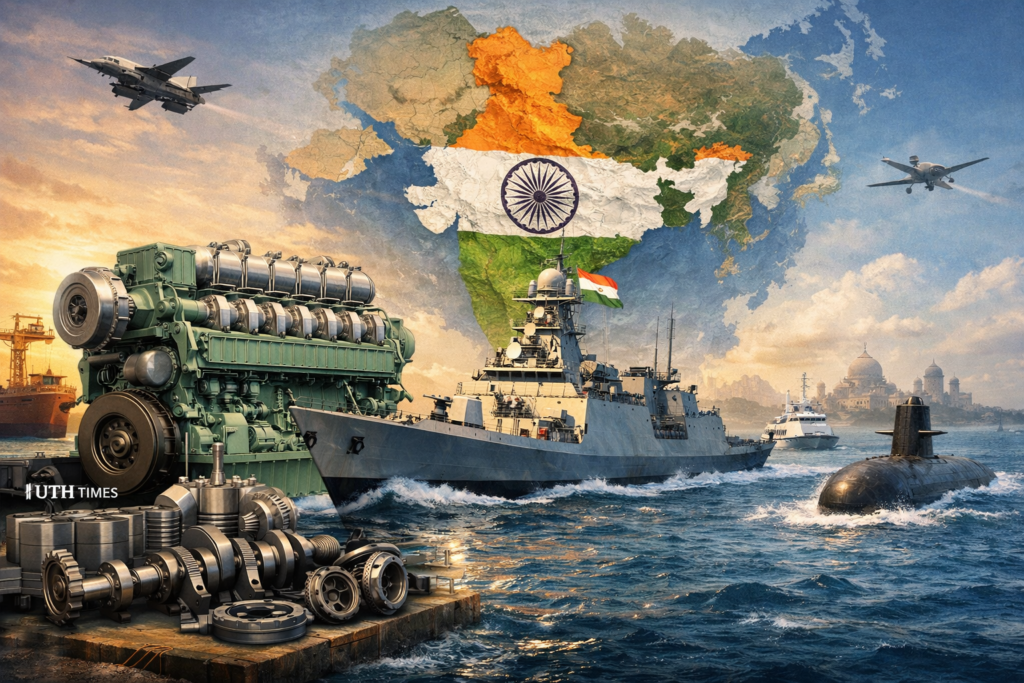
⚓ A Behemoth Beneath the Waves

The S-5 is designed as a true blue-water leviathan—built not for coastal defense, but for persistent, global deterrence.
🔹 Displacement leap

• Arihant class: ~6,000 tonnes

• S-5 class: ~13,500 tonnes

🔹 Why size matters

• Longer underwater endurance

• Greater acoustic stealth

• Vast payload capacity for missiles, sensors, and crew survivability

This is the transition from survivable to unstoppable.

🚀 Firepower Redefined: When Range Decides Power

The S-5’s weapon philosophy is brutally simple: strike from anywhere, without warning.

🔥 Missile architecture

• 12–16 Vertical Launch Tubes (up from 4)

• Designed for K-6 SLBMs

🌍 Global reach

• Estimated range: 6,000–8,000+ km

• MIRV capability — multiple nuclear warheads per missile

From the Bay of Bengal, an S-5 can reach deep into Asia and beyond—rendering adversary “safe zones” obsolete.

⚛️ The 190 MW Heart of a Predator

At the core lies a new 190 MW+ Pressurized Water Reactor—the answer to every limitation of earlier SSBNs.

⚡ What it enables

• Sustained high underwater speeds

• Rapid repositioning across the Indian Ocean

• Ability to evade hunter-killer submarines

The S-5 doesn’t just hide. It hunts invisibly.

🌏 The Geopolitical Shockwave

This project redraws strategic equations for China and beyond.

🧭 The message is unmistakable:

• The Indian Ocean is not contested—it is watched

• Land borders are no longer the sole pressure point

• India’s nuclear triad is now unbreakable

Deterrence has moved from minimum credibility to assured retaliation.

🔧 Construction has begun in Visakhapatnam

⏳ Expected induction: 2030–2032

🌊 By mid-2030s: permanent Continuous At-Sea Deterrence (CASD)

The Ending, Quiet but Absolute

The S-5 is not a weapon meant to be fired.

It exists so that no one ever dares to force that moment.

India has entered the deepest tier of strategic power—and it did so without making a sound.

Rakesh Bedi: A 49-Year Craft Journey That Dhurandhar Finally Made Mainstream Obvious

When Dhurandhar released on December 5, 2025, and audiences began talking about Rakesh Bedi with the kind of awe usually reserved for prestige character actors, it felt like a sudden discovery.

In reality, it was something else: recognition finally catching up to a career that never stopped working.

Bedi’s post-Dhurandhar appreciation has been loud because the performance is loud in impact, but the path to it has been built quietly across films, television sitcoms, and decades of theatre.

Delhi roots, formal training, and the stage-first spine

Born in New Delhi on 1 December 1954, Bedi’s early relationship with performance began in school through mono-acting competitions and later deepened through formal training at FTII, Pune.

He is also associated with Delhi’s theatre ecosystem, an important context because it explains why his performances often carry live, audience-aware timing even on camera.

In a 2018 interview, Bedi put it plainly: theatre was and remains his first love. That line matters because his career has never been screen-only; stage has been a parallel engine running underneath everything else.

The 1980s: Cult comedy and the reliable scene-stealer era

Bedi’s film breakthrough came in the early 1980s when Hindi cinema’s comedy was sharp, character-driven, and often anchored by ensembles.

His work in films like Chashme Buddoor (1981) helped establish him as a comic actor whose humour came from behaviour, not punchlines.

From there, his career expanded into a long run of films, often in supporting or character parts. That supporting actor label can be misleading.

It frequently means being handed the responsibility of making a scene land, keeping momentum alive, and giving the story texture, work that audiences enjoy instantly but industry conversations often under-credit.

The 1980s to 2000s TV boom: When India learned his face by heart

If films made him visible, television made him permanent.

Bedi became a household name through India’s sitcom era, shows that did not just entertain but shaped how comedy was written and performed on Indian TV.

His roles across major comedy series, especially Yeh Jo Hai Zindagi, Shrimaan Shrimati, and Yes Boss, cemented him as an actor with rare strengths: rhythm, innocence, chaos-control, and the ability to make a character iconic without turning them cartoonish.

This era also explains a strange career paradox. When you are too good at comedy and become too familiar, the industry can start seeing you as safe rather than serious.

You keep working constantly, but the due recognition keeps getting postponed.

The theatre decades: Not a side-quest, an entire second legacy

While audiences saw him weekly on television, Bedi kept doing what many screen actors gradually leave behind: regular theatre.

One of the most cited examples is his acclaimed one-man play Massage, where he performs 24 characters on stage.

It is an acting marathon that functions as a live demonstration of range, voice control, and character switching at speed.

He has also been active in contemporary theatre as a writer, director, and performer. He has been credited with writing and directing plays such as Mera Woh Matlab Nahi Tha, along with works like Shimla Coffee House and Jab We Separated.

In 2023, he noted that he had done around 200 shows with Felicity Theatre and described it as his main theatre group, numbers that underline how continuous, not occasional, his stage practice has been.

This theatre continuity is key to understanding Dhurandhar. Stage keeps an actor sharp because you cannot hide behind editing, multiple takes, or camera angles. It builds presence.
The 2010s and 2020s: Reinvention through consistency, not rebranding

In recent years, Bedi continued showing up across mainstream film and TV projects, often in character parts that audiences remember even when they do not remember the character’s name.

The work remained steady, but the public narrative did not shift until he got a role that forced the audience to see him differently.

Dhurandhar: The role that did not change him, only changed the spotlight

In Dhurandhar, Bedi plays Jameel Jamali, a serious political figure in a high-stakes spy thriller world.

What makes this performance resonate is not just the writing, it is the actor’s homework. Bedi has spoken about building the character by observing Pakistani politicians, studying speech patterns, diction, tone, and body language to get the portrayal right.

Then came the emotional aftermath. After the film’s success, casting director Mukesh Chhabra recalled Bedi being moved to tears, saying he had been working for 49 years and still never truly felt like a star until this moment of recognition arrived.

That is the real headline. A veteran did not suddenly become great. Audiences finally got the chance to notice it at scale.

Why people are rewatching his old work after Dhurandhar

The post-Dhurandhar wave is not only new fans. It is also older viewers revisiting his sitcom era and realising something they may have overlooked:

The comedy was not easy comedy, it was craft.

The timing was not loud timing, it was controlled timing.

The supporting roles were often the roles holding the emotional and comedic architecture of scenes together.

In other words, Dhurandhar gave Rakesh Bedi what many long-serving actors wait for: a cultural moment that reframes an entire career.

Who is The less-known genius behind Dhurandhar’s “best-in-years” album? FIND OUT

The “less-known genius” behind Dhurandhar’s soundtrack is Shashwat Sachdev — the film’s composer (songs and background score), and the person most responsible for shaping the album’s overall sound-world.


Why he’s the key name (and why many people missed it)
He didn’t just create individual “songs” — he designed an entire sonic universe. The music seamlessly moves between rap, synth-pop bangers, folk-rooted melodies, and intense cinematic tension cues, making the soundtrack feel like an extension of the film’s storytelling rather than a pause in it.
The album’s real “secret sauce” lies in smart curation and reinvention. Shashwat and his team reimagined older Indian classics into high-energy, contemporary forms, striking a rare balance between nostalgia and modern sound design. The result feels familiar yet completely fresh.

He also made the soundtrack globally sticky by going cross-border. A standout example is the use of Bahraini rapper Flipperachi’s track Fa9la for a major character entry — a scene cue that unexpectedly crossed over into mainstream pop culture and viral circulation.
Shashwat Sachdev isn’t new to the industry — he’s simply been underrated by the masses.

A National Film Award–winning composer for his background score in Uri, his technical confidence and big-cinema instincts are clearly audible throughout Dhurandhar.
The “invisible” co-geniuses who amplified the album
Even with Sachdev as the primary creative force, two key contributors quietly elevate the album to another level:


Lyric backbone: Irshad Kamil, who wrote most of the lyrics (with a few tracks penned by featured artists), grounding the music emotionally while preserving its cinematic scale.
Sound finishing: Justin Jose, who handled the re-recording and final mix — the last layer of polish that makes the music truly hit inside a theatre.

All songs on the official album (11 tracks) and what they do in the movie
Below is the complete album tracklist and the narrative or cinematic function each song serves inside the film.
1) Dhurandhar – Title Track

A high-voltage “mission statement” song with modern Punjabi and hip-hop energy, built on a classic remake. It sets the film’s core attitude and functions as its signature theme.
2) Ishq Jalakar – Karvaan


The modern qawwali pulse of the movie. Recreated from the classic Na To Karvan Ki Talash Hai / Yeh Hai Ishq Ishq lineage, it injects scale and gravitas, becoming the film’s big “heritage meets modern spy-thriller” moment.
3) Gehra Hua

The romance anchor of the film. It carries the emotional breathing space within an otherwise gritty spy narrative, grounding the story through intimacy and vulnerability.
4) Tere Ni Kararan

Pure Punjabi swagger energy, reimagined from a Lal Chand Yamla Jatt classic. In the film’s flow, it works as a cool, kinetic vibe track used during momentum-driven or attitude-heavy stretches.
5) Run Down The City – Monica

A retro-modern club and party banger built on the legacy of Piya Tu Ab To Aja. It acts as the film’s “fun chaos” release valve, breaking tension without disrupting pace.
6) Shararat

A flashy, crowd-facing item number featuring special appearances. Designed as an event song, it brings spectacle and mass appeal while aiming for viral recall.
7) Ez-Ez

The action-montage and chaos anthem of the film. Teasing violence, gunshots, explosions, and raw emotion, this track translates the film’s combat intensity directly into music.
8) Lutt Le Gaya

A mood-shifter rather than an anthem. More melody-led, it functions as a story-color song during the middle portions of the film, often supporting emotional turns or internal conflict.
9) Move – Yeh Ishq Ishq

Another qawwali-heritage reinvention connected to Yeh Hai Ishq Ishq. It works as an attitude and tempo bridge, sustaining the film’s identity of old-world poetry fused with modern pacing.
10) Naal Nachna

The film’s pure dance-energy Punjabi track. Built to spike tempo and keep the theatrical energy high when the narrative needs a lift.
11) Ramba Ho

A Bappi Lahiri-era throwback remix reworked for contemporary audiences. It delivers a strong retro punchline — the kind of song audiences remember walking out of the theatre.
Bonus: Non-album needle drops that became iconic in the film
These tracks are not part of the official 11-song album but play a crucial role in shaping the film’s texture and character identity.

Fa9la by Flipperachi — used during a key character sequence, functioning as a dramatic entry theme and adding an unexpected global edge to the film’s soundscape.

Hawa Hawa and Dum Maro Dum — classic callbacks used for character introductions and vibe-setting moments, reinforcing nostalgia and cultural memory.