Home Blog Page 15

Alien DNA Within Humans? A Genetic Claim That Shakes Science

0

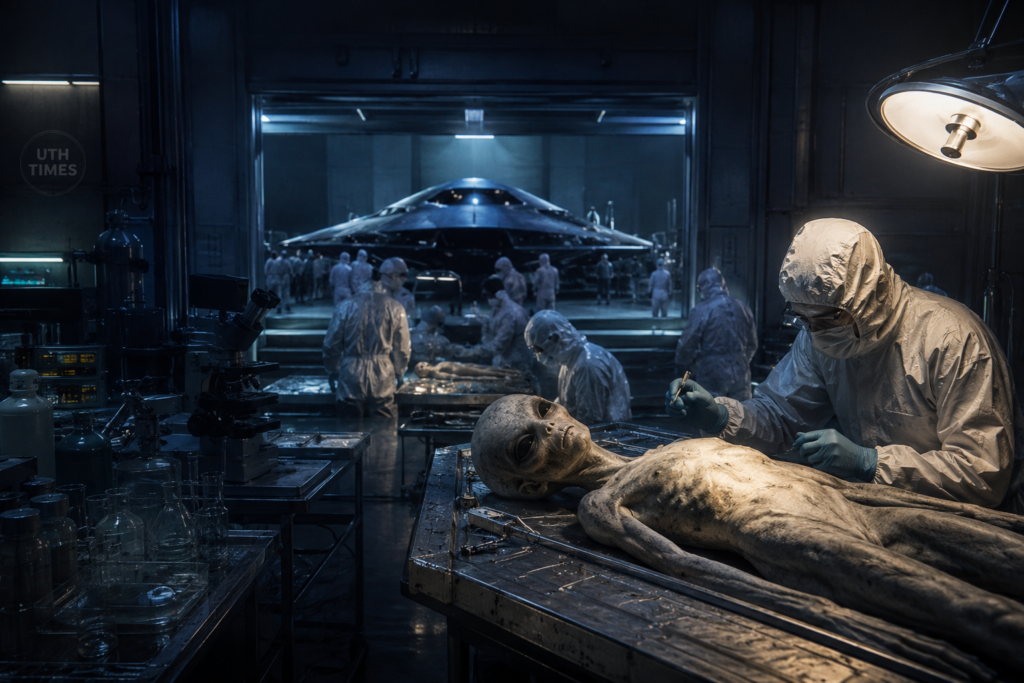
A controversial claim by Dr. Max Rempel, a molecular biologist with a PhD from the Institute of Gene Biology, has ignited intense debate across scientific and public circles.

According to Dr. Rempel, certain human families carry genetic sequences that do not match any known terrestrial life forms. These fragments, he claims, appear inserted rather than naturally evolved—raising an extraordinary possibility: non-human intervention in the human genome.

What Makes This DNA “Non-Human”?

🧬 Key genetic anomalies identified:

  • 🧩 DNA sequences that do not align with known human, animal, or microbial genomes
  • 🧪 Regions that remain inactive, yet are structurally complex
  • 🧠 Patterns inconsistent with standard evolutionary mutation processes
  • ⏳ Genetic markers appearing suddenly, without ancestral buildup

Rempel argues these traits defy classical Darwinian inheritance, suggesting an external origin rather than gradual evolution.

The “Insertion” Hypothesis Explained

🚀 How could DNA be inserted into humans?

  • 🛸 Advanced bioengineering far beyond modern human capability
  • 🧫 Targeted genetic modification at the embryonic or germline level
  • 🌍 A controlled experiment spanning generations

Rempel stops short of naming extraterrestrials directly—but implies a technologically superior non-human intelligence may have altered human DNA in the distant past.

Scientific Community: Fascinated, But Skeptical

⚠️ Mainstream scientists respond with caution:

  • 🔬 No independent peer-reviewed verification yet
  • 🧾 Unknown DNA could represent ancient viral remnants or undiscovered human variants
  • 🧠 Extraordinary claims demand extraordinary evidence

Many geneticists stress that “unknown” does not automatically mean “alien.”

Why This Claim Still Matters

🌌 Even skeptics admit the implications are enormous:

  • 👶 Rewrites human evolutionary history
  • 🧠 Raises questions about consciousness and intelligence
  • 🧬 Pushes the limits of genetic science and origin studies

Whether alien or not, these findings expose how little we truly know about our own genome.

Are we purely a product of Earth—or part of something far older, far wider, and far more mysterious?

Science hasn’t answered that yet. But the question is now impossible to ignore.

Russia’s Plasma Engine: 30 Days to Mars

0

What once belonged to science fiction is now stepping into the laboratory. Russian scientists have unveiled a prototype plasma engine that could slash the Earth–Mars journey from nearly nine months to just 30 days—a leap that could redefine the future of human spaceflight.

🚀 What Is This Plasma Engine?

At the heart of this breakthrough is a plasma-based electric propulsion system, developed by scientists associated with Rosatom research units. Unlike chemical rockets that rely on explosive thrust, this engine uses superheated plasma accelerated by electromagnetic fields.

🔹 Plasma is heated to extreme temperatures (millions of degrees)

🔹 Charged particles are expelled at ultra-high velocities

🔹 Continuous thrust is maintained for weeks, not minutes

The result? Sustained acceleration in space, something chemical rockets simply cannot achieve.

🧠 Why This Changes Everything

Traditional Mars missions follow orbital mechanics—launch, coast, and wait. Plasma engines change the rules.

🔥 Key advantages:

  • 🚀 Constant acceleration instead of short bursts
  • ⏱️ Mars transit cut to ~30 days
  • 🧑‍🚀 Reduced radiation exposure for astronauts
  • 🛰️ Greater maneuverability in deep space

This means missions could be faster, safer, and more flexible, opening doors to regular interplanetary travel rather than rare, high-risk expeditions.

⚙️ How It’s Different From Ion Engines

While ion engines already exist on satellites, this prototype operates at an entirely new scale.

🧲 What sets it apart:

  • ⚡ Power output measured in megawatts, not kilowatts
  • 🌌 Designed for crewed interplanetary spacecraft
  • 🔬 Built for long-duration, high-energy missions

The engine would likely be paired with a nuclear or advanced space-based power source, enabling uninterrupted thrust deep into space.

🌍 Strategic & Global Impact

This isn’t just a scientific achievement—it’s a geopolitical signal.

🌐 Potential implications:

  • 🚀 A new space race phase, focused on propulsion supremacy
  • 🪐 Faster missions to Mars, asteroids, and deep-space stations
  • 🔋 Spin-off technologies in energy, materials, and plasma physics

If scaled successfully, plasma propulsion could become the backbone of 21st-century space logistics.

🔮 What Comes Next

The prototype is currently ground-tested, but the roadmap includes:

  • 🧪 Space-based testing
  • 🛰️ Integration into experimental spacecraft
  • 🧑‍🚀 Long-term vision: human missions to Mars and beyond

A 30-day journey to Mars is no longer a dream—it’s a technological trajectory. Plasma engines may soon turn the Red Planet from a distant frontier into a reachable destination.

Turning Back Time: Scientists Rejuvenate Human Skin Cells Without Stem Cells

0

Aging has long been considered irreversible at the cellular level. But scientists at the Babraham Institute have just shaken that belief. In a landmark study, researchers successfully made 50-year-old human skin cells behave as if they were 30 years younger—without turning them into stem cells. This is not science fiction. This is cellular rejuvenation, real and measurable.

🔬 The Science Behind the Cellular “Reset”

At the heart of this discovery lies a carefully controlled twist on a Nobel Prize–winning technique developed by Shinya Yamanaka.

Instead of fully reprogramming adult cells into stem cells, researchers used a partial reprogramming approach:

  • 🧬 Adult skin cells (fibroblasts) were exposed to Yamanaka factors
  • ⏳ The process was deliberately stopped early—after just 13 days
  • 🔄 Cells reverted back to skin cells, but with a younger molecular identity

This precise interruption proved to be the breakthrough moment.

🧠 Molecular Age Reversal: Proof, Not Promise

Scientists didn’t rely on appearance—they relied on data.

The rejuvenated cells were analyzed using:

  • 🧪 Epigenetic clocks (chemical aging markers on DNA)
  • 📊 Transcriptome analysis (patterns of gene activity)

The results were stunning. The treated cells closely matched the biological profile of much younger cells, shedding many age-related molecular signatures—without losing their identity.

🩹 Younger Cells, Younger Behavior

What truly elevated this discovery was functionality.

The rejuvenated fibroblasts:

  • 🧴 Produced significantly more collagen, vital for firm, healthy skin
  • 🏃‍♂️ Migrated faster to close artificial wounds in lab tests
  • 🔁 Showed reversal in genes linked to Alzheimer’s disease and cataracts

This wasn’t cosmetic youth—it was functional rejuvenation.

🌍 Why This Discovery Is a Game-Changer

This technique hints at a future where aging tissues can be selectively refreshed—without the risks of uncontrolled stem cell growth.

Potential implications include:

  • 🧠 Slowing neurodegenerative diseases
  • 🦴 Improved tissue repair and wound healing
  • 🧬 Targeted anti-aging therapies at the cellular level

Importantly, cells were not fully reset, avoiding cancer-related risks often linked with stem cell conversion.

This research is still in its early stages. But it marks a powerful shift: aging may not be a one-way street after all. If refined and safely translated into humans, partial cellular reprogramming could redefine how we treat aging itself.

The clock hasn’t stopped—but science just learned how to rewind it.

🛕 Tirumala: The Living Abode of Lord Balaji

Tirumala is not merely a pilgrimage site. It is a living system of devotion, discipline, silence, science, and secrecy, operating seamlessly for centuries. Perched atop the Seshachalam Hills, the shrine of Tirumala Venkateswara Temple is where Bhakti meets flawless management and ancient Sanātana intelligence.

🌄 Where Geography Itself Becomes Sacred

The seven hills of Tirumala are believed to represent Adi Shesha, the cosmic serpent of Lord Vishnu. Every step up the hill is symbolic — a physical surrender of ego.

🔸 Dense forests preserved as sacred land

🔸 Strict eco-protection laws long before “sustainability” was a term

🔸 Silence zones that amplify inner awareness

This is not tourism. This is ritualized movement toward divinity.

👑 Lord Balaji: The God Who Owes Humanity

Unlike other deities, Lord Venkateswara is believed to have taken a divine loan to marry Goddess Padmavati — a debt devotees symbolically help repay.

✨ This belief fuels:

• Massive offerings of gold & wealth

• The idea that giving here multiplies karma

• An emotional bond where devotees feel personally responsible for their God

This is faith with participation, not passive worship.

🕯️ Precision That Rivals Modern Systems

Tirumala operates with a discipline most global institutions would envy.

⚙️ Daily rituals run to the second

⚙️ Temple kitchens feed lakhs without chaos

⚙️ Queue systems balance devotion and order

⚙️ Ancient Agamas guide every movement

All under Tirumala Tirupati Devasthanams, one of the world’s most sophisticated spiritual administrations.

🍥 The Laddu That Is More Than Prasad

The Tirupati Laddu is sacred economics.

🥣 Recipe locked under spiritual secrecy

🥣 GI-tag protected

🥣 Considered an extension of the deity

🥣 Prepared with ritual purity, not just hygiene

It’s food, faith, and legacy — rolled into one.

🔐 Mysteries That Refuse to Be Explained

• Why the idol sweats daily

• Why hair tonsured here never turns grey

• Why temple wealth defies economic logic

Tirumala doesn’t answer everything — and that’s the point. Mystery preserves reverence.


Tirumala isn’t about seeing God.

It’s about disciplining the self to deserve the sight.

Andaman & Nicobar: India’s Blue Economy Powerhouse

0

In a decisive strategic and economic push, the Narendra Modi government has unveiled a transformative vision: the Andaman & Nicobar Islands will emerge as the hub of India’s Blue Economy. This isn’t just a development plan—it’s a geopolitical, economic, and environmental masterstroke placing India at the heart of the Indo-Pacific maritime future.

Why Andaman & Nicobar? Geography That Commands the Seas

The Andaman & Nicobar Islands sit at the crossroads of some of the world’s busiest sea lanes, close to the Malacca Strait—a route handling nearly 40% of global trade.

🔹 Natural deep-water ports

🔹 Proximity to Southeast Asia

🔹 Control over critical maritime chokepoints

🔹 Gateway between the Indian Ocean & Pacific

This strategic positioning makes the islands ideal for trade logistics, maritime services, and naval presence—key pillars of the Blue Economy.

What the Blue Economy Means for India

The Blue Economy is not limited to fisheries—it’s a multi-trillion-dollar ecosystem built on sustainable ocean use.

🌊 Marine fisheries & aquaculture – High-value exports, modern fishing infrastructure

⚓ Ports & shipping services – Transshipment hubs, ship repair yards

🛢️ Offshore energy – Ocean thermal energy, renewables

🏝️ Eco-tourism & cruise tourism – Global tourist magnet with sustainability at core

🔬 Marine research & biotechnology – Pharmaceuticals, deep-sea exploration

For India, this means jobs, exports, energy security, and long-term economic resilience.

Strategic Muscle Meets Economic Might

Beyond economics, Andaman & Nicobar are vital to India’s maritime security doctrine.

🛡️ Strengthening naval & air infrastructure

🛡️ Monitoring Indo-Pacific sea lanes

🛡️ Counter-balancing rising regional assertiveness

🛡️ Enhancing disaster response & coastal security

The islands are evolving into a dual-use powerhouse—civilian prosperity backed by strategic deterrence.

Development Without Destruction: Sustainability First

The Modi government has emphasized environment-first growth:

🌱 Green ports & renewable energy

🐠 Coral reef protection & marine biodiversity conservation

🏘️ Community-led development for island residents

📊 Strict environmental impact governance

The aim: economic acceleration without ecological erosion.

What This Means for India’s Future

This move positions India as:

🚀 A maritime-led economy

🚀 A dominant Indo-Pacific stakeholder

🚀 A global Blue Economy innovatorThe ocean is no longer India’s boundary—it’s India’s opportunity.

The Andaman & Nicobar vision signals a historic shift—from land-centric growth to ocean-driven power. India is finally turning its seas into strength.

Adani Solar’s Historic Entry into Wood Mackenzie’s Global Top 10

India’s clean-energy story just crossed a defining milestone. Adani Solar has officially entered Wood Mackenzie’s Global Top 10 solar manufacturers, becoming the only Indian company to feature on this elite list.

This isn’t a symbolic win—it’s a strategic breakthrough that places India firmly inside the world’s solar manufacturing power circle.

🌍 Why Wood Mackenzie’s Top 10 Matters

Wood Mackenzie’s rankings aren’t based on hype or announcements. They measure real industrial muscle.

🔹 Production scale

🔹 Shipment volumes

🔹 Technology depth

🔹 Financial resilience

🔹 Global competitiveness

To break into this list means competing head-to-head with long-established solar giants from China, the US, and Europe—and winning on numbers, not narratives.

⚡ Adani Solar’s Rise: From National Player to Global Force

Adani Solar’s inclusion is the result of a deliberate, vertically integrated strategy backed by the Adani Group.

🔥 Key strengths driving the ranking:

  • 🧩 End-to-end manufacturing — ingots, wafers, cells, and modules under one ecosystem
  • 🏭 Giga-scale capacity expansion aligned with India’s renewable targets
  • 🔬 Advanced cell technologies improving efficiency and yield
  • 🌱 ESG-aligned operations with sustainability at the core

This isn’t contract manufacturing—it’s industrial sovereignty in action.

🇮🇳 Why This Is Bigger Than One Company

Adani Solar’s entry signals a structural shift in global solar manufacturing.

🚀 Strategic implications:

  • 🛡️ Reduces India’s dependence on imported solar modules
  • 📦 Strengthens supply-chain resilience amid global trade disruptions
  • 🌐 Positions India as a manufacturing alternative to China
  • 💼 Boosts investor confidence in India’s clean-tech ecosystem

For the first time, India isn’t just installing solar—it’s exporting solar capability.

🔮 What Comes Next

With India targeting massive renewable capacity additions, Adani Solar’s global validation could accelerate:

  • ⚙️ Domestic technology innovation
  • 🤝 International partnerships
  • 📈 Faster scale-up of India’s solar manufacturing sector

This ranking isn’t the destination—it’s the launchpad.

Adani Solar’s entry into Wood Mackenzie’s Global Top 10 is more than a corporate achievement—it’s a national inflection point.

India has officially arrived on the global solar manufacturing map—and this time, it’s here to stay.

BRICS Digital Currency Bridge: The Silent Reset of Global Payments

0

What if international payments stopped being slow, expensive, and politically filtered?

The Reserve Bank of India (RBI) has floated an idea that could quietly rewire how BRICS nations trade, travel, and transact—by linking their digital currencies. This isn’t hype. It’s architecture.

The Proposal Explained — One Network, Many Currencies

At the heart of the proposal lies a simple but radical shift: interoperability.

Instead of converting currencies through the US dollar, SWIFT, or multiple correspondent banks, BRICS nations could allow their Central Bank Digital Currencies (CBDCs) to talk to each other directly.

🌐 What this means:

  • 💱 Instant currency conversion between BRICS CBDCs
  • ⚡ Real-time settlement, not T+2 or T+3 delays
  • 💸 Lower transaction costs for businesses and travelers
  • 🔐 Central-bank–backed security, not private crypto volatility

This is not a single BRICS currency. It’s a digital bridge connecting sovereign currencies.

Why RBI Is Pushing This Now

India has already tested the waters with the Digital Rupee. The next step is scale—and BRICS offers exactly that.

🔥 Strategic drivers:

  • 🛡️ Reduced dependency on the US dollar for trade settlement
  • 🌍 Sanction-resilient payment routes
  • 🏗️ Stronger South–South economic corridors
  • 📈 Boost to exports, tourism, and MSMEs

For RBI, this isn’t ideological. It’s infrastructure logic.

Trade & Tourism: Where the Impact Will Be Felt First

Imagine this:

  • An Indian exporter gets paid instantly by a Brazilian importer—no dollar conversion.
  • A Chinese tourist in India pays via a CBDC wallet—no forex desk, no card fees.
  • A Russian energy deal clears in minutes, not days.

🚀 Real-world effects:

  • 🧳 Seamless cross-border tourism payments
  • 🏭 Faster trade cycles = higher liquidity
  • 🧾 Transparent, traceable transactions
  • 📊 Reduced FX volatility exposure

This is friction removal at scale.

Geopolitical Undercurrents — Quiet, But Powerful

This move aligns with a broader BRICS ambition: financial multipolarity.

By creating a parallel, sovereign payment layer:

  • 🌐 BRICS gains bargaining power
  • ⚖️ Global payment dominance gets diluted
  • 🧠 Monetary policy remains national—but connected

No slogans. No rebellion. Just design.

The Challenges Ahead

Let’s be clear—this isn’t plug-and-play.

⚠️ Hurdles include:

  • 🔐 Cybersecurity coordination
  • 📜 Regulatory harmonisation
  • 🧩 Technical standard alignment
  • 🤝 Political consensus across diverse economies

But none are deal-breakers. They’re engineering problems.

If implemented, this won’t make headlines like a new currency launch.

But years from now, it may be remembered as the moment global payments quietly changed direction.

BHARGAVASTRA: India’s 60-Strike Answer to Modern Warfare

0

When the world counts missiles one by one, India has changed the math altogether. With BHARGAVASTRA, India isn’t reacting to global defence trends — it is resetting them.

A Statement That Shook the Global Defence Space

“In America or any other country, they can launch four missiles simultaneously. But India’s BHARGAVASTRA fires 60 micro-missiles at once.”

This bold assertion by Satyanarayan Nuwal, Chairman of Solar Industries India Ltd, isn’t rhetoric — it’s a declaration of technological disruption.

BHARGAVASTRA is not incremental innovation. It is a doctrinal leap in how aerial threats are neutralized.

What Exactly Is BHARGAVASTRA?

BHARGAVASTRA is a next-generation counter-drone and swarm-neutralisation weapon system, engineered to eliminate saturation attacks in a single response.

Instead of launching one interceptor per target, it releases a storm of 60 micro-missiles simultaneously, overwhelming hostile drones, loitering munitions, and aerial swarms.

🔹 One trigger pull

🔹 Multiple kill vectors

🔹 Zero room for evasion

This is not defence by interception. This is defence by annihilation density.

Why the World Has No Equivalent

What sets BHARGAVASTRA apart is not just quantity — it’s architecture.

🚀 Distributed Firepower – Targets are hit from multiple angles at once

🚀 Micro-Missile Intelligence – Each unit operates with independent targeting logic

🚀 Low-Cost, High-Impact – Defeats expensive enemy platforms with economical ammunition

🚀 Swarm-Vs-Swarm Supremacy – Designed specifically for modern asymmetric warfare

No existing Western or Eastern system deploys this scale of simultaneous micro-engagement. That’s why Nuwal’s claim stands uncontested — no such system exists globally.

Strategic Meaning for India

BHARGAVASTRA signals a deeper shift:

🛡️ India is no longer importing doctrines

🛡️ India is exporting capability narratives

🛡️ India is preparing for future wars, not past ones

In an era where drone swarms can paralyse cities, bases, and convoys, BHARGAVASTRA becomes a force multiplier, not just a shield.

The Bigger Message

This is not just about a weapon.

It is about confidence — technological, strategic, and industrial.

BHARGAVASTRA proves that India’s private defence sector can deliver world-first systems, not just world-class ones.

The future battlefield will be crowded, fast, and unforgiving.

With BHARGAVASTRA, India has already arrived there — fully armed.

PhotonSync: India’s Quantum Leap Through Ordinary Fibre

0

Imagine turning the internet’s invisible highways into tamper-proof quantum corridors.

That’s exactly what Indian scientists have achieved with PhotonSync—a breakthrough that could redefine how the world communicates, secures data, and builds the quantum internet. The future of ultra-secure communication may no longer require exotic infrastructure—just smarter physics.

🚀 What Is PhotonSync—and Why It Matters

PhotonSync is a quantum-stabilisation technology that upgrades existing optical fibre networks into ultra-stable quantum communication channels. Instead of laying expensive new quantum fibres, PhotonSync works with what already spans cities, borders, and oceans.

🔹 It synchronises photons with extreme precision

🔹 It suppresses noise, signal drift, and phase instability

🔹 It preserves fragile quantum states over long distances

In simple words: PhotonSync teaches ordinary fibre to behave like elite quantum-grade infrastructure.

⚛️ The Science Behind the Breakthrough

Quantum communication fails not because of distance—but because photons forget who they are.

Temperature shifts, vibrations, and microscopic fibre defects cause decoherence, destroying quantum information. PhotonSync tackles this head-on.

✨ Key technical innovations include:

  • 🔬 Active photon-phase locking to maintain coherence
  • 🧠 Real-time feedback algorithms correcting distortions instantly
  • 📡 Adaptive synchronisation loops that learn from fibre behaviour

This allows entangled photons to stay perfectly aligned—even after travelling hundreds of kilometres.

🌍 Why This Changes the Global Quantum Race

Most quantum networks today are short-range, expensive, and experimental. PhotonSync flips the equation.

🔥 Strategic implications:

  • 🛡️ Unhackable quantum encryption for defence and banking
  • 🌐 Scalable quantum internet without rebuilding infrastructure
  • 🧮 Distributed quantum computing across cities
  • 🚀 Mass adoption readiness, not lab-only science

India is no longer catching up—it’s setting the rules.

🇮🇳 India’s Silent Tech Power Move

What makes PhotonSync extraordinary isn’t just the physics—it’s the engineering mindset.

🔹 Cost-effective

🔹 Infrastructure-compatible

🔹 Deployment-ready

This positions India as a quantum infrastructure architect, not just a research participant. In a world racing for quantum dominance, PhotonSync signals strategic maturity.

🔮 What Comes Next

PhotonSync opens doors to continent-scale quantum networks, quantum-secured elections, satellite-fibre hybrid systems, and real-world quantum services.

This isn’t a future promise.

This is a foundation.

PhotonSync proves that the quantum revolution won’t arrive with noise—it will arrive quietly, through the fibres already beneath our feet.

Yuge Yugeen Bharat Museum: Where 5,000 Years of India Come Alive

0

India is not just building a museum — it is curating a civilisational memory. By the end of 2026, New Delhi will unveil the world’s largest museum, a cultural colossus called the Yuge Yugeen Bharat Museum. This is not about glass cases and dusty artefacts. This is about time travel.

What Is the Yuge Yugeen Bharat Museum?

The name itself means “India across the ages.” This museum is designed to narrate India’s uninterrupted journey — from prehistoric settlements to a digital superpower — under one monumental roof.

🔹 A single integrated campus showcasing 5,000+ years of history

🔹 Built as part of India’s largest cultural infrastructure upgrade

🔹 Designed to replace and expand the existing National Museum ecosystem

This is storytelling at a continental scale.

Scale That Redefines “Largest”

This museum isn’t large — it is unprecedented.

🔹 Spread across hundreds of thousands of square metres

🔹 Over 950 galleries planned

🔹 Capacity to display millions of artefacts

🔹 Expected to surpass the Louvre and the Smithsonian in size

Every corridor is meant to feel like stepping into a different century.

A Museum Built for the 21st Century Mind

Forget static displays. The Yuge Yugeen Bharat Museum is being built for a generation raised on screens, speed, and stories.

🔹 Immersive AR/VR galleries

🔹 AI-powered curation and language translation

🔹 Interactive storytelling zones for children and researchers alike

🔹 Sensory exhibits combining sound, light, and motion

History here will not whisper — it will speak, move, and respond.

What Stories Will It Tell?

This museum is unapologetically expansive.

🔹 Indus Valley and Vedic civilisation

🔹 Ancient science, mathematics, astronomy, and medicine

🔹 Empires, invasions, resistance, and reform

🔹 Art, textiles, architecture, and living traditions

🔹 Freedom struggle and modern India’s rise

It connects spirituality with science, and heritage with innovation.

Why This Museum Matters to the World

This is India reclaiming narrative power.

🔹 Positions India as a global cultural authority

🔹 Becomes a top destination for heritage tourism

🔹 Serves as an academic and research hub

🔹 Strengthens soft power through culture, not slogans

The world won’t just visit India — it will understand India.

The Yuge Yugeen Bharat Museum is not about the past.

It is about identity, continuity, and confidence.

When its doors open in New Delhi in 2026, history won’t be preserved — it will be experienced.