
In the spiritually charged landscape of Kushinagar lies one of Buddhism’s most emotional and historically profound destinations — the place where Gautama Buddha attained Mahaparinirvana, the final liberation from the cycle of birth and death, over 2,500 years ago. More than a pilgrimage site, Kushinagar is a timeless symbol of peace, detachment, mortality, and spiritual awakening that continues to draw monks, historians, and seekers from across the globe.
The Parinirvana Temple: Where Buddha Entered Eternal Peace
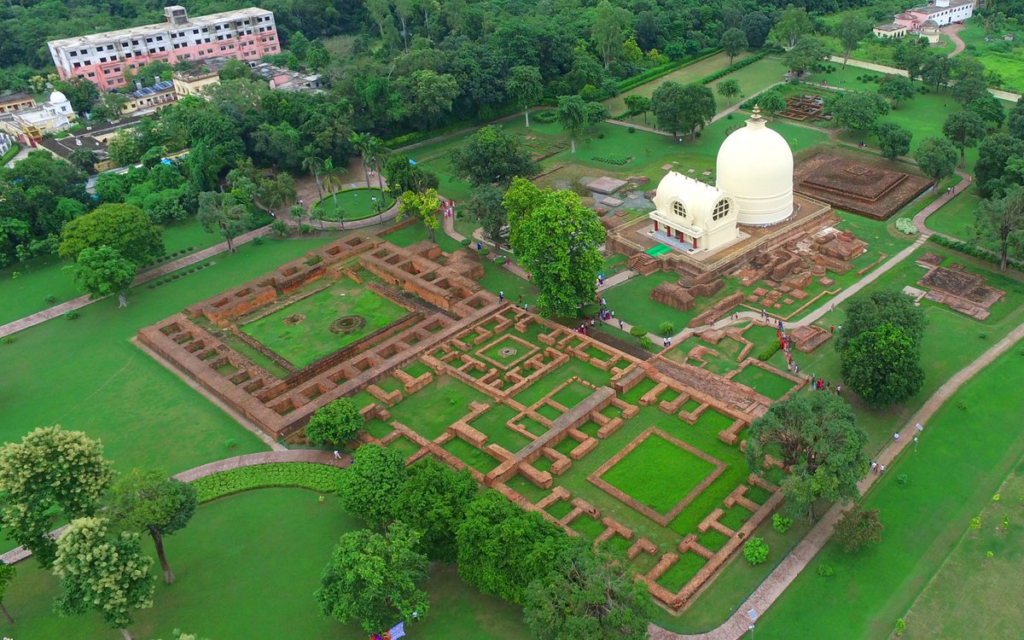
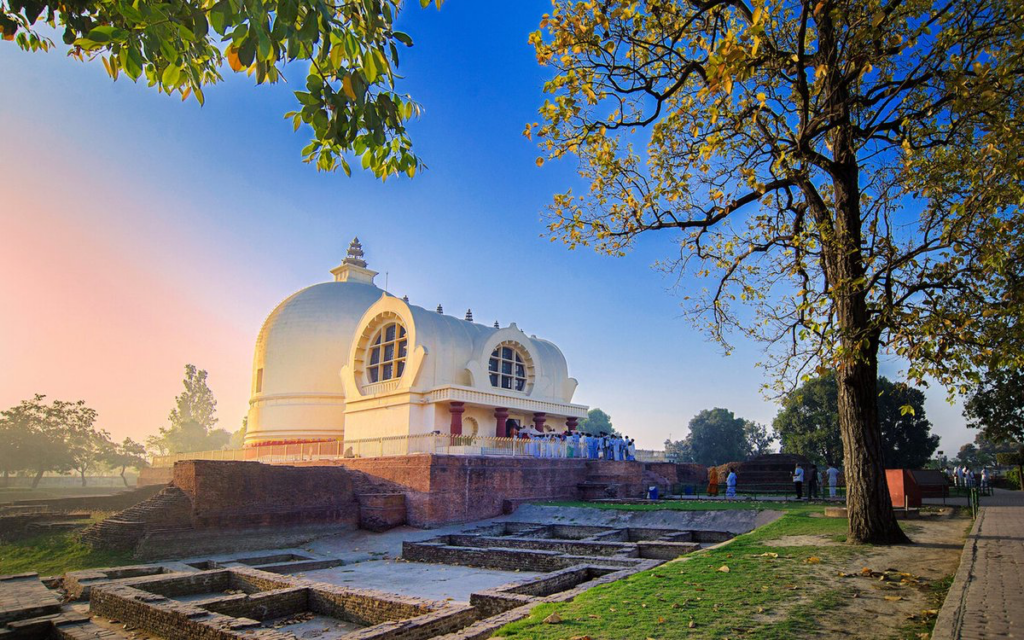
The heart of Kushinagar is the majestic Parinirvana Temple, one of the holiest Buddhist sites in the world.
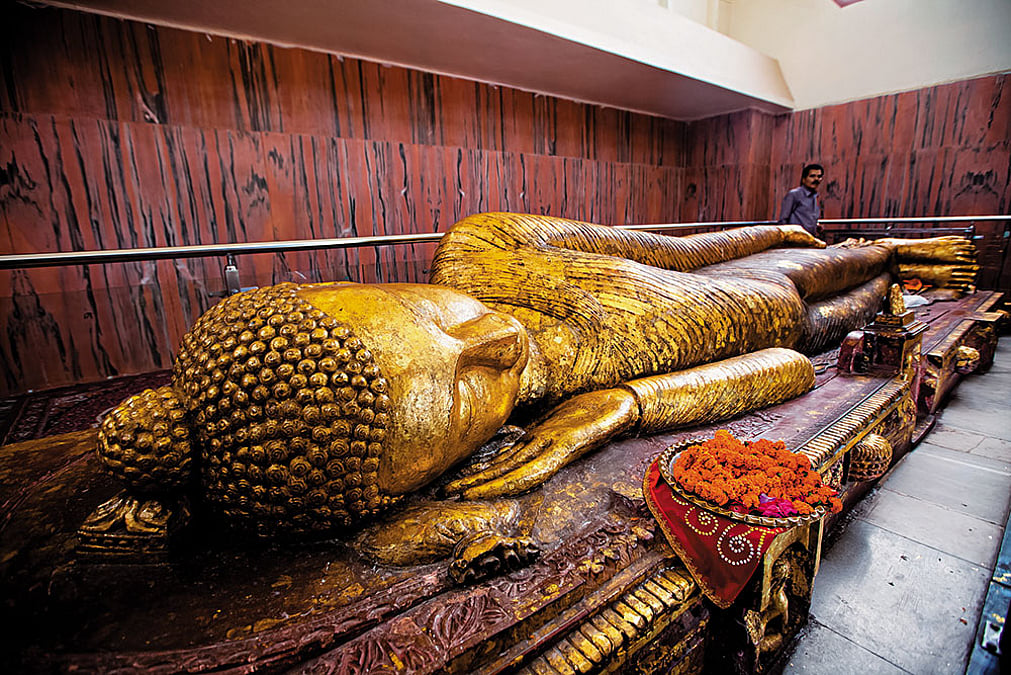
🔸 Inside the temple rests a massive 6.1-meter-long reclining statue of Buddha carved from monolithic red sandstone.
🔸 The statue depicts Buddha lying on his right side during his final moments before attaining Mahaparinirvana.
🔸 Historians believe this sacred sculpture dates back to the 5th century CE and was discovered during archaeological excavations in the 19th century.
🔸 The atmosphere surrounding the temple is deeply meditative. Chanting monks, fluttering prayer flags, incense smoke, and silence create an almost surreal spiritual environment.
According to Buddhist scriptures, Buddha arrived in Kushinagar after delivering his final teachings. It was here, beneath sal trees, that he spoke his last words emphasizing impermanence:
✨ “All conditioned things are subject to decay. Strive diligently.”
For Buddhists worldwide, this site is not associated with death alone — it symbolizes liberation, enlightenment, and transcendence beyond suffering.
Ramabhar Stupa: The Sacred Cremation Site of Buddha
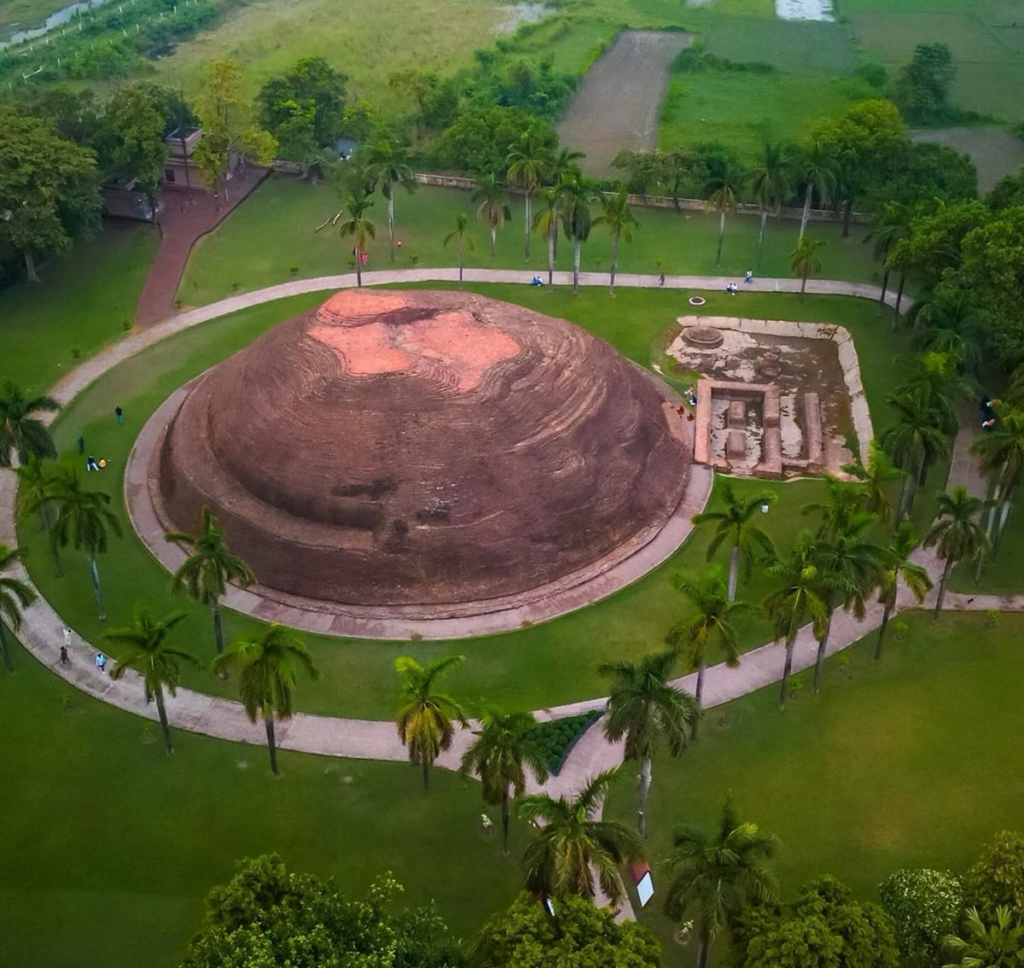
Located around 1.5 kilometers from the Parinirvana Temple stands the ancient Ramabhar Stupa, believed to be the cremation site of Buddha.
🔥 This massive brick stupa rises from a peaceful landscape surrounded by greenery and silence.
🔸 Ancient Buddhist texts identify this place as “Mukutbandhan Chaitya,” where Buddha’s mortal remains were cremated by the Malla rulers of Kushinagar.
🔸 Archaeologists estimate the stupa to be nearly 15 meters high and among the oldest surviving Buddhist memorial structures in India.
🔸 The site carries extraordinary historical significance because it marks the final earthly ritual associated with Buddha’s life journey.
Unlike crowded urban monuments, Ramabhar radiates serenity. Pilgrims often meditate here quietly, reflecting on the temporary nature of human existence.
A Global Spiritual Destination
Today, Kushinagar has evolved into an international Buddhist pilgrimage hub.
🌏 Countries including:
🔹 Thailand
🔹 Japan
🔹 Sri Lanka
🔹 Myanmar
🔹 South Korea
🔹 Vietnam
have established monasteries, meditation centers, and temples here, transforming the town into a living center of global Buddhist culture.
The recent development of the Kushinagar International Airport has further strengthened its global importance.
Conclusion
Kushinagar is not merely a historical destination — it is a sacred reminder of humanity’s search for peace, wisdom, and liberation. The Parinirvana Temple and Ramabhar Stupa together preserve the final chapter of Buddha’s earthly journey, making Kushinagar one of the most spiritually powerful places on Earth.

