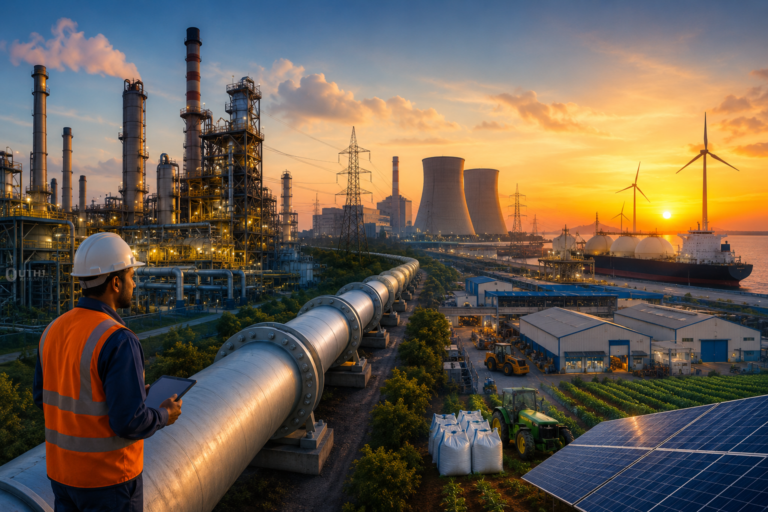
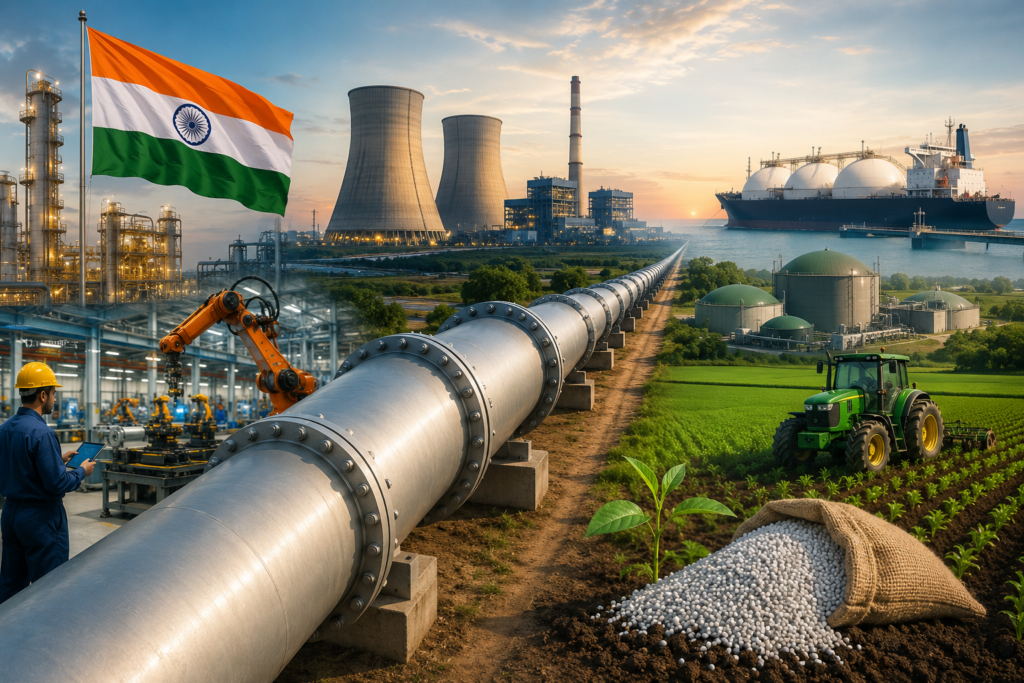
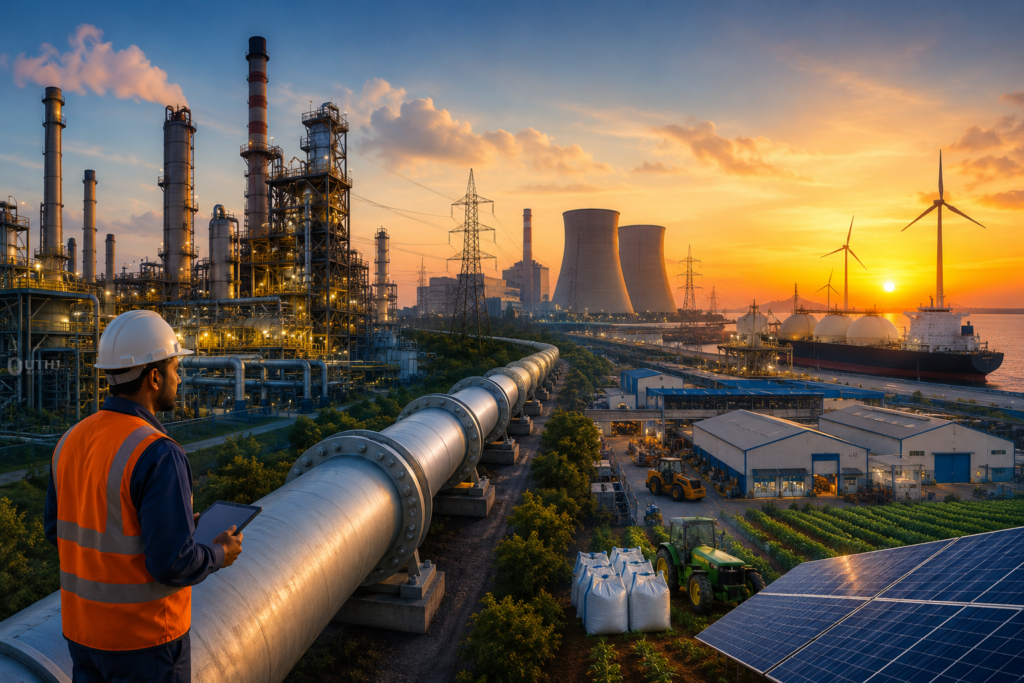
As geopolitical tensions continue to threaten global oil and gas routes, India is preparing for one of its most ambitious energy infrastructure projects ever — a proposed ₹40,000 crore deep-sea gas pipeline connecting Oman directly to Gujarat.
The 2,000-km subsea pipeline is not just an engineering project. It is a strategic move aimed at protecting India’s future energy supply from global disruptions, especially around the sensitive Strait of Hormuz.
Why This Pipeline Matters So Much 🌍
India imports a massive portion of its energy requirements from the Gulf region. Most of these supplies currently pass through the Strait of Hormuz — one of the world’s most sensitive maritime chokepoints.
Any conflict, military tension, or shipping disruption in this narrow route can severely affect:
🔹 India’s fuel supply 🔹 Energy prices 🔹 Industrial production 🔹 Electricity generation 🔹 Economic stability
The Oman-Gujarat pipeline is being viewed as a long-term insurance policy for India’s energy future.
The Vision Behind the Project 🚢
The proposed underwater pipeline is expected to directly transport natural gas from Oman to India’s western coast, likely Gujarat.
Key Highlights 📌
🔹 Estimated Cost: ₹40,000 crore 🔹 Length: Nearly 2,000 km 🔹 Route: Oman → Arabian Sea → Gujarat 🔹 Purpose: Secure uninterrupted gas supply 🔹 Focus: Reduce shipping dependence and strategic vulnerability
Experts believe the pipeline could significantly reduce risks associated with tanker transportation through unstable maritime zones.
Oman has emerged as one of India’s most trusted Gulf partners.
The country offers:
🌐 Strategic geographic access ⚡ Stable energy exports 🤝 Strong diplomatic relations with India 🚢 Connectivity to major energy routes
Unlike some conflict-prone regions, Oman provides relatively stable long-term cooperation, making it ideal for a project of this scale.
A Massive Boost for India’s Economy 📈
Natural gas is becoming increasingly important in India’s transition toward cleaner energy.
This pipeline could:
🔹 Support manufacturing industries 🔹 Strengthen fertilizer production 🔹 Power gas-based electricity plants 🔹 Reduce energy price volatility 🔹 Help India move toward lower carbon emissions
The project may also transform Gujarat into an even larger energy hub for western India.
The Engineering Challenge Beneath the Ocean 🌊
Building a 2,000-km deep-sea pipeline is an extremely complex task.
In a world shaped by supply shocks and geopolitical uncertainty, this pipeline could become one of India’s boldest energy security moves of the decade.
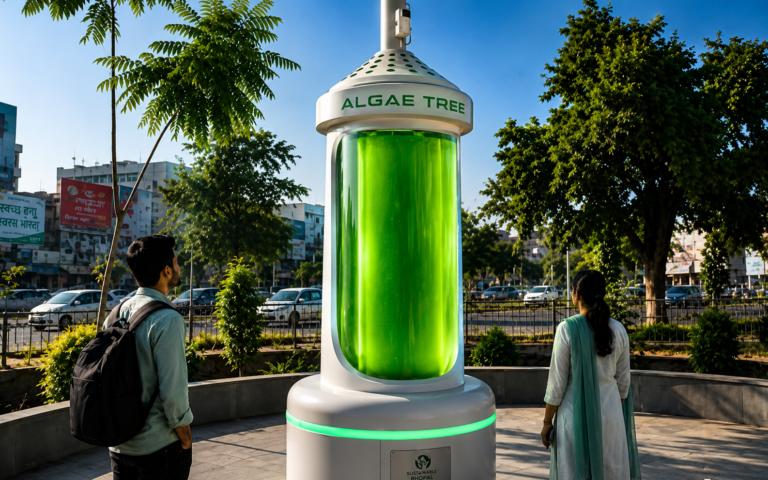
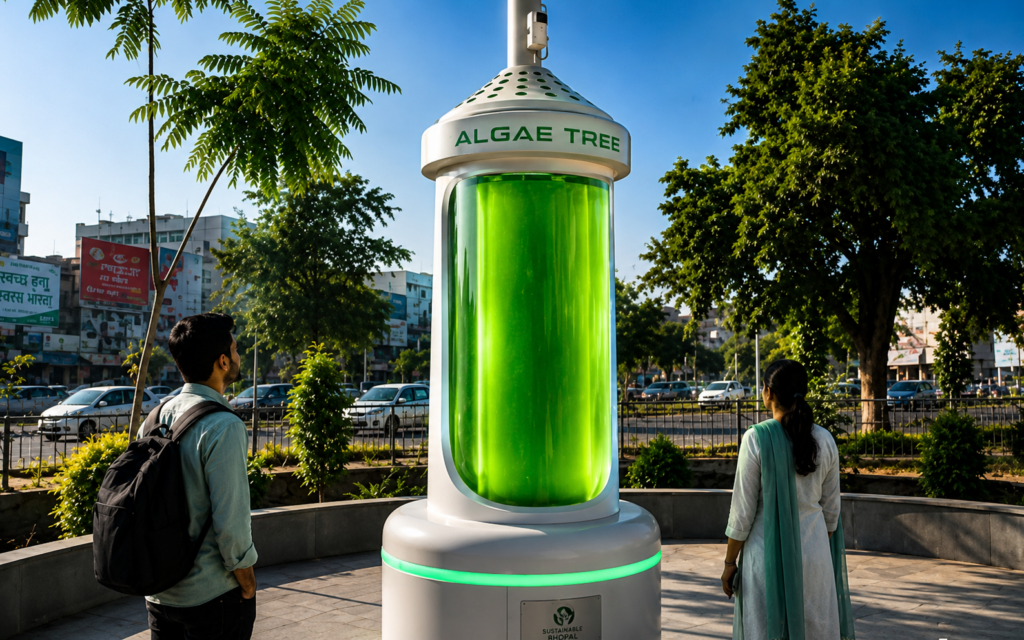
In a groundbreaking step toward futuristic sustainability, the city of Bhopal has installed India’s first “Algae Tree” — an advanced bio-engineered structure capable of absorbing as much carbon dioxide as nearly 25 natural trees.
At a time when Indian cities are battling rising pollution, climate change, and shrinking green spaces, this innovation is not just a scientific experiment — it is a glimpse into the future of urban living.
What Exactly is an Algae Tree? 🧪🌱
🚨 India's first “Algae Tree” that can absorb as much CO2 as 25 trees was installed in Bhopal. pic.twitter.com/rRY9xtxqEQ
— Indian Tech & Infra (@IndianTechGuide) May 14, 2026
Unlike traditional trees made of wood and leaves, an Algae Tree is a vertical biotechnological system filled with microalgae — microscopic aquatic organisms that naturally consume carbon dioxide during photosynthesis.
These algae are incredibly efficient because they grow rapidly and absorb CO₂ much faster than regular plants.
🌞 Sunlight powers the photosynthesis process
💨 Polluted air enters the chamber
🟢 Microalgae absorb carbon dioxide and release oxygen
🌍 Cleaner air is pushed back into the environment
The structure also includes:
Smart air filtration systems
Water circulation technology
Artificial lighting support
Real-time monitoring sensors
This makes it a living eco-machine, not just a decorative installation.
Why Bhopal’s Installation is a Big Deal 🇮🇳
The installation marks a major environmental milestone for India.
Urban regions often struggle with:
🚗 Vehicular pollution
🏭 Industrial emissions
🌡 Rising temperatures
🌫 Poor air quality
🌳 Lack of land for planting large forests
An Algae Tree solves a critical problem: 👉 How do you create more oxygen and absorb more pollution in less space?
That is where this futuristic structure becomes revolutionary.
The Science Behind Its Powerful CO₂ Absorption ⚡
Microalgae are among the most efficient carbon absorbers on Earth.
Scientists say they:
🌿 Grow up to 10 times faster than normal plants
💨 Capture carbon more aggressively
🔬 Produce high oxygen output
♻ Require minimal land area
The Bhopal Algae Tree reportedly has the carbon absorption capacity equivalent to nearly 25 mature trees, making it ideal for crowded metropolitan zones.
More Than Just Clean Air 🚀
The project is also symbolic of India’s growing interest in:
🌍 Climate-tech innovation
🧠 Smart cities
♻ Sustainable urban planning
🔋 Green biotechnology
Experts believe such installations could eventually appear at:
Metro stations 🚇
Airports ✈
Corporate hubs 🏢
High-traffic roads 🚦
Educational institutions 🎓
If scaled properly, Algae Trees could become an iconic feature of future Indian smart cities.
The Algae Tree in Bhopal is not merely a machine — it is a statement.
It represents a future where science and nature work together to fight pollution, redesign cities, and protect the planet. In a country rapidly urbanising like India, innovations like these may soon become essential rather than optional.
India’s defence story has entered a powerful new chapter. On May 11, 2026, Tata Advanced Systems rolled out the first C-295 military transport aircraft from its final assembly line in Vadodara, Gujarat — marking the first time a military aircraft has been assembled by a private Indian company.
This is not just the launch of an aircraft. It is the rise of a new industrial India — one that is building, assembling, innovating, and preparing to compete with the world’s biggest aerospace powers. ✈️⚡
The C-295 Deal That Changed India’s Aerospace Landscape
The C-295 project is part of a massive 56-aircraft agreement signed between the Indian Air Force and Airbus in partnership with Tata Advanced Systems.
Here’s what makes the deal historic:
🔹 16 aircraft are being delivered directly from Spain in fly-away condition 🔹 40 aircraft will be manufactured and assembled in India 🔹 The Vadodara facility is India’s first private-sector military aircraft assembly line 🔹 Thousands of Indian MSMEs and suppliers are expected to become part of the ecosystem
This project is creating far more than aircraft — it is building an entire aerospace manufacturing network inside India.
Why the C-295 Matters for the Indian Air Force 🛡️
The C-295 is a modern tactical military transport aircraft designed for versatility and rugged operations.
✨ Key capabilities include:
🚀 Carrying troops, cargo, and medical evacuation units 🚀 Operating from short and unprepared airstrips 🚀 Performing disaster relief and humanitarian missions 🚀 Supporting border logistics in difficult terrains like Ladakh and the Northeast 🚀 Replacing the ageing Avro fleet of the Indian Air Force
With modern avionics, fuel efficiency, and operational flexibility, the aircraft is expected to significantly strengthen India’s defence mobility.
Vadodara: India’s New Aerospace Powerhouse
For decades, India relied heavily on foreign imports for defence aviation. The Vadodara assembly line changes that narrative dramatically.
The facility symbolizes:
⚙️ Advanced aerospace manufacturing ⚙️ High-skilled engineering employment ⚙️ Technology transfer and indigenous capability ⚙️ Private-sector participation in national defence ⚙️ India’s ambition to become a global defence exporter
The project is also expected to inspire future collaborations in fighter aircraft, drones, and advanced aviation systems.
More Than Manufacturing — A Strategic Statement 🇮🇳
The rollout of the first Indian-assembled C-295 is a bold declaration of India’s strategic intent. It reflects the growing momentum of the “Atmanirbhar Bharat” vision — reducing dependence on imports while building world-class domestic capability.
India is no longer aiming to be only a buyer of defence technology. It is positioning itself as a builder, innovator, and future exporter in the global aerospace race. 🌍✈️
The Takeoff Has Just Begun
The first C-295 rolling out of Vadodara is more than a defence milestone — it is a symbol of India’s industrial confidence. From the factory floor to the skies, this aircraft carries the ambition of a nation determined to build its future with its own hands. 🇮🇳⚡
India’s energy story is no longer just about powering homes — it is now about powering a global transformation. 🇮🇳⚡
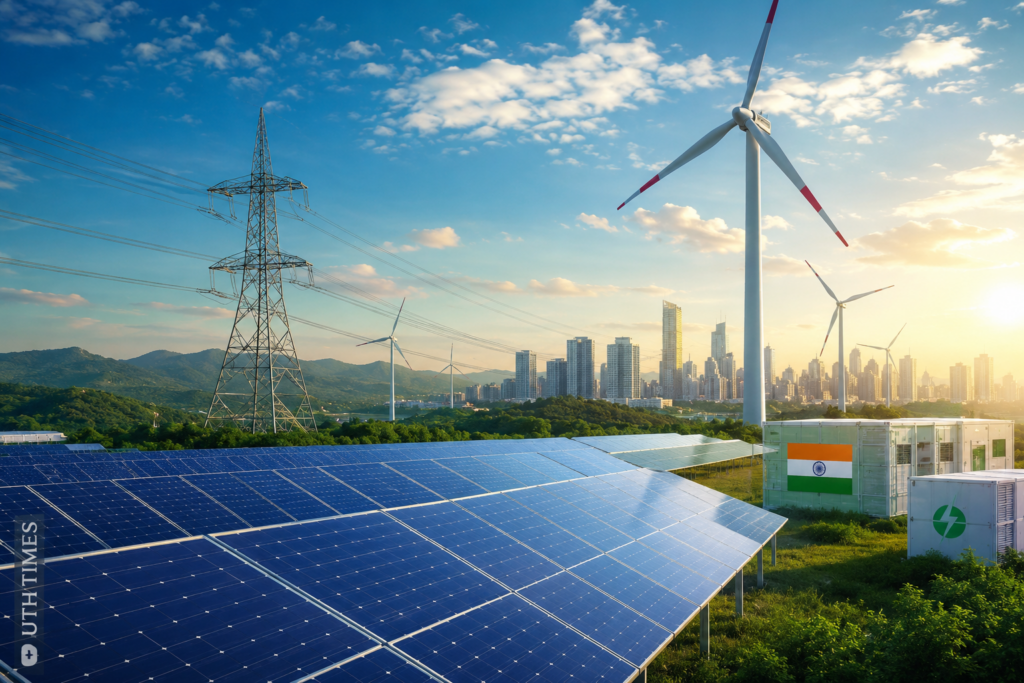
In a landmark achievement, India has officially become the world’s 3rd largest country in installed renewable energy capacity, signaling a historic shift from fossil-fuel dependence toward a cleaner and more self-reliant future. With non-fossil fuel capacity crossing 262.7 GW, the country is rapidly emerging as one of the most aggressive clean-energy economies on Earth.
🌍 India’s Green Energy Revolution Is Now Global
For decades, India was viewed as a developing economy struggling with rising energy demand. Today, that narrative is changing dramatically.
More than 50% of India’s installed electricity capacity now comes from non-fossil fuel sources, including solar, wind, hydro, and nuclear energy. This achievement is not just symbolic — it represents a structural transformation of the nation’s economic and industrial future.
The scale of expansion is extraordinary:
⚡ Solar module manufacturing capacity jumped from 38 GW to 74 GW within just one year
⚡ Solar cell manufacturing capacity surged from 9 GW to 25 GW
⚡ Massive solar parks and wind corridors are expanding across states like Rajasthan, Gujarat, Tamil Nadu, and Karnataka
⚡ India is increasingly positioning itself as a global renewable manufacturing hub
This rapid acceleration reflects both policy ambition and massive infrastructure execution.
☀️ Solar and Wind Are Reshaping India’s Power Economy
The biggest drivers behind this transformation are solar and wind energy.
India’s solar expansion has become one of the fastest in the world. From rooftop systems in cities to ultra-mega solar parks in deserts, clean electricity generation is scaling at unprecedented speed.
Meanwhile, offshore and onshore wind projects are helping diversify the renewable mix and reduce pressure on coal-based generation.
Why this matters deeply:
🌱 Reduced carbon emissions
🌱 Lower long-term dependence on imported fossil fuels
🌱 Stronger energy security during global crises
🌱 Faster electrification of industries and transportation
🌱 Attraction of global climate investment into India
Renewable energy is no longer just an environmental agenda — it has become an economic and geopolitical strategy.
🏭 The Next Big Challenge: Manufacturing Independence
Despite the rapid growth, India still faces one critical challenge — dependence on imported upstream solar components, particularly from foreign supply chains.
While module and cell production are rising rapidly, experts believe India must now focus on:
🔋 Domestic polysilicon production
🔋 Advanced battery storage manufacturing
🔋 Rare-earth and semiconductor ecosystems
🔋 High-efficiency next-generation solar technologies
The next phase of India’s clean-energy rise will depend not only on generating renewable power — but also on mastering the technologies behind it.
🚀 A Defining Moment for India’s Future
India is no longer simply participating in the global energy transition — it is becoming one of its central architects.
From climate leadership to industrial transformation, this renewable surge could redefine India’s position in the 21st-century global economy.
For decades, the UFO story lived in the shadows — half science, half folklore, half classified file. Grainy videos. Pilot testimonies. Objects moving in strange ways. Congressional hearings. Whistleblowers. Internet theories. And always, one question:
What does the government really know?
Now, the Pentagon has opened a new chapter. In its latest disclosure push, the US government released the first batch of previously classified files related to Unidentified Anomalous Phenomena, or UAPs — the official term for what most people still call UFOs. The release includes documents, videos, photos, transcripts and eyewitness reports dating back decades. CBS reported that the first release contained 162 files, including 120 PDFs, 28 videos and 14 image files.
This is not just another “alien story.” It is something bigger: the world’s most powerful military admitting that some things seen in the sky, on camera, and even during space missions, still need explanation.
The official release says the files are part of the Presidential Unsealing and Reporting System for UAP Encounters, also called PURSUE, and that more files will be released on a rolling basis. The effort involves multiple agencies including the White House, ODNI, NASA, FBI, Department of Energy and AARO.
The Most Powerful Part? It Is Not The “Alien” Angle
The internet wants a flying saucer. A body. A crashed craft. A dramatic confession.
But the real story is subtler — and in many ways, more serious.
These files show a long pattern of unexplained sightings reported by pilots, astronauts, military cameras and official agencies. Some may turn out to be balloons. Some may be birds. Some may be sensor errors. Some may be foreign drones. Some may be advanced technology. And some, for now, remain unresolved.
That uncertainty is exactly why the disclosure matters.
Reuters reported that the files include old reports of “flying discs,” Apollo mission-related photos, and transcripts of astronauts discussing unidentified objects or bright particles during lunar missions. Experts, however, also noted that this batch does not provide conclusive evidence of alien technology or extraterrestrial life.
So, no — the Pentagon has not said “aliens are here.”
But yes — it has admitted that the public deserves to see more.
Apollo, The Moon, And The Strange Dots
One of the most fascinating parts of the release is the space-era material.
According to The Guardian, the files include a 1969 debrief in which Apollo 11 astronaut Buzz Aldrin described seeing a “sizeable” object near the lunar surface. The release also includes an Apollo 17 photograph showing three dots in a triangular formation in the lunar sky, with no final consensus yet on the nature of the anomaly.
This is where the story becomes cinematic.
Imagine the scene: astronauts on the Moon, humanity standing on another world for the first time, and somewhere in the silence of space, a light appears that does not fit easily into the script.
That does not automatically mean extraterrestrial life. But it does mean the archive of human space exploration contains mysteries that remain emotionally powerful even decades later.
The New Files Also Bring Modern Sightings
The release is not only about old space missions.
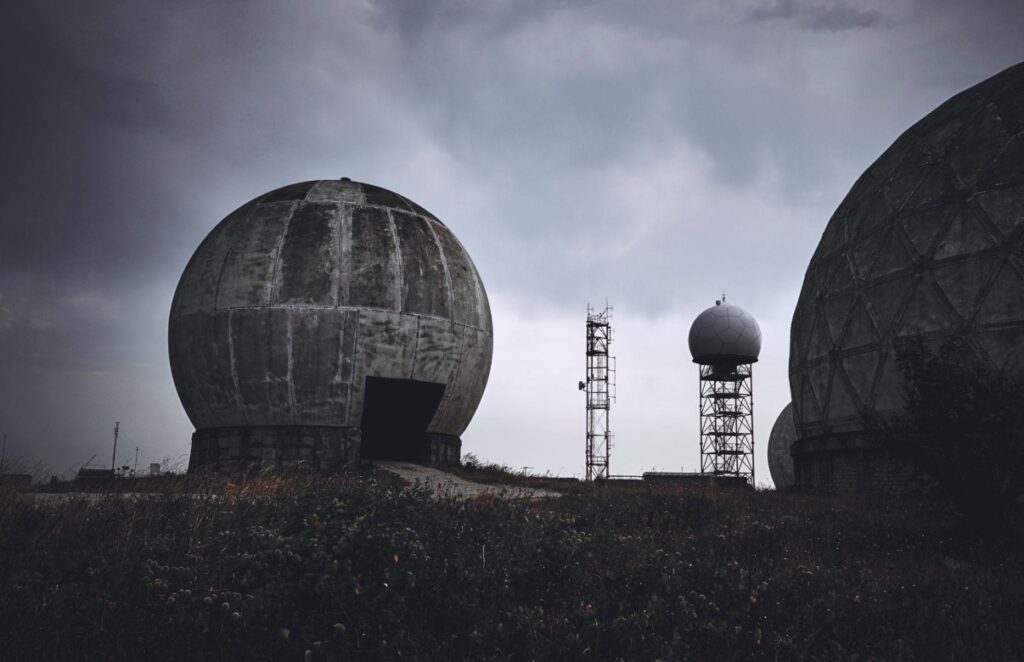
The files also include recent military footage from different parts of the world. CBS reported that several videos show objects captured by infrared cameras, including one object described as football-shaped in the Indo-Pacific and other strange visuals from locations such as Syria and Greece.
AARO’s official imagery page also shows how many recent UAP cases are still being categorized. Some are unresolved, some are under analysis, and some have been explained as balloons or birds. In one case, AARO assessed with high confidence that a video likely showed birds; in another, it assessed an object was almost certainly a balloon.
That is important. The serious approach is not blind belief. It is classification, analysis, comparison and evidence.
The sky is not always supernatural. But it is not always simple either.
Why The Internet Exploded
The public response was massive. People reported that the Pentagon’s new UFO website drew 340 million hits within its first 12 hours, citing Pentagon spokesperson Sean Parnell.
That number tells us something deeper about modern society.
We live in an age of satellites, AI, drones, deepfakes, military secrecy, private space companies and collapsing trust in institutions. The UFO question is no longer just about aliens. It is about transparency. It is about national security. It is about whether governments tell citizens the full truth.
And above all, it is about wonder.
Because despite all our technology, the sky still has the power to humble us.
The Sober Reality
For all the excitement, there is one crucial line that cannot be ignored.
AARO and earlier Pentagon assessments have repeatedly said they have found no verifiable evidence that any UAP sighting represents extraterrestrial activity or that the US government has access to alien technology.
That may disappoint believers. But it should not end the conversation.
The real question is not only, “Are these aliens?”
The better question is:
A balloon can be a misidentification. A drone can be a security threat. A sensor error can expose weaknesses in military systems. A genuine unknown can open an entirely new scientific frontier.
Each possibility matters.
The Disclosure Era Has Begun
This first batch is not the end. It is the beginning of a new phase.
The Pentagon says more files will be released over time. That means the UFO story may now move from conspiracy forums into public archives, from whispers into searchable databases, from “trust us” to “see for yourself.”
The truth may not arrive as a Hollywood moment.
No giant spaceship over the White House. No dramatic alien handshake. No final answer in one PDF.
Instead, disclosure may come as thousands of pages, blurry frames, old transcripts, unresolved cases, quiet admissions and slow public analysis.
And perhaps that is more realistic.
Because the universe does not owe us a clean reveal.
It gives us clues.
The sky has entered the chat.
The latest Pentagon UFO file release is not proof of aliens. But it is proof of something equally important: the mystery is real enough to be documented, archived, debated and disclosed.
For decades, people were told not to ask too many questions.
From royal palaces glowing under golden sunsets to vibrant bazaars overflowing with culture, Jaipur has once again captured global attention. In a major international recognition, the Pink City has secured the 5th position among the world’s best cities for tourists in the prestigious 2025 survey by Travel + Leisure.
For India, this is not just a tourism milestone — it is a global statement about heritage, luxury, culture, and modern travel experiences coming together in one unforgettable destination.
Why Jaipur Is Captivating the World
Unlike ordinary tourist destinations, Jaipur offers something few cities can replicate — a living royal experience. Every street, fort, palace, and market reflects centuries of Rajput grandeur blended with modern hospitality.
What makes Jaipur extraordinary is the balance between history and contemporary tourism.
✨ The Royal Heritage Experience
Tourists across the world continue to be mesmerized by Jaipur’s architectural magnificence.
Some of the city’s globally admired attractions include:
🔸 Hawa Mahal — the iconic Palace of Winds with its intricate pink sandstone windows
🔸 Amber Fort — a majestic hilltop fortress showcasing Rajput military brilliance
🔸 City Palace — where royal heritage still survives within a functioning palace complex
🔸 Jantar Mantar — the UNESCO-recognized astronomical marvel far ahead of its time
Visitors are not simply sightseeing in Jaipur — they are stepping into a cinematic historical universe.
Luxury Tourism Is Fueling Jaipur’s Global Rise
One major reason behind Jaipur’s rapid international popularity is its transformation into a luxury tourism hotspot.
🌟 Heritage hotels now offer palace-like stays
🌟 Royal dining experiences attract global celebrities
🌟 Destination weddings in Jaipur have become internationally fashionable
🌟 Curated cultural experiences give travelers deeper immersion into Rajasthani traditions
The city has evolved from being just a historical destination into a premium lifestyle travel experience.
International travelers increasingly seek “experiential tourism,” and Jaipur delivers exactly that — elephant village visits, folk performances, gemstone markets, traditional cuisine, hot-air balloon rides, and royal hospitality.
A Major Victory for Indian Tourism
Jaipur’s inclusion among the world’s top tourist cities reflects the growing global admiration for Indian culture and heritage tourism.
🌍 It boosts India’s international tourism image
📈 It strengthens Rajasthan’s economy through hospitality and travel
🏨 It encourages investment in tourism infrastructure
🎭 It promotes Indian art, crafts, cuisine, and traditions worldwide
Experts believe Jaipur’s ranking could further increase international tourist arrivals over the next few years.
More Than a City — A Timeless Experience
Jaipur is no longer just India’s Pink City.
It is now officially one of the world’s most admired travel destinations — where royalty, culture, luxury, and history merge into an unforgettable experience that continues to fascinate travelers across generations.
Imagine a world where plastic waste doesn’t remain on Earth for 500 years. Instead, it disappears within days — almost like science fiction becoming reality.
Scientists have now developed a groundbreaking self-destructing plastic embedded with special microbes that can activate and break down the material in just six days. This futuristic innovation could completely transform the global plastic crisis and redefine how humanity uses packaging, consumer products, and industrial materials.
The Science Behind the “Living Plastic”
Unlike ordinary plastic, this next-generation material contains dormant plastic-degrading microbes hidden directly inside the polymer structure.
Here’s how the system works:
🧬 The microbes remain inactive while the plastic is being used normally
💧 When exposed to specific environmental triggers such as moisture, heat, or nutrients, the microbes activate
⚡ Once awakened, they begin consuming and degrading the plastic from inside
🕒 The material can reportedly break down within six days under controlled conditions
This approach is radically different from biodegradable plastics that often require industrial composting facilities and still take months or years to decompose.
Scientists are essentially turning plastic into a “programmable material” capable of deciding when its own lifecycle ends.
Why This Discovery Is So Important
The world currently produces over 400 million tonnes of plastic waste annually, with huge amounts ending up in oceans, rivers, landfills, and even human bodies through microplastics.
This invention could help tackle several global crises at once:
🌍 Reduction in long-term plastic pollution
🐠 Less ocean contamination harming marine ecosystems
♻️ Smarter waste-management systems
🏭 Cleaner industrial packaging solutions
🚮 Reduced landfill pressure in overcrowded cities
Experts believe this technology could eventually be used in:
📦 Food packaging
🛍️ Shopping bags
💊 Medical supplies
🚚 Logistics materials
📱 Consumer electronics packaging
The idea of “disappearing plastic” may soon become commercially realistic.
The Biggest Challenge Scientists Still Face
Despite the excitement, researchers caution that large-scale adoption is not simple yet.
Major concerns include:
⚠️ Preventing accidental activation during storage or transport
⚠️ Ensuring microbes remain environmentally safe
⚠️ Managing production costs for mass manufacturing
⚠️ Balancing durability with rapid decomposition
Scientists must guarantee that the plastic stays stable while consumers use it — but decomposes only when intentionally triggered.
That balance is the core engineering challenge.
Could This Be the Future of Sustainable Materials?
Many researchers believe this innovation represents the beginning of an entirely new era called “responsive materials engineering.”
Future materials may not just be durable — they may also become intelligent, adaptive, and environmentally responsive.
🚀 Plastics that self-destruct
🚀 Packaging that dissolves safely
🚀 Materials that repair themselves
🚀 Smart products with programmable lifecycles
This could fundamentally reshape modern manufacturing.
For decades, plastic symbolized convenience but also environmental destruction. Now, scientists may have created a material capable of rewriting that story.
If successfully scaled, self-destructing plastic could become one of the most important sustainability breakthroughs of the decade — proving that the future of materials may not lie in permanence, but in controlled disappearance.
Uttar Pradesh is no longer thinking in short-term schemes — it is building a long-term future model. In one of its most ambitious cabinet decision rounds, the state government unveiled reforms that simultaneously target rural dignity, technological education, and administrative innovation.
From compensating farmers more fairly for infrastructure projects to bringing robotics labs into government schools and opening district governance to young professionals, UP’s latest decisions signal something much bigger: a state preparing itself for the next decade.
🌾 A Historic Shift for Farmers: Land Compensation Gets a Major Upgrade
For decades, infrastructure expansion often came at the cost of farmer dissatisfaction. Transmission towers, utility corridors, and large projects occupied agricultural land while compensation remained a sensitive issue.
Now, Uttar Pradesh has announced a landmark compensation framework that could redefine how infrastructure and agriculture coexist.
Key Highlights:
🔹 Farmers will receive 200% land value compensation for tower base installations 🔹 An additional 30% Right of Way (RoW) corridor payment will also be provided 🔹 The move is being seen as one of India’s most farmer-sensitive infrastructure compensation models
This is not merely financial support — it represents policy recognition that every inch of farmland carries emotional, economic, and generational value.
The decision could significantly reduce land-related disputes while accelerating power and transmission projects across the state.
More importantly, it sends a strong political and social message: development cannot happen by sidelining rural stakeholders.
🤖 DREAM Skill Labs: Bringing Future Technologies Into Government Schools
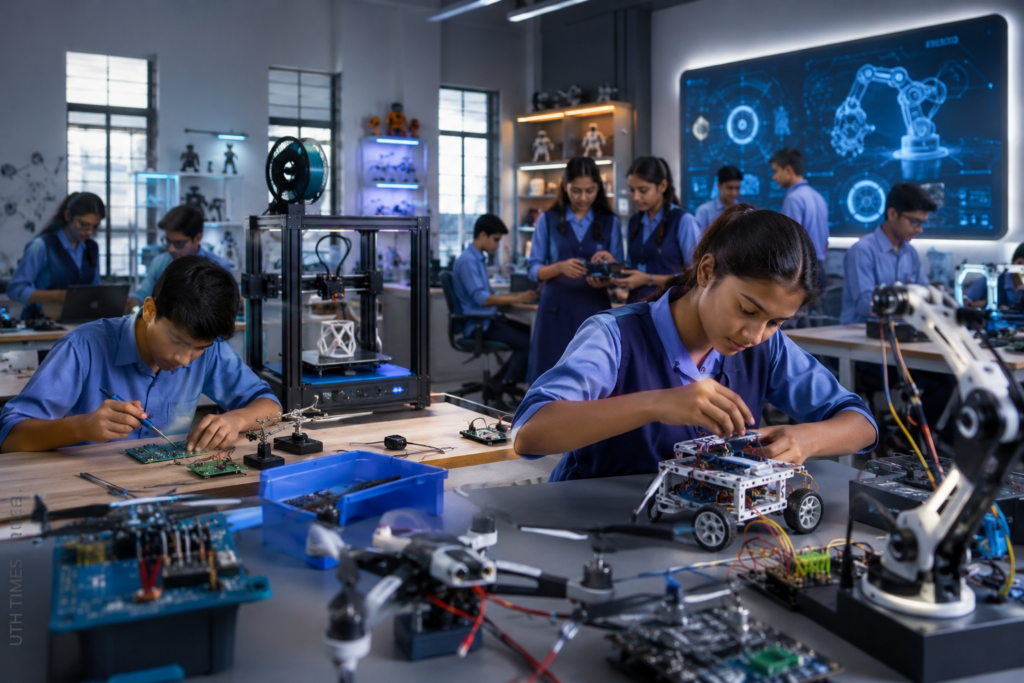
Perhaps the most transformative announcement was the launch of 150 DREAM Skill Lab clusters in partnership with Tata’s Nelco.
These labs aim to expose students to technologies that are shaping the global economy — not someday, but right now.
What makes this initiative extraordinary is its location.
These technologies are often limited to elite private institutions or expensive urban academies. UP is attempting to democratize access by integrating advanced skill ecosystems directly into government education infrastructure.
This could create an entirely new generation of rural and semi-urban innovators equipped for Industry 4.0 careers.
Instead of producing only degree holders, the state is now pushing to create creators, builders, and problem-solvers.
🏛️ OTD CM Fellowship: Young Professionals Enter Governance
Another standout decision was the launch of the OTD CM Fellowship Program.
The initiative will induct postgraduate professionals under 40 directly into district-level governance systems with a monthly stipend of ₹50,000.
Why this matters:
🔸 Young professionals bring fresh policy thinking 🔸 Governance becomes more data-driven and innovation-oriented 🔸 District administrations gain specialized talent 🔸 Citizens may see faster implementation and modern problem-solving
Rather than treating governance as a closed administrative structure, UP appears to be opening doors for collaborative leadership.
This model mirrors globally successful governance fellowships where professionals work inside public systems to accelerate reform from within.
These cabinet decisions are not isolated announcements — together, they form a blueprint for a more future-ready Uttar Pradesh.
A state where: 🌾 Farmers are treated with dignity 🤖 Students gain access to frontier technologies 🏛️ Young professionals help shape governance
UP is not just planning development anymore. It is redesigning how development itself should work.
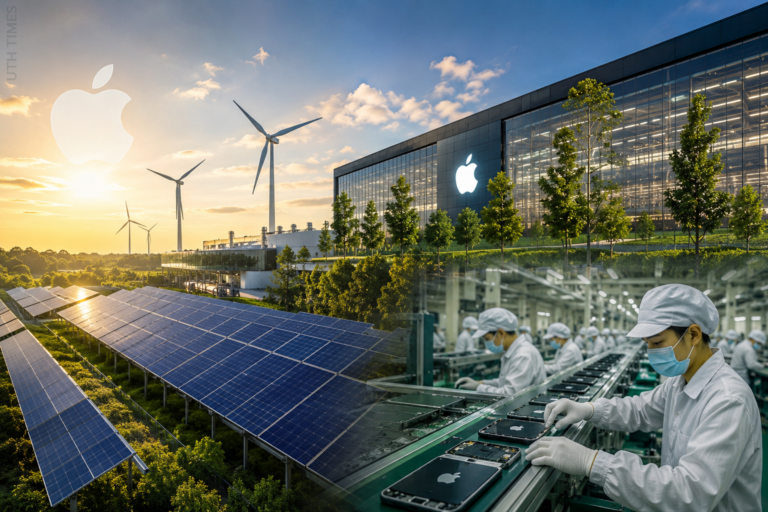
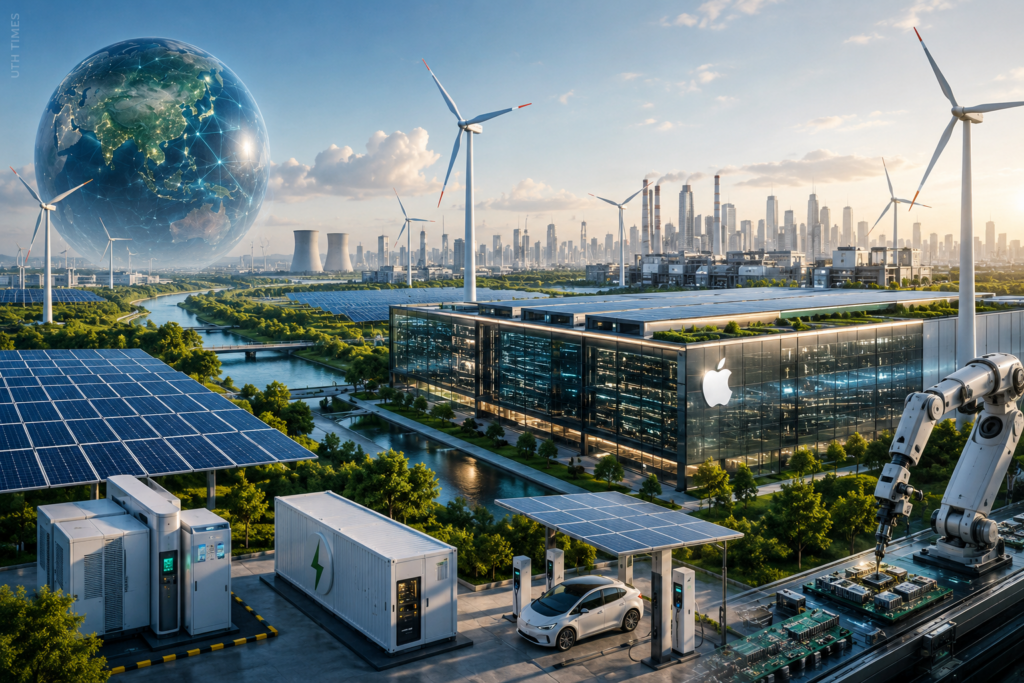
In a major signal of confidence in India’s clean energy future, Apple is reportedly investing nearly ₹100 crore toward renewable energy expansion across the country. The move is not just another corporate sustainability announcement — it reflects how global tech giants are now treating India as a strategic centre for green manufacturing, clean electricity, and future-ready infrastructure.
As climate pressure intensifies worldwide, Apple’s latest India-focused energy push could become a defining moment in the country’s transition toward industrial sustainability.
🌍 Why Apple Is Expanding Renewable Energy in India
Apple has been aggressively working toward becoming carbon neutral across its entire supply chain and product lifecycle by 2030. India plays a crucial role in that mission because the country has rapidly become one of Apple’s biggest manufacturing ecosystems outside China.
The new investment is expected to support renewable power sourcing for Apple-linked suppliers, manufacturing units, and operational facilities.
⚡ The core focus areas may include:
🔹 Solar energy infrastructure 🔹 Wind energy partnerships 🔹 Green manufacturing systems 🔹 Clean electricity procurement 🔹 Carbon emission reduction programs 🔹 Sustainable supplier operations
India’s growing electronics manufacturing ecosystem, especially iPhone production, requires enormous energy demand. Apple now appears determined to ensure that this growth is powered increasingly through clean energy rather than fossil fuels.
🇮🇳 India’s Strategic Importance in Apple’s Global Vision
Over the last few years, India has transformed from a secondary market into one of Apple’s most important strategic territories.
Today, several Apple suppliers already operate large-scale facilities across states like:
📍 Tamil Nadu 📍 Karnataka 📍 Telangana
With India emerging as a global smartphone manufacturing hub, renewable energy becomes critical not only for environmental goals but also for long-term operational stability.
🌱 This investment could help Apple:
🔸 Strengthen India supply chains 🔸 Reduce dependence on conventional power 🔸 Improve sustainability ratings 🔸 Meet international ESG commitments 🔸 Attract future green-tech collaborations
More importantly, it positions India as a serious player in the global clean manufacturing revolution.
⚙️ The Bigger Picture: Tech Giants Are Entering India’s Green Economy
Apple’s renewable energy expansion reflects a much larger global trend.
Technology companies are no longer investing only in software and devices — they are increasingly investing in energy infrastructure itself.
From AI data centres to semiconductor plants, future technologies require massive amounts of electricity. Renewable energy is quickly becoming the backbone of next-generation digital economies.
🚀 Experts believe India could soon become:
🌐 A global green manufacturing hub ⚡ A renewable-powered electronics centre 🏭 A sustainable supply-chain powerhouse 🔋 A major clean-tech investment destination
Apple’s move may encourage other multinational giants to accelerate similar renewable investments inside India.
Apple’s ₹100 crore renewable energy expansion is far bigger than a sustainability headline. It represents the growing intersection of technology, climate strategy, and India’s industrial future.
As global corporations race toward cleaner operations, India is no longer just participating in the green transition — it is increasingly becoming one of its most important battlegrounds.
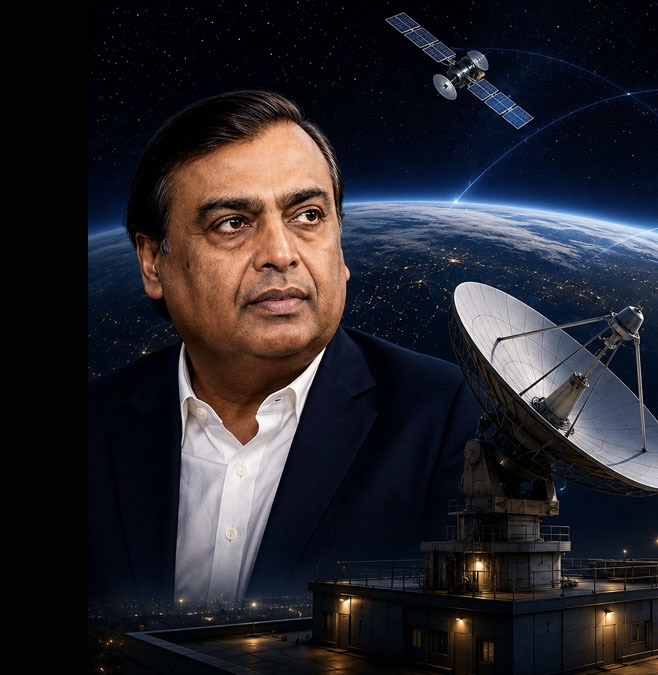
India’s space-tech race is entering a completely new phase — and this time, Reliance Jio wants to be at the center of it.
Reliance Industries is reportedly preparing a massive Low Earth Orbit (LEO) satellite expansion through Jio Platforms, signaling one of the boldest private-sector space ambitions India has seen so far. If executed at scale, this move could transform how millions of Indians access internet, communication, defence intelligence, and future AI-driven connectivity systems.
🌍 Why Reliance Is Suddenly Looking Toward Space
For years, Jio revolutionized India’s telecom market on the ground. Now the company appears ready to extend that disruption into orbit.
According to reports, Reliance has already formed six specialized teams focused on key satellite infrastructure areas including:
🔹 Satellite architecture 🔹 Payload engineering 🔹 Launch systems 🔹 User terminals 🔹 Ground communication networks 🔹 Strategic partnerships & spectrum planning
The company is also reportedly seeking orbital slots from the Department of Telecommunications (DoT) while simultaneously holding discussions with multiple satellite technology firms worldwide.
This indicates that Reliance is not exploring satellites casually — it is building the foundation for a long-term space communications ecosystem.
🛰️ India’s Answer to Starlink?
The global satellite internet market is becoming one of the most competitive technological battlefields of the decade.
Currently, major international players include:
⚡ Starlink ⚡ OneWeb ⚡ Amazon Kuiper
Reliance entering this space could create India’s strongest domestic alternative in the rapidly expanding LEO broadband market.
Unlike traditional telecom towers, LEO satellites orbit much closer to Earth, allowing lower latency, faster speeds, and wider coverage — especially in remote and rural regions where fibre infrastructure remains difficult or expensive to deploy.
This is where Jio’s scale becomes extremely powerful.
With its existing telecom ecosystem, digital platforms, cloud ambitions, and consumer reach, Reliance already possesses the infrastructure backbone needed to integrate satellite internet into mainstream Indian connectivity.
🔐 More Than Internet — A Strategic National Asset
This project is not just about faster internet.
Satellite infrastructure is increasingly becoming linked with:
🛡️ National security 🌐 Digital sovereignty 🤖 AI-based communications 📡 Disaster resilience 🚁 Defence intelligence systems 🏙️ Smart city infrastructure
If Reliance successfully develops or acquires advanced satellite capabilities, India could reduce dependence on foreign-controlled communication systems while strengthening indigenous digital infrastructure.
In the coming decade, space-based connectivity may become as important as oil pipelines or semiconductor supply chains.
🚀 The Beginning of India’s Orbital Internet Era
Reliance’s satellite ambitions reflect a much bigger reality — the future internet may not be built only through cables and towers anymore.
It may also be built from space.
And if Jio succeeds, India could emerge not just as a telecom giant on Earth, but as a serious player in the global orbital communications revolution.