
Imagine a world where plastic waste doesn’t remain on Earth for 500 years. Instead, it disappears within days — almost like science fiction becoming reality.
Scientists have now developed a groundbreaking self-destructing plastic embedded with special microbes that can activate and break down the material in just six days. This futuristic innovation could completely transform the global plastic crisis and redefine how humanity uses packaging, consumer products, and industrial materials.
The Science Behind the “Living Plastic”
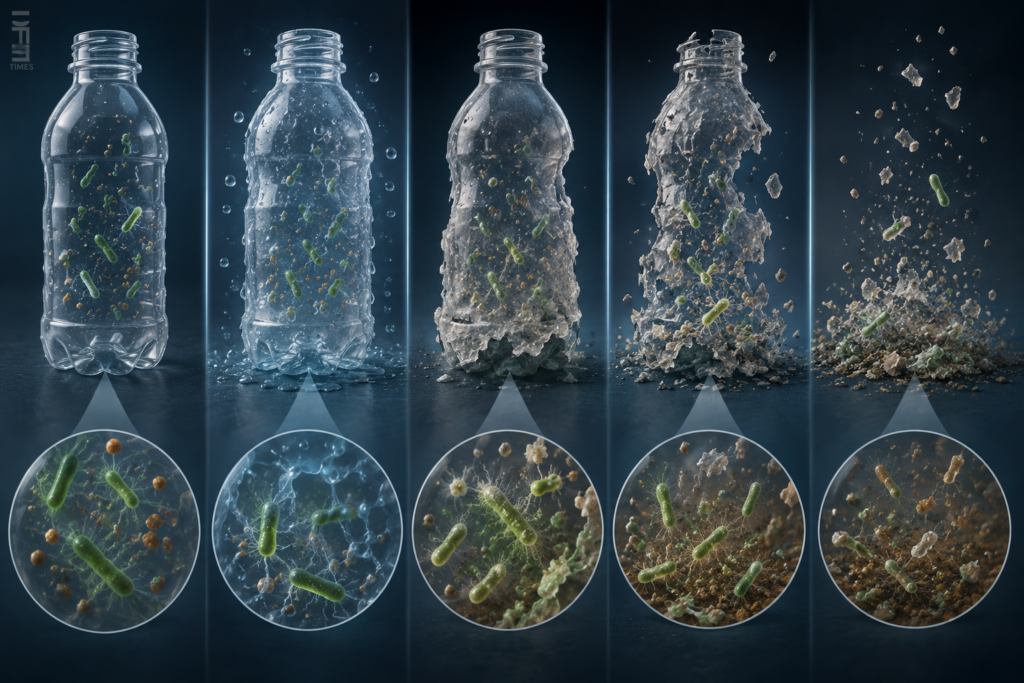
Unlike ordinary plastic, this next-generation material contains dormant plastic-degrading microbes hidden directly inside the polymer structure.
Here’s how the system works:
🧬 The microbes remain inactive while the plastic is being used normally
💧 When exposed to specific environmental triggers such as moisture, heat, or nutrients, the microbes activate
⚡ Once awakened, they begin consuming and degrading the plastic from inside
🕒 The material can reportedly break down within six days under controlled conditions
This approach is radically different from biodegradable plastics that often require industrial composting facilities and still take months or years to decompose.
Scientists are essentially turning plastic into a “programmable material” capable of deciding when its own lifecycle ends.
Why This Discovery Is So Important
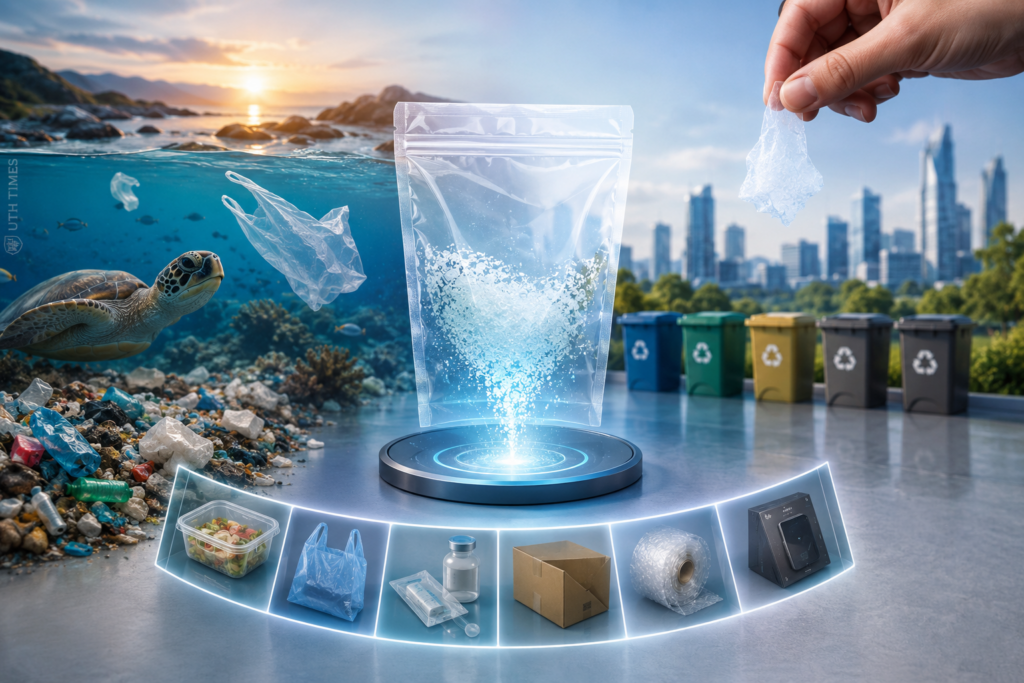
The world currently produces over 400 million tonnes of plastic waste annually, with huge amounts ending up in oceans, rivers, landfills, and even human bodies through microplastics.
This invention could help tackle several global crises at once:
🌍 Reduction in long-term plastic pollution
🐠 Less ocean contamination harming marine ecosystems
♻️ Smarter waste-management systems
🏭 Cleaner industrial packaging solutions
🚮 Reduced landfill pressure in overcrowded cities
Experts believe this technology could eventually be used in:
📦 Food packaging
🛍️ Shopping bags
💊 Medical supplies
🚚 Logistics materials
📱 Consumer electronics packaging
The idea of “disappearing plastic” may soon become commercially realistic.
The Biggest Challenge Scientists Still Face
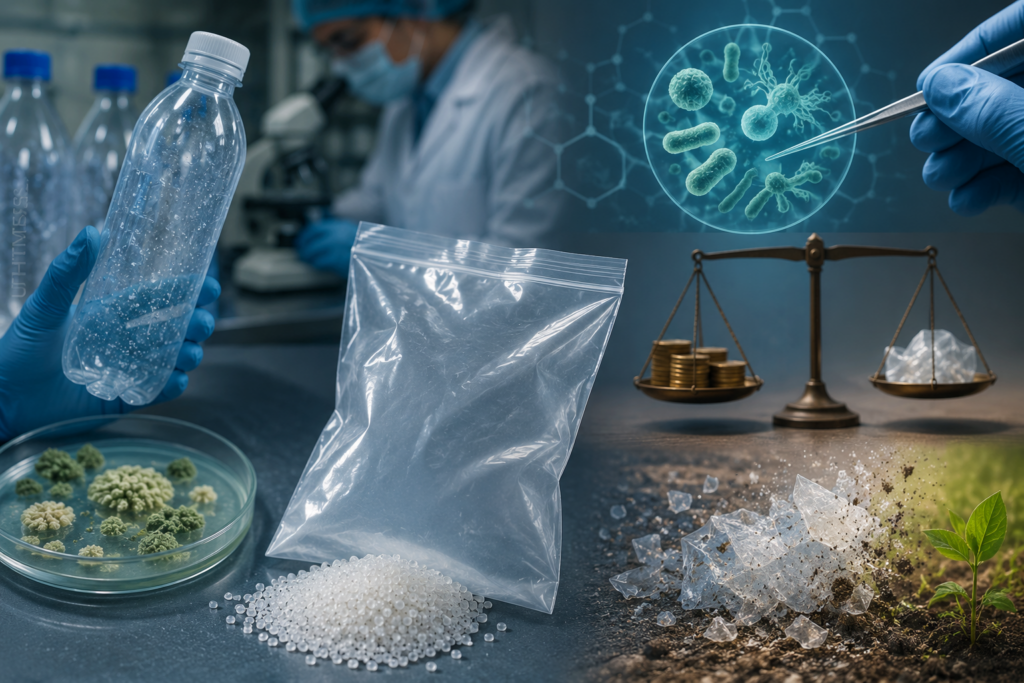
Despite the excitement, researchers caution that large-scale adoption is not simple yet.
Major concerns include:
⚠️ Preventing accidental activation during storage or transport
⚠️ Ensuring microbes remain environmentally safe
⚠️ Managing production costs for mass manufacturing
⚠️ Balancing durability with rapid decomposition
Scientists must guarantee that the plastic stays stable while consumers use it — but decomposes only when intentionally triggered.
That balance is the core engineering challenge.
Could This Be the Future of Sustainable Materials?
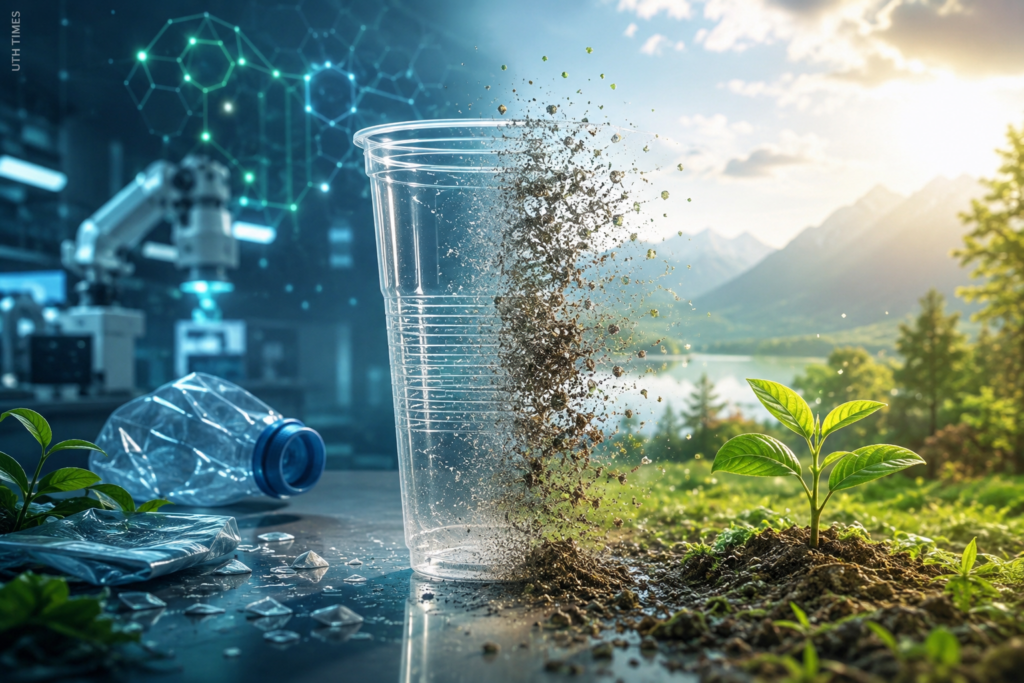
Many researchers believe this innovation represents the beginning of an entirely new era called “responsive materials engineering.”
Future materials may not just be durable — they may also become intelligent, adaptive, and environmentally responsive.
🚀 Plastics that self-destruct
🚀 Packaging that dissolves safely
🚀 Materials that repair themselves
🚀 Smart products with programmable lifecycles
This could fundamentally reshape modern manufacturing.
For decades, plastic symbolized convenience but also environmental destruction. Now, scientists may have created a material capable of rewriting that story.
If successfully scaled, self-destructing plastic could become one of the most important sustainability breakthroughs of the decade — proving that the future of materials may not lie in permanence, but in controlled disappearance.

