
Time is one of humanity’s oldest obsessions. Every civilization tried to understand the movement of the Sun, the rhythm of day and night, and the science behind celestial motion. But what if the meanings behind “AM” and “PM” were once understood in a far deeper and more poetic way than what modern education teaches today?
The debate surrounding the Sanskrit interpretation of AM and PM has recently sparked curiosity across social media, history circles, and cultural discussions worldwide.
The Meaning We Were Taught
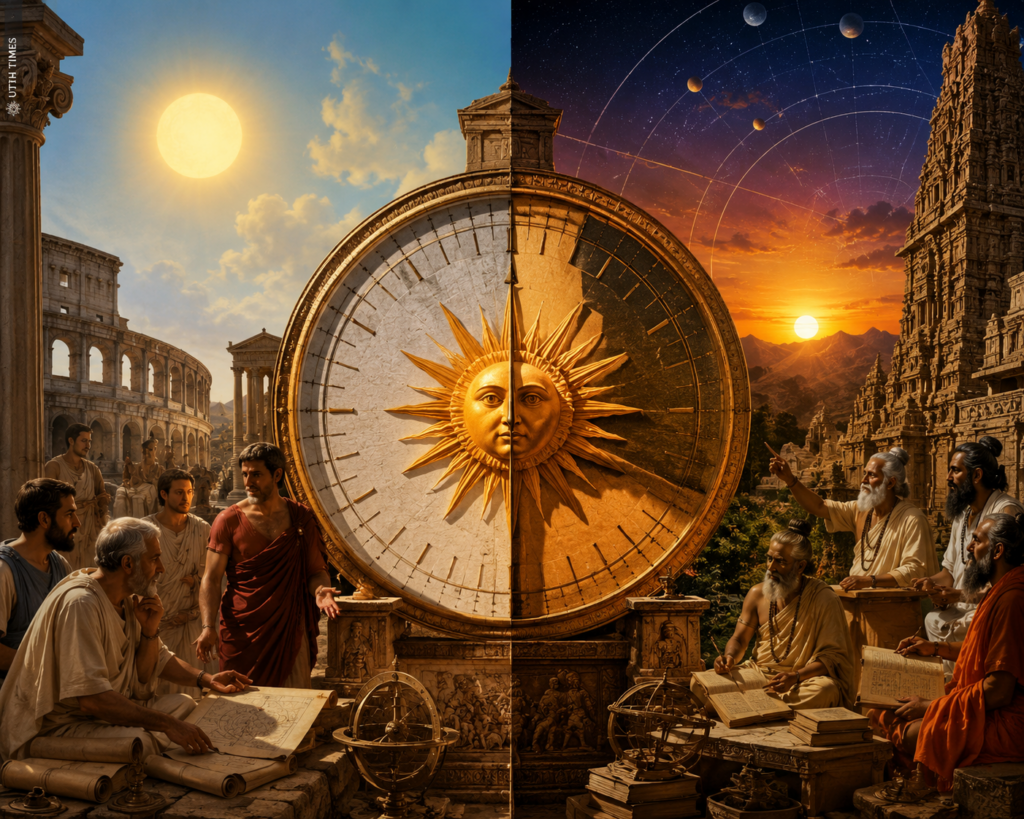
For generations, schools across the world have taught:
🔹 AM = Ante Meridiem
🔹 PM = Post Meridiem
These are Latin terms.
📌 Ante means “before”
📌 Post means “after”
📌 Meridiem refers to “midday” or noon
So technically:
☀️ AM means before midday
🌙 PM means after midday
Scientifically, this explanation is linguistically correct and originates from ancient Roman timekeeping traditions.
But many Indian cultural thinkers argue that Sanskrit offered a far more meaningful interpretation connected directly to the movement of the Sun itself.
The Sanskrit Interpretation That Fascinates People
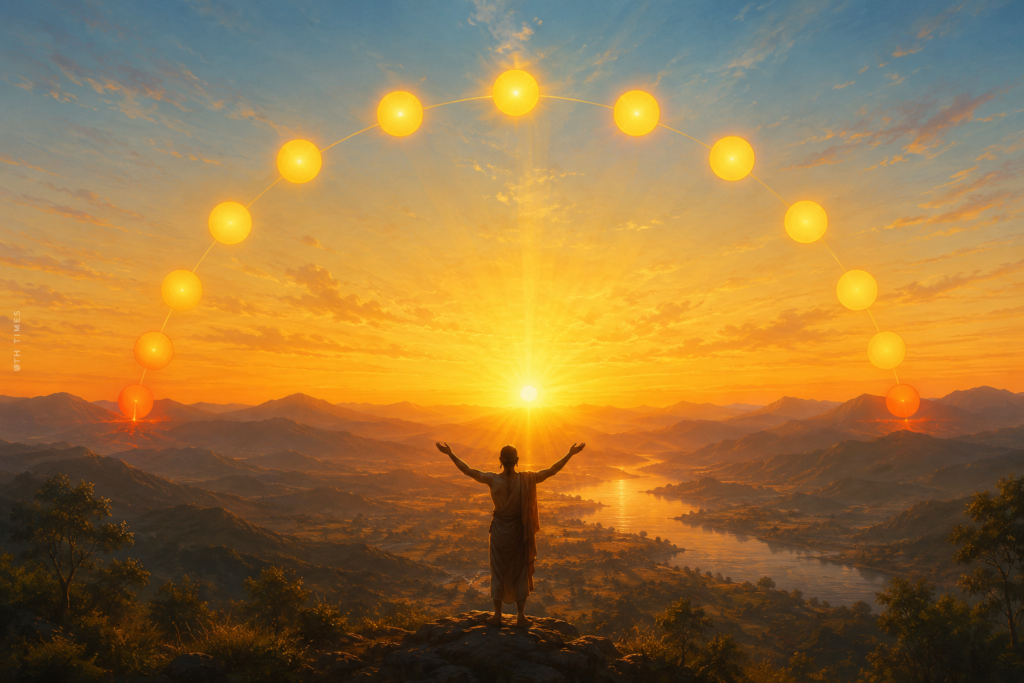
According to a widely shared Sanskrit explanation:
🌅 AM = Arohanam Martandasya
🌇 PM = Patanam Martandasya
Here:
🔸 Arohanam means rising or ascending
🔸 Patanam means declining or descending
🔸 Martanda is an ancient Sanskrit name for the Sun
This interpretation beautifully connects time not merely to “before” and “after,” but to the actual journey of the Sun across the sky.
Before Noon — The Ascending Sun
From sunrise until midday, the Sun climbs higher in the sky.
☀️ This upward motion symbolizes:
✨ Growth
✨ Energy
✨ Activity
✨ Expansion
Hence the phrase:
🌞 Arohanam Martandasya — “The rising of the Sun”
After Noon — The Descending Sun

After midday, the Sun slowly begins its descent toward sunset.
🌇 This phase represents:
⚡ Decline of daylight
⚡ Transition
⚡ Calmness
⚡ Completion
Thus comes:
🌙 Patanam Martandasya — “The setting or falling of the Sun”
Science, Culture & Civilizational Pride
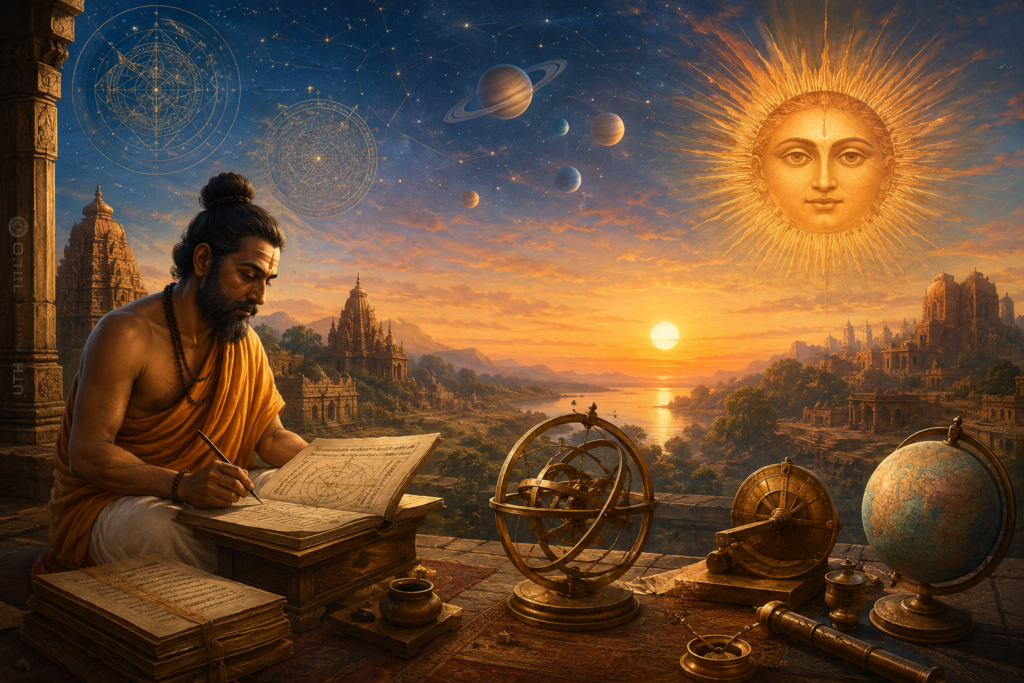
India’s ancient scholars made extraordinary contributions in:
🪐 Astronomy
📐 Mathematics
📚 Linguistics
⏳ Timekeeping systems
Texts like the Surya Siddhanta and works of great astronomers such as Aryabhata reveal how deeply ancient India studied celestial mechanics centuries ago.
However, historians also clarify that the official global use of AM and PM historically comes from Latin, not Sanskrit.
Still, the Sanskrit interpretation continues to inspire millions because it transforms time from a technical system into a poetic relationship with the Sun itself.
Whether viewed as linguistic history or cultural symbolism, this interpretation reminds us of one powerful truth:
🌍 Ancient civilizations did not merely measure time — they understood nature through it.
And perhaps that is why discussions like these continue to fascinate modern minds even today.

