
Home Blog Page 8

Ancient Symbols of Sanatan Dharma Found in the Philippines?

History occasionally reveals discoveries that challenge our understanding of ancient civilizations. Recently in Mumbai, researcher Syed Shamir Hussain presented a remarkable set of documents and artefacts that he claims are connected to two powerful symbols of Sanatan Dharma — Lord Shiva’s Trishul and Lord Indra’s Vajra. According to the research he presented, these symbols may date back nearly 10,000 years and were reportedly discovered in the Philippines, opening a fascinating discussion about the ancient spread of Indic culture across Southeast Asia.

The Presentation in Mumbai

The artefacts and historical documents were showcased during a research presentation where Syed Shamir Hussain detailed his findings and interpretations.

🔹 The presentation included photographs, sketches, and research documentation related to the objects.

🔹 The artefacts reportedly resemble Trishul (trident) and Vajra (thunderbolt weapon) symbols commonly associated with Hindu deities.

🔹 Hussain claims these symbols indicate ancient Sanatan cultural influence far beyond the Indian subcontinent.

Researchers attending the discussion noted that the shapes, engravings, and symbolic patterns bear similarities to traditional Hindu iconography, which has been historically present in many parts of Southeast Asia.

Symbolism of Trishul and Vajra

The two artefacts presented carry deep spiritual and mythological meaning in Sanatan philosophy.

🔱 Trishul – Weapon of Lord Shiva

The Trishul, the sacred trident of Lord Shiva, represents cosmic balance.

🔹 Creation, preservation, and destruction

🔹 Past, present, and future

🔹 Mind, body, and consciousness

In Hindu philosophy, the Trishul symbolizes ultimate spiritual authority and universal order.

⚡ Vajra – Weapon of Lord Indra

The Vajra, the thunderbolt weapon of Lord Indra, symbolizes divine power and indestructibility.

🔹 Represents lightning and energy of the heavens

🔹 Symbol of strength and righteousness

🔹 Associated with victory over chaos and evil

The presence of these symbols outside India could potentially indicate ancient cultural exchanges or migration routes.

Possible Historical Connections

Historians have long acknowledged the influence of Indian culture across Southeast Asia, including regions like Indonesia, Cambodia, Thailand, and Vietnam. However, findings in the Philippines could push this cultural timeline even further back.

Some scholars believe that:

🌏 Ancient maritime trade routes may have carried religious ideas, art, and symbols across oceans.

🌏 Early civilizations in Southeast Asia might have adopted Indic philosophical concepts.

🌏 Cultural exchange between India and island nations may have existed thousands of years earlier than previously assumed.

However, researchers emphasize that further archaeological verification and scientific dating will be required to confirm these claims.

Why This Discovery Matters

If authenticated, these artefacts could significantly reshape the historical understanding of early cultural diffusion.

🔹 It could demonstrate the global reach of ancient Indian philosophy.

🔹 It may reveal unknown maritime networks of ancient civilizations.

🔹 It could highlight the deep-rooted influence of Sanatan traditions across Asia.

Such discoveries often spark deeper exploration into how ancient societies interacted and shared knowledge across continents.

While further verification is necessary, the presentation by Syed Shamir Hussain has sparked curiosity among historians and cultural researchers alike. If these symbols truly date back 10,000 years, they could offer a powerful glimpse into the ancient spiritual and cultural connections linking India with Southeast Asia.

The discovery reminds us that history is still full of mysteries waiting to be uncovered.

The Mystery of Panchamukhi Ganesha

Across India’s ancient temples, sculptures silently narrate spiritual philosophies that are thousands of years old. Recently, historians studying an 11th-century sculpture of Panchamukhi Ganesha were reminded once again that Sanatan Dharma encodes deep wisdom through symbolism rather than simple imagery.

Why does Ganesha appear with five faces in this rare form? The answer reveals a powerful philosophical framework about consciousness, protection, and cosmic balance.

🔱 The Symbolism of Panchamukhi Ganesha

Unlike the commonly seen single-faced Ganesha, Panchamukhi (five-faced) Ganesha represents a multidimensional form of divine awareness.

Each face is believed to face a different direction, symbolizing the deity’s ability to observe, protect, and guide the universe from all sides simultaneously.

In Sanatan philosophy, the five faces represent the five cosmic elements (Pancha Mahabhutas) that constitute the universe.

🔹 Earth (Prithvi) – Stability, grounding, and physical existence.

🔹 Water (Jal) – Flow, adaptability, and emotional balance.

🔹 Fire (Agni) – Transformation, energy, and purification.

🔹 Air (Vayu) – Movement, intellect, and life force.

🔹 Space (Akasha) – Infinite consciousness and cosmic awareness.

Together, these elements illustrate that Ganesha governs not just obstacles in life but the very structure of existence itself.

🐘 The Five Faces and Their Spiritual Meaning

Each face of Panchamukhi Ganesha also carries a specific spiritual role, making this form deeply symbolic in Tantric and yogic traditions.

🔸 East-Facing Face – Represents wisdom and new beginnings, reminding devotees that knowledge is the first step to removing obstacles.

🔸 West-Facing Face – Symbolizes protection and the destruction of negativity.

🔸 North-Facing Face – Associated with prosperity, growth, and spiritual progress.

🔸 South-Facing Face – Represents courage and the ability to overcome fear.

🔸 Upward-Facing Face – Symbolizes enlightenment and connection with the divine consciousness.

This configuration reflects the belief that true wisdom requires awareness in every direction — physical, mental, and spiritual.

🏛️ Why the 11th-Century Sculpture Matters

The discovery of such sculptures from the 11th century highlights how sophisticated Sanatan philosophical thought was even a thousand years ago.

Ancient sculptors were not merely artists; they were philosophers and spiritual interpreters translating complex metaphysical ideas into stone.

The Panchamukhi Ganesha sculpture demonstrates:

🔹 Advanced symbolic understanding of the cosmos

🔹 Integration of spirituality, art, and philosophy

🔹 The deep cultural continuity of Sanatan traditions

It also proves that temple architecture was designed as a form of visual scripture, where every carving carried layers of meaning.

🌺 A Divine Reminder of Universal Balance

Panchamukhi Ganesha is more than an artistic representation — it is a philosophical message carved into history.

It teaches that wisdom requires balance of the five elements, awareness in all directions, and harmony between the physical and spiritual worlds.

Even after a thousand years, this ancient sculpture continues to remind us that Sanatan Dharma was never just religion — it was a profound science of existence.

5 Temples to Visit in Uttar Pradesh

Uttar Pradesh is not just India’s most populous state — it is the spiritual heart of the country. From the banks of the sacred Ganga to ancient cities that echo with centuries of devotion, the state is home to temples that attract millions of pilgrims and travellers every year. These temples are not only places of worship but also symbols of history, faith, architecture, and cultural legacy.

Here are five remarkable temples in Uttar Pradesh that every spiritual traveller should experience at least once.


🛕 Kashi Vishwanath Temple, Varanasi

Located in the ancient city of Varanasi, the Kashi Vishwanath Temple is one of the most sacred temples dedicated to Lord Shiva. It is counted among the twelve Jyotirlingas, making it one of the holiest pilgrimage sites in Hinduism.

🔹 The temple’s golden spire dominates the skyline of Varanasi’s old city.

🔹 The recently developed Kashi Vishwanath Corridor connects the temple directly to the Ganga ghats, enhancing accessibility and spiritual ambiance.

🔹 Pilgrims believe that visiting this temple grants liberation (moksha).

The energy of the temple combined with the spiritual atmosphere of the Ganga makes it a truly unforgettable experience.

🛕 Ram Janmabhoomi Temple, Ayodhya

The Ram Mandir in Ayodhya is one of the most historically and spiritually significant temples in India. It is believed to be the birthplace of Lord Rama, a central figure in the epic Ramayana.

🔹 The temple was inaugurated in 2024, marking a historic moment for millions of devotees.

🔹 Built with magnificent sandstone architecture, the temple reflects ancient Indian temple design.

🔹 Ayodhya itself is one of the seven sacred cities of Hinduism (Sapta Puri).

Today, Ram Mandir has become one of India’s most visited pilgrimage destinations.

🛕 Banke Bihari Temple, Vrindavan

Situated in Vrindavan, the Banke Bihari Temple is dedicated to Lord Krishna, worshipped here as Banke Bihari.

🔹 The temple is famous for its unique darshan tradition, where curtains repeatedly open and close.

🔹 It becomes incredibly vibrant during Holi and Janmashtami celebrations.

🔹 The temple reflects the deep devotional culture of the Braj region.

The lively chants, music, and devotion create an atmosphere that feels spiritually electrifying.

🛕 Prem Mandir, Vrindavan

Another architectural masterpiece in Vrindavan is the breathtaking Prem Mandir, built by Jagadguru Kripalu Maharaj.

🔹 Constructed entirely from Italian white marble, the temple features intricate carvings depicting scenes from Krishna’s life.

🔹 At night, colorful lighting and musical fountains transform the temple into a mesmerizing spectacle.

🔹 The temple celebrates divine love between Radha and Krishna.

Prem Mandir blends spirituality with stunning architectural beauty.

🛕 Sankat Mochan Hanuman Temple, Varanasi

The Sankat Mochan Hanuman Temple in Varanasi is one of the most revered temples dedicated to Lord Hanuman.

🔹 The temple was established by the legendary poet-saint Tulsidas.

🔹 Devotees believe prayers here help remove obstacles and difficulties from life.

🔹 The temple is especially crowded on Hanuman Jayanti and Tuesdays.

The devotion and simplicity of this temple make it one of the most spiritually comforting places in the city.

Uttar Pradesh’s temples are more than religious sites — they are living symbols of India’s ancient spiritual traditions. Whether it is the timeless spirituality of Varanasi, the divine birthplace in Ayodhya, or the devotional atmosphere of Vrindavan, these temples offer an unforgettable journey into India’s sacred heritage.


Plastic-Eating Fungus: Nature’s Secret Weapon Against Plastic Pollution

0

Deep inside the lush biodiversity of the Amazon rainforest, scientists have discovered something extraordinary — a fungus that can naturally break down plastic. At a time when the world is drowning in plastic waste, this microscopic organism could become one of the most powerful allies in humanity’s fight against pollution.

🌍 The Plastic Crisis the World Faces

Plastic pollution has become one of the largest environmental threats of the 21st century. Every year, millions of tons of plastic end up in landfills, oceans, and forests.

🔹 Around 400 million tons of plastic are produced globally every year.

🔹 Nearly half of this plastic is single-use, meaning it is discarded after one use.

🔹 Plastic can take hundreds of years to decompose, slowly breaking into harmful microplastics that contaminate soil, water, and even the food chain.

Scientists across the globe have been searching for sustainable and natural ways to break down plastic waste. Surprisingly, the answer might have been hidden for centuries in the dense ecosystems of the Amazon.

🍄 The Amazon Discovery: A Fungus That Eats Plastic

Researchers studying microorganisms in the Amazon rainforest discovered a fungus known as Pestalotiopsis microspora, which has a remarkable ability — it can digest plastic as a source of energy.

🔹 The fungus produces special enzymes capable of breaking down polyurethane, one of the most common and difficult-to-recycle plastics.

🔹 Unlike many organisms, it can survive in oxygen-free environments, meaning it could work even in landfills where oxygen levels are extremely low.

🔹 It essentially uses plastic as food, converting complex plastic molecules into simpler compounds.

This discovery shocked scientists because very few natural organisms can degrade plastic efficiently.

🔬 How This Fungus Could Transform Waste Management

The discovery has opened the door to revolutionary waste management technologies.

🔹 Scientists are studying how the fungus can be cultivated and scaled for industrial use.

🔹 It could be used in bioreactors to break down plastic waste much faster than natural decomposition.

🔹 Researchers are also exploring ways to extract the plastic-degrading enzymes and apply them in recycling facilities.

If successfully developed, this biological solution could help reduce the massive plastic burden in landfills and oceans.

🌱 Why the Amazon Still Holds Scientific Secrets

The Amazon rainforest is the largest and most biodiverse ecosystem on Earth, containing millions of species that scientists have yet to fully study.

🔹 Many organisms have unique biochemical abilities developed over millions of years.

🔹 Microbes and fungi often produce powerful enzymes that can solve modern technological challenges.

🔹 Protecting biodiversity could lead to discoveries that benefit medicine, climate solutions, and environmental restoration.

This plastic-eating fungus is just one example of nature’s hidden innovation.

🌎 A Small Organism With Planet-Sized Potential

Although the research is still developing, the discovery highlights an important truth — nature often holds solutions to humanity’s biggest problems.

If scientists can successfully harness this fungus, it could become a game-changing tool in the global battle against plastic pollution, proving that sometimes the smallest life forms can create the largest environmental impact.

India’s Golden Run: Five Years of Cricketing Dominance

In the last five years, Indian cricket has transformed from a strong contender into a global powerhouse. Across formats—Test, ODI, and T20—Team India has displayed a rare combination of consistency, depth, and fearless leadership. From record-breaking bilateral series to historic ICC victories, this era has not only redefined Indian cricket but has also reshaped the balance of power in world cricket.

🏆 The Historic 2026 T20 World Cup Triumph

The defining moment of this dominant era came in 2026, when India lifted the T20 World Cup with an emphatic performance in the final.

🔹 India delivered one of the most dominant finals in T20 World Cup history, defeating New Zealand by a massive margin.

🔹 The batting lineup displayed explosive power, posting a towering total that immediately put the opposition under pressure.

🔹 India’s bowling attack then dismantled New Zealand with ruthless precision, highlighting the team’s all-round superiority.

This victory was not just a trophy—it symbolized India’s tactical maturity, squad depth, and fearless modern cricket philosophy.

🏏 The Rise of a Multi-Format Giant

One of the biggest reasons behind India’s dominance since 2020 is its ability to excel in all three formats simultaneously.

🔹 India consistently remained among the top-ranked teams in ICC rankings across formats.

🔹 The team reached the finals or knockouts of several ICC tournaments, proving their ability to perform on the biggest stages.

🔹 India’s bench strength became the envy of world cricket—allowing entirely different squads to win overseas series.

Unlike earlier eras where teams specialized in one format, modern India has built a balanced ecosystem of power hitters, technically sound batters, and world-class bowlers.

🌍 Dominating at Home and Abroad

Historically, Indian teams were considered unbeatable at home but inconsistent overseas. Over the last five years, that narrative has changed dramatically.

🔹 Historic overseas wins in countries like Australia and England showcased India’s adaptability.

🔹 Young players stepped up under pressure, especially during challenging tours.

🔹 India maintained one of the longest home winning streaks in Test cricket, turning subcontinental conditions into an impregnable fortress.

This combination of home dominance and overseas competitiveness has elevated India’s status as the most complete cricketing nation.

🌟 The Era of Unmatched Depth

Another defining feature of this period is India’s incredible squad depth.

🔹 A powerful batting lineup capable of posting massive totals.

🔹 A world-class pace attack supported by elite spin bowlers.

🔹 Young talents seamlessly replacing senior players without weakening the team.

From emerging stars to experienced match-winners, India now operates with two or even three competitive playing XIs, something very few cricketing nations can boast.

📊 Leadership, Strategy, and Modern Cricketing Culture

Behind India’s dominance lies a transformation in leadership and cricketing philosophy.

🔹 Aggressive captaincy promoting fearless cricket.

🔹 Advanced analytics and data-driven strategies.

🔹 A robust domestic structure producing match-ready talent.

The Indian Premier League (IPL) has also played a crucial role, grooming players for high-pressure international scenarios.

The Future of Indian Cricket

India’s dominance over the past five years reflects not just a successful team but a system built for sustained excellence. With a strong talent pipeline, modern infrastructure, and fearless young cricketers, the future looks even brighter.

If the current momentum continues, the coming decade could firmly establish India as the undisputed superpower of world cricket.

India–Japan Rare Earth Partnership: Rajasthan at the Center of a Strategic Mineral Shift

0

In a world increasingly shaped by technological competition and supply-chain security, rare earth minerals have become the new strategic currency. Now, India and Japan are exploring a powerful collaboration to jointly explore rare earth deposits in Rajasthan—an initiative that could reshape the global critical minerals landscape.

🌏 Why Rare Earth Minerals Matter More Than Ever

Rare earth elements (REEs) are essential for powering the technologies that define the modern world—from smartphones and electric vehicles to advanced defense systems and renewable energy infrastructure.

🔹 They are used in EV batteries, wind turbines, semiconductor chips, and missile guidance systems.

🔹 Despite their name, these elements are relatively abundant but difficult and expensive to extract and refine.

🔹 Currently, China dominates nearly 70% of global rare earth mining and around 85–90% of processing capacity, giving it immense geopolitical leverage.

For countries like India and Japan—both major manufacturing economies—reducing dependence on Chinese supplies has become a strategic priority.

🇮🇳🇯🇵 The Rajasthan Opportunity

Rajasthan, known for its rich mineral reserves, has recently attracted attention for potential rare earth deposits in regions such as Barmer and Jalore. These areas may hold valuable minerals like neodymium, dysprosium, and terbium, which are critical for high-performance magnets used in EVs and electronics.

Under the proposed collaboration:

🔹 Japanese technology and expertise in rare earth processing would complement India’s mineral resources.

🔹 Joint exploration programs could involve geological surveys, advanced mapping, and pilot extraction projects.

🔹 Indian state agencies and Japanese companies may collaborate through strategic mineral partnerships.

This cooperation could significantly accelerate India’s rare earth exploration capabilities, which have historically been limited despite large geological potential.

⚙️ Strategic Impact: Beyond Mining

The partnership is not just about extracting minerals—it’s about building an alternative supply chain for the future economy.

🔹 India could strengthen its domestic semiconductor, EV, and electronics manufacturing ecosystems.

🔹 Japan would gain a stable, democratic supply partner outside China.

🔹 Both nations could play a larger role in global critical mineral alliances being formed among technologically advanced economies.

Such collaborations also align with India’s broader ambitions under initiatives like Make in India and the Critical Minerals Mission, aimed at securing resources needed for next-generation industries.

🚀 A New Chapter in the Global Mineral Race

As nations scramble to secure the resources powering the green and digital revolutions, the India–Japan rare earth initiative could become a defining strategic partnership.

If successful, Rajasthan may transform from a traditional mining region into a cornerstone of the world’s next technological supply chain, positioning India as a crucial player in the global rare earth economy.

India’s Semiconductor Leap: 85,000 Chip Designers Trained in Just 4 Years

India’s ambition to become a global semiconductor powerhouse is no longer a distant policy dream—it is unfolding at remarkable speed. Under the India Semiconductor Mission (ISM), the country has successfully trained 85,000 semiconductor design engineers in just four years, achieving a target originally planned for a decade. This milestone signals a decisive shift in India’s technological trajectory, placing the nation firmly on the map of global chip innovation.

🚀 The Mission That Fast-Tracked India’s Chip Ambitions

The India Semiconductor Mission, launched in 2021, was designed to build a complete semiconductor ecosystem—from fabrication to design and research. While fabrication plants often dominate headlines, chip design talent forms the intellectual backbone of the semiconductor industry.

🔹 The mission initially aimed to train 85,000 semiconductor design engineers within 10 years.

🔹 Through accelerated academic collaborations and industry partnerships, the goal was achieved in less than half the planned time.

🔹 Engineering institutions across India integrated specialized semiconductor courses, chip architecture training, and VLSI programs into their curricula.

This rapid capacity building has created one of the largest pools of semiconductor design talent in the world, strengthening India’s position as a critical contributor to global chip development.

🧠 Why Semiconductor Design Talent Matters

Semiconductors power everything—from smartphones and electric vehicles to AI systems and defense technologies. However, design expertise is where the real value lies.

🔹 Nearly 20% of the world’s semiconductor design engineers already come from India.

🔹 Major global companies rely heavily on Indian engineers for chip architecture, verification, and system design.

🔹 Training 85,000 additional engineers significantly expands India’s capability to design next-generation chips domestically.

Instead of remaining merely a consumer of semiconductor technologies, India is now positioning itself as a creator of high-value intellectual property in chip design.

🏫 Universities, Industry & Government: A Strategic Alliance

This milestone was made possible through a three-way collaboration involving academia, government, and the semiconductor industry.

🔹 Over 300 universities and engineering institutions introduced semiconductor-focused programs.

🔹 Partnerships with global chip leaders enabled hands-on training in advanced design tools and fabrication simulations.

🔹 Government initiatives funded labs, research centers, and skill development programs dedicated to semiconductor engineering.

The result is a new generation of engineers capable of working on cutting-edge technologies like AI chips, advanced processors, and automotive semiconductors.

🌍 What This Means for India’s Tech Future

India’s early achievement of this target reflects more than just educational progress—it signals a strategic shift in technological sovereignty.

🔹 A larger talent pool attracts global semiconductor investments.

🔹 It strengthens India’s role in the global supply chain of critical technologies.

🔹 It lays the groundwork for homegrown chip startups and innovation ecosystems.

As the world races to secure semiconductor dominance, India’s rapid talent expansion could become the country’s most powerful competitive advantage.

🔮 Conclusion: The Blueprint for a Silicon Future

Training 85,000 semiconductor design engineers in four years is more than a milestone—it is a declaration that India is ready to lead in the technology that powers the modern world. With talent now scaling faster than expected, India’s semiconductor story is no longer about catching up. It is about shaping the future of global chip innovation.

The Inner Architecture of Sri Lalita Sahasranamam

The Sri Lalita Sahasranama, embedded within the Brahmanda Purana, is not merely a hymn of a thousand names — it is a metaphysical blueprint of the universe and consciousness itself. For every practitioner of Sri Vidya — whether Kādi, Hādi, or Sādi — this stotram is not optional; it is foundational.

🔱 1–3: Defining the Absolute

🕉️ The opening salutations are not ornamental — they are ontological declarations.

These names establish Lalita as the Supreme Reality: beyond duality, beyond time, beyond conceptual limitation. She is not introduced as a goddess among many — but as Para-Brahman embodied. These first invocations position Her as both the source and substratum of all existence.


✨ 4–6: Radiance & Reflection

🌟 Names 4–5 describe Her as pure effulgence — self-luminous consciousness.

🪞 Name 6 transitions into reflection — the cosmic mirror in which creation appears.

Here, theology meets metaphysics: She is both the Light and the reflective medium through which multiplicity manifests.

🌺 7–51: The Gross Form (Sthūla Rūpa)

👑 These names paint a majestic iconography — crown, eyes, smile, weapons, ornaments.

🌸 This is not mere poetic beauty; it is tantric symbolism.

Each physical attribute corresponds to a cosmic principle — the sugarcane bow (mind), flower arrows (sense faculties), noose (attachment), goad (aversion). The Divine Form becomes a philosophical diagram.

🏰 52–63: Abode & Cosmic Geography

🏔️ Names 52–54 describe Her celestial dwelling.

🌆 55–63 unfold Sripuram, the mystic city — a mandala of layered consciousness.

Sripuram is not geography; it is spiritual topology — mapping inner realization stages.

🔥 64–84: Emergence from Chidagni

🔥 Lalita arises from the Fire of Pure Consciousness (Chidagni).

⚔️ These names narrate Her divine actions — the destruction of ignorance, restoration of dharma, and revelation of esoteric truths.

Here, the Sahasranama becomes dynamic theology — divinity in motion.

🔐 85–112: Subtle Forms of Supreme Power

🕉️ 85–87: Mantra Form — She becomes sound vibration.

💗 88–89: Kāmakalā Form — the primordial creative impulse.

🐍 90–112: Kundalini Form — the coiled energy within the human spine.

These names collapse macrocosm into microcosm. The Goddess is not distant; She rises within.

Conclusion

The Sri Lalita Sahasranamam is not a list — it is a layered ascent from form to formlessness. It begins with adoration and culminates in inner awakening. To chant it is to traverse the cosmos — and ultimately, oneself.

Elon Musk’s Neuralink: Connecting the Human Brain to Machines

0

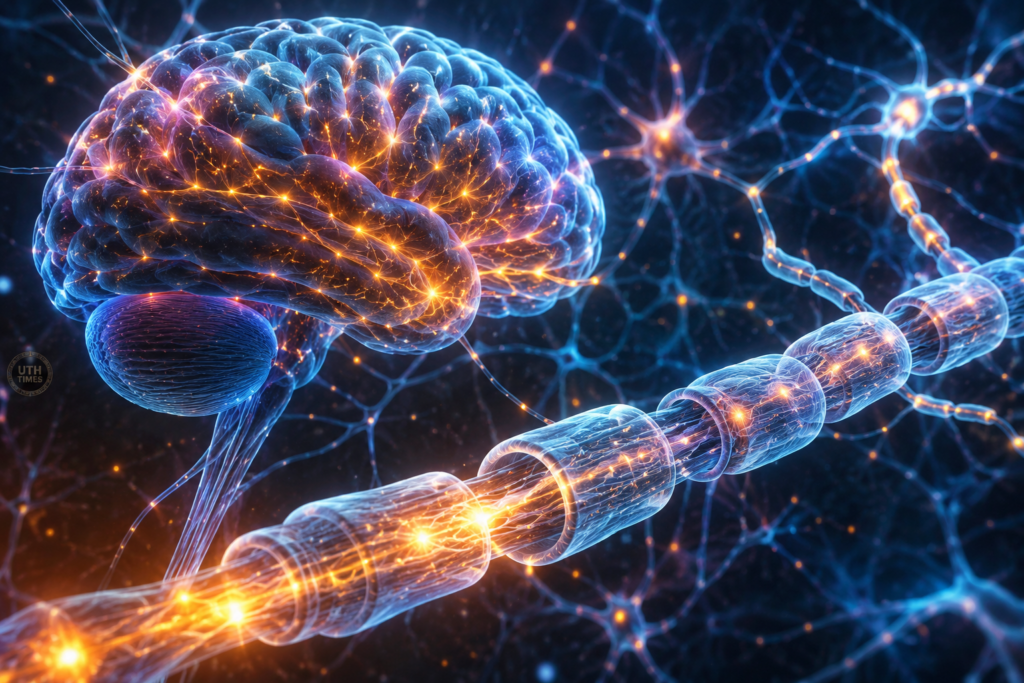
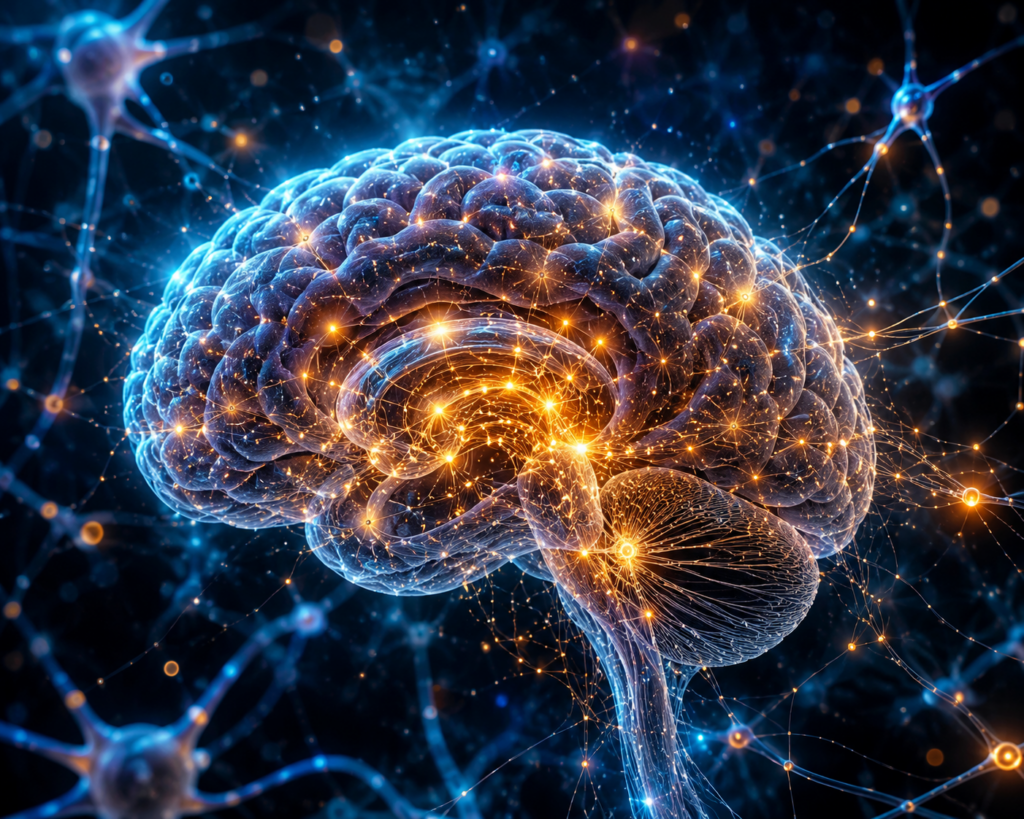
The idea of controlling computers with thoughts once belonged to science fiction. Today, Neuralink is turning that vision into reality by building implantable brain–computer interfaces (BCIs) that directly connect the human brain to digital devices. Founded in 2016 by Elon Musk and a team of scientists, the company aims to treat neurological disorders while pushing humanity toward a future where humans and artificial intelligence coexist.

The Vision Behind Neuralink

Neuralink was founded by Elon Musk and a team of neuroscientists and engineers with a long-term mission: to create a direct communication channel between the brain and computers.

Key goals include:

🔬 Restoring mobility for paralyzed patients

🧠 Treating neurological disorders like Parkinson’s and epilepsy

💻 Allowing people to control devices using only thoughts

🚀 Preparing humans for an AI-driven future

Unlike traditional medical implants, Neuralink’s technology is designed to be minimally invasive, highly precise, and scalable for mass use.

How the Neuralink Implant Works

At the heart of Neuralink’s innovation is a coin-sized implant called the Link, placed inside the skull by a specialized surgical robot.

Core technology features:

⚙️ Ultra-thin threads thinner than human hair

📡 Wireless brain signal transmission

🔋 Rechargeable battery system

🤖 Robot-assisted precision surgery

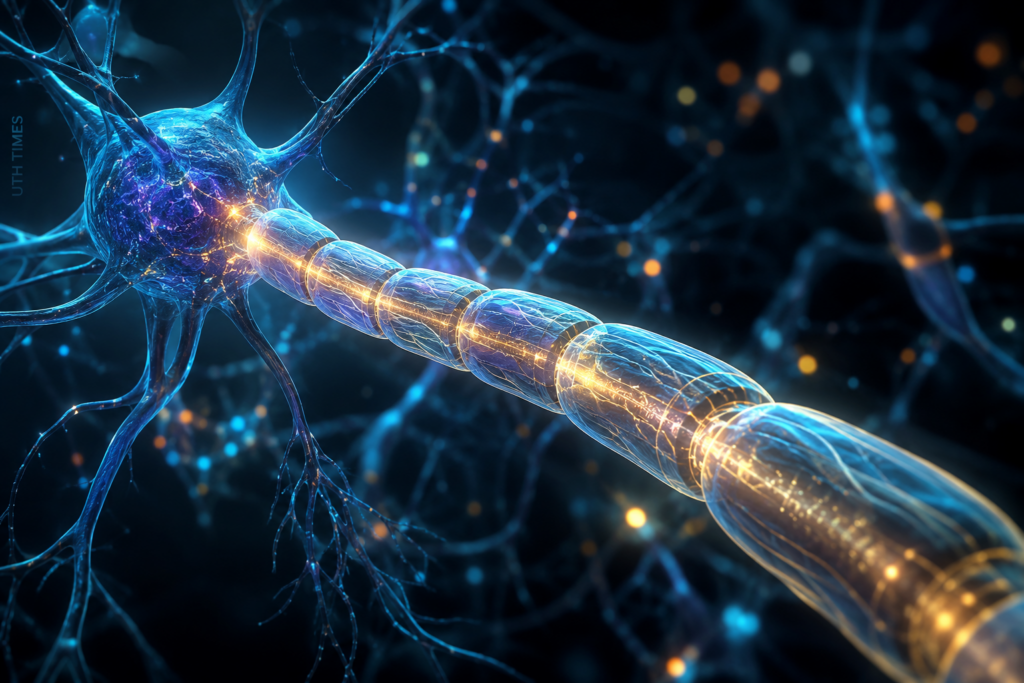
These flexible electrodes detect electrical signals from neurons and transmit them wirelessly to a computer or smartphone. The system translates neural activity into commands, allowing users to type, move cursors, or control devices using thoughts alone.

Human Trials and Breakthroughs

Neuralink entered a historic phase when it began human clinical trials in 2024.

Major milestones:

🧪 First human implant enabling thought-based cursor control

🦾 Paralyzed patients controlling computers independently

📊 Improved accuracy in decoding brain signals

🏥 FDA-approved early feasibility studies

Participants with spinal cord injuries have reportedly been able to browse the internet and play games using brain signals alone, demonstrating the real-world potential of BCIs.

Future Possibilities

Neuralink’s long-term ambitions extend far beyond medical treatment.

Potential applications include:

🚗 Controlling prosthetic limbs naturally

🎮 Immersive virtual reality experiences

🧠 Memory enhancement technologies

🤝 Human-AI integration

If successful, Neuralink could transform medicine, communication, and even human cognition itself.

The Ethical Debate

The technology also raises serious questions.

Major concerns include:

⚖️ Data privacy of brain signals

🔐 Risk of neural hacking

🧬 Long-term safety of implants

🌍 Inequality in access to enhancement technologies

Balancing innovation with ethics will determine how society adopts brain–computer interfaces.

Neuralink represents one of the boldest technological experiments of the 21st century. By bridging biology and technology, it is redefining what it means to be human — and may soon allow thoughts to become actions in the digital world.

Micron Opens $2.75B Chip Facility in Gujarat

India has entered a new era of semiconductor manufacturing as Micron Technology begins commercial production at its $2.75 billion facility in Sanand, Gujarat. The project marks one of the most significant milestones in India’s journey toward becoming a global semiconductor hub and strengthening technological self-reliance. 

India’s First Commercial-Scale Chip Facility

Micron’s Sanand plant is India’s first large-scale semiconductor production facility operating at commercial scale, representing a historic step in the country’s electronics manufacturing ambitions. 

The plant focuses on Assembly, Testing, Marking and Packaging (ATMP) — the crucial stage that converts silicon wafers into finished semiconductor products ready for global markets. 

🔹 Key Highlights

🚀 Investment: $2.75 Billion (₹22,500+ crore) 

🏭 Location: Sanand, Gujarat 

💻 Technology: DRAM and NAND memory chips 

🌍 Market: Global electronics and AI industries 

👷 Jobs: ~5,000 direct and 15,000 indirect jobs 

The facility processes advanced wafers from Micron’s global fabs and converts them into memory modules, SSDs, and semiconductor packages used in data centres, consumer electronics, and AI systems. 

How the Gujarat Plant Works

Unlike fabrication plants that create chips from raw silicon, Micron’s facility specializes in backend semiconductor manufacturing — a highly advanced process requiring precision engineering.

🔬 Production Process

⚙️ Silicon wafers arrive from global fabs 

🧪 Chips are assembled and packaged 

📊 Performance testing ensures reliability 

📦 Finished chips are exported worldwide 

The plant spans roughly 50 acres and includes large cleanroom areas, enabling high-volume semiconductor output. 

Strategic Importance for India

The launch of Micron’s facility signals India’s entry into the global semiconductor supply chain and strengthens the Make in India technology initiative. 

🌏 Strategic Impact

🛡️ Reduced dependence on imported chips

📈 Boost to India’s electronics industry

🤖 Support for AI and advanced computing

🏗️ Development of semiconductor ecosystem

Industry experts believe anchor investments like Micron will attract suppliers, research centres, and high-tech industries across Gujarat. 

A Turning Point in India’s Tech Future

Micron’s Gujarat facility is more than a factory — it represents India’s transition from a chip-consuming nation to a chip-producing power. With commercial production underway, the country is now positioned to play a meaningful role in the global semiconductor revolution.