
Coal mining is often associated with barren landscapes, environmental degradation and disappearing forests. However, one of India’s largest mine restoration initiatives is attempting to change that narrative. Adani Enterprises has announced that it has planted more than 1.6 million trees across 568 hectares of reclaimed land at the Parsa East & Kente Basan (PEKB) coal mine in Surguja district, Chhattisgarh. The company has also set an ambitious goal of planting 4 million trees by 2030, aiming to convert previously mined land into thriving green ecosystems.
🌳 Turning Exhausted Mines into Living Forests
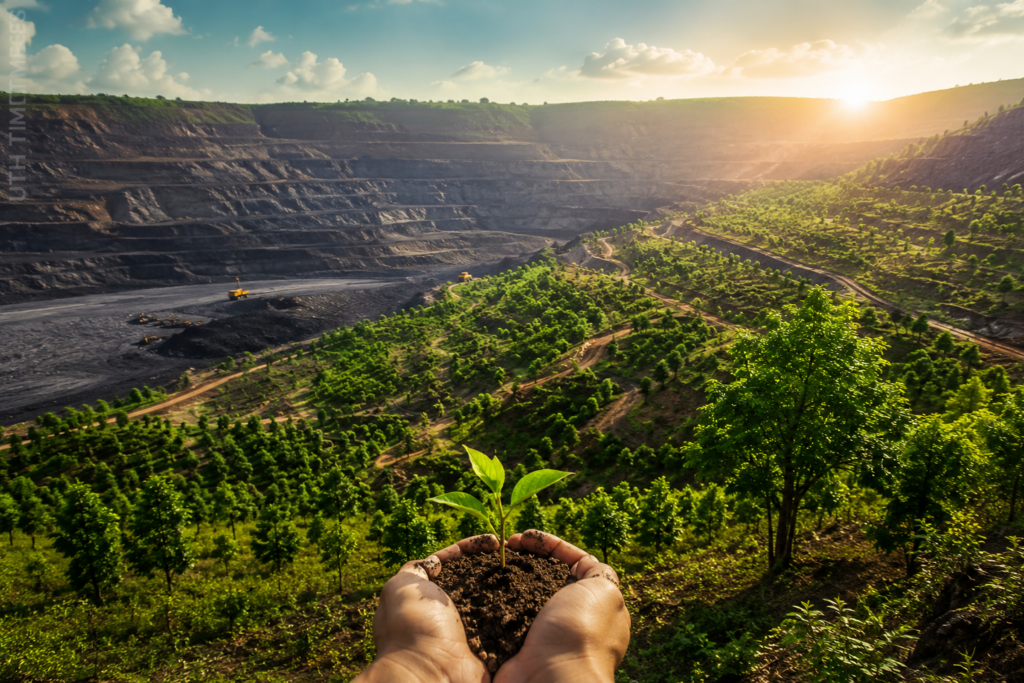
Instead of leaving mined land barren after coal extraction, the reclaimed areas are being scientifically restored through large-scale afforestation.
✨ The initiative focuses on rebuilding ecological balance rather than simply planting trees.
🌱 Key highlights include:
🔹 More than 1.6 million trees planted so far.
🔹 Green cover developed over 568 hectares of reclaimed mining land.
🔹 Target of 4 million trees by 2030.
🔹 Restoration of land once used for intensive mining operations.
The plantations include a mix of native and climate-resilient species that are better suited to the local environment, improving long-term survival rates while supporting biodiversity.
🌿 More Than Plantation—A Complete Ecological Restoration
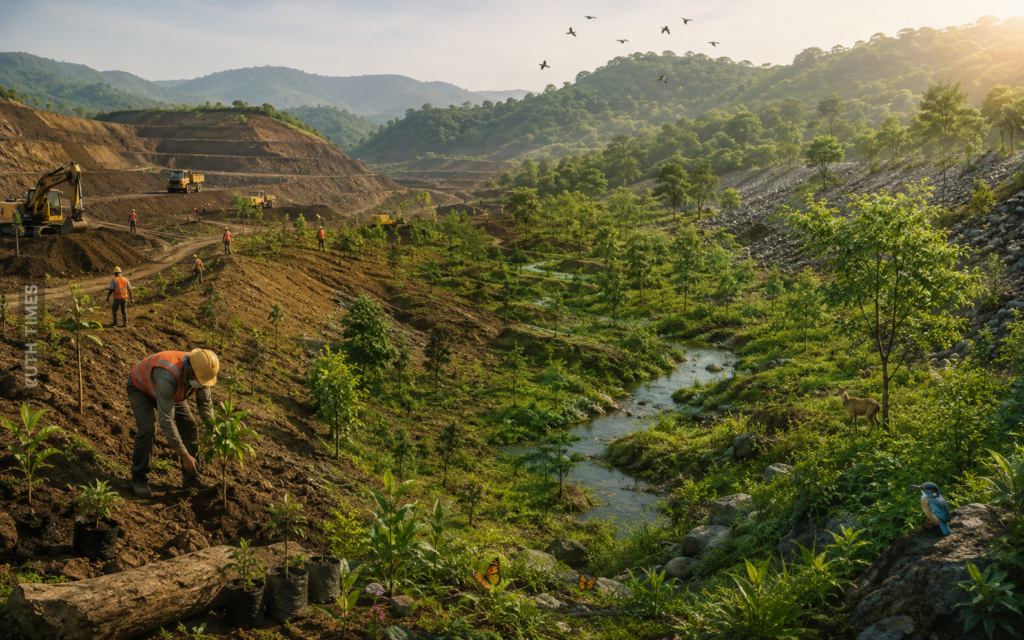
Modern mine reclamation extends far beyond tree planting. Before afforestation begins, the land undergoes careful reshaping, soil improvement and ecological planning.
✨ Restoration activities include:
🌱 Rebuilding fertile topsoil for vegetation.
🌱 Stabilising slopes to prevent erosion.
🌱 Improving water retention capacity.
🌱 Creating suitable habitats for birds, insects and small wildlife.
🌱 Restoring natural drainage systems wherever possible.
As vegetation matures, these reclaimed landscapes gradually begin functioning like natural ecosystems, helping improve air quality, regulate local temperatures and reduce dust generated from mining activities.
🌍 Supporting India’s Sustainability Goals
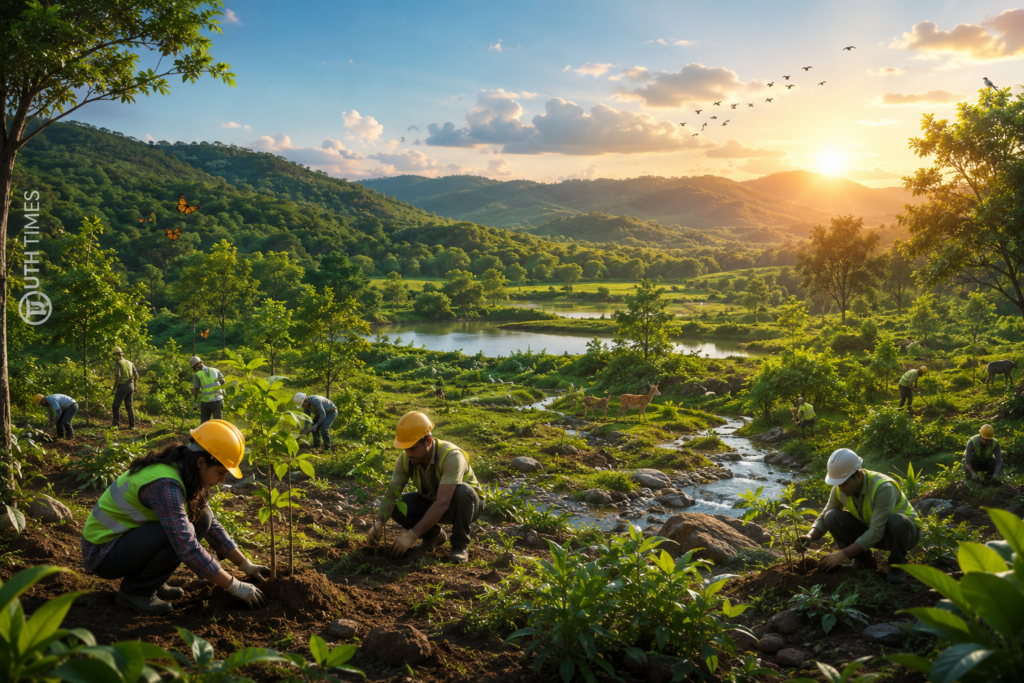
The project reflects a broader shift in India’s mining sector, where environmental restoration is becoming an increasingly important component of responsible resource development.
✨ Potential long-term benefits include:
🌍 Increased carbon absorption through expanding forest cover.
💧 Improved groundwater recharge and soil moisture.
🦋 Revival of biodiversity by attracting native flora and fauna.
🌾 Reduced land degradation after mining operations.
🌦️ Enhanced climate resilience across reclaimed landscapes.
Such projects also demonstrate how post-mining land can be repurposed into productive green spaces instead of remaining environmentally damaged.
🚀 A Long-Term Vision for Green Infrastructure
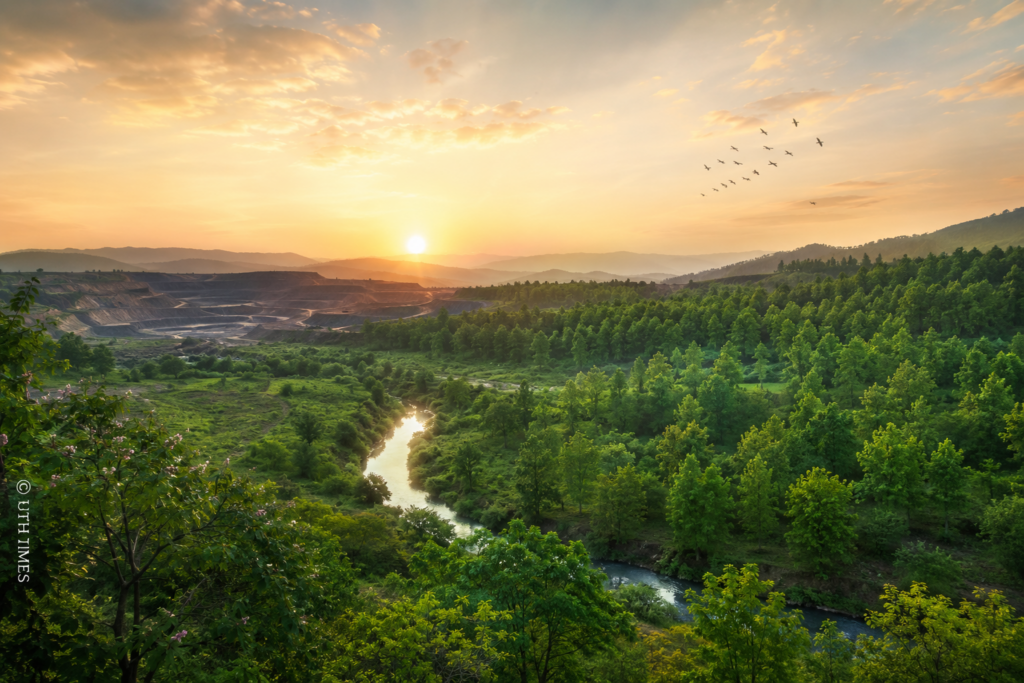
With four million trees planned by the end of this decade, the PEKB restoration programme represents one of the country’s most extensive mine rehabilitation efforts. While coal continues to play a role in India’s energy mix, initiatives like this highlight the growing emphasis on balancing industrial development with ecological responsibility.
If successfully sustained over the coming years, the reclaimed forests could serve as a model for future mine restoration projects across India, proving that environmental recovery and economic activity do not always have to move in opposite directions.
India’s energy transition is not only about producing cleaner power—it is also about repairing landscapes shaped by decades of resource extraction. The transformation underway in Chhattisgarh demonstrates how scientific mine reclamation and large-scale afforestation can give exhausted land a second life, creating greener ecosystems for future generations.

