
Home Blog Page 36

 Airbus Chairman Hails India’s Engineering Brilliance: “Completely Blown Away” 🇮🇳

0

✈️ A Global Giant Applauds India

In a statement that resonated across global tech and aviation circles, the Chairman of Airbus praised India’s engineering prowess, ambition, and technological innovation, declaring himself “completely blown away” by what he witnessed. His remarks not only underline India’s growing reputation as a global aerospace hub but also highlight a major shift in how international companies view Indian talent — from cost-driven outsourcing to co-development and innovation partnerships.

💡 “India Is Not Just a Cost Base — It’s a Source of Innovation”

In his address, the Airbus Chairman emphasized that India is no longer seen merely as an affordable manufacturing destination, but as a nation driving frontline innovation and design thinking. He lauded the precision, creativity, and agility of Indian engineers who are now shaping critical components of Airbus aircraft — from digital systems to structural designs.

“India is not just a cost base, but a source of innovation and co-development,” he remarked, adding that Indian teams have exceeded expectations in both technological excellence and long-term vision.

🇮🇳 A Strategic Partner in the Skies

Airbus has steadily deepened its ties with India over the past decade, expanding collaborations with Tata Advanced Systems, HAL, and several local suppliers. The Chairman called India a “strategic, long-term partner”, stressing its importance in Airbus’s mission to create a resilient, diversified, and sustainable supply chain.

India now contributes to the design and manufacture of various Airbus models, including the A320neo and A350 families, showcasing the nation’s evolving industrial and digital capabilities.

🧠 Engineering Excellence that Stunned the West

The admiration from one of the world’s top aerospace leaders reflects how India’s engineering education, start-up culture, and R&D ecosystem have rapidly matured. Indian engineers today stand shoulder-to-shoulder with their Western counterparts, bringing not only technical skill but also a visionary mindset that challenges convention.

🌍 A Future Soaring Together

As Airbus continues to expand its footprint in India, this partnership signifies more than business — it’s a fusion of European technology and Indian ingenuity. The Chairman’s awe-struck words mirror a truth the world is now realizing: India doesn’t just build for the world; it builds the future. ✨
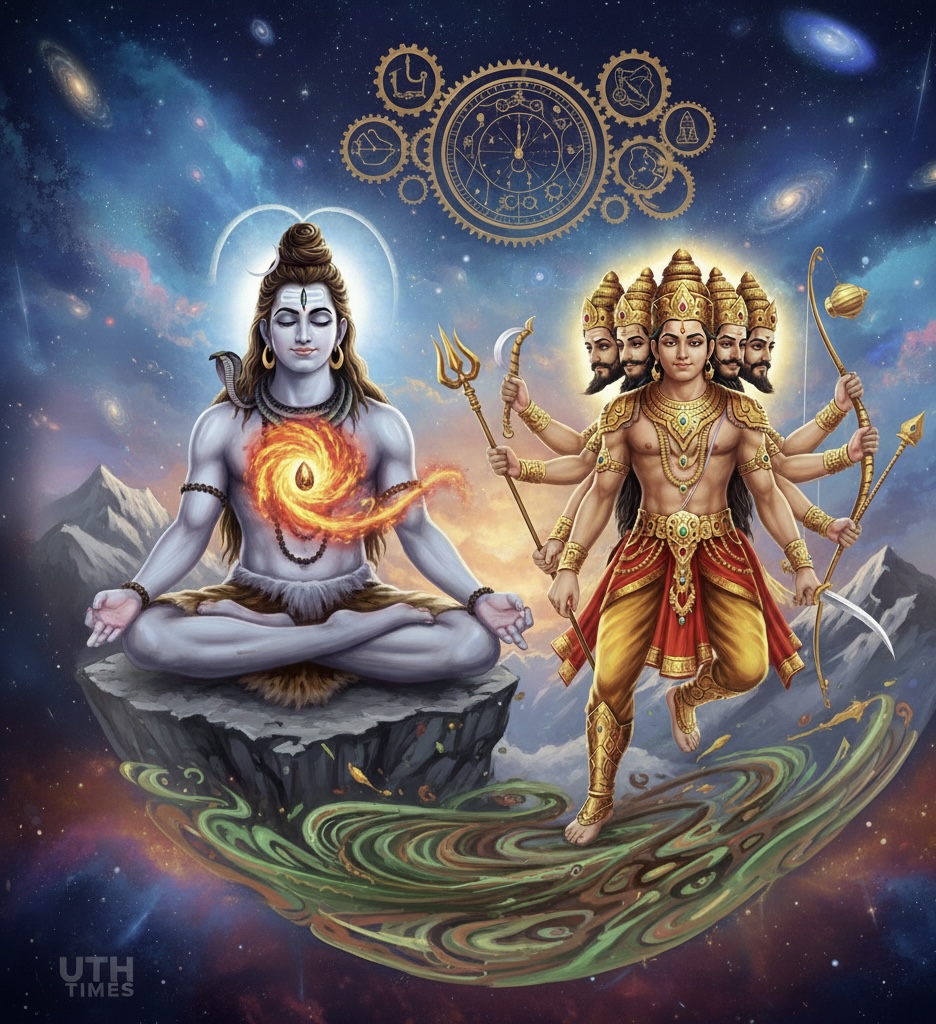
🚀 In essence: What once began as a collaboration of cost has now evolved into a partnership of **creativity, capability, and confidence. Airbus and India — engineering the skies, together.
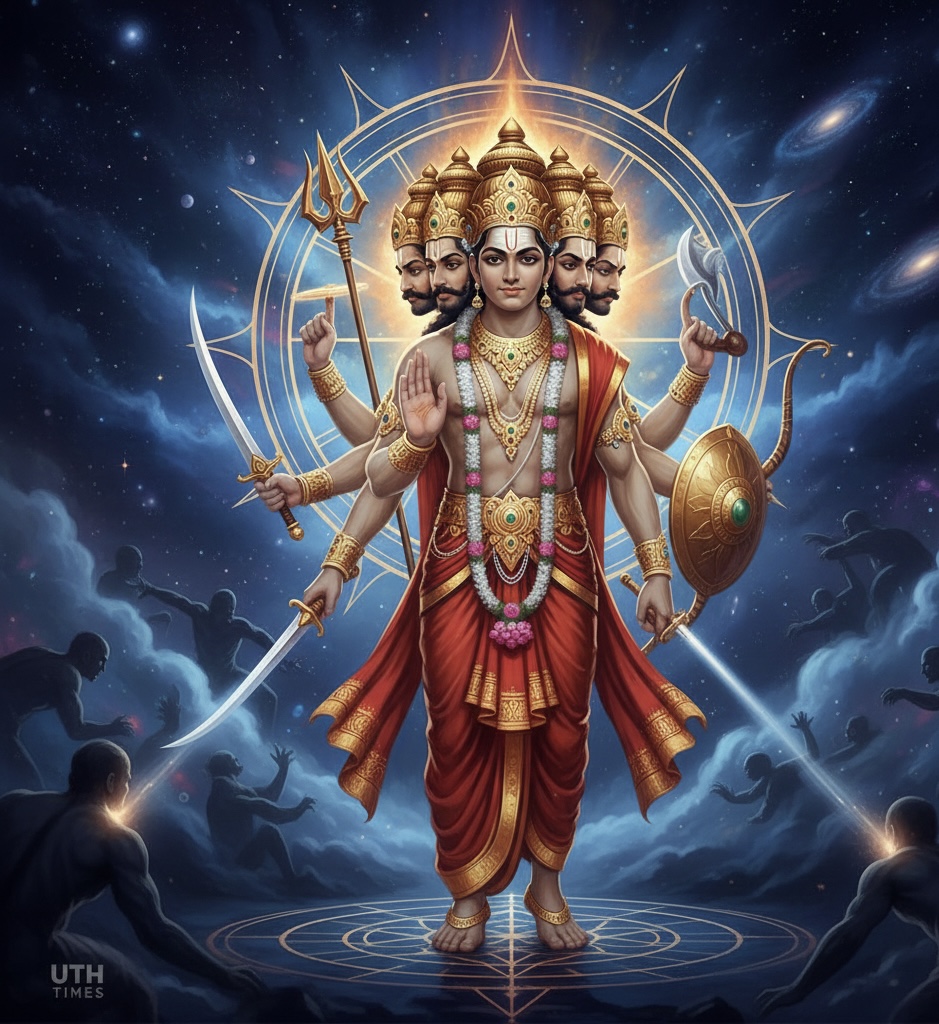
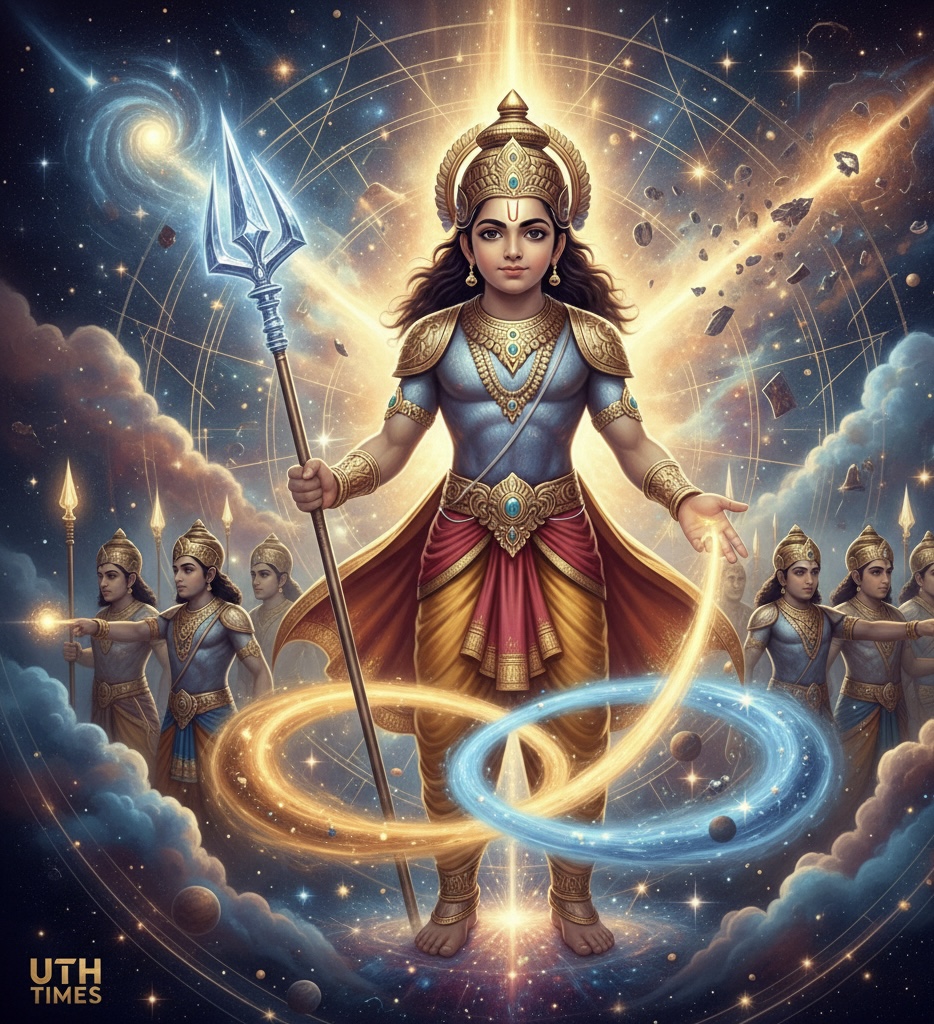
 5 Sacred Types of Japa: Shiva’s Hidden Technology for Inner Awakening 🔱

🌺 The Sound That Leads to Silence

In an age overflowing with noise, Lord Shiva’s ancient wisdom from the Vāvavīya Saṁhitā unveils the forgotten art of Japa — the chanting of divine names that transcends words and sound. Each form of Japa carries a unique vibration, a frequency that purifies the mind and elevates the spirit from outer sound to inner stillness. Let’s journey through the five sacred stages — from Vācika to Agarbha — the ultimate path from mantra to moksha.

🔊 1️⃣ Vācika Japa — The Spoken Chant

🕉️ “When the name is uttered with devotion, sound itself becomes sacred.”

This is the first step — chanting aloud. The voice resonates through space, purifying the surroundings and aligning the chanter’s energy with divine sound waves. The vibrations cleanse the aura, harmonizing the heart and mind.

💫 Power: 1x

🌸 Purpose: Perfect for beginners, as it connects the outer devotion (speech) with inner feeling (heart).

When you chant “Om Namah Shivaya” aloud, you don’t just speak — you vibrate with the universe.

👂 2️⃣ Upāṁśu Japa — The Whisper of the Soul

In this deeper form, the lips move but the sound remains unspoken. Only you and the Divine share the secret rhythm. It’s like whispering to eternity.

💫 Power: 100x

🌺 Effect: The subtle vibration of the lips creates an inner echo that calms the restless mind.

The silence between sounds becomes more powerful than the sound itself — your awareness starts to turn inward.

🧠 3️⃣ Mānasa Japa — The Silent Chant of the Mind

Here, the lips and tongue rest still — the mantra lives only as thought. Each repetition radiates energy within the subtle body.

💫 Power: 1000x

🌸 Effect: This Japa refines concentration; thoughts dissolve into the divine rhythm of the mantra itself.

When the mantra becomes your very thought, every breath turns sacred.

🧘‍♂️ 4️⃣ Sagarbha Japa — The Chant with Meaning and Awareness

This is not mere repetition. Each utterance holds bhava — devotion, understanding, and realization of the mantra’s divine meaning.

💫 Power: Beyond Measure

🌼 Effect: Brings deep tranquility and awareness; the practitioner experiences Samādhi — a state of pure unity.

Here, the chanter, the chant, and the Divine fuse into one current of consciousness.

🌺 5️⃣ Agarbha Japa — Beyond Chant and Sound

The final and rarest state — when chanting ceases altogether. There is no repetition, no sound, no effort. The mantra merges into awareness.

💫 Power: Infinite

🌸 Effect: Mind dissolves; the soul rests in Shiva consciousness — total stillness, total oneness.

This is the destination — when the mantra is no longer chanted, but lived.

✨ Conclusion: The Journey from Sound to Shiva

Shiva’s fivefold path of Japa is not merely spiritual practice — it’s an inner technology for transcendence. Start with your voice, move to your heart, and end in pure awareness. In every age, amidst chaos and distraction, this remains the timeless key to peace.

🕉️ From sound to silence, from mantra to moksha — this is the sacred journey of Japa.

India’s Forex Reserves Hit Record $702.28 Billion: Gold Shines as the Key Driver

0

🌏 A Record-Breaking Milestone

India has reached a remarkable financial milestone as its foreign exchange reserves surged to an unprecedented $702.28 billion, marking one of the highest levels ever recorded. This upward leap showcases India’s growing economic resilience amid a volatile global market, where currency fluctuations, energy prices, and geopolitical tensions dominate financial narratives.

What’s truly eye-catching is that this surge was not solely powered by foreign currency assets, but largely driven by a massive $6.18 billion jump in gold holdings—a sign that India is fortifying its reserves with tangible assets amid global uncertainty.

🪙 Gold: The Shining Star Behind the Surge

The spotlight of this record-breaking rise undoubtedly falls on gold. The Reserve Bank of India (RBI) has increased its gold reserves strategically, tapping into gold’s time-tested reputation as a hedge against inflation and market turbulence.

🔸 Gold holdings now stand at around $57 billion, up from the previous quarter, reflecting a smart diversification move away from purely dollar-based assets.

🔸 This strategy aligns with a global trend—many central banks worldwide are turning to gold amid weakening confidence in fiat currencies.

🔸 With international gold prices hovering around record highs, this timely investment has added significant value to India’s reserves.

By strengthening its gold base, India is not only securing its monetary stability but also projecting financial confidence that appeals to global investors.

💵 Beyond Gold: The Strength of the Rupee and RBI’s Strategy

While gold grabbed headlines, foreign currency assets and SDRs (Special Drawing Rights) also contributed to the overall reserve increase. The RBI’s calculated interventions in the foreign exchange market have helped maintain rupee stability without draining reserves excessively.

🔹 The steady inflow of foreign investments, particularly in Indian debt and equity markets, has reinforced this growth.

🔹 India’s position as one of the top 5 nations in global forex holdings now strengthens its ability to handle external shocks, from oil price surges to currency volatility.

This expansion reflects a confident economic environment backed by robust exports, remittances, and strategic fiscal management.

🌟 Conclusion: A Golden Era of Financial Confidence

India’s $702.28 billion reserve milestone isn’t just a number—it’s a symbol of strategic foresight and economic endurance. The glitter of gold, backed by sound policy moves, has added a new dimension to India’s financial sovereignty.

As the global economy sways under uncertainty, India’s golden strategy stands tall—turning stability into strength, and strength into global stature. ✨

🎬 KGF to Kantara: Inside India’s Most Fearless Film Studio – Hombale Films

Introduction

Before long, Hombale Films transformed from a relatively small Kannada banner into one of India’s most powerful pan-Indian production houses. In just over a decade, it has delivered national hits like KGF, Kantara, and Salaar, expanding beyond regional boundaries and making its mark in multiple languages. What enabled this rapid ascent? Here are five key insights.

5 Key Insights

1. Visionary Leadership & Risk Appetite

Co-founded in 2012 by Vijay Kiragandur and Chaluve Gowda, Hombale Films displayed bold ambition early on. Rather than confining itself to the safer regional circuit, it took calculated risks—investing in larger scale, multi-language releases.

2. Smart Content with Universal Appeal

Their big break came with KGF: Chapter 1, which was produced in Kannada but released across multiple languages. That established Hombale as a house that could deliver mass-appeal, pan-India content.

3. Deep Roots in Regional Identity + Storytelling

Even when aiming national, Hombale’s films often root themselves in local culture—Kantara, for instance, draws on folklore and nature. This “rooted yet global” balance gives them emotional authenticity and mass resonance.

4. Aggressive Language & Market Expansion

They didn’t wait for others to come to them. Hombale has actively ventured into Telugu, Tamil, Malayalam, and even animation. Their projects like Dhoomam (Malayalam) and Raghu Thatha (Tamil) are signposts of that expansion.

5. Franchise and Universe Building

Instead of one-off blockbusters, Hombale is now building cinematic universes. Their new Mahavatar animated universe, and the extended Kantara franchise are examples of long-term thinking and intellectual property leverage.

Summary

In less than fifteen years, Hombale Films earned its place among India’s cinematic heavyweights by pairing ambition with authenticity. With leaders who dare to dream big, content that resonates across regions, and strategic expansion across languages and formats, they’ve created not just hit films—but sustainable franchises and a pan-India identity.

Their rise offers a model for how regional players can scale into national powerhouses without losing their core cultural integrity.

World’s Tallest Durga Statue Stands Proud in Mauritius

🌺 A Divine Wonder in the Heart of the Indian Ocean

Amidst the serene hills of Ganga Talao, the most sacred Hindu site in Mauritius, rises a breathtaking symbol of devotion — the world’s tallest statue of Goddess Maa Durga, standing 108 feet high. This towering figure of divine energy and protection overlooks the tranquil crater lake, where thousands of devotees gather every year, especially during Maha Shivaratri. The location, already known as the “Kashi of the Indian Ocean,” has now become a global landmark of faith and cultural unity.

🛕 Crafted by Bharat’s Master Sculptor

What makes this monument extraordinary is that it was designed by Indian sculptor Shri Matu Ram Verma, a visionary artist from Bharat renowned for creating colossal idols that blend artistic grace with spiritual depth. Every inch of the statue reflects his mastery — from the fine detailing of Maa Durga’s ten arms and ornaments to the fierce yet compassionate expression on her face. The divine lion beneath her feet symbolizes courage, righteousness, and the victory of good over evil, echoing the essence of Shakti.

🌏 A Bridge Between Cultures and Faiths

Beyond its artistic brilliance, this statue carries deep symbolic meaning for the Indian diaspora in Mauritius. It stands as a bridge between India and its people abroad — a towering reminder of shared roots, culture, and faith. For visitors, it’s not just a monument but an experience — a moment to feel the presence of divine power and cultural pride in a land far from Bharat, yet deeply connected to its spiritual soul.

🌸 Conclusion: A Symbol of Eternal Shakti

The 108-foot Maa Durga statue at Ganga Talao is more than just a marvel of art — it’s a living testament to how faith transcends borders. Standing tall under the Mauritian sky, it radiates the spirit of Bharat and the timeless energy of Shakti. For millions across the world, this divine creation by Shri Matu Ram Verma isn’t merely a structure — it’s a reminder that wherever devotion travels, the essence 

The Timeless Water Clock of Bundi: Rajputana’s Ingenious Masterpiece

0

🕰️ A Drop into History

In the royal palaces of Bundi, Rajasthan, where frescoed walls still whisper the stories of valor and vision, lies one of India’s most fascinating yet forgotten scientific marvels — the Water Clock of Rajputana. Built centuries before wristwatches and wall clocks adorned royal chambers, this ingenious device used the rhythm of water to measure time with breathtaking precision.

💧 How Time Flowed in Bundi

At the heart of this ancient mechanism stood a large water-filled vessel and a smaller pierced copper bowl. Every 24 minutes, the smaller bowl — delicately balanced and perfectly engineered — would fill with water through its tiny central hole until it sank gracefully to the bottom.

Each sinking marked the passage of one ‘ghadi’, a traditional Indian time unit, which together formed the rhythm of the day. Palace attendants, often trained in the art of reading these intervals, would note the number of sinkings to determine the hour.

This was not merely a tool of measurement but a symphony of science and art — a visual and auditory experience as each bowl’s descent signaled another fragment of the day slipping by, much like the sands in an hourglass.

👑 The Rajput Precision: More Than Just Beauty

The Rajput engineers of Bundi mastered hydrodynamics long before the term existed. The pierced bowl’s hole diameter, vessel depth, and water temperature were all meticulously calibrated. Too wide a hole and it would sink too fast; too narrow and it would float indefinitely.

This precision reflected not only technological mastery but also a deep philosophical respect for time — viewing it as fluid, sacred, and cyclical, just like water itself.

🌅 The Legacy That Still Ticks

By the 1920s, when British chroniclers documented the water clock of Bundi Palace, it stood as a relic of India’s indigenous genius, blending science, spirituality, and sustainability. Today, though silent, it reminds us that centuries before silicon and circuitry, Indian minds were crafting timepieces powered purely by gravity and imagination.

🌊 In the End…

Every drop that filled Bundi’s water clock carried a message — that time, like water, never stops flowing. The Rajputs didn’t just measure time; they made it poetic.

5 Places on Earth That Defy Science (and Logic)

0

Some corners of our planet are so bizarre that they seem to laugh in the face of physics, logic, and even science itself. From mountains that pull cars uphill to waterfalls that disappear into thin air — these places remind us that Earth is full of mysteries yet to be decoded.

Let’s uncover five locations where the laws of nature simply refuse to play by the rules. 👇

🧲 1. Magnetic Hill, India – The Mountain That Pulls You Uphill

Nestled near Leh in Ladakh, Magnetic Hill looks like any other road cutting through the rugged Himalayas — until you stop your car.

🌀 Put your vehicle in neutral, and it mysteriously rolls uphill at a steady speed of 10–20 km/h!

Scientists say it’s just an optical illusion — the surrounding slopes create a false horizon, making a downhill slope appear like an uphill climb. But ask any traveler who’s been there, and they’ll tell you — it feels like magic.

🔥 2. The Door to Hell, Turkmenistan – The Eternal Flame Pit

Deep in the Karakum Desert of Turkmenistan burns a massive crater known as The Door to Hell.

In 1971, Soviet scientists accidentally drilled into a pocket of natural gas. The ground collapsed, creating a crater 70 meters wide — and to prevent poisonous methane from escaping, they set it on fire.

🔥 It was supposed to burn for a few days.

🔥 It’s still burning over 50 years later.

No one knows exactly how deep it goes or how long it will keep burning — but at night, it glows like a portal to another world.

💧 3. The Boiling River, Peru – Nature’s Steaming Mystery

Hidden in the heart of the Amazon, there’s a river so hot it can boil anything alive that falls in. Locals call it Shanay-Timpishka, meaning “Boiled by the Sun.”

Temperatures reach up to 95°C (203°F) — hot enough to cook an egg!

What’s strange is that there’s no volcanic activity nearby. Scientists are baffled — geothermal heat like this should only exist near active volcanoes. Some believe the water travels through deep fissures in Earth’s crust before surfacing, superheated, in the Amazon basin.

🌀 4. Lake Hillier, Australia – The Pink Lake That Stays Pink

On Middle Island in Western Australia, there’s a lake so bubblegum-pink it looks like a Photoshop edit. But it’s 100% real. 💗

Even when you scoop its water into a bottle — it stays pink! Scientists discovered that the color comes from microscopic organisms like Dunaliella salina, which produce red pigments under high salt and sunlight conditions.

Still, the most puzzling part? No one knows why the color never fades, even when the water is isolated or removed from the lake.

🧊 5. The Sailing Stones, Death Valley – Rocks That Move Themselves

Imagine walking through a desert and seeing heavy rocks gliding across the ground, leaving trails behind them. That’s what happens at Racetrack Playa, a dry lakebed in California’s Death Valley.

For decades, geologists were stumped — how could stones weighing hundreds of pounds move on their own?

In 2014, a breakthrough came: thin layers of ice form beneath the rocks at night, and when sunlight melts them slightly, wind pushes the stones slowly across the slick surface.

🪄 Science finally caught up — but witnessing the stones’ ghostly trails still feels like watching Earth perform a quiet miracle.

🌌 The Takeaway

From boiling rivers to pink lakes, these places prove one thing — our planet is still full of riddles waiting to be solved.

Every time we think we’ve mastered the laws of nature, the Earth smiles and says, “Think again.”

Temples Beyond Rivalry: When the Pandyas Honoured the Cholas Through Sacred Art

0

A Rivalry Etched in Stone, Yet Rooted in Respect

In the grand narrative of South Indian history, few rivalries burn as brightly as that between the Pandyas and the Cholas. Fierce contenders for supremacy, they battled across centuries for dominance over Tamilakam’s fertile plains and pearl-rich coasts. Yet beneath this turbulent rivalry lay something deeply admirable — a shared reverence for culture, divinity, and art.

Both dynasties believed that temple architecture was not merely a symbol of power but a vessel of spiritual continuity. And nowhere is this sentiment better illustrated than in Thanjavur’s sacred heart — the Brihadeeswara Temple.

🕍 The Periyanayaki Amman Shrine: A Gesture of Sacred Continuity

In an extraordinary act of cultural reverence, Jatavarman Sundara Pandyan, one of the most illustrious Pandya rulers, constructed the Periyanayaki Amman shrine within the Brihadeeswara Temple complex — the very citadel of Chola glory.

What makes this gesture remarkable is not merely the act itself, but the architectural harmony the Pandyas ensured. The shrine was built in the same Chola Dravidian style, mirroring the grandeur of Rajaraja Chola’s masterpiece. Every pillar, curve, and carving reflected a deep understanding of Chola aesthetics — as though the Pandyas were conversing with their rivals through stone.

Such unity in style amid political tension is a testament to how the sacred transcended the secular. The Pandyas did not attempt to outshine or dominate; instead, they blended reverence with rivalry, ensuring the shrine stood as part of the Chola legacy — not apart from it.

🔱 When Rivalry Bows Before Divinity

This rare act symbolizes a profound truth — that civilization thrives when cultural continuity triumphs over conquest. The Cholas and Pandyas may have drawn swords on battlefields, but in temples, they built bridges through devotion.

Even at the height of political friction, their artisans spoke a shared language of stone, rhythm, and faith, preserving the sacred identity of Tamil architecture for generations.

🌺 Epilogue: Stones That Whisper Harmony

The Periyanayaki Amman shrine stands not just as a monument, but as a message — that true greatness lies not in destroying the legacy of one’s rivals, but in honouring and elevating it. In Thanjavur’s timeless air, the stones still whisper — empires may fall, but art and devotion endure forever.

KANTARA & KANTARA CH 1: The Films That Awakened India’s Ancient Soul 🕉🚩🔥💪🕉

Context and Introduction

The films Kantara (2022) and Kantara: A Legend – Chapter 1 (2025), directed by Rishab Shetty, have been widely cited as changing the face of Indian cinema — especially regional cinema and how it appeals nationally and globally.

Below we unpack how and why they’ve achieved that, and what aspects mark their significance.

What They Did Differently

1️⃣ Rootedness & Folklore + Mass Appeal

🪶 Kantara (2022) is deeply rooted in the local traditions of coastal Karnataka — especially the “Bhoota Kola” ritual and tribal/mystic folklore — yet spoke powerfully to broad audiences.

🌿 The newer film Kantara: Chapter 1 carries that tradition further — exploring mythological pre‐colonial Karnataka, tribal vs royal conflict, spirituality, and nature.

📰 India Today notes that the film “shapes rooted cinema for a global audience.”

Why this matters:

A film doesn’t have to sacrifice local culture to become commercially successful. It shows that regional stories can become national blockbusters without diluting their cultural specificity.

2️⃣ Big Commercial Success from a Regional Language

💰 Kantara reportedly collected ₹400 crore+ worldwide.

🔥 Kantara: Chapter 1 is breaking records — e.g., becoming the 12th Indian film to cross ₹500 crore domestically.

🎬 Industry voices call it “a benchmark for Indian cinema.”

Why this matters:

It shows that Kannada cinema (or any regional film) can compete on a pan‐India scale, both in box office and cultural reach. It challenges the dominance of Bollywood/Hindi mainstream as the only big player.

3️⃣ Blending Genres & Spectacle with Authenticity

⚔️ The films don’t just stick to one genre — they mix action, myth, mysticism, folklore, and social commentary (land/forest rights, tribal identity).

🏞️ Chapter 1 raises the scale with massive war sequences and visual grandeur, while still using an authentic local setting.

Why this matters:

They prove that authenticity and spectacle aren’t at odds. They also raise the bar for production values in regional films.

4️⃣ Narrative & World-Building Ambition

🌌 The original Kantara introduced a self‐contained story with strong local flavour; Chapter 1 expands that universe — a prequel set centuries earlier that builds mythic depth.

💭 Critics note that this ambition — to build “a legend,” not just a film — is part of why the work resonates.

Why this matters:

It signals that regional cinema is ready for universe-building and serialized storytelling — territory often assumed to belong only to mainstream big-budget films.

5️⃣ Cultural Impact Beyond Cinema

🙏 Kantara (2022) inspired real-world policy — for example, the Government of Karnataka initiated a monthly allowance for Buta Kola performers.

🔥 The films have revived interest in local traditions, languages, and folklore as powerful subjects for mainstream cinema.

Why this matters:

When a film resonates culturally and socially, not just commercially, it reshapes what cinema can do in India — especially in regional languages.

Why It Might Be Seen as “Changing the Face of Indian Cinema”

Putting the above together, these films mark broader transformations:

🌍 Regional films going mainstream:

They blur the lines between “regional audience only” and “all-India audience.”

💫 Audience appetite for local + universal:

Viewers are willing to engage with culturally specific stories if told compellingly.

🎥 Shift in power dynamics:

Their success empowers filmmakers to craft authentic stories rather than formulaic pan-India scripts.

🏗️ New benchmarks:

Their production values, marketing, and multilingual releases set new standards for regional cinema.

🏞️ Cultural pride & identity:

They bring local folklore, rituals, and landscapes into the space of big cinema — not just niche storytelling.

Conclusion

In sum, Kantara and Kantara: Chapter 1 matter because they combine:

✨ Commercial blockbuster scale

🌾 Deep local culture

🌐 Pan‐India language appeal

And they do so from a regional base (Kannada) rather than imitating Bollywood.

They chart a path for Indian cinema where authenticity, ambition, and mass appeal align.

That’s why many commentators say these films are “changing the face of Indian cinema” — by transforming what kinds of stories get told, from where, and how far they can reach.

Japan’s MedTech Powerhouse Lands in Noida: A Global Hub in the Making 🌏

0

The Dawn of a Global MedTech Hub

In a groundbreaking move, Noida is set to house a Japanese Medical Device Manufacturing Cluster near the Jewar International Airport, marking a historic collaboration between India and Japan in high-tech healthcare manufacturing. The initiative is poised to transform India into a global MedTech powerhouse, attracting billions in foreign investment and generating thousands of skilled jobs.

Strategically located near one of India’s most advanced airports, the cluster will ensure seamless exports, especially to Southeast Asia, Europe, and the Middle East — making Noida a frontline player in global medical innovation.

🏗️ The Vision: India Meets Japan’s Precision

At the heart of this project lies a fusion of Japanese engineering excellence and India’s manufacturing dynamism. The cluster will specialize in producing high-end diagnostic tools, surgical robotics, imaging equipment, and implantable devices — technologies currently imported at massive costs.

💠 Backed by Japan’s JETRO (Japan External Trade Organization) and India’s Department for Promotion of Industry and Internal Trade (DPIIT), the plan will host over 50 MedTech companies in its first phase.

💠 The focus is on self-reliance in healthcare equipment, aligning perfectly with the Make in India and Atmanirbhar Bharat initiatives.

💠 Facilities will include R&D labs, clean rooms, testing centers, and precision engineering units built to international standards.

🌱 Economic and Social Impact

The project isn’t just about machines — it’s about momentum.

💠 The cluster is expected to create over 25,000 direct and indirect jobs, from engineers and technicians to logistics and research experts.

💠 It will boost medical exports by 40% within five years, helping India become a top-5 MedTech exporter in Asia.

💠 With eco-friendly design, solar-powered factories, and zero-waste goals, the cluster will set a new benchmark in sustainable industrial development.

✈️ Strategic Advantage: The Airport Connection

Situated minutes away from Noida International Airport, the cluster enjoys unmatched logistics efficiency. Faster export clearances and direct international freight connectivity will cut shipping times by 60%, allowing India to compete head-to-head with Japan, Germany, and the U.S. in medical equipment exports.

🌟 The Future of Healing Technology

This collaboration isn’t just industrial — it’s transformative. By merging Japan’s technological finesse with India’s cost-effective innovation, the Noida MedTech cluster signals the birth of a new health revolution in Asia.

✨ From surgical robots to AI-powered diagnostics, the future of medicine may just be engineered in Noida.