
Home Blog Page 22

Kali: The Final Answer to Injustice

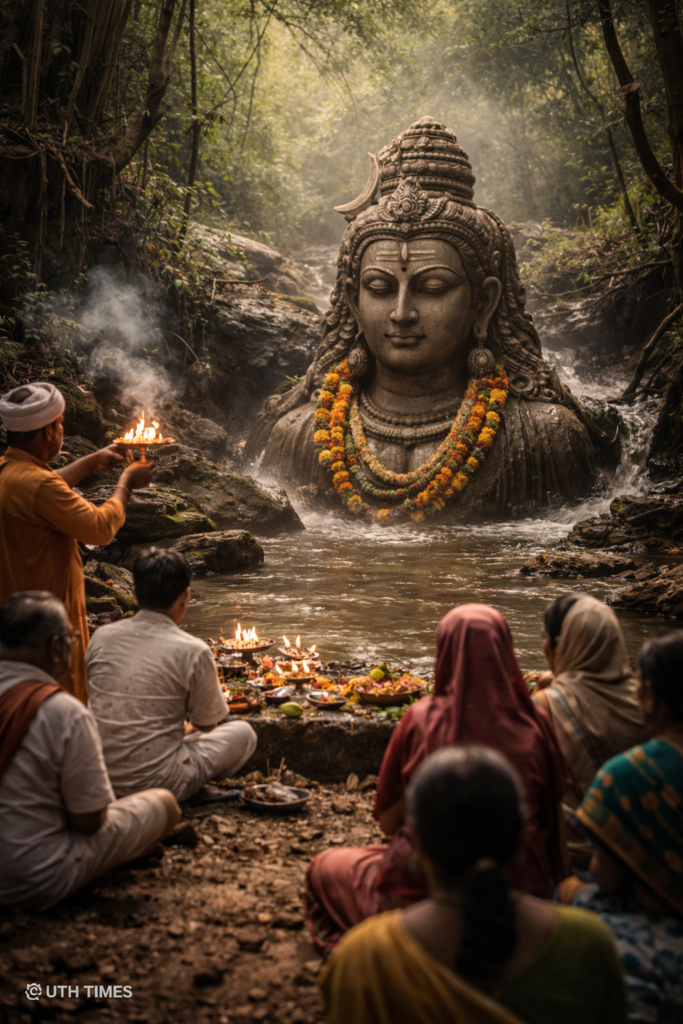
When injustice refuses to bend, Kali does not request — she arrives. She is not a warning. She is the conclusion.

⚔️ Where Mercy Ends, Kali Begins

There is a point where prayers go unheard, negotiations collapse, and cruelty thrives behind polite silence.

That is the threshold where Kali appears — not as fury, but as necessity.

On the battlefield, she is the last law.Her presence is not dramatic — it is decisive.Where others debate, she delivers.Her arrival marks a shift in reality: the moment the world stops tolerating what harms it.Kali’s sword is not for violence — it is for removal.

Removal of evil. Removal of ego. Removal of everything that stands between truth and its right to exist.

🌑 Her Form: A Scripture Written in Blood, Flame & Courage

Every element of Kali’s form teaches — and threatens — depending on who is watching.

  • ⚔️ Weapons Raised — No hesitation against what destroys dharma
  • 🩸 Severed Head in Hand — Ego dies before truth can breathe
  • 🌙 Crescent Moon — Endings are not final; rebirth waits
  • 👣 Tongue Extended — Victory must remain humble, never celebrated
  • 🌋 Wild Hair Flowing — Power that refuses to be contained
  • 🕉 Garland of Skulls — Life is sacred, and every life becomes a lesson

To fear her is to cling to illusion.

To understand her is to step into freedom.

🔥 Protection That Does Not Apologize

Kali is often misunderstood as rage — but she is love without compromise. A mother whispers until her child is safe. But when danger reaches the throat —

she becomes a storm. For the innocent — Kali is shelter. For the brave — she is transformation. For injustice — she is finality. Her protection is sharp because her love is deep — and true love defends, not observes.

⚡ Battlefield: The Place Where Souls Wake Up

When Kali steps onto the field, the ground itself changes. It is no longer chaos — it becomes verdict. Fear dissolves. Darkness shrinks. Truth stands without disguise. Her footsteps resound like a command:

“Be real. Be pure. Or be removed.”

The battlefield becomes a classroom where the first lesson is:

What is not meant for you — must end.

🗡️ Her Teaching: Endings Are Not Your Enemy

Kali teaches through cut, not through comfort.

✨ End what harms you

✨ Release what insults you

✨ Silence is not always noble

✨ Freedom begins when fear ends

The sword is not punishment — it is permission to let go of what you outgrew. Call her — and everything false will fall. Stand before her — and you will remember: sometimes the most divine thing is to end.

AI That Reads the Future: Predictive Systems Beyond Weather

0

Imagine a world where machines don’t just forecast the weather but predict human behavior, economic shifts, disease outbreaks, and social trends before they happen. This is no longer science fiction—predictive AI systems are transforming the way we anticipate the future. Unlike traditional forecasting tools, these AI models analyze massive datasets, detect hidden patterns, and simulate scenarios to help decision-makers act before events unfold.

📊 From Weather to Everything

Predictive AI began with meteorology, learning patterns in temperature, wind, and rainfall. Today, its scope has expanded:

  • Finance: AI predicts market trends, potential crashes, and investment opportunities by analyzing news, social media, and global events.
  • Healthcare: Machine learning models foresee disease outbreaks, patient deterioration, and treatment outcomes.
  • Urban Planning: AI anticipates traffic congestion, resource shortages, and emergency response needs.

The shift is from reacting to anticipating, changing how society prepares for uncertainty.

🤖 How Predictive AI Works

At the core of predictive AI are algorithms trained on historical and real-time data:

  1. Data Aggregation: Collects vast datasets—from social media activity to IoT sensor readings.
  2. Pattern Recognition: Detects correlations humans often miss.
  3. Simulation Models: Tests multiple “what-if” scenarios to estimate outcomes.
  4. Decision Guidance: Provides actionable insights for governments, businesses, and communities.

These systems don’t just calculate—they “learn” from outcomes, continuously refining their predictions.

🌐 Real-World Applications

  • Epidemic Forecasting: AI predicted flu trends and COVID-19 outbreak hotspots weeks in advance.
  • Financial Risk Management: Hedge funds use AI to anticipate stock volatility before traditional indicators signal danger.
  • Consumer Behavior: Retailers predict buying patterns, optimizing inventory before trends peak.
  • Disaster Preparedness: Predictive AI identifies flood-prone areas and optimal evacuation strategies.

⚠️ Challenges and Ethical Considerations

While promising, predictive AI raises critical questions:

  • Accuracy: Predictions are only as good as the data—biased or incomplete data can mislead.
  • Privacy: Massive data collection can invade personal privacy.
  • Decision Dependence: Over-reliance on AI might reduce human intuition and accountability.

Ethical frameworks are essential to ensure AI serves society responsibly.

🚀 The Future of Predictive AI

The next frontier is anticipatory intelligence, where AI doesn’t just predict probable outcomes but suggests interventions to shape the future. Imagine systems guiding global policy to prevent economic crises, health disasters, or social unrest. Predictive AI is not just about seeing the future—it’s about shaping it responsibly.

Skanda: The Unborn Warrior of Absolute Power

Skanda is not just a deity; he is the ultimate manifestation of will and decisive action in the universe.

🔥 Born Directly from Shiva: Beyond Nature and Birth

Skanda’s origin is extraordinary. Born solely from Shiva, without a mother, he symbolizes creation through pure intent. His birth rejects all dependency — biological, emotional, or material.

🌟 Shiva’s fiery seed – Not desire, but purpose incarnate.

🌟 Action from awareness – Skanda emerges fully formed, ready to execute cosmic duties.

🌟 Independence from prakṛti – He represents the possibility of power arising directly from absolute alignment.

This unique birth signifies that true strength comes not from attachments or circumstances but from inner mastery and alignment with purpose.

⚔️ Skanda as the Supreme Purusha Devata

Skanda embodies discipline, valor, and unwavering focus. He is the archetype of leadership that flows from self-mastery, not external support.

🛡️ Clarity over confusion – He acts decisively, guided by dharma.

🛡️ Discipline over impulse – Every action is deliberate, not reactive.

🛡️ Valor from stillness – Fearlessness stems from inner silence, not ego.

🛡️ Purpose as power – Focused intent becomes unstoppable force.

Unlike deities influenced by relationships or emotion, Skanda’s actions arise from absolute alignment with cosmic order, showing that leadership is born from inner strength.

💥 The Warrior Who Commands Reality

Skanda’s presence in the cosmos is precise and intentional.

🔹 The Vel (spear) – Represents sharp intelligence cutting through illusion.

🔹 Youthful form – Eternal alertness, free from corruption or distraction.

🔹 Leader of devas – Consciousness guiding nature, not bowing to it.

He teaches that when purpose and will align perfectly, action flows naturally, fearlessly, and decisively.

🌌 Restorer of Dharma, Beyond Emotion

Skanda does not act for pride, desire, or revenge. He acts because the universe demands balance.

✨ Order through alignment – He restores dharma with precision.

✨ Fearless execution – Victory is not sought; it unfolds naturally.

✨ Sovereignty of will – Absolute power arises from inner mastery, not circumstance.

Skanda is the reminder that true power emerges from within — unborn, unbound, and unstoppable.

Light Returns to Konark: The Sun Temple’s Sanctum Reopens After 122 Years

0

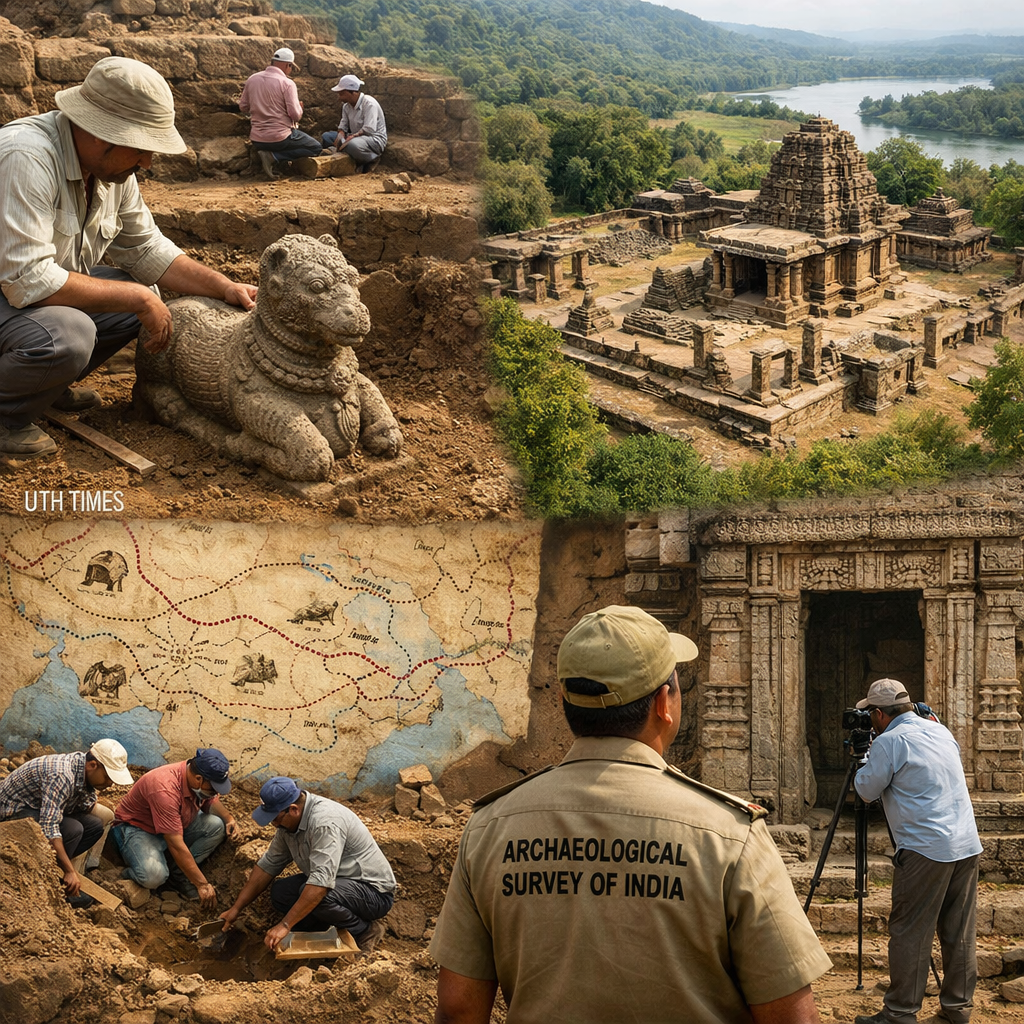
After more than a century of silence and sealed stone, light has finally entered the heart of Odisha’s Konark Sun Temple. The reopening of its garbhagriha (sanctum) is not just an archaeological event—it is a civilisational moment.

A Door Closed for 122 Years

The Konark Sun Temple, a 13th-century architectural marvel dedicated to Surya, had its sanctum sealed for 122 years, largely due to structural instability and sand accumulation. For generations, historians could only speculate about what lay beyond the blocked passage—was it empty, buried, or still breathing with art and ritual memory?

Now, the Archaeological Survey of India (ASI) has confirmed the discovery of a blocked internal passage, initiating a careful clearance through a 4×4-foot tunnel. With every inch of sand removed, the sanctum inches closer to daylight—and to history.

The ASI Operation: Precision Over Speed

This is not excavation as spectacle; it is archaeology as discipline.

🔆 Micro-tunnelling approach to prevent pressure damage

🔆 Manual sand clearance to protect unseen carvings

🔆 Structural monitoring of the temple’s fragile core

🔆 Controlled light exposure to avoid sudden material decay

The first rays entering the sanctum are symbolic—revealing not just space, but possibility.

Why the Garbhagriha Matters

In temple architecture, the garbhagriha is the spiritual nucleus. At Konark, its closure meant the temple functioned without its heart.

🌞 It once housed the principal solar deity

🌞 It aligns astronomically with the Sun’s movement

🌞 It represents cosmic order, time, and renewal

Reopening it restores not ritual—but meaning.

What Could Be Found Inside

While ASI remains cautious, expectations are high.

🪔 Buried sculptures or relief panels

🪔 Architectural motifs unseen since colonial times

🪔 Traces of ritual installations or flooring

🪔 Evidence clarifying why and how it was sealed

Even absence would speak volumes.

Konark Re-enters the Global Spotlight

As a UNESCO World Heritage Site, Konark’s sanctum reopening reshapes scholarly discourse—from conservation ethics to medieval Indian engineering. It positions India not as a keeper of ruins, but as a reviver of dormant heritage.

After 122 years, the Sun Temple breathes again. And as light returns to Konark’s core, history prepares to speak—slowly, carefully, and brilliantly.

From Search Engines to Thought Partners: How AI Changed Human Curiosity

0

For decades, human curiosity had a clear ritual. You had a question, you typed it into a search bar, and you received a list of links. Curiosity was transactional—ask, click, read, forget. Search engines didn’t think with us; they merely pointed us somewhere else.

Artificial Intelligence changed that relationship forever.

Today, we no longer search for answers. We converse with intelligence. And in doing so, AI has quietly reshaped how human curiosity works.

🔍 Curiosity in the Age of Search Engines

Search engines were built to retrieve information, not explore ideas. They rewarded precision, not wonder. If you didn’t know how to frame your question correctly, you often didn’t get what you were looking for.


This created a limitation:

People asked only what they could already articulate.

Curiosity became shallow—not because humans lacked depth, but because the tools demanded clarity before discovery.

🧠 The Shift: From Lookup Tools to Thought Partners

AI models don’t just fetch answers; they engage with uncertainty. You can approach them with half-formed thoughts, vague questions, or even confusion—and they respond by helping you think.

This is the real revolution.

AI functions less like a library and more like a thinking companion:

  • It asks follow-up questions
  • It connects ideas across disciplines
  • It expands the original question instead of narrowing it

Curiosity is no longer linear. It’s conversational.

🌱 How AI Changed the Nature of Questions We Ask

When people interact with AI, something subtle happens:

They stop asking what and start asking why and how.

Instead of:

“What is quantum computing?”

People now ask:

“Why does quantum computing change how we understand reality?”

AI invites depth because it doesn’t punish uncertainty. This has revived a philosophical curiosity that modern education and search algorithms had quietly suppressed.

⚠️ The Risk: Outsourcing Curiosity

But there’s a danger here.

When AI becomes too good at thinking with us, humans may stop thinking for themselves. If curiosity turns passive—where AI does the wondering and humans merely consume—then the tool becomes a crutch, not a catalyst.

True curiosity requires friction. AI must challenge thinking, not replace it.

🔮 The Future of Human Curiosity

The most powerful use of AI isn’t faster answers—it’s better questions.

In the future:

  • Curiosity will be collaborative
  • Learning will feel like dialogue, not instruction
  • Intelligence will be measured by the quality of questions, not the speed of answers

AI’s greatest contribution may not be knowledge at all—but the revival of deep, fearless curiosity in an age that forgot how to wonder.

Search engines helped us find information.

AI is teaching us how to think again.

And that may be the most human innovation of all.

Vishnu–Shiva: The Balance That Holds the Universe

The universe does not survive on extremes. It survives on balance. In Sanātan thought, that balance is revealed through Vishnu and Shiva—not as rivals, but as two eternal forces breathing life into the same Supreme Reality.

One Truth, Two Cosmic Movements

At the highest spiritual level, Vishnu and Shiva are not separate deities competing for supremacy. They are complementary expressions of one boundless consciousness—where preservation and transformation work together to sustain existence.

🔱 Vishnu protects the cosmic rhythm.

🔥 Shiva dissolves stagnation to allow rebirth.

Without Vishnu, creation would collapse into chaos.

Without Shiva, creation would suffocate in stagnation.

Vishnu: The Pulse of Continuity

Vishnu embodies dharma in motion—the quiet force that keeps the universe morally and structurally aligned.

✨ Aspects of Vishnu’s Role

  • 🛡️ Preservation of Dharma – Whenever righteousness declines, Vishnu descends as an avatar to restore balance
  • 🌊 Compassion & Stability – He sustains life with patience, order, and harmony
  • 🕊️ Continuity of Creation – Vishnu ensures that the world does not fracture under its own weight

Vishnu represents life’s rhythm—birth, duty, responsibility, and righteous action within the world.

Shiva: The Power of Sacred Transformation

Shiva is often misunderstood as destruction alone, but in truth, he represents liberation through transformation.

🔥 Aspects of Shiva’s Role

  • 🗝️ Dissolution of Illusion – Shiva destroys ego, ignorance, and false attachments
  • 🧘 Inner Awakening – He guides consciousness inward, beyond material bondage
  • 🌑 Renewal Through Endings – Shiva ensures that what no longer serves must dissolve

Shiva does not destroy life—he frees it.

Not Opposites, But Eternal Partners

Preservation without transformation leads to decay.

Transformation without preservation leads to chaos.

🌀 Their Unity Reveals a Deeper Truth

  • ⚖️ Balance is divine
  • 🔄 Endings are beginnings in disguise
  • 🕯️ Stillness and action coexist

The cosmic dance—Ananta Shayana and Tandava—is one continuous flow.

Spiritual Insight for the Seeker

In human life too:

  • Vishnu teaches us to live responsibly in the world
  • Shiva teaches us to detach and awaken within

Together, they guide the soul toward harmony and liberation.

Ending (Short & Resonant)

In Vishnu and Shiva, we glimpse the eternal truth: the universe is sustained not by conflict, but by balance. All forms rise from one infinite consciousness—preserving, dissolving, and renewing endlessly.

Har Har Mahadev 🔱🙏🏻

7 Films That Proved Storytelling Matters More Than Budget

0

In an era where cinema is often measured in box-office numbers and visual scale, some films quietly remind us of a timeless truth: a powerful story outlives an expensive spectacle. These films didn’t rely on massive budgets or visual excess. They relied on writing, character, and emotional honesty—and in doing so, they proved that storytelling remains cinema’s strongest currency.

🎬 1. 12 Angry Men (1957)

Set almost entirely inside a single room, 12 Angry Men is a masterclass in narrative tension. With no action sequences or elaborate sets, the film builds drama through dialogue, moral conflict, and shifting perspectives. Each conversation adds weight, making the audience lean in—not because of spectacle, but because of truth.

Why it works: Conflict is intellectual, not visual.

🎬 2. The Lunchbox (2013)

This gentle Indian drama turns misplaced lunchboxes and handwritten notes into a deeply human love story. No grand romance, no dramatic twists—just loneliness, routine, and connection unfolding quietly in Mumbai’s everyday life.

Why it works: Emotion is treated with restraint, not exaggeration.

🎬 3. Paranormal Activity (2007)

Made on a shoestring budget, this horror film didn’t depend on jump scares or CGI monsters. Instead, it used silence, suggestion, and anticipation to create fear. What the audience imagines becomes far more terrifying than anything shown.

Why it works: Fear comes from storytelling, not special effects.

🎬 4. Pather Panchali (1955)

Satyajit Ray’s debut didn’t need spectacle to create impact. It captured rural Indian life with poetic realism, turning ordinary moments into profound emotional experiences. The film’s honesty resonated across cultures and generations.

Why it works: Authenticity replaces artificial drama.

🎬 5. Clerks (1994)

Shot in black and white inside a convenience store, Clerks transformed everyday conversations into cinema. Its humor, honesty, and rawness proved that relatable writing can compensate for almost everything else.

Why it works: Strong voice matters more than polished visuals.

🎬 6. Before Sunrise (1995)

Two strangers walking and talking across Vienna—that’s almost the entire film. Yet, the conversations feel alive, intimate, and timeless. There are no dramatic stakes, only emotional ones.

Why it works: Dialogue becomes the driving force.

🎬 7. Rocky (1976)

Often remembered for its boxing sequences, Rocky is actually a deeply personal story about self-worth and resilience. Made on a limited budget, the film’s emotional payoff comes from character growth, not spectacle.

Why it works: The audience roots for the person, not the prize.

🎥 Final Take

These films succeed because they respect the audience’s intelligence and emotional depth. They remind us that cinema doesn’t need excess to be effective—it needs clarity, honesty, and purpose.

When storytelling leads, budget becomes secondary. And when story is weak, no amount of money can save a film.

How India Mastered Frugal Innovation Before the World Called It ‘Efficiency’

0

Long before boardrooms began worshipping “lean models” and “cost optimization,” India had already perfected an art the modern world is only now learning to name: frugal innovation. In India, efficiency was never a management strategy—it was a survival instinct.

While the West optimized abundance, India engineered solutions around constraint. Limited capital, massive populations, fragile infrastructure, and urgent needs didn’t slow innovation—they accelerated it.

🌱 Constraint as a Catalyst, Not a Limitation

In most economies, innovation begins with funding. In India, it begins with necessity.

From rural healthcare to space technology, Indian innovation has historically answered one core question:

“How do we make this work for everyone, not just for those who can afford it?”

This mindset produced solutions that were:

  • Affordable without being inferior
  • Scalable without being wasteful
  • Simple without being simplistic

The world now calls this efficiency. India has always called it jugaad—not as improvisation, but as intelligent adaptability.

🚀 Doing More With Less: The Indian Signature

India’s Mars Orbiter Mission cost less than many Hollywood films, not because ambition was smaller—but because design thinking was sharper. ISRO optimized fuel paths, reused components, and eliminated non-essential complexity.

In healthcare, low-cost diagnostics, generic medicines, and mobile clinics didn’t emerge from luxury labs—they emerged from understanding ground reality.

Even everyday systems—UPI, Aadhaar-linked services, low-cost education platforms—were built to operate at scale without collapsing under cost.

The goal was never perfection.

The goal was functionality at scale.

🧠 Why the World Is Catching Up Now

Ironically, the same global systems that once dismissed Indian frugality as “cheap” are now struggling under excess.

Rising costs, climate pressure, shrinking attention spans, and resource scarcity have forced the world to ask questions India answered decades ago:

  • Can innovation be inclusive and profitable?
  • Can systems be scalable without being fragile?
  • Can technology reduce cost instead of increasing dependency?

This is why global corporations now study Indian models—to learn resilience, not just revenue.

📊 Frugality Is Not About Saving Money—It’s About Saving Purpose

Indian frugal innovation is often misunderstood as cost-cutting. In reality, it’s about value-maximization.

It asks:

  • What is truly essential?
  • What can be removed without harming outcomes?
  • How do we serve the last person in the line?

This philosophy aligns more with civilizational thinking than quarterly profit cycles. It prioritizes longevity over luxury and impact over appearance.

🌍 The Real Lesson India Offers the World

India’s greatest export isn’t software or startups—it’s a mindset:

Innovation doesn’t require excess. It requires clarity.

As global systems face economic slowdown, climate stress, and social inequality, India’s frugal innovation model offers a roadmap—not backward, but forward.

Because the future doesn’t belong to those who build the biggest systems.

It belongs to those who build the most sustainable ones.

And India mastered that long before efficiency became fashionable.

Why AI Is Becoming Infrastructure, Not Software

0

For decades, software was something organizations used. Artificial Intelligence is something they now build around. This shift marks a fundamental transformation: AI is no longer a standalone application or feature—it is becoming infrastructure.

Just like electricity, the internet, and cloud computing, AI is evolving into a foundational layer that underpins systems, decisions, and economies.

From Tools to Foundations

Traditional software operates on explicit instructions. AI systems, especially large models, operate on learned patterns at scale. This difference changes how they are deployed.

  • Software is installed.
  • Infrastructure is embedded.

AI models now sit beneath applications—powering search, recommendations, fraud detection, logistics, content moderation, healthcare diagnostics, and financial systems simultaneously. Multiple services draw intelligence from the same model layer, much like multiple devices draw power from the same grid.

The Rise of Foundation Models

The emergence of large foundation models has accelerated this transition. These models are not built for single tasks; they are trained once and adapted everywhere.

This mirrors infrastructure economics:

  • High upfront cost
  • Massive scale advantages
  • Broad downstream usage

As a result, AI development is consolidating around shared model platforms rather than isolated software products.

AI Requires Compute, Not Just Code

Software scales by copying code. AI scales by consuming compute.

Training and running modern AI models demands:

  • Specialized chips
  • High-bandwidth data centers
  • Continuous energy supply

This physical dependency anchors AI closer to infrastructure industries like power, telecom, and cloud—not traditional software development.

Embedded Across Sectors

AI is no longer optional or vertical-specific. It is becoming horizontally embedded:

  • In finance, AI underwrites risk.
  • In manufacturing, it optimizes supply chains.
  • In governance, it monitors compliance.
  • In media, it shapes visibility and reach.

Once embedded, removing AI becomes as disruptive as removing internet access from a business.

Economic and Strategic Implications

When intelligence becomes infrastructure, control matters more than features.

Countries and corporations are now competing over:

  • Compute capacity
  • Model ownership
  • Data sovereignty

This explains the rapid rise of national AI strategies and regulatory focus on model access and deployment rather than just applications.

Software Can Be Replaced. Infrastructure Cannot.

Applications change quickly. Infrastructure endures.

Organizations that treat AI as a plug-in risk dependence. Those that treat it as infrastructure design resilience, adaptability, and long-term advantage.

The AI era is no longer about who builds the best app.

It is about who owns the intelligence layer everything else depends on.

The Most Radical Idea India Ever Gave the World: Inner Freedom

0

Long before freedom was reduced to flags, borders, and constitutions, India explored a more dangerous idea—freedom from within. While civilizations fought wars to change rulers, Indian thought questioned the ruler inside the human mind. This was not rebellion against the state; it was rebellion against bondage itself.

Inner freedom was never a slogan. It was a lifelong discipline.

A Civilization That Refused to Outsource Freedom

Most cultures defined freedom as external: land, power, rights, victory. Indian philosophy asked a quieter but sharper question—what is the use of external freedom if the mind remains enslaved?

From the Upanishads to the Bhagavad Gita, freedom was defined as:

  • 🧠 mastery over desire
  • 🧘 detachment without escape
  • 🔥 action without attachment to outcome

This idea was radical because it refused dependency. No king, empire, or institution could grant or take it away.

Why Inner Freedom Was Revolutionary

Inner freedom threatened every form of control. A person who is not ruled by fear, greed, or ego is impossible to manipulate.

This is why:

  • Saints challenged emperors without armies
  • Monks walked away from thrones without regret
  • Teachers spoke truth without fear of punishment

India produced rebels who didn’t overthrow governments—they made them irrelevant.

The Gita’s Quiet Explosion

The Bhagavad Gita didn’t ask Arjuna to renounce the world. It asked him to act without inner slavery. Krishna’s teaching was revolutionary:

  • ⚖️ Do your duty, but don’t become its prisoner
  • 🪶 Win or lose—remain free
  • 🕊️ Let the world touch your hands, not your soul

This was not escapism. It was psychological liberation in the middle of chaos.

Why the World Took Centuries to Understand It

The modern world chased freedom outward—rights, revolutions, reforms. Yet anxiety, addiction, and identity crises grew stronger.

Only now does the world circle back to ideas India normalised:

  • mindfulness
  • detachment
  • self-awareness
  • mental resilience

What India offered was not self-help. It was self-mastery.

Inner Freedom in a Controlled World

Today, surveillance can track bodies, algorithms can influence minds, and systems can shape behaviour—but inner freedom remains untouchable.

That is India’s most radical export:

A human being who is free even when circumstances are not.

Inner freedom doesn’t make obedient citizens. It makes conscious humans. And conscious humans are the hardest to control.

Empires rise and fall. Technologies age. Laws change.

But a civilization that taught people how to remain free inside created something eternal.

India didn’t just imagine freedom.

It made it unbreakable.