
For centuries, humans believed the body operates through five senses — sight, hearing, smell, taste, and touch. Later, science added a sixth: proprioception, the awareness of body position.
Now, researchers suggest something even more fascinating — humans may possess a previously unknown sensory ability that allows fingertips to detect objects before actually touching them.
Recent experiments reveal that our fingers may sense hidden structures beneath surfaces like sand, hinting at what scientists are calling a potential “seventh sense.”
The Discovery: Feeling Objects Without Touching Them
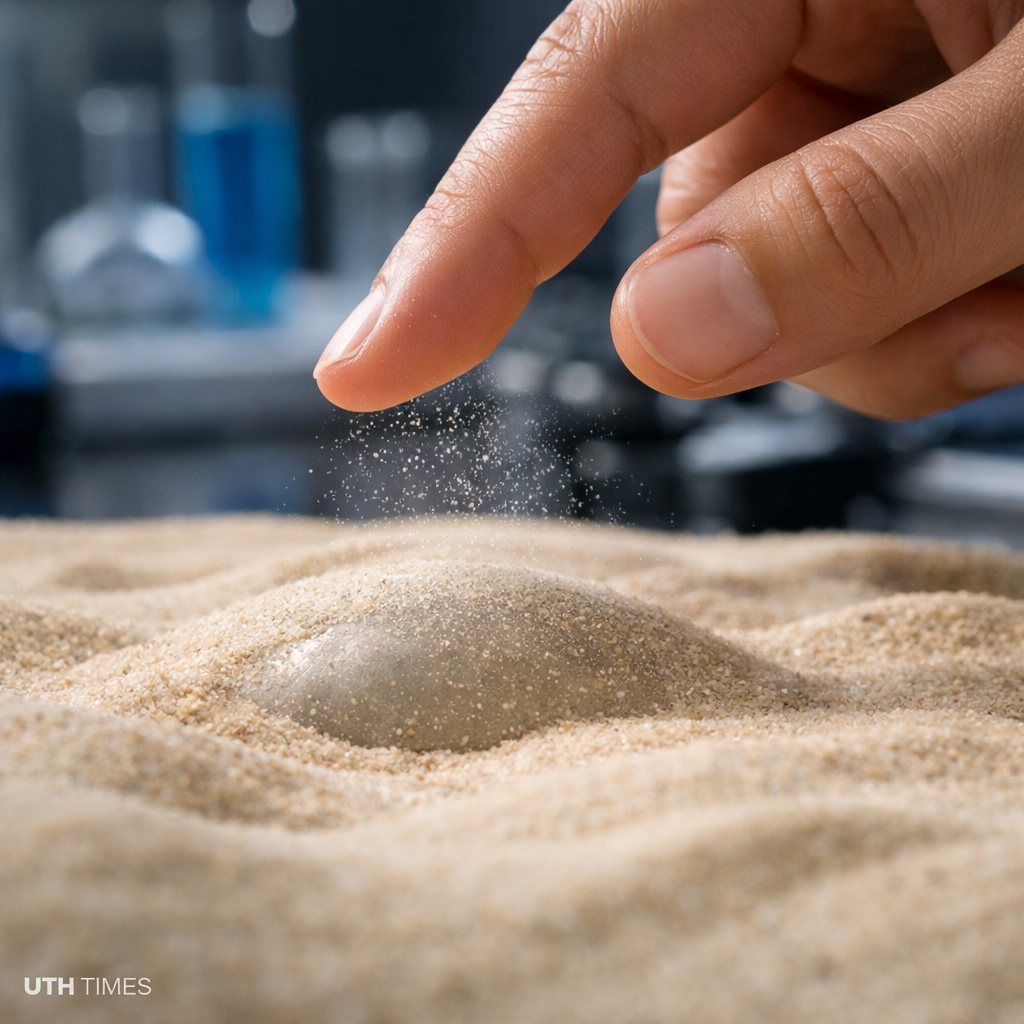
In a groundbreaking laboratory experiment, researchers asked participants to move their fingers across fine layers of sand that concealed solid objects underneath.
What surprised scientists was that participants could accurately detect where objects were buried before their fingers made direct contact.
🔬 Key findings from the experiment:
✨ Participants sensed changes millimeters above the surface
✨ Detection worked even when objects were fully covered by sand
✨ The effect occurred consistently across multiple participants
Researchers believe that subtle mechanical vibrations and air pressure shifts created by buried objects may be detected by the extremely sensitive nerve endings in human fingertips.
This means the brain might be interpreting microscopic signals that people are not consciously aware of.
Why Human Fingertips Are So Powerful
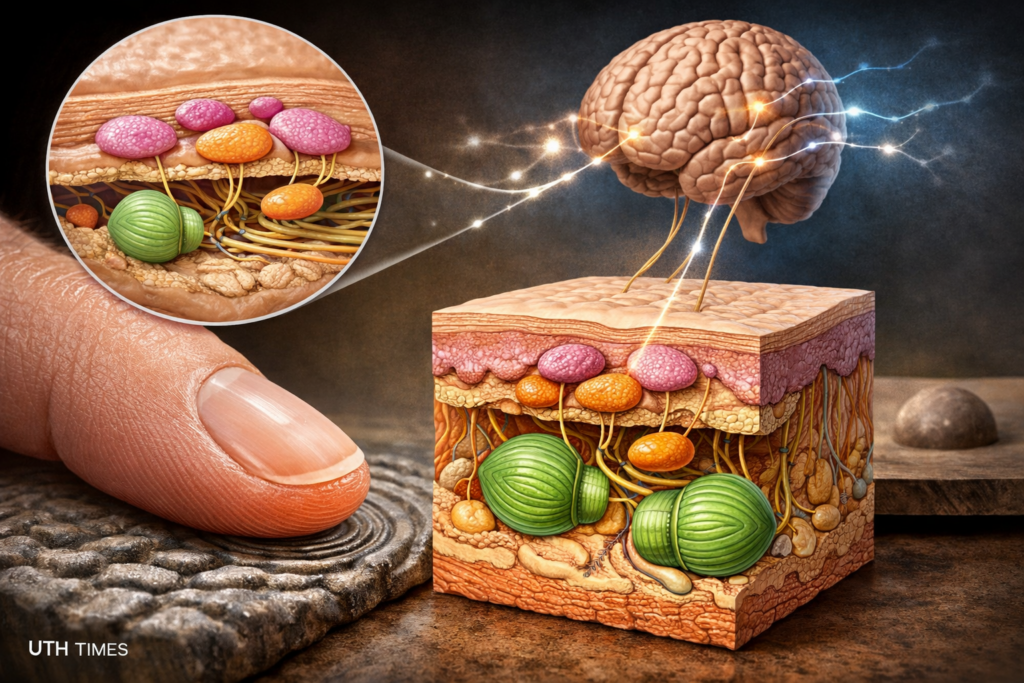
Human fingertips are among the most sensitive sensory organs in the body.
They contain thousands of specialized receptors designed to detect extremely tiny changes in texture, vibration, and pressure.
🧠 Important fingertip receptors include:
🔹 Meissner’s corpuscles – detect light touch and vibrations
🔹 Merkel cells – sense texture and shape
🔹 Pacinian corpuscles – detect deep vibrations
Scientists now think these receptors may work together to interpret disturbances in surfaces, allowing the brain to “predict” hidden objects.
Essentially, your fingers might be reading the physics of a surface before touching it.
What Scientists Mean by a “Seventh Sense”

The term “seventh sense” does not mean humans suddenly evolved a new organ. Instead, it suggests that existing sensory systems may perform functions scientists never recognized before.
Researchers believe this ability may help humans:
🧩 Detect hidden irregularities in surfaces
🧩 Improve fine motor skills and tool use
🧩 Enhance precision tasks like surgery or craftsmanship
This subtle sensory ability may have quietly supported human survival and technological development for thousands of years.
Why This Discovery Matters
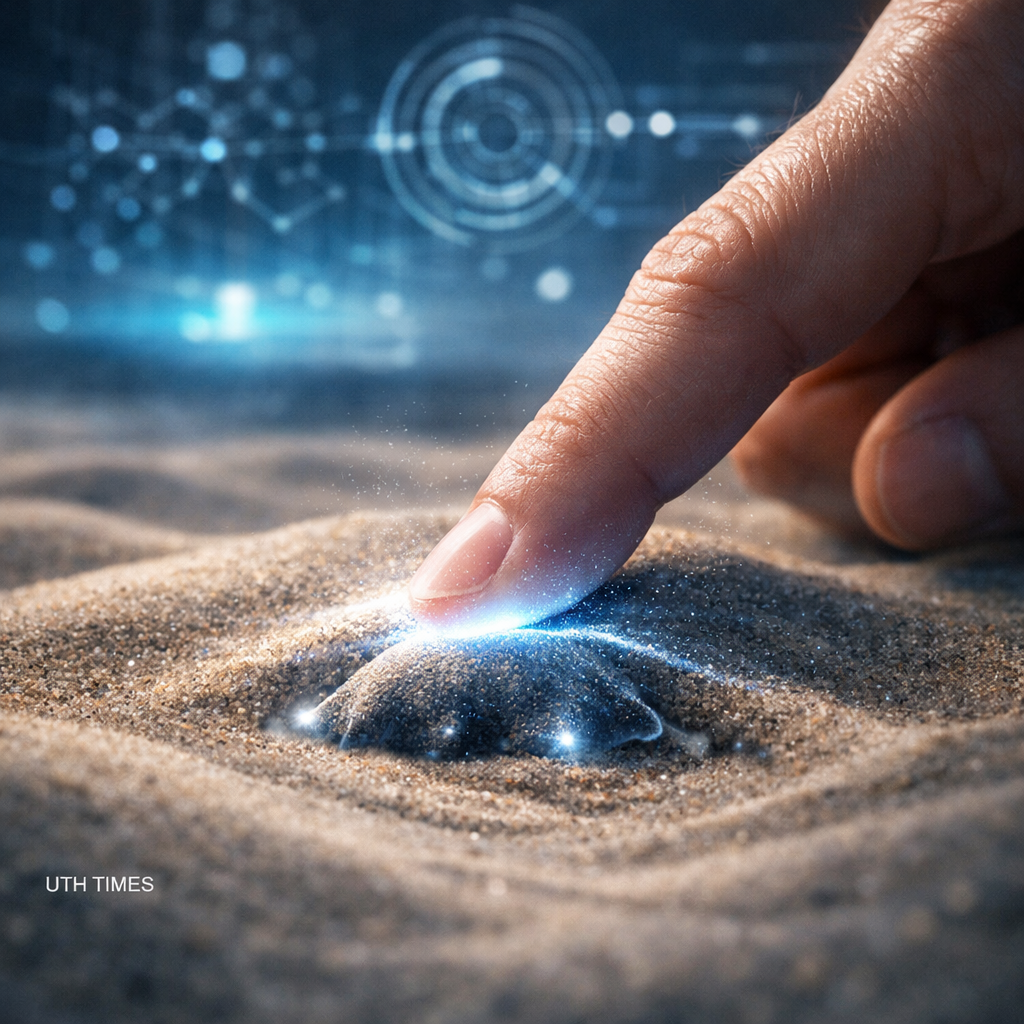
This discovery could influence several cutting-edge fields:
🚀 Robotics and artificial intelligence – designing robotic hands that mimic human touch
🧠 Neuroscience – understanding how the brain processes hidden sensory signals
🩺 Medical technology – improving prosthetic limbs with advanced touch sensitivity
Scientists say the human body may still hold many hidden capabilities waiting to be discovered.
The idea that humans might possess a hidden sensory ability reminds us that the human brain and body are far more sophisticated than we often realize.
What feels like ordinary touch may actually be a complex sensory system capable of perceiving the unseen.
And this “seventh sense” might just be the beginning of what science is about to uncover.

