
Home Blog Page 12

Could Consciousness Be Older Than Life Itself?

0

For centuries, scientists believed that consciousness emerged only after life evolved — a product of complex brains and nervous systems. But a bold scientific debate is now challenging this traditional belief.

A growing number of physicists and philosophers suggest that consciousness might not be created by life at all. Instead, it could be a fundamental feature of the universe that existed millions of years before the first living organism appeared on Earth.

If this idea proves even partially correct, it would revolutionize how humanity understands life, intelligence, and the universe itself.

The Theory: Consciousness as a Fundamental Property

Some scientists are exploring a radical possibility — that consciousness may be as fundamental to the universe as space, time, or energy.

This idea is often linked to the philosophical theory of panpsychism, which proposes that even the smallest particles of matter may possess extremely basic forms of awareness.

🔹 Key concepts behind this theory include:

🧠 Panpsychism – Suggests that consciousness is present in all matter at a fundamental level.

⚛️ Quantum information – Some physicists argue that information embedded in quantum systems may carry primitive forms of awareness.

🌌 Cosmic consciousness models – The idea that the universe itself may contain an underlying field of awareness.

Rather than brains producing consciousness, this theory proposes that brains may simply organize or amplify a consciousness that already exists in nature.

Why Scientists Are Considering This Idea

The mystery of consciousness remains one of the greatest unsolved problems in science. Despite decades of research, no one fully understands how awareness emerges from physical matter.

This puzzle has pushed some researchers to consider whether consciousness might be built into the universe itself.

Several observations have sparked this discussion:

🔬 Complex information in the early universe – The cosmos developed structured systems long before life evolved.

🧬 Information-based theories of biology – Some scientists believe life may have emerged from earlier self-organizing information networks.

🔭 Quantum behavior in nature – Certain physical systems show coordinated patterns that resemble information processing.

These discoveries suggest that information — the foundation of consciousness — may have existed long before biological life appeared.

What This Could Mean for Humanity

If consciousness predates life, it would completely transform modern science.

Possible implications include:

✨ A new understanding of the universe – Reality may be more interconnected and aware than previously believed.

🤖 Advances in artificial intelligence – Understanding consciousness at a fundamental level could reshape AI research.

🧠 New perspectives on the human mind – The brain might act as a receiver or organizer of universal consciousness.

Such ideas blur the boundaries between physics, biology, and philosophy, opening new ways to explore the nature of existence.

The Mystery Remains

At present, the idea that consciousness existed before life remains a fascinating but unproven hypothesis. Scientists continue to investigate the origins of awareness through neuroscience, physics, and cosmology.

Yet the question itself is powerful:

Did consciousness emerge with life, or has it been part of the universe all along?

As research continues, humanity may one day discover that the universe was never entirely silent — it may have always possessed the seeds of awareness.

Ancient Vishnu Idol Emerges from Telangana Forest Stream

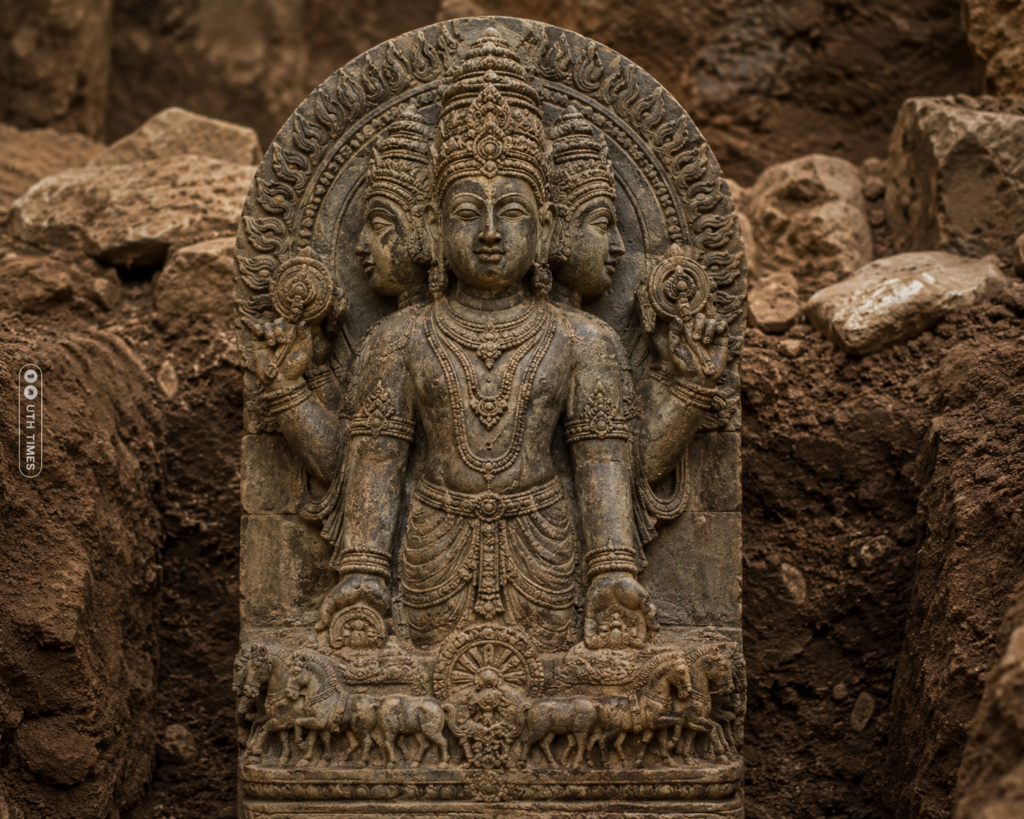
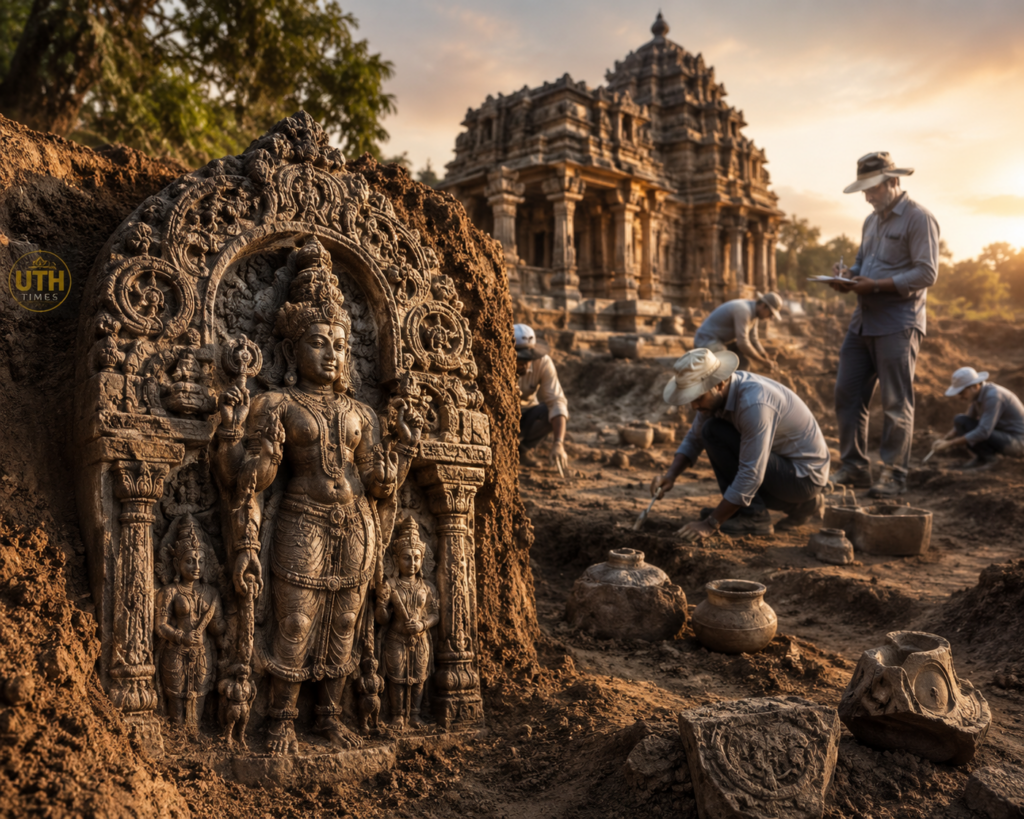
In a remarkable blend of archaeology, faith, and history, a 900-year-old idol of Lord Vishnu has been discovered in a forest stream near Chinthakani village in early March 2026. The discovery has quickly attracted historians, archaeologists, and devotees alike, opening a new chapter in understanding Telangana’s medieval heritage.

🌿 A Discovery Hidden in Nature

The idol was reportedly found in a shallow forest stream by local villagers while they were collecting water and exploring the area. The stream flows through dense forest terrain in the Jayashankar Bhupalpally district, a region known for its historical temples and ancient cultural roots.

According to preliminary assessments by experts, the sculpture is believed to be nearly 900 years old, dating back to the medieval period when powerful South Indian dynasties shaped the region’s religious architecture.

🔎 Key observations from the discovery:

✨ The idol was partially buried under stones and river sediment.

✨ Despite centuries of exposure to water, the carving remains remarkably intact.

✨ The sculpture is made of dark granite, a material commonly used in medieval temple art.

Villagers immediately informed local authorities and temple committees, after which officials secured the site to prevent damage or theft.

🛕 Artistic Details That Reveal Its Age

Experts studying the idol say the sculpture reflects stylistic elements associated with the Kakatiya dynasty, which ruled large parts of present-day Telangana between the 12th and 14th centuries.

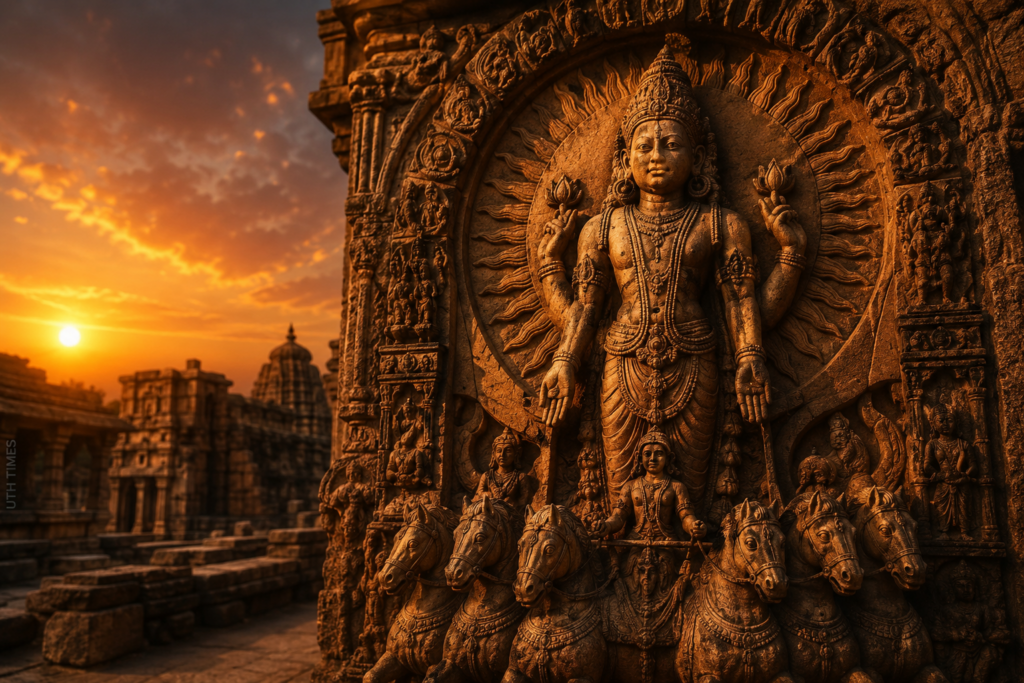
The idol depicts Vishnu, the preserver in the Hindu trinity, standing in a classical posture.

🔱 Notable features of the idol:

🪔 Four-armed representation – Symbolizing Vishnu’s divine attributes.

🪔 Sacred ornaments and crown – Intricate carvings typical of temple sculptures.

🪔 Symbolic weapons – Conch (Shankha), discus (Chakra), mace (Gada), and lotus (Padma).

🪔 Graceful stone detailing – Suggesting it was originally part of a temple complex.

Historians believe the idol might have belonged to a medieval temple that either collapsed, was destroyed, or was lost to time, eventually being carried by water currents into the forest stream.

🧭 Why This Discovery Matters

Archaeologists say this finding could help reveal forgotten temple networks and trade routes that once existed in this region of Telangana.

🌏 Possible implications:

📜 It may lead to archaeological excavation in nearby areas.

📜 The discovery strengthens evidence of Kakatiya-era temple culture.

📜 It highlights how natural landscapes can preserve centuries-old heritage.

Local authorities are expected to involve the Archaeological Survey of India to conduct further examination and conservation.

✨ Faith, History, and Mystery

While historians see an invaluable archaeological artifact, local villagers see something deeper — a divine presence rediscovered after centuries. Devotees have already begun visiting the site to offer prayers.

In many ways, the idol’s reappearance from a quiet forest stream is more than a discovery. It is a reminder that India’s ancient past often lies hidden in its landscapes, waiting patiently to be found again.

The Whale Protein That Could Help Humans Live 200 Years

0

For centuries, humans have searched for the secret to a longer life — from ancient herbal remedies to modern genetic engineering. Now, scientists believe the answer might be hidden deep within the oceans. Research into whales, the longest-living mammals on Earth, has revealed a fascinating biological secret: a unique protein that protects their cells from aging and disease.

If scientists can understand and replicate this mechanism, the implications for human longevity could be revolutionary — potentially extending human lifespans far beyond what was once thought biologically possible.

🐋 Why Whales Live So Long

Whales are extraordinary creatures not just because of their size but also their lifespan. Some species, particularly the bowhead whale, can live for over 200 years, making them one of the longest-living mammals known to science.

Scientists studying whale genomes discovered that these animals possess powerful biological defenses against aging.

🔬 Key discoveries include:

🧬 Enhanced DNA repair systems – Whale cells can repair genetic damage far more efficiently than human cells. This prevents mutations that normally accumulate with age.

🛡️ Cancer resistance mechanisms – Despite having trillions of cells, whales rarely develop cancer. Researchers believe specialized proteins suppress abnormal cell growth.

⚡ Unique longevity proteins – Certain proteins found in whales regulate inflammation, protect cells from stress, and slow down biological aging.

These mechanisms allow whales to maintain healthy cells for centuries without the usual deterioration seen in humans.

🧬 The Protein That Fascinates Scientists

One particular protein has captured the attention of longevity researchers. This protein helps regulate cellular stress responses, preventing damage caused by toxins, inflammation, and metabolic processes.

In simple terms, it acts like a biological shield, protecting cells from the wear and tear that normally shortens lifespan.

Researchers believe this protein works by:

🧪 Stabilizing cellular structures – preventing protein misfolding that leads to diseases such as Alzheimer’s.

🧫 Reducing oxidative stress – slowing down the chemical reactions that damage cells over time.

🧠 Improving tissue regeneration – helping cells repair themselves more efficiently.

Early laboratory studies suggest that introducing whale-inspired genetic mechanisms into human cells can significantly increase their resistance to aging-related damage.

🚀 What This Means for the Future of Humanity

If scientists can successfully replicate or mimic these whale proteins, the future of medicine could transform dramatically.

Potential breakthroughs include:

💊 Longevity therapies that delay aging by decades

🧬 Genetic treatments that prevent age-related diseases

❤️ Healthier, longer lifespans potentially approaching 150–200 years

Researchers emphasize that this science is still in early stages, but the discoveries have already reshaped how scientists think about aging.

The Ocean’s Secret to Human Longevity

Nature often hides its greatest innovations in unexpected places. Whales, silent giants of the ocean, may hold the blueprint for extending human life far beyond current limits.

As biotechnology advances, the dream of dramatically longer — and healthier — human lives may no longer belong only to science fiction.

Japan’s Moon Solar Ring: Powering Earth from Space

0

Imagine a future where Earth never runs out of electricity. No coal, no oil, and no fear of power shortages. Japan is exploring a revolutionary idea that could redefine the global energy system — building a massive solar power ring around the Moon that beams continuous energy back to Earth.

This ambitious concept, often called the Luna Ring, could become one of the most transformative engineering projects in human history.

☀️ What Exactly Is the Lunar Solar Ring?

The concept was originally proposed by Japan’s construction giant Shimizu Corporation, envisioning a solar belt stretching roughly 11,000 kilometers around the Moon’s equator.

🌕 Key idea:

Solar panels installed around the Moon would capture sunlight almost 24 hours a day.

🔋 Why the Moon?

Unlike Earth, the Moon has no atmosphere, clouds, or weather to block sunlight. This allows solar panels to operate with maximum efficiency.

⚡ How energy reaches Earth:

The electricity generated on the Moon would be converted into microwave or laser energy beams, transmitted to receiving stations on Earth, and then converted back into usable electricity.

This system could potentially provide continuous clean power to the entire planet.

🚀 How the Mega Project Would Work

Constructing a solar ring on the Moon would require a combination of robotic automation, lunar mining, and advanced space infrastructure.

🔹 Autonomous construction robots would build solar panels using materials extracted directly from lunar soil.

🔹 Mass drivers would transport materials across the Moon’s surface efficiently.

🔹 Energy transmission stations would convert electricity into microwaves or laser beams directed toward Earth.

🔹 Ground-based receivers on Earth would capture the beams and convert them back into electricity for power grids.

The entire system could produce around 13,000 terawatts of power, vastly exceeding humanity’s current energy consumption.

🌍 Why This Could Change the Planet

The Lunar Solar Ring could solve some of humanity’s biggest energy challenges.

🌱 Unlimited Clean Energy

The system could eliminate dependence on fossil fuels and dramatically reduce global carbon emissions.

🔌 Constant Power Supply

Unlike solar farms on Earth, lunar solar panels would not face night cycles or weather disruptions.

🏭 Industrial Transformation

Industries requiring enormous energy — such as hydrogen production, desalination, and AI infrastructure — could operate sustainably.

🌎 Energy Equity

Developing nations could gain access to stable electricity without building massive local infrastructure.

🛰️ The Challenges Ahead

Despite its promise, the project remains extremely ambitious.

⚠️ Astronomical cost — potentially trillions of dollars.

⚠️ Lunar logistics — transporting machinery and materials to the Moon is still expensive.

⚠️ Energy transmission safety — microwave beams must be carefully managed.

⚠️ Global cooperation — such a project would likely require international collaboration.

However, with rapid progress in space robotics, reusable rockets, and lunar exploration, the idea is gradually shifting from science fiction toward feasibility.

The Future of Planetary Power

Japan’s Lunar Solar Ring represents a bold vision of the future — one where humanity uses space not just for exploration, but for sustaining life on Earth.

If realized, the Moon may no longer be just a distant celestial body in the night sky.

It could become the ultimate power station for our planet.

Avataar: India’s First Drone That Conquers Sky and Sea

0

Technology often draws boundaries between air, land, and water. But a breakthrough innovation from Bengaluru is proving that the future of robotics may not follow those limits. AquaAirX, an emerging deep-tech startup, has introduced “Avataar” — India’s first hybrid drone capable of both flying in the air and diving underwater.

This cutting-edge invention is not just another drone; it represents a new generation of multi-environment robotics designed for exploration, defense, and disaster response.

🚀 The Birth of a Dual-Environment Drone

Traditional drones are engineered exclusively for aerial operations. Underwater exploration, on the other hand, requires specialized submersible vehicles.

AquaAirX’s Avataar bridges this technological gap.

🔹 It can take off like a conventional drone, navigating aerial landscapes with precision.

🔹 Within seconds, the same drone can enter water and operate as an underwater exploration vehicle.

🔹 It can later resurface and relaunch into the air, completing a seamless transition between two extreme environments.

This dual-capability system required engineers to redesign propulsion, waterproof electronics, pressure resistance, and buoyancy control — challenges that most drone developers avoid due to their complexity.

🌊 Engineering the Air-to-Ocean Transition

What truly sets Avataar apart is the technology enabling the air-to-water transformation.

🔹 Hybrid propulsion system allowing efficient thrust both in air and underwater.

🔹 Advanced waterproof architecture protecting sensitive electronics during deep dives.

🔹 Adaptive navigation sensors capable of switching between GPS-based aerial navigation and sonar-assisted underwater mapping.

🔹 Pressure-resistant materials ensuring structural integrity during submersion.

When Avataar hits the water surface, it doesn’t simply sink. Instead, it smoothly transitions into underwater mode, adjusting its propeller dynamics and navigation algorithms for aquatic mobility.

This level of engineering precision makes it one of the most sophisticated robotic platforms developed in India’s drone ecosystem.

🛰️ Strategic Applications Across Industries

Avataar’s hybrid design opens doors to multiple high-impact applications.

🔹 Defense & Maritime Security

Monitoring coastlines, inspecting naval assets, and detecting underwater threats.

🔹 Search and Rescue Operations

During floods or maritime accidents, the drone can scan both surface and underwater environments.

🔹 Ocean Research & Environmental Monitoring

Scientists can study coral reefs, underwater ecosystems, and marine pollution without deploying expensive submersibles.

🔹 Infrastructure Inspection

It can inspect bridges, dams, offshore pipelines, and underwater cables — critical infrastructure often difficult to access.

Such versatility dramatically reduces operational costs and improves efficiency for agencies working across land and sea.

🇮🇳 A Leap for India’s Deep-Tech Innovation

India’s drone ecosystem has been growing rapidly, but Avataar represents something more profound — a technological leap into hybrid robotics.
By combining aerial autonomy with underwater exploration, AquaAirX is positioning India among the few nations experimenting with cross-environment drones.

The innovation reflects how Indian startups are moving beyond basic drone manufacturing toward high-end robotics and deep-tech engineering.

Avataar hints at a future where robotic systems will operate across multiple environments without human intervention.

From ocean exploration to disaster management, hybrid drones like Avataar could redefine how humans observe and interact with the planet’s most inaccessible regions.

In many ways, this drone doesn’t just fly or dive — it expands the horizon of what drones can truly become.

Ancient Symbols of Sanatan Dharma Found in the Philippines?

History occasionally reveals discoveries that challenge our understanding of ancient civilizations. Recently in Mumbai, researcher Syed Shamir Hussain presented a remarkable set of documents and artefacts that he claims are connected to two powerful symbols of Sanatan Dharma — Lord Shiva’s Trishul and Lord Indra’s Vajra. According to the research he presented, these symbols may date back nearly 10,000 years and were reportedly discovered in the Philippines, opening a fascinating discussion about the ancient spread of Indic culture across Southeast Asia.

The Presentation in Mumbai

The artefacts and historical documents were showcased during a research presentation where Syed Shamir Hussain detailed his findings and interpretations.

🔹 The presentation included photographs, sketches, and research documentation related to the objects.

🔹 The artefacts reportedly resemble Trishul (trident) and Vajra (thunderbolt weapon) symbols commonly associated with Hindu deities.

🔹 Hussain claims these symbols indicate ancient Sanatan cultural influence far beyond the Indian subcontinent.

Researchers attending the discussion noted that the shapes, engravings, and symbolic patterns bear similarities to traditional Hindu iconography, which has been historically present in many parts of Southeast Asia.

Symbolism of Trishul and Vajra

The two artefacts presented carry deep spiritual and mythological meaning in Sanatan philosophy.

🔱 Trishul – Weapon of Lord Shiva

The Trishul, the sacred trident of Lord Shiva, represents cosmic balance.

🔹 Creation, preservation, and destruction

🔹 Past, present, and future

🔹 Mind, body, and consciousness

In Hindu philosophy, the Trishul symbolizes ultimate spiritual authority and universal order.

⚡ Vajra – Weapon of Lord Indra

The Vajra, the thunderbolt weapon of Lord Indra, symbolizes divine power and indestructibility.

🔹 Represents lightning and energy of the heavens

🔹 Symbol of strength and righteousness

🔹 Associated with victory over chaos and evil

The presence of these symbols outside India could potentially indicate ancient cultural exchanges or migration routes.

Possible Historical Connections

Historians have long acknowledged the influence of Indian culture across Southeast Asia, including regions like Indonesia, Cambodia, Thailand, and Vietnam. However, findings in the Philippines could push this cultural timeline even further back.

Some scholars believe that:

🌏 Ancient maritime trade routes may have carried religious ideas, art, and symbols across oceans.

🌏 Early civilizations in Southeast Asia might have adopted Indic philosophical concepts.

🌏 Cultural exchange between India and island nations may have existed thousands of years earlier than previously assumed.

However, researchers emphasize that further archaeological verification and scientific dating will be required to confirm these claims.

Why This Discovery Matters

If authenticated, these artefacts could significantly reshape the historical understanding of early cultural diffusion.

🔹 It could demonstrate the global reach of ancient Indian philosophy.

🔹 It may reveal unknown maritime networks of ancient civilizations.

🔹 It could highlight the deep-rooted influence of Sanatan traditions across Asia.

Such discoveries often spark deeper exploration into how ancient societies interacted and shared knowledge across continents.

While further verification is necessary, the presentation by Syed Shamir Hussain has sparked curiosity among historians and cultural researchers alike. If these symbols truly date back 10,000 years, they could offer a powerful glimpse into the ancient spiritual and cultural connections linking India with Southeast Asia.

The discovery reminds us that history is still full of mysteries waiting to be uncovered.

The Mystery of Panchamukhi Ganesha

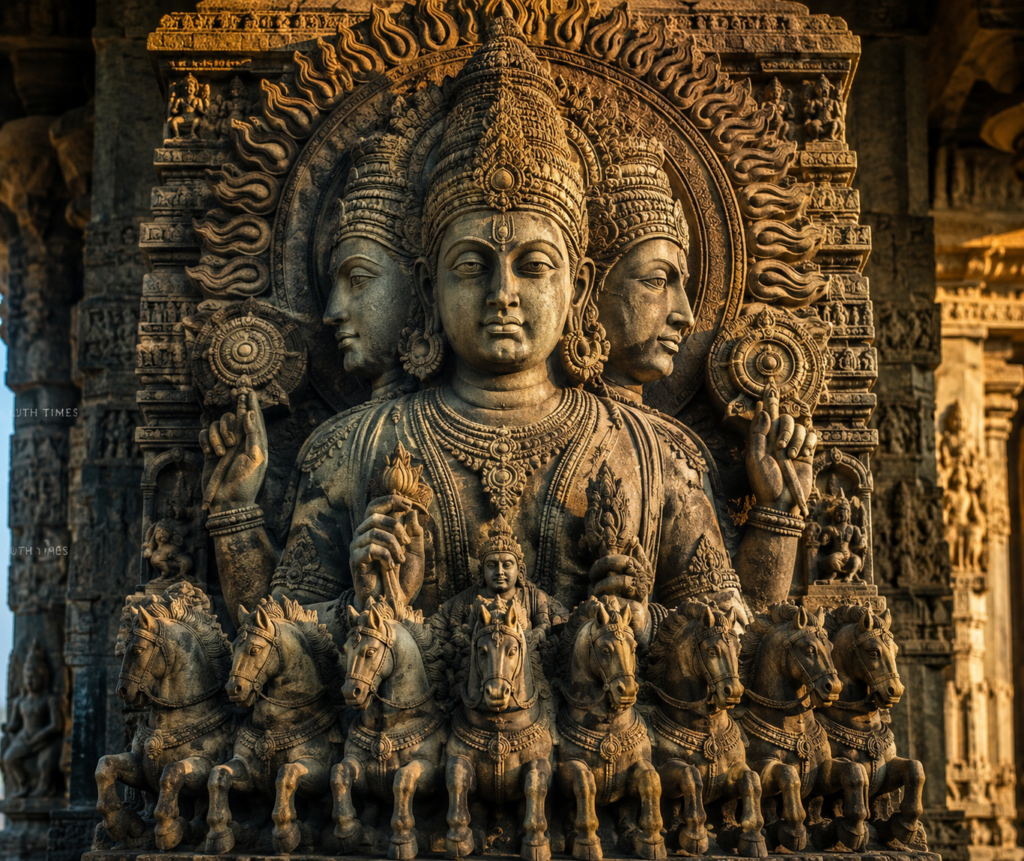
Across India’s ancient temples, sculptures silently narrate spiritual philosophies that are thousands of years old. Recently, historians studying an 11th-century sculpture of Panchamukhi Ganesha were reminded once again that Sanatan Dharma encodes deep wisdom through symbolism rather than simple imagery.

Why does Ganesha appear with five faces in this rare form? The answer reveals a powerful philosophical framework about consciousness, protection, and cosmic balance.

🔱 The Symbolism of Panchamukhi Ganesha

Unlike the commonly seen single-faced Ganesha, Panchamukhi (five-faced) Ganesha represents a multidimensional form of divine awareness.

Each face is believed to face a different direction, symbolizing the deity’s ability to observe, protect, and guide the universe from all sides simultaneously.

In Sanatan philosophy, the five faces represent the five cosmic elements (Pancha Mahabhutas) that constitute the universe.

🔹 Earth (Prithvi) – Stability, grounding, and physical existence.

🔹 Water (Jal) – Flow, adaptability, and emotional balance.

🔹 Fire (Agni) – Transformation, energy, and purification.

🔹 Air (Vayu) – Movement, intellect, and life force.

🔹 Space (Akasha) – Infinite consciousness and cosmic awareness.

Together, these elements illustrate that Ganesha governs not just obstacles in life but the very structure of existence itself.

🐘 The Five Faces and Their Spiritual Meaning

Each face of Panchamukhi Ganesha also carries a specific spiritual role, making this form deeply symbolic in Tantric and yogic traditions.

🔸 East-Facing Face – Represents wisdom and new beginnings, reminding devotees that knowledge is the first step to removing obstacles.

🔸 West-Facing Face – Symbolizes protection and the destruction of negativity.

🔸 North-Facing Face – Associated with prosperity, growth, and spiritual progress.

🔸 South-Facing Face – Represents courage and the ability to overcome fear.

🔸 Upward-Facing Face – Symbolizes enlightenment and connection with the divine consciousness.

This configuration reflects the belief that true wisdom requires awareness in every direction — physical, mental, and spiritual.

🏛️ Why the 11th-Century Sculpture Matters

The discovery of such sculptures from the 11th century highlights how sophisticated Sanatan philosophical thought was even a thousand years ago.

Ancient sculptors were not merely artists; they were philosophers and spiritual interpreters translating complex metaphysical ideas into stone.

The Panchamukhi Ganesha sculpture demonstrates:

🔹 Advanced symbolic understanding of the cosmos

🔹 Integration of spirituality, art, and philosophy

🔹 The deep cultural continuity of Sanatan traditions

It also proves that temple architecture was designed as a form of visual scripture, where every carving carried layers of meaning.

🌺 A Divine Reminder of Universal Balance

Panchamukhi Ganesha is more than an artistic representation — it is a philosophical message carved into history.

It teaches that wisdom requires balance of the five elements, awareness in all directions, and harmony between the physical and spiritual worlds.

Even after a thousand years, this ancient sculpture continues to remind us that Sanatan Dharma was never just religion — it was a profound science of existence.

5 Temples to Visit in Uttar Pradesh

Uttar Pradesh is not just India’s most populous state — it is the spiritual heart of the country. From the banks of the sacred Ganga to ancient cities that echo with centuries of devotion, the state is home to temples that attract millions of pilgrims and travellers every year. These temples are not only places of worship but also symbols of history, faith, architecture, and cultural legacy.

Here are five remarkable temples in Uttar Pradesh that every spiritual traveller should experience at least once.


🛕 Kashi Vishwanath Temple, Varanasi

Located in the ancient city of Varanasi, the Kashi Vishwanath Temple is one of the most sacred temples dedicated to Lord Shiva. It is counted among the twelve Jyotirlingas, making it one of the holiest pilgrimage sites in Hinduism.

🔹 The temple’s golden spire dominates the skyline of Varanasi’s old city.

🔹 The recently developed Kashi Vishwanath Corridor connects the temple directly to the Ganga ghats, enhancing accessibility and spiritual ambiance.

🔹 Pilgrims believe that visiting this temple grants liberation (moksha).

The energy of the temple combined with the spiritual atmosphere of the Ganga makes it a truly unforgettable experience.

🛕 Ram Janmabhoomi Temple, Ayodhya

The Ram Mandir in Ayodhya is one of the most historically and spiritually significant temples in India. It is believed to be the birthplace of Lord Rama, a central figure in the epic Ramayana.

🔹 The temple was inaugurated in 2024, marking a historic moment for millions of devotees.

🔹 Built with magnificent sandstone architecture, the temple reflects ancient Indian temple design.

🔹 Ayodhya itself is one of the seven sacred cities of Hinduism (Sapta Puri).

Today, Ram Mandir has become one of India’s most visited pilgrimage destinations.

🛕 Banke Bihari Temple, Vrindavan

Situated in Vrindavan, the Banke Bihari Temple is dedicated to Lord Krishna, worshipped here as Banke Bihari.

🔹 The temple is famous for its unique darshan tradition, where curtains repeatedly open and close.

🔹 It becomes incredibly vibrant during Holi and Janmashtami celebrations.

🔹 The temple reflects the deep devotional culture of the Braj region.

The lively chants, music, and devotion create an atmosphere that feels spiritually electrifying.

🛕 Prem Mandir, Vrindavan

Another architectural masterpiece in Vrindavan is the breathtaking Prem Mandir, built by Jagadguru Kripalu Maharaj.

🔹 Constructed entirely from Italian white marble, the temple features intricate carvings depicting scenes from Krishna’s life.

🔹 At night, colorful lighting and musical fountains transform the temple into a mesmerizing spectacle.

🔹 The temple celebrates divine love between Radha and Krishna.

Prem Mandir blends spirituality with stunning architectural beauty.

🛕 Sankat Mochan Hanuman Temple, Varanasi

The Sankat Mochan Hanuman Temple in Varanasi is one of the most revered temples dedicated to Lord Hanuman.

🔹 The temple was established by the legendary poet-saint Tulsidas.

🔹 Devotees believe prayers here help remove obstacles and difficulties from life.

🔹 The temple is especially crowded on Hanuman Jayanti and Tuesdays.

The devotion and simplicity of this temple make it one of the most spiritually comforting places in the city.

Uttar Pradesh’s temples are more than religious sites — they are living symbols of India’s ancient spiritual traditions. Whether it is the timeless spirituality of Varanasi, the divine birthplace in Ayodhya, or the devotional atmosphere of Vrindavan, these temples offer an unforgettable journey into India’s sacred heritage.


Plastic-Eating Fungus: Nature’s Secret Weapon Against Plastic Pollution

0

Deep inside the lush biodiversity of the Amazon rainforest, scientists have discovered something extraordinary — a fungus that can naturally break down plastic. At a time when the world is drowning in plastic waste, this microscopic organism could become one of the most powerful allies in humanity’s fight against pollution.

🌍 The Plastic Crisis the World Faces

Plastic pollution has become one of the largest environmental threats of the 21st century. Every year, millions of tons of plastic end up in landfills, oceans, and forests.

🔹 Around 400 million tons of plastic are produced globally every year.

🔹 Nearly half of this plastic is single-use, meaning it is discarded after one use.

🔹 Plastic can take hundreds of years to decompose, slowly breaking into harmful microplastics that contaminate soil, water, and even the food chain.

Scientists across the globe have been searching for sustainable and natural ways to break down plastic waste. Surprisingly, the answer might have been hidden for centuries in the dense ecosystems of the Amazon.

🍄 The Amazon Discovery: A Fungus That Eats Plastic

Researchers studying microorganisms in the Amazon rainforest discovered a fungus known as Pestalotiopsis microspora, which has a remarkable ability — it can digest plastic as a source of energy.

🔹 The fungus produces special enzymes capable of breaking down polyurethane, one of the most common and difficult-to-recycle plastics.

🔹 Unlike many organisms, it can survive in oxygen-free environments, meaning it could work even in landfills where oxygen levels are extremely low.

🔹 It essentially uses plastic as food, converting complex plastic molecules into simpler compounds.

This discovery shocked scientists because very few natural organisms can degrade plastic efficiently.

🔬 How This Fungus Could Transform Waste Management

The discovery has opened the door to revolutionary waste management technologies.

🔹 Scientists are studying how the fungus can be cultivated and scaled for industrial use.

🔹 It could be used in bioreactors to break down plastic waste much faster than natural decomposition.

🔹 Researchers are also exploring ways to extract the plastic-degrading enzymes and apply them in recycling facilities.

If successfully developed, this biological solution could help reduce the massive plastic burden in landfills and oceans.

🌱 Why the Amazon Still Holds Scientific Secrets

The Amazon rainforest is the largest and most biodiverse ecosystem on Earth, containing millions of species that scientists have yet to fully study.

🔹 Many organisms have unique biochemical abilities developed over millions of years.

🔹 Microbes and fungi often produce powerful enzymes that can solve modern technological challenges.

🔹 Protecting biodiversity could lead to discoveries that benefit medicine, climate solutions, and environmental restoration.

This plastic-eating fungus is just one example of nature’s hidden innovation.

🌎 A Small Organism With Planet-Sized Potential

Although the research is still developing, the discovery highlights an important truth — nature often holds solutions to humanity’s biggest problems.

If scientists can successfully harness this fungus, it could become a game-changing tool in the global battle against plastic pollution, proving that sometimes the smallest life forms can create the largest environmental impact.

India’s Golden Run: Five Years of Cricketing Dominance

In the last five years, Indian cricket has transformed from a strong contender into a global powerhouse. Across formats—Test, ODI, and T20—Team India has displayed a rare combination of consistency, depth, and fearless leadership. From record-breaking bilateral series to historic ICC victories, this era has not only redefined Indian cricket but has also reshaped the balance of power in world cricket.

🏆 The Historic 2026 T20 World Cup Triumph

The defining moment of this dominant era came in 2026, when India lifted the T20 World Cup with an emphatic performance in the final.

🔹 India delivered one of the most dominant finals in T20 World Cup history, defeating New Zealand by a massive margin.

🔹 The batting lineup displayed explosive power, posting a towering total that immediately put the opposition under pressure.

🔹 India’s bowling attack then dismantled New Zealand with ruthless precision, highlighting the team’s all-round superiority.

This victory was not just a trophy—it symbolized India’s tactical maturity, squad depth, and fearless modern cricket philosophy.

🏏 The Rise of a Multi-Format Giant

One of the biggest reasons behind India’s dominance since 2020 is its ability to excel in all three formats simultaneously.

🔹 India consistently remained among the top-ranked teams in ICC rankings across formats.

🔹 The team reached the finals or knockouts of several ICC tournaments, proving their ability to perform on the biggest stages.

🔹 India’s bench strength became the envy of world cricket—allowing entirely different squads to win overseas series.

Unlike earlier eras where teams specialized in one format, modern India has built a balanced ecosystem of power hitters, technically sound batters, and world-class bowlers.

🌍 Dominating at Home and Abroad

Historically, Indian teams were considered unbeatable at home but inconsistent overseas. Over the last five years, that narrative has changed dramatically.

🔹 Historic overseas wins in countries like Australia and England showcased India’s adaptability.

🔹 Young players stepped up under pressure, especially during challenging tours.

🔹 India maintained one of the longest home winning streaks in Test cricket, turning subcontinental conditions into an impregnable fortress.

This combination of home dominance and overseas competitiveness has elevated India’s status as the most complete cricketing nation.

🌟 The Era of Unmatched Depth

Another defining feature of this period is India’s incredible squad depth.

🔹 A powerful batting lineup capable of posting massive totals.

🔹 A world-class pace attack supported by elite spin bowlers.

🔹 Young talents seamlessly replacing senior players without weakening the team.

From emerging stars to experienced match-winners, India now operates with two or even three competitive playing XIs, something very few cricketing nations can boast.

📊 Leadership, Strategy, and Modern Cricketing Culture

Behind India’s dominance lies a transformation in leadership and cricketing philosophy.

🔹 Aggressive captaincy promoting fearless cricket.

🔹 Advanced analytics and data-driven strategies.

🔹 A robust domestic structure producing match-ready talent.

The Indian Premier League (IPL) has also played a crucial role, grooming players for high-pressure international scenarios.

The Future of Indian Cricket

India’s dominance over the past five years reflects not just a successful team but a system built for sustained excellence. With a strong talent pipeline, modern infrastructure, and fearless young cricketers, the future looks even brighter.

If the current momentum continues, the coming decade could firmly establish India as the undisputed superpower of world cricket.