
Home Blog Page 10

India’s First Dedicated Drone Airbase Coming Up in Meerut

0

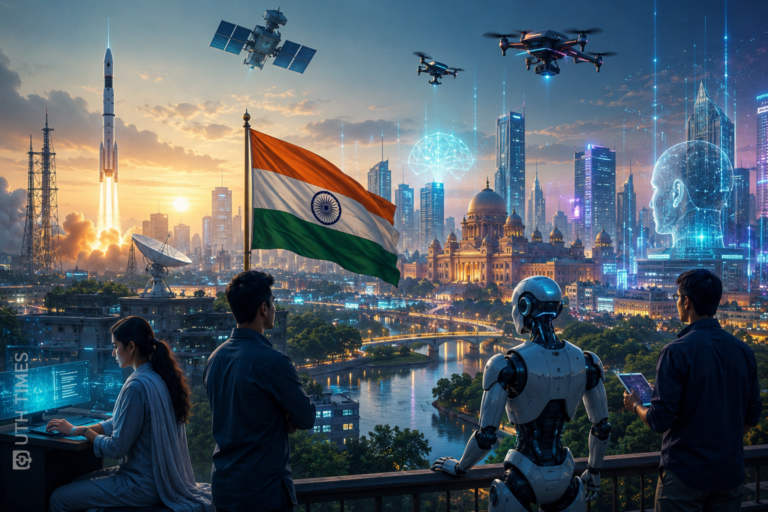
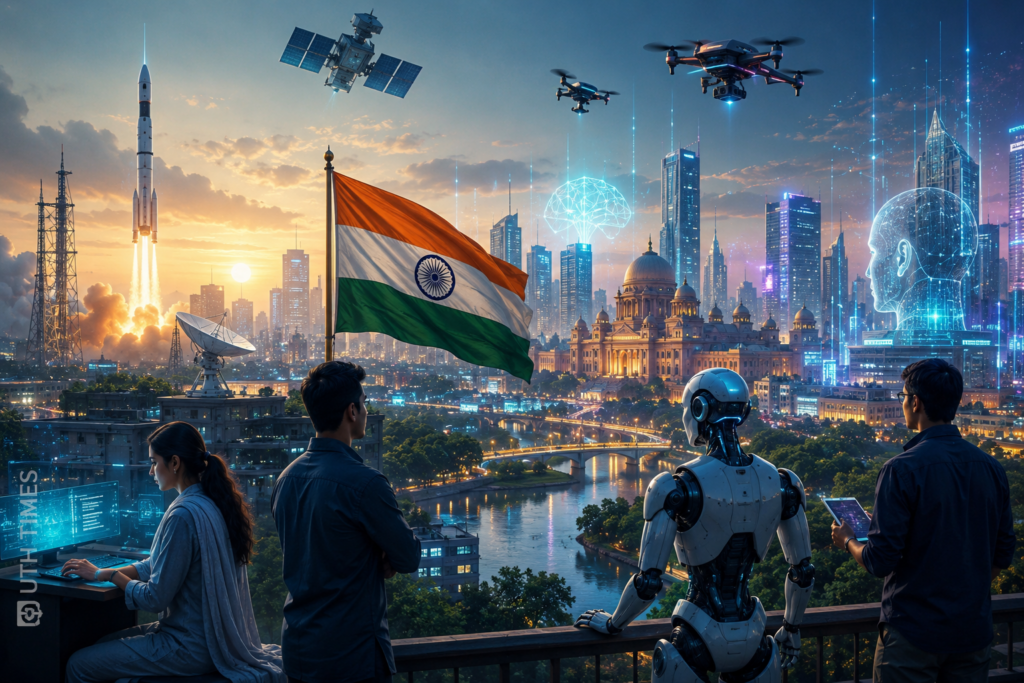
India is preparing to enter a new era of unmanned warfare with the construction of its first dedicated drone airbase in Meerut, Uttar Pradesh. Once operational, India will join a select group of nations possessing specialized drone air stations — a major milestone in the country’s military modernization and technological self-reliance.

Strategic Shift Toward Drone-Centric Warfare

Modern conflicts have proven that drones are no longer support tools — they are core combat assets. India’s upcoming drone airbase represents a transition from conventional air operations to a networked unmanned warfare architecture.

🔹 Designed exclusively for Unmanned Aerial Vehicles (UAVs)

🔹 Dedicated launch, recovery, and maintenance infrastructure

🔹 Integration with satellite and AI-based control systems

🔹 Continuous surveillance and rapid strike capability

🔹 Reduced dependence on manned aircraft for risky missions

Unlike conventional airbases, the Meerut facility will operate as a centralized drone command ecosystem, allowing simultaneous deployment of surveillance drones, loitering munitions, and armed UAVs.

Why Meerut Was Chosen

Meerut’s strategic location in western Uttar Pradesh provides direct operational advantages for both defense preparedness and rapid deployment.

🔹 Close proximity to India’s western borders

🔹 Quick reach to northern and central sectors

🔹 Strong road and rail connectivity

🔹 Existing military infrastructure nearby

🔹 Ideal terrain for UAV testing and operations

The location enables rapid-response drone missions, allowing the armed forces to monitor sensitive zones and respond within minutes rather than hours.

What Makes This Airbase Unique

The Meerut drone station will not be a conventional military facility. It is being planned as a high-tech unmanned aviation hub.

🚀 Advanced ground control stations with encrypted communications

🚀 AI-assisted mission planning and targeting systems

🚀 Dedicated drone repair and manufacturing support units

🚀 Autonomous flight testing corridors

🚀 Real-time data transmission to command centers

Once operational, India will reportedly become the fifth country globally to operate a dedicated drone air station, placing it among the leaders in unmanned defense technology.

This infrastructure will also support indigenous drone programs under Atmanirbhar Bharat, strengthening India’s domestic defense industry.

Future Implications for India’s Military

The drone airbase could reshape India’s defense doctrine by shifting toward persistent surveillance and precision strikes.

⚡ Faster intelligence gathering

⚡ Lower operational costs

⚡ Minimal risk to human pilots

⚡ Round-the-clock border monitoring

⚡ Improved counter-terror operations

The facility is expected to become a template for future drone bases across India.

The Meerut drone airbase signals India’s arrival into the age of autonomous military power. As unmanned systems redefine global warfare, this facility could become the backbone of India’s future air dominance strategy.

China’s 100-Year Nuclear Battery: Powering the Future in a Coin

0

China has unveiled a revolutionary coin-sized nuclear battery capable of generating electricity for up to 100 years without recharging. This breakthrough could transform everything from medical implants to deep-space missions by providing an ultra-long-lasting, maintenance-free power source.

The Technology Behind the 100-Year Battery

Unlike conventional lithium-ion batteries that rely on chemical reactions, this nuclear battery uses radioactive isotope decay to produce continuous electricity.

⚛️ How It Works

🔹 Uses radioactive isotopes that release energy slowly over decades

🔹 Converts radiation into electricity through semiconductor layers

🔹 No charging required for its entire lifespan

🔹 Stable energy output for nearly a century

🔹 Extremely compact — about the size of a coin

The battery is based on betavoltaic technology, where electrons released during radioactive decay are captured and converted into electrical current. This method ensures steady and predictable energy generation, unlike traditional batteries that degrade over time.

Engineers designed the battery to remain operational in extreme temperatures and harsh environments, making it ideal for aerospace and defense use.

Why This Breakthrough Matters

China’s nuclear battery represents a major step toward permanent micro-power systems that could eliminate battery replacement entirely.

🚀 Potential Applications

🔹 Medical devices like pacemakers lasting a lifetime

🔹 Remote sensors in oceans and deserts

🔹 Military surveillance equipment

🔹 Space probes and satellites

🔹 AI-powered microelectronics

🔹 Internet-of-Things devices

Devices powered by such batteries could operate for decades without maintenance — a massive advantage in inaccessible environments such as deep oceans or outer space.

The battery could especially benefit long-duration space missions, where replacing or recharging batteries is nearly impossible.

Engineering and Safety Innovations

China’s engineers claim the nuclear battery is safe for civilian use due to its low radiation levels and secure containment.

🛡️ Safety Features

🔹 Radiation fully sealed inside protective layers

🔹 No risk of leakage under normal conditions

🔹 Resistant to puncture and corrosion

🔹 Designed to avoid thermal runaway

🔹 Non-flammable and chemically stable

Unlike lithium batteries, nuclear batteries cannot explode or catch fire, making them safer in certain applications.

Global Technology Race Begins

China’s announcement signals the start of a new energy race focused on ultra-long-life power systems.

🌍 Strategic Implications

🔹 Reduced dependence on battery supply chains

🔹 Technological leadership in micro-energy systems

🔹 Military and aerospace advantages

🔹 Expansion of autonomous technologies

🔹 New industrial ecosystem

If successfully commercialized, nuclear micro-batteries could redefine how small electronic devices are powered worldwide.

The coin-sized nuclear battery represents a glimpse into a future where devices run for decades without interruption. If China succeeds in scaling the technology, the idea of charging everyday electronics could one day become obsolete.

India’s First Indigenous Marine Engine Set for 2028

0

India is preparing to enter a new era of maritime self-reliance. Kirloskar Oil Engines has announced that India’s first fully indigenous marine engine will be ready for delivery by April 2028, marking a major milestone in the country’s industrial and naval capability.

This project represents more than a technological achievement — it signals India’s determination to reduce dependence on imported propulsion systems and strengthen strategic autonomy at sea.

A Breakthrough in Indigenous Engineering

For decades, India has relied heavily on foreign suppliers for marine propulsion systems used in naval vessels, commercial ships, and offshore platforms. The upcoming indigenous marine engine will change this equation.

🚢 Core Highlights

🔹 Fully designed and manufactured in India

🔹 Built to meet global marine certification standards

🔹 Suitable for naval and commercial vessels

🔹 High fuel efficiency and optimized performance

🔹 Designed for long operational life in harsh marine environments

Kirloskar Oil Engines aims to produce a high-performance diesel marine engine capable of supporting a wide range of vessels including patrol boats, cargo ships, and coastal defense platforms.

Unlike earlier licensed manufacturing efforts, this engine will be entirely Indian-designed, ensuring full control over intellectual property and future upgrades.

Strategic Importance for India

Marine engines are among the most critical components of any vessel. Dependence on imports has historically created vulnerabilities in supply chains and defense preparedness.

⚓ Why This Matters

🔹 Reduces dependence on European and East Asian suppliers

🔹 Strengthens naval self-reliance under Make in India

🔹 Supports domestic shipbuilding industry

🔹 Enhances export potential for Indian vessels

🔹 Improves maintenance and spare-parts availability

This initiative aligns with India’s broader push for defense and industrial indigenization, ensuring that critical technologies remain under national control.

Experts believe indigenous propulsion technology will significantly strengthen India’s maritime security in the Indian Ocean Region.

Engineering Challenges and Innovation

Developing a marine engine domestically is an extremely complex task requiring precision engineering and advanced testing.

⚙️ Development Focus Areas

🔹 High torque output for heavy vessels

🔹 Corrosion-resistant materials

🔹 Low vibration and noise levels

🔹 Compliance with emission norms

🔹 Advanced cooling systems

Kirloskar engineers are working on a design optimized for tropical and high-salinity environments, conditions where imported engines often require modifications.

The project also involves collaboration with shipbuilders and certification agencies to ensure seamless integration into future vessels.

Future of India’s Maritime Industry

The indigenous marine engine could become a cornerstone for India’s maritime manufacturing ecosystem.

🌊 Long-Term Vision

🔹 Indigenous propulsion ecosystem

🔹 Boost to shipbuilding sector

🔹 Reduced lifecycle costs

🔹 Export-ready marine technology

🔹 Strategic maritime independence

If successful, India could join the small group of nations capable of designing and producing complete marine propulsion systems domestically.

The 2028 delivery timeline represents a decisive step toward maritime technological sovereignty. India is not just building an engine — it is building the foundation of an independent maritime future.

Gayatri Mantra: The Science of Inner Awakening

The Gayatri Mantra is not merely a sacred chant — it is a sophisticated spiritual technology encoded in sound. Ancient seers understood that consciousness responds to vibration. The mantra was designed as a precise sequence of sonic frequencies capable of harmonizing the human nervous system with universal intelligence.

This is why the Gayatri Mantra is often called the “Mantra of Illumined Consciousness.”

🕉️ Sonic Blueprint of Human Consciousness

The Gayatri Mantra contains 24 syllables, each believed to stimulate subtle energy channels within the body. In yogic understanding, sound vibrations influence the nāḍīs (energy pathways) and awaken dormant awareness.

🔹 The vibration begins at the navel — the center of life force

🔹 It rises through the heart — the seat of emotion and compassion

🔹 It stabilizes in the throat — the center of expression

🔹 It culminates in the brow — the center of intuition

Ancient Rishis recognized that structured sound can reorganize mental patterns, similar to how resonance shapes physical matter. Chanting in rhythmic breathing synchronizes the brain’s electrical activity, producing clarity and calm.

Gayatri is therefore considered a neuro-spiritual alignment process, not just a prayer.

⚡ Syllables and Energy Activation

Each segment of the mantra corresponds symbolically to levels of awareness:

🔸 Om – The primordial vibration representing universal consciousness

🔸 Bhur – Awakening physical awareness

🔸 Bhuvah – Refining mental energy

🔸 Swaha – Expanding subtle consciousness

🔸 Tat Savitur – Aligning with cosmic intelligence

🔸 Varenyam Bhargo – Purifying perception

🔸 Devasya Dhimahi – Activating higher intellect

🔸 Dhiyo Yo Nah Prachodayat – Illumination of inner wisdom

This layered structure turns the mantra into a progressive meditation, guiding awareness from the material world toward higher cognition.

🧠 Breath, Brainwaves and Vibration

Modern studies on mantra meditation suggest rhythmic chanting can regulate the autonomic nervous system and reduce mental noise.

✨ Slow repetition stabilizes breathing patterns
✨ Vibrations stimulate vagus nerve responses
✨ Mind enters alpha and theta brainwave states
✨ Emotional reactivity decreases

Ancient practitioners described this state as “Medha Shakti” — awakened intelligence.

Gayatri chanting was traditionally done at sunrise because circadian rhythms make the brain more receptive to meditative states at dawn.

🔱 Scientific Spirituality of Sanātana Dharma

Sanātana Dharma views spirituality as experiential science rather than belief.

🔹 Sound is treated as measurable vibration

🔹 Consciousness is treated as observable awareness

🔹 Breath is treated as a regulating mechanism

🔹 Meditation is treated as a method of inner research

The Gayatri Mantra reflects a civilization that explored the physics of consciousness thousands of years ago.

Chanted with awareness, Gayatri becomes more than sound — it becomes a pathway from thought to illumination.

It does not change the world outside first — it transforms the universe within.

The Age of Robotic Soldiers Has Begun 

0

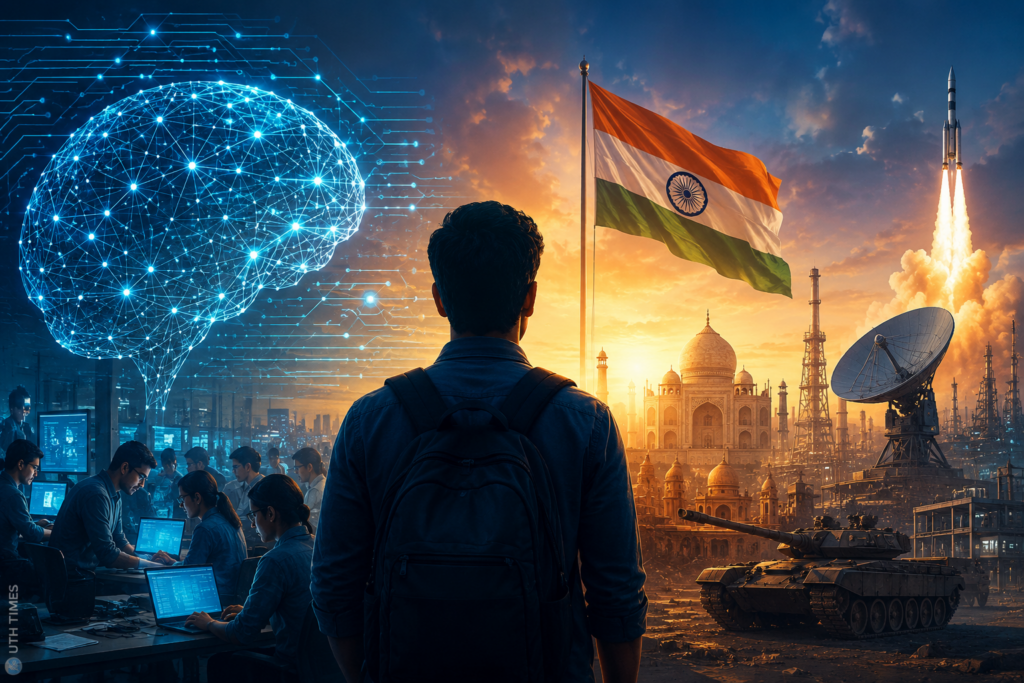
Artificial Intelligence is rapidly reshaping the battlefield, and according to former DRDO chief Dr. G. Satheesh Reddy, robotic soldiers may soon become a reality. Future wars will not just be fought by humans — intelligent machines will fight alongside them, changing the very definition of military power.

This transformation is not science fiction anymore; it is a technological race already underway.

The Rise of Autonomous Combat Systems

Modern militaries are moving toward AI-powered combat platforms that can operate with minimal human intervention. These robotic soldiers are expected to perform missions that are too dangerous or complex for human troops.

Future battlefield robots may include:

🔹 Autonomous ground soldiers

• AI-powered robots capable of patrol, surveillance, and combat support

• Equipped with sensors, night vision, and target recognition systems

• Able to navigate difficult terrains without human guidance

🔹 AI-enabled decision systems

• Algorithms that analyze battlefield data in real time

• Faster threat identification than human soldiers

• Instant tactical recommendations

🔹 Human-machine teaming

• Robots assisting soldiers instead of replacing them

• AI acting as a “digital wingman” on land and air missions

• Reduced human casualties in high-risk operations

Unlike traditional machines, these systems will learn and adapt continuously.

How AI Will Transform Warfare

Artificial Intelligence is expected to redefine military strategy and operations.

⚙️ Speed Beyond Human Capability

• AI can process thousands of battlefield inputs within seconds

• Real-time tactical adjustments

• Faster response during combat

🛰 Persistent Surveillance

• 24/7 monitoring through autonomous systems

• Drone swarms and robotic scouts

• Continuous intelligence gathering

🧠 Precision Combat

• Smart targeting reduces collateral damage

• Advanced recognition distinguishes friend from foe

• Improved mission success rates

Future wars may be decided by algorithms as much as by armies.

India’s Emerging Robotic Warfare Vision

India is steadily investing in AI-driven defense technologies aligned with this vision.

🚀 Key Developments

🔸 AI-enabled unmanned ground vehicles for border patrol

🔸 Autonomous surveillance drones for high-altitude regions

🔸 Smart sensors integrated into combat networks

🔸 Indigenous AI warfare research programs

India aims to combine technological self-reliance with next-generation warfare capability.

Ethical and Strategic Challenges

Despite their advantages, robotic soldiers raise critical concerns.

⚠️ Major Questions

🔹 Who controls lethal AI decisions?

🔹 Can machines be trusted in combat situations?

🔹 Risks of cyber-attacks on autonomous weapons

🔹 Possibility of uncontrolled escalation

Military experts believe human oversight will remain essential.

Robotic soldiers will not replace humans completely, but they will become indispensable partners in future conflicts. Nations that master AI-driven warfare will dominate the strategic landscape.

The era of intelligent machines on the battlefield has already begun — and the soldier of the future may not be human.

India Extends Tarapur-1 Life with Indigenous Nuclear Technology 🇮🇳⚡

0

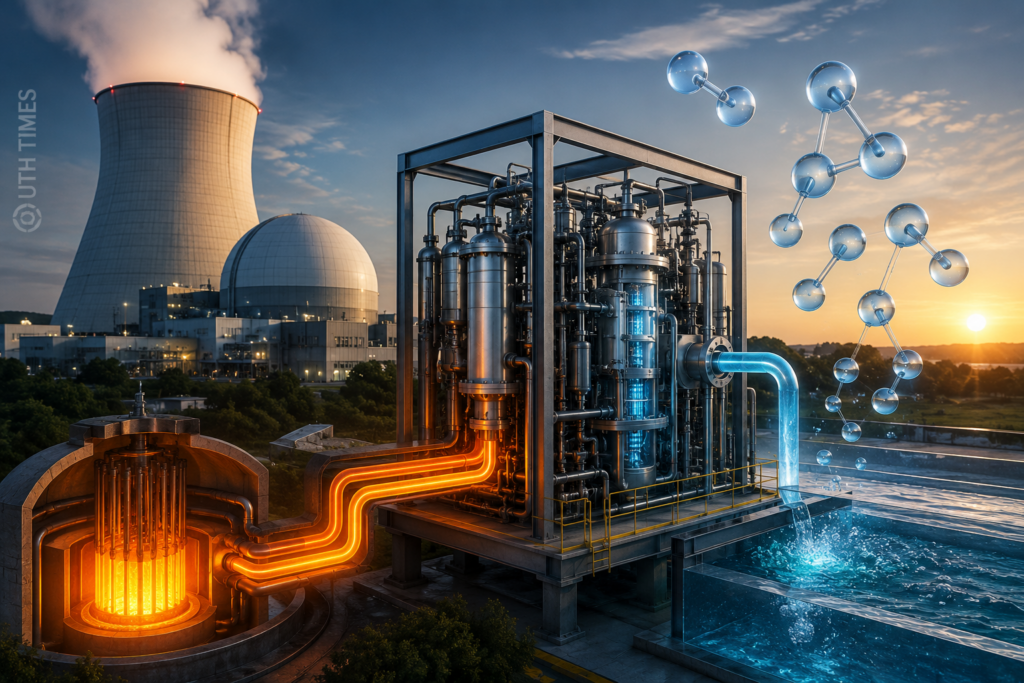
India has achieved a historic milestone by successfully extending the operational life of Tarapur Atomic Power Station Unit-1 (TAPS-1) through fully indigenous nuclear engineering. The reactor has now returned to the grid after a comprehensive modernization program — marking a decisive step toward nuclear self-reliance and long-term energy security.

India’s First Fully Indigenous Reactor Life Extension

Tarapur-1, commissioned in 1969, is one of Asia’s oldest operating nuclear reactors. Instead of retiring the aging facility, Indian engineers carried out a complete life extension and safety overhaul without foreign technical assistance.

Key Achievements

🔹 Full replacement and refurbishment of critical reactor systems

🔹 Indigenous design validation and safety upgrades

🔹 Structural reinforcement for extended operational life

🔹 Advanced instrumentation and control modernization

🔹 Compliance with latest nuclear safety standards

This achievement places India among a very small group of nations capable of extending reactor lifetimes through domestic expertise alone, making it the first country in Asia to complete such a project independently.

Engineering Complexity Behind the Upgrade

Extending the life of a nuclear reactor is far more complicated than routine maintenance. It requires deep knowledge of reactor physics, metallurgy, radiation effects, and safety engineering.

⚙️ Reactor component ageing assessment and redesign

⚙️ Replacement of critical piping and coolant systems

⚙️ Modern digital control architecture installation

⚙️ Enhanced seismic and thermal safety margins

⚙️ Advanced radiation monitoring systems

Engineers had to work within extreme radiation environments while ensuring zero compromise on safety — demonstrating India’s end-to-end nuclear engineering capability.

The project also reduced dependence on imported nuclear technology, strengthening domestic capabilities across the entire nuclear supply chain.

Strategic Importance for India’s Energy Future

The successful life extension of Tarapur-1 signals a new era in India’s nuclear program.

⚡ Long-term baseload clean energy generation

⚡ Reduced need for costly new reactor construction

⚡ Strengthening of indigenous nuclear industry

⚡ Improved energy security

⚡ Lower carbon emissions

By extending the reactor’s lifespan, India gains decades of additional clean electricity, supporting the country’s growing energy demand without increasing fossil fuel dependence.

A Blueprint for Nuclear Self-Reliance

The Tarapur-1 project demonstrates that India can independently manage the entire lifecycle of nuclear reactors — from construction to modernization and long-term operation.

It represents more than a technical upgrade — it is proof that India’s nuclear sector is evolving into a self-sustaining technological ecosystem capable of powering the nation for decades.

Hyderabad’s Solar Footpath: A Walk into the Future

0

Hyderabad is quietly redesigning the idea of a simple footpath. In the upscale Filmnagar–Jubilee Hills corridor, the city has launched a model eco-friendly footpath that combines recycled plastic infrastructure with a solar-powered roof — transforming an everyday pedestrian space into a symbol of sustainable urban engineering.

This pilot project is not just about walking — it is about how future cities will function. 

A Smart Corridor Built from Waste

The eco-footpath stretches 1.5 km between Ramanaidu Studio and BVB Junction and is being developed at a cost of ₹1.68 crore. 

Instead of conventional concrete tiles, engineers are installing plastic paver blocks made from 65–70% recycled single-use plastic, including multilayer packaging and polyethylene waste. 

🔹 Diverts large volumes of plastic from landfills

🔹 Reduces demand for cement and natural resources

🔹 Compressive strength above 35 MPa, suitable for heavy pedestrian use 

🔹 Modular zig-zag design improves durability

Hyderabad generates thousands of tonnes of waste daily, with plastic forming a major share. By converting trash into infrastructure, the city is turning an environmental crisis into a civic resource. 

This footpath is not just eco-friendly — it is a circular economy in action.

Solar Roof: Energy Above Every Step

One of the most striking features is the 10 kWp solar canopy installed above the footpath. 

Solar Infrastructure Highlights

☀️ Grid-connected solar modules generate clean electricity

☀️ Elevated mounting structures provide shade for pedestrians

☀️ Automated cleaning and lightning protection systems 

☀️ Energy feeds into the city’s power network

The solar roof transforms the pathway into a micro power station, proving that public infrastructure can generate energy rather than consume it.

Designed for Everyone

The Filmnagar footpath is engineered with universal accessibility in mind.

Inclusive Features

🟡 Tactile pavers for visually impaired pedestrians

🟡 Guidance strips for safe navigation

🟡 Barrier-free walking zones 

This ensures the corridor works equally well for students, professionals, elderly citizens, and differently-abled pedestrians.

A Blueprint for Future Cities

The Filmnagar project is designed as a model footpath, meaning its success could influence infrastructure development across Hyderabad and other Indian cities. 

By merging waste recycling, renewable energy, and pedestrian-friendly design, Hyderabad is demonstrating how even small urban spaces can become climate-smart assets.

A simple footpath is becoming a statement — the future of cities may begin where people walk.

India Eyes Entry Into 6th-Generation Fighter Program With France

0

India is exploring a strategic partnership with France to participate in the Future Combat Air System (FCAS) — a sixth-generation fighter ecosystem that could redefine aerial warfare. If realized, the collaboration would place India among the few nations shaping the future of combat aviation rather than merely purchasing it.

This move signals India’s ambition to transition from a buyer of advanced aircraft to a co-designer of next-generation air combat systems.

Why FCAS Matters for India

The FCAS program goes far beyond building a fighter jet. It is an integrated air combat ecosystem expected to dominate skies after 2040.

Key technological pillars include:

🔹 Stealth Dominance

  • Advanced radar-evading designs beyond current fifth-generation aircraft
  • Adaptive stealth coatings and thermal signature control
  • Reduced detectability against future AI-driven radar networks

🔹 Combat Cloud Warfare

  • Real-time battlefield data sharing between aircraft, satellites, and ground forces
  • AI-assisted decision-making systems
  • Ultra-secure encrypted communication networks

🔹 Drone-Teaming Capability

  • Fighters controlling swarms of unmanned “loyal wingman” drones
  • Autonomous reconnaissance and strike missions
  • Reduced pilot risk in high-threat environments

🔹 Artificial Intelligence Integration

  • Predictive threat analysis
  • Automated mission planning
  • AI-enhanced targeting precision

Participation would give India early access to technologies that could otherwise take decades to develop independently.

Strategic Shift Toward France

France has emerged as India’s most trusted aerospace partner.

The potential FCAS cooperation builds on:

✈️ Rafale Industrial Cooperation

  • Technology transfer and local manufacturing experience
  • Deep operational familiarity within the Indian Air Force

⚙️ Engine Development Links

  • Safran collaboration on advanced fighter engines
  • Potential co-development of next-generation propulsion

🤝 Strategic Autonomy Alignment

  • France supports independent defense capabilities
  • Fewer export restrictions compared to other partners

This makes France a natural partner if Germany-France coordination inside FCAS slows or diverges.

FCAS vs AMCA: Complement or Competition?

India is already developing the Advanced Medium Combat Aircraft (AMCA) — a fifth-generation stealth fighter.

However, FCAS participation could accelerate India’s technological leap.

🚀 Parallel Development Advantages

  • AMCA provides indigenous design capability
  • FCAS offers access to sixth-generation architecture
  • Shared technologies reduce development risks

Rather than replacing AMCA, FCAS could act as a technology accelerator, helping India bridge the gap between fifth- and sixth-generation aviation.

A Seat at the Global Air Combat Table

Joining FCAS would elevate India into an elite aerospace club alongside Europe and the United States.

It would mean:

🌍 Co-shaping future air warfare doctrine

🔬 Access to classified next-generation research

🛠 Strengthening India’s aerospace industry

🛡 Long-term strategic independence

If negotiations progress, India may move from being a customer of advanced fighters to a founding architect of sixth-generation air power — a transformation that could define its military aviation for decades.

Japan City & Singapore City: YEIDA’s Global Vision for Yamuna Expressway

0

The Yamuna Expressway is set to transform into an international investment corridor as the Yamuna Expressway Industrial Development Authority (YEIDA) has proposed the creation of Japan City and Singapore City in Uttar Pradesh. The plan aims to bring world-class urban design, advanced industries, and global investment directly into India’s fastest-growing economic belt.

If approved by the Uttar Pradesh government, this project could redefine the Yamuna Expressway region as India’s first truly global industrial-urban ecosystem.

🌏 A New Global Corridor in Uttar Pradesh

YEIDA’s proposal focuses on developing country-specific urban clusters inspired by Japanese and Singaporean planning models.

🔹 Japan City

  • Planned as a high-tech manufacturing hub
  • Expected focus on automobiles, electronics, robotics, and precision engineering
  • Designed with Japanese urban efficiency and industrial discipline
  • Likely to attract Japanese companies already investing in India

🔹 Singapore City

  • Planned as a smart urban and financial district
  • Inspired by Singapore’s clean, efficient, technology-driven urban model
  • Focus on IT parks, fintech hubs, corporate offices, and high-end residential zones
  • Expected to include smart transport and digital infrastructure

Unlike traditional industrial areas, these cities are envisioned as integrated economic ecosystems combining business districts, housing, education hubs, and social infrastructure.

🚄 Strategic Location Advantage

The proposed cities will come up along the Yamuna Expressway, one of North India’s fastest-developing infrastructure corridors.

📍 Key Advantages:

🔸 Close to Noida International Airport (Jewar Airport)

🔸 Direct connectivity to Delhi-NCR

🔸 Access to Eastern and Western Freight Corridors

🔸 Near upcoming logistics hubs and industrial clusters

This location could make the region a gateway for global companies entering North India.

🏗️ Beyond Real Estate: A Strategic Economic Move

This proposal is not just about urban expansion — it is a strategic attempt to attract foreign direct investment (FDI).

💼 Expected Impacts:

🔹 Creation of thousands of high-skilled jobs

🔹 Increase in global manufacturing presence

🔹 Growth of export-oriented industries

🔹 Rise in property and infrastructure value

YEIDA aims to position the Yamuna Expressway as a global business destination comparable to Asian economic zones.

🌱 Smart and Sustainable Design

Both cities are expected to incorporate next-generation planning.

🌿 Proposed Features:

🔹 Smart traffic systems

🔹 Green buildings

🔹 Renewable energy integration

🔹 Efficient water management

🔹 High-speed digital connectivity

These features align with India’s goal of building future-ready smart cities.

If approved and executed successfully, Japan City and Singapore City could turn the Yamuna Expressway into India’s most internationally integrated growth corridor, blending global urban design with Indian economic ambition.

This proposal signals a shift — from building cities to building global ecosystems inside India.

China’s Stem-Cell Diabetes Cure: The Patient Who Stopped Insulin

0

For decades, diabetes meant lifelong insulin injections and constant monitoring. A recent stem-cell experiment in Shanghai has begun reshaping that expectation. One patient with long-standing Type 2 diabetes reportedly stopped insulin after receiving lab-grown insulin-producing cells derived from his own stem cells — a development that signals real biological repair rather than temporary control.

🧬 How Scientists Rebuilt Insulin Production

Researchers developed insulin-secreting beta-like cells from the patient’s own stem cells and transplanted them into his body. Instead of controlling blood sugar externally, this therapy aims to restore the pancreas’s natural function.

Key elements of the procedure:

🔬 Patient-Derived Stem Cells

Scientists reprogrammed the patient’s cells into pluripotent stem cells, minimizing immune rejection risks and avoiding donor dependence.

🧪 Engineered Beta Cells

The stem cells were converted into functional insulin-producing cells designed to respond dynamically to glucose levels.

💉 Precision Transplantation

The regenerated cells were implanted into a region with strong blood supply so they could detect glucose and release insulin naturally.

📊 Medical Monitoring

Detailed blood tests and imaging showed stable glucose control without insulin injections — the strongest evidence that the cells were functioning like a biological pancreas.

This marks one of the clearest human demonstrations that beta-cell replacement therapy can move beyond laboratory experiments.

🌍 Why This Case Matters Worldwide

The Shanghai case represents a shift from managing diabetes to potentially repairing the underlying damage.

Its importance extends far beyond one patient:

🌍 Human Proof of Regeneration

Beta-cell therapies have shown promise in animals, but real human evidence has been limited.

💉 Reducing Lifetime Insulin Dependence

If replicated, future patients may rely less on daily injections and monitoring.

🧠 Personalized Regenerative Medicine

Using a patient’s own cells suggests safer and more individualized therapies.

🏥 A Blueprint for Future Treatments

The procedure creates a clinical pathway for larger trials and improved methods.

For millions living with diabetes, the idea that insulin-producing cells can be rebuilt is a major scientific shift.

⚠️ The Limits Scientists Emphasize

Despite the excitement, researchers stress that this is an early-stage clinical observation.

Key uncertainties remain:

🔍 Durability of the Cells

Scientists must determine whether the regenerated beta cells will function for many years.

🧬 Cost and Complexity

Personalized stem-cell therapy requires advanced laboratories and specialized expertise.

📈 Need for Larger Studies

A single successful patient cannot define a universal treatment.

⚕️ Different Diabetes Types

It is still unclear how well this method could work for Type 1 diabetes.

Scientific validation will require multi-patient clinical trials and long-term monitoring.

🔮 A Glimpse of Diabetes Treatment’s Future

The Shanghai study offers something rare in diabetes research — visible biological recovery instead of disease management. If future trials confirm these findings, diabetes care may shift from lifelong insulin therapy toward regenerative solutions.

For now, the result stands as a powerful signal that rebuilding insulin production in humans may no longer be a distant idea — but an emerging medical reality.