
Hyderabad is quietly redesigning the idea of a simple footpath. In the upscale Filmnagar–Jubilee Hills corridor, the city has launched a model eco-friendly footpath that combines recycled plastic infrastructure with a solar-powered roof — transforming an everyday pedestrian space into a symbol of sustainable urban engineering.
This pilot project is not just about walking — it is about how future cities will function.
A Smart Corridor Built from Waste
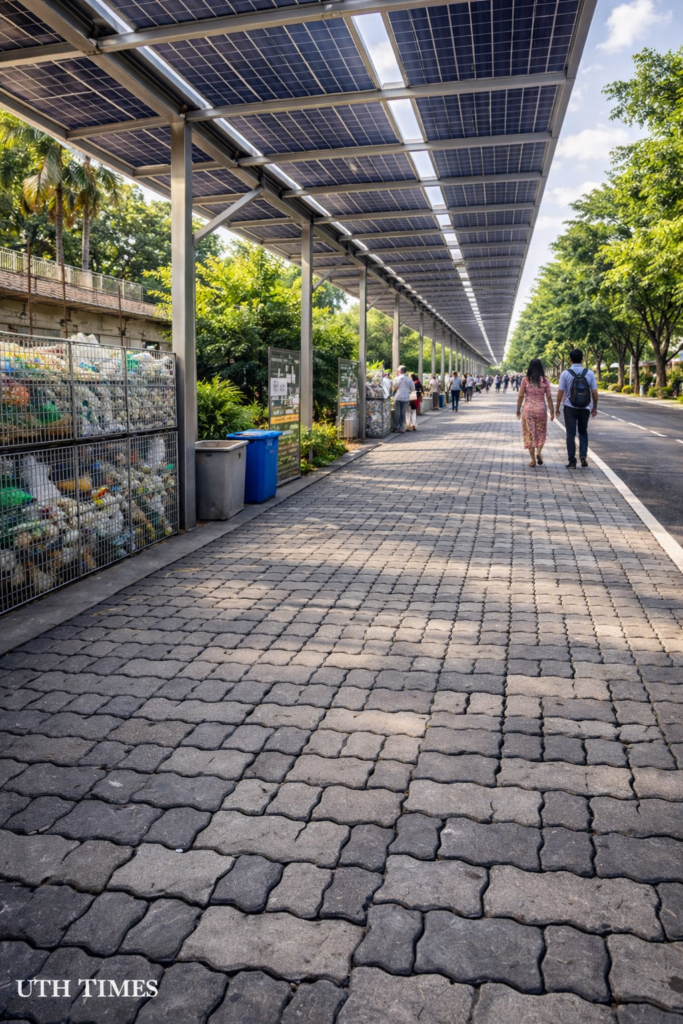
The eco-footpath stretches 1.5 km between Ramanaidu Studio and BVB Junction and is being developed at a cost of ₹1.68 crore.
Instead of conventional concrete tiles, engineers are installing plastic paver blocks made from 65–70% recycled single-use plastic, including multilayer packaging and polyethylene waste.
🔹 Diverts large volumes of plastic from landfills
🔹 Reduces demand for cement and natural resources
🔹 Compressive strength above 35 MPa, suitable for heavy pedestrian use
🔹 Modular zig-zag design improves durability
Hyderabad generates thousands of tonnes of waste daily, with plastic forming a major share. By converting trash into infrastructure, the city is turning an environmental crisis into a civic resource.
This footpath is not just eco-friendly — it is a circular economy in action.
Solar Roof: Energy Above Every Step
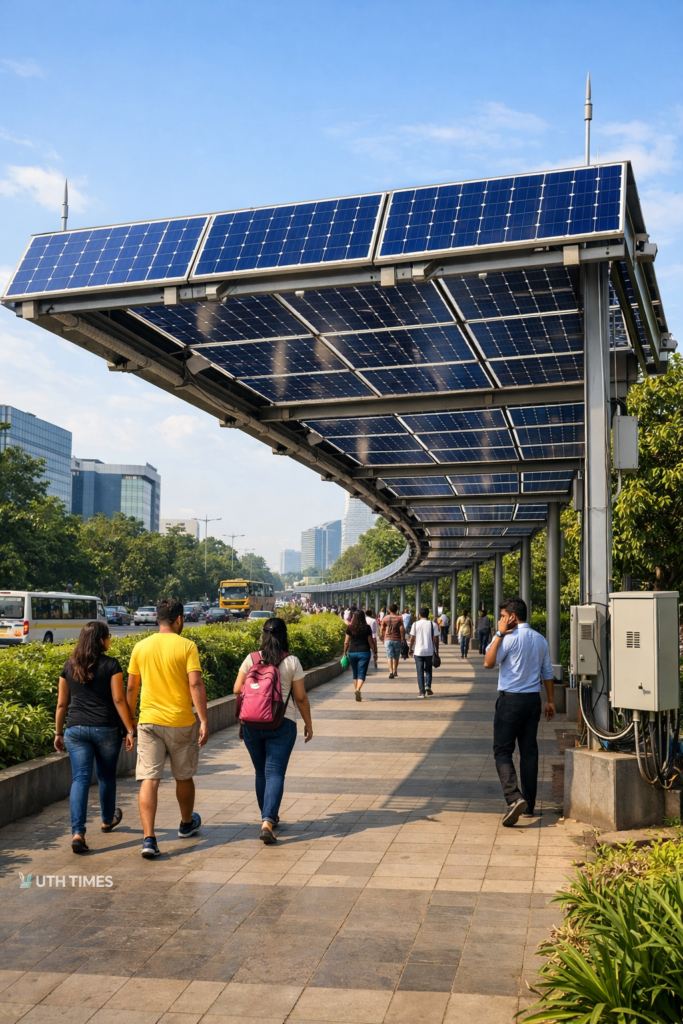
One of the most striking features is the 10 kWp solar canopy installed above the footpath.
Solar Infrastructure Highlights
☀️ Grid-connected solar modules generate clean electricity
☀️ Elevated mounting structures provide shade for pedestrians
☀️ Automated cleaning and lightning protection systems
☀️ Energy feeds into the city’s power network
The solar roof transforms the pathway into a micro power station, proving that public infrastructure can generate energy rather than consume it.
Designed for Everyone
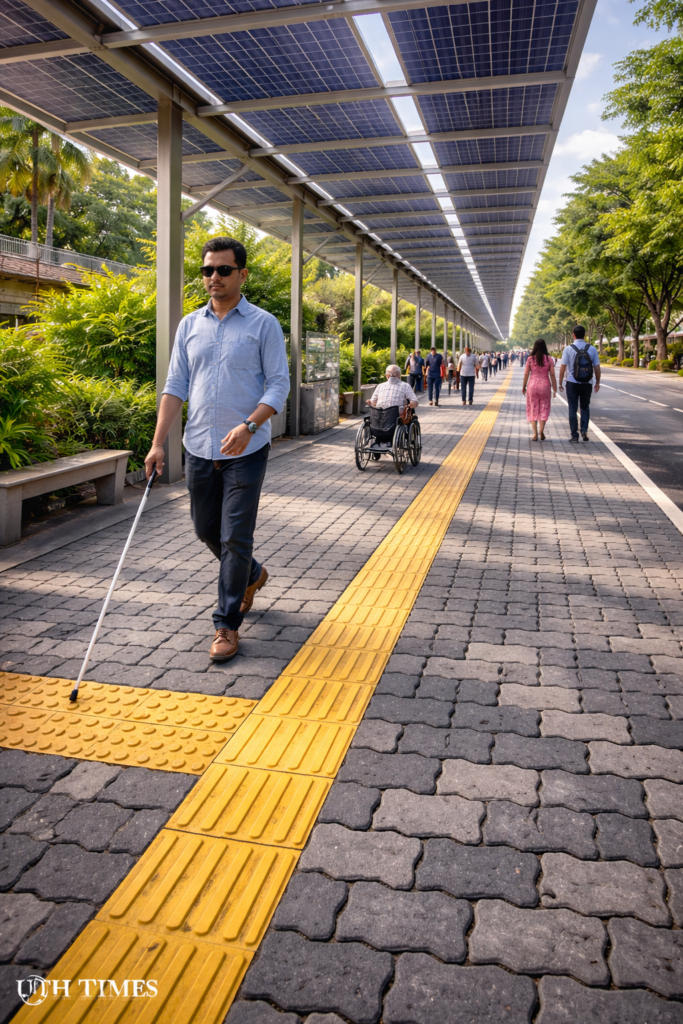
The Filmnagar footpath is engineered with universal accessibility in mind.
Inclusive Features
🟡 Tactile pavers for visually impaired pedestrians
🟡 Guidance strips for safe navigation
🟡 Barrier-free walking zones
This ensures the corridor works equally well for students, professionals, elderly citizens, and differently-abled pedestrians.
A Blueprint for Future Cities
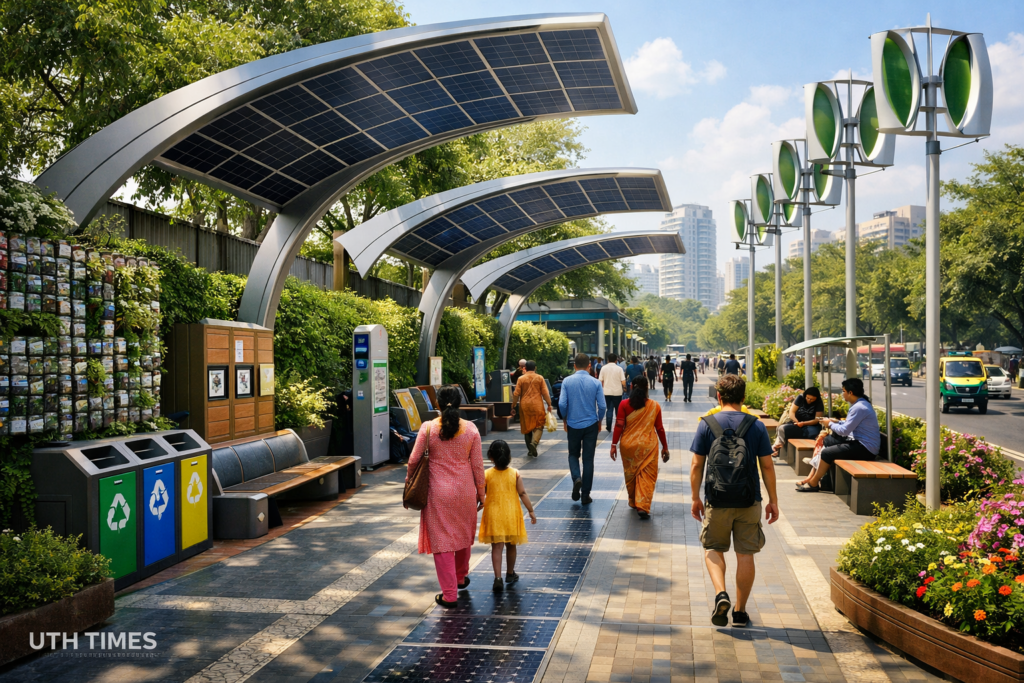
The Filmnagar project is designed as a model footpath, meaning its success could influence infrastructure development across Hyderabad and other Indian cities.
By merging waste recycling, renewable energy, and pedestrian-friendly design, Hyderabad is demonstrating how even small urban spaces can become climate-smart assets.
A simple footpath is becoming a statement — the future of cities may begin where people walk.

