
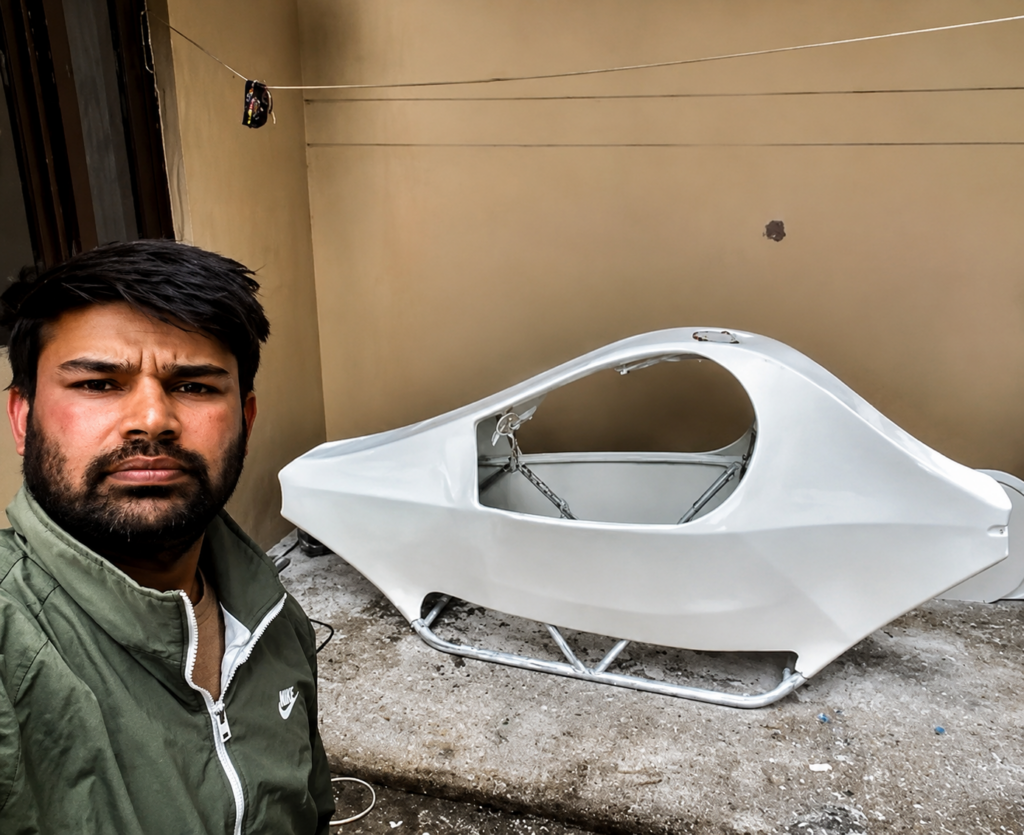
A small village in Almora has suddenly become part of a much bigger conversation about the future of mobility. Ravi Tamta, an innovator and entrepreneur from Kaflikhan, Uttarakhand, has attracted attention after test-flying a single-seater electric flying vehicle developed through his startup, Hapida Sky.
🚁 Who Is Ravi Tamta?

Ravi Tamta is a young entrepreneur based in Almora whose work has focused heavily on solving practical problems in hilly regions and village communities. His earlier innovations include a bamboo smart stick, mobile-charging shoes, a bamboo-processing machine and an electric-vehicle charging system. Hapida describes its broader mission as using science and technology to address challenges faced by people living in mountainous and rural areas.
What makes his latest project remarkable is not simply the fact that it flies—it is the problem he is attempting to solve: difficult terrain and long road journeys in the Himalayan region.
✈️ Meet HAPIDA SKYNeX
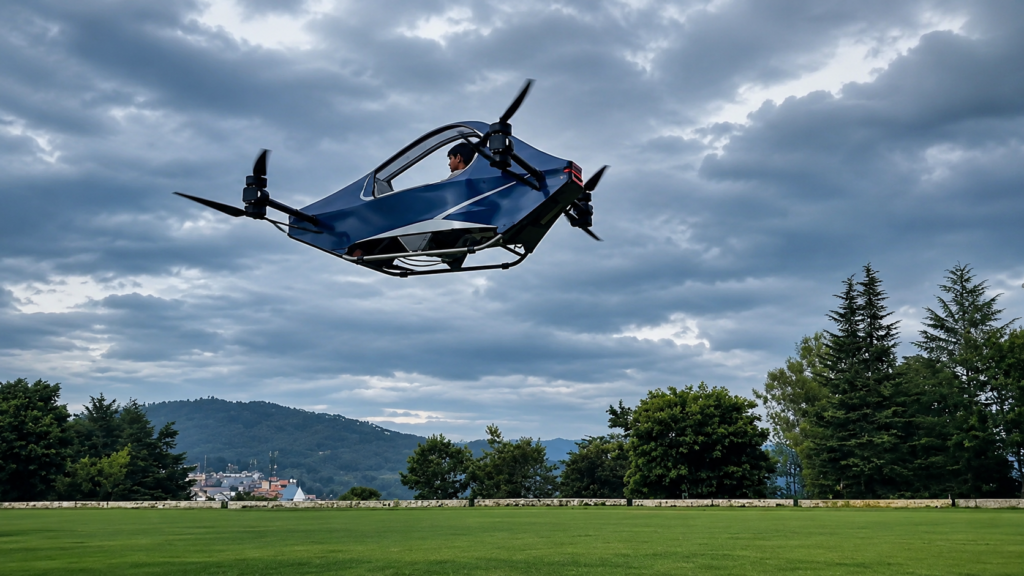
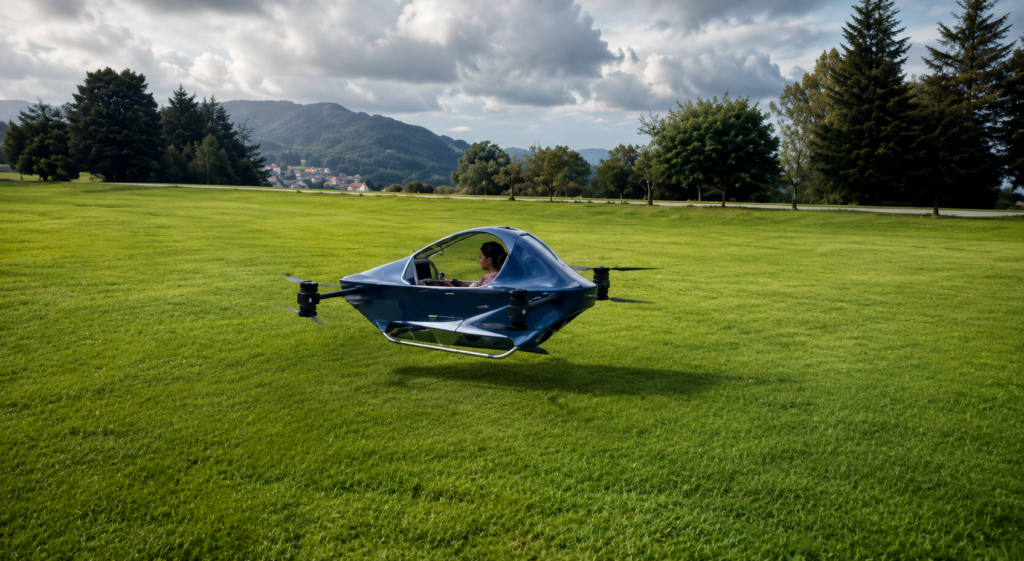
The vehicle is called HAPIDA SKYNeX Prototype. Reports describe it as a single-seater, electric personal flying vehicle based on modified and enhanced drone/multicopter technology. Its recent test flight in Almora showed the prototype lifting off the ground, bringing the concept of personal aerial mobility into the spotlight.
🔹 Single-seater configuration designed around personal mobility
🔹 Electric propulsion, pointing toward cleaner aerial transportation
🔹 Drone-derived technology, adapted into a human-carrying flying platform
🔹 Developed under Hapida Sky, a company based in Almora and incorporated in 2023.
⚙️ How Did He Make It Fly?
The basic engineering idea is surprisingly fascinating. Instead of relying on conventional aircraft wings, the prototype uses the principles of multirotor drones—multiple powered propellers generate the upward thrust required for vertical flight.
That architecture could be particularly interesting in mountainous areas because a vehicle capable of vertical take-off and landing does not necessarily require a conventional runway.
But there is an important distinction: SKYNeX is still a prototype, not a commercially certified flying car. It requires extensive development, testing, safety validation and regulatory approvals before it could become an everyday transport system.
🏔️ Why Uttarakhand Could Be the Perfect Testing Ground
For Himalayan communities, distance is not always measured in kilometres—it is measured in roads, slopes, bends and travel time.
Reports suggest a roughly 40-km road journey that can take around 90 minutes could theoretically be reduced to about 10 minutes by air if such technology eventually becomes practical.
That opens possibilities ranging from emergency connectivity and disaster response to tourism and remote-area transportation.
🇮🇳 From Village Innovation to Aerial Mobility
The real story behind Ravi Tamta’s flying vehicle is bigger than a viral video. It represents an increasingly important Indian innovation model: local problems inspiring unconventional engineering solutions.
SKYNeX is not yet the flying-car future—but it is a striking prototype showing what can happen when experimentation takes off from the mountains.
And perhaps, in Uttarakhand, the next road to innovation may literally be through the sky.

