
A remarkable step in regenerative medicine is bringing lab-grown replacement tissues closer to real-world transplantation.
🫁 A Windpipe Built for One Patient
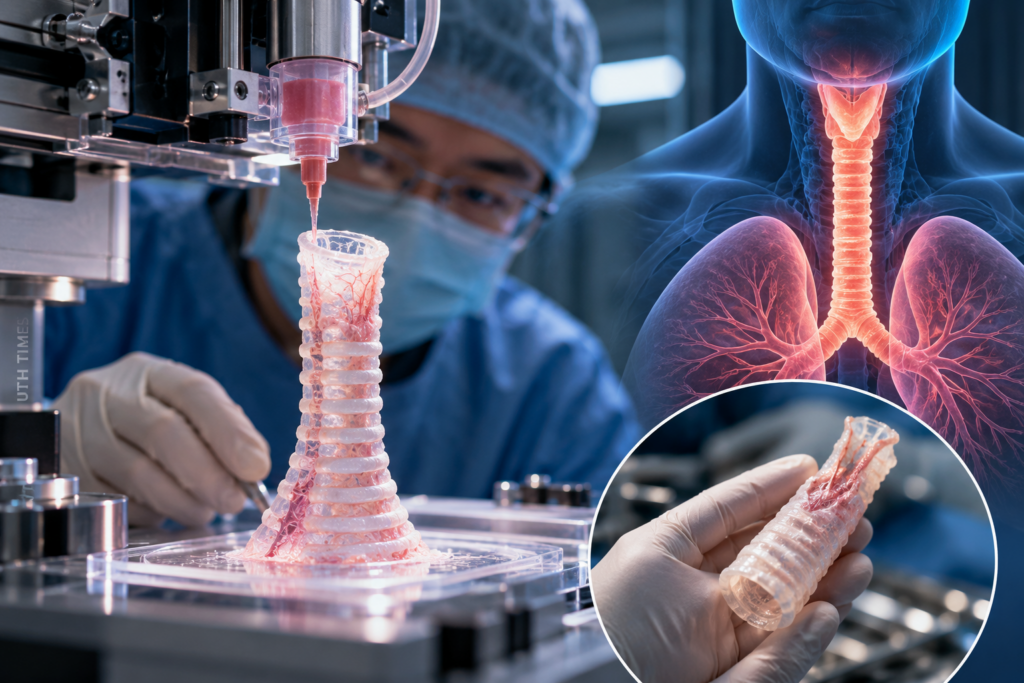
South Korean researchers have demonstrated the potential of 3D bioprinting to create a customised artificial trachea, the tube that carries air from the throat toward the lungs. The approach is designed around the individual patient rather than relying entirely on a conventional donor organ. South Korean research groups have developed patient-specific tracheal constructs using 3D printing, biodegradable scaffolds and living cells.
The significance is enormous: instead of simply implanting a manufactured tube, scientists are attempting to create a structure that can support tissue regeneration and integrate with the patient’s body.
🧬 The Patient’s Own Biology Becomes the Building Material
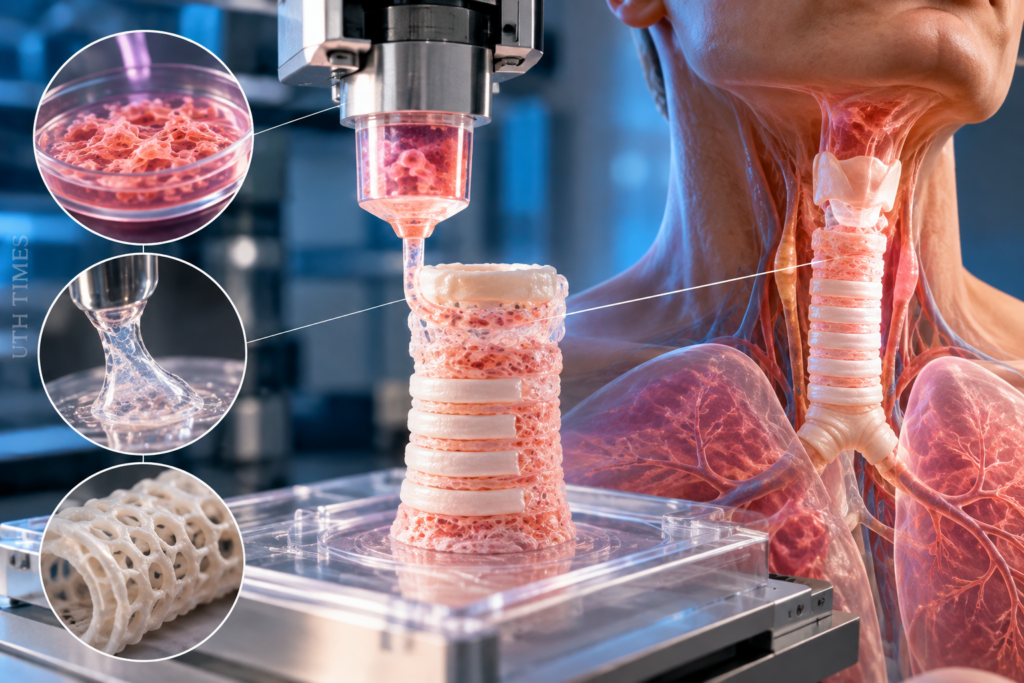
One of the most important ideas behind this technology is autologous cell-based regeneration—using cells originating from the patient.
🔹 Researchers can combine living cells with specially formulated bio-inks and a biodegradable polymer scaffold such as polycaprolactone (PCL).
🔹 The 3D printer deposits these materials layer by layer, creating a tubular structure designed to reproduce important features of the natural airway.
🔹 Research has focused on rebuilding both the protective respiratory lining and cartilage, two components essential for a functional trachea.
This is fundamentally different from simply manufacturing a plastic replacement. The long-term goal is for the implanted structure to become increasingly integrated with living tissue.
🚫 Why Avoiding Immune-Suppressing Drugs Matters
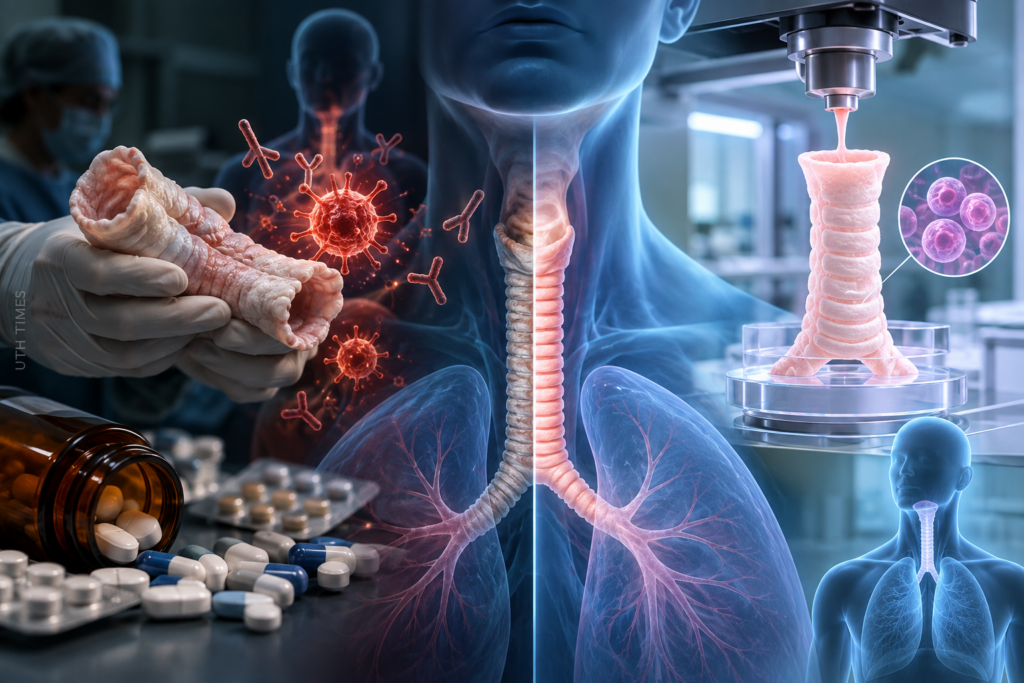
Traditional transplantation can involve a major biological problem: rejection. When transplanted tissue comes from another person, the recipient’s immune system may identify it as foreign.
That can require immunosuppressive medication, sometimes for extended periods, bringing its own risks.
A tracheal implant built substantially from a patient’s own cells offers a different strategy: make the replacement biologically familiar to the body from the beginning.
Reports on South Korea’s pioneering 3D-bioprinted tracheal transplantation have highlighted successful implantation without conventional long-term immunosuppression. However, this should be viewed as an emerging clinical technology—not evidence that rejection has been permanently solved for all future bioprinted organs.
🖨️ From Digital Scan to Living Structure
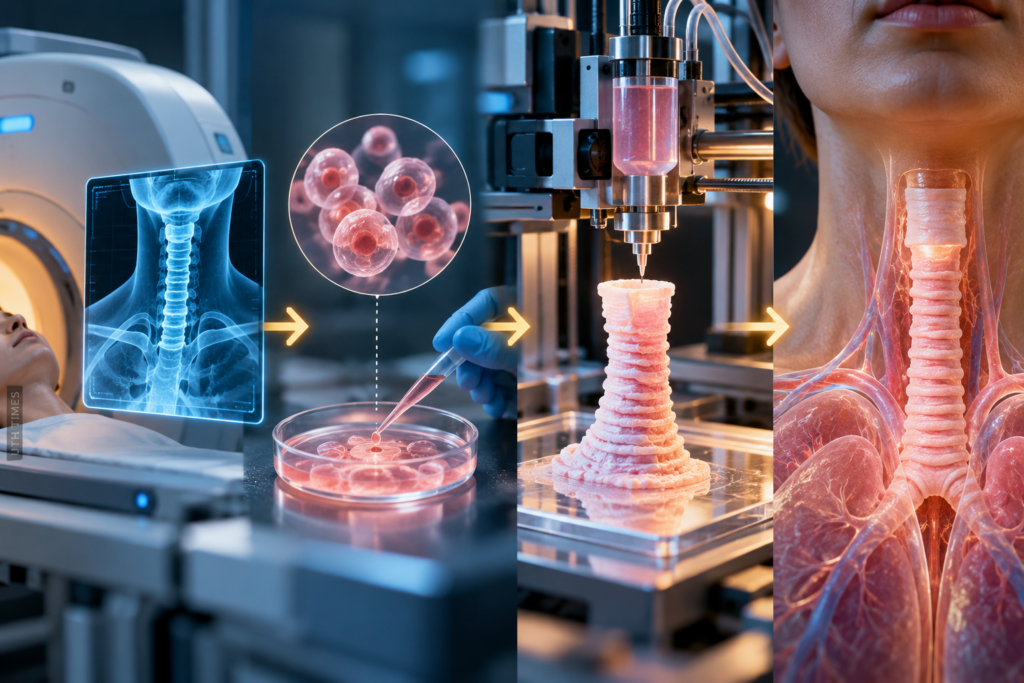
The concept resembles a futuristic manufacturing pipeline:
📌 Medical imaging → creates a detailed model of the patient’s anatomy.
🧬 Cell preparation → provides biological material for regeneration.
🖨️ 3D bioprinting → builds the customised tubular structure.
🌱 Tissue integration → the objective is for living tissue to regenerate around and within the construct.
South Korean researchers have already demonstrated sophisticated tracheal tissue-engineering approaches in laboratory and animal studies, including structures designed to encourage formation of respiratory epithelium and cartilage.
🌍 Could This Change Organ Replacement?
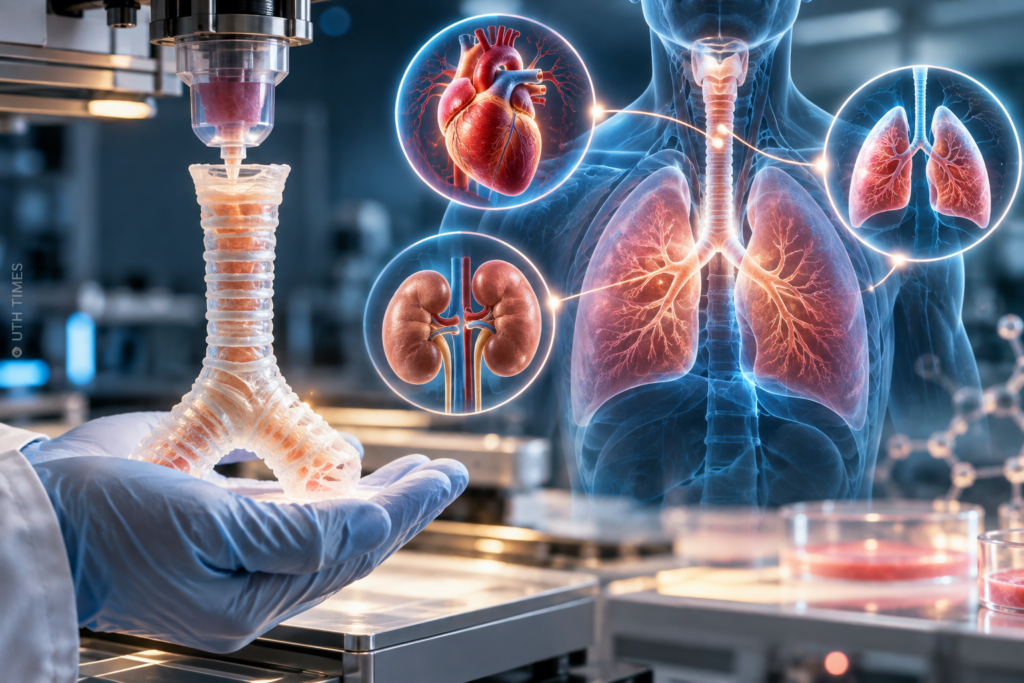
The windpipe may be only one chapter.
If researchers can reliably control shape, mechanical strength, blood supply, tissue maturation and long-term biological integration, similar principles could eventually influence the development of increasingly complex replacement tissues.
But major challenges remain. A successful tracheal implant does not mean that fully functional 3D-printed hearts, kidneys or lungs are immediately around the corner. Those organs require vastly more complex networks of blood vessels, nerves and specialised cells.
The real breakthrough is not simply printing an organ.
It is the possibility of manufacturing a replacement around the biology of the person who needs it.
From donor dependence to personalised tissue engineering, the technology points toward a future where medicine may increasingly build what the body has lost.

