
India’s semiconductor journey has reached another important milestone. Researchers at Indian Institute of Technology Delhi have developed what the institute describes as the country’s first working, demonstrable indigenously designed micro-GPU from a university—a compact graphics processor aimed at affordable embedded devices.
⚡ A Made-in-India Graphics Engine
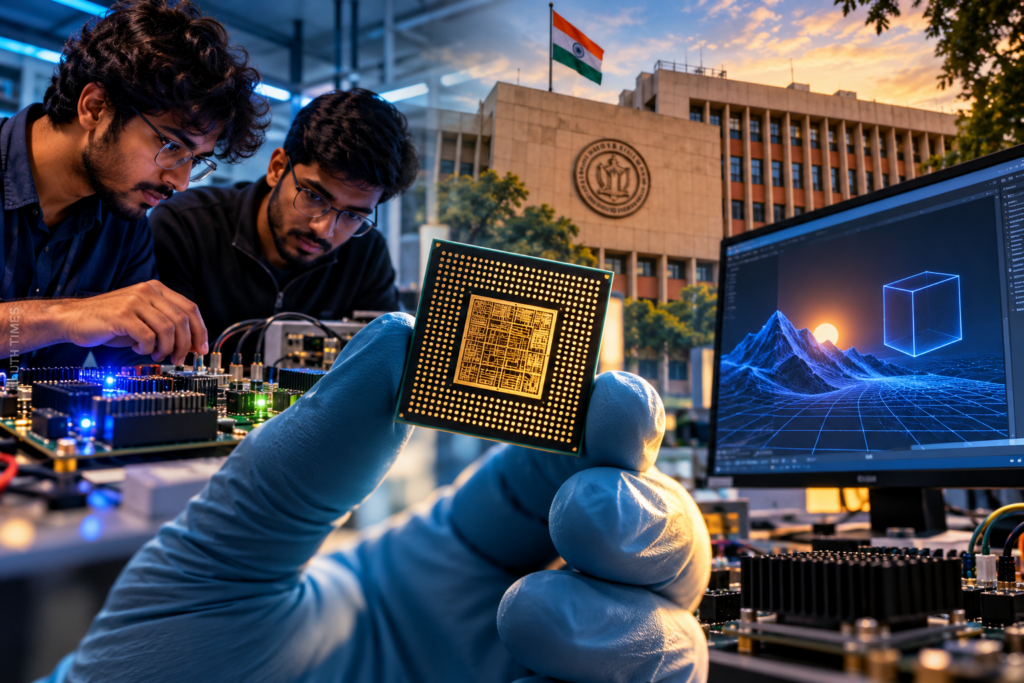
Unlike the powerful GPUs found in gaming PCs and AI data centres, IIT Delhi’s micro-GPU is designed for smaller, specialised systems that need basic graphics and display processing.
The project was led by M.Tech students Nammi Akash and M. Ravi Teja, under the guidance of professors Jayadeva and Kaushik Saha from IIT Delhi’s Electrical Engineering Department.
🔹 The team created a custom floating-point GPU engine entirely in Register Transfer Language (RTL).
🔹 The design was mapped onto a Spartan-7 Field Programmable Gate Array (FPGA) platform.
🔹 Researchers successfully demonstrated programmable graphics rendering, showing that the architecture can actually execute graphics-processing tasks rather than remaining only a theoretical design.
🖥️ Small GPU, Big Possibilities
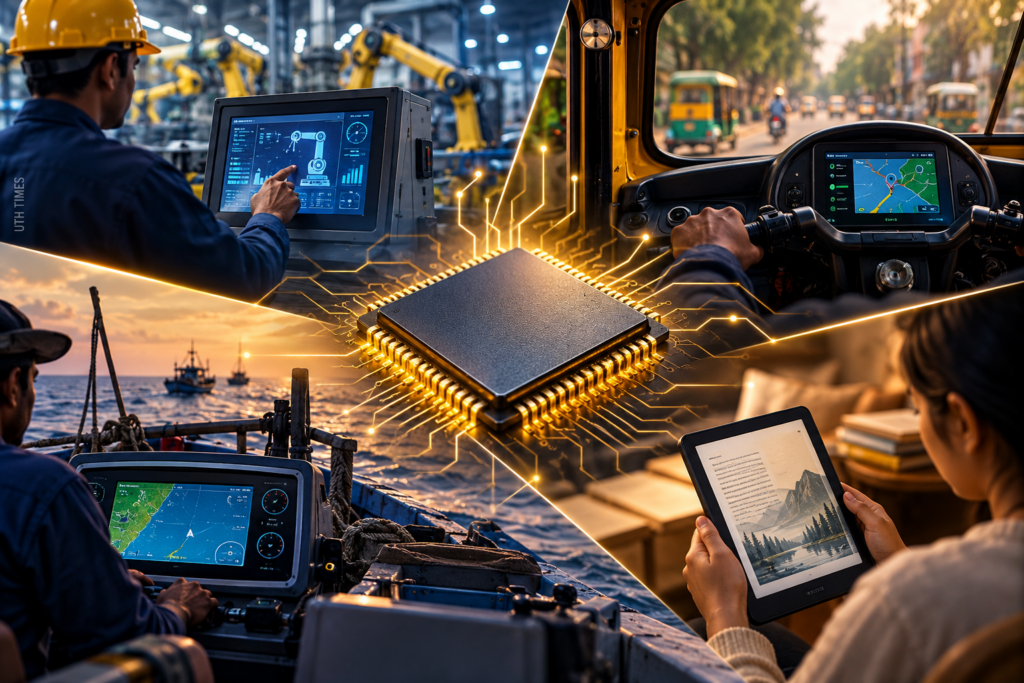
The real significance of the micro-GPU lies in its intended applications. Its architecture is designed to provide graphics capabilities where conventional high-end processors may be unnecessary or too expensive.
🚀 Industrial control displays could use it to drive visual interfaces.
🚀 Low-cost human-machine interfaces could gain indigenous graphics capabilities.
🚀 E-rickshaw dashboard navigators could potentially use the technology for affordable navigation displays.
🚀 Small fishing boats could benefit from indigenous inland-water navigation terminals.
🚀 Educational e-book readers could incorporate affordable embedded visualisation.
This makes the project particularly relevant to devices where cost, compactness and specialised functionality matter more than high-end graphical performance.
🇮🇳 Why This Matters for India
GPUs have become increasingly important across modern computing, including graphics, AI and machine-learning systems. IIT Delhi says GPUs used in the country are currently imported, making indigenous development an important step toward reducing import dependence.
The project also demonstrates that advanced processor architecture can be developed within an academic environment. According to IIT Delhi, the work required innovations across arithmetic hardware, programmable architecture, compilers and embedded-system design.
🔬 What Comes Next?
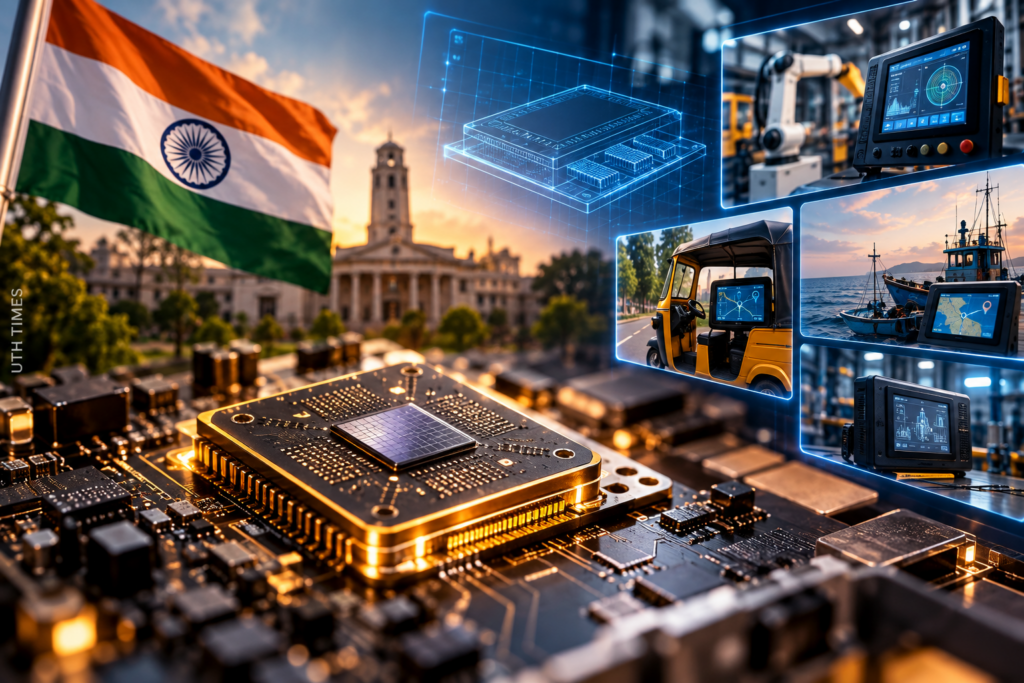
The current micro-GPU is only the beginning. The researchers are exploring an 8–16-core vector-style graphics processor architecture, along with an optimised compiler and graphics software toolchain.
The team also plans to explore a proof of concept using a 65-nanometre ASIC process, potentially opening a pathway from FPGA-based research to dedicated silicon hardware. Funding is being sought for ASIC development, system integration and eventual commercialisation.
IIT Delhi’s micro-GPU is not positioned as a replacement for high-end commercial GPUs. Its importance lies elsewhere: creating a compact, programmable and potentially affordable Indian graphics-processing platform for embedded technology.
From a university FPGA prototype to future indigenous silicon, the project represents a promising step toward building more of the hardware India uses—from the architecture level upward.

