
What sounds like science fiction is becoming a real engineering possibility. Nobel Prize-winning chemist Omar Yaghi and his technology company Atoco have developed atmospheric water-harvesting systems designed to extract moisture directly from air—even in dry environments—and produce up to around 1,000 litres of clean water per day.
🌍 The Secret Is Hidden Inside the Material
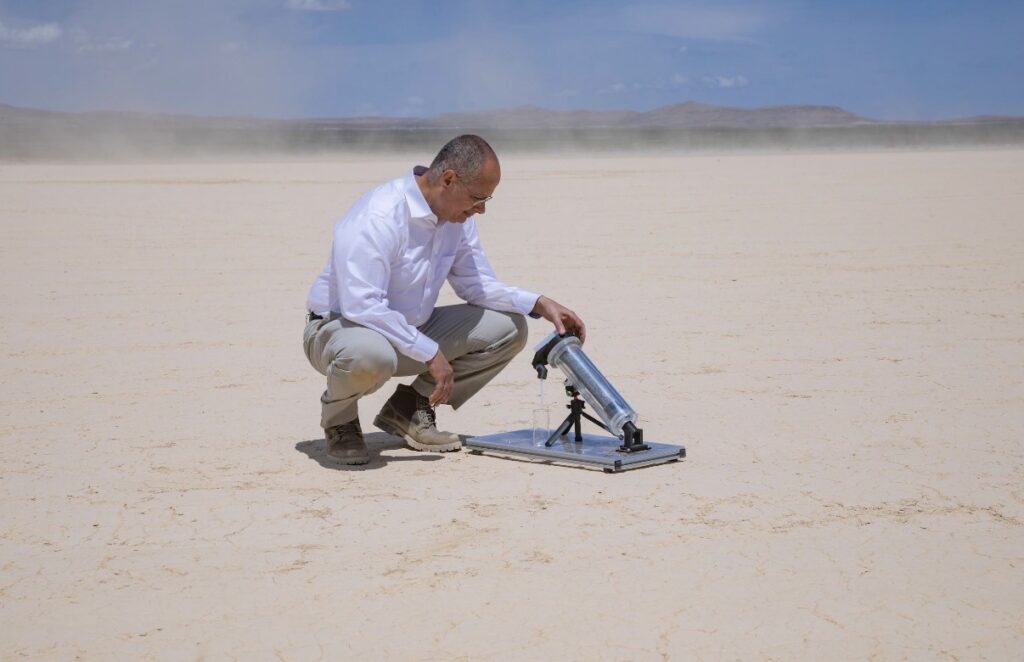
The breakthrough is based on Metal-Organic Frameworks (MOFs), highly porous materials pioneered through Yaghi’s work in reticular chemistry.
🔹 MOFs contain an enormous network of microscopic pores that can selectively capture water molecules from the atmosphere.
🔹 Their internal surface area can be extraordinarily large relative to their physical size—Nobel Prize materials note that a small quantity can have an internal surface area comparable to a football field.
🔹 Crucially, the technology relies on adsorption, rather than simply cooling large quantities of air until moisture condenses. That opens the door to harvesting water in environments where conventional atmospheric water generators can become energy-intensive.
☀️ Sunlight Becomes the Power Source
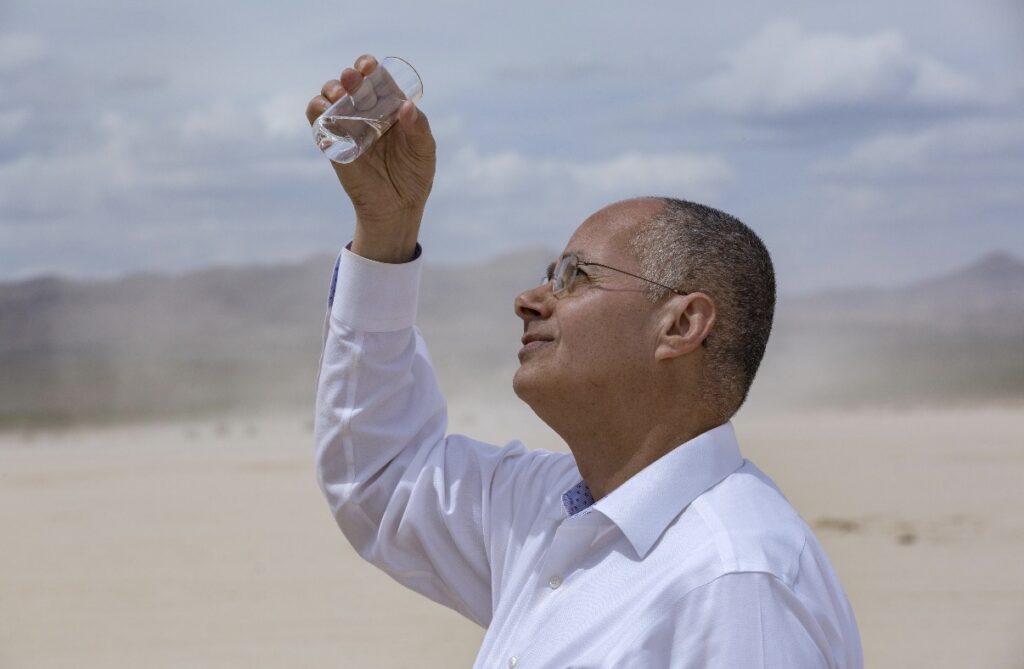
The machine’s most striking feature is how little conventional energy it can require.
🌞 During the capture stage, the MOF material attracts water vapour from surrounding air.
🔥 Solar heat—or other low-grade thermal energy—is then used to release the captured moisture.
💧 The released vapour is condensed into liquid water and subsequently treated for drinking.
Yaghi has described systems capable of operating using ambient sunlight and thermal energy rather than conventional grid electricity. Berkeley reported that his team demonstrated water harvesting in Death Valley and is developing larger systems for substantial daily output.
🏜️ Why Dry Regions Matter Most
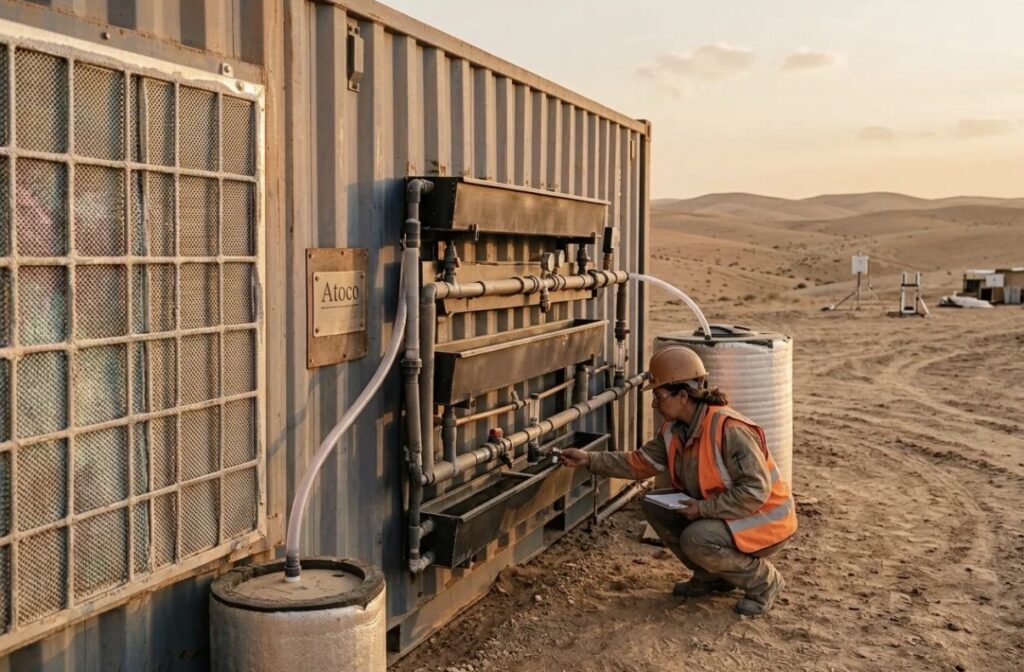
The real significance isn’t simply producing water—it is producing it where conventional water infrastructure is difficult to establish.
🚰 Remote communities could potentially generate water locally instead of depending entirely on pipelines or tanker deliveries.
🏜️ Desert and drought-prone regions could gain another source of freshwater.
⚡ Off-grid operation could make the technology useful after disasters, during infrastructure failures or in isolated settlements.
Atoco has described units roughly comparable to a 20-foot shipping container, with the potential to generate up to 1,000 litres daily using ultra-low-grade thermal energy.
🧪 From Nobel-Winning Chemistry to Real-World Water
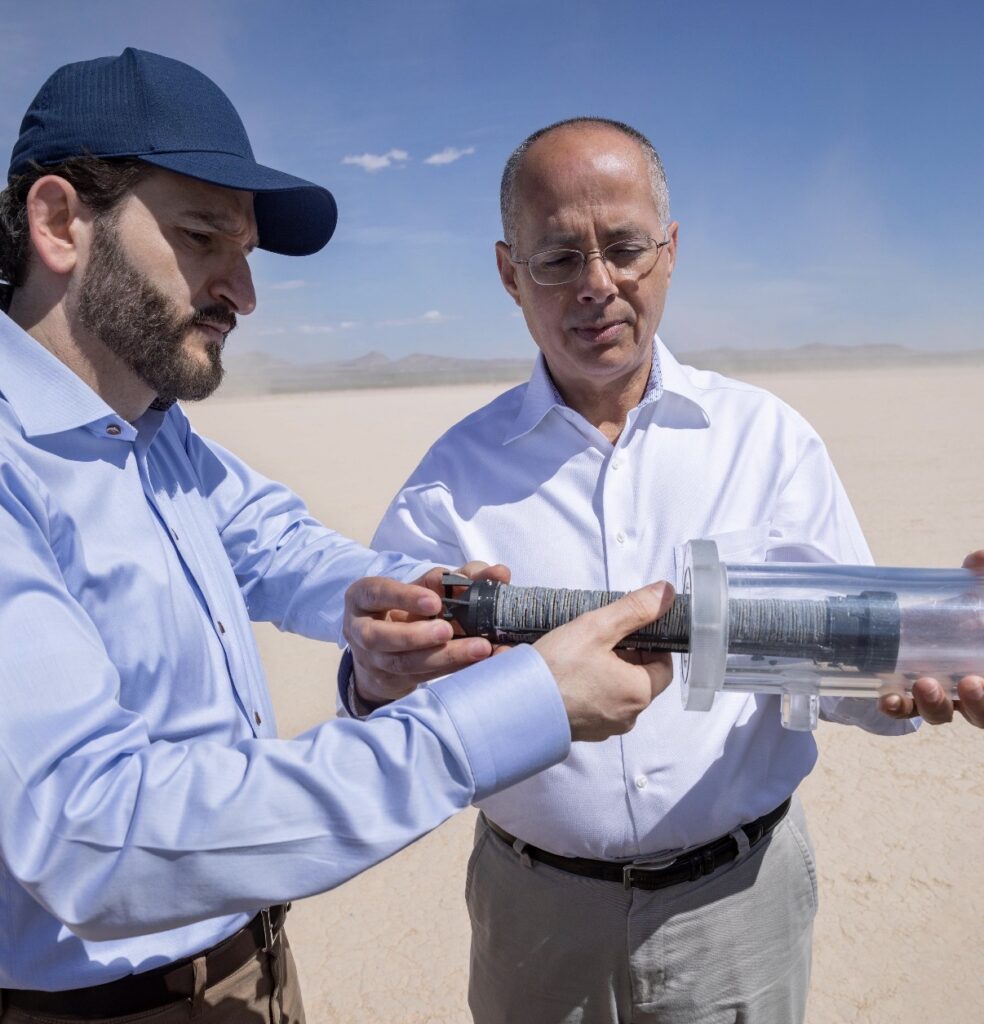
Yaghi received the 2025 Nobel Prize in Chemistry, alongside Susumu Kitagawa and Richard Robson, for work associated with the development of metal-organic frameworks.
The water-harvesting application demonstrates how fundamental chemistry can move from molecular-scale research toward infrastructure-scale technology.
But one important clarification matters: the machine does not create water from nothing. It captures water vapour already present in the atmosphere and concentrates it into usable liquid water. Output also depends on atmospheric conditions and system design.
The promise is enormous: a future where some communities could treat the air around them as a local water resource, reducing dependence on conventional centralized supplies.
The technology is still part of a rapidly developing field, so cost, manufacturing scale, maintenance and real-world performance across different climates will determine how widely it can ultimately be deployed.
The idea is simple—but the science behind it is anything but. The next water revolution may not come from beneath our feet. It could come from the air above us.

