
India has just achieved a major milestone in Earth observation. In the early hours of September 4, 2026, ISRO successfully launched EOS-05 aboard GSLV-F17, placing the satellite into its intended Sub-Geosynchronous Transfer Orbit. The mission opens a new chapter in how India watches, understands and responds to events on Earth.
🚀 A Historic GSLV-F17 Mission

The 51.7-metre-tall, 420.5-tonne GSLV-F17 lifted off from the Second Launch Pad at Satish Dhawan Space Centre, Sriharikota, at 2:55 AM IST. Roughly 18–19 minutes later, the rocket separated and injected the approximately 2,367-kg EOS-05 spacecraft into its planned transfer orbit.
🔹 This was the 19th flight of the GSLV.
🔹 EOS-05 is the heaviest payload ever carried by a GSLV, surpassing the vehicle’s earlier payload capability. ISRO says improvements in structural mass optimisation and propulsion performance helped make this possible.
🔹 The mission also represents an important return to flight for GSLV after its previous Earth-observation mission, EOS-03, was unsuccessful in 2021.
🛰️ Why EOS-05 Is Different
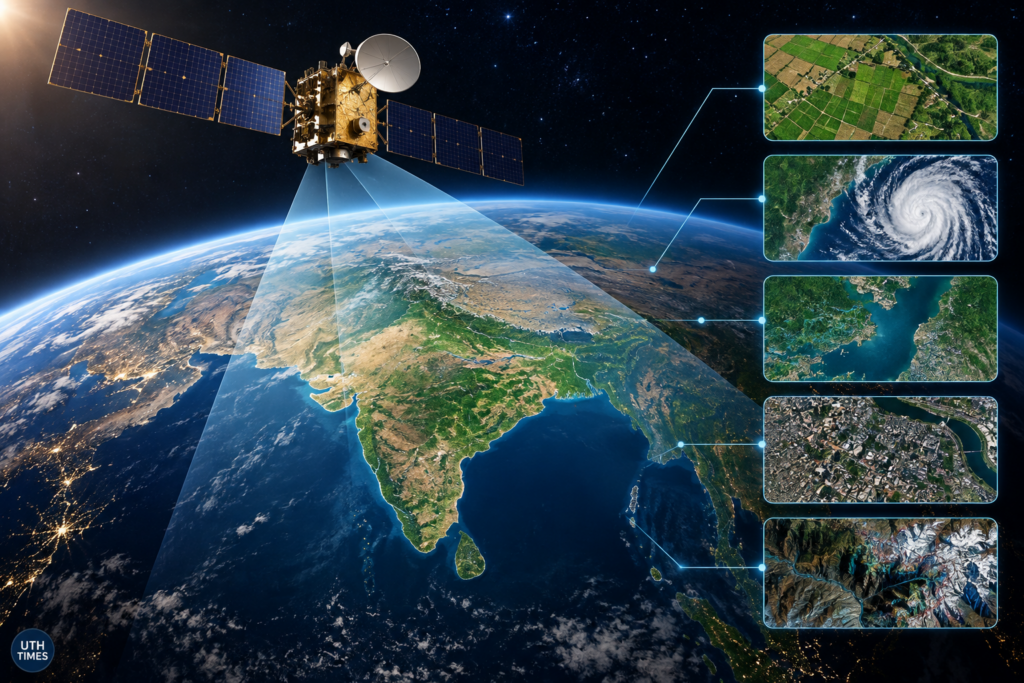
The real significance lies in where EOS-05 is designed to operate.
Most Indian Earth-observation satellites operate from much lower orbits, including polar and sun-synchronous orbits. EOS-05 takes a different approach: it is India’s first dedicated imaging satellite designed to operate from a geosynchronous orbit.
🔹 From roughly 36,000 km above Earth, the satellite can repeatedly observe a broad region instead of rapidly moving across the sky like conventional low-orbit imaging satellites.
🔹 That makes the mission particularly valuable for applications where frequent, consistent observation matters.
🔹 Its imagery can support areas including agriculture, disaster management, environmental monitoring, water resources, urban planning and strategic applications.
🌍 From Imaging to Intelligence

Think of EOS-05 as a new kind of persistent eye over India.
A lower-orbit satellite can capture highly detailed images but revisits a particular location periodically. A geosynchronous imaging platform can instead maintain a much more consistent view of a large geographical region.
🔹 Disaster response: Track floods, cyclones and major emergencies with repeated observations.
🔹 Agriculture: Monitor large agricultural regions and changing land conditions.
🔹 Infrastructure: Observe expanding cities, roads and other major developments.
🔹 Strategic needs: Provide timely Earth-observation data for national requirements.
🇮🇳 More Than Another Launch
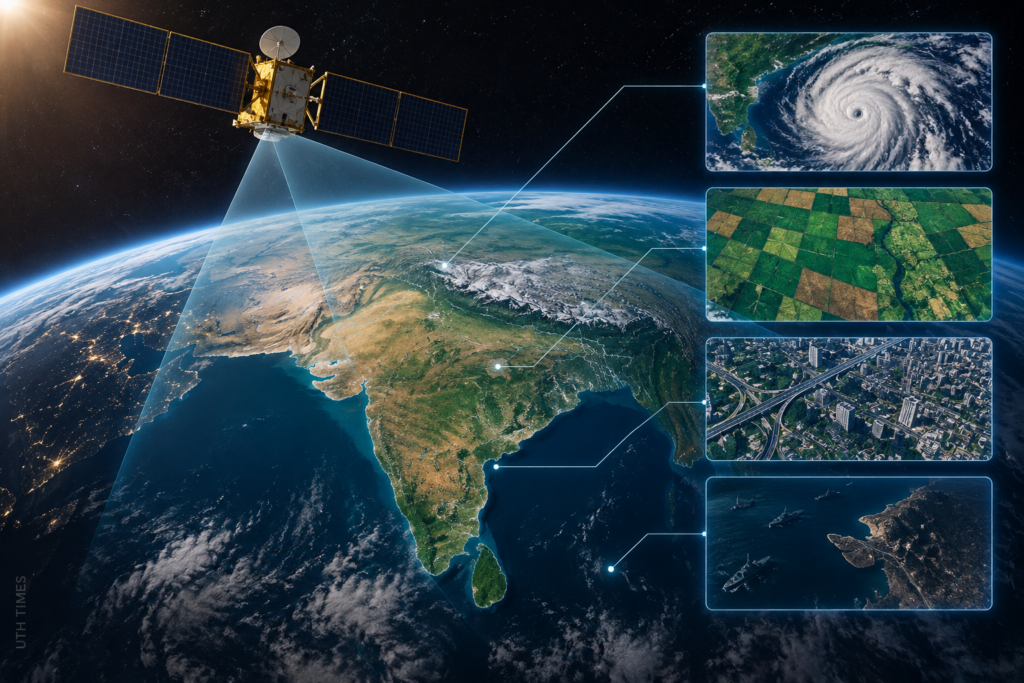
The mission is not simply about putting another satellite into space. It demonstrates India’s growing ability to combine heavy-lift launch capability, advanced spacecraft design and high-altitude Earth observation into a single operational architecture.
The successful injection is the beginning of the next phase: EOS-05 will use onboard propulsion to move from its transfer orbit toward its intended operational geosynchronous orbit.
With EOS-05, ISRO is pushing Earth observation beyond conventional satellite architecture. The objective is clear: see more, revisit faster and turn space-based imagery into actionable intelligence.
This is not just another satellite above India.
It is a new vantage point.

