
The Kurukshetra war is remembered as a Dharma Yuddha—yet some of Krishna’s most decisive strategies appear to bend, stretch, or even violate conventional rules of warfare. That contradiction is precisely what makes Krishna’s role in the Mahabharata so fascinating.
Krishna did not simply teach Arjuna how to fight. He forced him to confront a far harder question: Is dharma merely following rules—or protecting righteousness when the rules themselves are being exploited?
⚔️ When the Rules Became a Weapon
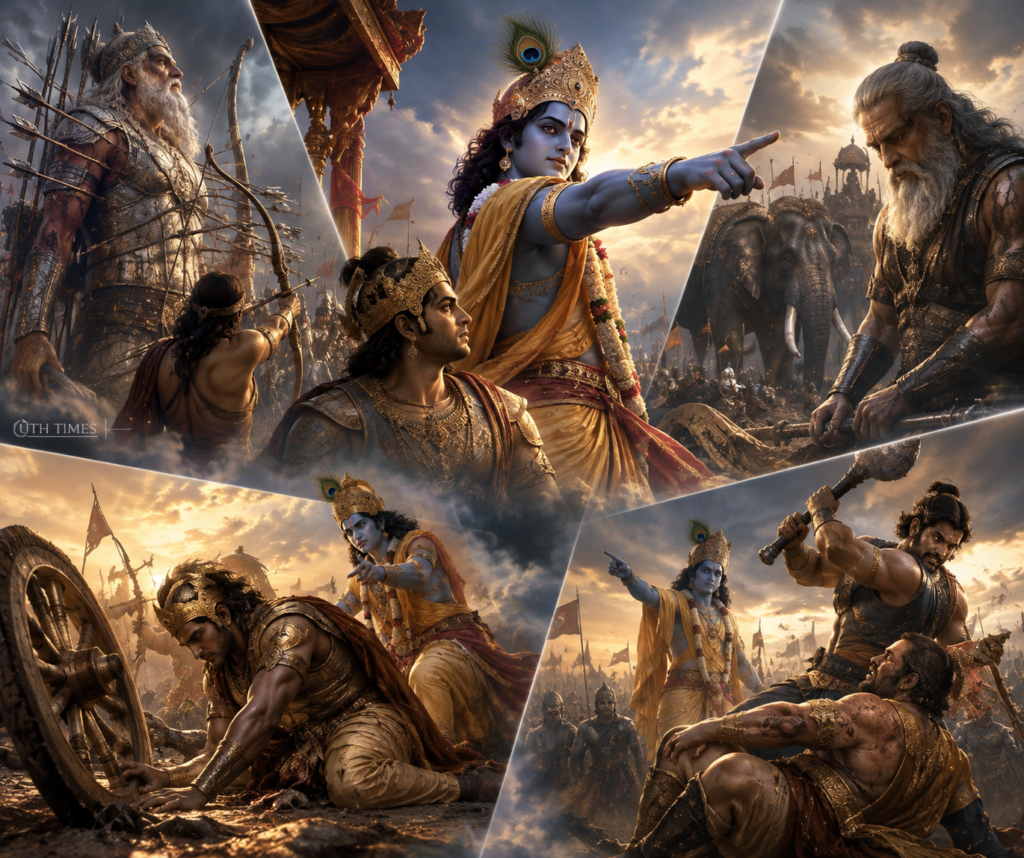
The Kaurava side possessed formidable warriors—Bhishma, Drona, Karna and others. Defeating them through conventional combat was extraordinarily difficult.
Krishna therefore adopted a different philosophy: strategy had to respond to strategy.
🔹 Bhishma: Bhishma could not be easily defeated while fighting at full strength. Krishna guided Arjuna toward using Shikhandi as the shield through which Bhishma would finally lower his weapons.
🔹 Drona: Drona’s battlefield power seemed almost unstoppable. Krishna recognised that Drona’s emotional attachment to his son Ashwatthama could become the key to stopping him. Yudhishthira announced that Ashwatthama was dead—referring to an elephant bearing that name, while Drona understood the statement differently. Once Drona abandoned his weapons, he was killed.
🔹 Karna: When Karna’s chariot wheel became stuck, he appealed to the accepted warrior code for a pause. Krishna reminded Arjuna of Karna’s earlier participation in actions that had already violated the spirit of that code, including the assault on Draupadi and the killing of Abhimanyu. Arjuna then struck.
🔹 Duryodhana: In the final mace duel, Krishna indicated the vulnerable point on Duryodhana’s body, enabling Bhima to strike his thigh—an act contrary to the conventional rules of mace combat.
These were not random acts of deception. They formed a pattern: Krishna repeatedly prioritised the destruction of a system he regarded as fundamentally corrupted over the preservation of rules that his opponents had already manipulated.
🕉️ Dharma Was Bigger Than a Rulebook
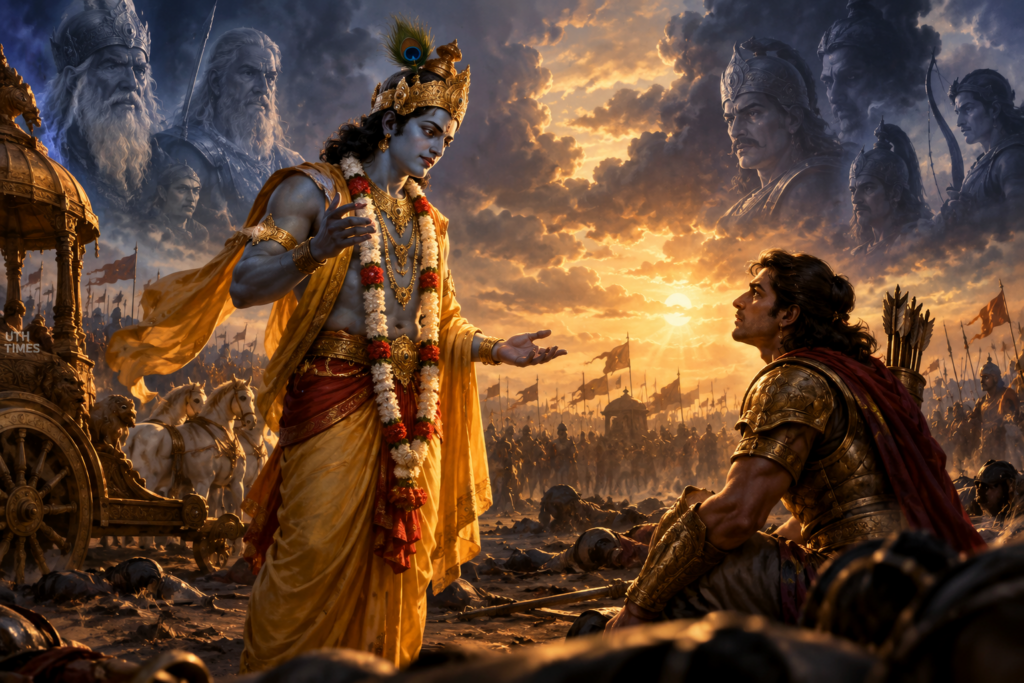
This is where Krishna becomes more than a battlefield strategist.
The Bhagavad Gita, embedded within the Mahabharata, presents Arjuna’s crisis as a conflict between personal emotion, duty and righteousness. Krishna urges him to perform his duty without attachment to the fruits of action.
But the wider Mahabharata makes the moral picture far more complicated.
The epic does not present Krishna’s strategies as a comfortable shortcut to victory. They raise uncomfortable questions about whether an apparently righteous cause can remain completely righteous when its enemies refuse to play by the same rules.
That is the genius of the story.
Krishna does not make morality easy. He makes it difficult.
🔥 So, Did Krishna Break the Rules?
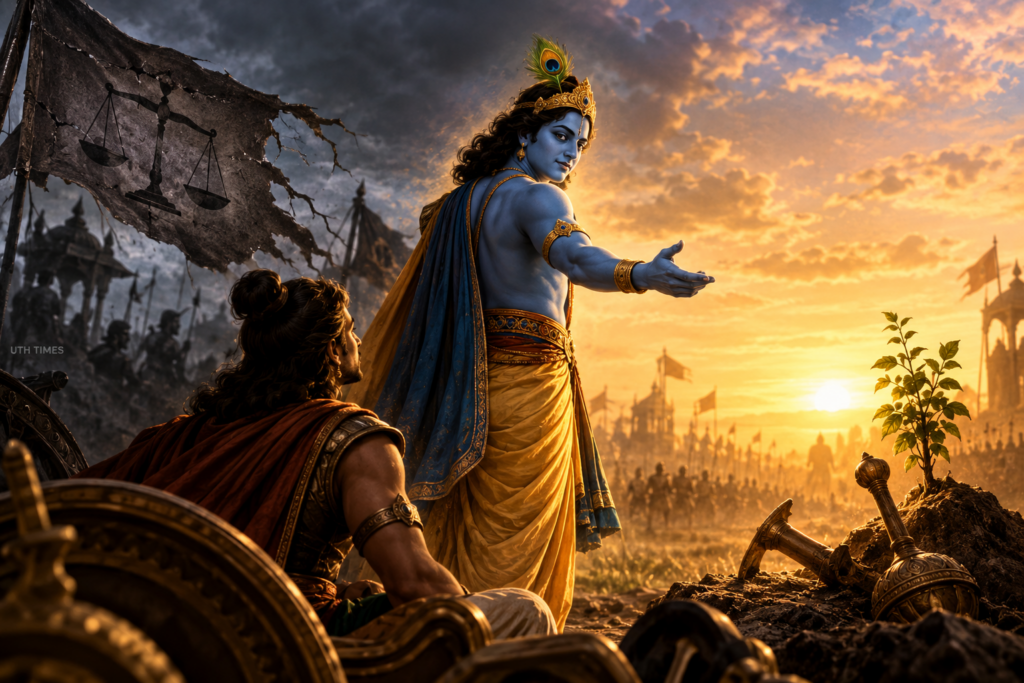
Yes—if we judge his actions strictly by conventional battlefield rules.
But the deeper Mahabharata question is different:
What should happen when rigid adherence to rules protects adharma instead of preventing it?
Krishna’s answer appears to be that dharma cannot always be reduced to procedure. Sometimes, protecting the larger moral order demands decisions that carry their own moral cost. Scholars and commentators have long debated precisely this tension between Krishna’s pursuit of dharma and his use of deception during the war.
Krishna’s greatest battlefield weapon was not the Sudarshan Chakra.
It was clarity.
He understood that winning a war and preserving dharma were not necessarily the same thing—and that sometimes the path to restoring order could itself look morally uncomfortable.
That is why Krishna remains one of the most complex figures in the Mahabharata.
He did not teach that every rule should be broken.
He taught that dharma must ultimately serve justice—not become a shield for injustice.

