Home Blog Page 60

The Strange Space Object That Flew Through Our Solar System

🚀 A Visitor from the Dark

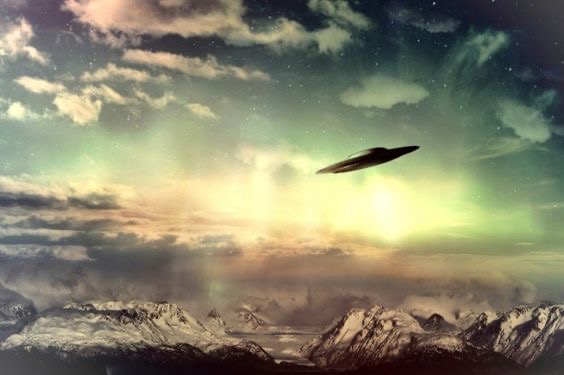
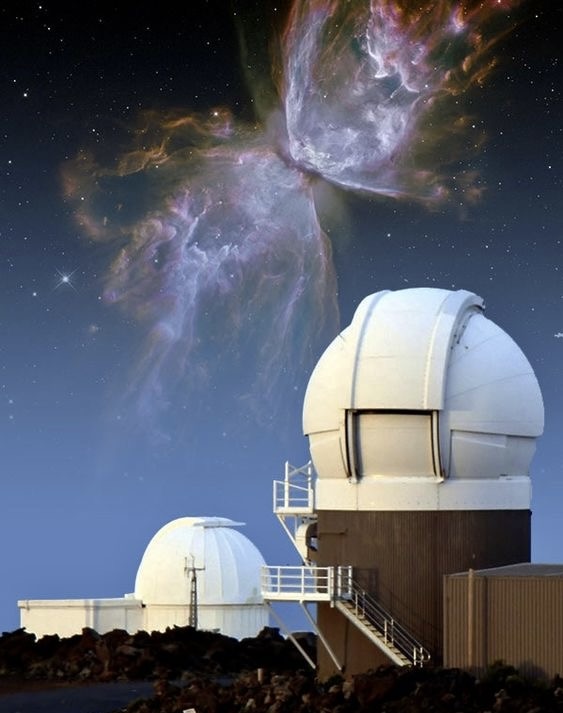
In October 2017, astronomers in Hawaii detected something hurtling through our solar system — faster than anything we’d ever seen. They named it ʻOumuamua, meaning “scout” or “messenger” in Hawaiian. But it was no ordinary space rock.

It came from outside our solar system — the first known interstellar object to ever pass through.

🌀 Not a Comet. Not an Asteroid. Not Normal.

At first, scientists thought it was a comet. Then maybe an asteroid. But none of the data made sense.

  • It sped up mysteriously — without a tail or gas trail like a comet.
  • It was shaped like a cigar or pancake, spinning irregularly.
  • And most bizarre of all: it reflected sunlight in strange ways, unlike any known object.

Harvard astronomer Avi Loeb sparked controversy by suggesting it could be artificial — possibly an alien probe.

🔍 The New Findings: Tracing the Origin

Now, a 2024 reanalysis using trajectory mapping and star charts has traced ʻOumuamua’s possible path. It appears to have come from a young star system about 32 light-years away — one known for having unstable planetary formations.

Here’s the twist: the way ʻOumuamua moved — accelerating without visible thrust — may be explained by a thin sheet-like structure, possibly made of artificial material, such as light sail technology.

It’s not proof of aliens — but it doesn’t rule them out.

👽 Why Scientists Are Still Split

While most researchers suggest exotic natural explanations (like hydrogen ice or cosmic dust sheets), others argue the object’s precision and silence feel… designed.
If oumuamua was a message, we may have missed it.

🌌 The Message We Might Have Missed

ʻOumuamua came and went in a flash — vanishing into the cosmic dark before we could even aim a spacecraft at it. But its brief visit left behind a trail of questions that science still can’t fully answer. If it was a natural object, it was the strangest we’ve ever seen. If it wasn’t… then we may have just witnessed the first silent knock on Earth’s cosmic door — and let it pass us by.

1953: He Claimed Aliens Spoke to Him — What He Said Shocked the World

📍Mojave Desert, California — 1953, 2:00 AM

In the silent stillness of a desert night, one man claimed to hear the impossible.

His name was George Van Tassel, a former aviation engineer turned mystic. On a moonlit night in 1953, while meditating beneath the open sky near Giant Rock in the Mojave Desert, he said he received a telepathic message from a non-Earthly being. The name? Ashtar — a “galactic commander” from the Ashtar Galactic Command, a force of extraterrestrials allegedly watching over Earth.

🛸 The Message That Froze Time

Van Tassel described the voice as calm, resonant, and non-human. Ashtar’s message wasn’t hostile — it was a warning.

“You are endangering Earth and the galaxy with your atomic weapons. Your wars echo across space.”

According to Van Tassel, humanity had entered a critical stage. Nuclear tests were rippling through the fabric of space, attracting dangerous attention from beyond. Ashtar’s goal, he claimed, was to guide Earth away from destruction and toward cosmic harmony.

🌀 The Aftermath: The Integration and UFO Culture

Van Tassel became a key figure in America’s early UFO movement. He began construction of the Integratron, a domed energy chamber he said was based on anti-gravity and celestial frequencies — all guided by what Ashtar told him. Some believed it could heal, others believed it could extend life.

The story caught fire among 1950s seekers, sparking thousands of Ashtar messages channeled by other “contactees” worldwide. While many scientists dismissed it as pseudoscience, others were intrigued by how specific and consistent the messages were — across time and people.

🧠 Fact, Fantasy, or Future?

No concrete evidence of Ashtar or his fleet ever emerged, but Van Tassel’s story lives on in conspiracy theory, new-age circles, and UFO history. The idea of telepathic contact from space now echoes in modern claims of alien abductions, crop circles, and secret galactic councils.

Could it have been a hallucination? A hoax? Or the first real call from a watcher in the stars?

🌌 One thing remains chilling:

What if that desert voice was real… and we ignored the warning?

The Eyes Know: How AI Detects Lies Before You Speak

0

“Your mouth may lie, but your pupils won’t.

In the age of deepfakes and disinformation, truth is no longer just what you say — it’s what your eyes betray before your lips even move. Deep within intelligence labs, border control systems, and research universities, AI-powered lie detection models are being trained to decode micro-movements in your eyes — in real time.

👁️ What’s Actually Happening?

Traditional polygraphs track pulse, sweat, and breath — but they’re invasive and inaccurate. New AI models bypass all that by focusing only on your eye behaviour:

  • Microsaccades : Tiny, involuntary eye jerks that happen when your brain is processing stress or deception.
  • Pupil dilation: Eyes subtly widen when lying, especially when fabricating under pressure.
  • Blink rate: AI can track if you’re blinking too slowly (hyper-focus) or too fast (anxiety).
  • Fixation patterns: AI analyzes where and how long you look when questioned — liars often avoid eye contact or overcorrect to “seem honest.”

🛰️ Where It’s Being Used (Secretly or Quietly)

  • EU’s iBorderCtrl system: Trialed in border security checks, it used an AI lie-detection avatar that scanned travelers’ faces and eyes during questioning. It could flag high-risk travelers for additional screening.
  • Silent Talker AI: A UK company that developed early-stage models analysing eye and facial data to assess deception. It was considered for airport and visa interviews.
  • Chinese surveillance programs: Some reports claim that AI-enhanced CCTV in certain regions is being trained to detect emotional anomalies — including deceptive behaviour — based on eye and face data alone.

🧪 Why It’s Still Largely Hidden

  • Ethical concerns: Eye-based lie detection skirts consent and raises serious questions about psychological profiling without permission.
  • False positives: Stress and fatigue can mimic deception — making innocent people appear guilty.
  • Pre-crime potential: It edges dangerously close to predictive policing — where AI guesses your intent before you act.

🧬 Where It’s Going

The future of law enforcement and security may involve no questions asked — just a camera that looks into your eyes and decides: truth or lie.

Soon, your biometric truth signature may become your passport, your confession, or your defence — all based on the twitch of an eye.

The Blink That Betrays

In a future where AI reads lies from your eyes, even silence won’t protect you. One blink — and the truth is out.

Dattatreya Swami’s Secret Teaching of the Three Gunas

How a Wild Mystic Turned Parashurama’s Axe into Dust and the Mind into Silence

🔥 The Avadhuta Who Defied Categories

Dattatreya Swami, the timeless sage, is unlike any figure in the spiritual pantheon. Neither a renunciate nor a householder, neither madman nor saint, he wandered through existence wearing nothing but the wind and wisdom. His teachings were not sermons—they were direct transmissions, paradoxes, and riddles that cracked open the human mind.

🌌 The Three Paths Within You

One of Dattatreya’s most mysterious teachings involves the three gunas—Rajas, Sattva, and Tamas. These are not just psychological states; they are the fundamental threads that weave reality:

  • 🔥 Rajas – The Fire of Action
    It is the guna of energy, ambition, restlessness, and desire. It drives the world forward but burns everything in its path. It is the force behind success—and suffering.
  • 🌊 Sattva – The Ocean of Harmony
    This is clarity, balance, purity, and stillness. It appears as peace and wisdom, but can become a trap of spiritual pride and stagnation. It is seductive because it feels like the goal.
  • 💀 Tamas – The Desert of Inertia
    The force of darkness, laziness, confusion, and sleep. It is the temptation to retreat, to escape, to numb. Often feared, it is also the place where transformation silently brews.

🪔 The Crossroads Is You

Dattatreya’s ultimate teaching is devastating in its simplicity:

You are not the traveler choosing between these paths. You are the crossroads itself.

The gunas are not external forces. They are inner movements—masks worn by consciousness. Trying to escape one and cling to another is like rearranging shadows. The solution is not in choosing, but in transcending.

🌀 Shatter the Framework

When the great warrior Parashurama asked which path to take, Dattatreya did not offer direction. He offered dissolution.

“Shatter the crossroads. Drop the axe. Stand nowhere.”

In that moment, identity dissolved, and the illusion of choice vanished. There was no path, no seeker, no goal. Only the presence of now—the unconditioned awareness beyond all qualities.

☺️ The Laugh of Liberation

This is the heart of the Avadhuta’s laughter: when the gunas collapse, what remains is freedom.

No striving, no surrender, just silent joy.

That is Dattatreya’s secret: Not how to master the world—but how to be free from the illusion of ever needing to.

AI-Powered Plants That Respond to Human Emotions

0

🌿 When Nature Learns to Feel You Back

What if your houseplant could feel your sadness? Or bloom a little brighter when you’re happy? This isn’t sci-fi anymore — welcome to the strange and beautiful world of emotion-sensing, AI-powered plants.

Blending the natural intelligence of plants with the computational power of artificial intelligence, researchers are developing interactive green companions that can read your mood and respond in subtle, living ways.

💡 How Does It Work?

These futuristic plants are embedded with:

  • Sensors that detect electromagnetic signals, temperature, sound, and light
  • AI models trained to interpret emotional cues from facial expressions, voice tone, or even biometric data
  • Actuators or light patterns that allow the plant to visibly respond — through movement, color shifts, vibrations, or even scent release

In simple terms:

😔 If you’re stressed, the plant may lean toward you gently, change its LED glow to calming blue, or emit lavender scent.

😊 If you’re joyful, it might “stand taller” or display vibrant lighting patterns.

🧠 Where Nature Meets Neural Networks

One of the most fascinating projects comes from MIT’s Media Lab, where plants are being used as living interfaces. In one prototype, a philodendron was fitted with electrodes and connected to a neural network. The plant responded to touch and vibrated subtly in response to the user’s heartbeat — a true biobot companion.

Other startups like Mu Design (Lüa Plant) have created smart pots with animated faces that mimic the plant’s “mood,” based on how well you’re caring for it — making plants more expressive and emotionally interactive.

🌍 Why It Matters

This fusion of AI and biology represents more than a cool gadget:

  • 🌱 It redefines well-being tech, making emotional care more organic
  • 🧠 It explores plant consciousness and inter-species communication
  • 🤖 It raises big questions: Can a machine interpret nature? Can a plant understand us?

✨ The Future Is Alive

AI-powered plants might soon be your emotion-sensitive roommate — part mental health companion, part interactive décor. As boundaries blur between the organic and the artificial, these living systems could change how we think about intelligence, empathy, and life itself.

So next time you walk by a leafy friend…

You might just wonder:

Did it just feel something?

Scientists Are Trying to Create a Mirror Universe in a Lab

0

👨‍🔬 A Parallel World Might Be Just a Neutron Away

What if there’s another version of you — living in a mirror universe, just beyond your perception? Sounds like science fiction, right? But researchers at the Oak Ridge National Laboratory (ORNL) in Tennessee, USA,

are actually investigating whether a “mirror universe” might exist — and whether we can talk to it.

🧪 The Experiment That Defies Reality

Physicist Leah Broussard and her team are leading a mind-bending experiment that involves firing neutrons (tiny particles found in atoms) at a barrier and seeing if they disappear and reappear mysteriously on the other side.

The idea? Some of those neutrons might be slipping into a parallel universe and bouncing back. If that happens, it would be the first experimental evidence of a mirror world.

🪐 What Is a Mirror Universe?

This “mirror” world wouldn’t just be a copy — it would be a shadow realm made up of mirror particles, governed by mirror forces, and possibly containing mirror atoms, stars, planets, and even life.
In other words,

Everything here… could exist there too.
But slightly altered — reversed in properties, behavior, or even time itself.

🚪 Why It Matters

The strange behavior of neutrons has puzzled physicists for years. Neutrons seem to “vanish” faster than expected in lab conditions. Some believe this could be because they temporarily visit a mirror world before returning.

If proven, this discovery could:

  • Explain dark matter, the mysterious substance that makes up most of the universe.
  • Offer new insights into quantum mechanics and gravity.
  • Completely redefine reality as we know it.

🌌 The Future: Crossing the Barrier?

This isn’t just theoretical science. Experiments are getting more precise, and new tech might allow us to detect particles moving between universes in the next decade.

If confirmed, it could mean that our universe is just one in a greater multiverse — and for the first time, we’d have a way to reach across the divide.

✨ Final Thought

From Marvel movies to ancient myths, the idea of a parallel world has captured human imagination. But now, scientists aren’t just dreaming it — they’re testing it.
And if the door to a mirror universe opens…

1945: The Man Who Made Water Defy Gravity — And Unleashed A Dark Secret

0

In the waning days of World War II, a little-known Austrian inventor did something unthinkable — he made water defy gravity.

His name? Viktor Schauberger, a self-taught forest caretaker and natural scientist who believed nature held secrets far beyond conventional physics. But what he discovered in 1945 didn’t just stir scientific curiosity — it triggered a global intelligence war.

🔬 Anti-Gravity Water?

Schauberger’s invention was based on vortex dynamics — the swirling motion of water he observed in mountain streams. He claimed that, under certain conditions, water could generate levitational forces. In one of his experiments, a fluid vortex lifted objects upward — seemingly breaking the laws of gravity.

⚙️ His Device: The Repulsine

He built a machine called the Repulsine — a bell-shaped craft that used spinning vortex chambers. According to reports, it produced lift and propulsion without fuel. Many believe it may have been a prototype for anti-gravity flight.

☠️ Enter: Hitler’s SS

Once word of his discovery reached high command, Hitler’s SS abducted Schauberger and forced him into secret weapon projects. He worked under brutal conditions in a hidden Austrian lab — allegedly contributing to Nazi UFO experiments during the final days of the Third Reich.

🇺🇸 Post-War Secrecy

After Germany’s fall, Operation Paperclip brought top Nazi scientists to the U.S. Schauberger was brought in too — under duress. He was interrogated, and his inventions were immediately classified. The U.S. military sealed his documents, many of which remain restricted even today.

🕵️‍♂️ Spies and the Soviet Hunt

The Soviets, hearing whispers of an “anti-gravity weapon,” sent agents to locate his work. Some reports suggest KGB-backed scientists tried to reverse engineer Schauberger’s blueprints, believing they held the key to a new arms race.

🧪 His Darkest Discovery

But Schauberger’s real terror wasn’t about levitation. Before he died in 1958, he hinted that he had stumbled upon a force so destructive it could alter Earth’s balance — a form of natural energy capable of planetary devastation if misused.

🗝️ What Was Buried… May Be Unearthed

Declassified files slowly emerging hint at technologies decades ahead of their time, tied to vortex physics and clean energy. Was Schauberger a madman? Or a genius silenced by governments?

One thing is clear: His story is not finished. And perhaps… neither is his invention.

38,000-Year-Old Megastructure? New Discovery Beneath Giza Shocks Experts

The land of pyramids may still be hiding secrets deeper than we ever imagined. In a discovery that’s igniting both scientific intrigue and ancient mystery, researchers have unveiled what might be a second underground complex beneath Egypt’s iconic Giza Plateau — this time under the Pyramid of Menkaure.

🔦 Radar Reveals a Mega-Mystery

Using high-frequency ground-penetrating radar (GPR), Italian radar expert Filippo Biondi and his team claim to have detected an enormous subterranean network stretching over 2,000 feet. The scan beneath Menkaure mirrors strange formations recently found under the Pyramid of Khafre, including spiraled tunnels, voids, and chamber-like spaces. This pattern, scientists say, could point to a massive underground “megastructure” possibly linking all three pyramids in an intricate, buried web.

🧬 An Ancient Civilization Lost in Time?

Biondi and his colleagues suggest these structures predate dynastic Egypt — potentially going back 38,000 years, well beyond the timeline of known Egyptian history. Their hypothesis? An advanced pre-Egyptian civilization, long erased by a global cataclysm, may have constructed these enigmatic underground realms. Could this be the same civilization hinted at in legends and esoteric texts?

🔥 Elements and Energy: A Lost Technology?

The design of the chambers reportedly incorporates the classical elements: air, water, fire, and earth — prompting speculation that the complex wasn’t just ceremonial but possibly part of an energy system or lost technology. The idea echoes age-old stories of ancient powers and forgotten sciences once harnessed by early civilizations.

📜 Echoes from the Edfu Texts

Intriguingly, ancient writings found in the Temple of Edfu tell of a “sacred domain” near Giza that was destroyed in a flood, with its survivors hiding their wisdom in an “Underworld of the Soul.” The radar findings now seem to align with these mythic records, breathing new life into tales long dismissed as symbolic.

🗿 Mainstream Pushback vs. New Possibilities

Of course, not everyone is convinced. Famed Egyptologist Dr. Zahi Hawass has dismissed the claims as “nonsense,” arguing that radar cannot penetrate to such depths. But with similar anomalies detected twice now, and data still being processed, curiosity is far from fading.

👁️ Rewriting History?

Whether these are the traces of a lost civilization or a natural quirk of geology, one thing is certain: the sands of Giza may still guard a deeper truth. If verified, these findings could rewrite the story of human origin, suggesting our ancestors were not just farmers and hunters — but possibly architects of hidden worlds, buried beneath our feet.

We Are Past the Event Horizon : Sam Altman’s Vision of the AI Future

0

A Message from the Eye of the AI Storm

OpenAI CEO Sam Altman has once again stirred the tech world by dropping a powerful new blog post that feels more like a transmission from the future than a typical update. Titled unofficially by readers as a glimpse beyond the event horizon, this post is about where humanity stands in the AI journey—and where we’re rapidly heading.

🔮 “Digital Superintelligence Is Coming—Sooner Than You Think”

Altman opens with a seismic statement:

“We are past the event horizon; the takeoff has started.”

This isn’t just poetic. It’s a warning, a prophecy, and an invitation. For Altman, humanity has already crossed the threshold where AI will never again be slow, simple, or controllable in the old sense.

📌 Key Takeaways from Altman’s Post

Here are the most compelling quotes and what they imply for our future:

🧠 “Humanity is close to building digital superintelligence.”

Superintelligence—AI that surpasses humans in nearly every cognitive task—is no longer just a theoretical idea. According to Altman, we’re nearly there, and the world should prepare for unprecedented shifts in power, knowledge, and responsibility.

🧬 “It’s much less weird than it seems like it should be.”

Altman suggests that as radical as it sounds, AI’s rise is weirdly normal. People are adapting, systems are evolving, and the sci-fi future doesn’t feel like fiction anymore.

🛠️ “Alignment remains the hardest part.”

Building powerful AI is becoming easy. Aligning it with human goals, ethics, and safety? That’s the real challenge—and the one that may determine our collective fate.

💡 “We need a global framework for AI governance.”

Echoing past calls, Altman urges governments, companies, and individuals to think beyond borders. AI isn’t a national project—it’s a planetary force. Collaboration, not competition, is the only way forward.

🧭 The Road Ahead: Risks, Hopes, and the Altman Doctrine

Sam Altman’s latest writing isn’t just a tech blog—it’s a call to action. He emphasizes:

  • 🧩 The importance of solving alignment before full superintelligence arrives
  • 🌍 The need for global institutions to monitor and steer AI development
  • 🤝 A vision where AI becomes a co-pilot, not a conqueror

Altman walks the line between optimism and caution, between revolutionary progress and existential risk.

📘 Final Word: 

When the Future Knocks, Will We Be Ready?

Sam Altman isn’t just predicting the future—he’s shaping it. His blog post tells us what those inside the AI labs already know: we’re living in the prologue of a new era. Whether that becomes a utopia, a dystopia, or something entirely new depends on what we choose today.

The Untold Carbon Cost of Digital Storage: Is Your Google Drive Secretly Harming the Planet?

0

What if I told you that your 2,154 screenshots of memes, your 87 copies of the same CV, and that abandoned Google Doc titled “New Project (Final) (Really Final)” could be slowly cooking the planet? Surprise — your Google Drive isn’t as ‘light’ as it seems!

💻 The Cloud: Fluffy Name, Heavy Reality

You think “the cloud” is all airy and weightless? Think again. Behind every photo, file, and long-forgotten PDF stored online are monstrous data centers — gigantic warehouses filled with thousands of power-hungry computers running 24/7.

🌍 These centers:

  • 🔌 Consume crazy amounts of electricity
  • ❄️ Need super-chilling air conditioning systems
  • 💨 Emit a lot of CO₂ (far more than your ceiling fan ever will!)

Ironically, the ‘cloud’ has a carbon footprint heavier than your mom’s steel almirah.

🗑️ Digital Hoarding: The New Environmental Crime?

Just because storage feels endless and invisible doesn’t mean it’s free for the planet. Every extra GB means more energy burnt somewhere on Earth.

🔍 The usual suspects on your drive include:

  • 📸 4,000 duplicate selfies
  • 🎞️ Unfinished videos from college projects
  • 📂 99 “Important Docs” folders you never open
  • 📝 Random shopping lists saved as Word docs

Congratulations — your cluttered Drive may be emitting more carbon than your old scooty.

⚡ So… How Big is the Problem?

Reports say data centers worldwide consume 1% to 2% of global electricity — almost the same as the aviation industry! Shocking, isn’t it?

That casual “save to Drive” click may be costing the Earth more than you ever imagined.

🌱 What Can You Do? Become a Digital Minimalist!

Ready to save the planet (and your sanity)?

  • 🧹 Clean out old files monthly
  • ♻️ Delete junk mails and spam
  • 📦 Avoid “just in case” hoarding

Because remember: what’s out of sight is NOT out of carbon footprint!

🎯 Conclusion: Stop Feeding the Cloud Monster!

So next time you save that 52nd version of your resume — pause. Ask yourself: “Do I really need this file… or am I making the Earth sigh again?” Looks like digital detox is the new eco-friendly trend. Are you in?