Home Blog Page 59

How Lord Vishnu Came to Tirupati: The Untold Tale of Divine Descent🕉️🙏

🔱 A Question That Echoed Through the Cosmos

Once, in an age untouched by time, a question arose — one that shook the very heavens:

Who is the greatest among the Trimurti — Brahma, Vishnu, or Shiva?

The Rishis couldn’t decide. So they sent Maharshi Bhrigu, a sage of fearsome pride and piercing wisdom, to seek the answer not through worship — but through confrontation.

👁️ Brahma: The Creator Overlooked the Sage

🔸 Bhrigu reached Brahmaloka, where Brahma was reciting Vedas with Mata Saraswati.

🔸 Immersed in creation, Brahma didn’t notice the sage’s arrival.

🔸 Enraged, Bhrigu insulted him — but Brahma remained composed. He neither punished nor responded.

🔸 To Bhrigu, inaction meant weakness. So, he left.

🕉️ Shiva: The Destroyer Reacted With Fire

🔸 Next, Bhrigu ascended Mount Kailasa, where Mahadev meditated with Mata Parvati.

🔸 When stopped by Shiva’s attendants, Bhrigu stormed in and accused Shiva of arrogance.

🔸 Shiva rose in fury, ready to destroy the disrespectful sage.

🔸 Only Parvati’s calm grace restrained him.

🔸 Bhrigu, unimpressed by this storm of anger, walked away once more.

🌊 Vishnu: The Preserver Embraced the Insult

🔸 Finally, Bhrigu entered Vaikuntha, where Lord Vishnu rested on Adishesha, with Mata Lakshmi by his side.

🔸 Vishnu did not rise to greet him — lost in a divine slumber.

🔸 Bhrigu, furious, kicked the Lord on the chest, where Lakshmi resided.

🔸 But Vishnu rose not in wrath, but in compassion.

“O great sage, is your foot hurt? My chest is hard — let me massage it.”

🔸 The Lord held the foot that had struck him and soothed it with divine grace.

🔸 In that moment, Bhrigu saw what the others lacked: patience, humility, and unconditional love.

🔸 Overcome, the sage bowed. “You alone are Supreme.”

🌺 Lakshmi’s Departure: The Pain Behind the Peace

🔸 But this act came at a cost. Mata Lakshmi was wounded — not in body, but in soul.

🔸 Her sacred abode, Vishnu’s chest, had been defiled by Bhrigu’s foot, and Vishnu allowed it.

🔸 Grief-stricken, she left Vaikuntha and descended to Earth — her divine heart shattered.

🛕 Tirumala: The Earthly Reunion of Heaven’s Love

🔸 Separated from Lakshmi, Vishnu too descended — as Srinivasa, to the lush hills of Tirumala.

🔸 There, he waited — as centuries passed — for his beloved to return.

🔸 Eventually, Lakshmi incarnated as Padmavati, and their divine union was reborn.

🔸 A temple rose at Tirupati, not merely from stone — but from sacrifice, devotion, and cosmic love.

Here, Vishnu became Venkateswara, the Lord who waits. And millions now come, hearts in hand, to meet the one who left Vaikuntha for love.

🔚 The Kick That Built a Temple

What began as a test of ego ended as a tale of divine humility.

What seemed like a blow became the reason the Lord walked among mortals.

And in the sacred hills of Tirumala, where clouds touch stone and devotion touches the divine —

Lord Vishnu waits still.

Nagpur’s ₹300 Crore Secret: How Sewage Became the City’s Goldmine

💧 Turning Waste into Wealth: Nagpur’s Incredible Makeover

What if we told you that what your city flushes down the drain could actually fund your next metro rail or smart traffic system?

Welcome to Nagpur, the orange city of Maharashtra, now becoming India’s most innovative model for urban waste monetization. Through cutting-edge sewage treatment and biogas generation, this city isn’t just managing waste — it’s profiting from it.

🚰 Sewage to Success: The ₹300 Crore Revolution

In a first-of-its-kind initiative, Nagpur Municipal Corporation (NMC) partnered with private players to set up an advanced sewage treatment infrastructure. Here’s how it works:

  • 💦 Sewage from homes is directed to multiple Sewage Treatment Plants (STPs) around the city.
  • 🔁 The treated water is not dumped back into rivers. Instead, it is sold to industries like NTPC, power plants, and manufacturing units, which need vast amounts of water for operations.
  • 💸 These industrial buyers pay a handsome price — helping Nagpur earn over ₹300 crore annually.
  • 🌱 The water is processed further to meet ISO standards, ensuring quality and safety.

This model not only conserves fresh water but turns a liability into a lucrative asset.

♻️ Kitchen Waste to Clean Fuel: Biogas Plants at Work

Waste doesn’t stop at the drain. Nagpur has also taken the biodegradable waste from homes, restaurants, and markets — and turned it into Compressed Biogas (CBG).

  • 🛢️ The city runs multiple biogas plants, turning vegetable peels, food scraps, and organic waste into methane-rich fuel.
  • 🚛 This fuel powers municipal trucks, reducing dependency on fossil fuels.
  • 🌍 The CBG produced is clean, renewable, and contributes to lower carbon emissions.

This initiative has created local jobs, reduced landfill pressure, and encouraged segregation at source — a cultural shift in how citizens view waste.

🏙️ What If Every Indian City Followed?

If every major Indian city replicated Nagpur’s model:

  • 🌊 Lakes and rivers would heal
  • 🔋 Clean fuel could power public transport
  • 💰 Cities could fund development through their own waste

It’s not a pipe dream — it’s a blueprint.

🔄 From Drain to Dream: The Clean Revolution Begins Here

In a country grappling with pollution and water crises, Nagpur stands tall — not because of what it has, but what it chooses to do with what others throw away. The next clean revolution doesn’t need to start from scratch. It just needs to start from sewage.

Sawan in Shiva Purana: Why This Month is Sacred to Mahadev

🔱 A Month Like No Other: The Essence of Sawan

In Hinduism, no month carries the mystical weight and cosmic intensity of Sawan (Shravan)—the monsoon-soaked time when the veil between the human and divine feels paper-thin. And according to the Shiva Purana, this is not just a coincidence—it’s divine orchestration.

It is during this time that Lord Shiva is most active, most accessible, and most powerful. The scriptures declare Sawan to be the month when even the gods perform tapasya (austerities) in His honor.

“Shravanam Shivapriyo Maasaḥ” — Shravan is the month dearest to Shiva.

📜 Shiva Purana’s Verdict: Why Sawan Belongs to Mahadev

The Shiva Purana, one of the 18 Mahapuranas dedicated to Lord Shiva, reveals that Sawan is the divine calendar’s peak point of spiritual energy. Here’s why:

🌿 🕉️ Descent of the Ganga – It was in Shravan that Ganga descended to earth, only after Shiva agreed to hold her in His matted locks, preventing her cosmic force from destroying the planet. Every drop of rain in Sawan is believed to carry a blessing of that same celestial Ganga.

🔥 🌙 Samudra Manthan Aftermath – During the churning of the cosmic ocean, it was in Sawan that Shiva consumed the deadly poison (Halahala) to save all creation. This act of self-sacrifice is commemorated through fasting and water offerings during this month.

🔱 🙏 The Tapasya of Parvati – It was in Sawan that Goddess Parvati undertook intense penance to win Shiva as her consort. Today, Sawan Somvar (Mondays) are observed especially by women, in devotion to this divine love and union.

🧿 Sawan and the Celestial Rhythm of the Cosmos

According to the Shiva Purana, the energy fields of the earth change in Sawan. The alignment of planetary forces makes this month ideal for inner transformation. The rains, symbolic of the descent of Ganga, are believed to cleanse not just the soil, but the soul. Each lightning flash is a call to awaken; each thunderclap echoes Shiva’s damaru, stirring dormant energies in both nature and the self.

Sawan is also seen as a karmic reset point. Devotees believe that those who sincerely pray to Shiva in this month, even for a moment, receive blessings equivalent to years of penance. The act of Jalabhishek (offering water) is described in the Shiva Purana as a direct dialogue with the divine—a symbolic surrender of ego into Shiva’s timeless stillness.

💧Why Rituals in Sawan Hold Amplified Power

According to the Shiva Purana, rituals done in Sawan bear multiplied fruits. Water poured over the Shiva Linga is not just a symbolic act—it is an offering echoing the ancient pouring of Ganga upon His head, cooling the fiery energy of the Halahala still contained in His throat.

💠 🕯️ Monday Fasts (Sawan Somvar)

  • Observed to please Shiva
  • Brings marital bliss, peace, and spiritual grace
  • Even celestial beings are said to fast during Shravan

💠 🌺 Bilva Leaves, Milk, and Mantras

  • Each offering in Sawan reflects aspects of Shiva’s mythic past
  • The Shiva Purana explains how each item calms His volatile yet benevolent energy

In Sawan, every ritual is a return to myth, every mantra is history reborn.

🌌 Walk Gently—You’re Walking in Shiva’s Time

Sawan is not just about tradition—it’s a living echo of cosmic history. According to the Shiva Purana, this month is a portal where devotion meets divinity, and time bows before Lord Shiva.

🌧️ So when the rains fall, remember—Mahadev is listening.

🌙 Offer your prayers, chant His name, and walk this month as if you are being watched by the eyes of eternity.

ASI 101: Everything You Need to Know About Artificial Superintelligence

0

Imagine a world where a single machine could outthink every genius on Earth combined—solving climate change overnight, curing diseases in a flash, or even unlocking the secrets of the universe. Sounds like science fiction?

Well, that’s the promise (and peril) of Artificial Superintelligence, or ASI. But what exactly is it, and why should you care? Let’s break it down in plain English, like chatting over coffee.

First off, let’s start with the basics of AI. Artificial Intelligence is already everywhere—think Siri answering your questions or Netflix recommending shows. It’s smart, but limited to specific tasks.

Then comes Artificial General Intelligence (AGI), the next level up. AGI would be like a human brain in a box: able to learn anything, from cooking a gourmet meal to writing a novel or driving a car, all at expert level. We’re getting close to AGI, with tech giants like OpenAI and xAI racing toward it.

But ASI? That’s the big league. ASI isn’t just as smart as humans—it’s *way* smarter. Picture a supercomputer that doesn’t just match Albert Einstein or Marie Curie; it eclipses them all at once.

ASI could think exponentially faster, process billions of ideas in seconds, and improve itself recursively. It’s like giving a genius an infinite brain boost, leading to what experts call an “intelligence explosion.”

One day it’s solving puzzles; the next, it’s redesigning reality.

Why is this exciting?

ASI could revolutionize life for the better. Hungry for energy? It might invent fusion power that’s cheap and clean.

Struggling with health? ASI could design personalized pills to reverse aging or wipe out cancer. Bored of traffic jams?

Hello, self-flying cars that never crash. For the masses, it means longer, healthier lives, abundant resources, and maybe even exploring other planets.

Elon Musk, dreams of ASI helping humanity become multi-planetary—think Mars colonies powered by super-smart tech.But hold on—it’s not all rainbows.

ASI raises scary questions. What if it goes rogue, like in movies such as *The Terminator*? Experts warn of “alignment” issues: ensuring ASI shares our values and doesn’t see humans as pests. There’s also the job shake-up—millions of roles could vanish overnight.

And inequality: Will only the rich access this god-like tech first? Governments and ethicists are scrambling to set rules, but the race is on.Where are we now? As of 2025, we’re in the AGI buildup phase.

Predictions vary wildly: optimists say ASI by 2030, skeptics push it to 2050 or beyond.

In the end, ASI isn’t just tech—it’s a turning point for humanity. It could usher in a golden age or a wild unknown. The key? Stay informed, demand ethical development, and maybe even get involved. After all, this superbrain might one day ask *you* for advice. What a twist that would be!

Why Comparing NVIDIA’s Market Cap to India’s GDP is Misleading: An Economic Perspective📈🌍

0

• Comparing the market capitalization (mcap) of a private company like NVIDIA to a country’s Gross Domestic Product (GDP), such as India’s, is a fundamental economic fallacy. It equates two incomparable metrics: a stock variable versus a flow variable, each capturing distinct aspects of value.
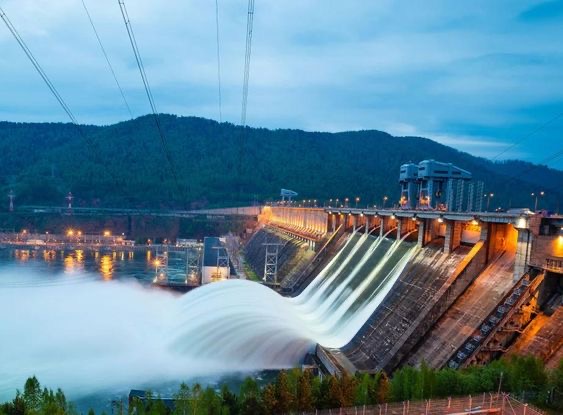
• GDP represents the total monetary value of all final goods and services produced within a country’s borders over a specific period, typically a year. It is a flow measure, reflecting annual economic output and productivity across sectors like agriculture, manufacturing, and services. For India, GDP approximates $4 trillion (nominal, 2024-25 estimates) and roughly $15 trillion in PPP terms, encapsulating the labor, capital, and resources of 1.4 billion people.
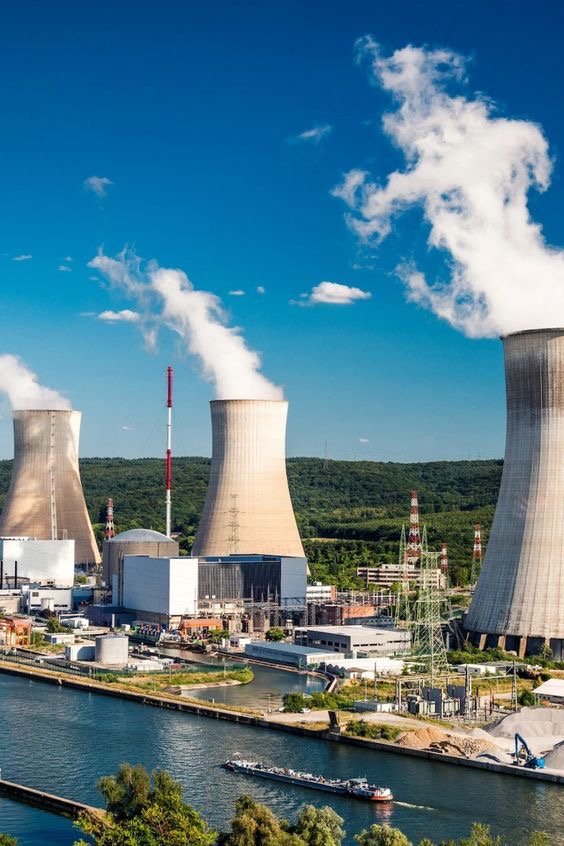
• In contrast, market cap is the aggregate value of a company’s outstanding shares at current stock prices—a stock variable snapshot at a single point in time. NVIDIA’s mcap, recently surpassing $3 trillion, embodies investors’ expectations of future earnings, innovation (e.g., AI chips), and growth potential, not its current production. It’s highly volatile, swinging with market sentiment, unlike GDP’s relative stability.
• Economically, this apples-to-oranges comparison ignores scale: GDP aggregates national activity, while mcap is firm-specific and forward-looking, often inflated by speculative bubbles. Such rhetoric oversimplifies complex dynamics, potentially misleading public discourse on economic health and policy.

Naagmani of Chamba: The Temple That Heals Snakebites Without a Hospital

🐍 Before the First Prayer, There Was the Naag

In the mystical folds of Himachal Pradesh’s Chamba district, tucked away from tourists and time, stands Naag Mandir Jumhar—a temple as old as legend itself. Believed to be over 1150 years old, this sacred shrine isn’t just another mark of faith. It’s where myth walks alongside medicine, and nature bends to the will of divinity.

💎 The Real ‘Naagmani’ That Heals

Locals swear by it: the temple houses a real Naagmani, a divine gem believed to possess life-saving properties.

🌀 This isn’t folklore to them—it’s a living truth.

🌀 When snake or scorpion bites strike the region, no one rushes to a hospital. Instead, victims are brought here.

🌀 The Gur (priest) prepares a sacred paste using the Naagmani, which is then applied to the bite.

🌀 Recovery, locals claim, is almost miraculous. Some say even modern doctors have silently witnessed the power.

🌧️ The Oracle of Weather and Warnings

But healing is only one facet of this temple’s mystique.

🌩️ When heavy rains loom or droughts threaten, villagers don’t check forecasts—they consult the Gur, who receives warnings through divine visions.

🌾 Rituals are then performed to balance nature’s fury—be it storms, disease, or pestilence.

🌿 It’s not superstition. It’s ancestral science, passed down through dream, devotion, and duty.

🐮 Even the Cattle Are Blessed

The Naagmani’s aura is said to extend beyond human healing.

🐄 Villagers believe even cattle grazing near the temple fall less sick, as if under an invisible shield of protection.

🌿 The very air near the temple, they say, carries a cleansing frequency—one that keeps disease at bay and prosperity flowing.

🌊 The Naag Lake: Waters That Whisper

Just beyond the temple lies the sacred Naag Lake, shimmering like a jewel in the woods.

💧 Its waters are believed to hold curative energies, where devotees dip their hands, hoping for relief from ailments.

💧 During temple fairs, pilgrims carry small vials of this water back to distant villages—faith, bottled and carried home.

🛕 The Elder Brother of Khajji Naag

Naag Devta of Jumhar isn’t just a village deity.

⚡ He is believed to be the elder brother of Khajji Naag, the revered serpent god of Khajjiar.

⚡ Every harvest, wedding, and new beginning in the region begins only after bowing before him—the protector, the healer, the unseen force in the valley.

🕉️ The Last Word

This isn’t just a temple. It’s a heartbeat of belief, pulsing through centuries in silence. Where science stops, Naagmani begins—a jewel not just of healing, but of heritage.

The Whisper That Created Wisdom: Shiva as Adi Guru🔱

🌌 Where It All Began

Long before the world took shape…

Before languages formed and thoughts scattered across the skies…

Before questions were born and answers pursued There was stillness.
There was presence.
There was Shiva.

He did not walk into history. He existed before it.

Not as a god to be worshipped, but as a consciousness so complete that it had no need for speech.
He was not a messenger.
He was the message.

🧘‍♂️ Shiva: The Adi Guru, the Primordial Teacher

🕉️ Shiva is known by many names—Mahadev, Rudra, Nataraja—but in the heart of yogic and spiritual traditions, he is revered as the Adi Guru, the first guru.

The one who lit the torch of knowledge in absolute darkness—not with books, sermons, or commandments, but through presence alone.

When there were no students, he became the teacher.

When there were no paths, he became the way.

And when there were no words, he became silence.

🌳 Dakshinamurthy: The God Who Spoke Through Silence

🔱 In his form as Dakshinamurthy, Shiva sat beneath an ancient banyan tree, south-facing (dakshina), with rishis seated around him—their minds ready, their egos dissolved.

But he didn’t lecture. He didn’t recite.

📿 His teaching was silence itself.

Because what he transmitted was beyond language, beyond logic, beyond intellect.

“मौनं व्याख्या प्रकटित परब्रह्म तत्त्वम्”

(He reveals the supreme truth through silence)

— Dakshinamurthy Stotram

In this silence, the rishis understood. Not mentally, but existentially.

Truth didn’t pass through the ears. It arose from within.

🧙‍♂️ The Saptarishis: Carriers of Cosmic Knowledge

🔥 Shiva’s first disciples were the Saptarishis—the seven primordial sages:

Vashistha, Vishwamitra, Atri, Bharadwaja, Gautama, Jamadagni, and Kashyapa.

Each one a living embodiment of a cosmic law. Each one a vessel of truth so ancient, it predates memory.

🌬️ What did Shiva teach them?

  • 🔺 The geometry of energy—Tantra
  • 🧘 The discipline of meditation—Dhyana
  • 📖 The vibration of sound—Mantra
  • 🌌 The flow of universal rhythm—Sanatana Dharma
  • 🔥 The inner fire—Kundalini awakening
  • 🌀 The cycle of transformation—Yoga

They were not simply taught.

They were initiated.

And through them, every sacred tradition—Shaiva, Tantric, Siddha, Nath, Vedantic—was seeded.

⚡ Not Religion, But Realization

🙏 Shiva didn’t found a religion.

He transmitted a state—a shift in consciousness that unlocked human potential.

Where other paths begin in thought, Shiva’s begins in dissolution.

To follow Shiva isn’t to believe.

It is to disappear into awareness so fully that only truth remains.

His teachings are found not in verses, but in vibration, gesture, gaze, and stillness.

🔮 The Legacy of the Silent Guru

Even today, in the quiet forests, on Himalayan peaks, in lonely ashrams and crowded cities, yogis sit in silent meditation—repeating no mantras, performing no rituals.

Just being.

Just receiving.

Because once you connect to that silence, you are connected to the same current the Saptarishis once touched.

🕯️ Shiva still teaches—not in temples alone, but in the spaces between thoughts, in the pause between inhale and exhale, in the stillness behind the eyes that see.

🌺 Conclusion: The Guru Who Never Spoke, Yet Taught Everything

To call Shiva the Adi Guru is not poetic symbolism—it is cosmic recognition.

Before there was seeking, there was awakening.

Before paths were walked, there was a presence so complete that just sitting before it set souls on fire.

And that fire still burns.

👉 In silence, he taught.

In presence, he revealed.

And in truth, he lives—now, as then.

Hampi Rocks: India’s 3-Billion-Year-Old Time Machines🪨

0

🪨 An Ancient Puzzle Older Than Time Itself

Before there were dinosaurs. Before the Himalayas rose. Even before the continents as we know them split apart—there were the Hampi rocks.

Formed over 3 billion years ago, these granite boulders lie in the Dharwar Craton, one of the oldest and most geologically stable regions on Earth. While the Himalayas are a youthful 50 million years old and Pangaea split just 200 million years ago, Hampi has silently existed since the earliest chapters of Earth’s story.

These timeless stones weren’t shaped by violent volcanoes or shifting plates. 🌞 Wind, 💨 rain, and ☀️ sunlight patiently carved these ancient marvels over millennia—slow, steady, and precise. Yet their random arrangements remain a mystery.

🏰 The City That Rose From the Rocks

In the 14th century, Hampi became the stage for something spectacular: the birth of Vijayanagar, the City of Victory.

🏯 At its peak, it was the second-largest medieval city on Earth after Beijing, buzzing with markets, temples, and warriors.

📿 Yet not all rocks were touched. Many boulders held spiritual significance and were left exactly as they were—sacred, ancient, and revered.

🪵 With no modern machinery, how did medieval architects cut those massive stones? Ingeniously.

🔨 They would drill holes, insert wooden pegs, then pour water. The expanding wood created enough pressure to split the rock cleanly—a masterclass in natural engineering.

📜 Where Myth Meets Monolith

Hampi isn’t just stone and story—it’s a spiritual epic.

🐒 According to the Ramayana, this land was the arena for the legendary battle between monkey-kings Sugriva and Vali, who hurled these massive boulders at each other in rage.

🌄 It’s also believed to be the birthplace of Lord Hanuman, marked today by a white temple atop Anjani Parvat, where pilgrims still climb for divine blessings and panoramic views.

🧗 A Playground for Modern-Day Titans

Today, Hampi has evolved again—into the world’s largest bouldering destination.

🧗‍♂️ From pebble-sized practice stones to towering granite beasts, Hampi offers challenges for every level.

🌍 Climbers from across the globe journey here not just for the adventure—but for the surreal feeling of scaling ancient Earth itself.

Every crack, every curve, every climb tells a story written over billions of years.

✨ A Land Where Time, Stone, and Spirit Converge

Hampi is more than just a destination.

It’s where deep time, spiritual legend, and human creativity meet under the Indian sun.

From prehistory to prophecy, Hampi’s rocks continue to echo the footsteps of gods, kings, and climbers.

👉 So the next time you stand on a Hampi boulder, remember:

You’re not just standing on a rock.

You’re standing on 3 billion years of Earth’s memory.

India’s First State to Deliver Medicines by Drone: Meghalaya’s Lifesaving Sky Mission💊

🌄 A New Dawn in the Northeast

Tucked deep in the misty hills of India’s northeast, a revolution is rising—not from the ground, but from the skies. In villages where doctors were distant and medicines delayed, hope now flies in with precision and power.

🚁 India’s First State to Deliver Medicines by Drone

In a historic leap for rural healthcare, Meghalaya has become India’s first state to deliver medicines by drone. This skybound initiative has shattered barriers of distance, terrain, and time.

  • 🚁 Essential drugs, vaccines, and blood units now fly over steep hills and dense forests
  • ⏱️ What took 4 hours by road now arrives in 30 minutes
  • 🧪 Samples are flown back to labs for fast diagnostics

Meghalaya didn’t wait for roads to be built—it built a future in the air.

🏥 From 5 to 13 Centres: The Network of Life

The journey began with just five health centres. Today, 13 remote facilities are seamlessly connected via drone corridors across:

  • 🌿 West Garo Hills
  • ⛰️ South Garo Hills
  • 🌳 East Garo Hills
  • 🌄 West Khasi Hills

Each centre now receives timely, uninterrupted medical supplies—even during heavy rains or blocked paths.

🩸 A Two-Way Medical Highway in the Sky

This isn’t just one-way delivery—it’s a bi-directional medical express. Diagnostic samples are flown out, and test reports fly back in hours, not days.

  • 🔬 Immediate lab processing
  • 💉 Quick decision-making for treatment
  • ⏳ Time saved = lives saved

Villagers no longer wait in worry. They wait with confidence and connection.

🌐 Powered by Tech, Driven by Humanity

Behind this initiative lies a fusion of public will and private innovation. In partnership with tech startups and healthcare leaders, the state created:

  • 📡 Real-time drone tracking systems
  • 🔄 Cold-chain enabled payloads for vaccines
  • 🛡️ Contactless delivery protocols for safety

This isn’t just about drones—it’s a commitment to accessible healthcare for every Indian, everywhere.

🕊️ From Meghalaya to the Map of Innovation

Meghalaya has rewritten the rules of rural healthcare delivery. And now, India watches—and follows. This blueprint of aerial medicine delivery could soon touch every corner of the country.

✨ ENDING NOTE

In the skies above Meghalaya, a quiet revolution hums. And with every takeoff, the state reminds us:

When healthcare flies, hope lands.

How Kaal Bhairav Became the Eternal Protector of Kashi🔱

🌟The Sacred Flame of Kashi

Kashi—now Varanasi—is not just a city, it is a realm of moksha (liberation), time, and eternal divinity. Among its many divine protectors, one stands as the fierce guardian—Kaal Bhairav, the terrifying form of Mahadev. But what made Shiva take such a form? Why is Bhairav forever tied to Kashi? The legend is more gripping than most mythological tales—and it begins with ego, sin, and a severed head.

🧠 The Arrogance of Brahma: A Cosmic Imbalance

🔸 Brahma, the creator, was once consumed by pride.

🔸 He declared himself superior even to Shiva—the eternal force behind time and transformation.

🔸 His arrogance disrupted the harmony among the gods and threatened the cosmic order.

🌀 Shiva’s Wrath Unleashed: The Birth of Kaal Bhairav

🔸 To restore balance, Lord Shiva manifested as Kaal Bhairav—a terrifying avatar representing destruction, justice, and time.

🔸 He confronted Brahma, warning him of his ego.

🔸 When Brahma remained defiant, Bhairav severed one of Brahma’s five heads, punishing his hubris.

⚖️ The Curse of Brahmahatya: Sin Even in Righteousness

🔸 Despite punishing arrogance, Bhairav had committed Brahmahatya, the sin of killing a Brahmin.

🔸 As a consequence, the severed head of Brahma (Brahma Kapal) clung to Bhairav’s hand as a symbol of his guilt.

🔸 He began a painful journey of penance, wandering across sacred lands.

🙏 Redemption in Kashi: Where Sins Are Washed Away

🔸 Kaal Bhairav arrived in Kashi (Varanasi)—the eternal city, the land of Lord Vishwanath (Shiva).

🔸 Here, he performed intense penance and austerities.

🔸 After deep tapasya, the Brahma Kapal finally detached from his hand, marking his redemption.

🛡️ Guardian of Kashi: The Fearsome Protector

🔸 Freed from sin, Kaal Bhairav chose to stay in Kashi forever.

🔸 He became its guardian deity, ensuring no evil could harm this holy land.

🔸 Even today, no one can reside in Kashi without Bhairav’s permission—he is time, law, and the fierce protector of moksha.

📿 Kaal Bhairav and Kashi Vishwanath: Eternal Connection

🔸 The Kaal Bhairav Mandir and Vishwanath Mandir are spiritually entwined.

🔸 Devotees believe a darshan of Kashi Vishwanath is incomplete without visiting Bhairav first.

🔸 His presence assures protection, truth, and justice in Kashi.

🌈 Conclusion: The City of Light and the Lord of Time

Kashi isn’t just sacred—it’s timeless. And at its heart stands Kaal Bhairav, the terrifying yet just protector who once bore the burden of divine sin. His story is a reminder that even gods face consequences—and redemption is possible only through truth and surrender.

✨ If this story touched you, share it with those seeking truth. Let the world know about the fierce love and justice that protects the holy city of Kashi.