Home Blog Page 47

Why Sanatan Dharma Survived While Other Ancient Civilizations Collapsed🕉️

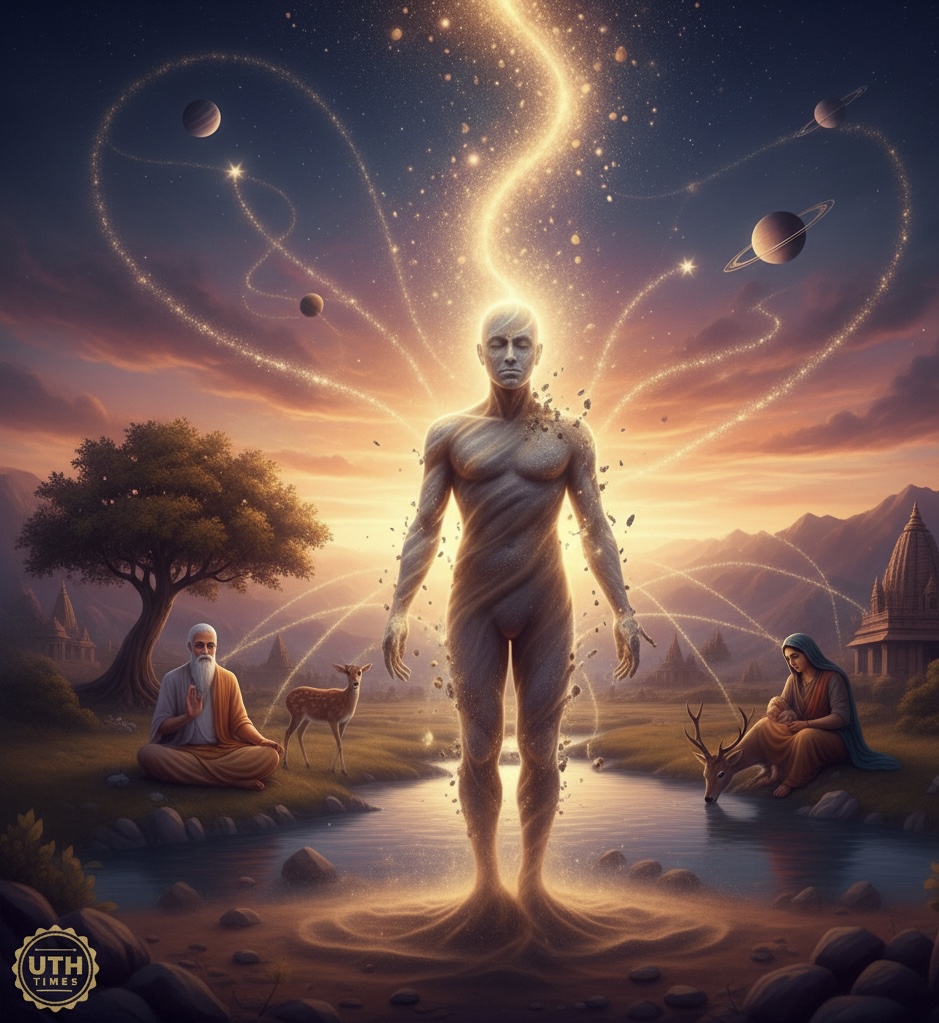
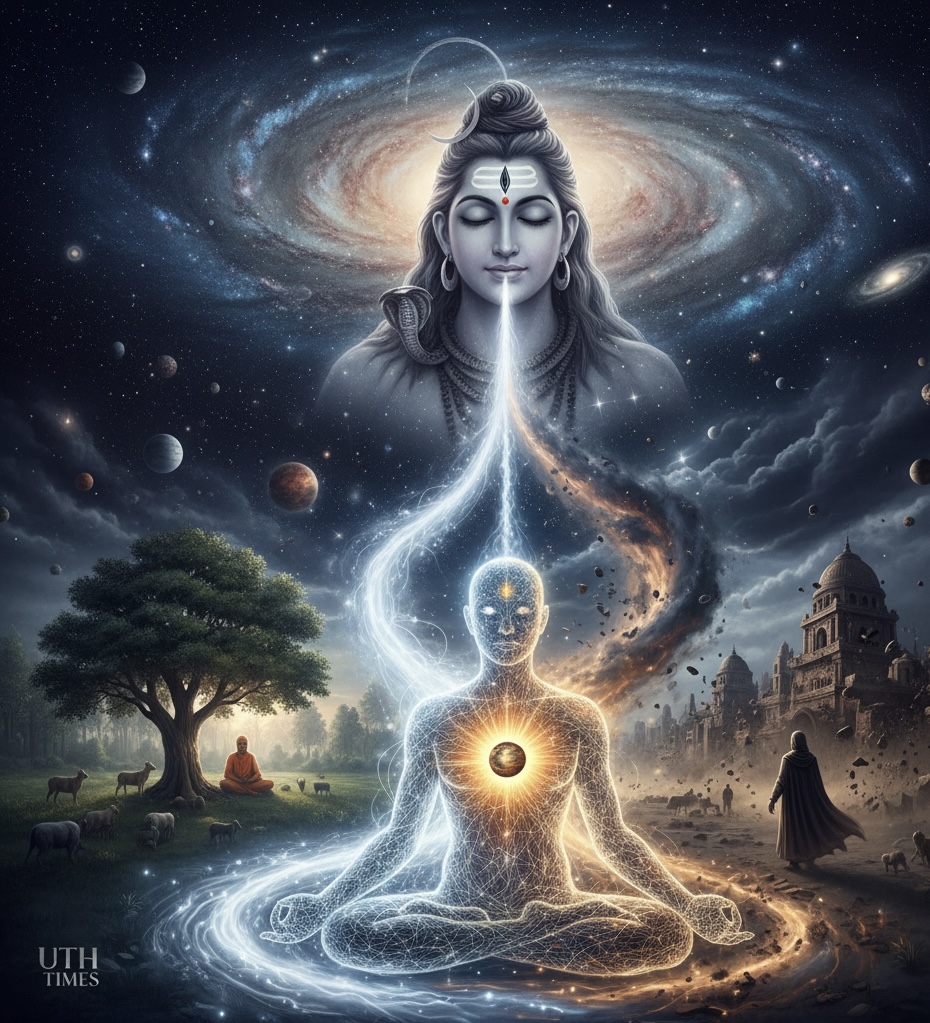
Civilizations rise like the sun, blaze for centuries, and then fade into ruins. Rome, Mesopotamia, Egypt—all left behind silent stones and scattered scrolls. Yet, amidst the collapse of empires, Sanātana Dharma—the world’s oldest living tradition—remains unbroken, still practiced by over a billion people. The question is not just “how,” but why.

🌿 Adaptability: The Secret of Timelessness

Unlike rigid systems, Sanātana Dharma is not confined to a single prophet, scripture, or doctrine.

  • 🌸 It embraces multiple paths—bhakti, jñāna, karma, yoga—allowing seekers to choose their way.
  • 🌸 Its openness to reinterpretation kept it alive during foreign invasions, colonization, and modern globalization.
  • 🌸 Instead of resisting change, it absorbed Buddhist thought, Sufi traditions, and even modern science into its vast ocean of wisdom.

This elasticity of thought made Sanātana Dharma not just survive, but thrive.

🔥 Resilience Through Philosophy

While empires collapse when their rulers fall, Sanātana Dharma rests not on power but on principles.

  • ⚡ The concept of Dharma—righteous order—creates a moral compass beyond political kings.
  • ⚡ The cyclical view of time (Yugas, Kalpas) gives followers patience, hope, and endurance through dark ages.
  • ⚡ Even when temples were destroyed, the idea of God as infinite and formless meant that divinity could not be erased.

This resilience turned invasions into temporary storms against an eternal sky.

🌏 Universalism: A Dharma for All

Sanātana Dharma proclaims Vasudhaiva Kutumbakam—“the world is one family.”

  • 🌼 Unlike exclusivist religions, it never demanded conversion, only respect for truth.
  • 🌼 This inclusivity meant it could coexist alongside other cultures rather than wage endless wars.
  • 🌼 Its spiritual vocabulary—Om, Yoga, Karma, Moksha—has transcended borders, shaping global thought even today.

By being universal, it could survive anywhere.

🌙 Conclusion

Other civilizations collapsed because they tied survival to rulers, empires, or rigid dogmas. Sanātana Dharma endures because it is not just a religion—it is a living ecosystem of ideas, evolving with time yet rooted in eternity. It is not history’s relic, but history’s reminder: truth cannot be conquered, only rediscovered.

Lost Civilizations That Modern Archaeology Still Can’t Explain

0

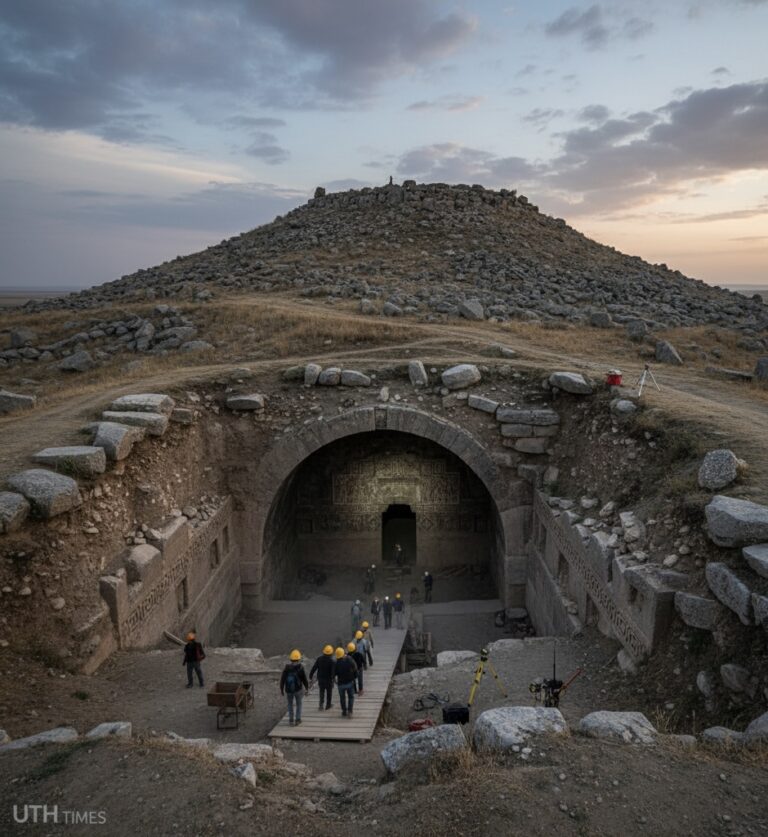
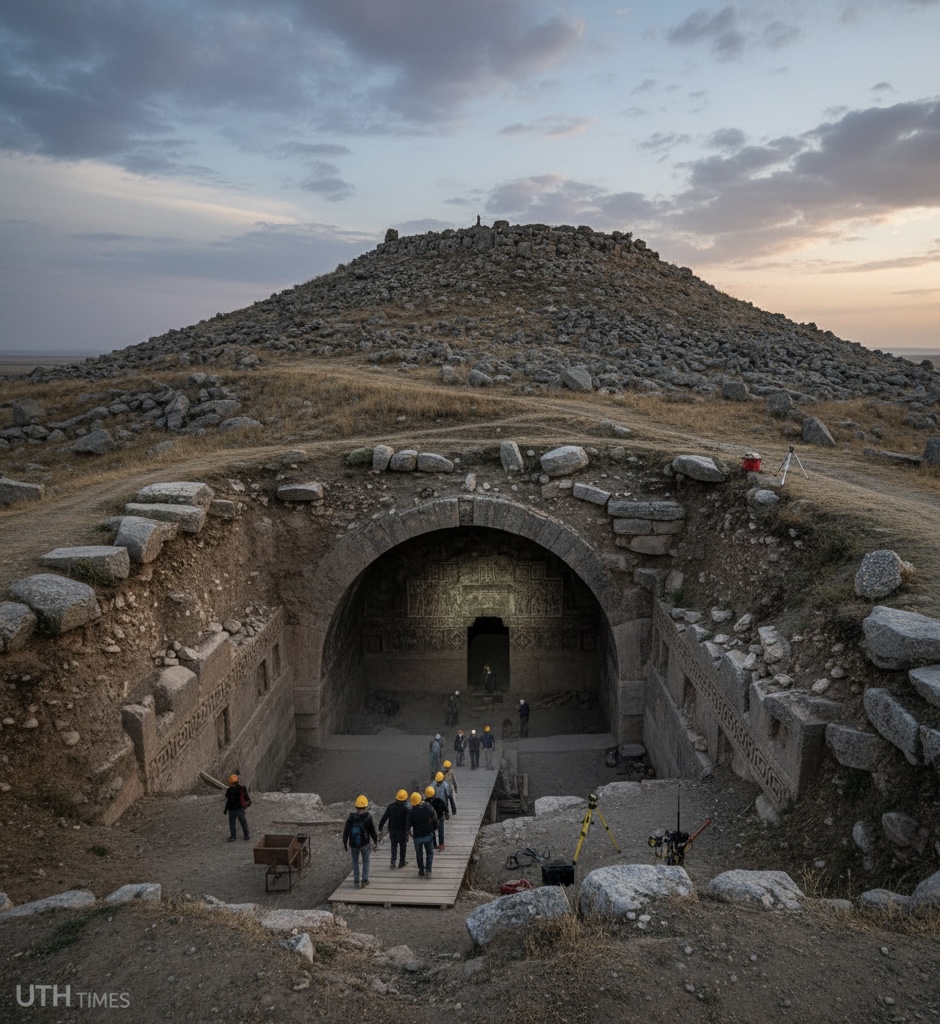
Some civilizations rose, thrived, and fell — leaving behind ruins that still whisper secrets. Yet, a few cultures vanished so mysteriously that even modern archaeology fails to decode their fate. These aren’t just forgotten societies; they are enigmatic worlds erased from memory. Let’s uncover the most baffling ones.

🏝️ The Sunken City of Dwarka

Legends from the Mahabharata describe Dwarka, the kingdom of Lord Krishna, as a jewel of the sea. For centuries, it was dismissed as mythology—until marine archaeologists found submerged ruins off Gujarat’s coast.

  • 🌀 Vast stone structures, grids, and pillars lie 100 feet underwater.
  • 🌀 Artefacts date back over 9,000 years—older than Mesopotamia itself.
  • 🌀 Was Dwarka swallowed by the sea as texts claim, or does it belong to a civilization even older?
    Despite evidence, mainstream archaeology struggles to fit Dwarka into the established timeline of human history.

🗿 The Olmecs: Giants of Mesoamerica

Before the Maya or Aztec, the Olmecs flourished around 1500 BCE in present-day Mexico. But who were they?

  • 🌀 Colossal stone heads, each weighing up to 50 tons, remain unexplained — how were they carved and moved without advanced tools?
  • 🌀 Their genetic origins remain murky — some researchers speculate African or even trans-oceanic connections.
  • 🌀 Their script and religious practices remain undeciphered.
    The Olmecs vanished suddenly, leaving only scattered traces for archaeologists to debate over.

🏜️ The Mysterious Nabta Playa

In the middle of Egypt’s desert lies Nabta Playa, a prehistoric site older than Stonehenge.

  • 🌀 Circular stone alignments suggest astronomical knowledge 7,000 years ago.
  • 🌀 Advanced water systems hint at surprising engineering skills.
  • 🌀 The people behind it vanished, leaving no written record.
    Who were these desert star-gazers? And how did they master such cosmic precision? Archaeologists are still searching.

🏯 The Indus Valley Puzzle

The Indus Valley Civilization (3300–1300 BCE) stretched across modern India and Pakistan. Yet, its mysteries endure.

  • 🌀 Its cities had sewage systems more advanced than Europe’s until the 19th century.
  • 🌀 The undeciphered script continues to defy linguists.
  • 🌀 No evidence of kings or armies — how did they govern such vast populations?
    When the civilization collapsed, it left silence — no clear cause, no clear successors.

✨ Conclusion

These civilizations are more than ruins — they are riddles carved into stone and time. Each lost society challenges our understanding of history, reminding us that human progress may be far older, deeper, and more mysterious than textbooks dare to admit.

Click here to learn From Chanakya : 9 Ancient Economic Lessons Still Alive…

0

India’s economic wisdom is not a new invention. Long before Wall Street and Silicon Valley, our land produced thinkers like Chanakya, whose Arthashastra (written around 300 BCE) remains one of the sharpest economic and political texts ever created.

Fast-forward to today, and you’ll see the same principles quietly powering modern businesses and startups.

Let’s explore 9 timeless economic lessons that prove—what is ancient, is still alive.

1. Diversify Income Streams

📜 Chanakya’s wisdom: A king should collect revenue from multiple sources, not just one.

🚀 Startup lesson: Smart companies don’t depend on one product. Think Reliance (oil + telecom + retail) or Google (search + ads + cloud).

2. Cash Flow is King

📜 Chanakya’s wisdom: Wealth must circulate; hoarded money loses value.

🚀 Startup lesson: Even unicorns collapse without liquidity. That’s why startups obsess over burn rate and cash runway.

3. Invest in Human Capital

📜 Chanakya’s wisdom: The strength of a kingdom lies in its people.

🚀 Startup lesson: Tech giants thrive because of their teams. From Infosys to Zoho, people-first policies fuel innovation.
4. Information is Power

📜 Chanakya’s wisdom: Spies and intelligence networks are vital for stability.

🚀 Startup lesson: In today’s world, data is the new oil. Market research, analytics, and consumer insights are the “spies” of business.

5. Tax Smartly, Not Heavily

📜 Chanakya’s wisdom: “Collect taxes like a bee takes nectar—without harming the flower.”

🚀 Startup lesson: Businesses know customers stay loyal when pricing feels fair. Freemium models and low-cost subscriptions reflect this.

6. Adapt or Perish

📜 Chanakya’s wisdom: A wise ruler bends with changing times.

🚀 Startup lesson: Startups that pivot survive. Paytm went from recharge platform to fintech giant. Flexibility = survival.

7. Reputation is Wealth

📜 Chanakya’s wisdom: A ruler’s character ensures loyalty more than gold.

🚀 Startup lesson: In the age of reviews and Twitter storms, brand trust is everything. One scandal can sink years of growth.

8. Sustainable Growth > Quick Profit

📜 Chanakya’s wisdom: Long-term stability is better than short-lived gain.

🚀 Startup lesson: Investors love sustainable growth. Zerodha stayed profitable without burning billions in flashy ads.

9. Knowledge is the Ultimate Capital

📜 Chanakya’s wisdom: Education and strategy build empires.

🚀 Startup lesson: In the knowledge economy, startups built on ideas (like Byju’s, PhysicsWallah, Coursera) dominate global markets.

🌏 The Moral of the Story

From ancient kingdoms to modern boardrooms, economics runs on the same eternal principles.

Chanakya taught kings to think beyond gold. Today, startups think beyond valuations.

💡 The truth is clear: Markets change, technology evolves, but wisdom never expires.

7 Crazy Conspiracy Theories That Shockingly Turned Out Real

0

For years, people laughed at conspiracy theories, dismissing them as wild imagination. But history shows us something chilling — sometimes, those “crazy” theories turn out to be 100% real. From secret experiments to government cover-ups, here are 7 conspiracies once denied but later exposed.

🔍 The List

1. MK-Ultra: CIA’s Mind Control Program

👉 “Brainwashing wasn’t just sci-fi — it was real.”

In the 1950s–60s, the CIA secretly ran experiments using LSD, hypnosis, and torture to manipulate human behavior. For decades, it was denied as fiction, until declassified documents proved otherwise.

2. The Watergate Scandal

👉 “A burglary that brought down a president.”

In 1972, suspicions arose that President Nixon’s team spied on political opponents. First dismissed as rumor, it turned out true — leading to Nixon’s historic resignation.

3. Project Sunshine: Human Bodies Used for Experiments

👉 “Science done in the shadows.”

In the 1950s, whispers spread that researchers used body parts from deceased infants and adults for radiation experiments — without family consent. Years later, documents confirmed the shocking truth.

4. The Tuskegee Syphilis Study

👉 “Treatment was withheld… just to ‘study’ death.”

For 40 years (1932–1972), U.S. health officials observed African-American men with syphilis but never treated them, even after a cure was found. This scandal remains one of the darkest chapters in medical ethics.

5. Big Tobacco Hid Cancer Links

👉 “The smoke and mirrors of an industry.”

For decades, cigarette companies knew smoking caused cancer. Instead of warning people, they funded misleading studies and advertising campaigns. It was only in the 1990s that internal documents exposed the cover-up.

6. The Iran-Contra Affair

👉 “A real-life political thriller.”

In the 1980s, U.S. officials secretly sold weapons to Iran and funneled the money to Nicaraguan rebels. Initially denied, investigations later revealed the entire covert operation.

7. NSA Mass Surveillance (Snowden Revelations)

👉 “Privacy was an illusion all along.”

For years, people joked that governments were spying on every call, text, and email. In 2013, Edward Snowden revealed it was all true — the NSA was conducting global surveillance on an unimaginable scale.

🔮 Closing

Not every conspiracy theory is true. But history proves one thing — sometimes the most unbelievable stories are the ones rooted in reality. The next time you hear a theory that sounds crazy, remember: truth is often stranger than fiction.

The Miracles of Somnath Jyotirlinga That Will Give You Goosebumps😬

✨ Introduction

Somnath is not just a temple — it is a legend carved into stone, rebuilt from dust, and guarded by divine mystery. Among the twelve Jyotirlingas of Shiva, Somnath stands apart, wrapped in tales of miracles, invasions, and eternal resilience.

🌌 The Self-Manifested Jyotirling

According to ancient scriptures, Somnath was Swayambhu — a self-manifested Shivling radiating cosmic energy. It was said no sculptor’s hand had touched it, yet it shone with a brilliance that attracted kings, sages, and travelers from across the world.

🧲 The Shivling That Floated in Air

Arab and Persian chronicles describe Somnath’s Shivling as an object defying gravity. It appeared to float in space, not resting on any base. Many believed it was suspended by unseen magnetic forces — a science far ahead of its age. For pilgrims, however, it was nothing less than the visible play of Shiva’s divine power.

⚔️ Mahmud of Ghazni’s Encounter (1025 CE)

When Mahmud of Ghazni stormed Somnath, his soldiers froze in awe. Inside the sanctum, before their eyes, stood a Shivling hovering in the air. Fear spread like wildfire — touching it seemed like inviting death. For a moment, even the invaders hesitated.

But greed silenced their fear. Ordered by Ghazni, they struck with hammers and bars. The weapons curved away unnaturally, as if some unseen force resisted the blow. At last, when cracks appeared, hidden gems spilled out — dazzling wealth beyond imagination. Yet, legends whisper that the true Jyotirlinga remained untouched, beyond human destruction.

🔥 Seventeen Attacks, Seventeen Resurrections

The plunder of 1025 was not the end. Over centuries, Somnath faced seventeen invasions. Each time, the temple was razed to the ground. Yet each time, it rose again, stronger and grander. Somnath became the living symbol of India’s unbroken spiritual spirit, a flame that invaders could never extinguish.

🌊 Conclusion

Somnath is more than stone walls or rituals. It is a testament to faith, resilience, and the mysteries of the divine. Even today, when the ocean waves crash against its shores, one can almost hear the echo of a Shivling that once floated — a miracle that refused to die.

Why Scientists Think 3I/ATLAS Might Not Be a Normal Comet

0

🌌 A Comet That Refuses to Be Normal

3I/ATLAS, an interstellar visitor, has been under watch by Avi Loeb and his team. Unlike any comet observed before, it carries a bizarre chemical fingerprint: nickel without iron and cyanide streaming at 20 grams per second.

Normally, nickel and iron appear together, born side by side in the furnaces of supernovae. But here? Iron is missing, as if nature’s balance has been hacked. Add to that a smokestack-like release of cyanide, and suddenly the line between comet and machine begins to blur.

🏭 Nickel Refining in the Void

🔹 Nickel loss: 5 g/s

🔹 Cyanide production: 20 g/s

🔹 Both spike near the Sun

On Earth, such a pattern mirrors nickel carbonyl refining, a process used in metallurgy. Nature doesn’t run refineries—but industries do. The absence of iron hints at purposeful separation, a sign that this might not be just a chunk of frozen rock. Instead, it resembles a leaking factory drifting through the solar system.

🌍 The Unnatural Chemistry of 3I/ATLAS

Observations from Webb, SPHEREx, and Hubble deepen the mystery:

  • 🚫 No classic comet tail, despite a massive dust coma.
  • ❄️ 95% CO₂, only 5% H₂O, opposite of water-rich comets.
  • 🛰 Trajectory aligned with the ecliptic plane, as if deliberately aimed inward.

Every datapoint screams “designed,” not “random.” Instead of obeying cometary rules, 3I/ATLAS bends them, creating an object that behaves like technology cloaked in geology.

📡 The October 3, 2025 Opportunity

Loeb proposes we turn our largest radio telescopes toward 3I/ATLAS during its Mars flyby this October. If this object carries intelligence, it might broadcast—or at least echo—our signals back. Notably, its departure from the Oort Cloud would line up with humanity’s 80-year-old radio and nuclear awakening. Was someone listening, and responding?

🤖 Comet or Craft?

Best case: a strange CO₂-rich comet unlike any other.

Worst case: evidence of alien technology, a refinery venting into the void.

Nickel without iron. Cyanide like exhaust. A trajectory too deliberate to ignore. 3I/ATLAS might not just be passing through—it might be leaving a trail of breadcrumbs across the solar system.

✨ The Universe Just Winked

This isn’t just science—it’s a riddle. A silent, leaking, CO₂-soaked machine gliding across the stars. The question isn’t whether it’s a comet. The question is whether we’re ready to admit it might not be.

7 Times India’s Economy Outsmarted Global Predictions🇮🇳

0

For decades, economists around the world have tried to predict India’s economic journey. 📈

But time and again, Bharat has proved them wrong—defying numbers, breaking stereotypes, and writing its own script.

Here are 7 iconic moments when India’s economy outsmarted global predictions 👇

1. The 1991 Economic Reforms

💡 Prediction: India was seen as a “closed” economy on the brink of collapse.

🔥 Reality: Liberalization, privatization, globalization (LPG) reforms turned the crisis into a comeback. Within a decade, India emerged as one of the fastest-growing economies.

2. Dot-Com Boom of the Early 2000s

💡 Prediction: Outsourcing would make India “just a cheap labour hub.”

🔥 Reality: IT revolution in Bengaluru, Hyderabad, and Gurugram created global giants like Infosys, TCS, and Wipro—transforming India into the world’s digital back-office.

3. 2008 Global Financial Crisis

💡 Prediction: The meltdown would drag India down with Wall Street.

🔥 Reality: While Western economies suffered recessions, India maintained growth of around 6–7%—earning the title of “resilient economy.”

4. The 2010s Smartphone & UPI Boom

💡 Prediction: Cash-loving India would take decades to embrace digital finance.

🔥 Reality: In less than a decade, UPI became the world’s largest real-time payments system, surpassing even China and the US.

5. COVID-19 Pandemic (2020–2022)

💡 Prediction: India would collapse under the economic strain of lockdowns.

🔥 Reality: Despite contraction in 2020, India bounced back as the fastest-growing major economy post-pandemic, powered by vaccines, startups, and digital adoption.

6. Surpassing the UK in 2022

💡 Prediction: Colonial hangover made it seem impossible for India to beat its former ruler anytime soon.

🔥 Reality: By 2022, India overtook the UK to become the fifth-largest economy, a historic reversal of roles.

7. The Trillion-Dollar Startup Wave

💡 Prediction: India lacked venture capital culture and innovation mindset.

🔥 Reality: By 2025, India is home to 100+ unicorns, making it the world’s third-largest startup ecosystem after the US and China.

🌏 The Moral of the Story

Economists calculate with numbers. India calculates with civilizational resilience.

Every time the world writes India off, Bharat rises with something no model can measure—its unstoppable spirit.

✨ The next prediction? That India will be the world’s third-largest economy by 2030.

But if history has taught us anything, maybe—just maybe—it will happen even sooner. 😉

The Big Bang Wasn’t the Beginning — It Was a Black Hole’s End

0

🌌 A New Twist in the Cosmic Story

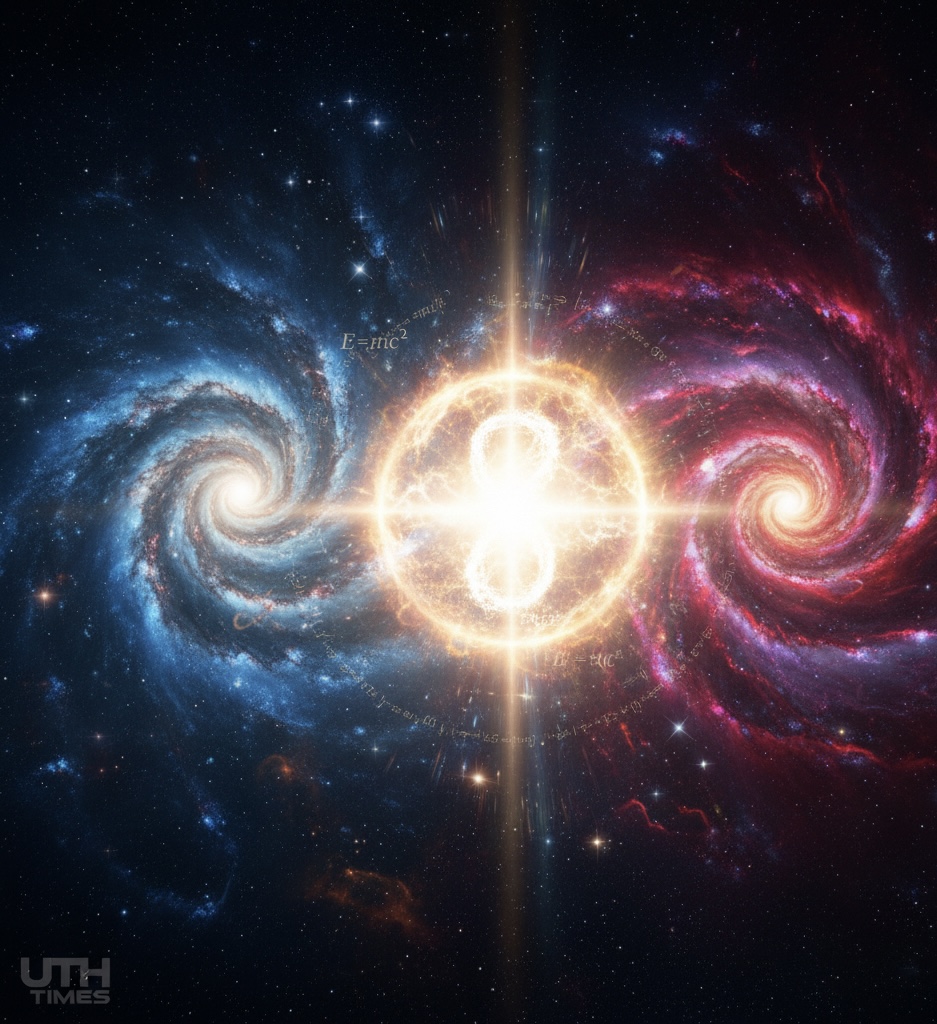
The Big Bang is often taught as the absolute beginning of everything — time, space, matter, and energy exploding from a single singularity. But what if we’ve misunderstood the greatest event in the universe’s history? What if the Big Bang was not a beginning, but an aftermath?

That’s exactly what a groundbreaking paper in Physical Review D suggests: our universe may have bounced out of a black hole.

🕳️ The Black Hole Universe Hypothesis

Instead of imagining the universe as born from nothing, researchers propose that it emerged from the collapse of a previous cosmic structure. When a massive star collapses, it forms a black hole. Now imagine that, but on a truly cosmic scale: a gravitational collapse so enormous that it doesn’t end with destruction but with rebirth.

  • 🌠 Inside the black hole, matter and energy crunch down into a near-singularity.
  • 🔄 Instead of remaining trapped forever, the intense density creates a “bounce” — like a compressed spring releasing.
  • 🌍 The bounce manifests not as destruction, but as the expansion of a brand-new universe — ours.

In this picture, the Big Bang wasn’t the start of time, but the aftermath of a gravitational implosion.

🔬 The Science Behind the Bounce

The mathematics behind this idea is grounded in general relativity and quantum physics. While Einstein’s equations predict singularities (infinite density), quantum corrections hint that nature avoids true infinities. Instead, at ultra-high densities, spacetime can rebound.

Researchers model this “quantum bounce” as the point where:

  • 🌀 Gravitational collapse halts.
  • 💥 Pressure and density trigger an explosive reversal.
  • 🌌 The reversal creates an expanding space-time — which we perceive as the Big Bang.

This makes the Big Bang less of a birth and more of a cosmic metamorphosis.

🔭 Why This Changes Everything

If true, this theory answers age-old mysteries:

  • ✨ Why did the universe start so smooth yet slightly uneven? A bounce naturally seeds those patterns.
  • ♾️ Could there be multiple universes, each born from collapses of older ones? Yes — this model allows an eternal chain of black-hole universes, a cosmic recycling.
  • ❓What was “before” the Big Bang? According to this idea, a previous universe’s collapse.

This isn’t science fiction — it’s a framework rooted in observable physics, tested against cosmic microwave background data and gravitational models.

🚀 The Beginning Was an Ending

So maybe we’ve been asking the wrong question all along. Instead of “What came before the Big Bang?”, the answer might be: another universe collapsed into a black hole.

The Big Bang, then, is less a divine spark and more a phoenix moment — the universe rising from the ashes of another.

And if that’s true, our cosmos isn’t a lonely singular event — it’s part of a grand, endless cosmic cycle.

The Day an Alien Spoke Through a Mexican Pilot’s Voice 👽🛸

0

🌅 A Flight That Was Never Supposed to Be Legendary

On June 21, 1976, a young student pilot, Rafael Pacheco Pérez, took off from the Escuela de Aviación de México for what should’ve been a routine training flight. It was a clear day, a small trainer plane, and a simple route. Nothing about that morning suggested history was about to be written in the strangest way possible.

But somewhere between Mexico City and Acapulco, the ordinary turned into the unimaginable.

⏳ The Hour That Vanished

Radar screens in Mexico City suddenly lost Pacheco’s aircraft. No blip. No signal. Nothing. For an entire hour, he was gone.

Then, without warning, the plane reappeared—circling over Acapulco, a journey that should’ve taken nearly three hours in his trainer. Instead, it happened in just one. The physics didn’t add up. The timeline didn’t add up. And then came the voice.

📡 “We Are Observing You”

As controllers scrambled, they heard a chilling transmission. Air traffic controller Carlos de Kretschy listened closely as a calm, almost mechanical voice came over the frequency.

👉 “You are not alone in the universe… we are observing you.”

The voice claimed that Rafael himself was merely the microphone—a human radio being used as a vessel. It wasn’t the pilot speaking, but something through him.

🛬 An Impossible Landing

When Pacheco finally landed in Acapulco, investigators swarmed. What they found raised more questions than answers:

  • ⛽ Fuel tanks were nearly full, even though such a flight should’ve drained them.
  • 🧑‍⚕️ Medical checks showed no drugs, no illness—only a deep, unnatural drowsiness.
  • 🗣️ Pacheco’s memory was blank; all he recalled was overwhelming sleepiness before blacking out.

From that day onward, the young pilot reportedly never flew again.

🛸 Theories That Refuse to Rest

Researchers, skeptics, and UFO enthusiasts have debated this case for decades. What really happened during that missing hour?

  • 👻 Possession Theory: Was Pacheco’s body hijacked, his voice used like a puppet?
  • 🛸 UFO Encounter: Did he slip into contact—or even inside—a non-human craft?
  • ⏳ Time-Slip Hypothesis: Did the laws of space and time briefly bend for his aircraft?

None of these explanations fully satisfy the evidence. Yet none can be dismissed either.

🌌 A Whisper That Still Echoes

Nearly fifty years later, Rafael Pacheco’s vanished hour remains one of aviation’s eeriest stories. Was it a hoax, a hallucination, or a genuine cosmic encounter?

One thing is certain: when that calm voice spoke through him, it left behind a message humanity still struggles to answer—

“You are not alone.”

India’s Civilizational Comeback: The Modi Govt’s Economic Revolution

0

India is no longer the promise of tomorrow — it is the force of today shaping the future. According to a landmark EY (Ernst & Young) report, by 2038, India will rise to the world’s second rank in GDP (PPP terms), overtaking the United States with a projected $34.2 trillion economy. This isn’t just economics; it’s history correcting itself.

📊 The Big Shift: From Emerging to Dominating

For years, India was boxed into the label of an “emerging market.” But those days are over. The transition from the world’s fifth-largest economy in nominal terms today to the second-largest in PPP by 2038 is a dramatic shift in global hierarchy.

This leap is more than just numbers — it’s a civilizational return to scale. India, once home to one of the greatest economies in pre-colonial times, is reclaiming its place at the head table of global power.

⚡ The Power Drivers of India’s Rise

India’s ascent is not accidental; it’s driven by deep structural strengths and bold reforms:

  • 👩‍💼 Demographic Muscle: By the 2030s, India will command the world’s largest workforce, with a median age far younger than most advanced economies. This demographic dividend ensures labor, talent, and innovation at unmatched scale.
  • 🏭 Industrial Momentum: From semiconductor plants to defense manufacturing, India is turning into a factory hub of the world. Programs like Make in India and Production-Linked Incentives are pulling global giants into Indian soil.
  • 📲 Digital Revolution: No other economy has built a public digital stack like India — UPI, Aadhaar, CoWIN, and ONDC are case studies in digital inclusion, efficiency, and speed. This foundation is boosting productivity across sectors.
  • 🌱 Green Transformation: India is set to become the largest renewable energy hub of the future. With solar, EVs, and green hydrogen, the country is ensuring growth without compromising sustainability.

🏆 Global Impact

India’s arrival at the world’s No. 2 economic rank will have seismic global consequences:

  • 🌍 Strategic Balance: For the first time in centuries, the global economic order will be led by two Asian giants — China and India — with the US pushed to third place.
  • 💸 Investment Magnet: Stable democracy, a rising middle class, and a booming consumer market will make India the prime destination for global capital.
  • 🔗 Trade Rewiring: From ASEAN to Africa, India will become the nerve center of the Global South, connecting supply chains, digital flows, and energy corridors.
  • 🏛️ Voice of the People: Unlike China’s closed model, India offers the world a democratic growth alternative, amplifying its moral and political weight.

🔮 The Future Path: Beyond Numbers

By 2038, the world will not just witness India’s rise — it will feel it in trade policies, cultural influence, and global decision-making. The second economy title is not the endgame, but a stepping stone towards global leadership in innovation, sustainability, and governance.

🔥 Closing

The forecast is clear: by 2038, India will not just rise — it will reign as the world’s second economy, leaving the US behind and reshaping global power for generations. The future isn’t shifting west or east anymore. The future is Indian. 🇮🇳