Home Blog Page 46

The Giant Snake of Congo: The True Story of Africa’s 50-Foot Snake Sighting

0

A Startling Encounter in the Skies

In 1959, Belgian pilot Remey Van Lierde was flying over the dense jungles of the Congo when he spotted something that froze him mid-flight—a snake so large it seemed impossible. He estimated its length at nearly 50 feet, a size that defied both biology and imagination. Acting quickly, he ordered his co-pilot to take photographs as he circled the area multiple times. Those grainy black-and-white images would later spark one of the most enduring mysteries of Africa.

🐍 The 50-Foot Snake That Shouldn’t Exist

Witnesses described the snake as thick as a tree trunk, with a triangle-shaped head wider than a man’s shoulders. If accurate, this creature would dwarf even the largest known anacondas and pythons. Scientists tried to dismiss it as an optical illusion or exaggeration—but the photograph still stands as forbidden evidence that something far bigger lurks in the Congo.

  • Comparison: The prehistoric Titanoboa reached 42 feet—shorter than Van Lierde’s claim.
  • Implication: Could such giants still roam in isolated, untouched regions?

🌿 The Congo: Land of Hidden Giants

The Congo Basin is one of the most unexplored regions on Earth. Its vast jungles hide countless species still unknown to science. Locals have long spoken of monstrous snakes, creatures that devour crocodiles whole and move like living rivers through the trees. What Van Lierde saw may not have been a lone anomaly, but a glimpse into Africa’s hidden biological inventory.

🧬 Beyond Biology: An Inconvenient Truth

The existence of such a snake isn’t just a zoological curiosity—it’s a challenge to the official narrative of evolution and extinction.

  • Were these creatures prehistoric survivors left untouched by time?
  • Or were they the result of something stranger—bioengineering from an age before humans?

Such questions unsettle science, which prefers tidy answers. And so, this story remains quietly shelved, passed around only in cryptozoology circles and whispered by explorers.

🎭 Monsters as Tools of Fear

Yet, there’s another layer. Sightings of giant snakes often coincide with moments of political upheaval. During Africa’s decolonization, when nations were reclaiming power, tales of monstrous fauna surged. Were such stories subtly amplified to keep people fearful of their own land? After all, a giant snake is easier to fear than invisible systems of control. Myths can herd minds just as fences herd cattle.

A Mystery That Refuses to Die

More than six decades later, the Giant Snake of Congo still haunts imaginations. Was it a real beast, a prehistoric remnant, or a carefully planted tale? We may never know for certain. But one thing is clear: sometimes the scariest monsters are not just the ones slithering in jungles, but the stories that shape what we dare to believe.

7 Places in India Believed to Be Portals to Other Dimensions ✨

0

India is not just a land of temples and traditions—it’s a living museum of mysteries. Across the subcontinent, there are certain places wrapped in myth, legend, and unexplained phenomena. Many believe these sacred spots aren’t just historical or spiritual—they may be gateways to other realms.

Let’s step into the mystic side of Bharat 🇮🇳👇

1. Martand Sun Temple, Kashmir☀️

This grand ruin is more than just a temple—it is said to resonate with cosmic energy. Locals whisper that its foundation stands on a power spot where sunlight opens a “cosmic window.” Some call it the “door of the devas”, where prayers could travel instantly to higher dimensions.

2. Bhangarh Fort, Rajasthan👻

One of the most haunted places in India, but mystics say it’s not ghosts that make it strange—it’s the energy vortex inside the fort. People have reported sudden disorientation, missing time, and an eerie silence that feels “otherworldly.” Could this be a tear in our reality?

3. Mount Kailash, Tibet (near Indian border) 🕉️

No human has ever climbed Kailash. Legends say it’s because it isn’t meant to be conquered—it’s a cosmic axis. Scriptures describe it as a gateway between earth and divine dimensions, where Shiva himself resides. Pilgrims feel time slowing down as they circumambulate this sacred peak.

4. Vimanasthali, Hampi (Karnataka)✈️

Hampi, the lost city of Vijayanagara, is filled with strange carvings of flying chariots—Vimanas. Some scholars believe the Vimanasthali hills were portals used by gods to travel across realms. Even today, the magnetic pull here feels unusually strong.

5. Shambhala (Hidden Himalayas) 🏔️

Texts from Tibetan Buddhism and Indian mysticism describe Shambhala as a hidden kingdom, accessible only through a secret portal in the Himalayas. Some believe it still exists—shielded by an interdimensional doorway that reveals itself only to the pure-hearted.

6. Rameswaram, Tamil Nadu🌊

Near the famous Ramanathaswamy Temple lies a mysterious stretch of sea—where Ram Setu begins. Scriptures say this is where Lord Rama connected to another realm for divine guidance. Divers claim the waters hold unusual stillness, like a threshold between worlds seen and unseen.

7. Chilika Lake, Odisha🐚

Known for its shifting islands and sudden weather changes, Chilika is believed to be a “water portal.” Locals narrate stories of fishermen disappearing for days, only to return with no memory. Legends claim this brackish lagoon hides a gateway to Naglok (realm of serpent beings).

🌌 Final Thought

Whether these are just myths or actual portals, one thing is clear—India’s sacred geography is infused with mysteries beyond science. Each of these places whispers that our world is not the only one… there are dimensions waiting just beyond the veil.

Why We Need To Honour The Sun….Again🌞

🌞 The Forgotten Glory of Surya Worship

There was a time when the Indian subcontinent glittered with Sun temples dedicated to Surya Dev. From the breathtaking Konark in Odisha to the Martand temple in Kashmir, these shrines were not just religious monuments but astronomical observatories, cultural hubs, and centers of cosmic energy.

The Sun was seen as the eternal witness, the life-giver, and the Vedic deity who powered all existence. In fact, Rigveda itself has over 100 hymns to Surya. Yet, somewhere down the centuries, India stopped building Sun temples. Why?

🔱 Political Upheavals and Invasions

The decline wasn’t natural—it was forced. Most Sun temples of North India were systematically destroyed during waves of invasions. The Martand Sun Temple in Kashmir, built in the 8th century by Lalitaditya, was reduced to rubble by Islamic rulers. Similar fates befell temples in Multan, Gujarat, and Bengal.

These weren’t just attacks on stone—they were attacks on civilizational memory. When the temples fell, the continuity of rituals, architecture, and traditions around Surya worship weakened drastically.

📜 Shift in Religious Priorities

As centuries passed, Vaishnavism and Shaivism rose to prominence, while Surya worship remained niche. Temples for Vishnu, Shiva, and Devi continued to be built, but Surya shrines became rare. The reason wasn’t rejection—it was assimilation. Surya was absorbed into other deities, appearing as an aspect of Vishnu (Aditya) or Shiva (Rudra-Surya).

Thus, while Surya mantras lived on in rituals like Sandhya Vandanam and Surya Namaskar in yoga, the grand temple tradition faded into silence.

🎭 Cultural Amnesia and Misrepresentation

Today, the tragedy deepens. Instead of reverence, cinema and popular culture often mock these sacred sites. Films like Haider label Martand temple as “Shaitan ki gufa”, turning a luminous heritage into a “den of demons.” This isn’t just ignorance—it’s erasure of civilizational pride.

We, as a society, celebrate fleeting pop culture moments but forget to reclaim the cosmic heritage that once placed India at the center of solar worship worldwide.

🌅 The Case for Rebuilding Sun Temples

Rebuilding Sun temples isn’t just about stone and mortar—it’s about restoring balance with the cosmos. Surya temples were aligned with solstices, equinoxes, and astronomical precision, making them powerful centers of spiritual energy and scientific wisdom.

Reviving them would mean:

  • 🌞 Spiritual Renewal: Reconnecting with Vedic roots.
  • 🏛 Cultural Pride: Reclaiming heritage erased by invasions.
  • 🔭 Scientific Legacy: Restoring India’s astronomical genius.
  • 🌍 Global Relevance: Positioning India as a leader in cosmic spirituality again.

🌞 Conclusion: The Call of Surya

The Sun still rises every morning, indifferent to whether we honor Him or not. But civilizations that forget their source of light sink into darkness. It is time we reclaim Surya, not as a relic of the past, but as the guiding flame of the future.

Mahabali Wasn’t from Kerala: The Real Story of Onam

0

🌸 Onam: More Than a Festival

Every year, Kerala blooms with pookkalams (floral carpets), echoes with boat races, and celebrates the legendary return of King Mahabali. To Keralites, Mahabali is remembered as the golden-age ruler who visits his people once a year. But what if the story we grew up with isn’t exactly what the scriptures say?

👑 The Traditional Kerala Legend

The popular version paints Mahabali as Kerala’s most beloved king. His reign was marked by prosperity, equality, and happiness—so much so that even the Devas grew envious. Lord Vishnu then descended as Vamana, the dwarf Brahmin, and during Mahabali’s yajna asked for three steps of land.

  • First step: Vamana covered the earth 🌍
  • Second step: He spanned the heavens 🌌
  • Third step: Mahabali offered his own head 🙏

Pressed down to the netherworld, Mahabali was not condemned but honored—Vishnu granted him Sutala to rule and the boon to return to his people once every year. That annual homecoming is what Onam celebrates.

📜 The old Version: Mahabali in Gujarat?

When we turn to the Bhagavata Purana and Vamana Purana, the narrative shifts. Mahabali’s yajna, where Vamana appeared, is not located in Kerala at all but on the banks of the Narmada River in Bharuch (ancient Bhrigukaccha, Gujarat).

  • Bharuch was sacred to Sage Bhrigu, central in Vaishnava lore.
  • The Ashvamedha Yajna performed by Bali there is where Vamana intervened.
  • Sutala, his divine new realm, is described as being under Vishnu’s personal protection.

This makes Bharuch, not Kerala, the actual backdrop of the Mahabali-Vamana episode.

🌀 Then Why Onam in Kerala?

Folklore travels, adapts, and roots itself in local culture. Kerala embraced Mahabali as the symbol of a just ruler and linked his annual return to its harvest festival. Over centuries, the itihaas and the agrarian celebration fused into Onam, a cultural identity far larger than geography.

🌺 Closing Thought

So, was Mahabali a Malayali king? Scriptures suggest otherwise. He may have ruled near the Narmada, yet Kerala claimed him as its own—turning Onam into not just a festival of return, but a timeless reminder of prosperity, equality, and hope.

The Secret Quarantine of Earth: A 13,000-Year Mystery 😱

0

Most believe Earth is just another planet evolving naturally. But what if I told you humanity has lived under a literal cosmic quarantine for over 13,000 years? A planetary lockdown—sealed from the galactic network—so deep that most forgot it ever existed. The truth is stranger than fiction.

🌍 Before the Quarantine: Earth as a Living Library

Earth was never designed to be a prison. She was envisioned as a Living Library, a convergence hub where DNA from countless star nations was interwoven.

  • ⭐ Lyra, Sirius, Andromeda, Pleiades, Arcturus—each seeded their codes here.
  • 👥 Souls once came freely to learn, exchange, and evolve.
  • 🌱 Earth was abundant, open, and alive—a galactic crossroads of wisdom.

But this treasure attracted predators.

🐍 The Infiltration: When Darkness Entered

Orion empires, Draco forces, and rogue AI collectives saw Earth’s potential.

  • 🔬 DNA was spliced, memory codes rewritten.
  • ⚔️ Fear, war, and hierarchy were woven into the human template.
  • 🧠 Slowly, humanity forgot its divine origins.

Earth’s golden age began to fracture.

⚡ The Seal: Fall of Atlantis and the Quarantine

The breaking point came with Atlantis’ collapse around 13,000 years ago.

  • 🌊 Advanced tech misused, crystal grids shattered.
  • 🌀 Planetary field collapsed into distortion.
  • 👁 To protect the galaxy, councils placed Earth under quarantine.

What it meant:

  • 🧩 The Veil of Forgetting → Souls lost memory of their origins.
  • 🚪 Stargates Closed → Portals like Giza, Shasta, Uluru locked.
  • 📡 Frequency Nets → Saturn–Moon loops distorted consciousness.
  • 🔒 Closed System → Earth became a sealed simulation.

Not punishment—containment. Protection.

⛓ The Control Era: 13,000 Years of Darkness

For millennia, the seal was reinforced.

  • ⛪ Religion twisted prophets into dogma.
  • 👑 Empires ruled through blood and hierarchy.
  • 💰 Money, war, and trauma looped humanity endlessly.

Flame-bearers came in every age—mystics, sages, rebels. But most were silenced, persecuted, or erased.

🌟 The Cracks: Quarantine Breaking Down

Around the early 2000s, the seal began to rupture.

  • 📈 Schumann Resonance spiked—Earth’s heartbeat rising.
  • ☀️ Solar flares carried memory codes, bypassing nets.
  • 🧘 Awakening surged—millions remembering their origins.
  • 🌐 Stargates stirred—Sedona, Shasta, Uluru reactivating.

The controllers responded with distraction: mass media, digital hypnosis, global fear. But the cracks are irreversible.

🚀 The Present Threshold: The Collapse of the Veil

Today, we stand at the edge of history.

  • 🌠 The quarantine is ending.
  • 🌌 The veil is thinning.
  • 🌍 Earth reconnects with the galactic web.

This is why timelines feel unstable. Why illusions unravel faster than people can process.

🔮 The Future: After Quarantine

What lies beyond the seal?

  • 👽 Galactic Contact → Direct resonance, not governments.
  • 🔑 Return of Stargates → Earth re-joins galactic highways.
  • 🔥 Role of Flame-Bearers → Those who endured density will guide the New Earth.

🌅 Conclusion

The quarantine was never to break us. It was to prove us. And now it dissolves. We came to carry the flame through the heaviest density. We came to rise when rising seemed impossible.

The prison walls are falling. And the whole galaxy is watching.

Parivartini Ekadashi: The Turning Point of the Universe

Some nights are ordinary, and some nights are cosmic milestones. Parivartini Ekadashi is one such divine night — when Lord Vishnu, resting on the eternal serpent Shesha Naga, shifts His side during Yog-Nidra. This turning is not just a divine gesture; it marks a cosmic recalibration, where dharma, karma, and destiny align in new ways.

🔱 The Divine Significance of Parivartini Ekadashi

The spiritual calendar of Sanātana Dharma holds Chaturmās, the four months of Lord Vishnu’s cosmic sleep (July–November). These sacred months began with Devshayani Ekadashi — when Vishnu went into Yog-Nidra.

  • 🌿 At Parivartini Ekadashi, He shifts sides, symbolizing a mid-point shift in cosmic energy.
  • 🕉️ This divine turn is believed to realign the universe, influencing everything from human destinies to spiritual vibrations.
  • 🚩 Scriptures say, those who fast and pray on this Ekadashi earn blessings that are equivalent to performing great yajnas.

Thus, this day is not just about devotion but about syncing with the rhythm of the cosmos.

🕉️ The Power of Fasting on This Night

Ekadashi fasts are seen as the highest form of discipline — but on Parivartini Ekadashi, the effects are multiplied.

  • 🌸 Cleansing of Karma: Just as Vishnu turns, devotees too can turn away from old karmic patterns.
  • 🔥 Tapasya Reset: Fasting aligns body and mind with cosmic vibrations, amplifying spiritual growth.
  • ✨ Path to Moksha: Ancient texts say that observing this fast opens the gates of liberation, helping one break free from the cycle of birth and death.

🌍 The Cosmic Turning and Human Destiny

Parivartini Ekadashi is more than divine myth — it’s a reminder that the universe itself breathes and shifts. When Vishnu turns:

  • ⚖️ Dharma is Strengthened: Righteous forces gain momentum.
  • 🌟 Energy Recalibrates: Spiritual seekers experience breakthroughs and clarity.
  • 🔮 Destiny Shifts: Life offers new chances, new directions, and opportunities to rewrite fate.

This night, prayers, meditations, and intentions carry extraordinary potency because they flow with the turning current of the universe.

🌺 Conclusion

Parivartini Ekadashi is not just a religious observance — it is the turning point of the cosmos itself. As Vishnu turns in His cosmic sleep, the wheel of destiny also turns. Tonight is a reminder that no situation is final, no karma unchangeable, and no destiny fixed. Align yourself with this divine shift, and let the universe turn your life towards light, dharma, and liberation.

Dr. Ian Stevenson: The Scientist Who Tracked 2,500 Children Who Remembered Past Lives

0

🌌 A Scientist Who Asked the Ultimate Question

What happens when we die? Most people turn to faith, philosophy, or myth for answers. But Dr. Ian Stevenson—a Canadian psychiatrist and professor at the University of Virginia—decided to investigate it like a scientist.

He wasn’t a mystic. He wasn’t chasing ghosts. He simply wanted evidence. What he found would shake both science and spirituality.

🧒 Children Who Spoke of Other Lives

Stevenson focused on a rare phenomenon: children, usually between ages 2 and 6, who spontaneously recalled past lives. Their stories weren’t vague dreams. They were packed with detail:

  • 👶 Names of people they’d never met
  • 🏘️ Descriptions of villages they’d never seen
  • 🩸 Accounts of violent deaths that matched records
  • 🪦 Birthmarks and scars exactly where fatal wounds once were

Most of these children came from humble, rural backgrounds, with little or no exposure to the world beyond their village. Yet their memories reached across time and continents.

🌍 From Sri Lanka to the World

The journey began in Sri Lanka, where Stevenson met a boy who insisted he was once a man named Maha. The boy recalled being struck by a bus, described Maha’s wife, home, and street—and when Stevenson checked, every detail was true.

That single case turned into a 40-year mission. Stevenson traveled across five continents, documenting over 2,500 cases. From India to Lebanon, Alaska to Turkey, the pattern repeated: young children remembering lives that didn’t belong to them.

📖 The Evidence That Shook Science

Stevenson’s work was groundbreaking because of his scientific rigor.

  • 🖊️ He published Twenty Cases Suggestive of Reincarnation in 1966.
  • 📂 He left behind massive archives of interviews, medical reports, and photographs.
  • ⚖️ He never claimed “proof,” but called them “cases suggestive of reincarnation,” allowing room for skepticism.

His detailed records forced even hardened materialists to pause. Was this coincidence, cultural influence, or something deeper about the human soul?

🕊️ Final Thoughts

Dr. Ian Stevenson passed away in 2007, but his legacy remains unmatched. By tracking 2,500 children who remembered past lives, he built one of the most compelling scientific archives on reincarnation.

He may not have answered the ultimate question, but he left us with a mystery that refuses to fade: Do we live more than once?

Vallimalai Murugan Temple: The Rock-Cut Wonder of Tamil Nadu

High on a hill near Vellore lies a shrine that has stood unshaken for more than a thousand years. Carved into living rock, it carries not just the genius of Pallava architecture but also the fragrance of a divine love story. Welcome to the Vallimalai Murugan Temple, a sanctuary where history, legend, and devotion meet.

🕉️ Birthplace of Goddess Valli

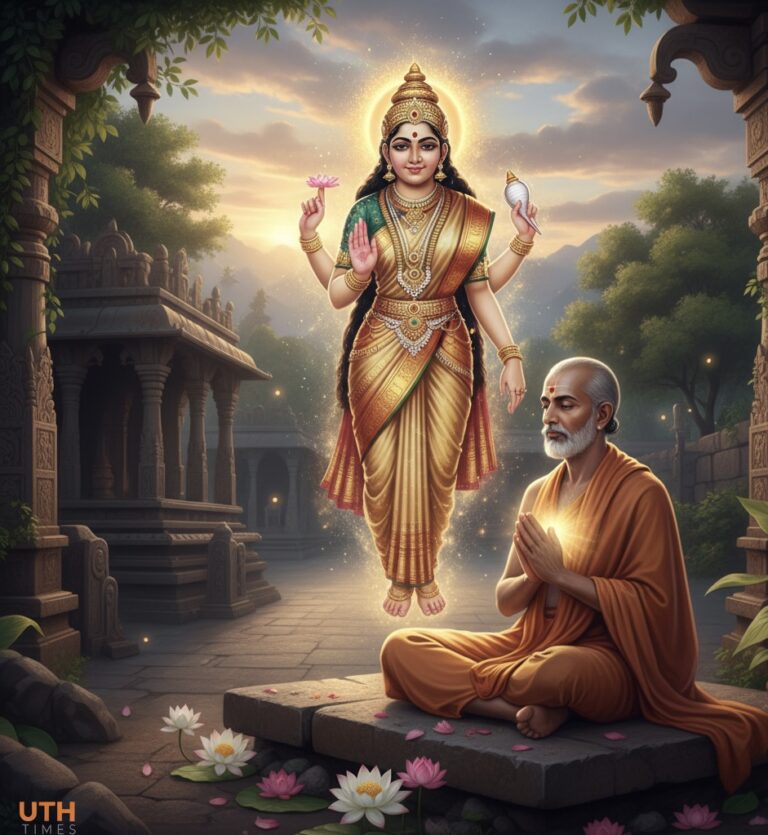
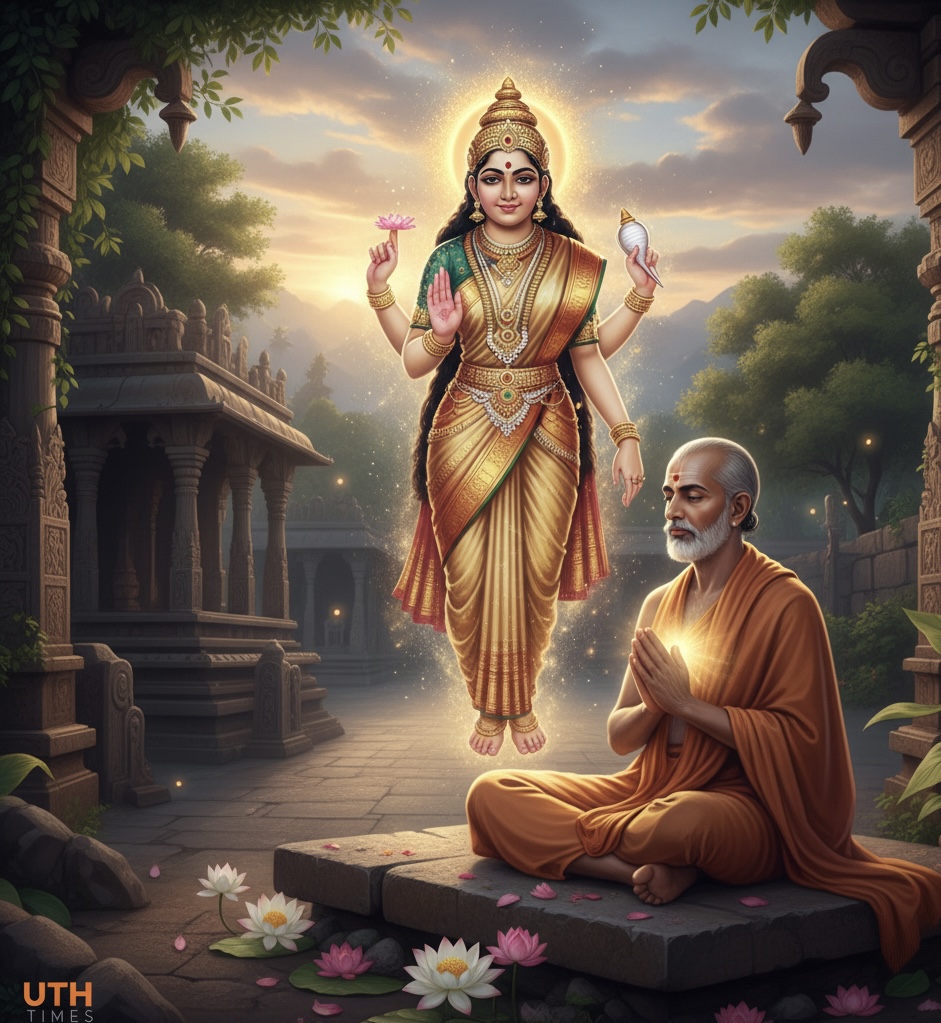
Vallimalai is revered as the birthplace of Goddess Valli, consort of Lord Murugan. According to legend, a drop of divine sweat from Goddess Lakshmi fell on the grass in Arcot. A deer consumed it, and from this mystical act, Valli was born. She was raised by the tribal chief Nambirajan, destined to become the eternal companion of Murugan. This sacred origin makes the hill a site of immense spiritual energy.

💍 The Divine Union of Murugan and Valli

The hill carries the echoes of one of Hinduism’s most beautiful love stories. Sage Narada informed Lord Murugan about Valli’s destiny, leading the Lord to Vallimalai in various disguises to win her affection. It was with the clever help of Lord Ganesha, who appeared as a wild elephant, that Murugan finally revealed his divine form. Their celestial marriage was celebrated here, making Vallimalai a symbol of eternal devotion and divine romance.

🏛️ A Pallava Rock-Cut Marvel

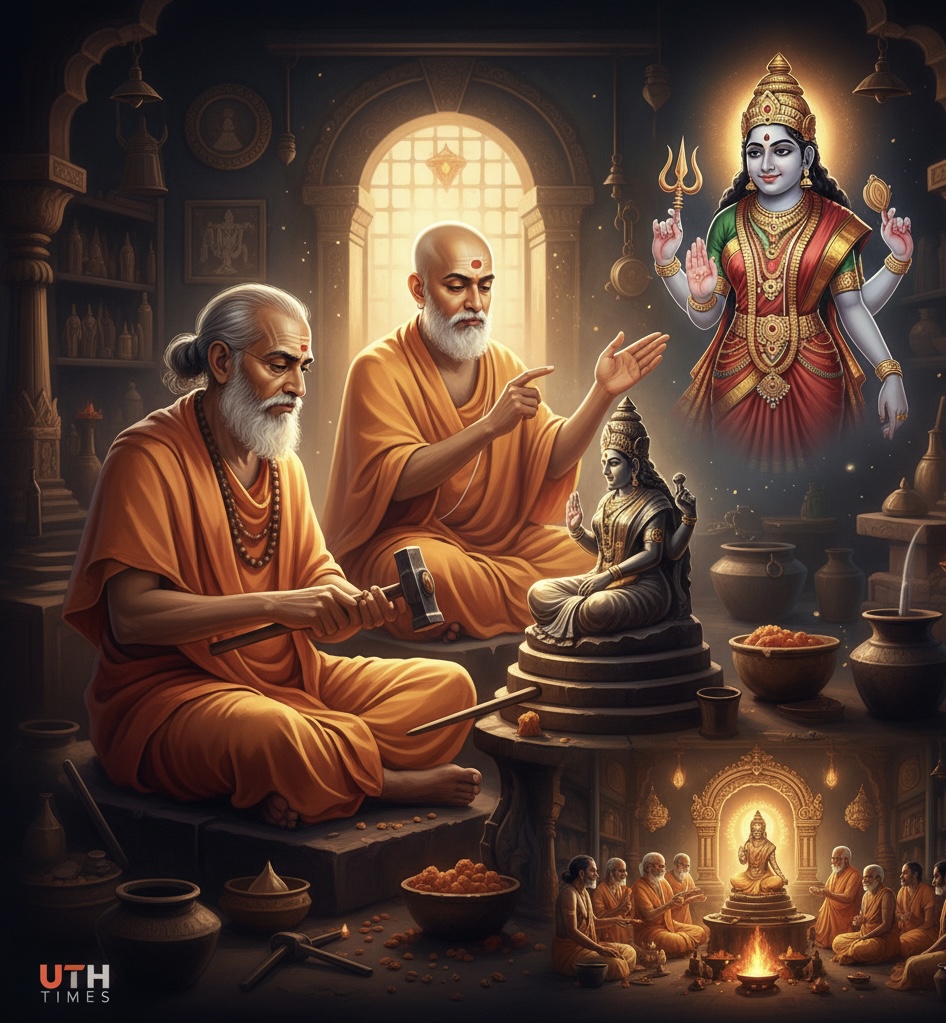
Dating back over 1000 years, the Vallimalai Murugan Temple is a jewel of Pallava rock-cut architecture. Entirely carved out of stone, its sanctum and mandapas display remarkable craftsmanship. Declared a Monument of National Importance, it attracts not only devotees but also historians and architects fascinated by its ancient artistry. The climb up the hill to the shrine is itself a spiritual journey, rewarding pilgrims with panoramic views and divine grace.

🙏 Faith, Miracles, and Mysticism

This temple is deeply connected with faith and miracles. A popular belief is that childless couples are blessed with children after praying here. Vallimalai is also called Gugai Siddhar Kovil, as many Siddhars once meditated in its caves. Excavations even revealed the bodies of Siddhars in meditative posture, adding an aura of mystery and sanctity to the site.

🌺 Conclusion

The Vallimalai Murugan Temple is not just stone and sculpture—it is history carved into rock, faith etched into time, and love celebrated in eternity. For devotees, seekers, and travelers alike, this sacred hill is a place where the earthly and the divine meet.

Dr. Subbarow: The Forgotten Genius of medicine 💊

0

A Life That Changed Yours, Quietly

“You’ve probably never heard of Dr. Yellapragada Subbarow. Yet because he lived, you may be alive today.” These words ring true even decades after his passing. Born on January 12, 1895—the same day as Swami Vivekananda—Subbarow mirrored Swamiji’s transformative spirit, not through philosophy, but through the silent revolutions of science.

🌍 Early Struggles, Unyielding Spirit

  • Subbarow’s defiance began in Madras Medical College, where he chose to wear a Khadi surgical gown in response to Gandhi’s Swadeshi call.
  • This act of courage cost him dearly—he was denied an MBBS and awarded only an LMS, shutting the doors of the colonial Madras Medical Service.
  • Instead of bowing down, he joined Dr. Lakshmipathi’s Ayurvedic College, where he nurtured an interest in integrating Ayurveda with modern science.
✈️ From Madras to Harvard: A Journey of Grit

  • With financial aid from his in-laws and Malladi Satyalingam Naicker Charities, Subbarow sailed to Boston in 1922.
  • Admitted to Harvard Medical School, he lived in constant fear of deportation, since Indians were barred from U.S. citizenship.
  • Supporting himself through menial jobs, he still managed groundbreaking research, refusing to let barriers define him.

🔬 Discoveries That Power Life Itself

  • Collaborating with Dr. Cyrus Fiske, Subbarow developed the Fiske–Subbarow Method, revolutionizing how scientists measure phosphorus in body fluids.
  • This led to the discovery of phosphocreatine and ATP (adenosine triphosphate)—the universal energy currency of life. Every heartbeat, every breath you take, is powered by molecules whose pathways he helped illuminate.
Etched in Antibiotics

  • His brilliance extended into medicine, contributing to the discovery of tetracyclines, the antibiotic family that saved countless lives.
  • In 1994, when plague ravaged Surat and Maharashtra, Doxycycline

🌟 A Legacy Beyond Border

Though denied recognition during his lifetime, Dr. Subbarow’s discoveries became the invisible foundation of modern medicine. From the ATP that fuels every living cell, to antibiotics that continue to save lives worldwide, his contributions span across generations and geographies. Yet, while the West benefitted from his brilliance, India still struggles to give him his rightful place in history. His life stands as a reminder that true greatness often works silently, leaving behind a legacy not of fame, but of survival and hope for humanity.

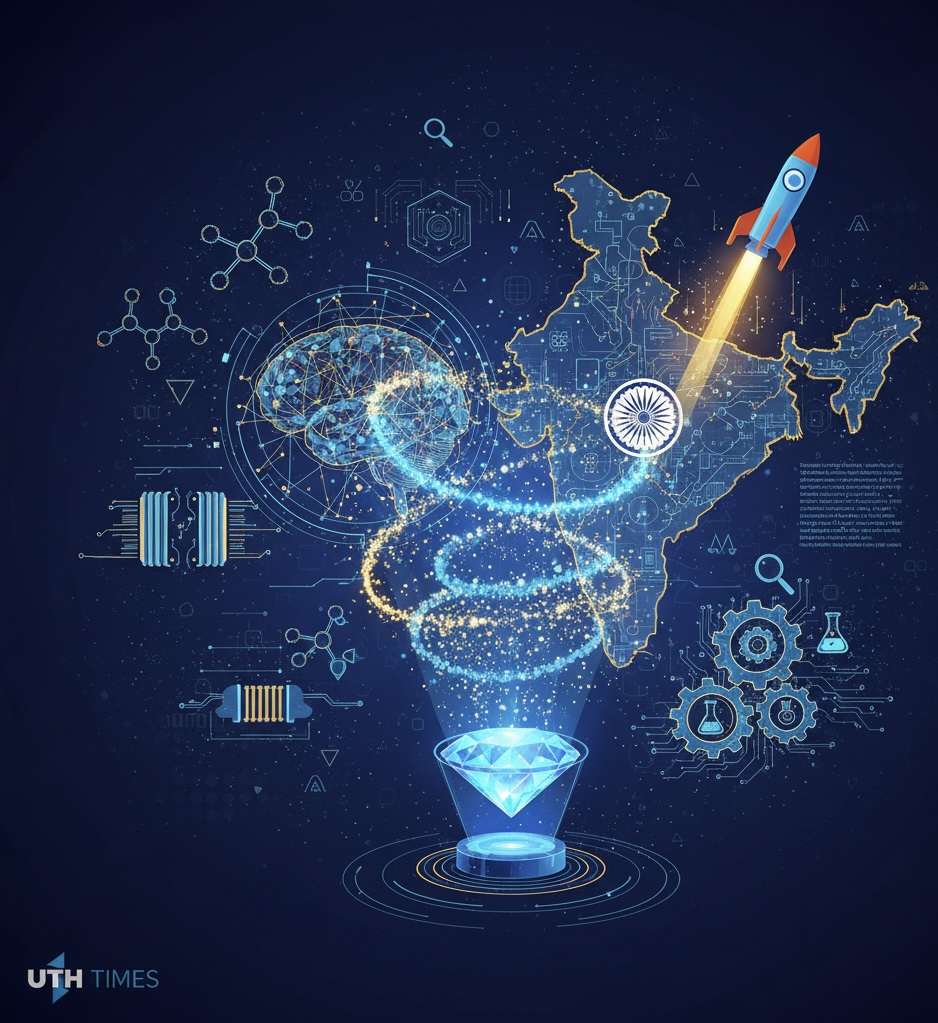
India’s First Made-in-Bharat Chips: A Giant Leap in Technology 🇮🇳

0

Every great nation has its defining moment. For Bharat, the dawn of its own semiconductor chip marks not just progress, but sovereignty in the digital age.

🚀 The Historic Milestone

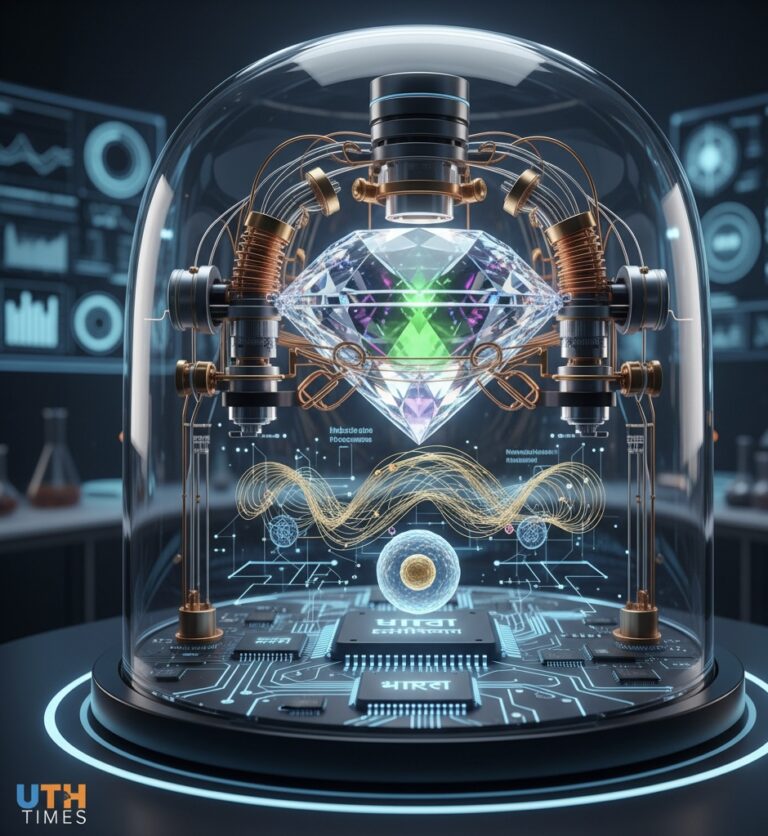
For decades, India depended on foreign giants for semiconductor imports—tiny chips that power everything from smartphones to satellites. Now, with the launch of the first Made-in-India semiconductor chip, Bharat has entered the elite club of nations capable of crafting the “brain of technology” on its own soil.

This achievement was not overnight. It is the result of years of strategic vision, meticulous planning, and massive investments under the Semicon India Mission, backed by PM Narendra Modi’s determination to make India a global electronics hub.

💡 Why Semiconductors Matter So Much

Semiconductors are more than just chips—they are the foundation of the digital economy.

  • 📱 Smart Devices – Every phone, laptop, and tablet breathes because of these chips.
  • 🚗 Automobiles – From EVs to self-driving cars, chips are the invisible drivers.
  • 🚀 Defence & Space – Bharat’s security and space ambitions demand indigenous chip power.
  • 🌐 AI & 5G – Future technologies like Artificial Intelligence, IoT, and 5G are impossible without advanced semiconductors.

By producing its own chips, India reduces its dependence on global supply chains and shields itself from international disruptions like the COVID-19 semiconductor shortage.

🏗️ The Vision Behind the Revolution

PM Modi’s call for “Atmanirbhar Bharat” was not just a slogan—it is now reality. His government pushed:

  • 💰 Massive Investments – ₹76,000 crore semiconductor incentive scheme.
  • 🤝 Global Partnerships – Collaborations with top chipmakers to transfer know-how.
  • 🏭 Mega Factories – State-of-the-art chip plants being set up in Gujarat and Karnataka.
  • 🎓 Skill Development – Training engineers to master the world’s most complex technology.

This ecosystem ensures India won’t just make chips—it will innovate, design, and dominate in the coming decades.

🌍 India on the Global Map

With this leap, Bharat joins the semiconductor powerhouses—Taiwan, South Korea, and the U.S. But India’s advantage is its youth-driven workforce, cost-effectiveness, and growing market demand. Global companies are already eyeing India as the next semiconductor manufacturing hub.

🔔 A Ending..

The first Made-in-India chip is more than silicon and circuits—it is a symbol of India’s unstoppable rise. From “Make in India” to “Invent in India,” Bharat’s digital future has just begun.