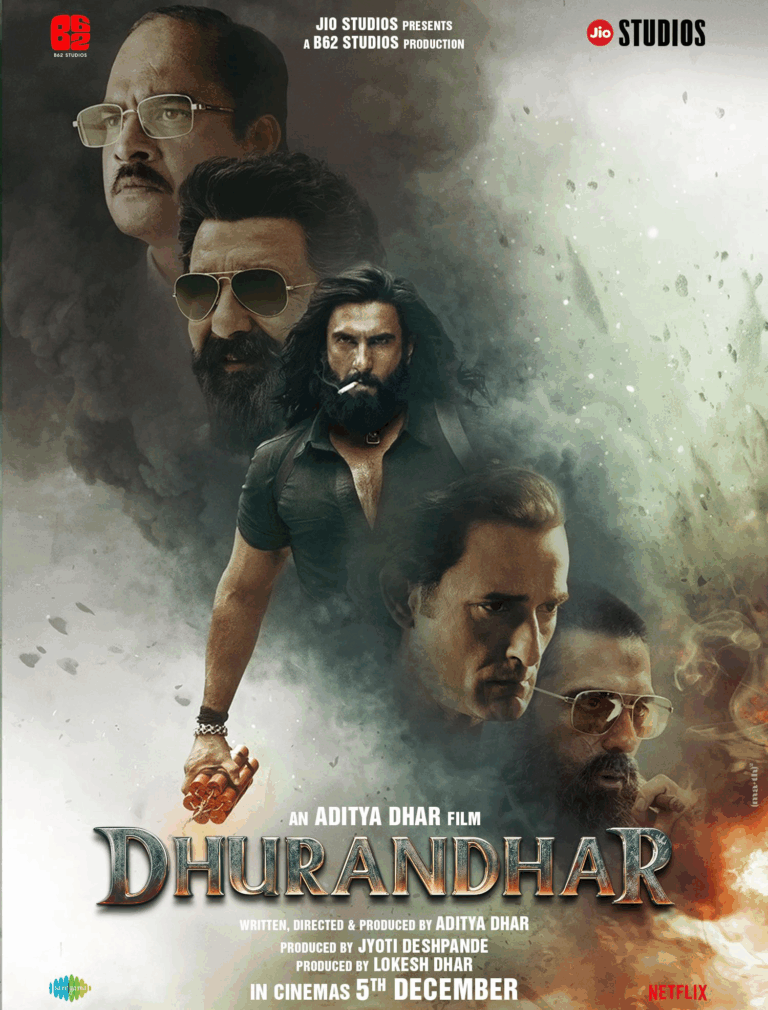
Calling Dhurandhar the “peak of Hindi cinema” isn’t just fan hyperbole – it’s a way of saying: this is what a 2025 Hindi film looks like when politics, craft, box office, memes, and music fire together.
1. A 3.5-Hour Monster That Refuses to Apologise
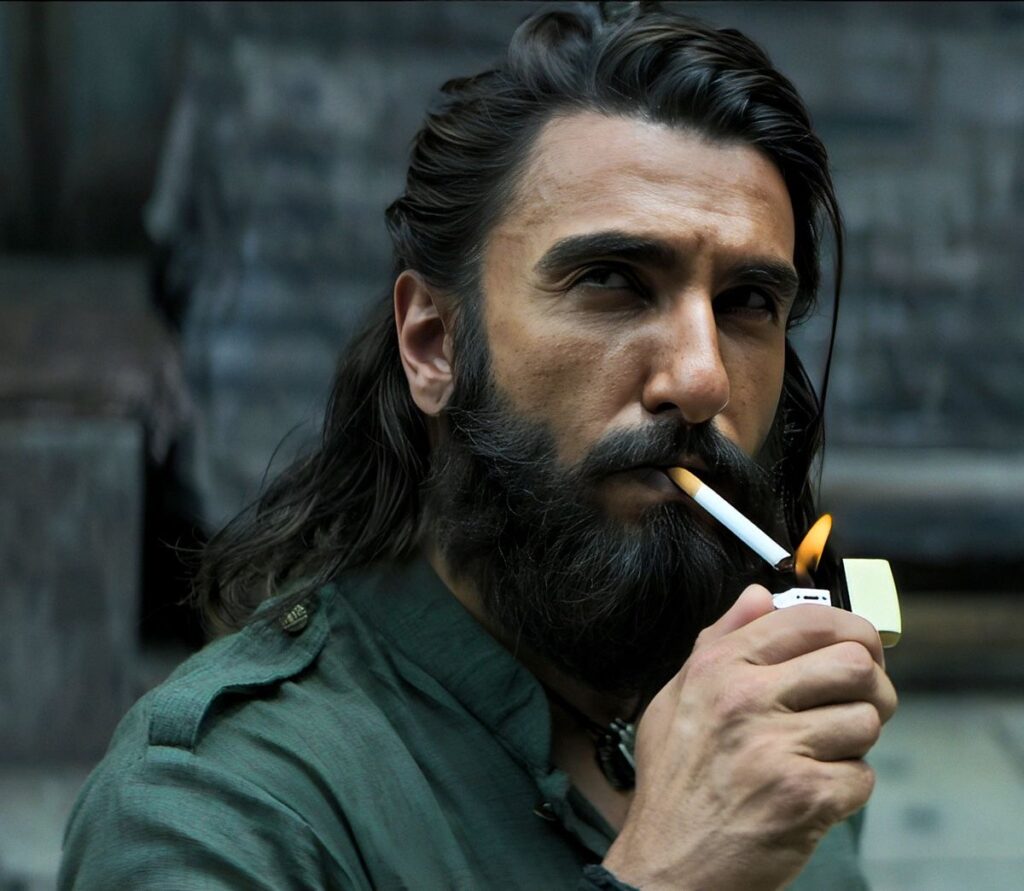
In an era of “please-keep-it-under-2-hours” attention spans, Dhurandhar arrives at 214 minutes and simply says — deal with it.
This runtime is not indulgence; it’s intention. Aditya Dhar builds the film in sweeping chapters:
- Karachi’s Lyari underworld becomes a living, rotting ecosystem.
- RAW–ISI–Lyari networks unfold without expositional laziness.
Cult films demand commitment. Dhurandhar demands nearly 3.5 hours of immersion — which is exactly why people will rewatch, decode, and debate it.
2. The “Traveller” and a Gallery of Instantly Iconic Characters
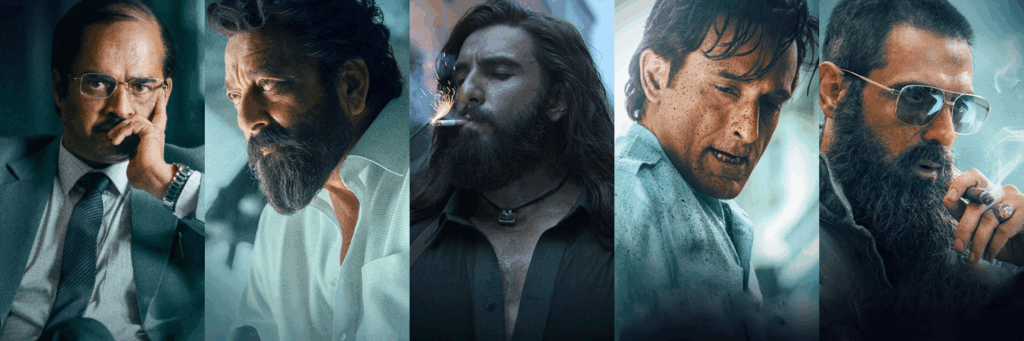
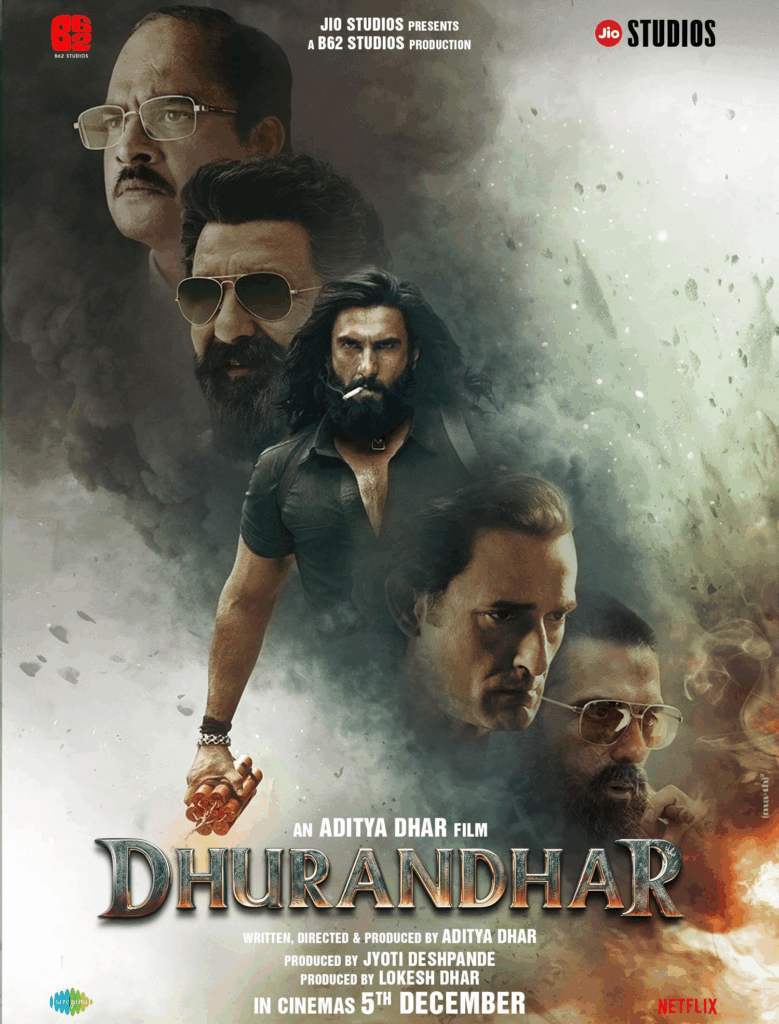
At the centre: Ranveer Singh as the mysterious Traveller, a RAW asset who slips into Karachi’s gangland like a ghost.
But what makes it cult is the ensemble:
- Ranveer Singh – The Traveller
A rare, ice-cold, underplayed performance from a maximalist star. - Akshaye Khanna – Rehman Dakait
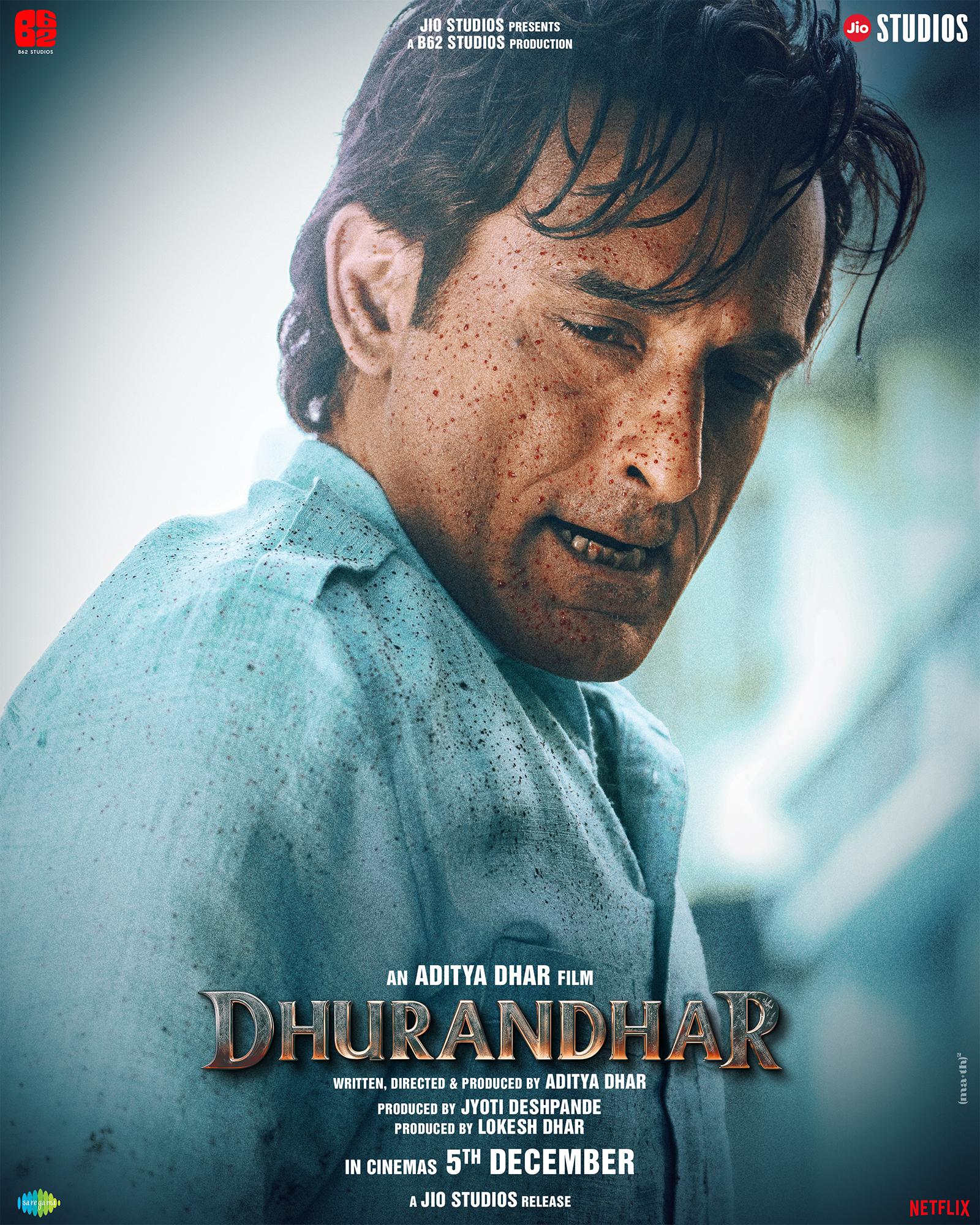
Already a cult legend. His entry on Flipperachi’s “FA9LA” is being hailed as the next Jamal Kudu moment. - R. Madhavan – the strategist
An Ajit Doval–coded mastermind anchoring the film’s “brain” layer. - Sanjay Dutt – the Chaudhry Aslam–inspired cop
Folk hero meets feared encounter specialist. - Arjun Rampal – the Ilyas Kashmiri–inspired militant
Bringing the global terror machinery into the story.
These are characters you can sketch from memory, quote at 2 a.m., and mimic at hostel parties — cult gold.
3. World-Building: Karachi Rebuilt by Bollywood
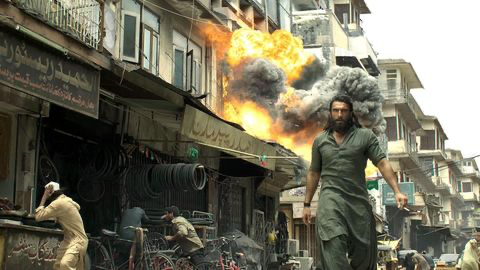
Most of Karachi in the film isn’t Karachi.
Dhar’s team stitched it across:
- Thailand
- Ludhiana villages
- Mumbai sets
- Kasauli
- Ladakh & Punjab for military sequences
Lyari lanes built in Bangkok seamlessly connect to Indian locations through lighting, colour, and lenses.
This is film-school-level production design.
Dhurandhar has a map, a smell, a lived reality — not generic India–Pakistan wallpaper.
4. Soundtrack, FA9LA & the New Meme Lexicon
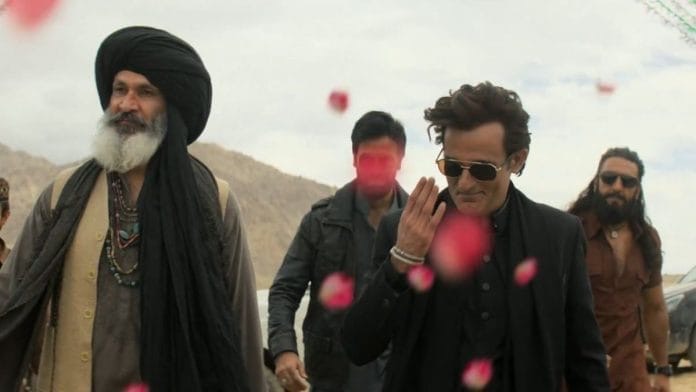
A cult film must have cult music. Dhurandhar has multiple:
- Title track: flips the 1995 classic “Na Dil De Pardesi Nu” into a swaggering modern anthem.
- “Ishq Jalakar (Karvaan)”: a reimagined qawwali built on “Na To Karwan Ki Talash Hai.”
- “FA9LA”: Bahraini rap powering Rehman Dakait’s viral entry.
Just like Sholay’s Yeh Dosti, Wasseypur’s Hunter, or Animal’s Jamal Kudu, Dhurandhar’s soundscape is now internet cultural currency.
5. Peak Hindi Cinema Craft: Big-Screen Filmmaking, Not Just Content
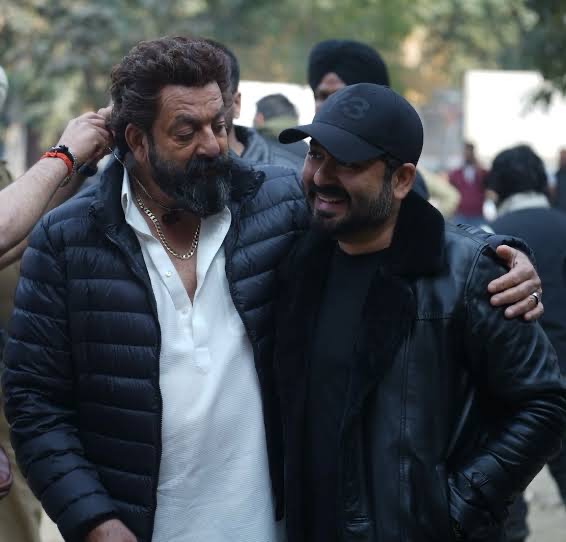
The film industry’s “content over cinema” fatigue meets Dhar’s opposite response — pure, crafted cinema.
Praised across major reviews:
- Cinematography (Vikash Nowlakha): neon-soaked Karachi rooftops, nervous handheld violence, elegant wides.
- Editing (Shivkumar Panicker): 214 minutes called “loaded,” not “bloated.”
- Score (Shashwat Sachdev): industrial-electronic + desi percussion = “techno-jingo” signature.
It combines Hindi mainstream spectacle with Korean/Latin American crime saga precision.
6. Politics, Violence & Discomfort — the Cult Friction
Cult films are always polarising.
- Reviews split between 3–5 stars.
- Graphic violence and torture pushed CBFC into demanding cuts and muting abuses.
This discomfort is part of the cult machinery.
7. Box Office Beast — Built Like a Cult Movie
Dhurandhar behaves like a cult film while earning like a blockbuster.
- ₹100+ crore opening weekend in India.
- USD 2M+ in North America in 3 days — rare for an A-rated Hindi actioner.
But it’s also:
- 214 minutes
- Hyper-violent
- Episodic
- Geopolitically dense
A risky, messy, stylish film that shouldn’t be a mass hit — but is.
8. The Dhar-verse: From Uri to Dhurandhar
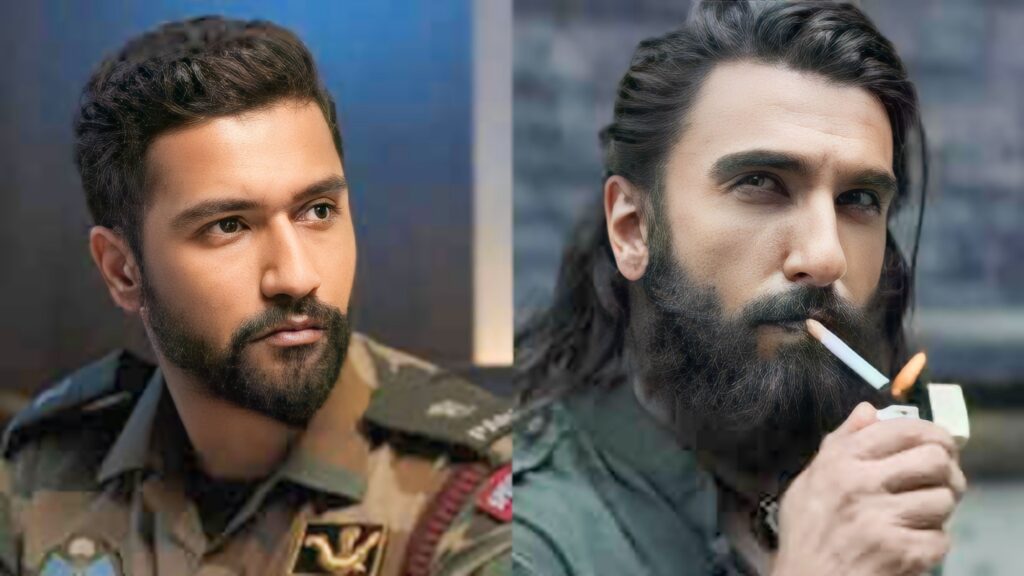
After Uri, expectations were brutal.
Fans now see Dhurandhar as part of a growing covert-ops cinematic universe:
- Boots-on-ground patriotism
- Black ops overlap
- World-building continuity
- Shared tone, shared military logic
With Part 2 arriving March 19, 2026, the theorising and lore-crafting have already begun.
9. Why Dhurandhar Feels Like the Peak — and the Future
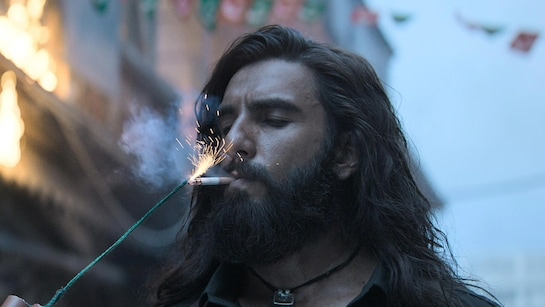
Because it merges:
- Old-school Indian cinema (runtime, dialogue, villains, music, patriotism)
- Modern cinematic grammar (world-building, realism, memes, brutality, geopolitics)
- Polarised critics + unified audience
- Instant myth-making around characters like Rehman Dakait & the Traveller
Right now, in December 2025, Dhurandhar is doing exactly what a cult film should at birth:
- Make the box office shake
- Make the internet obsess
- Make critics squirm
- Make friends say: “Tu theatre mein dekh, nahi to miss ho jayega.”