
Home Blog Page 40

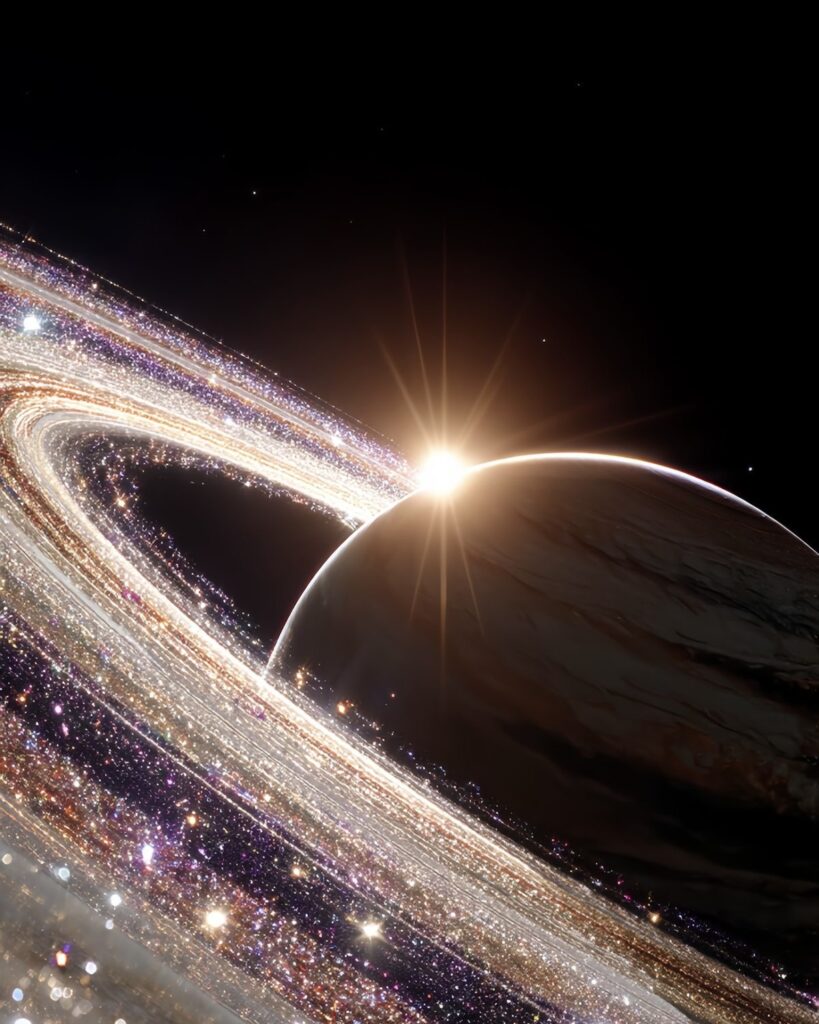
Navagrahas: The Nine Divine Forces Behind Human Destiny🪐

🌞 The Celestial Guardians of Life

In the vast expanse of the Vedic cosmos, Navagrahas — the nine planetary deities — stand as the eternal governors of destiny. These radiant forces are not merely astronomical bodies; they are divine intelligences, each embodying a distinct aspect of karma, energy, and consciousness. From the brilliance of the Sun to the shadowy mystery of Rahu and Ketu, the Navagrahas form the celestial mechanism that shapes every moment of human existence.

🌕 The Nine Divine Powers

According to ancient Jyotish Shastra (Vedic Astrology), these nine planets are:

🌞 Surya (Sun) – The soul, authority, vitality, and fatherly energy.

🌙 Chandra (Moon) – The mind, emotions, intuition, and motherly care.

🔥 Mangala (Mars) – Courage, strength, action, and warrior spirit.

💎 Budha (Mercury) – Intelligence, communication, wit, and learning.

🕉️ Guru (Jupiter) – Wisdom, righteousness, faith, and expansion.

💫 Shukra (Venus) – Beauty, love, wealth, and creative harmony.

⚖️ Shani (Saturn) – Karma, discipline, justice, and endurance.

🐉 Rahu (North Node) – Obsession, illusion, ambition, and material drive.

🐍 Ketu (South Node) – Detachment, spirituality, past karma, and liberation.

Each graha represents a divine archetype, influencing the spiritual and material patterns of life. Together, they weave the intricate fabric of destiny.

🪔 The Dance of Karma and Time

The Navagrahas operate as the cosmic timekeepers of karma. Every movement, alignment, and aspect among them signifies a rhythm of fate — marking times of growth, challenge, and awakening. When the planets align harmoniously, blessings unfold; when they clash, they test our endurance and wisdom.

In this dance of light and shadow, Jyotish reveals the sacred truth — no planet punishes or rewards, it merely reflects the vibration we emit. The Navagrahas are mirrors of our own karmic blueprint, teaching that destiny is not fixed but fluid and responsive to our inner evolution.

🌟 The Spiritual Science of Balance

The ancients knew that aligning with these divine forces brings balance to life. Through mantras, yantras, gemstones, fasting, and meditation, one could harmonize planetary energies. Temples across India — such as the Navagraha shrines in Tamil Nadu, Assam, and Kashi — were built to honor these celestial beings, channeling their blessings for collective welfare.

🔱 Conclusion: The Divine Symphony

The Navagrahas remind humanity that the universe is alive with intelligence. Every sunrise, eclipse, and planetary motion is not random — it’s a divine symphony guiding souls through their karmic journeys. To understand the Navagrahas is to glimpse the sacred rhythm between heaven and human life — a truth that transcends time, religion, and science alike. 🌌

The Iron Miracle of Delhi: Vishnudhvaja’s 1600-Year Rustless Secret ⚙️🇮🇳

0

🌅 A Symbol That Defies Time

Standing tall in the heart of Delhi’s Qutub Complex, the Iron Pillar of Delhi, also known as Vishnudhvaja (“Standard of Vishnu”), is one of India’s greatest scientific and spiritual legacies. Erected during the reign of Chandragupta II Vikramaditya of the Gupta Empire around 400 CE, this 7.3-meter (24-foot) pillar has withstood the ravages of time, rain, and pollution — yet it remains untouched by rust for over 1600 years.

Its surface gleams faintly golden even today, a testament to ancient India’s unmatched metallurgical genius — a mystery that modern science still marvels at.

⚙️ The Metallurgical Marvel of Ancient India

🧪 What makes this iron pillar truly astonishing is not its size or beauty — but its composition. Crafted from 99.72% pure wrought iron, it was forged using ancient Indian smelting and welding techniques far ahead of their time.

Unlike modern steel, which corrodes easily, the Vishnudhvaja’s iron developed a thin protective film of misawite, a rare iron-hydrogen-oxygen compound. This layer prevents further oxidation, effectively rendering the pillar rust-proof for millennia.

🔬 Scientists from IIT Kanpur and the National Metallurgical Laboratory have studied this phenomenon, calling it a “metallurgical miracle born of divine craftsmanship.”

🕉️ A Pillar of Faith and Royal Pride

🔱 The Sanskrit inscription engraved on the pillar dedicates it to Lord Vishnu, erected in honor of a “Chakravartin King” — widely believed to be Chandragupta II. It once stood in a Vishnu temple complex in Udayagiri (Madhya Pradesh) before being moved to Delhi centuries later.

To the devotees, the pillar wasn’t merely metal — it was Dharma cast in iron, symbolizing eternal strength and devotion to the Divine Preserver.

🌌 Enduring Mystique of Vishnudhvaja

Even after centuries of invasions, earthquakes, and urban chaos, the Iron Pillar stands unbroken — a silent witness to the glory of Bharat’s golden age.

✨ It reminds us that true strength isn’t just in might or metal, but in wisdom, devotion, and craftsmanship that outlasts time itself.

In a world chasing innovation, the Iron Pillar stands as proof that India mastered it — 1600 years ago. ⚔️

Sanjeevani: The Lost Vedic Herb That Revived Life Itself 🌿

🌄 The Night Death Stood Still

In the epic Ramayana, there came a night when the world seemed to hold its breath. As Shri Lakshman lay unconscious on the battlefield, struck by the deadly Shakti Astra of Meghnad, despair shadowed the army of Lord Ram. But faith transformed into action when Hanuman was entrusted with an impossible task—to bring back the Sanjeevani Booti, the divine herb said to restore life itself.

Hanuman soared across the skies to the distant Dronagiri Parvat (now believed to be in Uttarakhand). Unable to identify the herb amidst the mountain’s glowing vegetation, he lifted the entire mountain and returned before dawn. As the fragrance of Sanjeevani touched Lakshman’s body, life pulsed once again—proof that divinity and nature often work hand in hand.

🌿 The Forgotten Science Behind Sanjeevani

Sanjeevani isn’t just a myth—it represents a lost branch of Vedic biomedicine. Ancient Ayurvedic texts like Charaka Samhita and Sushruta Samhita describe herbs capable of reversing cell damage, restarting vital energy (Prana), and even halting decay.

🪷 Healing Beyond Time: The herb was said to emit a faint golden glow, symbolizing its Tejas or divine energy. Scientists and botanists have long searched for it in the Himalayan belt—particularly the Dronagiri range near Joshimath—where rare medicinal plants thrive even today.

🔬 Modern Parallels: Some researchers link Sanjeevani to Selaginella bryopteris, a “resurrection plant” that can survive extreme dehydration and come back to life when watered—a biological echo of Lakshman’s revival. Could this be the scientific trace of the mythical herb?

🔱 Faith Meets Ancient Biotechnology

The story of Sanjeevani bridges the gap between devotion and forgotten science. It suggests that ancient India not only revered nature but mastered it through spiritual and medical synergy. The Vedic healers saw plants as living entities, vessels of divine consciousness. What we call “myth” may, in truth, be an encrypted record of advanced botanical knowledge.

🌕 Eternal Message of Sanjeevani

Sanjeevani is more than a herb—it’s a symbol of hope that life can rise from death, and knowledge can transcend time. As modern science inches closer to decoding nature’s deepest secrets, perhaps one day the real Sanjeevani will bloom again—reminding humanity that faith and wisdom, together, can conquer even mortality. 🚩

BRO Breaks Its Own Record: World’s Highest Motorable Road Now Touches 19,400 ft in Ladakh

0

🏔️ A New Summit of Achievement

The Border Roads Organisation (BRO) has once again made history, quite literally scaling new heights—constructing the world’s highest motorable road at an astonishing altitude of 19,400 feet in Ladakh. This engineering marvel, built at Demchok in Eastern Ladakh, surpasses its previous record at Umling La (19,024 ft), reaffirming India’s unmatched prowess in mountain infrastructure development.

This isn’t just another road—it’s a symbol of resilience, innovation, and national pride, connecting one of the most remote and strategically crucial regions on Earth.

🚜 Engineering Against the Impossible

Building a road at 19,400 ft is nothing short of defying nature itself.

At this altitude, oxygen levels drop to almost half of what we breathe at sea level, machinery malfunctions, and human endurance is pushed to its limits. Yet, BRO engineers and workers braved bone-freezing temperatures, snowstorms, and thin air to carve out this route through the unstable, rugged terrain of the Himalayas.

  • 🧱 The road was constructed under Project Himank, the same initiative that earlier built the Umling La pass road.
  • 🧭 It connects Chisumle-Demchok, a route vital for both military logistics and civilian access.
  • ⚙️ Advanced technologies like geosynthetic reinforcements and cold-weather asphalt were deployed to ensure durability against frost and landslides.

Every meter built was a battle against altitude, and every milestone marked a triumph of human will.

🇮🇳 Strategic and Symbolic Significance

This road is not just an engineering feat—it’s a geopolitical statement. Located near the Line of Actual Control (LAC), it dramatically enhances India’s strategic mobility, allowing faster troop and supply movement in border zones.

Beyond military advantage, it opens new avenues for eco-tourism, local trade, and regional connectivity, linking the remote hamlets of Ladakh to mainstream India. The road also reinforces India’s commitment to empowering border communities, often living in isolation under extreme conditions.

🌌 Touching the Sky, Inspiring a Nation

With this record-breaking achievement, the BRO has shown that for India, no height is too high. The road at 19,400 ft isn’t merely a route—it’s a message carved in stone and snow:

When determination meets innovation, even the sky bows down.

🫡 From the heights of Ladakh, India salutes the spirit that builds beyond boundaries.

Unveiling India’s Tech Revolution: 7 Innovations Transforming the Nation🇮🇳

0

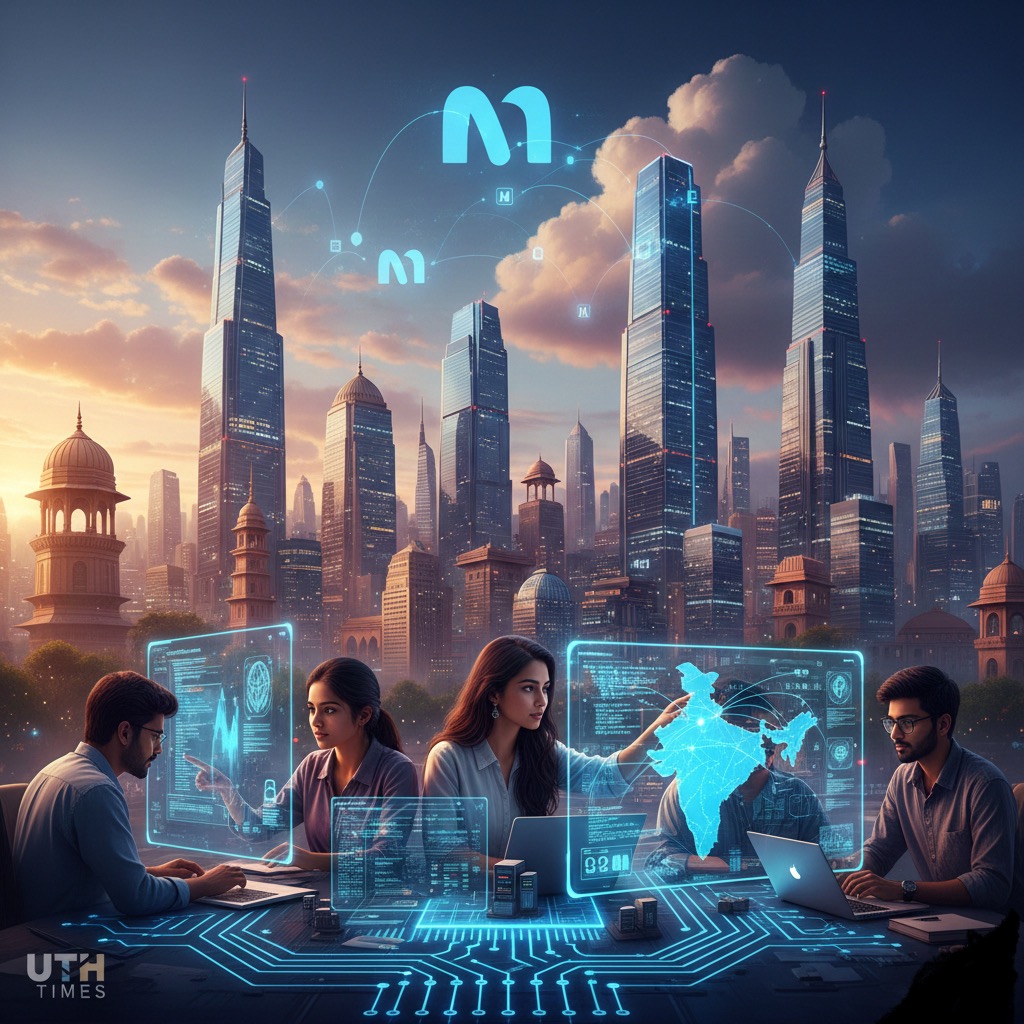
India’s technology revolution is no longer a distant dream — it’s happening right now. From space missions that make history to AI that understands our languages, India is unveiling a new era of innovation that’s transforming how we live, work, and connect.

Here are 7 groundbreaking tech innovations that are reshaping India’s present — and redefining its future. 🚀

1️⃣ UPI: The Fintech Superpower

💳 What began as a simple digital payment system has become India’s biggest tech success story.

The Unified Payments Interface (UPI) now processes billions of transactions monthly, powering everything from small tea stalls to global businesses.

💡 Game changer: Over 30 nations, including France, Singapore, and the UAE, are adopting the UPI model — a testament to India’s fintech leadership.

2️⃣ ISRO’s Space Leap: From the Moon to the Sun

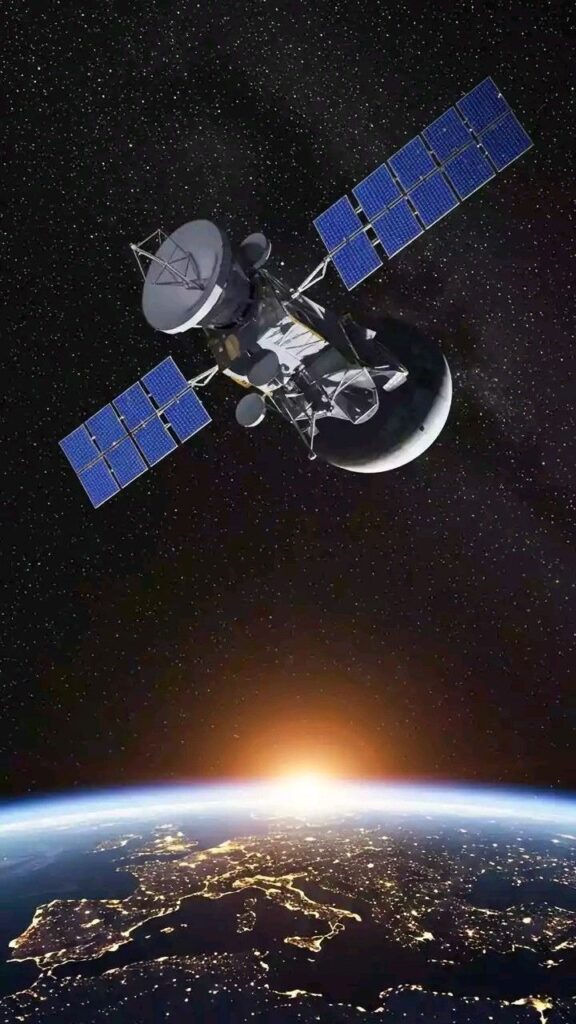
🛰️ India’s space agency, ISRO, has stunned the world with its bold missions.

After the historic Chandrayaan-3 lunar landing, India launched Aditya-L1, its first solar mission — a remarkable leap in scientific exploration.

🚀 What’s next: The ambitious Gaganyaan mission aims to send Indian astronauts into space, unveiling a new era in human spaceflight.

3️⃣ AI Made in India: Tech with a Local Soul

🤖 The IndiaAI Mission and Bhashini Project are creating artificial intelligence that speaks and understands Indian languages.

From healthcare chatbots to smart agriculture tools, these AI systems are designed for India’s unique challenges — and opportunities.

💬 Impact: Rural entrepreneurs, farmers, and students can now access digital tools in their own mother tongue — bringing tech closer to every citizen.

4️⃣ BharatNet & 5G: Building the Digital Backbone

🌐 Beneath India’s digital rise lies BharatNet, a project connecting over 6 lakh villages with high-speed internet.

Combined with India’s rapid 5G rollout, it’s fueling the growth of smart cities, e-learning, and remote healthcare.

⚙️ Result: Every corner of India — from Ladakh to Lakshadweep — is now part of the global digital conversation.

5️⃣ Electric Vehicle Boom: Driving a Greener Future

⚡ India’s EV revolution is accelerating fast, led by innovators like Tata Motors, Ather Energy, and Ola Electric.

Government support through FAME-II and growing charging infrastructure are making sustainable mobility a reality.

🔋 Future unveiled: By 2030, India aims for 30% of all vehicles on its roads to be electric — cutting pollution and dependence on fossil fuels.

6️⃣ Deep Tech & Quantum Startups: The Next Frontier

🧬 India’s startup ecosystem is diving deep into frontier technologies — quantum computing, drones, and advanced cybersecurity.

Startups like QNu Labs (quantum encryption) and Garuda Aerospace (drones) are pioneering indigenous innovations.

💡 The unveiling: These “deep tech” ventures are putting India on the global map for original, high-impact scientific innovation.

7️⃣ Semiconductor Revolution: Powering Self-Reliance

💽 Chips are the heart of modern devices — and India is entering this critical race.

With initiatives like the India Semiconductor Mission, and partnerships with Micron and TSMC, the nation is setting up world-class chip fabrication plants.

🔧 Vision: To make India not just a tech consumer — but a tech creator.

🌟 Conclusion: The Dawn of a Digital Bharat

India’s tech revolution is not just about innovation — it’s about empowerment.

Every new startup, satellite, and silicon chip is part of a larger story: a nation unveiling its true potential.

From the smallest village connected through fiber to the vast expanse of space explored by ISRO, India is proving one thing loud and clear

💫 The future is not coming. It’s being built India.

Sharad Purnima: The Moonlit Night of Divine Harmony 🌕

🌕 The Night of Celestial Brilliance

Sharad Purnima, also known as Kojagari Purnima, is considered the most radiant full moon of the year. On this sacred night, the moon is believed to descend to its fullest brilliance, illuminating the world with an ethereal glow. The ancient seers said that the moon’s rays on Sharad Purnima are infused with Amrit, the celestial nectar of healing and rejuvenation.

🪷 It is said that even nature pauses in reverence — the air grows still, the waters shimmer like silver, and a divine calm fills the universe. Science interestingly supports this too: the moon’s high reflective energy on this night can influence the cooling of the earth’s atmosphere, mirroring the serenity described in the scriptures.

💫 The Divine Dance of Raas Leela

Sharad Purnima holds immense spiritual importance as the night of Maha Raas Leela, when Shri Krishna performed the celestial dance with the Gopis in Vrindavan. According to the Bhagavata Purana, Krishna multiplied Himself so that each Gopi felt His divine presence beside her — a symbol of the eternal union between the soul and the Divine Consciousness.

🌸 This Leela was not a dance of the body, but of the spirit — representing the purest love, untainted by desire or ego. The full moon shone as a witness to this union, bathing the forests of Vrindavan in silver light, where time itself dissolved into bliss.

🍶 The Nectar of Healing and Faith

In Indian tradition, it is customary to leave kheer (sweet milk-rice) under the open moonlight on Sharad Purnima. It is believed that the moon’s cooling rays imbue it with Amritic properties, turning it into an elixir that nourishes body and soul. Consuming it before sunrise symbolizes the intake of lunar energy and divine grace.

🌿 Yogic texts also connect this night with enhanced pranic vibrations — a time when meditation, silence, and gratitude draw one closer to the cosmic rhythm.

🌙 Silence as a Prayer

As the world basks in the moon’s silver glow, Sharad Purnima becomes a reminder that the highest form of prayer is silence — the stillness in which the heart meets the Divine.

✨ Tonight, as the moon pours its Amrit upon the Earth, may your soul bathe in its peace, your mind rest in calm, and your heart awaken to the eternal dance of love and light.

The Mystery of Tassili n’Ajjer: Alien Gods of the Sahara?

0

Deep in the Sahara Desert lies one of humanity’s most mystifying treasures—the Tassili n’Ajjer rock art of southern Algeria. These ancient paintings, dating back nearly 10,000 years, portray beings and scenes that defy explanation. Were they mere expressions of primitive imagination—or a record of something extraordinary?

🌍 The Timeless Canvas of the Sahara

Hidden within rugged sandstone plateaus, the Tassili n’Ajjer region spans over 72,000 sq. km, making it one of the largest open-air museums on Earth. Recognized as a UNESCO World Heritage Site, this area preserves over 15,000 paintings and engravings that trace the evolution of life in the Sahara—from wild animals and hunting rituals to mysterious figures unlike anything seen before.

These works were created when the Sahara was not the arid desert we know today but a lush, green savanna teeming with rivers, animals, and human life.

👽 The Enigmatic “Round-Head Beings”

Among the most striking are the “Round Head” figures, humanoid beings painted with large, bulbous heads and strange elongated bodies. Some appear to float, while others are shown in groups as if part of a ritual or otherworldly encounter.

Archaeologists suggest they may represent gods, shamans, or spiritual visions. Yet, their resemblance to modern depictions of extraterrestrials has fueled an entire wave of theories that they could be records of ancient alien contact.

🐾 Daily Life Meets the Unknown

Not all of Tassili’s art is mysterious—many panels vividly capture everyday life:

  • 🐂 Herding of cattle and domestication of animals
  • 🏹 Hunting with bows, arrows, and spears
  • 💃 Ritual dances and communal gatherings

But the presence of the bizarre “otherworldly” figures alongside these ordinary scenes raises a burning question: why would early humans mix real life with visions of strange beings unless they believed—or experienced—something beyond the natural world?

🔥 Myths, Theories, and Modern Fascination

Some scholars argue the figures symbolize altered states of consciousness brought about by ritual practices or hallucinogenic plants. Others remain convinced they are evidence of forgotten encounters with advanced beings who once walked the Earth.

Regardless of interpretation, the Tassili rock art continues to inspire debate, drawing archaeologists, historians, and even UFO researchers from across the globe.

Conclusion

The Tassili n’Ajjer rock paintings remain a riddle etched in stone—bridging the worlds of myth, spirituality, and cosmic mystery. Whether depictions of gods, spirits, or visitors from the stars, they remind us that humanity’s earliest stories may hold secrets far greater than we can imagine.

Anunnaki: Survivors of a Lost Civilization?

0

For centuries, the Anunnaki have been described as gods from the ancient Sumerian world. But what if they weren’t divine beings at all? What if they were simply remnants of a highly advanced civilization that collapsed long before recorded history—mistaken for gods by early humanity?

🌍 The Anunnaki in Sumerian Records

Ancient Sumer, often called the cradle of civilization, described the Anunnaki as powerful beings who shaped laws, guided rulers, and influenced destiny. To the Sumerians, they were “gods.” Yet, when we study the texts closely, these beings weren’t always presented as supernatural—they had disputes, hierarchies, and tasks. Could this mean they were not immortal deities but influential humans from a forgotten age?

🏛️ Survivors of a Lost Civilization?

Imagine a civilization so advanced that their tools appeared magical to early humans:

  • 🔧 Technology mistaken for magic: Machines, weapons, or flying crafts could have been interpreted as gifts of the gods.
  • 📚 Knowledge as divine law: Their wisdom in astronomy, agriculture, and governance might have seemed unattainable, embedding itself as “commandments” in myth.
  • 🏗️ Architecture as evidence: The sudden leap in human structures—from ziggurats to advanced city-planning—raises the question: did humans truly develop this alone, or did they inherit knowledge from “survivors”?

🌌 Not From the Stars, But From the Past

Popular theories often link the Anunnaki to aliens. But what if the truth is closer to home? Instead of extraterrestrials, they could have been descendants of a pre-flood civilization—perhaps destroyed by natural catastrophe, like the Younger Dryas impact or great floods. Their survivors, carrying fragments of lost science, would have seemed like otherworldly beings to newly emerging societies.

📖 Myths as History in Disguise

Across cultures—Sumerian, Egyptian, Mesoamerican—we find recurring myths of gods descending, teaching, and ruling. These could be cultural echoes of the same event: encounters with survivors of a once-great civilization. Myths, then, aren’t pure fantasy, but veiled memories passed down through generations.

🔔 Conclusion

The Anunnaki may not have been gods from the stars—but humans from Earth’s forgotten chapter. Survivors carrying wisdom, shaping myths, and leaving behind mysteries we still struggle to decode. Perhaps mythology isn’t about worshipping the divine—it’s about remembering what humanity lost.

Sanatan Dharma’s Secret of Brahmacharya: Awakening the Medha Nadi for Superhuman Memory

Sanatan Dharma holds within it profound sciences of human transformation. Among its most guarded secrets is the awakening of the Medha Nadi—a hidden nerve channel that unlocks superhuman clarity, memory, and wisdom through 12 years of disciplined Brahmacharya.

🌌 Brahmacharya Beyond Celibacy: The Art of Ojas Conservation

  • In Sanatan Dharma, Brahmacharya is not about denial—it is about channeling Ojas (vital energy).
  • Instead of being wasted at lower centers, this energy is redirected into the brain, fueling brilliance and divine willpower.
  • The result? Ordinary human strength is transformed into extraordinary inner mastery.

🧠 The Medha Nadi: A Hidden Superconductor of Intelligence

  • After 12 continuous years of Brahmacharya, yogic texts describe the awakening of Medha Nadi, a subtle channel in the brain.
  • This Nadi becomes a superconductor for focus, memory, and intelligence, unlocking capacities far beyond ordinary human limits.
  • Long before neuroscience discovered neuroplasticity, Sanatan sages had already mapped this inner transformation.

⚡ What Happens When Medha Nadi Awakes?

✅ Photographic-like memory power

✅ Laser-sharp concentration

✅ Deep emotional balance

✅ Intuitive wisdom beyond logic

This is not just an upgrade—it’s a shift from human mode to divine consciousness, the very state through which Rishis revealed eternal scriptures.

📜 The Rishis and Eternal Wisdom

  • The timeless brilliance of the Vedas and Upanishads was possible because the Rishis practiced Brahmacharya.
  • Their words were not written from fleeting thought but flowed directly from the awakened Medha Nadi—hence their eternal resonance even today.

🔬 Sanatan Wisdom Meets Modern Science

  • Neuroscience now confirms what Rishis knew—energy conserved and directed upwards rewires the brain.
  • This explains why Brahmacharya, when practiced with discipline, results in heightened cognition, mental stability, and spiritual awakening.

🕉️ Sacred Mantra for Brahmacharya

“ॐ वज्रं वज्राय तेजः स्मृतये स्वाहा”

🔸 This mantra builds memory, strengthens willpower, and channels life-force toward higher consciousness.

🔹 Conclusion

In the vision of Sanatan Dharma, Brahmacharya is not suppression—it is mastery. The awakening of the Medha Nadi is not mythology but a forgotten science of human potential. To walk this path is to transform memory, intelligence, and consciousness into their divine state.

Vijaya Dashami: The Eternal Triumph of the Soul

Vijaya Dashami, also known as Dussehra, is not just a cultural festival—it is a profound reminder of the eternal truth: light always prevails over darkness. On this sacred day, Maa Durga’s victory over Mahishasura reflects the triumph of the Higher Self over the asuric forces of ego, ignorance, and fear within us.

🔱 The Significance Beyond Mythology

Vijaya Dashami carries a universal message that extends far beyond rituals and legends.

  • 🌺 It marks the culmination of Navaratri, when the worship of Maa Durga in Her nine forms leads to spiritual purification and awakening.
  • 🌺 The tenth day symbolizes completeness—victory achieved through perseverance, devotion, and inner discipline.
  • 🌺 The festival is a mirror of our inner journey, reminding us that the battle against negativity is not external but within our own consciousness.

⚔️ Maa Durga: The Divine Force Within

Durga is not only a goddess of mythology but the cosmic power that sustains and protects life.

  • 🌼 Her ten arms signify the strength to confront multiple challenges at once—both worldly struggles and inner weaknesses.
  • 🌼 Her weapons—trident, discus, sword, bow—represent divine tools of wisdom, clarity, courage, and self-mastery.
  • 🌼 Each demon She defeats symbolizes a vice: Mahishasura (ignorance), Shumbha (pride), Nishumbha (doubt). The victory is the soul’s freedom from bondage.

Thus, worshipping Durga is not external alone—it is an invocation of Shakti, the divine power sleeping within every being.

🔥 Vijaya Dashami as an Inner Awakening

On this day, Hindus celebrate with grandeur—burning effigies of Ravana and immersing idols of Durga—but the deeper meaning lies in spiritual awakening.

  • 🌸 The burning of Ravana represents the annihilation of ego and the ten negative tendencies that bind us.
  • 🌸 The immersion of idols signifies detachment—Durga may return to the cosmos, but Her energy remains alive within the devotee.
  • 🌸 It is an invitation to awaken the Yoga Shakti, to rise above limitations, and to live fearlessly with divine guidance.

Vijaya Dashami is not just the end of a festival; it is the beginning of a transformed life.

🌟 Conclusion

Vijaya Dashami is the eternal reminder that the soul is destined to triumph. The goddess slays the forces of darkness, but the true battlefield lies within us. When ignorance falls and wisdom arises, when ego dissolves and Self shines forth—that is the real Vijaya Dashami.