
Home Blog Page 38

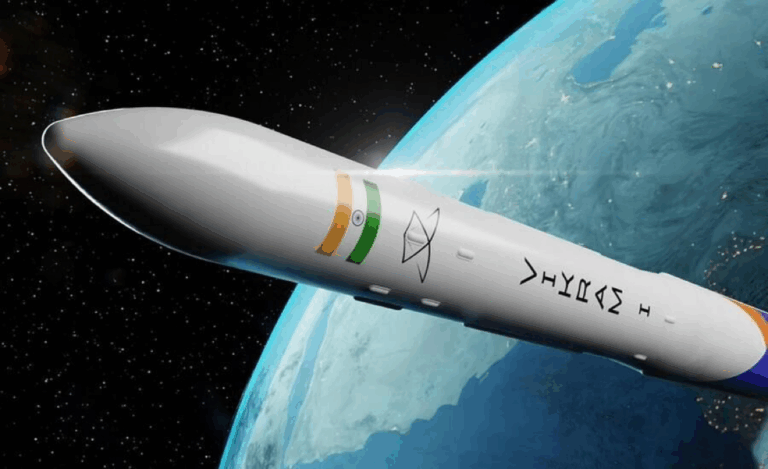
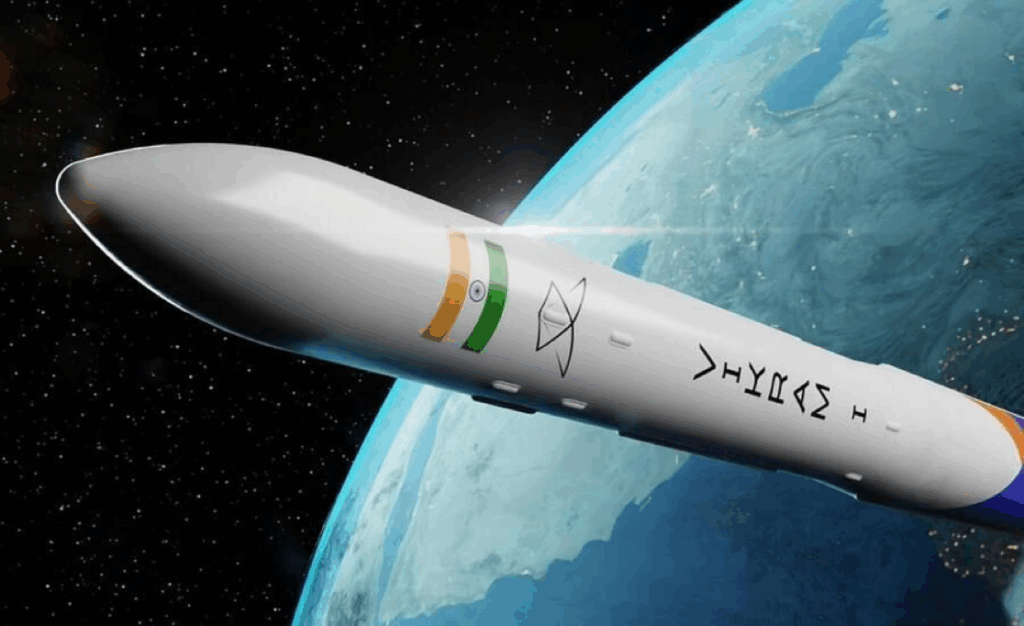
India’s Hypersonic Power: DRDO’s “Dhvani” Missile Ready for Test Flight 🇮🇳🚀

0

🌟 A New Sonic Roar in India’s Defense Sky

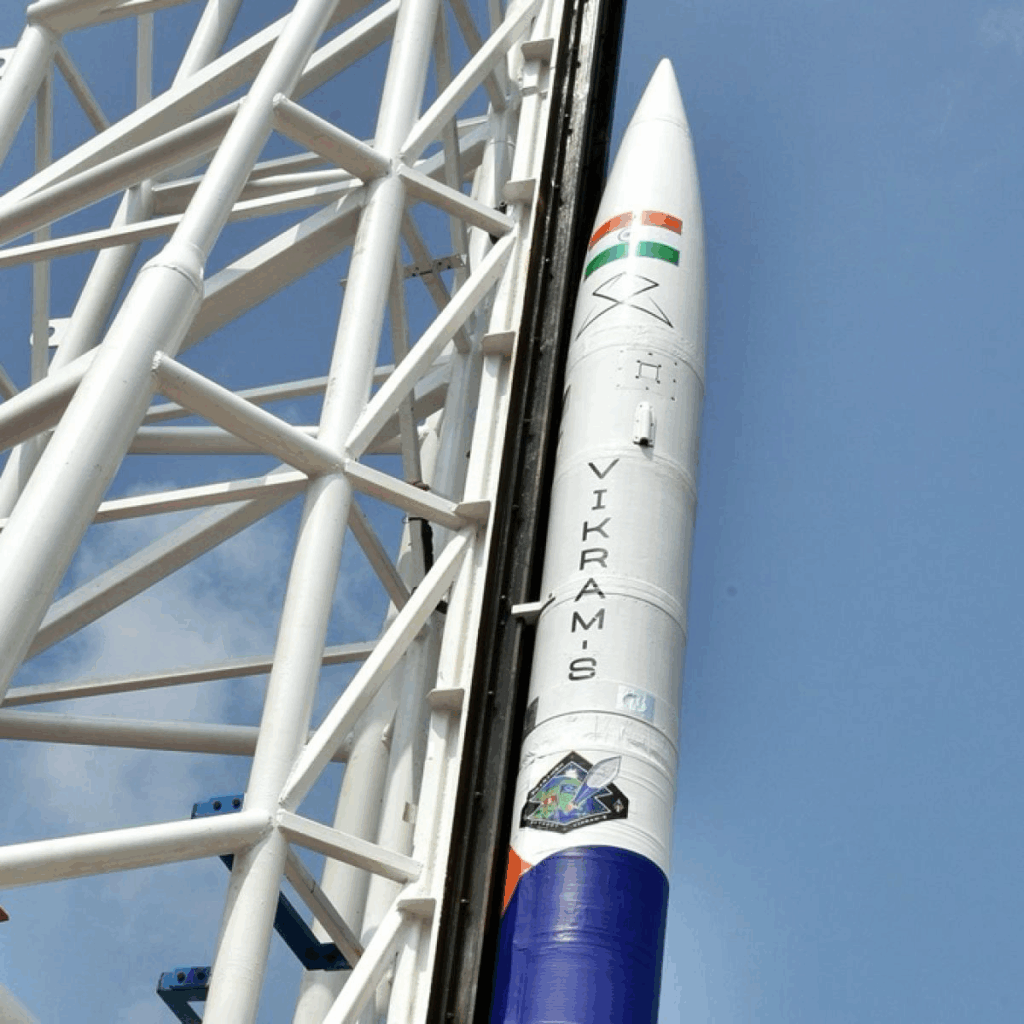
India is gearing up for a historic leap in defense technology as DRDO (Defence Research and Development Organisation) prepares to test “Dhvani”, its most ambitious hypersonic missile to date. Aptly named after the Sanskrit word for “sound,” Dhvani represents the thundering sonic power of India’s next-generation weaponry — a perfect blend of speed, stealth, and precision.

⚡ Beyond Speed: The Mach 6 Marvel

At its heart, Dhvani is a technological beast.

  • 🚀 Speed: Capable of touching Mach 5 to 6, this missile can cover nearly 7,400 km/h, outpacing any existing intercept systems.
  • 🔥 Range: With an estimated reach of 6,000 to 10,000 kilometers, Dhvani extends India’s strategic footprint across continents.
  • 🧠 Guidance: Fitted with next-gen AI-based navigation systems, it ensures pinpoint accuracy, even against moving maritime targets.

This immense speed makes it uninterceptable, placing it in the elite category of global hypersonic weapons — alongside systems from the US, Russia, and China.

🕵️‍♂️ The Stealth Edge: Invisible and Invincible

What truly sets Dhvani apart is its stealth-optimized geometry.

  • 🛰️ Radar Evasion: Its heat-resistant composite materials and radar-absorbing shape render it almost undetectable during flight.
  • 🌫️ Low Infrared Signature: The advanced thermal shielding drastically reduces its visibility to enemy satellites and defense radars.

In essence, Dhvani doesn’t just strike — it vanishes into thin air before and after impact.

🧩 India’s Strategic Leap

With Dhvani, India joins the limited circle of nations mastering hypersonic propulsion and aerodynamic control. Beyond defense, the technology developed for Dhvani could also pave the way for hypersonic transport systems in the future — shrinking travel times and boosting aerospace innovation.

🇮🇳 The Final Word: A Sound That Shakes the Future

When Dhvani takes flight, it won’t just be another missile test — it will be a symbol of India’s arrival in the hypersonic era. A fusion of indigenous innovation, national pride, and strategic deterrence, Dhvani is not just a weapon… it’s the sound of India’s unstoppable momentum. 🔥

Bajrang Setu: Rishikesh’s Glass Gateway to the Divine

0

🌉 The Dawn of a New Icon Over Maa Ganga

Rishikesh — the spiritual heart of Uttarakhand — is set to unveil its newest architectural wonder, Bajrang Setu, on 31st October. Stretching 132 meters across the sacred Ganga River, this glass suspension bridge is not just a feat of engineering but a poetic blend of divinity and design. With its transparent glass walkways, visitors can now experience the surreal sensation of walking directly above the flowing Ganga — a view that merges thrill with tranquility.

🕉️ Design Rooted in Divinity, Inspired by Kedarnath

The entrances of Bajrang Setu are architectural tributes to the Kedarnath Temple, symbolizing faith and resilience. Each archway reflects intricate carvings and sacred motifs, echoing the Himalayan grandeur of the shrine itself. This design choice perfectly ties together Rishikesh’s spiritual essence and Uttarakhand’s temple heritage — making Bajrang Setu not merely a bridge, but a pilgrimage of architecture.

The bridge’s transparent flooring and steel cables have been constructed using state-of-the-art materials, ensuring safety while preserving its aesthetic brilliance. The interplay of glass, steel, and river reflections creates a celestial experience, especially under the golden hues of dawn and dusk.

✨ Engineering Meets Emotion: A Tourist Magnet

With its cutting-edge suspension technology, Bajrang Setu is set to become India’s most photographed pedestrian bridge. Designed to handle high foot traffic while maintaining stability, the bridge stands as a testament to modern India’s infrastructural vision.

Tourists, adventure seekers, and devotees alike will find themselves mesmerized by its transparent floor — offering a 360° view of Rishikesh’s landscape, from the emerald forests to the distant peaks. At night, illuminated LED panels along the cables transform Bajrang Setu into a glowing ribbon of light over the sacred Ganga — a sight destined to become Rishikesh’s new identity.

🌺 A Symbol of Modern Faith and Future Vision

Bajrang Setu doesn’t just connect two riverbanks — it connects tradition and technology, devotion and design. It’s a living metaphor for how India honors its spiritual roots while stepping boldly into the future.

When the bridge opens this 31st October, it will not only change the skyline of Rishikesh but redefine what it means to walk on faith — quite literally, above the sacred waters of Maa Ganga.

Hayagriva Avatar: The Divine Horse-Headed Form of Lord Vishnu 🌺

Among Lord Vishnu’s many incarnations, the Hayagriva Avatar stands out as a radiant symbol of divine intelligence and the victory of knowledge over ignorance. Though less celebrated than Rama or Krishna, Hayagriva holds immense significance in the Vaishnava tradition — embodying the sacred union of wisdom, purity, and enlightenment.

🌺The Meaning Behind the Name

The word Hayagriva (Sanskrit: हयग्रीव) translates to “Horse-necked” or “Horse-headed.”

🐎 Haya means horse, symbolizing speed, energy, and intellect.

🐎 Griva means neck, representing the connection between thought and speech.

Thus, Lord Vishnu’s Hayagriva form — with the head of a horse and the body of a man — signifies divine wisdom communicated through sacred sound, reminding humanity that true knowledge flows from purity of mind and devotion.

🌸The Legend of Hayagriva: The Restorer of the Vedas

As narrated in the Skanda Purana, Agni Purana, and Mahabharata, a time came when the universe fell into darkness.

🌟 Two fierce demons, Madhu and Kaitabha, born from Lord Vishnu’s earwax, stole the Vedas from Lord Brahma while he slept. Deprived of these sacred texts, Brahma lost the knowledge to continue creation.

🌟 Desperate and helpless, Brahma prayed to Lord Vishnu — the Preserver of the Universe. Answering his call, Vishnu manifested as Hayagriva, radiant as a thousand suns, his horse face glowing with divine light.

🌟 With celestial power, Hayagriva battled Madhu and Kaitabha for thousands of years amidst cosmic waters. Eventually, he slew the demons and reclaimed the stolen Vedas, restoring order, light, and divine wisdom to the cosmos.

🌺Spiritual Symbolism

✨ Wisdom Over Ignorance: Hayagriva embodies the triumph of knowledge over darkness and confusion.

✨ The Voice of Truth: His horse head represents clarity of sound — the divine vibration (Om) through which creation unfolds.

✨ Patron of Learning: Devotees, especially scholars and students, worship Hayagriva for clarity of mind, memory, and eloquence.

🌸Conclusion

The Hayagriva Avatar of Lord Vishnu is not merely a tale from ancient texts — it’s a timeless message. It reminds us that divine knowledge can never be destroyed, only hidden — and through devotion, humility, and purity, it can always be reclaimed. 🌺
Platforming Merit: When Legacy Becomes Leverage

0

In startup parlance, platforming merit means creating a narrative or platform around authentic strengths and values — and letting that credibility attract support, users, and growth. Sweet Karam Coffee is a vivid example: they built a brand around their grandmother’s recipes and values — and that trust and emotional resonance became their biggest asset.

☕ The Rise of Sweet Karam Coffee

Founded in October 2015 in Chennai, Sweet Karam Coffee began as a kitchen experiment by cousins wanting to relive the authentic snacks and sweets their grandmother, Janaki Paati (now 80+), used to make.

What made their approach powerful:

  • 👵 They positioned Janaki Paati as the face and voice of authenticity — her age, legacy, and recipes added deep credibility.
  • 🌐 They digitized and scaled regional, handmade snacks using an online-first strategy: “Go online for Tradition.”
  • 🚀 Over time, they expanded across India and abroad, serving over 1 lakh customers and onboarding numerous home-chefs (especially women) into their network.
  • 💛 The brand now evokes emotional longing, nostalgia, and trust — especially in diaspora communities craving “home” flavors.

🌟 5 Key Insights from Their Journey

1️⃣ Authenticity is your strongest platform

People connect to real stories. Positioning Janaki Paati’s legacy made the brand feel genuine, not engineered.
2️⃣ Age is an advantage, not a liability

Rather than sidelining her, the founders leveraged her 80+ years as a symbol of trust, continuity, and tradition.

3️⃣ Leverage ecosystem, not just product

They didn’t just sell snacks — they built a network of homepreneurs (many women), turning the brand into a social movement.

4️⃣ Emotional positioning scales globally

Diaspora and culture-curious consumers value tradition and memory — Sweet Karam tapped that sweet spot beyond geographic limits.

5️⃣ Platforming merit attracts both consumers and stakeholders

Because their origin story is strong, they draw media, investors, and customers who believe in a mission — not just a product.

💼 Legacy as Leverage

In just under a decade, Sweet Karam Coffee transformed from a kitchen experiment into a ₹100+ crore (or aspirational scale) brand with emotional gravity. Their story shows how platforming merit — building on deep authenticity and values — can outshine many conventional growth strategies.

Comet Shoes: The Two Friends Turning Sneakers into a ₹5 Crore-a-Month Revolution

0

🌟 The Rise of Comet — A New Star in India’s Sneaker Universe

Two young friends turned a simple dream into a roaring success story. Their startup, Comet, is now earning a staggering ₹5 crore per month, shaking up India’s footwear market with its stylish, high-quality, and proudly Made-in-India sneakers.

In 2024, they secured a ₹42 crore funding round at a ₹167 crore valuation, a feat that places Comet among India’s most promising D2C lifestyle brands. But this wasn’t an overnight success — it was a journey powered by grit, creativity, and a relentless belief in India’s design potential.

👟 From Passion to Profit: The Birth of a Brand

The founders, driven by their shared love for sneakers and frustration with overpriced global brands, decided to create premium yet affordable shoes for Indian consumers. Their idea was simple but powerful — blend international aesthetics with Indian craftsmanship.

Every pair of Comet shoes is made with meticulous attention to detail — from handpicked materials to ergonomic designs built for comfort. The brand speaks to India’s new-age youth — those who crave both style and substance.

Their marketing strategy? Authentic storytelling. The duo showcased their journey openly on social media, connecting with a generation that values transparency and purpose. This emotional connect helped Comet skyrocket in both sales and loyalty.

💡 The Business Boom — Funding, Growth & Vision

Comet’s ₹42 crore raise wasn’t just about money; it was about momentum. Investors were quick to recognize a rising brand that’s rewriting India’s footwear playbook.

Today, Comet sells thousands of pairs monthly through its website and retail partnerships, often selling out within days of new drops. Their focus on limited-edition designs, eco-friendly production, and youth-centric branding has made Comet more than just a shoe brand — it’s a movement.

🔥 The Road Ahead: From India to the World

With strong profits, cult following, and global interest, Comet’s next step is international expansion. The founders envision putting Indian sneakers on global shelves — proving that “Made in India” can stand toe-to-toe with Nike and Adidas.

✨ Ending Note

Two friends, one vision, and a dream stitched in every sole — Comet isn’t just a footwear brand; it’s a statement of India’s creative confidence.

And the best part? This is just their first step.

Top 5 Technological Breakthroughs Powering India’s Future in 2025🇮🇳

0

2025 has been a transformative year for India’s tech landscape — where innovation meets ambition. From AI-driven healthcare to quantum computing, India is not just adopting global trends — it’s setting them. Let’s explore the Top 5 technological breakthroughs that are redefining India’s digital decade and placing the nation among the world’s innovation leaders.

⚙️ 1. BharatGPT: India’s Indigenous AI Revolution

India has entered the generative AI race with BharatGPT, a multilingual large language model trained on Indian dialects and cultural data. Developed under the “AI for All” mission, it supports 12 Indian languages and powers education, governance, and customer service sectors.

💡 Why it matters: It democratizes AI access for over a billion Indians and reduces dependency on Western models like ChatGPT or Gemini.

🌐 2. India’s Quantum Leap: The QNu Labs Breakthrough

Bengaluru-based QNu Labs has achieved a major milestone by commercializing Quantum Key Distribution (QKD) — a technology that ensures unhackable communication.

💡 Why it matters: With this, India joins an elite global club, securing defense and financial data with quantum encryption, and propelling forward the government’s ₹6,000 crore National Quantum Mission.

🧬 3. AI in Healthcare: CureAI’s Predictive Diagnostics

Pune-based CureAI developed an AI model capable of detecting early signs of tuberculosis, cancer, and heart failure using basic X-rays and blood reports.

💡 Why it matters: This is saving thousands of rural lives, turning India into a hub for affordable AI-driven healthcare solutions.

🚀 4. ISRO’s Reusable Launch Vehicle (RLV) Breakthrough

ISRO’s successful RLV-LEX-02 mission in 2025 marks India’s step toward low-cost space access. The winged vehicle autonomously landed after a suborbital flight, paving the way for reusable rockets.

💡 Why it matters: This could slash launch costs by 80%, making India a global competitor in commercial space launches.

⚡ 5. Green Hydrogen Push: India’s Energy Tech Renaissance

With the National Green Hydrogen Mission, Indian startups and PSUs have developed AI-optimized electrolyzers that produce hydrogen 40% more efficiently.

💡 Why it matters: India is on track to become a net exporter of green hydrogen by 2030, powering clean mobility and industries.

🇮🇳 Conclusion: India’s Tech Age Has Arrived

From AI to aerospace, India’s breakthroughs in 2025 reflect a nation rapidly evolving from technology consumer to technology creator. The world isn’t just watching — it’s taking notes.

The Divine Birth of King Dasharatha: A Miracle Forged by Devotion and Destiny

🌿 The King Who Bowed Before Duty — and the Divine

In the sacred land of Ayodhya, King Aja was renowned not only for his valor but also for his unflinching devotion to Lord Shiva. One day, while performing his Sandhyā Vandana, the mighty Ravana arrived to challenge him. But what unfolded next revealed the depth of Aja’s spiritual power.

As he meditated, King Aja offered sacred water backward — a gesture that stunned Ravana. When questioned, Aja replied serenely, “A cow grazing a yojana away was about to be attacked by a lion. I offered water backward to save her.”

Curious, Ravana traveled to the site and found the lion slain, struck by arrows made of water. Awestruck, Ravana realized the divine might of King Aja — a warrior whose faith itself was a weapon. He retreated, bowing to Aja’s spiritual supremacy.

🌸 The Miracle of the Lotus — A Curse Turned Blessing

Years later, while wandering through a serene forest, King Aja saw a radiant lotus floating in a crystal lake. When he tried to pluck it, the flower drifted away. Suddenly, a celestial voice thundered —

“O King, you are childless. You are not worthy of this divine lotus.”

The words pierced Aja’s heart. Grief consumed him, but his devotion deepened. His prayers reached Lord Shiva, who, moved by Aja’s purity, commanded Dharmaraja (Yama) to bless him with an heir through divine intervention.

🔱 The Copper Coin that Birthed a Dynasty

A humble Brahmin, sent by fate, visited Aja’s court. When offered gold, he refused, asking only for what truly belonged to the king. That night, Aja earned a single copper coin through labor at a blacksmith’s forge and gifted it to the Brahmin’s wife.

When the Brahmin received the coin, the earth itself split open! Nine golden chariots ascended to the heavens, and the tenth remained — carrying a divine child.

“O King,” said the Brahmin, “accept this child — born from your humility and labor. He is your son.”

👑 The Birth of Dasharatha — The Charioteer of Ten Directions

That miraculous child was King Dasharatha, originally named Manu. His chariot could move in all ten directions, earning him the name “Dasharatha” — one who commands the heavens, earth, and beyond.

Born not from desire, but from sacrifice, devotion, and divine grace, Dasharatha would one day father Lord Rama, the very incarnation of dharma.

🌺 Conclusion: The Legacy of a Divine Lineage

The story of Dasharatha’s birth is not just mythology — it’s a testament to faith, humility, and divine justice. From a single copper coin to a celestial child, the universe itself conspired to reward a king whose heart beat in rhythm with devotion.

It reminds us that miracles are not born from wealth or power — but from sincerity, sacrifice, and the purity of one’s soul.

🏔️ Gunung Padang: The 25,000-Year-Old Pyramid That Rewrites Human History

0

🌋 The Mysterious Hill That Shook Archaeology

In the lush highlands of West Java, Indonesia, sits Gunung Padang, once thought to be an ordinary volcanic hill. But in 2023, geologists revealed something astonishing — beneath the surface lies what could be the oldest pyramid ever discovered, possibly dating back 25,000 years. If true, it would predate Egypt’s Great Pyramid of Giza by at least 20,000 years, shattering the established timeline of human civilization.

🧬 Uncovering the Layers of Time

Using ground-penetrating radar, 3D imaging, and carbon dating, researchers found that Gunung Padang is not just a natural formation but a man-made, multi-layered structure.

  • 🪶 The top layer, built around 2,500–3,000 BCE, consists of massive basalt columns arranged in terraces.
  • 🪶 Beneath lies a second layer, carbon-dated to 8,000 BCE, showing signs of ancient construction.
  • 🪶 The deepest core, astonishingly, dates back to 25,000 BCE, making it the oldest known megalithic structure on Earth.

This discovery, led by geologist Danny Hilman Natawidjaja, suggests that sophisticated builders existed during the Ice Age, long before recorded history recognized “civilization.”

🧠 Built by Whom? The Mystery Deepens

Here’s where it gets even stranger — some scientists believe the pyramid’s builders might not have been Homo sapiens as we know them. The precision, alignment, and layered engineering appear too advanced for the Stone Age.

The theory has ignited fierce debates:

  • ⚡ Some experts claim it’s evidence of an unknown lost civilization, one that thrived before the last Ice Age.
  • ⚡ Others argue it could point to non-human intelligence, suggesting early contact or guidance from beings beyond human evolution.
    Regardless of which side you stand on, Gunung Padang forces us to question everything we thought we knew about our past.

🏺 Egypt vs. Indonesia: Rewriting Ancient Timelines

For centuries, Egypt’s Great Pyramid of Giza has symbolized humanity’s earliest architectural brilliance. But if Gunung Padang’s age is verified, the torch of ancient genius might shift from Africa to Southeast Asia.

Some independent researchers even argue that Egypt’s pyramids could be far older than believed—perhaps 40,000 years old, aligning with forgotten epochs of human prehistory.

🌌 The Final Word: A Gateway to Forgotten Ages

Whether carved by Ice Age humans or something beyond, Gunung Padang isn’t just a pyramid — it’s a chronological riddle, a whisper from a time when history itself hadn’t yet begun.

It reminds us that the Earth still hides secrets that can rewrite our entire understanding of civilization — and perhaps, our own origins.

India’s ₹7,350 Crore Leap Toward Rare Earth Self-Reliance: A Magnet Revolution Begins

0

🇮🇳 The Spark of Self-Reliance

India has set its sights on a magnetic revolution! With the launch of a ₹7,350 crore scheme, the nation is ready to strengthen its grip on one of the most crucial materials in the modern world — rare earth permanent magnets. These high-performance magnets are the backbone of electric vehicles, wind turbines, robotics, medical devices, and even defense technologies.

The move marks a decisive step in India’s “Atmanirbhar Bharat” (self-reliant India) vision — minimizing dependence on China, which currently dominates over 85% of the global rare earth market.

⚙️ Why Rare Earth Magnets Matter

🧲 The invisible powerhouses: Rare earth magnets, made from elements like neodymium, samarium, and dysprosium, are what make electric motors spin faster and gadgets work smarter. They are 15 times stronger than regular magnets and essential for next-gen clean technologies.

🚗 EVs to energy: From the motor of an electric car to the rotor of a wind turbine, these magnets drive India’s green ambitions. As the global shift toward sustainability accelerates, control over magnet production is becoming as strategic as oil once was.

💡 The ₹7,350 Crore Gameplan

💰 Production-linked incentives (PLI): The scheme will offer financial support to companies manufacturing high-end rare earth magnets domestically.

🏭 Tech-driven ecosystem: It includes setting up advanced refining and processing facilities, fostering R&D, and forming public-private partnerships to ensure complete value-chain development — from ore extraction to finished magnets.

🌍 Strategic autonomy: The government’s focus is not just industrial — it’s geopolitical. By reducing reliance on China, India aims to secure critical mineral supplies for its defense and energy sectors, reinforcing national security and economic stability.

🚀 The Bigger Picture: India’s Global Magnet Moment

With this initiative, India could soon emerge as a global alternative in the rare earth market — attracting international investors, supporting startups, and ensuring steady raw material supplies for future industries.

This ₹7,350 crore magnet mission is more than a scheme — it’s a statement of intent, signaling that India is ready to power the world’s next industrial wave, not follow it.

🌟 Conclusion: The Magnetic Pull of Progress

India’s rare earth revolution isn’t just about metals — it’s about momentum. As the country magnetizes innovation, investment, and independence, one thing becomes clear: the future is being forged in India, and it’s powerfully magnetic.

India Shines Bright: Now the World’s Third-Largest Solar Power Producer with 125 GW Capacity☀️

0

In a dazzling leap forward, India has scaled the solar energy charts to claim the third spot globally, installing about 125 gigawatts (GW) of solar capacity. This is not just a milestone in megawatts — it’s a signal to the world that India’s solar revolution is real, bold, and unstoppable.

🌍 India Joins the Solar Big League

India now stands behind only China and the United States in terms of installed solar power capacity. With 125 GW of solar connected, the nation has vaulted ahead of many major economies to take third place. 

This surge comes as the government reports having achieved several renewable targets five years ahead of schedule.  Notably, now more than half of India’s total installed electricity capacity is sourced from non-fossil sources, reflecting the depth of the clean energy shift. 

💡 How India Harnessed the Sun — Policy, Scale & Innovation

Policy Engines & National Schemes

  • Through PM-KUSUM, the government supports solarizing agricultural pumps (3.5 million), off-grid solar pumps (1.4 million), and small solar plants (10 GW).  
  • Under Surya Ghar – Muft Bijli Yojana, more than 2 million households are now benefiting from rooftop solar power.  
  • Clear regulatory frameworks, bidding transparency, and solar-friendly tariffs have boosted investor confidence.

Massive Deployments & Flagship Projects

  • Solar parks such as Pavagada Solar Park (2,050 MW) showcase scale and strategic land use.  
  • The Rewa Ultra Mega Solar Park (750 MW), with record low tariffs, proved grid parity is possible.  
  • Deserts, canals, rooftops — solar is spreading into all corners, pushing the envelope of where power can be generated.

Manufacturing & Tech Push

  • India is now the second-largest manufacturer of solar modules after China, helping reduce import dependence.  
  • Private players like Adani are scaling integrated solar manufacturing—wafers, ingots, modules—boosting domestic value chains.  

🚀 Record Growth & Momentum

  • In the first half of FY26, India added a record 25 GW of renewable capacity, with about 21.7 GW from solar alone.  
  • Renewables (excluding large hydro) now approach 197 GW, with solar as the lead driver.  
  • The pipeline is robust, and growth trajectories suggest even more staggering additions in coming years.

⚠️ Challenges & Road Ahead

  • Storage Bottlenecks: Solar’s intermittency demands battery or long-duration storage. India must catch up fast.
  • Grid Infrastructure: Integrating vast solar generation requires smart grids, transmission upgrades, and flexibility.
  • Land & Ecosystem Conflicts: Large solar farms compete with agriculture, biodiversity — innovative models like floating and canal solar must scale.
  • Finance & Equity: More capital needs to flow, especially to rural and last-mile installations.

Still, these challenges are not walls—they are call-to-action fronts for innovation, collaboration, and policy leaps.

🔚Ending

India’s arrival as the world’s third-largest solar power nation (125 GW) marks more than just a numerical victory — it’s proof that ambition, rooted policy, and bold execution can reshape an energy future. The journey ahead may spark more debates and face hitches, but the solar torch is lit — and its brilliance is just beginning.