Home Blog Page 18

₹1 Crore Rejected: The Engineer Who Bet Everything on India

0

When most people chase security, Venkata Narasimha Reddy chose uncertainty. Born into a farmer’s family, he rejected a ₹1 crore annual job offer to chase something far bigger — India’s deep-tech independence.

This is not a feel-good story.

This is a high-risk, high-conviction revolution.

The Realisation That Changed Everything

Reddy noticed a hard truth hidden in plain sight:

⚡ India’s automotive and mobility ecosystem was deeply dependent on imported technology

⚙️ Core electronics, intelligence systems, and telematics were not made in India

📉 Innovation existed — but ownership of technology didn’t

Instead of complaining, he asked one brutal question:

Why can’t India build this itself?

That question became his turning point.

13 Years. ₹4.5 Crore. One Unshakable Belief

Rather than taking the comfortable path, Reddy made a decision most wouldn’t dare:

🔥 Invest 13 years of personal savings

💰 Put ₹4.5 crore of his own money on the line

🚫 Say no to a ₹1 crore yearly salary

With that conviction, Narga Engineering was born — not as a startup chasing valuation, but as a mission chasing capability.

This wasn’t entrepreneurship.

This was nation-building through engineering.

What Narga Engineering Builds (And Why It Matters)

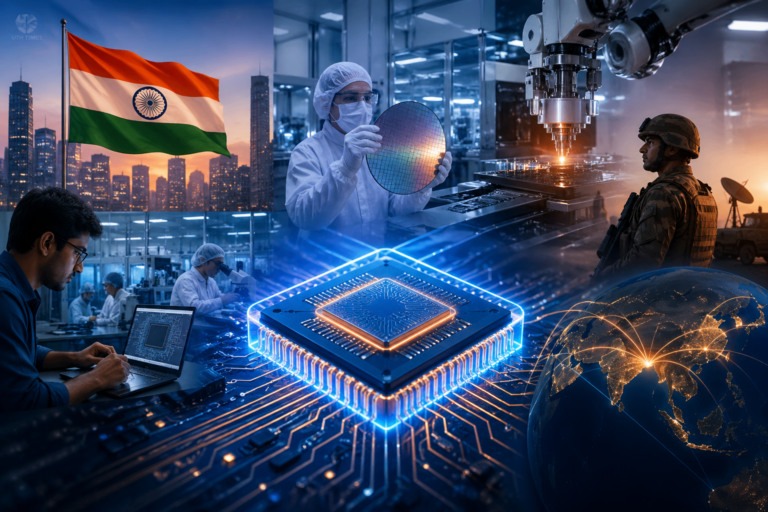
Today, Narga Engineering designs and manufactures advanced, India-first deep-tech products, including:

🛰️ 5G telematics units powering smart mobility

🔌 EV chargers built for India’s electric future

📷 Advanced dashcams with intelligent sensing

🚗 Automotive-grade electronics made on Indian soil

Each product replaces import dependency with homegrown intelligence — a silent but powerful shift.

Why This Story Is Bigger Than One Startup

This isn’t just about success.

🫡 It’s about technological sovereignty

🧠 It’s about owning core IP, not just assembling parts

🇮🇳 It’s about proving that deep-tech can rise from Indian roots

Reddy didn’t wait for policy, funding hype, or applause.

He built first. Believed first. Risked first.

In an era obsessed with safe careers and fast exits, Venkata Narasimha Reddy chose courage over comfort.

He didn’t just reject a ₹1 crore job.

He invested in India’s future.

Infosys–Cognition Alliance: Devin Goes Global

0

The global IT playbook is being rewritten. In a decisive move, Infosys has partnered with Cognition to deploy Devin, the world’s first autonomous AI software engineer, across global enterprises—signaling a new era where AI doesn’t just assist, it executes.

🚀 The Announcement That Turned Heads

Infosys’ collaboration with Cognition brings Devin AI directly into enterprise-grade delivery models. This isn’t an experiment or a pilot—it’s a global deployment strategy aimed at redefining how software is built, tested, deployed, and maintained.

For Infosys, this move cements its leadership in AI-first services. For the industry, it marks the beginning of autonomous engineering at scale.

🤖 What Makes Devin a Game-Changer?

Devin isn’t just another coding assistant. It functions like a full-stack software engineer.

🔹 Writes production-ready code

🔹 Fixes bugs independently

🔹 Understands project requirements

🔹 Runs tests and debugs errors

🔹 Collaborates via natural language

Unlike traditional AI tools that require constant human prompts, Devin plans, reasons, and executes tasks end-to-end—a first in enterprise AI deployment.

🌍 Why Infosys Went All-In

Infosys isn’t adopting Devin for hype—it’s a strategic weapon.

⚙️ Productivity Leap: Faster development cycles without compromising quality

⚙️ Cost Efficiency: Reduced manual effort in repetitive engineering tasks

⚙️ Scalability: Devin can be deployed across multiple projects simultaneously

⚙️ Human-AI Collaboration: Engineers move from execution to innovation

Infosys’ global delivery model now gets a digital engineer that never sleeps.

🧠 Enterprise Impact: Beyond Automation

This partnership pushes AI from support to ownership.

📊 Faster time-to-market for clients

📊 More resilient and adaptive software systems

📊 Engineering teams focused on architecture, strategy, and creativity

📊 AI-driven consistency across large-scale codebases

Devin doesn’t replace engineers—it amplifies them.

🌐 A Signal to the Global Tech Industry

With this move, Infosys sends a clear message:

The future of IT services is autonomous, intelligent, and AI-native.

Competitors are watching closely. Clients are recalibrating expectations. And software engineering, as we know it, is evolving—fast.

This isn’t just a partnership. It’s a preview of tomorrow’s tech workforce—where humans lead, and AI builds. Infosys and Cognition didn’t just deploy Devin. They deployed the future.

What Did Arjuna See in Vishwaroopam?

On the battlefield of Kurukshetra, time did not merely pause—it dissolved. When Arjuna asked to see the true form of Krishna, he was not prepared for what followed. The Vishwaroopam was not a form—it was existence itself, revealed without limits.

This vision, described in the Bhagavad Gita, remains one of the most profound cosmic revelations ever recorded.

🌌 The Assembly of Cosmic Forces

Arjuna did not see one god—he saw all divine energies unified.

✨ Within the Vishwaroopa resided:

  • 🌞 Adityas – embodiments of cosmic order
  • 🌬️ Vasus – elemental forces of nature
  • 🔥 Rudras – energies of destruction and transformation
  • 🩺 Ashwinis – healers of the universe
  • 🌪️ Maruts – the storm powers of motion

These were not separate beings. They were cells of one infinite body, functioning in absolute harmony.

🌍 The Universe Within a Single Form

What stunned Arjuna most was scale. The Vishwaroopa contained:

  • 🌌 All galaxies, realms, and dimensions
  • ⏳ Past, present, and future simultaneously
  • 🧬 Birth, life, decay, and dissolution in one vision

There was no “outside” the Vishwaroopa. The universe was not created by it—the universe existed inside it.
🕉️ Gods Within the Supreme

Arjuna witnessed even the highest divinities humbled.

🙏 He saw:

  • 🌸 Brahma, the creator, seated within the form
  • 🔱 Shiva, the destroyer, emerging from its vastness
  • ✨ Countless Devas offering reverence

This shattered hierarchy. The message was unmistakable:

All gods draw their power from the One.

☀️ Eyes of Sun, Breath of Fire

The Vishwaroopa was alive with terrifying brilliance:

  • 🌞 The Sun and Moon served as its eyes—illumination and rhythm
  • 🔥 Cosmic fire poured from its mouth, consuming warriors and worlds alike

This was not cruelty. It was Kala—Time itself—executing inevitable destiny.

🙇 Even Gods Stood in Awe

The most humbling sight?

All deities—fearless, immortal beings—stood worshipping Krishna, overwhelmed by the realization that they too were manifestations of something far greater.

Arjuna trembled. His bow slipped. Knowledge replaced doubt.

The Eternal Truth Revealed

The Vishwaroopam was not shown to frighten Arjuna—but to free him.

⚖️ It taught one absolute truth:

You are not the doer. You are the instrument.

And with that realization, destiny resumed its course.

SBI’s Rupee Bridge to Israel : A Financial Shift with Strategic Impact

0

When State Bank of India — India’s largest lender — decided to deepen its role in Israel, it wasn’t just another banking move. It was a calculated geopolitical and economic statement. As the only Indian bank operating in Israel, SBI is now set to promote India–Israel trade in Indian rupees, while significantly easing remittances between the two nations.

This is not about convenience.

This is about currency power, trade sovereignty, and strategic alignment.

Why Rupee Trade Matters Now

Global trade has long been dominated by dollar-based settlements. SBI’s move challenges that norm.

🔹 Reduced Dollar Dependency – Trade settlements in rupees lower exposure to dollar volatility

🔹 Lower Transaction Costs – No double currency conversion

🔹 Faster Settlements – Direct rupee channels cut delays

🔹 Sanction-Resilient Trade – A more independent payment ecosystem

For Indian exporters and Israeli importers, this means predictability, stability, and speed.

Boosting India–Israel Trade Corridors

India and Israel already share strong ties in:

• 🚜 Agriculture & irrigation tech

• 💻 Cybersecurity & deep tech

• 🛡️ Defence manufacturing

• 🧪 Pharmaceuticals & healthcare

By enabling rupee-based invoicing and settlements, SBI removes a key friction point in bilateral trade — currency risk. Small and mid-sized businesses, often hurt by forex fluctuations, stand to benefit the most.

This isn’t incremental growth.

This is trade democratization.

Remittances: Faster, Cheaper, Cleaner

SBI’s expanded role also simplifies money flows:

💸 Indian professionals in Israel can remit funds home with lower charges

💼 Businesses can manage working capital without forex uncertainty

⏱️ Settlement time drops significantly

In a world where cross-border payments are still painfully slow, this move introduces financial efficiency at scale.

A Strategic Banking Footprint

SBI’s presence in Israel is more than operational — it’s symbolic.

🏦 It represents India’s growing confidence in exporting its financial systems

🌏 It aligns with India’s push for rupee internationalisation

📈 It strengthens South–West Asia economic integration

This is banking as foreign policy infrastructure.

As global trade fragments and financial systems realign, SBI’s rupee-led initiative places India not as a follower — but as a rule-setter.

India isn’t just trading with Israel.

It’s reshaping how the trade is paid for.

India Takes the Helm: BRICS Enters a New Global Era

0

A quiet but powerful shift has taken place in global geopolitics. As BRICS expands into a 10-nation force, India steps in as Chair—ready to steer one of the world’s most influential coalitions into its next chapter.

What Makes BRICS 2026 Different

BRICS is no longer a five-nation club. With expansion, it now represents nearly half of the world’s population and a massive share of global growth.

🌍 A Broader Coalition

  • Emerging economies from multiple continents
  • Stronger Global South representation
  • Reduced dependence on Western-dominated institutions

💰 Economic Gravity

  • Trillions in combined GDP
  • Energy, minerals, manufacturing, and technology power
  • A serious alternative voice in global finance

This is not expansion for size—it’s expansion for influence.

Why India’s Chairmanship Matters

India’s leadership arrives at a moment when the world is looking for balance, not blocs.

🧭 A Bridge Nation

  • Trusted by both developing and developed economies
  • Active in G20, Quad, and Global South forums
  • Capable of consensus-building without coercion

🏗️ Agenda-Setter, Not Rule-Follower

  • Push for fair trade systems
  • Reform of global financial institutions
  • Stronger development financing for poorer nations

India isn’t just chairing meetings—it’s shaping direction.

India’s Strategic Priorities as BRICS Chair

Under India’s stewardship, BRICS is expected to move from vision to execution.

🚀 Key Focus Areas

  • Digital public infrastructure & fintech cooperation
  • Climate finance without growth penalties
  • Local-currency trade to reduce dollar dependence
  • Technology sharing among emerging economies

🛠️ Institutional Strengthening

  • Expanding the New Development Bank’s role
  • Faster project approvals
  • Transparent, inclusive decision-making

This is governance with speed—and purpose.

What This Means for the World Order

BRICS under India is not anti-West—it is pro-multipolar.

⚖️ A System Reset

  • Power diffusion instead of dominance
  • More voices at global decision tables
  • Development models tailored to local realities

The message is clear: global leadership is no longer exclusive.

India’s BRICS Chairmanship in 2026 is more than a diplomatic milestone—it’s a statement. The world is changing, and leadership is shifting toward those who can unite, not divide. BRICS is ready. And India is at the center of it.

India’s Green Roads Revolution: A World-First Breakthrough Turning Farm Waste into Highways

0

India has done what no other nation has commercially achieved before. The country is now the first in the world to commercially produce bio-bitumen for road construction using farm waste, a landmark announcement confirmed by Nitin Gadkari.

This is not a laboratory experiment. This is real, scalable infrastructure — and it changes everything.
What Is Bio-Bitumen — And Why It Matters

Bio-bitumen is a plant-based alternative to petroleum bitumen, the black binder used to hold asphalt roads together.

🌾 Made from: Agricultural residue and farm waste

🛣️ Used for: National highways, rural roads, expressways

♻️ Replaces: Fossil-fuel-based petroleum bitumen

Unlike traditional bitumen, bio-bitumen:

  • 🔥 Cuts crude oil dependence
  • 🌍 Reduces carbon emissions
  • 🚜 Converts farm waste into economic value

This innovation directly links farm fields to highways — a rare convergence of agriculture, environment, and infrastructure.

From Stubble to Superhighways

India burns millions of tonnes of crop residue every year, worsening air pollution. Bio-bitumen flips this problem into a solution.

🚜 Farm waste becomes raw material

💰 Farmers gain an extra income stream

🌫️ Stubble burning reduces drastically

Instead of smoke-filled skies, the same waste now strengthens India’s roads. That’s circular economy in action — not theory.

Engineering Meets Environmental Intelligence

Bio-bitumen isn’t weaker. In fact, trials show it offers:

  • 🛡️ High durability
  • 🌡️ Better temperature resistance
  • 🧱 Strong binding properties

It performs on par with — and in some conditions better than — petroleum bitumen. This makes it ideal for India’s diverse climate, from scorching plains to cold hill highways.

Economic Impact: Import Cuts & Jobs Created

India imports massive quantities of crude oil for road construction.

📉 Bio-bitumen reduces import bills

🏭 Boosts domestic manufacturing

👷 Creates rural & green-tech jobs

Every kilometre laid with bio-bitumen is money saved, emissions avoided, and livelihoods generated.

Why This Moment Is Bigger Than Roads

This breakthrough signals a shift in how India builds:

  • 🌱 Sustainability is now infrastructure-grade
  • 🏗️ Innovation is moving from labs to highways
  • 🌍 India becomes a global model for green construction

Other nations are watching — and learning.

The Road Ahead

India didn’t just invent a greener road material.

It redefined what development looks like in the climate era.

Highways no longer begin with oil wells.

They now begin on farms.

From Munna Bhai to SP Chaudhary: How Sanjay Dutt Became Bollywood’s Moral Paradox

0

Bollywood has produced stars, rebels, and icons—but only a handful of actors have carried the moral anxieties of an entire era on their shoulders. Sanjay Dutt belongs to that rare category. His cinematic journey is not a sequence of roles; it is a slow-burning moral narrative that has unfolded across decades. When he appears as SP Chaudhary in Dhurandhar, it feels less like a performance and more like the inevitable destination of a career shaped by conflict, consequence, and conscience.

In his early years, Sanjay Dutt’s screen presence was defined by brute force and emotional turbulence. He played men who were physically dominant yet morally untethered—characters driven by instinct rather than ideology. These performances were not polished, but they were revealing. They established Dutt as an embodiment of raw masculinity, power without reflection, mirroring a phase in Hindi cinema that valued strength over introspection. The absence of moral clarity in these roles was not a flaw; it was a precursor.

That precursor matured into something far darker during his gangster phase. Films such as Khalnayak and Vaastav transformed Sanjay Dutt into Bollywood’s most authentic carrier of moral contradiction.

His criminals were not cinematic fantasies; they were social outcomes. Violence in these films was never celebratory—it was inevitable, suffocating, and tragic. Dutt’s performances captured men who understood their own moral decay but lacked the tools to escape it.

In doing so, he turned the gangster genre into a form of social diagnosis, forcing audiences to confront uncomfortable truths about power, poverty, and consequence.

Then came the rupture that redefined everything—Munna Bhai MBBS. Munna Bhai did not redeem the gangster; it reimagined morality itself. Compassion replaced aggression. Emotional intelligence replaced intimidation. In a society increasingly hardened by systems and hierarchies, Munna Bhai proposed empathy as rebellion.

Sanjay Dutt’s persona shifted decisively—from moral collapse to moral possibility. This was not transformation through punishment, but through humanity.

The years that followed refined this evolution. Authority entered Dutt’s roles, but it came weighted with memory and restraint. His characters aged, reflected, and carried the burden of experience. That journey finds its most complete expression in SP Chaudhary. In Dhurandhar, Sanjay Dutt’s lawman is not performative or heroic in the conventional sense. He is controlled, scarred, and deeply aware of the cost of power. This is Munna Bhai’s empathy hardened into discipline, and the gangster’s chaos distilled into judgment.

Sanjay Dutt did not reinvent himself to survive changing cinema. He allowed cinema to absorb his contradictions. And in doing so, he became Bollywood’s most compelling moral paradox.

Hayagriva: The Victory of Wisdom Over Darkness

In the vast cosmic narrative of Hindu philosophy, few avatars are as intellectually profound as Hayagriva. This is not merely a tale of divine combat—it is a philosophical declaration: ignorance can never rule where true knowledge exists. When the sacred Vedas themselves were endangered, the universe witnessed not brute force, but enlightened intelligence rise to restore order.

The Theft That Shook Creation

The demon Hayagriva committed a crime greater than destruction—he stole knowledge itself.

📜 What Happened

  • 🕳️ The demon seized the Vedas, the foundation of cosmic law
  • 🌊 He hid them in the depths of the primordial ocean
  • ⚖️ Creation slipped toward chaos as sacred wisdom vanished

Without the Vedas, Brahma could not continue creation. The universe stood on the brink—not because of war, but because ignorance had interrupted divine order.

Vishnu’s Most Intellectual Avatar

To counter this unprecedented threat, Lord Vishnu did something extraordinary—He did not manifest as a warrior king, but as pure wisdom incarnate.

🧠 Why Hayagriva Was Different

  • 🐎 Horse-head symbolizing speed, clarity, and divine intellect
  • 📖 Personification of absolute knowledge
  • 🔔 Voice of the Vedas themselves

Hayagriva was not just protecting knowledge—He was knowledge.

The Battle Beyond Weapons

This confrontation was not about physical dominance.

⚔️ The Real War

  • 💡 Enlightenment vs ignorance
  • 📘 Sacred wisdom vs stolen knowledge
  • 🌌 Order vs cosmic confusion

Hayagriva destroyed the demon not through rage, but through supreme awareness, reclaiming the Vedas and returning them to Brahma—thus realigning the universe with truth.

The Deeper Meaning of the Hayagriva Avatar

This avatar delivers a timeless message that transcends mythology.

✨ What Hayagriva Teaches Humanity

  • 📚 Knowledge is the ultimate protector
  • 🌑 Darkness cannot survive in the presence of wisdom
  • 🔍 Awareness is more powerful than force

In an age of noise, misinformation, and intellectual decay, Hayagriva remains deeply relevant.

Why Hayagriva Still Matters Today

Even now, Hayagriva is worshipped as the patron of learning, memory, and intellect, especially by students, scholars, and seekers of truth.

📿 He reminds us that whenever wisdom is threatened—divine intelligence will rise.

Hayagriva stands as an eternal truth carved into cosmic history:

🕊️ Knowledge does not need weapons. It only needs to awaken.

India Builds 29 km of Highway in 24 Hours — A Guinness World Record Moment

0

In a single, electrifying day, India didn’t just construct a highway — it redefined what modern infrastructure execution looks like. On NH-544G in Andhra Pradesh, the nation set two Guinness World Records, laying 29 kilometres of highway lanes and deploying over 10,600 metric tonnes of bituminous concrete within 24 hours — a feat now officially recognised by Guinness World Records.

🚧 The 24-Hour Sprint That Changed the Global Narrative

This was not a symbolic attempt. It was a full-scale, high-stakes execution under real-world conditions.

🚀 29 km of highway lanes laid

🔥 10,600+ metric tonnes of bituminous concrete used

⏱️ Completed in a continuous 24-hour operation

Few nations have attempted infrastructure delivery at this scale — fewer still have succeeded.

🛣️ Why NH-544G Was the Perfect Stage

NH-544G is a strategically vital corridor designed to:

⚙️ Boost industrial and logistics movement

🚚 Reduce freight transit time

🌍 Strengthen regional economic integration

Executing the record on a functional, high-importance national highway sent a clear signal: India’s speed is now matched by strategic intent.

🏗️ Inside the Engineering War Room

Behind the headline numbers was an operation closer to a military mission:

👷 Hundreds of engineers, supervisors, and operators

🛠️ Multiple asphalt paving teams working in parallel

📊 Continuous real-time quality checks

⏰ Zero downtime machinery rotation

Every kilometre was pre-planned. Every tonne of asphalt was calibrated.

This wasn’t improvisation — it was orchestration.

🔥 Bituminous Concrete: Strength Over Spectacle

The use of bituminous concrete at this scale ensured the highway isn’t just fast-built — it’s future-proof.

🛡️ High resistance to heat and monsoon stress

🚦 Designed for heavy commercial traffic

🕒 Extended lifespan with reduced maintenance needs

This road is engineered to perform long after the applause fades.

🌏 Why This Record Matters Beyond India

This achievement does more than enter a record book:

📈 Positions India as a global infrastructure executor

🏗️ Proves large democracies can deliver with speed

🤝 Highlights matured coordination between planning, manpower, and machinery

Infrastructure today is power — and India just demonstrated it in asphalt and steel.

India didn’t just build a highway in 24 hours.

It built a message the world can’t ignore.

A Gigantic Water World Discovered 700 km Inside Earth

0

What if Earth has been hiding an ocean deeper than any sea we know — not on the surface, but 700 kilometers below our feet?

Scientists have uncovered compelling evidence of a gigantic “hidden ocean” locked deep inside Earth’s mantle. This isn’t water sloshing around like our oceans — it’s water trapped inside minerals, reshaping how we understand Earth’s structure, history, and even the origin of surface oceans.

This discovery isn’t just fascinating.

It’s planet-altering.

Where Is This Hidden Ocean Located?

The hidden ocean exists in the mantle transition zone, a layer between:

  • 🌍 Earth’s upper mantle
  • 🔥 Earth’s lower mantle

This zone lies 410–660 km beneath the surface, under immense pressure and extreme heat.

Here, a rare mineral called ringwoodite acts like a sponge — locking water molecules inside its crystal structure.

How Much Water Are We Talking About?

Not drops.

Not lakes.

An ocean-scale reservoir.

Scientists estimate:

  • 🌊 The mantle transition zone may hold as much water as all Earth’s surface oceans combined
  • 💧 This water is stored chemically, not as liquid
  • 🧊 It remains stable under crushing pressures millions of times stronger than atmospheric pressure

In short: Earth may be far wetter on the inside than on the outside.

How Was This Discovered?

The breakthrough came through:

  • 📡 Seismic wave analysis
  • 🌐 Global earthquake monitoring
  • 🔬 Laboratory simulations of deep-Earth conditions

Seismic waves slowed and bent in unusual ways, revealing water-rich minerals far below — a signature impossible to ignore.

Why This Changes Everything

This hidden ocean could explain:

  • 🔄 How Earth recycles water between surface and interior
  • 🌋 Why volcanic eruptions behave the way they do
  • 🌎 How oceans may have formed without asteroid delivery
  • 🧬 Why Earth remained habitable for billions of years

It also reshapes how scientists think about water on other planets.

If Earth can store oceans internally — so can other rocky worlds.

What This Means for the Future

This discovery opens doors to:

  • 🚀 New planetary exploration models
  • 🧠 Better understanding of plate tectonics
  • 🌍 Deeper insight into Earth’s long-term climate stability

Earth isn’t just a blue planet on the outside.

It’s blue on the inside too.

The Bigger Truth

We’ve explored the Moon.

We’ve mapped Mars.

Yet one of the greatest oceans on Earth was hiding beneath our feet — silently shaping the planet we call home.

Sometimes, the biggest discoveries aren’t out there in space…

They’re buried deep within us.