
What once took aerospace teams years, armies of engineers, and endless design reviews has now happened in days. An AI system has reportedly designed a functioning rocket engine in just two weeks — and it wasn’t based on simply copying old human ideas. It explored bold, unusual shapes, engineers 3D-printed the result, and the engine successfully fired. This is not just innovation. It is a glimpse of a new industrial era.
🚀 When Machines Start Inventing
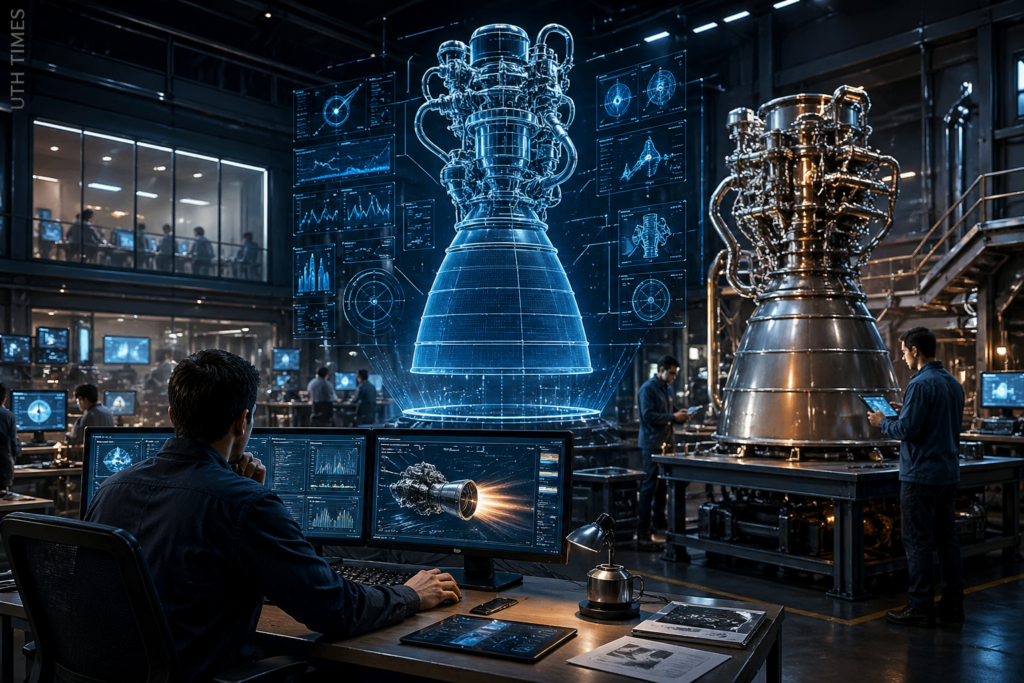
Traditional rocket engine design is one of the hardest tasks in engineering. Every curve, channel, nozzle angle, and cooling path must survive brutal temperatures, extreme pressure, and violent vibration.
Normally, this requires:
🔹 Years of simulation work
🔹 Repeated prototypes
🔹 Large engineering teams
🔹 Massive testing budgets
But AI compressed this cycle dramatically. Instead of slowly refining one human idea at a time, it generated thousands of possible concepts rapidly, tested them digitally, rejected weak options instantly, and kept evolving stronger designs.
The result: a new engine concept in only two weeks.
🧠 Designs Humans Rarely Imagine
This is where the story becomes extraordinary.
Human engineers often work within known logic, proven geometries, and past design traditions. AI does not carry that same mental baggage. It can explore shapes that look strange, asymmetric, organic, or mathematically complex — designs humans may ignore because they appear unconventional.
That means:
🔹 Unusual internal cooling channels
🔹 Non-traditional combustion chamber layouts
🔹 Weight-saving structures impossible to hand-design
🔹 Performance-focused geometries beyond standard intuition
Some of the most advanced future machines may not “look human-designed” at all.
🖨️ From Code to Fire: 3D Printing Changes Everything
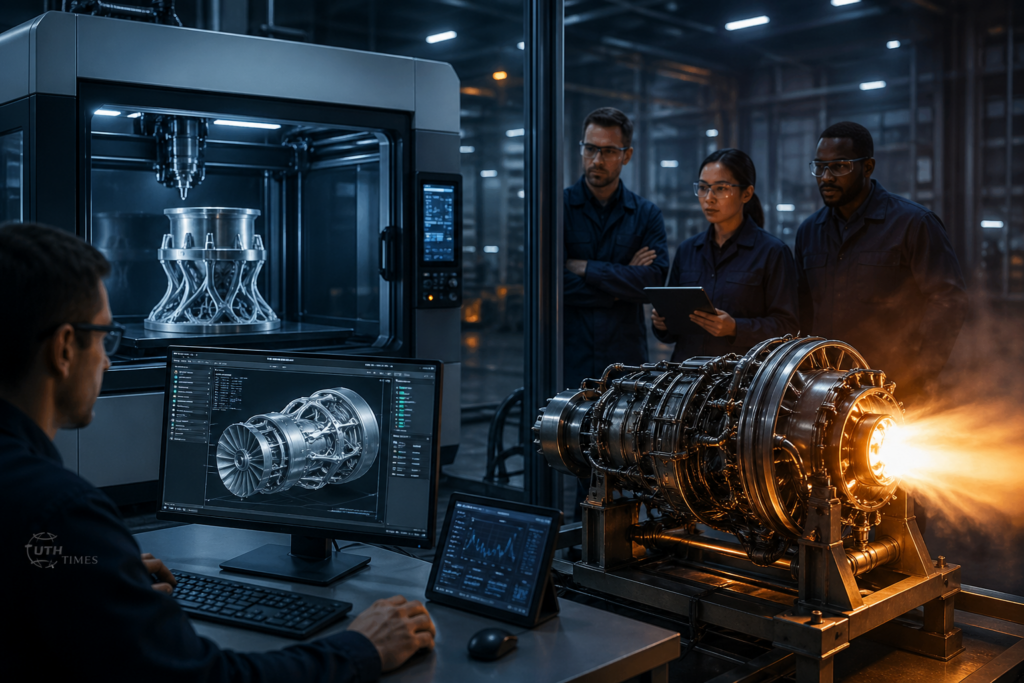
Without modern manufacturing, many AI-generated designs would remain impossible to build.
But metal 3D printing has changed aerospace production. Engineers can now print highly complex engine parts layer by layer, including internal pathways and shapes that traditional machining cannot produce.
That creates a powerful partnership:
🔹 AI invents
🔹 Software simulates
🔹 Printers manufacture
🔹 Humans validate and test
When the printed engine was fired successfully, it proved that AI design can move beyond theory into physical reality.
🌍 Why This Changes the Space Race
If rocket engines can be designed in weeks instead of years, the economics of space could transform.
Countries and companies may soon build:
🔹 Faster launch systems
🔹 Cheaper reusable rockets
🔹 Custom engines for specific missions
🔹 Rapid defense and satellite propulsion systems
Speed is now becoming a strategic weapon.
This is bigger than one rocket engine. It signals the arrival of AI as an inventor, not just an assistant. The next breakthrough engine, aircraft, battery, or reactor may not begin on a human sketchpad — but inside an algorithm.

