
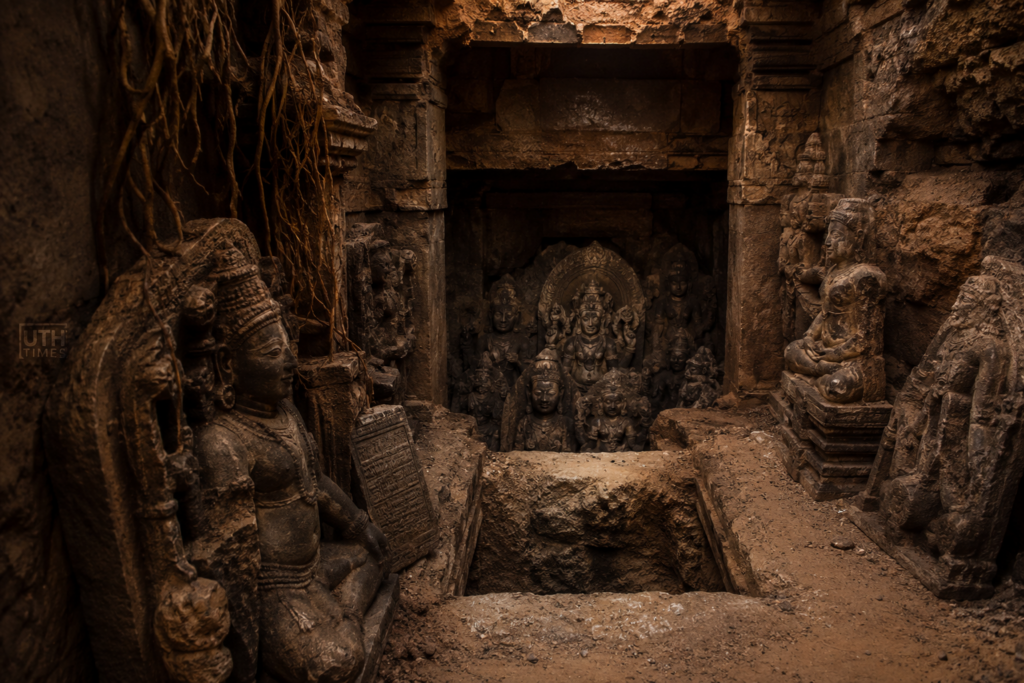
A remarkable archaeological discovery in Gujarat has brought centuries of forgotten history back into the spotlight. During excavation work at Bharuch’s historic Jama Masjid, officials uncovered ancient Hindu and Jain sculptures hidden inside a sealed underground vault that had reportedly remained closed for nearly seven centuries. The findings have sparked widespread interest among historians, archaeologists, and heritage enthusiasts across the country.
A Vault Locked in Time
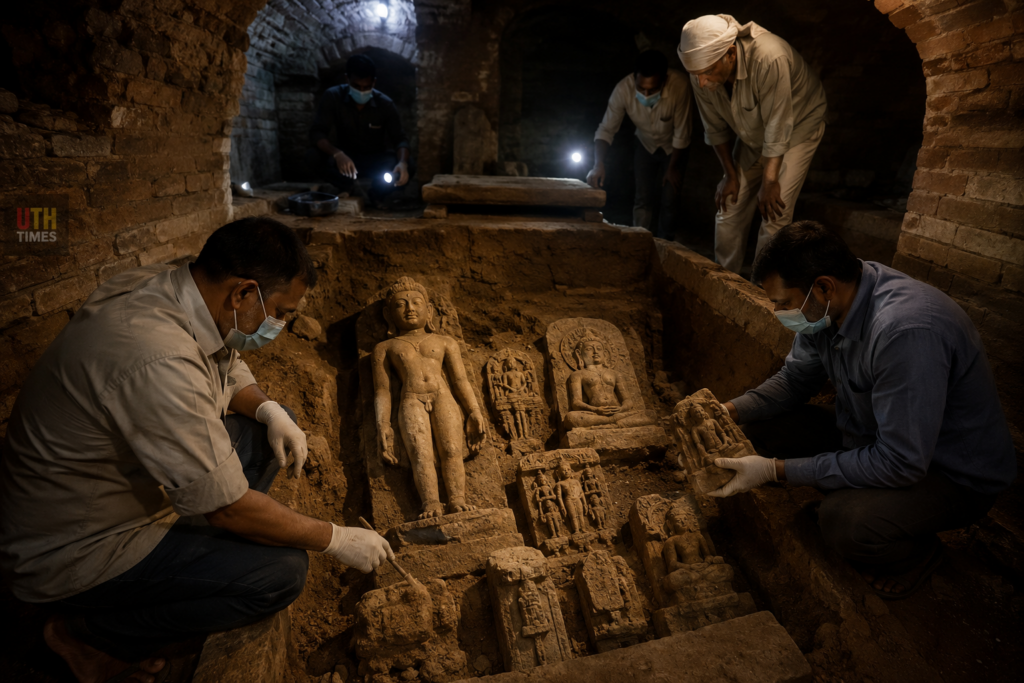
The discovery was made during an operation conducted by the Archaeological Survey of India (ASI), which was carrying out excavation and encroachment-removal activities at the historic site.
🔹 Archaeologists accessed a basement chamber that had remained sealed for approximately 700 years.
🔹 Inside the vault, they found multiple stone sculptures and religious artifacts.
🔹 The condition of several idols suggested that they had been carefully preserved beneath the structure for centuries.
The revelation has transformed what was a routine conservation exercise into one of the most intriguing archaeological finds in recent years.
The Mallinath Idol and Other Significant Discoveries
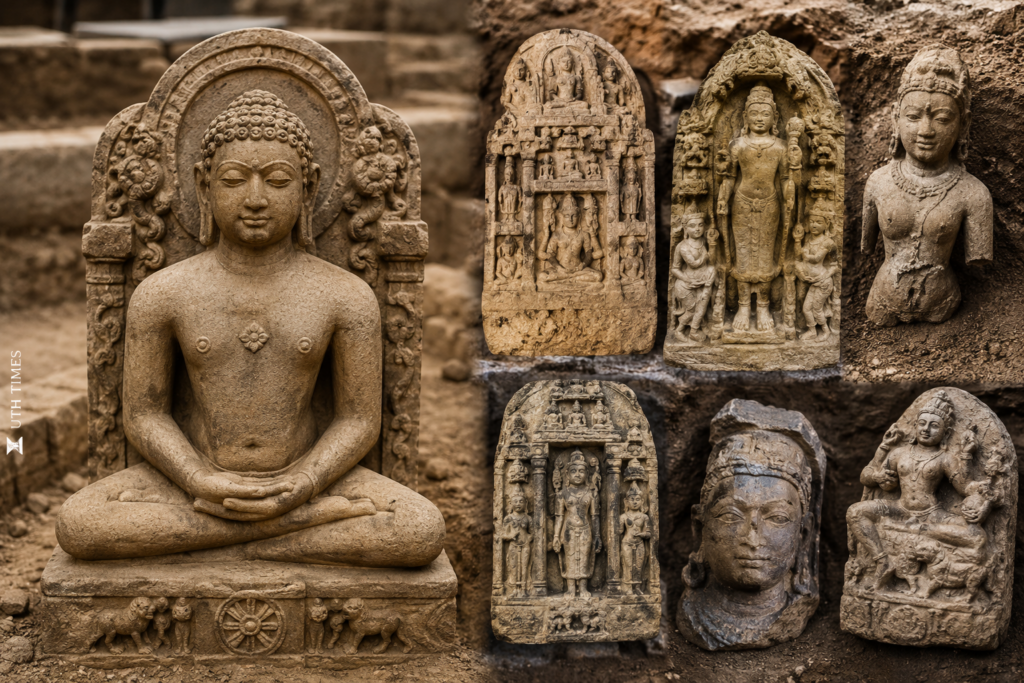
Among the most important artifacts recovered is an idol believed to represent Mallinath, the 19th Tirthankara of Jainism.
🔹 The sculpture is considered highly significant because of its historical and religious importance.
🔹 Archaeologists also recovered several other Hindu and Jain carvings from the site.
🔹 The artistic style of the sculptures may help experts better understand the region’s religious and cultural landscape before the medieval period.
The discovery highlights Bharuch’s long-standing role as a center of trade, culture, and spiritual activity.
An Inscription That Speaks Across Centuries
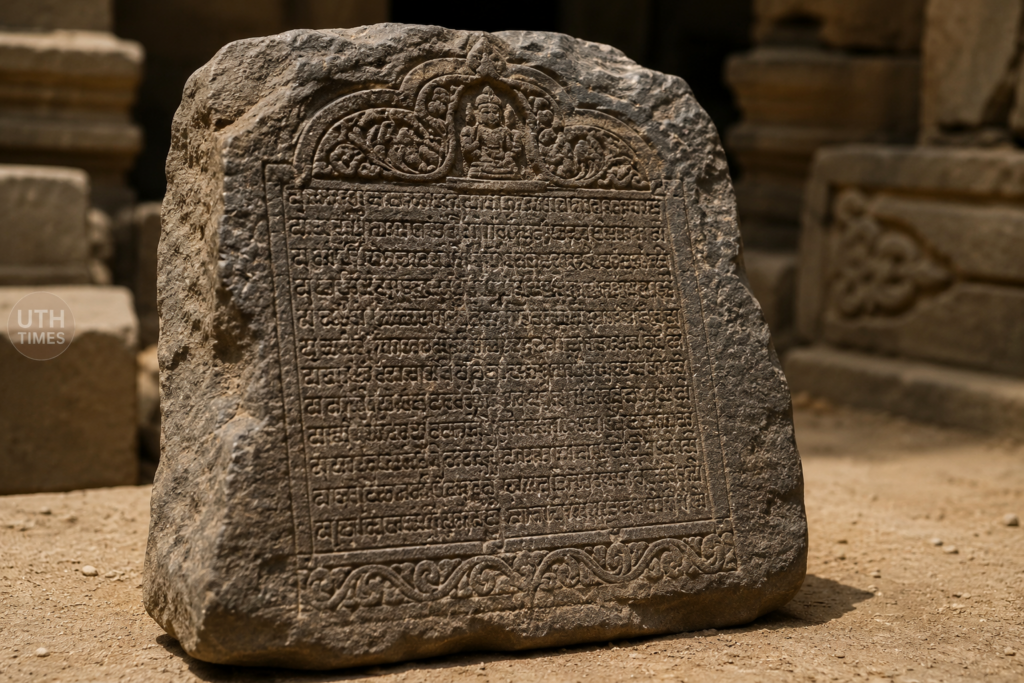
Perhaps even more significant than the idols is the recovery of an inscription dated Vikram Samvat 1213, corresponding to the 12th century.
🔹 Such inscriptions serve as valuable historical records.
🔹 They can provide information about rulers, patrons, religious institutions, and local society of the period.
🔹 Researchers are now expected to conduct detailed studies to decipher and interpret the text fully.
This inscription could become a key piece of evidence in reconstructing the region’s medieval history.
Why This Discovery Matters
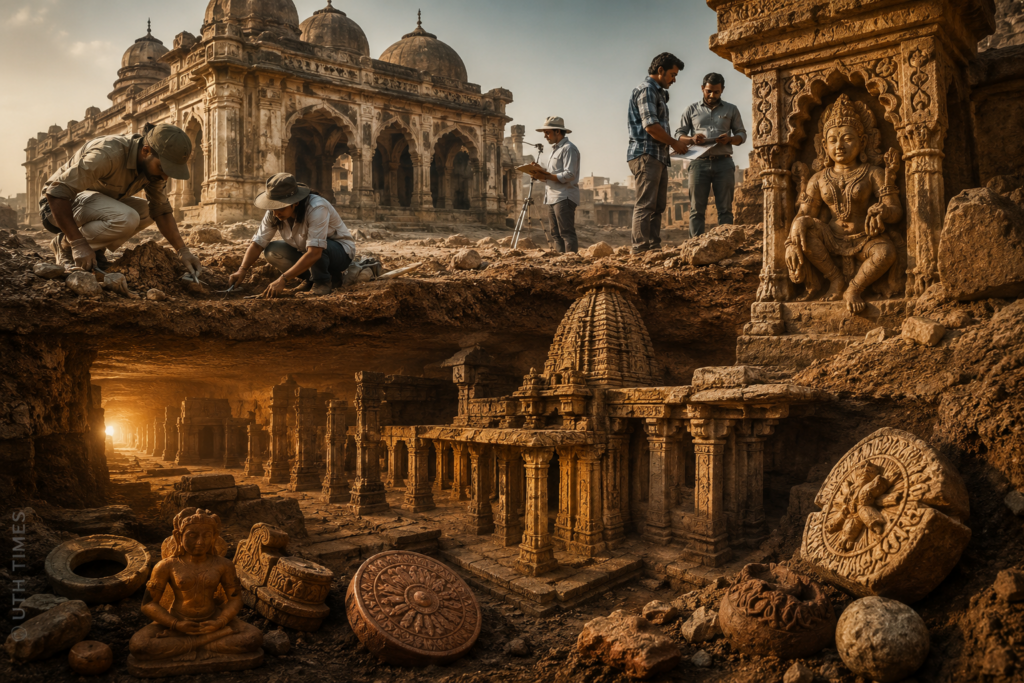
The find has reignited discussions about the layered history of many historic structures across India.
✨ It reveals the possibility of older cultural remains existing beneath later constructions.
✨ It offers fresh material for archaeological and historical research.
✨ It strengthens understanding of Gujarat’s rich Hindu, Jain, and medieval heritage.
✨ It demonstrates the importance of scientific excavation in uncovering forgotten chapters of history.
A Window into India’s Forgotten Past
What lay hidden beneath the stones of Bharuch for centuries has now emerged as a powerful reminder of India’s deep and interconnected civilizational heritage. As experts continue to study the idols and inscriptions, the sealed vault of Bharuch may yet reveal more stories waiting to be told after hundreds of years of silence.

