
Could the human brain be doing something far stranger than anyone imagined? A new scientific study has proposed that tiny nerve fibres inside the brain might possess the ability to generate quantum entanglement—one of the most mysterious phenomena in modern physics. While the idea remains theoretical, it is opening an entirely new frontier in neuroscience and quantum science.
A Radical New Theory Linking the Brain and Quantum Physics
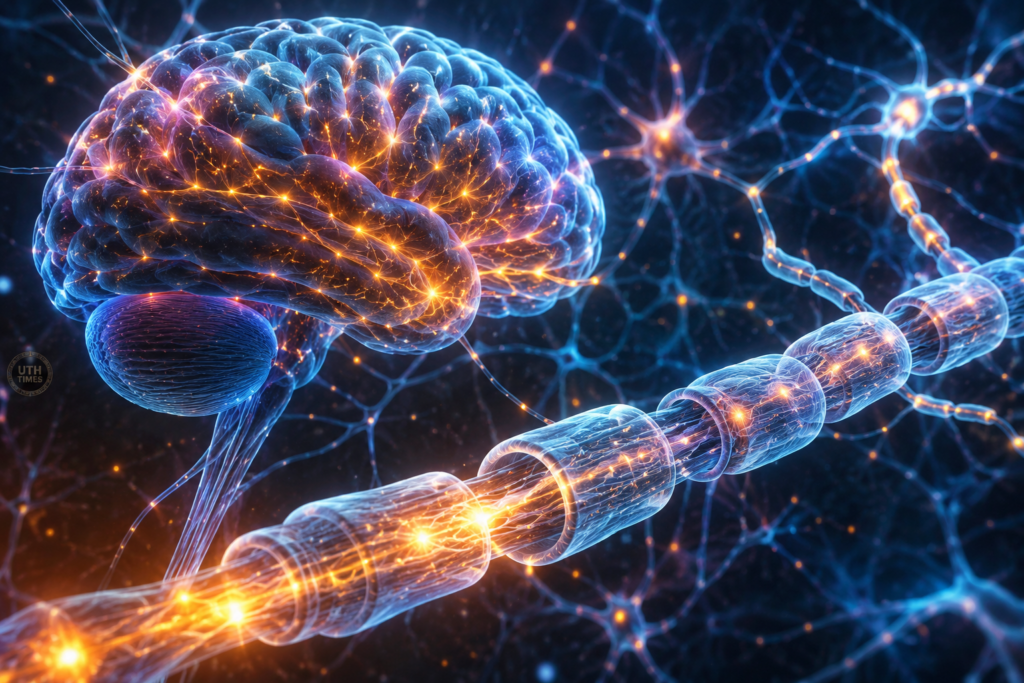
For decades, scientists have viewed the brain as an extraordinarily complex biological computer driven by electrical and chemical signals. However, emerging research suggests that some microscopic structures inside nerve cells could behave in ways that resemble quantum systems.
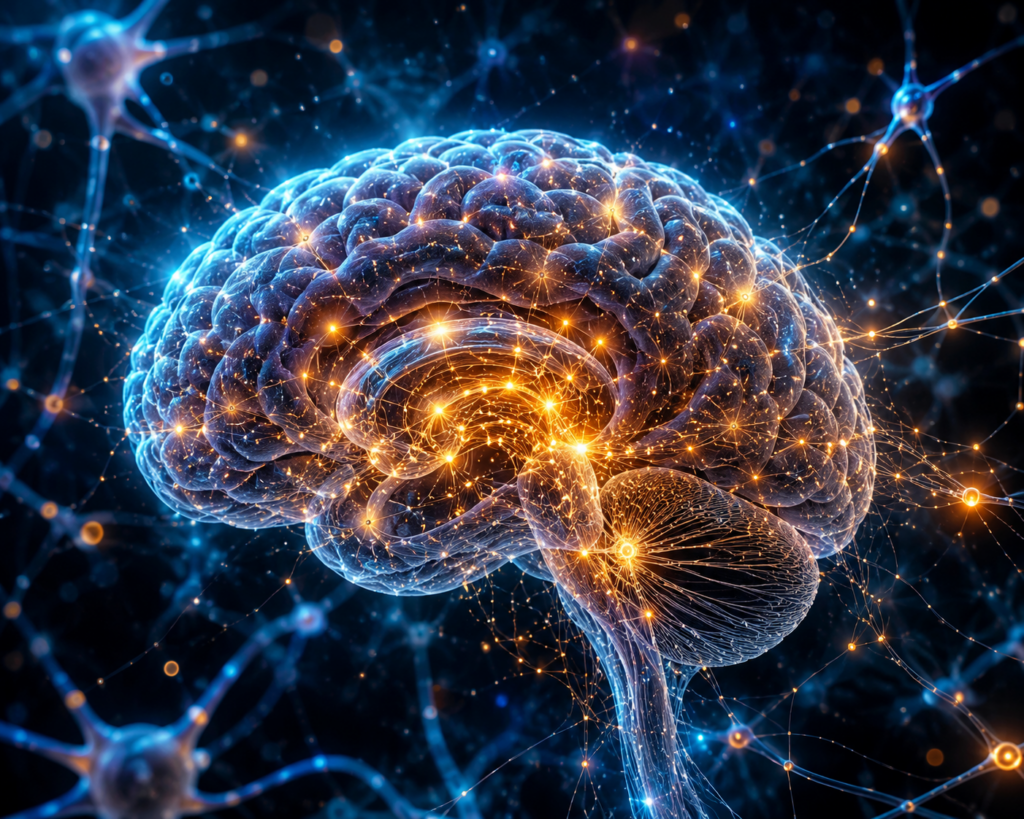
The latest study proposes that myelinated nerve fibres—the insulated extensions that rapidly transmit signals between neurons—may create physical conditions capable of supporting quantum entanglement.
If confirmed through future experiments, this would represent one of the most remarkable discoveries in neuroscience, potentially reshaping our understanding of how the brain processes information.
What Exactly Is Quantum Entanglement?
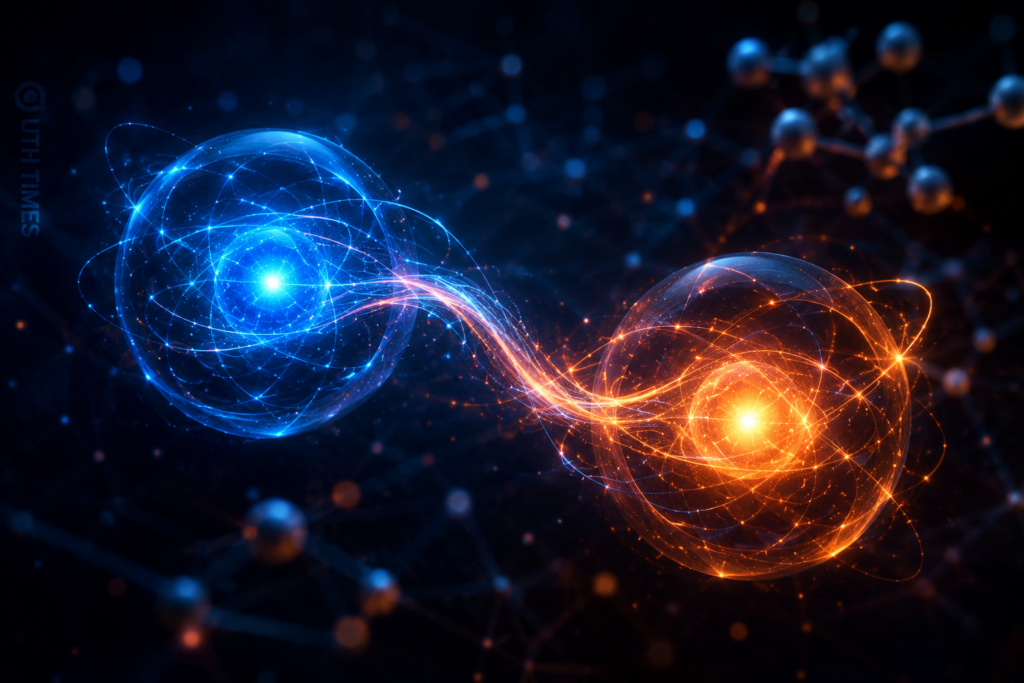
Quantum entanglement is a phenomenon in which two particles become so deeply connected that the state of one instantly influences the other, regardless of the distance separating them.
✨ Key characteristics include:
🧠 Particles behave as if they share a hidden connection.
⚛️ Measuring one particle immediately determines the state of its partner.
🌍 The effect appears to work across enormous distances.
🔬 It is among the most experimentally verified yet least understood features of quantum mechanics.
Scientists currently exploit entanglement in cutting-edge technologies such as quantum computing, ultra-secure communication and advanced sensing systems.
Why Do Scientists Think the Brain Could Support It?
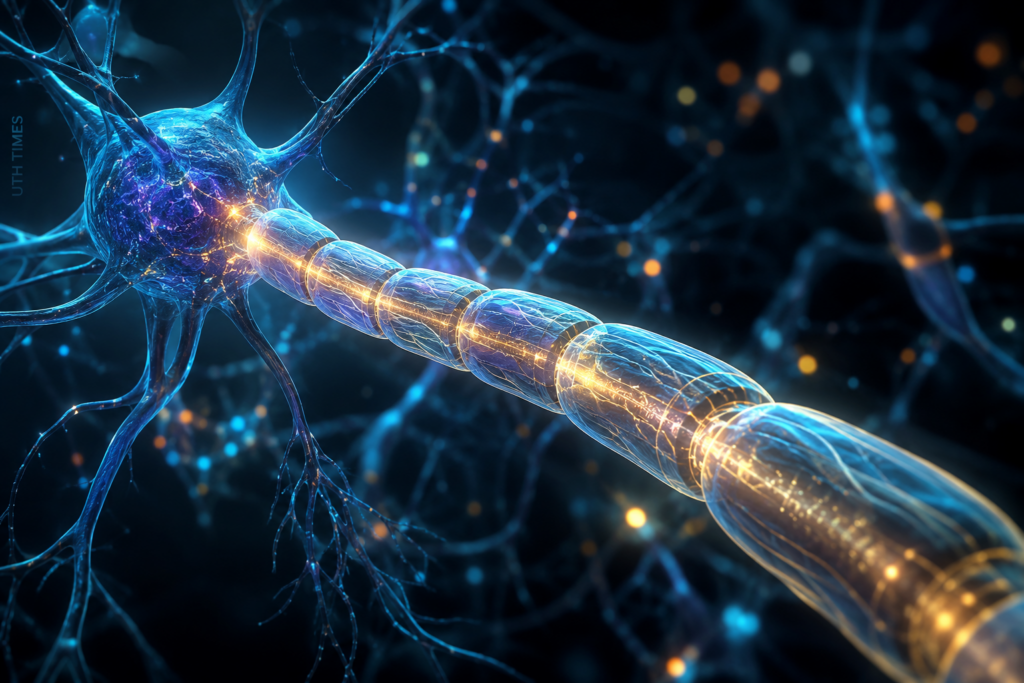
The new research focuses on the unique architecture of myelinated axons.
These nerve fibres are wrapped in a fatty insulating layer called myelin, traditionally believed to improve the speed of electrical signal transmission. Researchers now suggest this insulation may also create an environment capable of guiding extremely weak light particles, known as biophotons, through the brain.
✨ According to the hypothesis:
🟢 Myelin could function similarly to an optical fibre.
🟢 Biophotons might travel with minimal interference.
🟢 These photons could interact quantum mechanically inside neural networks.
🟢 Such interactions might generate or preserve quantum entanglement over microscopic distances.
Although highly speculative, the proposal is supported by advanced mathematical modelling and known physical properties of biological tissues.
Could This Explain Consciousness?
Perhaps the most exciting implication concerns human consciousness.
Some scientists have long argued that classical biology alone may not fully explain awareness, memory and cognition. If quantum processes genuinely occur inside neurons, they could introduce an entirely new layer of information processing beyond conventional electrical signalling.
However, researchers emphasise that there is currently no experimental proof that quantum entanglement creates consciousness. The theory simply provides a possible mechanism worthy of further investigation.
Challenges Still Remain
The biggest obstacle is the brain’s environment itself.
✨ Scientists must determine whether:
🔹 Quantum states can survive the brain’s warm, wet and noisy conditions.
🔹 Biophotons are abundant enough to influence neural activity.
🔹 Laboratory experiments can directly detect entanglement inside living brain tissue.
🔹 Alternative biological explanations remain more convincing.
Only carefully controlled experiments will determine whether the hypothesis reflects genuine biology or remains an elegant theoretical model.
If future research validates this idea, it could transform neuroscience, quantum computing and even medicine by revealing previously unknown mechanisms behind intelligence and cognition. For now, the study serves as an exciting reminder that the human brain may still hold some of the universe’s deepest scientific mysteries.
Whether this hypothesis ultimately proves correct or not, it demonstrates that the boundary between biology and quantum physics is becoming increasingly fascinating—and the next breakthrough could fundamentally change how humanity understands the mind itself.

