
India’s underwater robotics story just made a major splash on the global stage.
The IIT Bombay AUV team has emerged as the winner of the Wildcard Challenge at RoboSub 2026 in California, taking on 58 teams representing 9 countries in one of the world’s prominent autonomous underwater robotics competitions.
🌊 Two AUVs. One Mission. A Global Challenge.
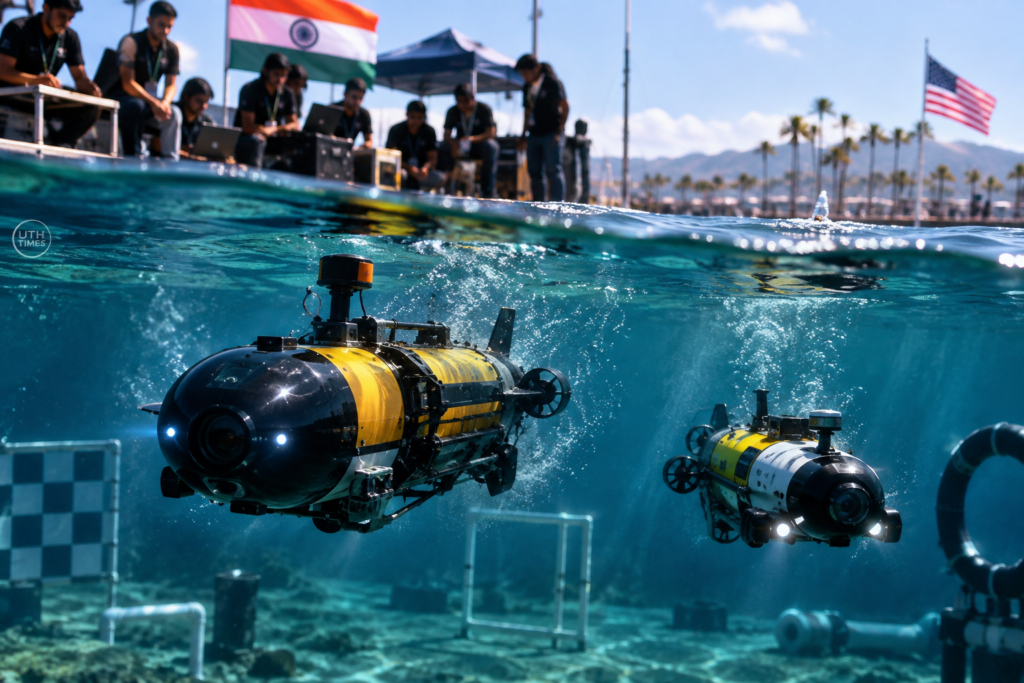
What made IIT Bombay’s performance particularly impressive was its decision to deploy two autonomous underwater vehicles (AUVs) — Matsya 7 and Mini Matsya — and operate them in parallel.
Rather than relying on a single vehicle to handle the underwater mission, the team demonstrated a coordinated multi-vehicle approach designed to tackle different elements of the challenge efficiently.
🤖 Matsya 7 — the team’s advanced full-scale autonomous underwater vehicle, built to undertake complex underwater operations.
🤖 Mini Matsya — a smaller autonomous platform that adds flexibility and enables the team to approach mission requirements through a second robotic system.
⚙️ Parallel operation — running both vehicles simultaneously showcased not just hardware capability, but also the team’s ability to manage autonomous decision-making, navigation and mission execution in a demanding environment.
🏆 What the Wildcard Victory Means
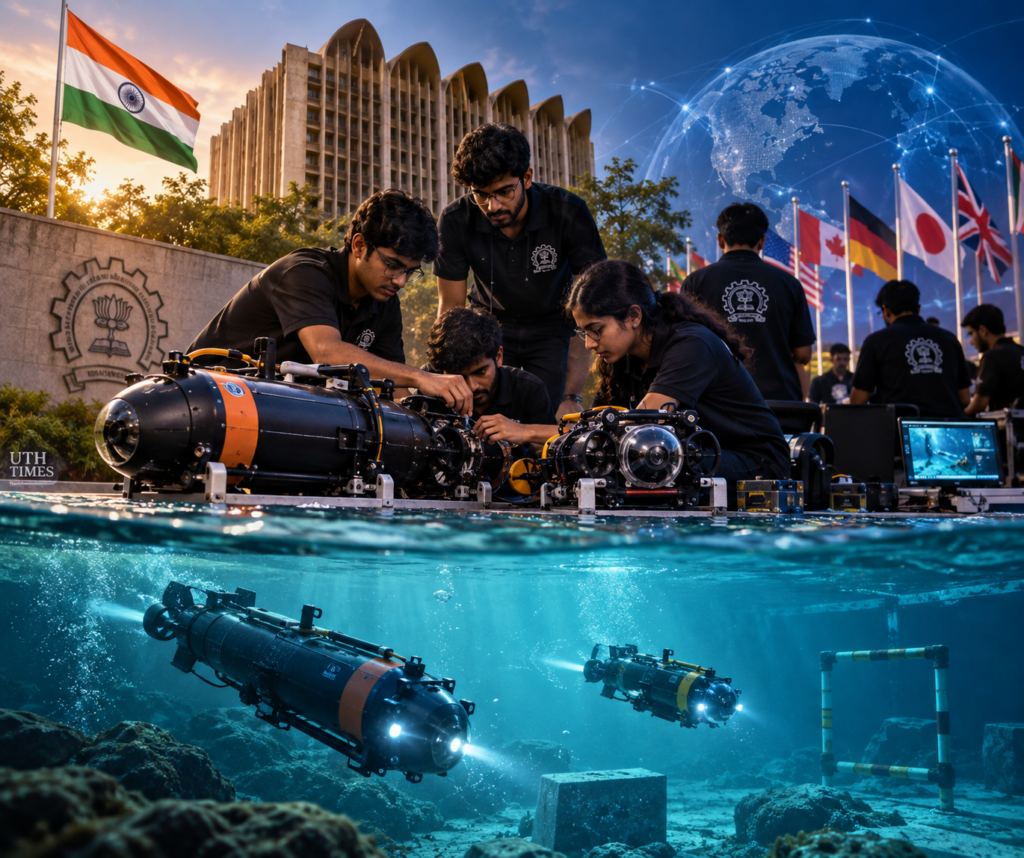
Winning the Wildcard Challenge against an international field of 58 teams from 9 countries is more than another competition trophy.
It represents a significant demonstration of India’s growing capabilities in autonomous underwater systems, robotics and intelligent machines.
🌐 RoboSub places teams in scenarios where underwater vehicles must perform tasks with limited human intervention.
🧭 That makes reliable navigation and autonomous decision-making crucial.
📡 The vehicles must interpret their surroundings, maintain their mission objectives and respond to changing underwater conditions.
🛠️ For a student-led engineering team, successfully integrating these capabilities into functioning AUVs represents a substantial technical achievement.
🇮🇳 From IIT Bombay to the Global Robotics Arena
The achievement also highlights the increasingly sophisticated engineering ecosystem emerging from Indian universities.
IIT Bombay’s AUV programme has been working on underwater robotics for years, with the Matsya series representing an evolving platform for experimentation and technological development.
The RoboSub 2026 result puts that work under an international spotlight.
And perhaps most importantly, it demonstrates that Indian student engineers are not merely learning about advanced robotics — they are building, testing and competing with autonomous machines on the global stage.
🚀 The Bigger Picture
Underwater autonomy has applications far beyond competitions, spanning areas such as ocean exploration, marine research, infrastructure inspection, environmental monitoring and defence-related technologies.
That makes achievements like this particularly significant.
The real victory isn’t simply that two robots completed underwater tasks.
It is that IIT Bombay showed what Indian engineering talent can accomplish when sophisticated autonomy, robotics and relentless experimentation come together.
From the depths of California’s RoboSub arena, Matsya 7 and Mini Matsya have delivered a powerful message: India’s next generation of underwater robotics is already making waves.

