
🚀 A Bold Step: Why This Matters
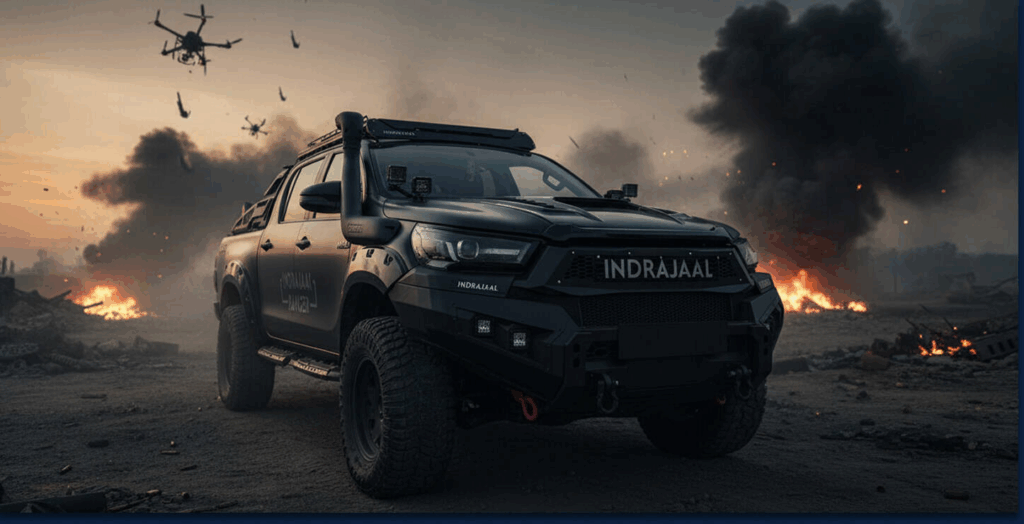
The Indrajaal Ranger has just been unveiled — and it’s being hailed as India’s first fully mobile, AI-driven Anti-Drone Patrol Vehicle (ADPV). Unlike traditional drone-defence setups, this is a combat-grade vehicle capable of detecting, tracking and neutralising hostile drones while on the move. That mobility — combined with real-time intelligence — marks a major shift in how India plans to defend its airspace, borders, cities and critical infrastructure.
With drone-based smuggling, illicit arms drops, and cross-border infiltration becoming more frequent, static anti-drone installations are no longer enough. The Ranger aims to close that gap — giving security forces a mobile shield that can patrol remote roads, border belts, urban zones, and sensitive installations with equal ease.
🧠 What Powers the Ranger: Tech & Capabilities
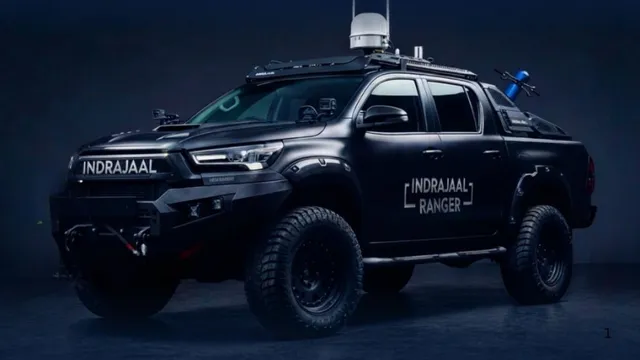
- AI-Brain “SkyOS” — At the heart of Ranger is the proprietary autonomy engine, SkyOS™, which fuses data from multiple sensors to deliver dynamic drone detection, classification, tracking, and threat assessment. It’s not just a sensor-platform — it’s an autonomous decision-making centre, capable of acting even when the vehicle is moving.
- Sensor Suite & Detection Range — Ranger can detect drones from as far as 10 kilometres away, giving early warning and reaction time even against low-flying or fast-moving aerial threats.
- Countermeasures — From Soft to Hard Kill
- Cyber takeover / “Soft Capture” — Ability to hijack rogue drones (within ~5 km), potentially taking control without destroying them.
- Soft-kill (RF jamming / GNSS spoofing) — Disrupts navigation and control of drones, rendering them harmless.
- Hard-kill (Interceptor drones / kinetic kill) — If the threat escalates, Ranger can deploy interceptor (or “kamikaze”) drones to physically neutralise the hostile drone. Mitigation range goes up to ~4 km.
- On-the-Move Deployment — Built on a rugged 4×4 platform (similar to a combat or tactical vehicle), Ranger is designed for versatile terrain — border roads, canals, farms, urban spaces — and ready for rapid redeployment.
🛡️ Where Ranger Makes the Most Impact
- Border & Supply-line Security — With smuggling of drugs, weapons and explosives increasingly using drones along northern and western borders, Ranger gives forces a mobile response to intercept aerial threats before they reach border-side convoys or remote outposts.
- Critical Infrastructure Protection — Airports, refineries, industrial installations, power plants — anywhere a fixed anti-drone dome might not be feasible — Ranger can patrol and defend on-demand, creating a “moving security shield.”
- Urban & Event Security — For big events, urban centers or crowd-heavy zones, Ranger can be deployed for aerial surveillance, drone threat detection, and quick neutralisation — bridging the gap between static security and full air defence setup.
🎯 Bigger Picture: What This Means for India’s Defence Strategy
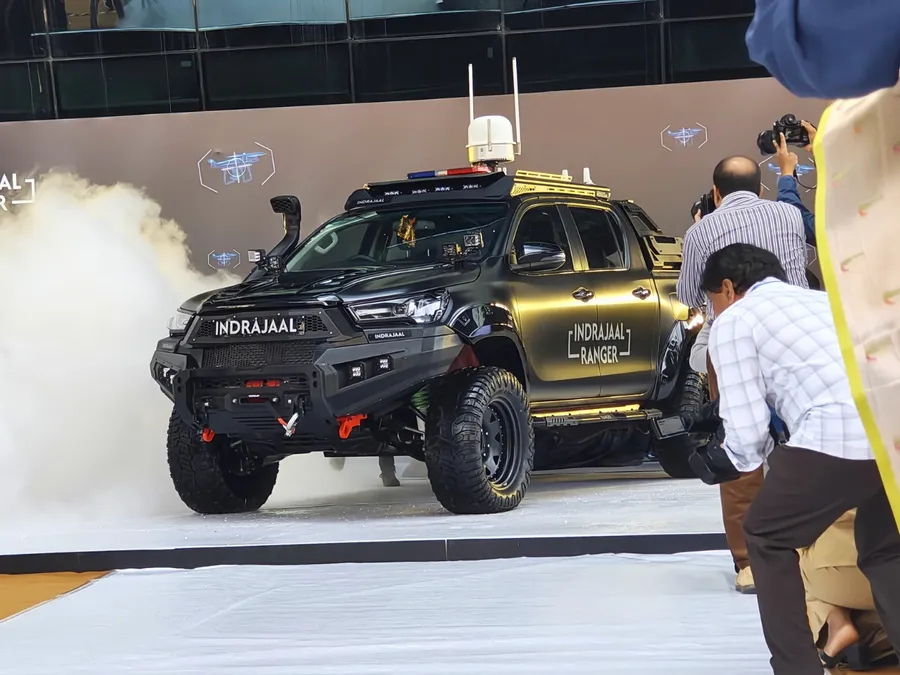
The launch of Indrajaal Ranger signals more than just a new vehicle — it’s a paradigm shift. As drones become a go-to tool for smugglers, extremists, and spies, having a mobile, intelligent counter-UAV platform gives India agility and autonomy. This capability isn’t limited to borders: it extends to protecting cities, infrastructure, supply chains, and events — a comprehensive answer to modern aerial threats.
By empowering security forces with rapid-response aerial defence — even in remote or dynamic environments — Ranger may well redefine what “airspace security” means in 2025 and beyond.
✨ Final Word
The Indrajaal Ranger doesn’t just represent a new technology — it’s India’s aerial watchdog on wheels, a sentinel that turns every patrol into a protective bubble. In a world where threats often come from above — silent, fast, and unseen — Ranger aims to make the skies safer for every Indian.

