
A single stem, fossilized and silent — yet carrying the story of life through thin ice and shifting climates. Scientists from Birbal Sahni Institute of Palaeosciences (BSIP) have unearthed a 37,000-year-old bamboo fossil from the silt deposits of Chirang River in Imphal Valley, Manipur. This small relic holds a big secret — thorn scars that reveal how bamboo survived the Ice Age.
🌱 The Remarkable Find: Nature’s Time Capsule
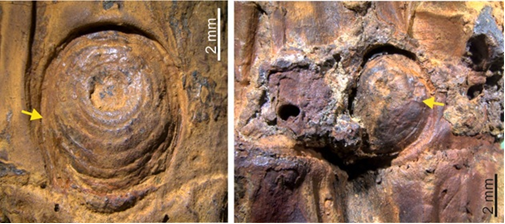
- The fossil was found buried in silt-rich floodplain deposits of the Chirang River — sediment layers dating back to the Late Pleistocene (about 37,000 years ago).
- Despite being a fragile plant — with hollow stems and fibrous tissues that usually decay fast — this bamboo stem survived with extraordinary detail: nodes, internodes, buds, and most importantly — the scars of once-living thorns.
- In laboratories, scientists compared its morphology (node spacing, bud positions, thorn-scar patterns) with that of modern thorny bamboos (like Bambusa bambos and Chimonobambusa callosa). Based on that, they assigned the fossil to the genus Chimonobambusa — and more specifically named it Chimonobambusa manipurensis.
🛡️ Thorn Scars: Evidence of an Ancient Survival Strategy
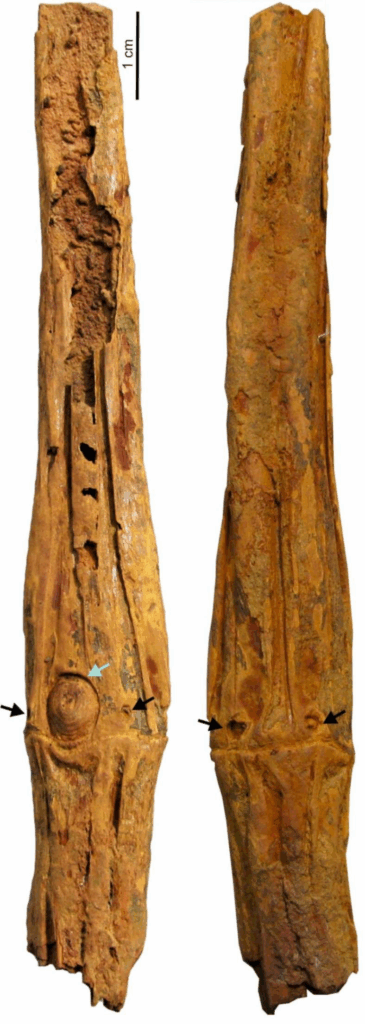
- Those tiny scars are more than just marks on a fossil — they point to an evolutionary defense system. Bamboo had grown thorns to deter hungry herbivores thousands of years ago.
- Their existence tells us that the forests around Imphal Valley were once home to large animals — perhaps wild cattle, rhinos, deer — grazing on young shoots. To survive in such a hostile environment, bamboo had already evolved thorn-based deterrence.
- This is the first fossil evidence in Asia of a bamboo species that had thorns — turning assumptions about bamboo defense mechanisms being “modern” on their head.
🌍 Manipur — A Climate Refuge Amid Ice Age Turmoil
- During the Ice Age, much of the world — including regions like Europe — saw global cooling and drying, wiping out sensitive plants such as bamboo.
- But the discovery of C. manipurensis from 37,000 years ago proves that parts of Northeast India (including Imphal Valley) remained warm and humid enough, acting as a climatic refuge. Here, bamboo populations survived while elsewhere they vanished.
- This survival under extreme global conditions highlights the importance of the region — not just geographically, but ecologically — in preserving biodiversity through deep time.
🔭 Why This Matters — For Science, Climate & Future Ecology

- The fossil gives palaeobotanists direct evidence of plant-animal interaction from tens of thousands of years ago — via the thorn scars. That’s rare in fossil records.
- It enriches our understanding of bamboo evolution: when thorny defenses evolved, under what ecological pressures, and how resilient bamboo lineages remained through climatic upheavals.
- For climate science: knowing species that survived dramatic climatic changes in refuges like Imphal Valley gives clues about how biodiversity might weather future climate shifts. The survival story of C. manipurensis becomes a natural lesson in resilience.
🌿 Closing
A slender bamboo stem, silenced by time — yet speaking volumes about survival, evolution, and resilience. The discovery of a 37,000-year-old thorny bamboo in Manipur’s Imphal Valley isn’t just a paleobotanical curiosity. It’s a message from Earth’s past: even when ice cold shadows fell across continents, life found a refuge, adapted, and endured. That tiny, ancient bamboo holds a timeless lesson — resilience isn’t accidental; it’s forged by hardship and preserved by time.

