
🌅 A Short but Powerful Start

From 2.3 GW in 2014 to an astonishing 100 GW in 2025 — India’s solar manufacturing capacity has skyrocketed, marking a defining moment in its clean energy revolution. This isn’t just growth; it’s a giant leap toward a sustainable, self-reliant future.
⚡ The Journey: From Modest Beginnings to Global Leadership
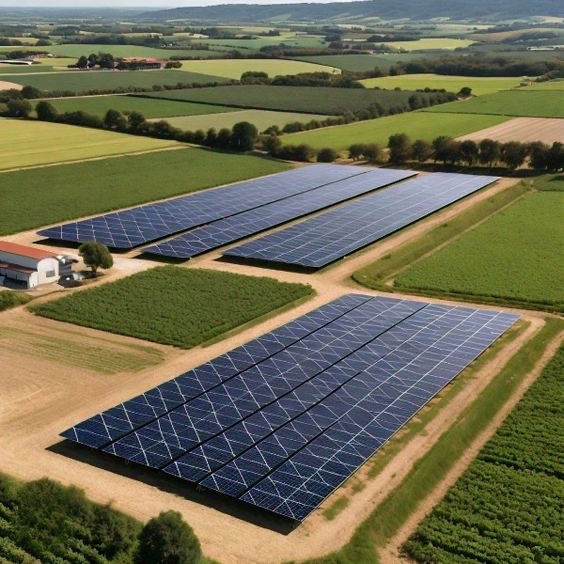
Back in 2014, India’s solar PV module manufacturing stood at just 2.3 GW — a modest figure in the global renewable energy landscape. Fast forward to 2025, and the nation has hit the 100 GW milestone, emerging as one of the world’s largest solar manufacturing hubs.
This exponential growth was fueled by:
- 🌞 National Solar Mission: A strategic policy push aimed at making solar a mainstream energy source.
- 🏭 Massive Industrial Investment: Incentives like the Production Linked Incentive (PLI) scheme attracted top players to set up manufacturing units.
- 🌍 Global Climate Commitments: India’s dedication to the Paris Agreement accelerated the pace of renewable expansion.
🔆 Why This 100 GW Milestone Matters

Reaching 100 GW solar PV manufacturing capacity isn’t just a number—it’s a game-changer for:
- 💡 Energy Security: Reducing dependence on imported energy resources.
- ♻ Climate Action: Cutting millions of tonnes of carbon emissions annually.
- 💼 Economic Growth: Generating thousands of skilled jobs in engineering, manufacturing, and maintenance.
- 🚀 Global Competitiveness: Positioning India as a leader in the clean tech supply chain.
🌍 The Bigger Picture: India’s Clean Energy Roadmap

The 100 GW mark is part of a much grander vision. India aims for 500 GW of renewable energy capacity by 2030, with solar energy playing the leading role. This rapid scaling up means cleaner air, reduced fossil fuel imports, and a stronger economy rooted in green innovation.
🌟 A Short but Powerful End
From humble beginnings to a global solar powerhouse, India’s 100 GW achievement proves one thing: when vision meets execution, the sun truly never sets on progress.

