
India’s humanoid robotics race is moving from prototypes to practical demonstrations. Mumbai-based Vanar Robots has showcased its Generation 1 humanoid handling packages and material-handling tasks, highlighting improvements in reliability, control and physical performance.
📦 From Walking to Actually Working
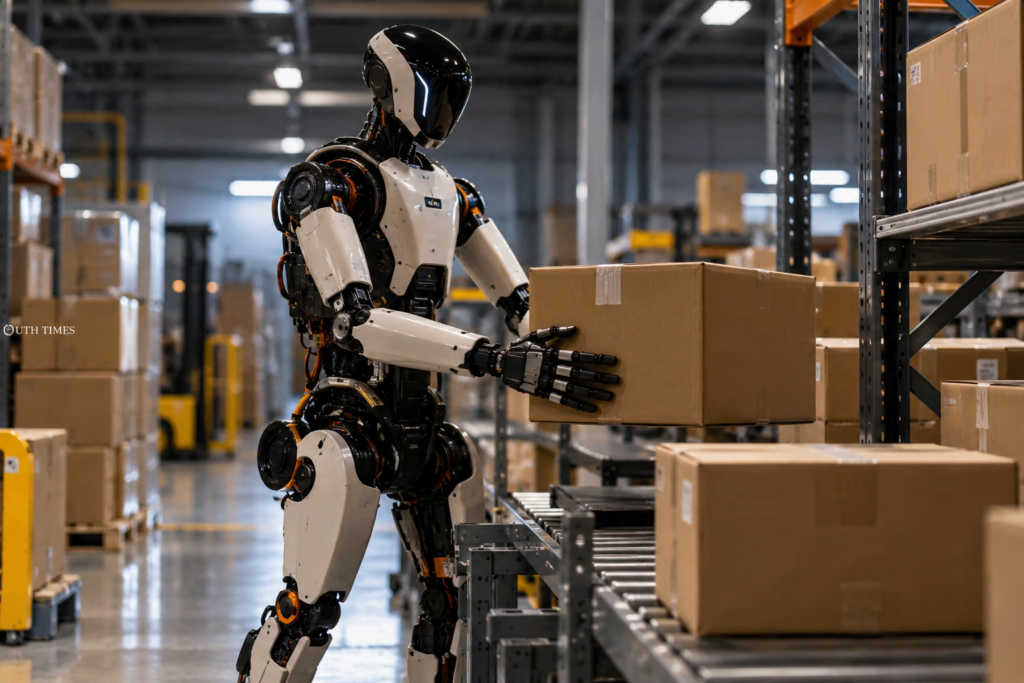
The significance of the latest demonstration is not simply that a humanoid robot can move. The bigger question is whether it can perform useful physical work repeatedly and reliably.
Vanar Generation 1 is being developed around that challenge. The company’s material-handling demonstrations show the robot moving beyond basic locomotion toward tasks involving objects and industrial workflows.
🔹 Package handling demonstrates the robot’s ability to coordinate movement, balance and manipulation.
🔹 Material handling tests how effectively the humanoid can interact with physical objects rather than simply following a programmed walking routine.
🔹 Improved reliability is particularly important because industrial robotics demands consistency over repeated operations.
🔹 Physical performance becomes meaningful when the robot can combine force, precision and controlled movement in the same task.
This shift—from demonstrating what a robot can do once to developing something that can perform a task repeatedly—is one of the biggest challenges in humanoid robotics.
🤖 What Makes Vanar Generation 1 Different?
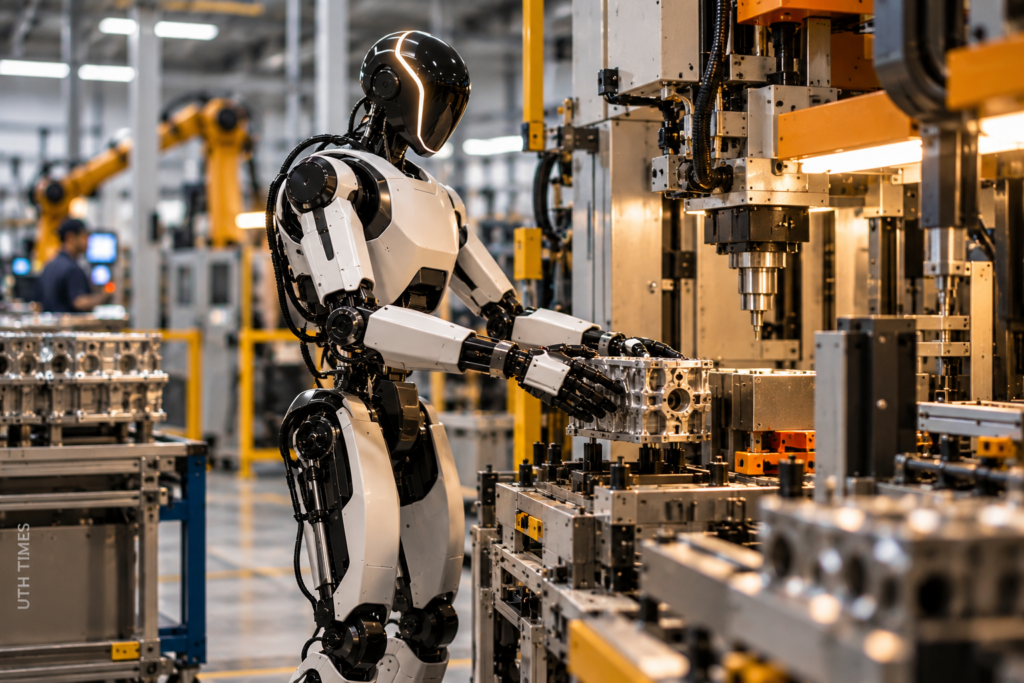
Vanar’s approach is strongly focused on building the core technology internally. The company lists Generation 1 at approximately 5 feet 9 inches tall, around 60 kg, with 38 degrees of freedom. Its structure, actuators, manipulators and software are being developed in-house.
🔹 The robot uses proprietary actuators designed as part of Vanar’s full-stack approach.
🔹 Its tendon-driven manipulators are designed for high-payload interaction.
🔹 The system is built around human environments, meaning the long-term objective is for humanoids to work within spaces, tools and infrastructure already designed for people.
That philosophy could be crucial for industrial adoption. Instead of rebuilding factories around robots, humanoids can potentially adapt themselves to existing workplaces.
🏭 Why Package Handling Matters
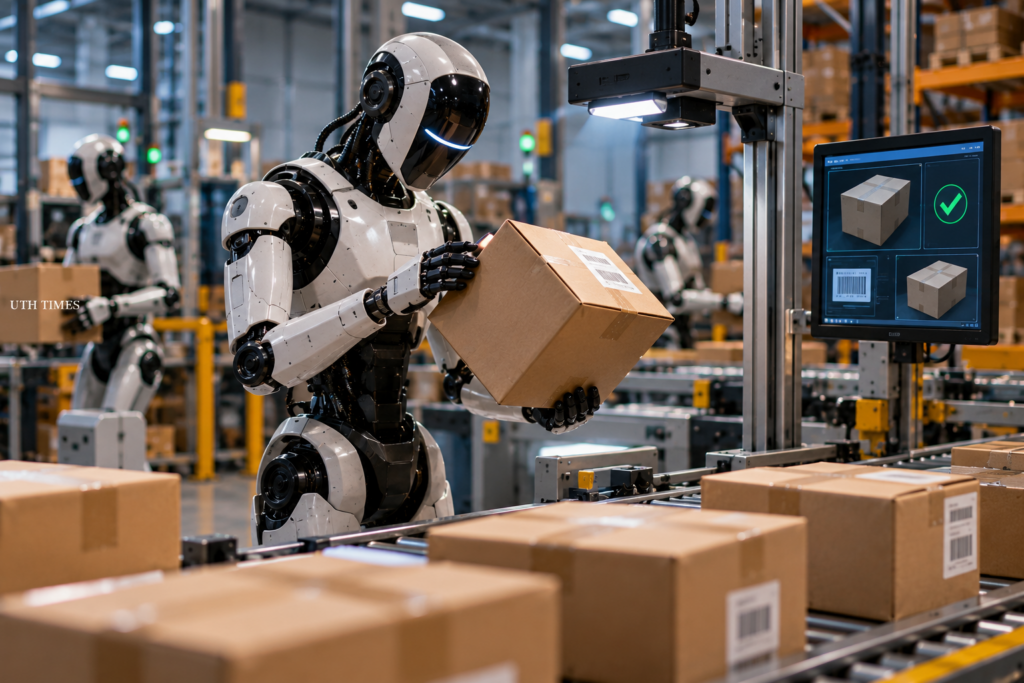
Handling a package may look simple to a human, but for a humanoid it combines multiple complex abilities.
The machine has to perceive an object, position its body, control its hands, apply appropriate force, maintain balance and complete the movement without damaging the object.
That makes material handling a useful proving ground for physical intelligence.
🔹 Warehouses
🔹 Manufacturing facilities
🔹 Logistics operations
🔹 Construction environments
🔹 Repetitive industrial workflows
are among the areas where such capabilities could eventually become valuable.
🇮🇳 India’s Bigger Robotics Ambition
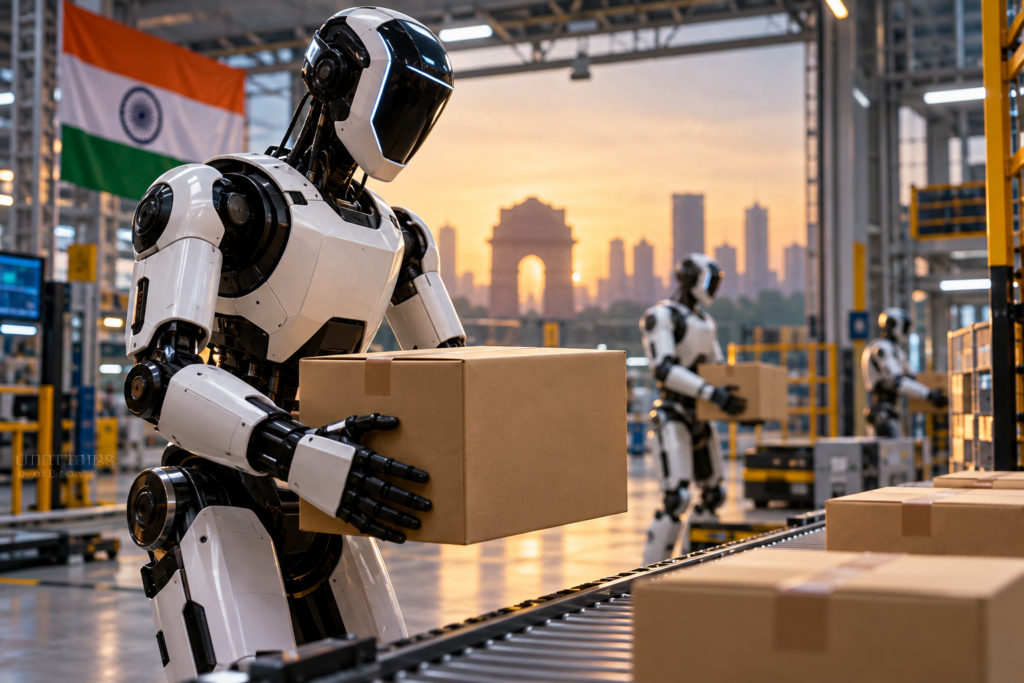
Vanar is not presenting Generation 1 merely as a single-purpose warehouse machine. The company describes a broader vision in which humanoids can perceive environments, make decisions and execute physical work across different tasks.
The company currently targets industrial beta deployment in 2027, with limited units intended for selected industrial partners.
That makes the current package-handling demonstrations important: they represent another step toward proving that an Indian-built humanoid can transition from an engineering prototype into a machine capable of useful work.
The real race in humanoid robotics is no longer simply about building a robot that looks human.
It is about creating machines that can work, adapt, repeat and improve.
Vanar Generation 1’s latest demonstrations suggest that India’s humanoid robotics story is increasingly moving toward that practical frontier—where reliability and real-world performance matter as much as futuristic design.
One package at a time, the experiment is becoming a workplace reality.

