
A potential Su-57 technology-transfer deal could take India-Russia defence cooperation into a new generation—combining stealth-fighter capability with the “Make in India” ambition.
🇷🇺 Moscow Puts Su-57 on the Table
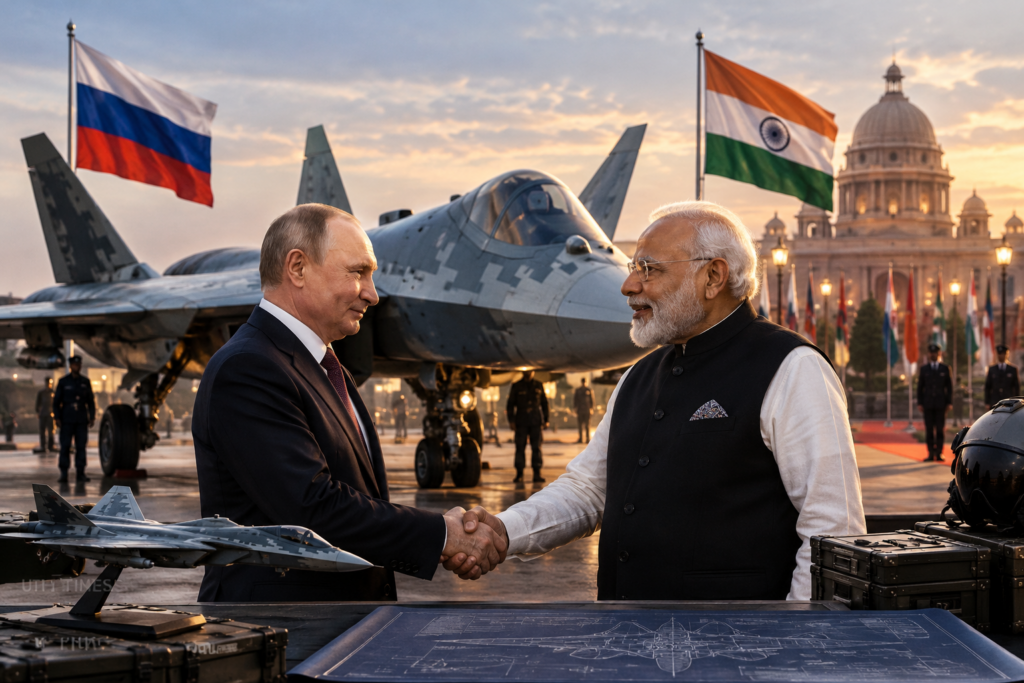
Ahead of Russian President Vladimir Putin’s scheduled meeting with Prime Minister Narendra Modi during the BRICS Summit in New Delhi, Moscow has confirmed that the Su-57 is a major item on the bilateral defence agenda.
Kremlin spokesperson Dmitry Peskov said Russia is discussing India’s request for Su-57 production technology, while stressing that the fighter incorporates highly sensitive technologies that Moscow would normally protect closely.
This is significant because the conversation is no longer simply about buying finished aircraft. It is potentially about allowing India to participate much more deeply in the aircraft’s production and technological ecosystem.
✈️ From Buying Jets to Building Them
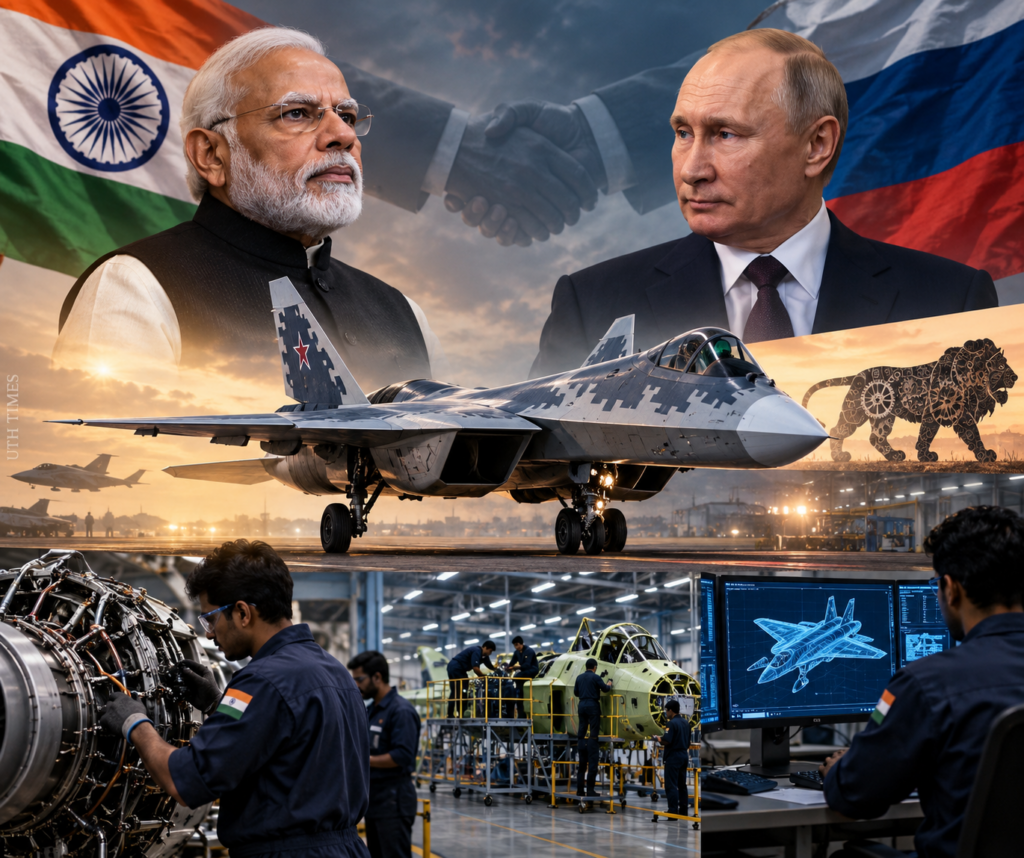
The biggest attraction for New Delhi could be the possibility of localised manufacturing.
🇮🇳 India has increasingly pushed defence partnerships toward domestic production, technology absorption and greater self-reliance.
🔧 Russia has previously indicated willingness to explore licensed production and deeper technology transfer for the Su-57E, potentially drawing on the long-running experience of programmes such as the Su-30MKI.
🛠️ Earlier Russian industry statements have also discussed potentially providing extensive technical documentation and even source-code access if suitable agreements are reached—although the precise scope of any future transfer remains subject to negotiations.
That distinction matters. A conventional purchase would add aircraft to the Indian Air Force. A genuine technology-transfer arrangement could help expand India’s aerospace manufacturing, maintenance, software and systems-integration capabilities.
🛡️ Why the Su-57 Matters to India
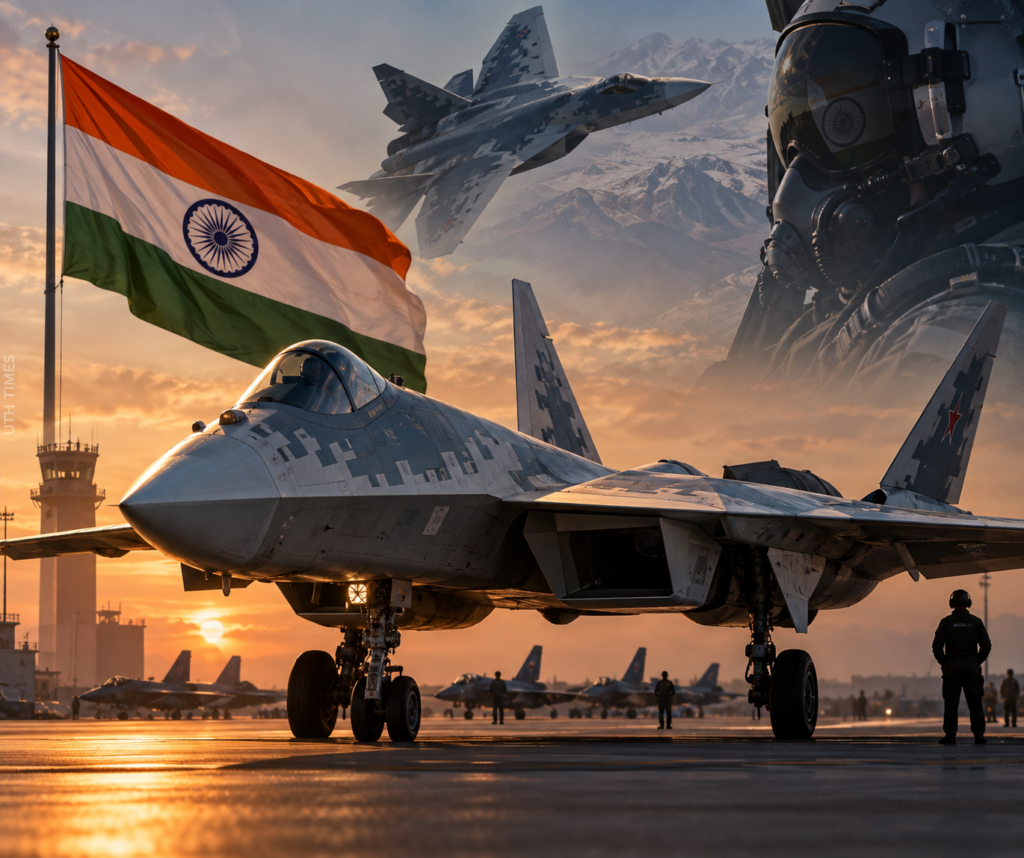
The Su-57 is Russia’s fifth-generation fighter, designed around stealth, advanced avionics, high manoeuvrability and multi-role combat capability.
⚡ Its appeal comes from combining air-to-air and air-to-ground missions on a single advanced platform.
🎯 Its modern weapons architecture and internal weapon bays are intended to support operations in heavily contested environments.
🔄 Its potential importance for India also lies in modernisation: Russian officials have presented the aircraft as a platform with substantial room for future upgrades.
For India, such a platform could potentially serve as an interim capability while the country’s indigenous AMCA programme moves toward operational maturity.
🇮🇳 Make in India Could Be the Real Prize
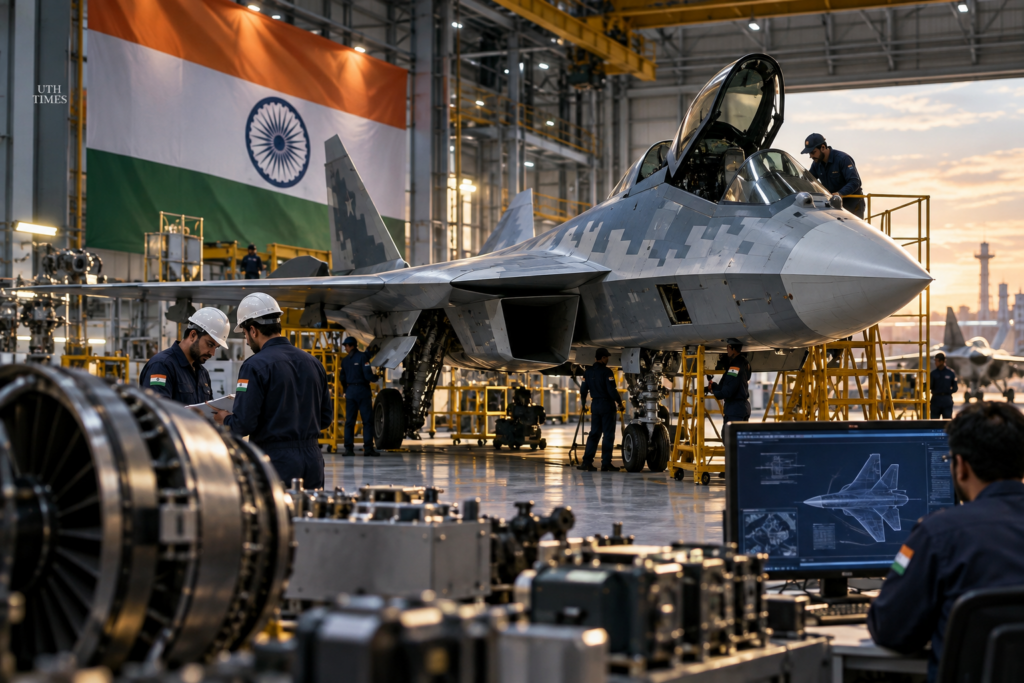
The most strategically important phrase in this entire development may not be “Su-57”—but “technology transfer.”
India has been steadily attempting to move from being primarily an importer of sophisticated military equipment toward becoming a manufacturer and technology developer.
A deeper Su-57 partnership could potentially create opportunities across:
🔹 Aircraft assembly and manufacturing
🔹 Aerospace components and supply chains
🔹 Maintenance and overhaul capabilities
🔹 Avionics and software integration
🔹 Indigenous weapons integration
🔹 Long-term fighter modernisation
Russia has simultaneously been seeking stronger industrial and technology partnerships with India ahead of the BRICS summit, with Russian companies showcasing technologies and manufacturing opportunities under the broader Make in India framework.
🤝 More Than Just One Fighter Deal
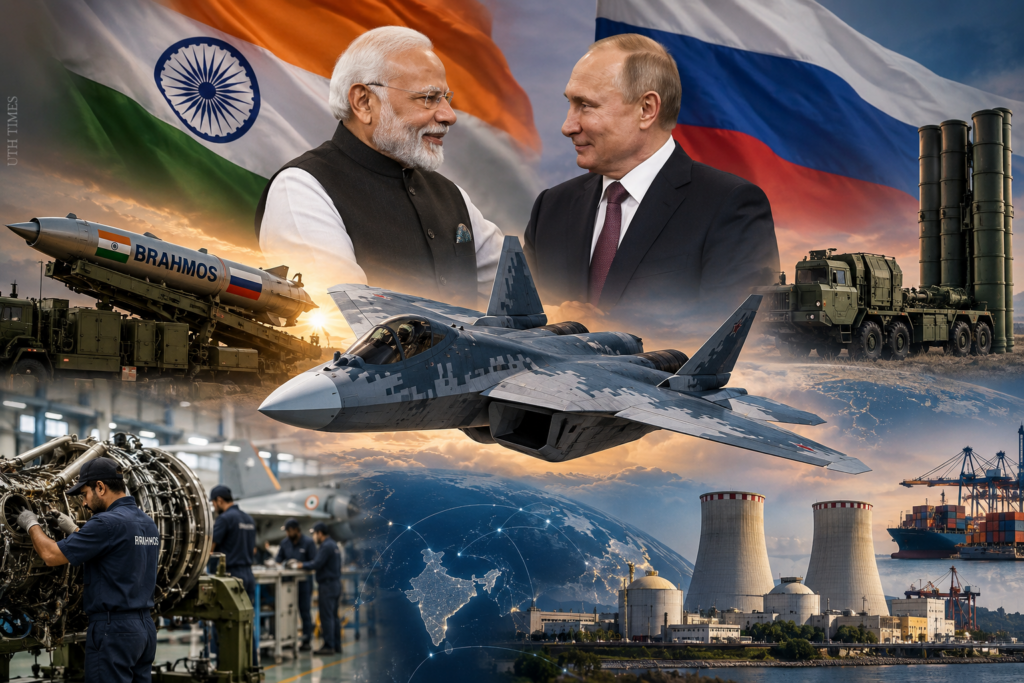
The Su-57 discussion is emerging alongside a much wider India-Russia strategic conversation.
🚀 Moscow has also indicated interest in upgrading the jointly developed BrahMos system.
🛡️ The S-400 air-defence programme remains part of the defence relationship.
⚛️ Nuclear-energy cooperation and potential new nuclear projects are also expected to feature in discussions.
💰 Trade, payments and broader economic cooperation are additional priorities surrounding the Modi-Putin meeting.
If India and Russia eventually agree on meaningful Su-57 technology transfer and local production, the significance would extend far beyond another fighter acquisition.
It could become a test of whether India can turn a foreign fifth-generation platform into a deeper domestic aerospace capability.
For now, however, no final Su-57 production or technology-transfer agreement has been announced. The upcoming Modi-Putin discussions could determine just how far Moscow is prepared to go—and how much technology New Delhi is prepared to absorb.
The aircraft may be Russian. The bigger ambition is unmistakably Indian: build more, import less, and master the technology.

