
Deep in the Sahara Desert lies one of humanity’s most mystifying treasures—the Tassili n’Ajjer rock art of southern Algeria. These ancient paintings, dating back nearly 10,000 years, portray beings and scenes that defy explanation. Were they mere expressions of primitive imagination—or a record of something extraordinary?
🌍 The Timeless Canvas of the Sahara
Hidden within rugged sandstone plateaus, the Tassili n’Ajjer region spans over 72,000 sq. km, making it one of the largest open-air museums on Earth. Recognized as a UNESCO World Heritage Site, this area preserves over 15,000 paintings and engravings that trace the evolution of life in the Sahara—from wild animals and hunting rituals to mysterious figures unlike anything seen before.
These works were created when the Sahara was not the arid desert we know today but a lush, green savanna teeming with rivers, animals, and human life.
👽 The Enigmatic “Round-Head Beings”
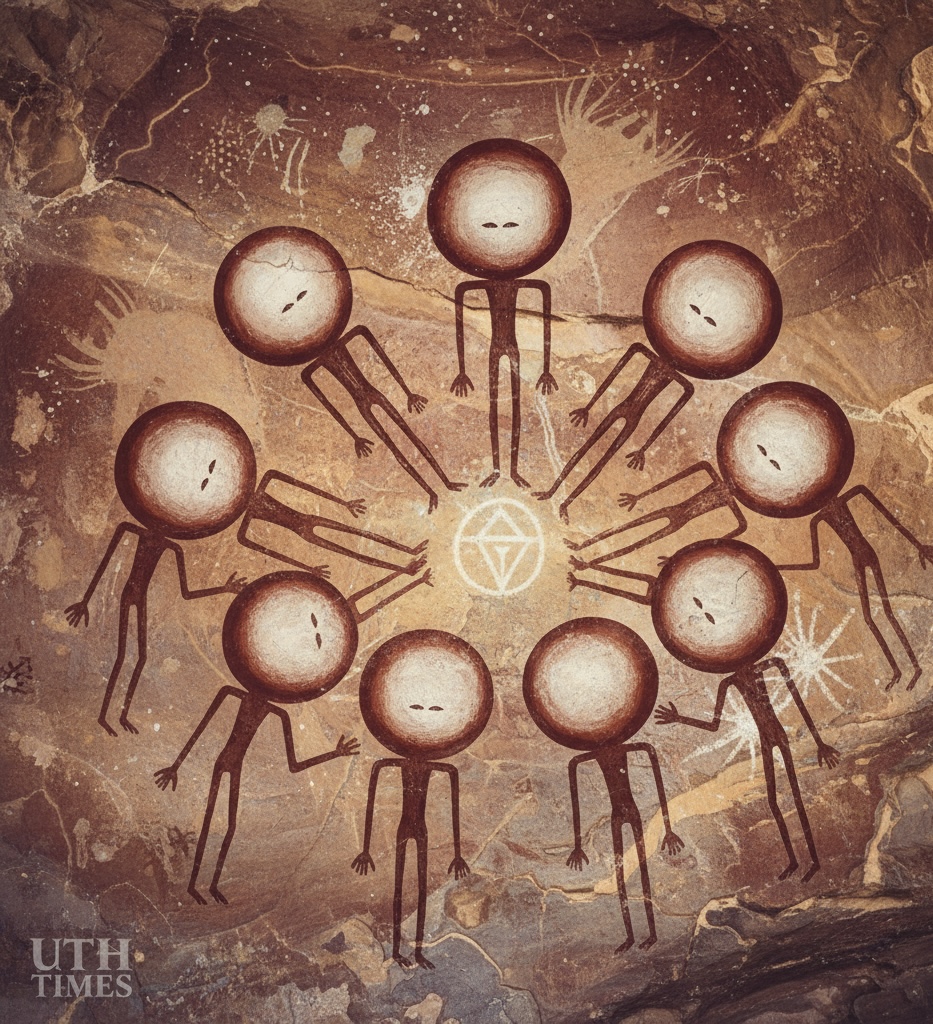
Among the most striking are the “Round Head” figures, humanoid beings painted with large, bulbous heads and strange elongated bodies. Some appear to float, while others are shown in groups as if part of a ritual or otherworldly encounter.
Archaeologists suggest they may represent gods, shamans, or spiritual visions. Yet, their resemblance to modern depictions of extraterrestrials has fueled an entire wave of theories that they could be records of ancient alien contact.
🐾 Daily Life Meets the Unknown
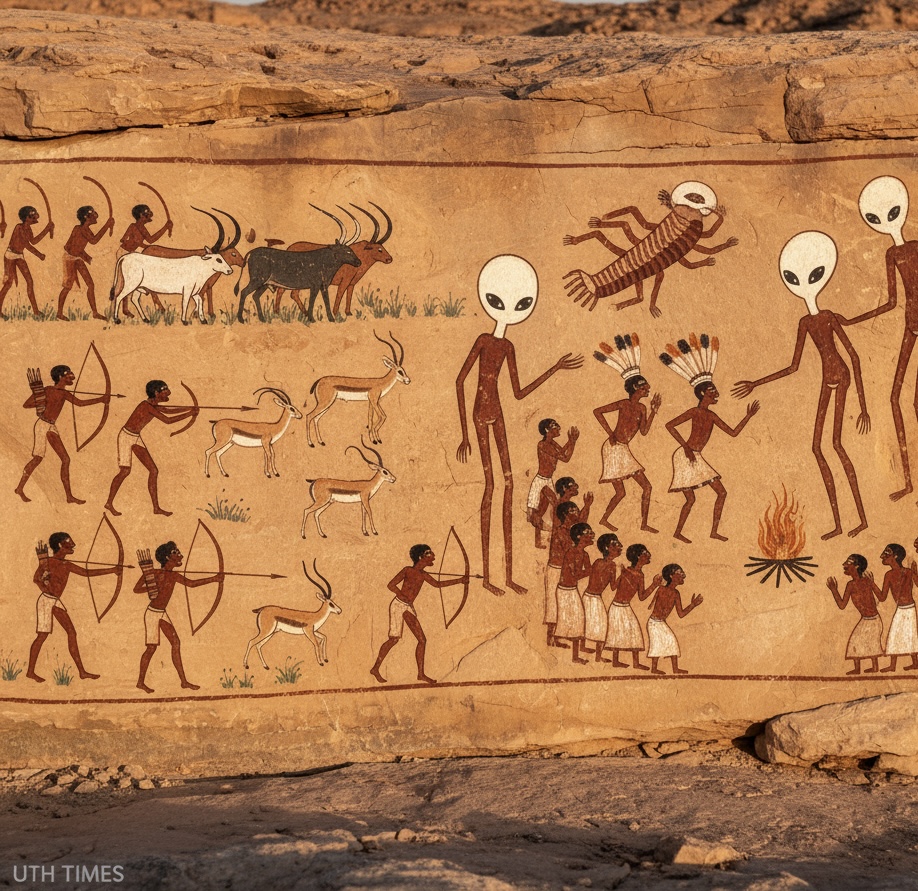
Not all of Tassili’s art is mysterious—many panels vividly capture everyday life:
- 🐂 Herding of cattle and domestication of animals
- 🏹 Hunting with bows, arrows, and spears
- 💃 Ritual dances and communal gatherings
But the presence of the bizarre “otherworldly” figures alongside these ordinary scenes raises a burning question: why would early humans mix real life with visions of strange beings unless they believed—or experienced—something beyond the natural world?
🔥 Myths, Theories, and Modern Fascination
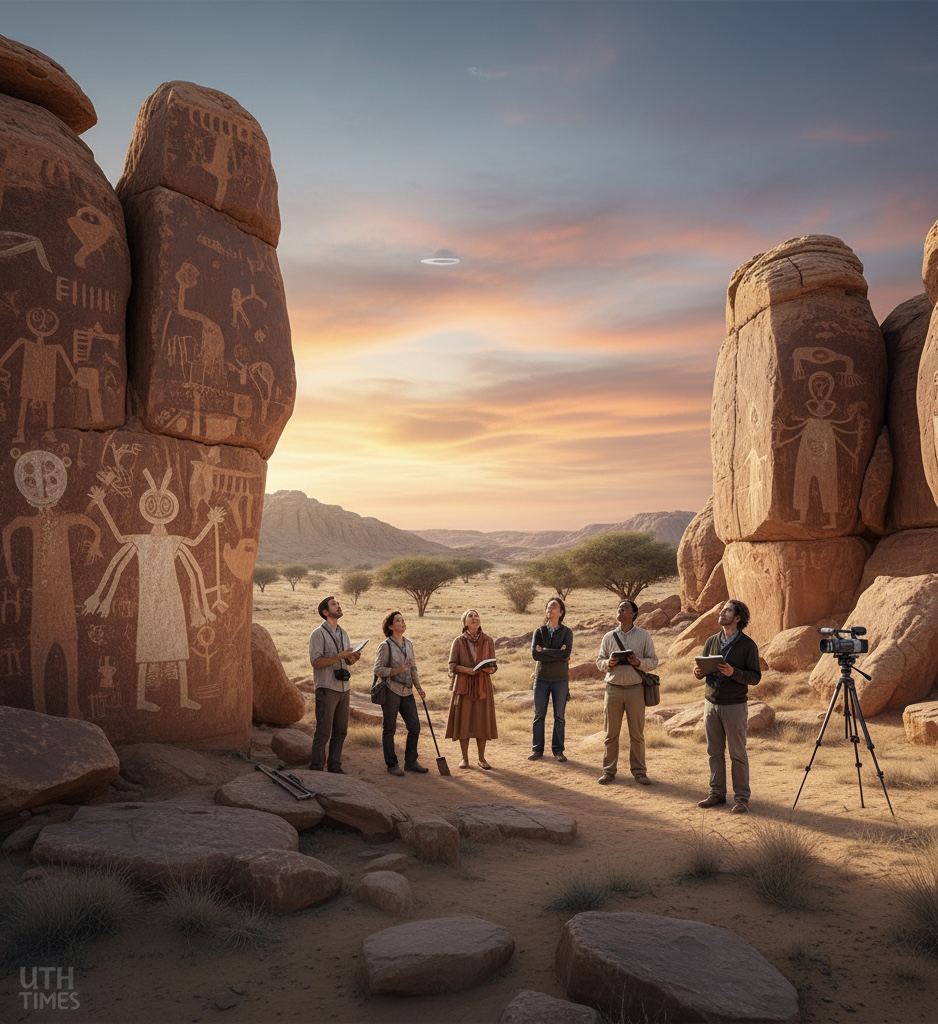
Some scholars argue the figures symbolize altered states of consciousness brought about by ritual practices or hallucinogenic plants. Others remain convinced they are evidence of forgotten encounters with advanced beings who once walked the Earth.
Regardless of interpretation, the Tassili rock art continues to inspire debate, drawing archaeologists, historians, and even UFO researchers from across the globe.
Conclusion
The Tassili n’Ajjer rock paintings remain a riddle etched in stone—bridging the worlds of myth, spirituality, and cosmic mystery. Whether depictions of gods, spirits, or visitors from the stars, they remind us that humanity’s earliest stories may hold secrets far greater than we can imagine.

