
A legend sleeps behind the snow-laden summit of the highest peak on Earth — a legend that whispers the name Naubhandana.
🌄 What’s in a Name: From Sagarmatha to Naubhandana

- In local lore, the mighty mountain stands known as Sagarmatha, or by other regional names.
- But ancient texts — echoing the sacred voices of past ages — speak of it as Naubhandana:
“Nau” meaning boat, and “bhandana” meaning to tie or anchor. - This name is no poetic flourish — it carries the memory of a cosmic event when the world was reclaimed from the flood.
🌊 The Great Deluge and the Cosmic Ark
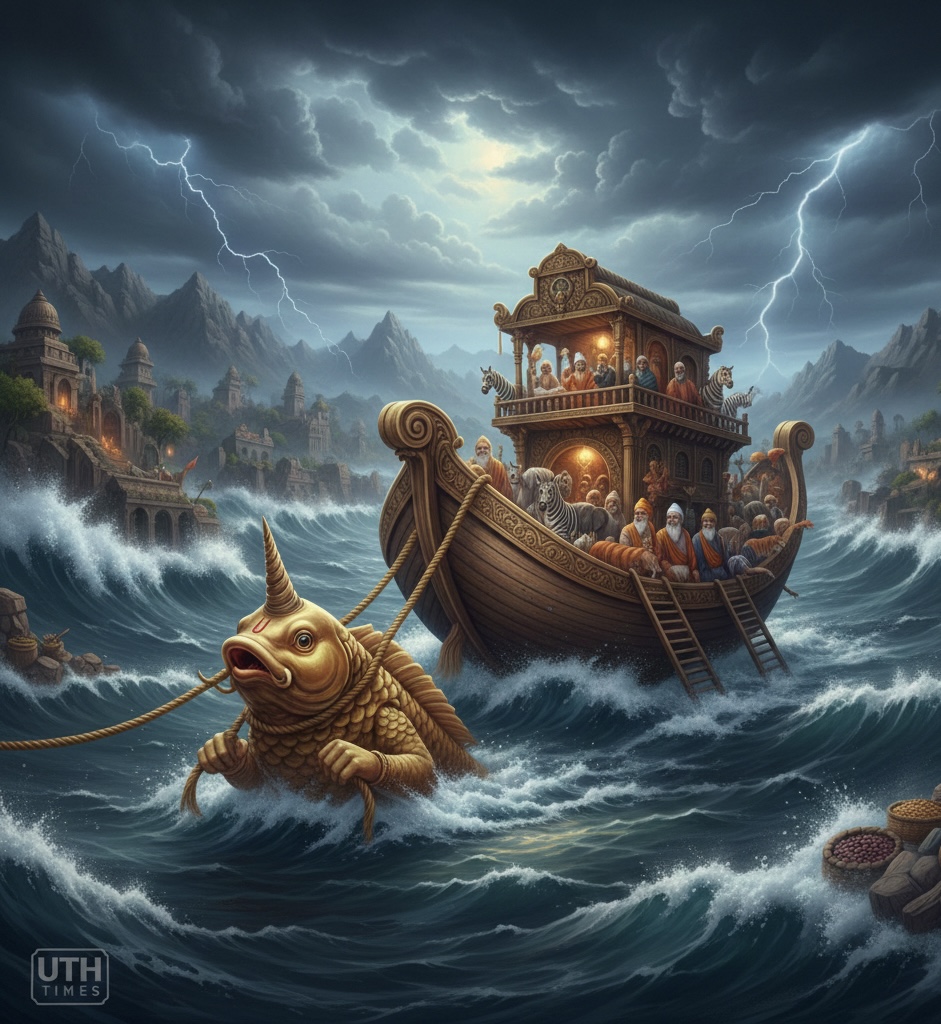
- As time’s wheel turned to the end of the Chaksusha Manu Era, a catastrophic flood (Pralaya) consumed the lands.
- The wise king Satyavrata Manu was commanded by Vishnu to build a massive boat — carrying sages, seeds, animals, and hope itself.
- When the deluge rose to swallow everything, Vishnu manifested as the Matsya Avatar. With his mighty horn, he towed that ark through the endless waters.
🏔️ The Ark Anchored on the Lone Peak
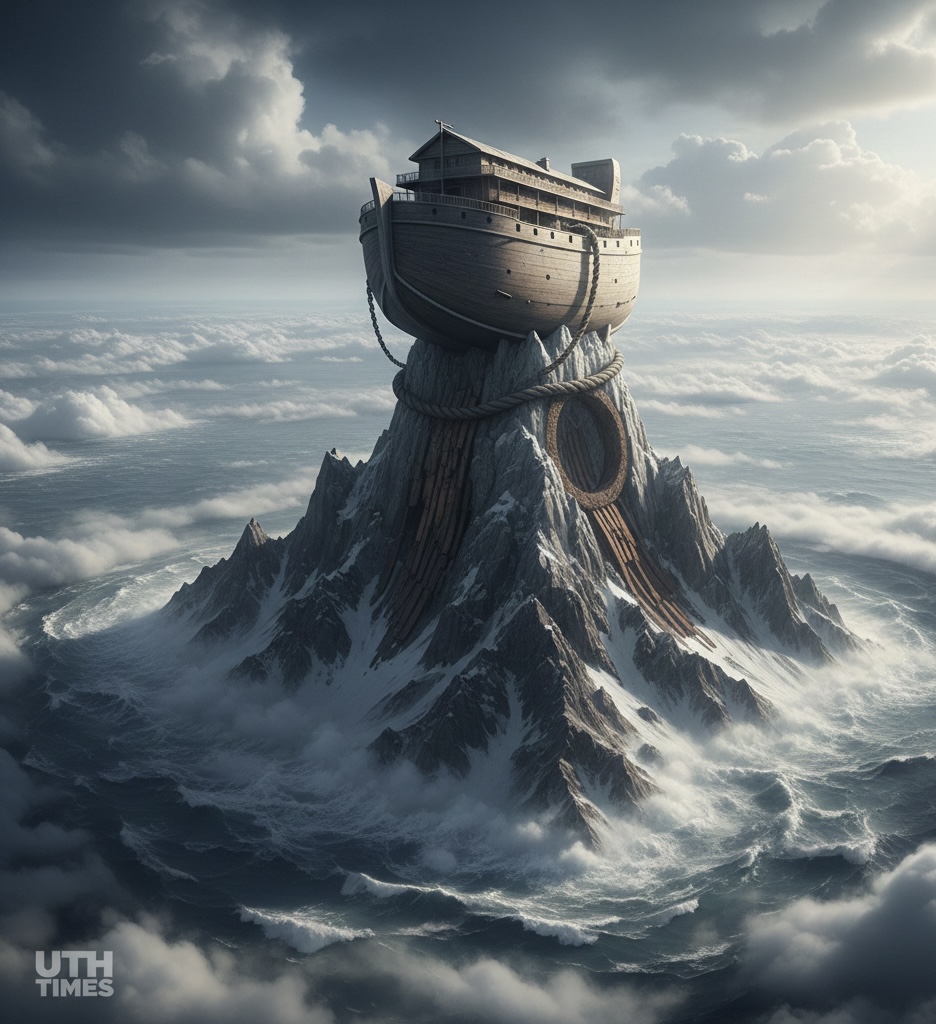
- Amid infinite waves, only one peak pierced the watery horizon: the mountain we now call Everest.
- According to scripture, the boat was tied to that peak — hence the name Naubhandana.
- Storytellers claim the summit still bears a faint, circular “band”— a subtle mark — visible at extreme altitude, said to be the ancient tethering point of the sacred vessel.
🔱 A Peak of Eternal Significance

- Naubhandana is not just a geological wonder — it is a cosmic anchor, a bridge between mortal disaster and divine salvation.
- The legend reminds humanity: even if the world drowns in chaos, a sacred refuge — the unshakeable mountain — endures.
- For believers and seekers alike, the peak becomes more than rock and snow; it becomes hope carved into the Himalayas.
This is the tale of Naubhandana — not merely the tallest mountain, but the anchored beacon of life after the flood.
May its silent summit continue to remind us that even in the darkest deluge, salvation awaits the steadfast.

